Conversation with Global Macro Investor Founder: How Can the Global Liquidity Cycle Drive Cryptocurrencies Toward a $100 Trillion Target?
TechFlow Selected TechFlow Selected
Conversation with Global Macro Investor Founder: How Can the Global Liquidity Cycle Drive Cryptocurrencies Toward a $100 Trillion Target?
Raoul said we are currently in the macroeconomic "summer," which is typically when the economy performs best, the business cycle begins to recover, and investments increase accordingly.
 Navigating Web3 tides with focused insights
Compilation & Translation: TechFlow
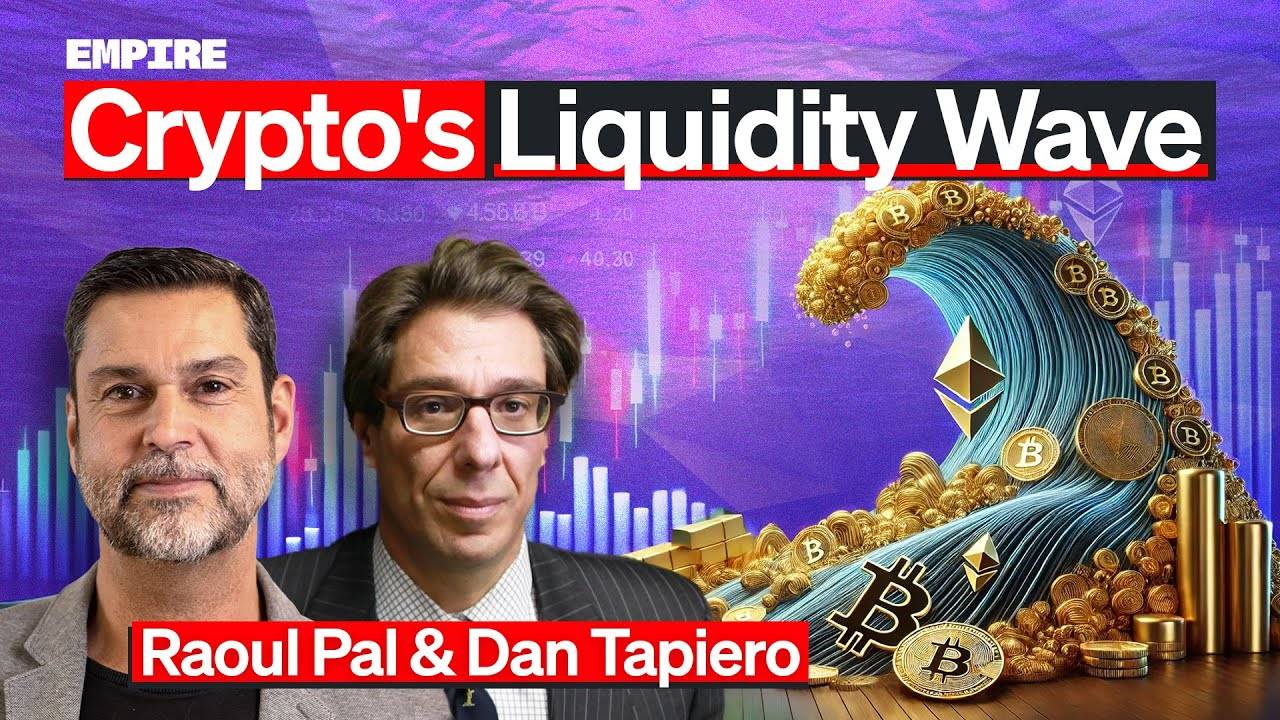
Guests: Raoul Pal, founder of Global Macro Investor; Dan Tapiero, founder and CEO of @10tfund & @1RTPartners
Host: Jason Yanowitz, founder of Blockworks
Podcast Source: Empire
Original Title: How Global Liquidity Cycles Drive Crypto's $100T Target | Raoul Pal & Dan Tapiero
Air Date: August 27, 2024
Background Information
In this episode, Raoul Pal and Dan Tapiero explore how global liquidity cycles could propel the cryptocurrency market toward an astonishing $100 trillion scale. They delve into the concept of "code for everything," revealing how broad economic trends are paving the way for explosive growth in crypto. Pal and Tapiero examine China’s economic challenges, debate AI’s impact on employment, and share their portfolio allocation strategies—ranging from Bitcoin potentially reaching million-dollar valuations to the rise of new Layer-1 blockchains.
Company Background: 10t Fund is an investment firm focused on growth-stage companies within the digital asset ecosystem. Global Macro Investor is an institutional research service founded by Raoul Pal, specializing in global macroeconomic trend analysis and investment strategy.
Global Macro Liquidity Cycles
Overview of Liquidity Cycles
-
Raoul explains that since the 2008 global debt reset, countries have restructured debt by cutting interest rates to zero—a move that has provided significant systemic advantages. He notes that the debt refinancing cycle closely aligns with the business cycle, typically occurring every four years. This cycle coincides with both the crypto cycle and the U.S. election cycle, placing us at a pivotal moment.
Impact of Debt Refinancing
-
Raoul emphasizes that approximately $10 trillion in debt now requires refinancing, and liquidity injections will be essential to meet this demand. Major central banks globally are engaged in similar refinancing efforts, with China potentially being the weakest link due to its dollar shortage.
Fed Policy and Global Impact
-
The two discuss the impact of the U.S. Federal Reserve's tightening policies on the global economy. Dan points out that a strong dollar puts pressure on other nations, especially China. Raoul predicts that as interest rates decline, financial conditions will loosen, fueling a recovery in the business cycle.
Who Is Driving the Cycle?
Integration of Governments and Central Banks
-
Raoul states that governments and central banks are no longer independent entities but have effectively merged. One side must refinance existing debt and issue new debt, while the other ensures proper management of these obligations.
Investor Response and Market Dynamics
-
Dan adds that individual investors' asset allocation decisions also play a crucial role. He describes it as a complex power structure where global investable capital creates reflexive effects once markets begin moving. Market participants make predictions based on economic data and invest accordingly—behavior that then feeds back into shaping the economy itself.
Definition and Impact of Liquidity
Yano observes that the Fed often makes decisions based on data from a year prior.
-
Raoul breaks down U.S. liquidity components, including the Treasury General Account (TGA), reverse repos, and quantitative easing. He stresses that these elements are interconnected and managed strategically to steer economic momentum.
Clarity of the Current Cycle
-
Raoul believes this is the clearest macroeconomic cycle he’s ever seen, although such clarity won’t last indefinitely. As liquidity flows increase, capital gains will rise, helping fund fiscal deficits.
-
Dan agrees, noting that artificially high interest rates have made current economic conditions unusually transparent.
Structural Changes and Technological Impact
-
Raoul views this as a massive deflationary shock—one many haven’t yet recognized.
-
They discuss rising productivity and workforce displacement. Dan argues that despite concerns, new technologies may create novel job forms.
-
Raoul concludes that over the next decade, we may see even greater technological superpowers emerge. While structural challenges remain, overall GDP growth could increase—though how these gains are distributed remains to be seen.
Does the U.S. President Influence the Economic Cycle?
Yano asks whether the U.S. president can influence global liquidity cycles, noting that while different presidents might accelerate or delay cycles, these shifts appear pre-programmed.
Politics and Economics
-
Raoul argues that all presidents must finance the same deficit levels and cannot escape via austerity. Since 2008, both political parties have followed nearly identical economic policies, limiting presidential impact.
Capital Flow Shifts
-
Dan believes that while presidents don’t fundamentally alter economic cycles, they can affect capital flows. For example, if certain candidates win, investor confidence in U.S. markets may drop, prompting capital migration to Europe or Asia. He stresses that market reactions hinge on data and policy changes.
Current Phase of the Economic Cycle
-
Raoul says we’re currently in the “summer” phase of the macro cycle—marked by a weakening dollar, falling interest rates, and the need for debt refinancing. Historically, this phase sees strong economic performance, with business cycles reviving and investment increasing.
Market vs. Economy Relationship
-
Dan believes liquidity enters markets first, followed later by economic recovery. Though some indicators lag, markets have already hit record highs, signaling robust performance.
Why Aren't We in a Recession?
Data Revisions and Economic Conditions
-
Yano references a tweet about recession risks, mentioning the Bureau of Labor Statistics’ planned downward revision of employment data from April 2023 to March 2024—by around 1 million jobs.
-
Dan notes such revisions occur annually and don’t necessarily indicate a real recession. Over the past 30 years, data corrections have been routine during economic cycles.
Market Intelligence and Liquidity
-
Raoul argues markets anticipate such revisions, so they aren’t major shocks. When growth slows, markets expect more liquidity—and react far more intelligently than commonly assumed.
Evolving Economic Cycles
-
Dan adds that while economic conditions shift, underlying patterns remain consistent. He advises Yano to focus on running his business rather than getting lost in complex macro factors. During recoveries, businesses should seize opportunities, using tools like AI to boost efficiency instead of blindly hiring more staff.
How Companies Should Adapt
-
Raoul says corporate earnings rise with the business cycle, driving increased ad spending and subscription revenue. After tough times, the outlook should be positive.
-
Dan shares how his firm uses AI to restructure operations and highlights investments in companies that achieved profitability by streamlining processes and adopting new technologies amid market headwinds.
Optimal Portfolio Today
Observations on Current Investment Climate
-
Dan shares findings from a survey of global family offices, showing extremely high allocations to cash (28%) and fixed income (50%), while exposure to commodities and crypto remains minimal—prompting his focus on gold and digital assets.
Portfolio Construction
-
Dan says portfolio construction depends on risk tolerance. He recommends allocating at least 10% to blockchain, crypto, and Web3 digital assets, with Bitcoin and Ethereum as core holdings. He also suggests considering venture funds and growth funds.
Role of Technology and Gold
-
Raoul believes tech assets are a key investment theme, as technology is in a long-term bull market. He advises including gold in portfolios to hedge against future volatility. Since 2011, Nasdaq has delivered average annual returns of 17%, compared to 8% for the S&P 500. He urges investors to take bolder risks.
Risk Aversion Among Family Offices
-
Dan and Raoul discuss the risk-averse nature of family offices, which tend to overcommit near cycle peaks. While their current portfolios may seem conservative, these institutions will eventually increase allocations to risk assets as market sentiment evolves.
Trading Cycles
Mindset in Crypto Trading
-
Raoul admits he regrets every time he sells BTC. He advocates accumulating during bear markets rather than trying to time tops. Reflecting on buying Bitcoin at $200, he notes he’d be vastly wealthier had he simply held.
Targets and Risk Management
-
Dan mentions setting target prices—for instance, taking profits when Bitcoin hits certain levels. In volatile markets, knowing your goals is critical. Upcoming company IPOs also provide natural exit points.
Long-Term Investment Opportunity
-
Dan calls crypto the largest macro investment opportunity he’s ever seen. He believes Bitcoin could reach $30,000–$50,000—or much higher. With gold valued at $15–20 trillion, Bitcoin alone could become a $10 trillion asset.
Emotional Volatility Among Young Investors
-
Dan observes that young investors are highly emotional during market swings, especially during downturns. Recalling his twenties, he says repeated failures have made him immune to market mood swings.
Choosing an Investment Strategy
-
Dan and Raoul say investors today face two main choices: long-term holding (HODL) or active trading. But active trading demands immense time and effort—few succeed. Raoul notes most successful traders prefer holding over frequent trading.
Pitching to Limited Partners
Yano asks Dan what he’s currently pitching—whether Bitcoin as a hedge against chaos or superior technology and money.
Current Investment Environment
-
Dan responds that he focuses on growth-stage companies, not early-stage VC. He sees unique opportunities in secondary markets, where attractive valuations allow purchases of quality company shares.
Opportunities in Secondary Markets
-
Dan explains that after FTX’s collapse, traditional private equity funds suffered heavy losses in crypto, creating a liquidity gap in secondary markets. Many large firms haven’t raised capital in over a year, allowing him to buy shares at 60%–90% discounts—even in companies with solid revenue and profits.
Investment Strategy
-
Dan emphasizes focusing on existing portfolio companies and hunting for secondary market deals. He’s deployed over $600 million across four funds, becoming one of the largest buyers. He believes dysfunctional market pricing enables access to high-quality assets at fair prices.
Risk Management and Long-Term View
-
Dan prefers long-term ownership of cash-flow-positive companies over competing for high-risk startups. While many young investors chase quick wins, his goal is steady 5x–10x returns over time. In today’s environment, achieving stable returns with low risk is paramount.
Outlook for the Future
-
Raoul adds that current illiquidity in crypto markets creates abundant opportunities. Early investors often dump tokens during volatility, causing sharp price drops—giving professional investors room to identify strong plays.
12-Month Forecast
Market Outlook
-
Raoul avoids specific price targets due to network complexity and vulnerability to attacks, but expects significant upside. He anticipates Solana could rise tenfold and Bitcoin four to five times—consistent with typical bull market behavior.
New Investment Opportunities
-
Raoul notes that new Layer-1 projects continually emerge, offering strong early-stage investment potential. While these may surge quickly and correct sharply, they represent valuable trading opportunities worth watching.
Interest Rates and Market Impact
-
Dan simplifies the analysis: with current rates at 5%, Bitcoin is near all-time highs. If rates fall to 2.5%, Bitcoin could easily surpass $100,000.
-
Dan stresses that this single factor alone should give investors great confidence, despite other market dynamics.
Innovation and User Applications
-
Raoul highlights ongoing innovation and rapidly growing on-chain activity. As user-facing applications gain traction—especially breakthroughs in gaming—he expects a new growth cycle. The shift from Web2 to Web3 will happen at scale.
Impact of Elections
Political Climate and Crypto Markets
-
Dan doesn’t believe a Democratic victory would negatively impact crypto or force founders to leave the U.S.
Historical Precedents
-
Raoul notes that crypto has survived multiple national bans—including repeated crackdowns in China and India—none of which derailed the market. He underscores that crypto’s decentralized nature makes it resistant to suppression regardless of political shifts.
Confidence in the Market
-
Dan adds that despite negative sentiment and uncertainty, markets consistently overcome challenges. Short-term noise often distracts, but true opportunity lies in long-term holding and patience. He views digital currency adoption as irreversible—just like the internet.
Simplifying Thinking
-
Yano agrees with Dan, saying excessive macro analysis can overwhelm and confuse. Sticking to simple, clear investment logic is more effective.
-
Raoul adds that investors shouldn’t get distracted by market noise but focus instead on core drivers that truly shape markets.
Join TechFlow official community to stay tuned
Telegram:https://t.me/TechFlowDaily
X (Twitter):https://x.com/TechFlowPost
X (Twitter) EN:https://x.com/BlockFlow_News
 深潮TechFlow