Besides the U.S., leaders of this superpower are also Bitcoin fans
TechFlow Selected TechFlow Selected
Besides the U.S., leaders of this superpower are also Bitcoin fans
Today's hottest news is undoubtedly that Russia has allowed cryptocurrency mining!
 Navigating Web3 tides with focused insights
Author: Viee, Core Contributor at Biteye
Editor: Crush, Core Contributor at Biteye
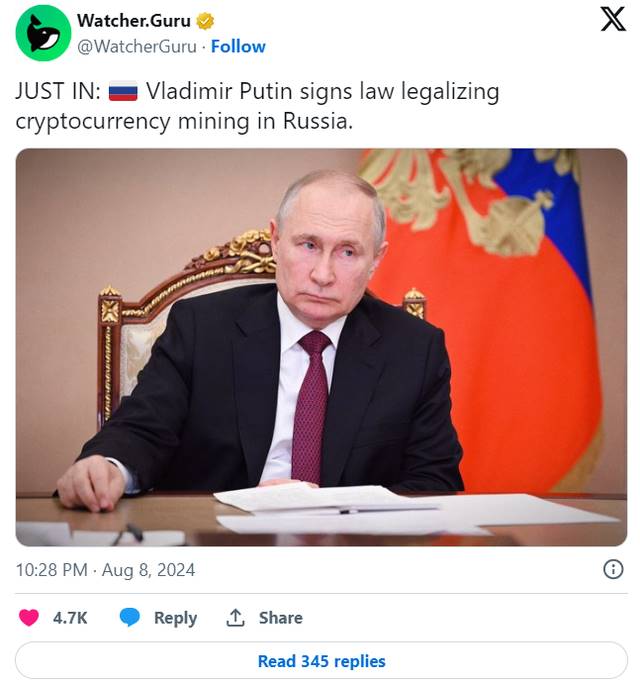
Today's hottest news is undoubtedly Russia legalizing cryptocurrency mining—an event that could go down in history as a milestone.
According to TASS, Russian President Vladimir Putin signed into law the legalization of cryptocurrency mining on August 8, marking a significant development for the BRICS alliance in the field of digital currencies.
Here are the key points of the bill:
The law introduces new concepts such as cryptocurrency mining, mining pools, and mining infrastructure operators, treating mining as an economic activity rather than merely a method of issuing digital currency.
Only Russian legal entities and individual entrepreneurs registered with Russia’s digital ministry may legally engage in mining.
Ordinary citizens who do not exceed government-set energy consumption limits may conduct small-scale mining without registration.
Foreign digital financial assets are allowed to be traded on Russian blockchain platforms. The Central Bank of Russia has the authority to ban specific digital asset issuances if they threaten financial stability.
Miners must provide information about mined cryptocurrencies to the government to ensure compliance.
This is not the first pro-cryptocurrency legislation passed by Russia this year. As early as late July, Russia decided to allow the use of cryptocurrencies for payments in international trade to counter Western sanctions.
What does Russia’s opening up to cryptocurrencies mean?
It’s important to note that Russia has long played a significant role in Bitcoin—truly a major player. Back in 2021, data from the Cambridge Centre for Alternative Finance showed that the U.S. was the largest consumer of electricity for Bitcoin, accounting for 35.40%.
Following closely were Kazakhstan (18%), Russia (11.23%), Canada (9.6%), and Ireland (4.7%). By July 2024, cryptocurrency mining accounted for 1.6% of Russia’s total national electricity consumption.
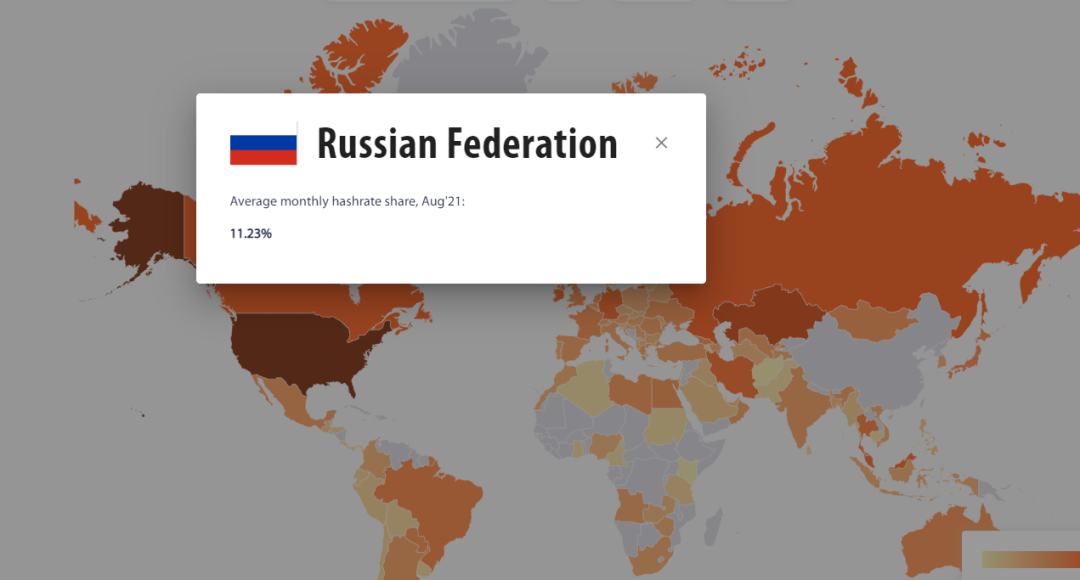
Looking at these figures, if we compare the crypto market to a large-scale game, Russia appears to already be an advanced player who has moved beyond the beginner stage. Yet in reality, Russia's stance on crypto policy has wavered significantly in recent years.
Prior to 2017, the Russian government and central bank viewed cryptocurrencies with high caution, perceiving them as risky and primarily concerned about their potential use in illegal activities such as money laundering.
In 2019, Russia began exploring effective regulation of cryptocurrencies. On regulatory matters, the Ministry of Finance favored a more lenient approach, while the central bank advocated strict control—and even proposed banning private cryptocurrencies altogether.
By 2020, Russia passed the "Digital Financial Assets Law," which recognized cryptocurrencies as property but prohibited their use in purchasing goods and services—marking the initial establishment of a legal framework for digital currencies.
Over time, the Russian government’s attitude toward cryptocurrencies has gradually become more positive. On December 14, 2023, the Russian Ministry of Finance proposed a new bill aimed at legalizing Bitcoin (BTC) mining and establishing mechanisms for selling mined coins.
The bill included provisions banning cryptocurrency advertising and required that mined cryptocurrencies be sold through foreign platforms, prohibiting the use of Russian information infrastructure.
By May 2024, Anton Gorelkin, Chairman of the State Duma Committee on Financial Markets, voiced opposition to a complete ban on cryptocurrency circulation, emphasizing the importance of regulating cryptocurrency trading platforms within a legal framework.
Now, today, Russia has officially legalized cryptocurrency mining.
From cautious resistance to full openness, Russia’s shift on cryptocurrency mining represents a complete 180-degree reversal! This series of policy changes by Putin reflects a determination to seek new growth drivers and secure a place in the global digital economy.
So why has Russia undergone such a dramatic policy reversal? We can summarize it into several key reasons:
1. Need to Counter Western Sanctions
As relations between Russia and Western nations have deteriorated, Russia has faced a series of economic sanctions. Using cryptocurrencies for cross-border payments and transactions allows Russia to bypass these sanctions and strengthen trade capabilities—especially with non-Western countries.
2. Seeking New Economic Growth Drivers
The Russian government recognizes the immense economic potential of cryptocurrencies and blockchain technology. Legalizing mining and trading can generate new tax revenues. The Ministry of Finance estimates that starting from 2023, annual tax revenue from crypto trading and mining could reach 2.5 billion rubles (approximately $34 million).
3. Leveraging Existing Advantages
Russia holds advantages in energy resources and computing power, making it well-suited for cryptocurrency mining. In 2022, President Putin highlighted during a government meeting that Russia possesses both abundant electricity surplus and skilled experts in the field—giving it a competitive edge in mining.
4. Gradual Improvement of Regulatory Frameworks
Since 2019, Russia has been exploring ways to regulate cryptocurrencies effectively. Although disagreements existed between the Ministry of Finance and the central bank, these discussions laid the groundwork for future policy shifts. The 2020 Digital Financial Assets Law marked a crucial step in defining the legal status of cryptocurrencies in Russia.
In summary, Russia’s new regulations on cryptocurrency mining are no accident—they result from extensive policy debate and preparation, signaling the government’s gradual embrace of the crypto industry.
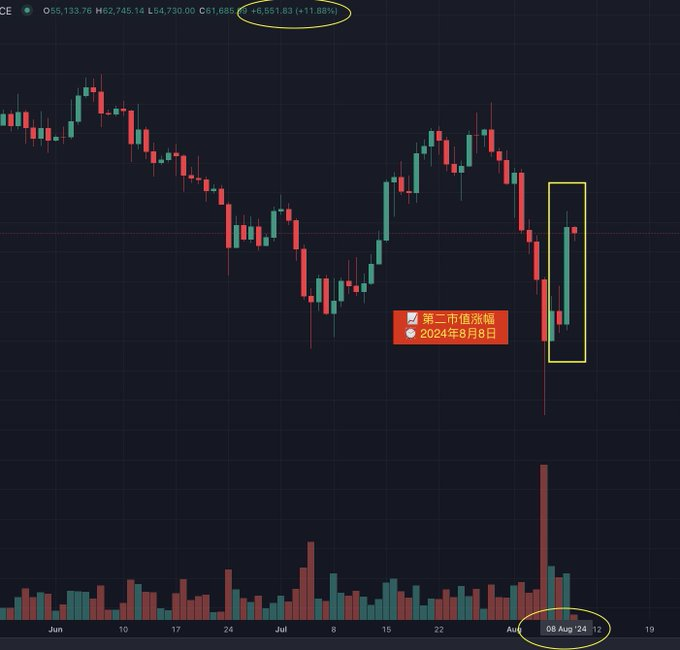
With such strong positive momentum, Bitcoin did not disappoint the market—rising from $55,000 to $61,000 in just one day yesterday, achieving the second-largest single-day market cap increase in history!! The largest occurred on February 8, 2021, during the previous bull run, when it surged 19.54% intraday!
Looking ahead, as crypto policies continue to evolve and global markets shift, Russia may play an increasingly important role in the global digital economy.
Price volatility in digital assets like Bitcoin will continue to attract investor attention, and Russia’s policy direction will have a profound impact on the global cryptocurrency market—while also presenting significant challenges for Russia itself.
With world leaders like Trump and Putin expressing support for Bitcoin, cryptocurrencies are gradually gaining recognition from mainstream governments. This shift marks Bitcoin’s journey from the fringes to the center stage, continuously injecting new momentum into the diversification of the global financial system.
Join TechFlow official community to stay tuned
Telegram:https://t.me/TechFlowDaily
X (Twitter):https://x.com/TechFlowPost
X (Twitter) EN:https://x.com/BlockFlow_News
 @BiteyeCN