EU's MiCA Regulation to Take Effect: Bitstamp and Binance Lead the Way in Delisting Non-Compliant Stablecoins
TechFlow Selected TechFlow Selected
EU's MiCA Regulation to Take Effect: Bitstamp and Binance Lead the Way in Delisting Non-Compliant Stablecoins
MiCA requires fiat-backed stablecoins to have sufficient liquid reserves and obtain an "electronic money license."
 Navigating Web3 tides with focused insights
Author: Aiying Aiying
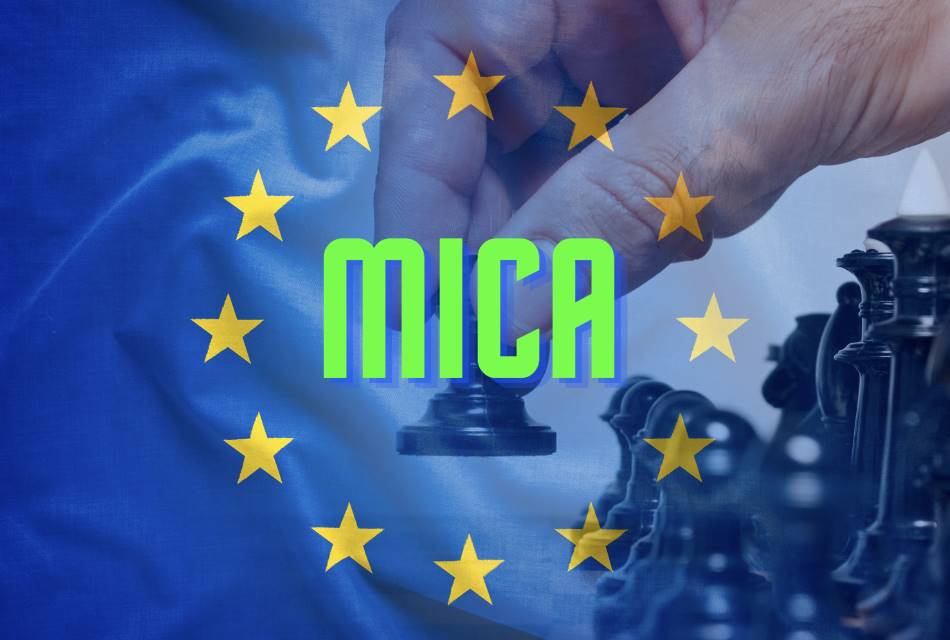
Recently, the European Union's upcoming Markets in Crypto-Assets (MiCA) regulation has drawn widespread attention. This regulatory framework is having a profound impact on the cryptocurrency industry, particularly the stablecoin market. MiCA requires fiat-backed stablecoins to maintain sufficient liquid reserves and obtain an "electronic money license." It also sets trading volume caps and other asset backing requirements. June 30 marks a critical deadline by which exchanges must delist non-compliant stablecoins.
In response to MiCA, major EU-based cryptocurrency exchanges are taking action. This week, Bitstamp announced it will delist stablecoins that do not meet MiCA requirements, such as Tether’s EURT, and will directly communicate with affected customers. Binance has also restricted users from utilizing unauthorized stablecoins and copy trading services, advising them to switch to compliant digital assets or fiat currencies. In contrast, Coinbase has not yet taken clear preventive measures but stated it will continue monitoring developments to ensure MiCA compliance.
The implementation of MiCA presents multiple challenges for the EU crypto market. Since most stablecoins are pegged to the U.S. dollar, many will struggle to meet MiCA requirements in the short term, leading to restricted trading and reduced liquidity. Jasper De Maere, Research Director at Outlier Ventures, noted that the new regulations could limit European citizens’ trading activities and crypto investment opportunities, potentially forcing companies to scale back operations in the EU—thereby affecting innovation and consumer market access.
Despite the compliance challenges and market uncertainty introduced by MiCA, the regulation also offers legal clarity and investor protection. Going forward, as more exchanges and stablecoin issuers adapt their strategies to comply with MiCA, the EU crypto market is expected to continue evolving under this new regulatory environment. Industry experts believe MiCA plays a positive role in providing legal certainty and protecting investors, and may serve as a model for international crypto regulation.
Previously, Aiying Aiying published an article titled [Comprehensive Analysis of Europe’s MiCA Legislation: Impacts on Web3, DeFi, Stablecoins, and ICO Projects], which detailed the potential implications of the legislation. Below is one excerpt from that piece:
Potential Impacts of the MiCA Regulation
Impact 1: Delisting Privacy Coins
Cryptographic assets with built-in anonymity features (such as Monero, Zcash, and other “privacy coins”) can only be listed on trading platforms if CASPs or relevant regulators are able to identify token holders and their transaction histories. Since this is practically unachievable, privacy coins are expected to be removed from EU-regulated cryptocurrency exchanges.
Impact 2: Existing License Holders Will Have Easier Access to MiCA Authorization
CASP entities already licensed under national frameworks will benefit from a streamlined MiCA authorization process and have up to 18 months to secure final MiCA licenses. For example, Germany’s regulated crypto custodians may benefit from these simplified procedures and transitional measures. However, only MiCA-licensed CASPs will be able to offer services across the entire EU single market via the so-called “passporting” mechanism. As a result, most crypto firms are expected to apply for MiCA authorization as soon as possible.
Impact 3: Unification of the European Market
MiCA will bring harmonized regulation, enhance competitiveness, and promote institutional development. Until now, EU-based crypto companies wishing to serve the entire EU market had to apply individually to each country’s regulator—a costly and cumbersome process. Under MiCA, the same binding requirements will apply uniformly across all 27 member states. Once a company obtains a MiCA license in one country, it will be able to provide licensed services throughout the EU single market via passporting.
Impact 4: Offshore Companies Will Be Restricted, EU-Based Firms Will Benefit
After MiCA takes effect, offshore and unregulated companies will no longer be allowed to actively solicit EU customers. Even rules allowing foreign firms to accept EU clients who initiate contact will become stricter. This means EU-regulated crypto firms will gain market share from unregulated overseas competitors.
Impact 5: MiCA Encourages Institutional Participation; European Banks Accelerate Their Crypto Strategies
MiCA could drive increased institutional adoption and activity in the EU crypto market. According to Bloomberg data, only 4% of European institutional funds are currently exposed to crypto assets. Regulatory uncertainty has been one of the main barriers preventing institutional entry. Over the next 48 months, major European banks are expected to launch crypto asset services—ranging from custody and trading to issuing e-money tokens or asset-referenced tokens.
Impact 6: Impact of MiCA on Stablecoin Issuers
MiCA’s new regulatory rules will pose significant compliance challenges for stablecoin issuers like Tether, especially considering Tether’s long-standing lack of full transparency regarding its reserve composition and absence of comprehensive audits by authoritative independent bodies. Tether has also been involved in multiple lawsuits and investigations, including an $18.5 million settlement with the New York Attorney General’s Office and reported investigations by the U.S. Department of Justice over alleged bank fraud, money laundering, and illegal operations. Going forward, stablecoin issuers like Tether face substantial compliance reform costs.
To address these challenges, Tether should proactively advance its compliance efforts, building strong partnerships with EU regulators and third-party auditing firms to enhance market credibility and competitiveness. In response to tightening regulations, Tether has already taken steps toward greater compliance. For example, Tether recently announced a collaboration with the Italian branch of BDO International—the world’s fifth-largest accounting firm—to audit its reserve attestation reports, with plans to increase reporting frequency from quarterly to monthly.
Under the MiCA framework, stablecoin issuance will become more compliant and transparent. Issuers like Tether must accelerate their compliance transformation to adapt to the new regulatory landscape and remain competitive in the EU market.
Impact 7: Impact of MiCA on DeFi
MiCA applies to enterprises—natural and legal persons, as well as “certain other entities.” These “other entities” may include unincorporated organizations, but the EU has clarified that decentralized DAOs and protocols are not the intended targets of this expansion. Paragraph 22 of MiCA clarifies: “If crypto-asset services are provided in a fully decentralized manner without any intermediary, they shall fall outside the scope of this Regulation.” This core principle has been repeatedly affirmed in public statements by key officials from the European Commission and Parliament.
However, details matter. The regulation notes that MiCA may still apply even if certain activities or services are partially decentralized. This means that if any component or step within a DeFi project is not fully decentralized, it may still be subject to MiCA requirements.
How much decentralization (technical, governance, legal, etc.) is required to fall outside MiCA’s scope? This remains an ambiguous and subjective determination. I expect enforcement actions and litigation to emerge around this issue. While the EU is generally reluctant to enforce its laws extraterritorially, it will pay close attention to DeFi projects that claim decentralization in name but operate centrally, especially if they serve users in the EU.
DeFi projects seeking to fall outside MiCA’s scope have two options:
-
Demonstrate full decentralization (a high bar)
-
Block EU users
Nevertheless, it is commendable that the EU, while crafting regulations for traditional financial institutions, explicitly excluded genuinely decentralized DeFi projects. If certain aspects of MiCA become global standards, that would be a positive development.
Impact 8: Challenges and Uncertainty
However, MiCA’s ultimate success heavily depends on the implementation standards and enforcement practices established by EU regulators over the next 12–18 months. Some provisions may impose burdens on industry participants, and their full impact will only become clear once technical implementation standards provide practical guidance.
Impact 9: High Compliance Costs and Innovation Constraints
As seen recently in Hong Kong, excessive compliance costs can lead to corporate exodus. Similarly, MiCA’s compliance burden may cause stablecoin issuers to bypass the EU altogether. Exchanges face overly stringent disclosure requirements and liabilities that offer little benefit to consumers, making their products less competitive compared to offshore rivals. EU consumers may either be cut off from innovation or continue relying on—and being exposed to—the largest offshore liquidity and utility pools. Moreover, regulators may interpret most NFT and DeFi projects as falling within MiCA’s scope, requiring compliance—an ambiguity left open in MiCA’s current preamble. This will inevitably drive teams and resources to relocate outside the EU.
Detailed Overview of the Nine Key Components of MiCA:
-
Definition and scope of the regulation
-
Transparency and disclosure requirements for crypto project issuances
-
Licensing applications and associated obligations
-
Investor and customer protection measures
-
Requirements to prevent insider trading and market manipulation
-
Penalties for violations
-
International cooperation and coordinated supervision
-
Potential impacts of the MiCA regulation
-
Can MiCA become a global standard?
Join TechFlow official community to stay tuned
Telegram:https://t.me/TechFlowDaily
X (Twitter):https://x.com/TechFlowPost
X (Twitter) EN:https://x.com/BlockFlow_News
 Aiying Compliance