A Comprehensive Overview of Projects and Sectors Frequently Endorsed by Ethereum Founder Vitalik
TechFlow Selected TechFlow Selected
A Comprehensive Overview of Projects and Sectors Frequently Endorsed by Ethereum Founder Vitalik
This article aims to review projects and technical directions that Vitalik has historically endorsed, examine their development and current status, and attempt to summarize the underlying reasons as well as how they have influenced and shaped the Ethereum we see today.
 Navigating Web3 tides with focused insights
Author: Terry
As one of the fastest-monetizing influence domains, for ordinary retail investors deep in the Web3 world, keeping up with alpha bloggers' and KOLs' promotional tweets has almost become an essential skill for tracking wealth-generating opportunities.
So who is currently the most influential "product promoter" in the crypto space?
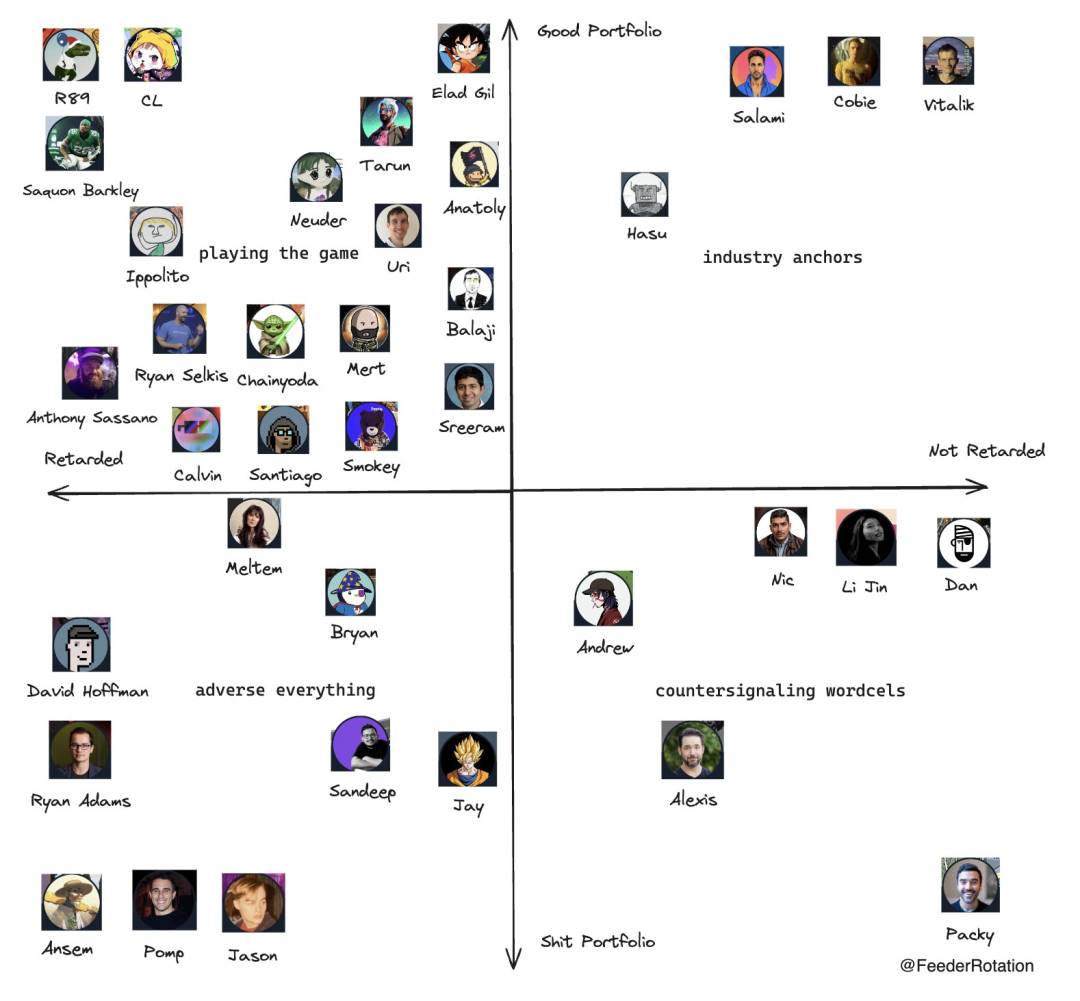
Although the following KOL promotion effectiveness chart may not be rigorous, placing Vitalik Buterin in a league of his own is strikingly accurate—regarded as the ultimate decision-maker across the broader Ethereum ecosystem. While Vitalik rarely directly promotes projects, every explicit or implicit action he takes exerts tremendous market influence.
The recent surge in ENS following Vitalik's endorsement serves as a classic example. This article therefore aims to review projects and technological directions that Vitalik has historically promoted, analyze their development and current status, and explore how these endorsements have shaped—and continue to shape—the Ethereum we see today.
Open Preference for ENS
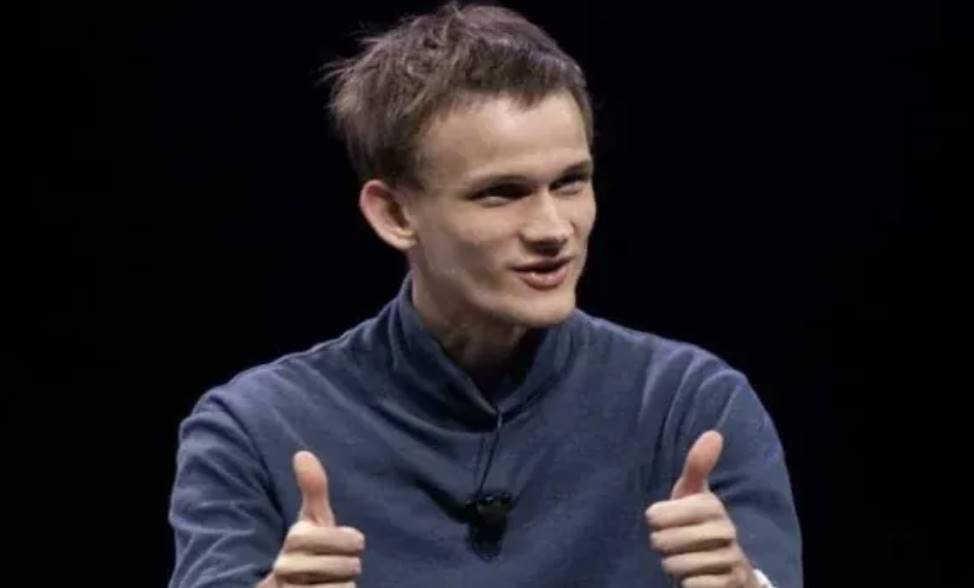
It's no exaggeration to say that Vitalik clearly favors ENS.
He once publicly stated in an interview: “Ethereum Name Service (ENS) is by far the most successful non-financial Ethereum application.”
As widely known, ENS, launched in 2017,Ethereum Name Service, is a decentralized domain name system built on Ethereum. Through its unique auction mechanism, users can bid to register one or more .eth Ethereum domain names linked to their Ethereum addresses.
In short, ENS maps long, hard-to-remember Ethereum addresses starting with “0x” to custom short addresses such as satoshi.eth or vitalik.eth. Thus, within ENS-supported wallets, users no longer need to copy-paste lengthy addresses—they can simply use their ENS domain to link cryptocurrency addresses and receive payments.
Vitalik’s Twitter display name has consistently been “vitalik.eth,” effectively providing ENS with long-term free advertising and signaling his strong support.
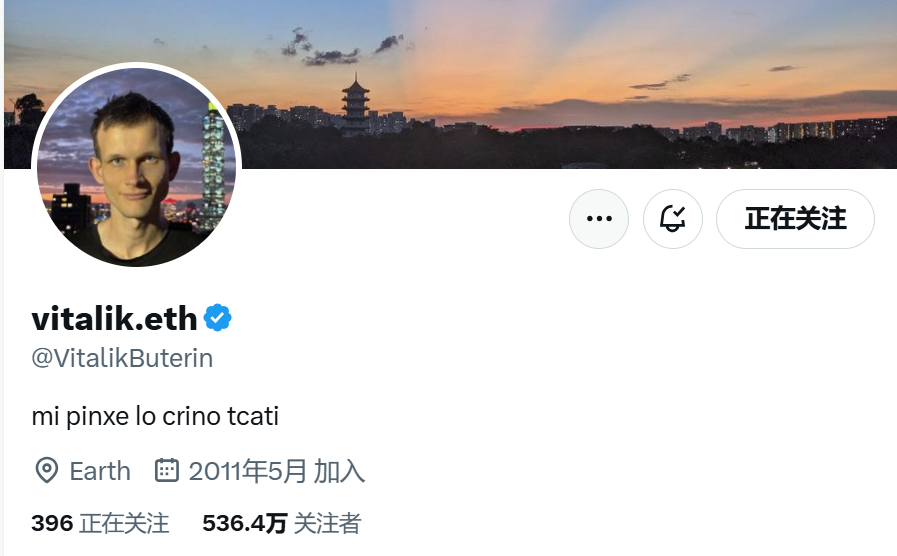
Since early this year, Vitalik has taken direct action, repeatedly promoting ENS in public—a move that visibly boosted ENS’s price trajectory in secondary markets:
On January 3, Vitalik retweeted ENS’s Layer2 data resolution solution, posting: “All L2s should run on CCIP resolvers so we can register, update, and read ENS subdomains directly on L2. ENS is important—it needs to be affordable.” Subsequently, ENS surged over 30% within five minutes, breaking above 12 USDT.
Then on May 21, Vitalik and ENS staged another dramatic show of support. It began when Vitalik, discussing sequencers and intents with others, highlighted three key aspects regarding cross-L2 standards and infrastructure: “token transfers, ENS, and critical changes to smart contract wallets (for individuals and organizations).”
He emphasized: “We need an open, decentralized protocol to quickly transfer assets from one L2 to another, integrated into wallet default send interfaces. Token transfers, ENS, and key updates to smart contract wallets are easy to implement on L1 but difficult on L2. Light clients, basic reliability, and proof systems are also more secure and decentralized on L1 than on L2.”
Overall, since January 3, ENS has risen from $8 to a high of $30—an increase of nearly 300%.
What Else Has Vitalik Promoted?
Beyond ENS, the list of projects and technical directions Vitalik has previously endorsed is impressively long.
Plasma
First is Plasma, once Vitalik’s most favored Ethereum scaling solution—now rarely mentioned and largely unknown to many new users.
In August 2017, Vitalik and Joseph Poon jointly introduced Plasma—an off-chain scaling framework. Essentially, it moves computation and data (except deposits, withdrawals, and Merkle roots) off the Ethereum mainnet while periodically storing key operational state data on-chain to leverage Ethereum’s security guarantees.
However, due to Plasma’s inability to solve data withholding issues and difficulties migrating contract states back to L1, it was eventually superseded by Rollups as Ethereum’s dominant scaling path. Today, Rollups have become the de facto mainstream choice for Ethereum scaling.
Notably, because Rollups heavily depend on on-chain data availability while Plasma bypasses this issue entirely and significantly reduces transaction fees, interest in Plasma has recently revived. At the end of last year, Vitalik Buterin published articles like “Exit games for EVM validiums: the return of Plasma,” positioning Plasma as a method leveraging validity proofs from zkSync and StarkNet to enhance blockchain scalability.
This has prompted renewed attention to Plasma’s ability to minimize data availability constraints, suggesting it may play a significant role again in boosting Ethereum’s network performance.
RAI
In the stablecoin space, Vitalik once wrote an in-depth piece outlining his views on stablecoin design, categorizing them into three types: centralized stablecoins, DAO-governed real-world asset-backed stablecoins, and minimally governed crypto-collateralized stablecoins.
The first two categories are represented by USDT/USDC and DAI respectively. For the third category, he specifically detailed RAI’s model, noting that RAI avoids all ties to traditional financial systems, making it harder to attack.
Later, during public appearances, Vitalik expressed belief that RAI’s rise could help resolve Lido’s dominance in the LSD ecosystem, stating: “RAI doesn’t necessarily need radical governance. If the RAI community adopts more proactive governance to support staked ETH and intentionally accepts only non-dominant forms of staked ETH, that would suffice.”
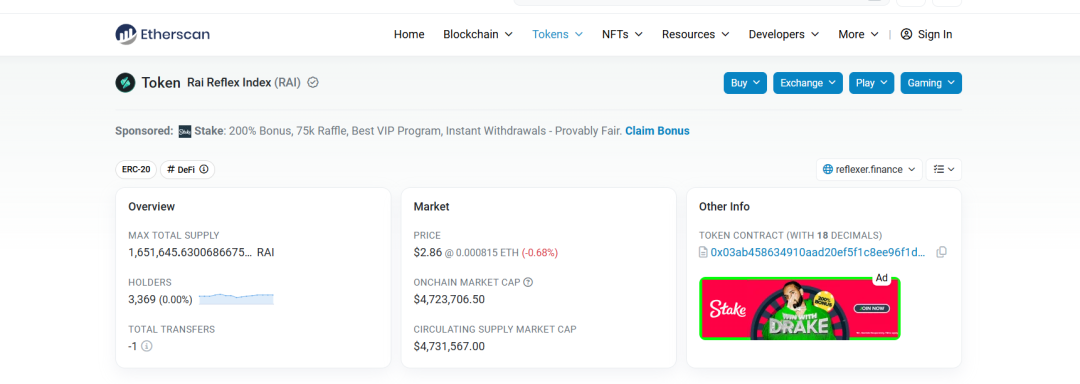
Yet at the time of writing, on-chain data shows RAI’s total supply remains around 1.65 million tokens—negligible compared to other stablecoins.
SIWE, POAP, SBT
In the Web3 world, how do you prove who you are?
Vitalik once wrote that tools like ENS help build identity ecosystems because “blockchains are valuable for identity applications due to their independence from institutions.” Beyond ENS, SIWE, POAP, and SBT are also viewed by Vitalik as core components of on-chain identity systems:
Sign In With Ethereum (SIWE) allows Web3 users to log into traditional websites using their blockchain accounts;
POAP issues tokens representing verifiable achievements;
Most notably, through the paper “Decentralized Society: Finding Web3’s Soul,” Vitalik broughtSoulbound Tokens (SBTs) into broader awareness, gradually establishing them as practical carriers of Web3 digital identities. SBTs enable proof of outcomes while preserving on-chain traces and participation records, featuring permanent, non-transferable token properties—laying the foundation for robust one-to-one Web3 identity frameworks.
In this sense, the core idea behind SBTs is to establish native Web3 identity systems from scratch for each user, enabling expansion beyond DeFi and NFTs into diverse new application scenarios based on these identity layers.
However, as Web3 social trends have cooled, SBTs remain merely one form of decentralized identity credential without widespread on-chain adoption yet.
DVT
On December 28, 2023, Vitalik published a post discussing how to handle the massive signature load on Ethereum’s network without sacrificing decentralization. He proposed Distributed Validator Technology (DVT) as a solution—building decentralized staking pools.
Since DVT allows multiple nodes to act as a single Ethereum PoS validator, it greatly enhances both security and decentralization. As early as November 2023, Lido began piloting DVT solutions via Obol Network and SSV Network to create a distributed validator network.
Loopring/Taiko
As one of the earliest representative Rollup projects, Vitalik has repeatedly praised Loopring’s approach—for instance, acknowledging the Loopring protocol in discussions about transaction performance, noting that combined with sharding, horizontal scaling solutions could theoretically enable Ethereum to process up to 160,000 transactions per second.
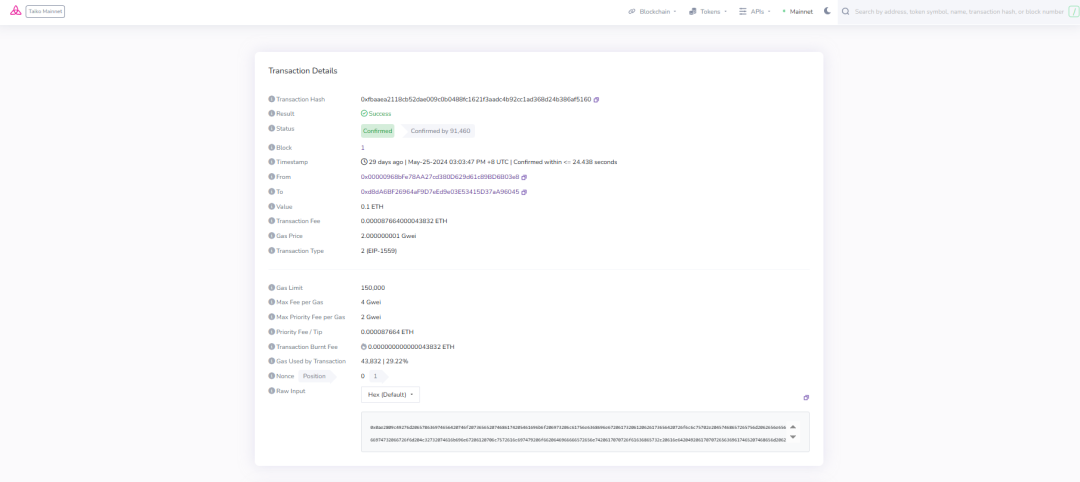
Taiko, closely related to Loopring and recently launched on mainnet, has also received Vitalik’s recognition. On May 25, Vitalik Buterin acted as a block proposer on Taiko’s mainnet, minting its first block and adding a message:
“I’m excited to see that Taiko is launching as a based rollup. Ethereum benefits from L2s taking a plurality of different approaches, and I appreciate them being among the first to go in this direction.”
Farcaster
In September 2023, Vitalik’s X account was hacked, posting a phishing link offering free Proto Danksharding commemorative NFTs from ConsenSys, resulting in over $690,000 in user losses.
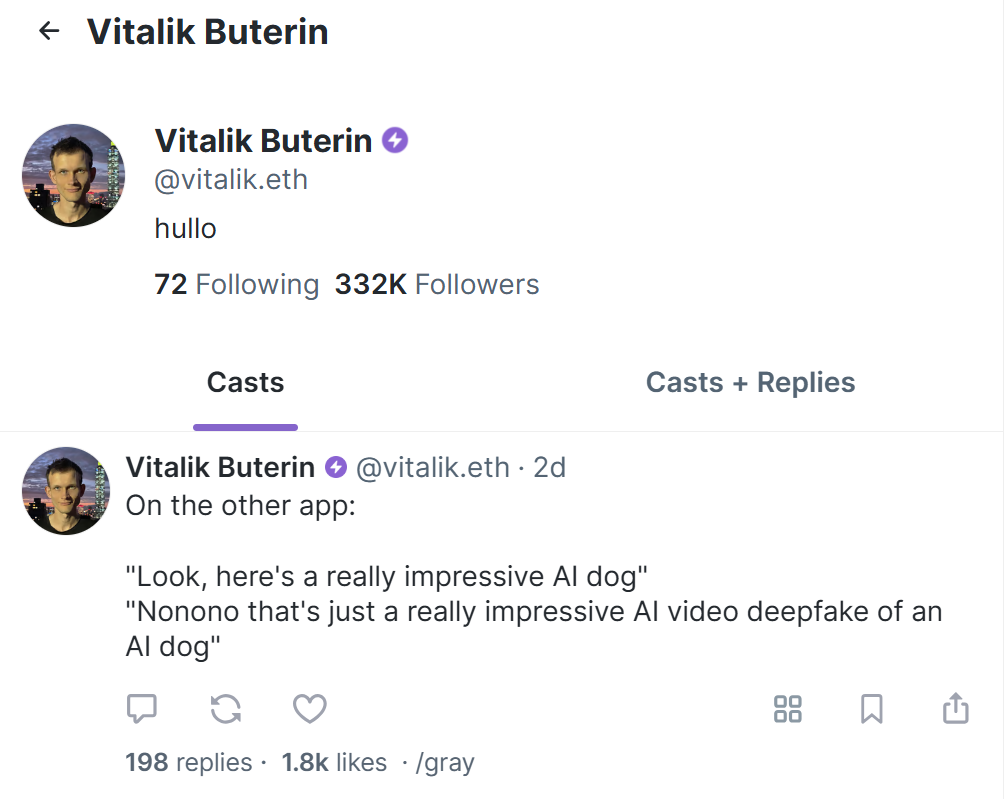
Vitalik later confirmed on Farcaster, a decentralized social media platform, that his Twitter account had suffered a SIM-swapping attack—likely due to exposing his phone number when registering for Twitter Blue. He added that he had uninstalled Twitter and joined Farcaster, where account recovery is controlled via Ethereum addresses.
As of writing, Vitalik has indeed made Farcaster his primary social platform—posting over ten messages in the past week alone, while remaining silent on X, with his latest post being a reply from June 11.
The Hidden Battle for Ethereum’s Orthodoxy Behind the Promotions
Returning to the central question: as a figure whose words and actions profoundly impact the broader Ethereum ecosystem and even the entire Web3 world, what motivates Vitalik’s public endorsements?
The answer lies primarily in safeguarding Ethereum’s orthodoxy—ensuring its development stays on track and maintains momentum—while actively shaping his vision for the future: a further decentralized Ethereum achieving mass adoption.
Just considering ENS, Plasma, and Taiko mentioned above, we can clearly identify a consistent thread focused on defending Ethereum’s Data Availability (DA) orthodoxy:
First, Vitalik’s advocacy for ENS’s L2 data resolution requires that ENS services extended to various L2s must adopt canonical Ethereum DA, meaning DA must reside on the Ethereum mainnet—effectively excluding L2s relying on third-party DA platforms like Celestia.
Since ENS is a key component of Ethereum’s identity system, it will become an indispensable non-financial application and infrastructure as the broader Ethereum ecosystem achieves mass adoption and sees traffic surges.
Establishing the standard early—that deploying ENS on L2s requires DA on Ethereum mainnet—increases the opportunity cost for L2s choosing third-party DA, forcing them to carefully weigh trade-offs.
Plasma’s intent is even clearer—amid the DA wars, it completely sidesteps data availability concerns, drastically lowering transaction costs. Especially when combining Plasma with ZK proofs, Plasma block validity can be proven directly on the main chain, reducing reliance on exit mechanisms.
Finally, Taiko, as the first live Based Rollup project, shines precisely by using L1-based sequencing for Rollup scaling—delegating sequencing power (and associated MEV revenue) to L1, ensuring all ordering and security are provided by Ethereum L1, thereby strengthening Ethereum’s economic appeal and competitiveness.
Behind every public move lie legitimate or illegitimate (private or public) interests—Ethereum and Vitalik are no exception. Long before the debate over third-party DA led by Celestia emerged, it was evident that Vitalik possesses seasoned strategic acumen.
An interesting analogy in the article “On Vitalik and Various Roadmaps’ Impact on Ethereum Governance” likens Vitalik to Ethereum’s de facto CTO, steering the massive ship away from deviation:
He guides Ethereum’s development to align with various “roadmaps” and holds decisive authority over whether development paths conform to Ethereum’s vision (regardless of whether he intends to wield such unilateral power).
From this perspective, despite common jokes comparing Vitalik and Satoshi Nakamoto as the two leading founders in crypto, at least Vitalik proves himself a highly capable project founder—vigorously defending Ethereum’s orthodoxy, firmly steering the Ethereum vessel along what he (and a few key figures) believe is the right course, ensuring it neither derails nor loses speed amid fierce blockchain competition.
Conclusion
Vitalik is human, not divine. Viewing him from this angle makes the answers behind everything much clearer.
For ordinary users, remembering that Vitalik’s various explorations often signal emerging trends—and being able to敏锐ly detect potential future battlegrounds for capital—is sufficient.
Join TechFlow official community to stay tuned
Telegram:https://t.me/TechFlowDaily
X (Twitter):https://x.com/TechFlowPost
X (Twitter) EN:https://x.com/BlockFlow_News
 白话区块链
白话区块链