From Coinbase's Cross-Border Crypto Payment Promo: Recent Growth in the Stablecoin Market, Institutional Drivers, and Future Outlook
TechFlow Selected TechFlow Selected
From Coinbase's Cross-Border Crypto Payment Promo: Recent Growth in the Stablecoin Market, Institutional Drivers, and Future Outlook
Stablecoins are becoming an increasingly popular form of digital currency and will represent "a growing share" of the global $100 trillion electronic money market by the end of 2025.
 Navigating Web3 tides with focused insights
Written by: Aiying Aiying
Today, Coinbase launched an advertising campaign targeting U.S. voters to promote cryptocurrency as a cheaper method for remittances. Coinbase's Chief Policy Officer noted that the ad aims to remind voters and potential customers that crypto enables overseas transactions at lower costs and with greater convenience. Many households feel excluded by the traditional financial system, and cryptocurrencies are increasingly becoming part of family discussions. Products like USDC transfers and Coinbase Wallet have gained popularity because they offer cheaper and more convenient alternatives. This reflects the essence of economic freedom—the core reason many people are turning to crypto.
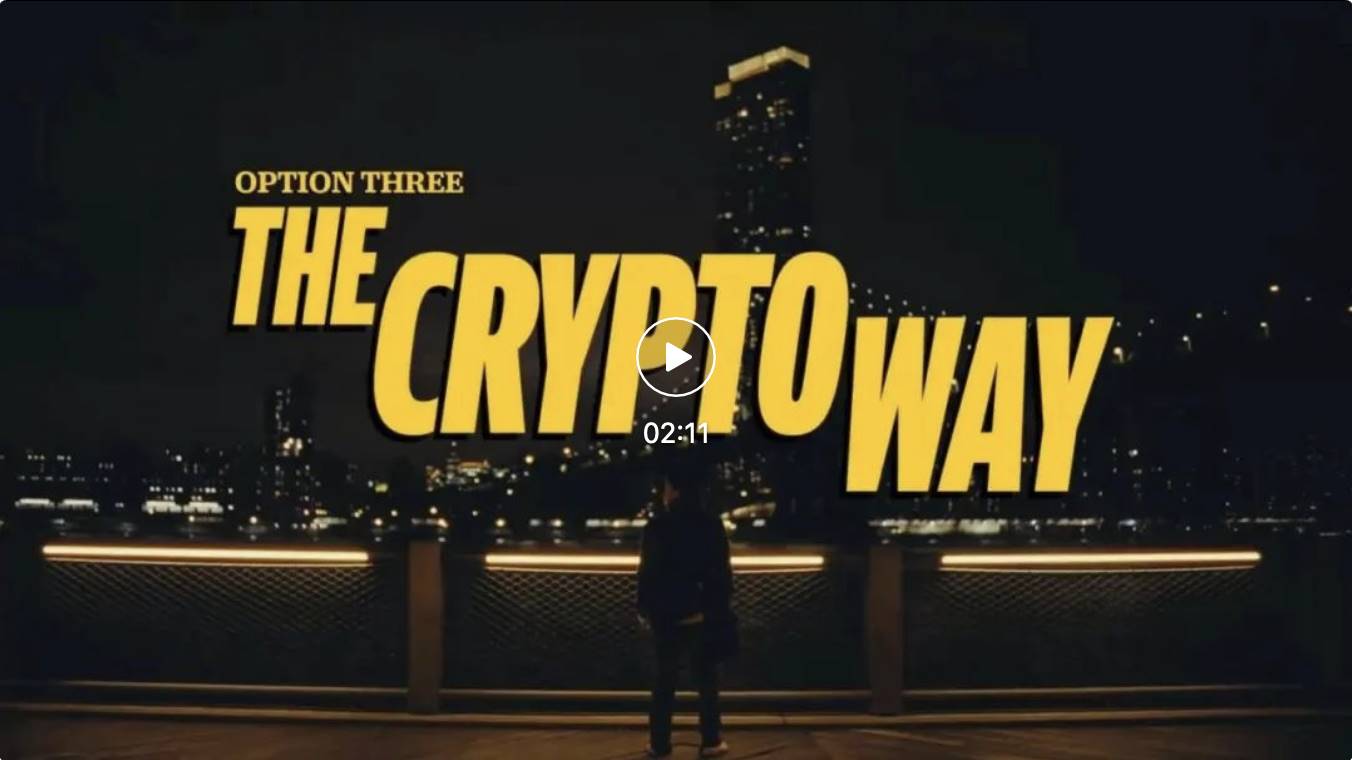
Video link:https://mp.weixin.qq.com/s/VA0wdNh4aUJ8p2CaFnaTAA
This week has seen significant developments in the stablecoin space. Aiying Aiying deeply senses how rapidly this field is advancing—here are some recent observations from Aiying Aiying on market trends and data over the past two weeks:
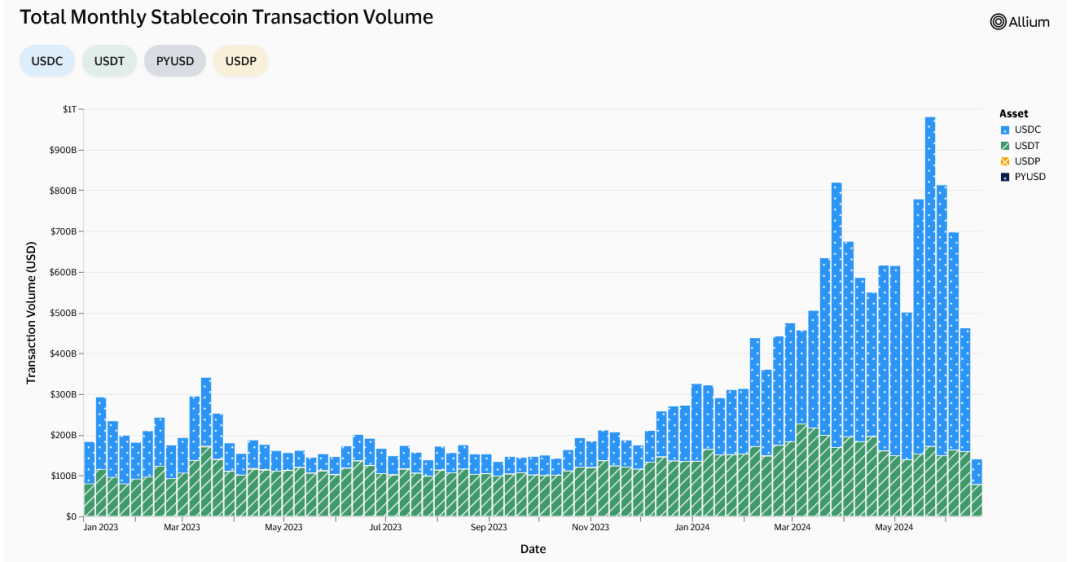
1. Surge in Stablecoin Transaction Volume
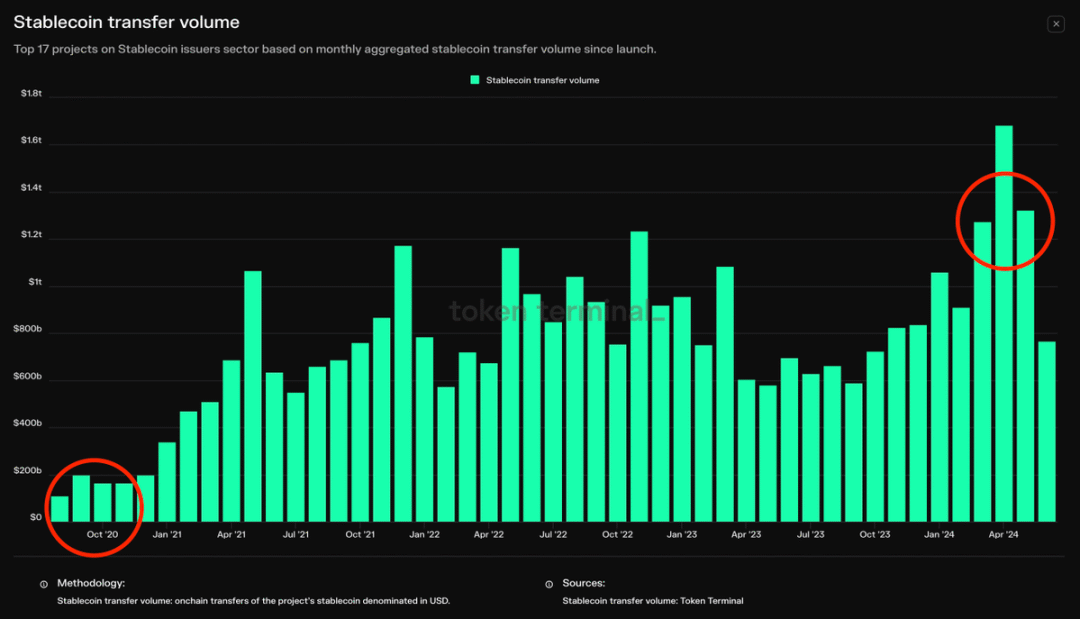
According to data from Token Terminal, monthly stablecoin transaction volume has increased tenfold over the past four years—from $100 billion per month to $1 trillion. On June 20, 2024, total cryptocurrency market trading volume reached $74.391 billion, with stablecoins accounting for 60.13%, or approximately $44.71 billion. Among them, USDT (Tether) was the most widely used, with a market cap of $112.24 billion, representing 69.5% of all stablecoins. On June 20 alone, USDT’s trading volume hit $34.84 billion, making up 46.85% of the day’s total trading volume.
2. Major Investment Banks and Financial Institutions Are Driving Stablecoins
1. Asset Management Giants Join In
This week, several financial giants began tokenizing assets, signaling strong confidence in the future of stablecoins. For example, BlackRock, the world's largest asset management firm managing $10.5 trillion in assets, launched its BUIDL fund—a tokenized fund primarily backed by U.S. Treasuries. The fund has already surpassed $460 million in size, making it one of the largest tokenized funds on public blockchains.
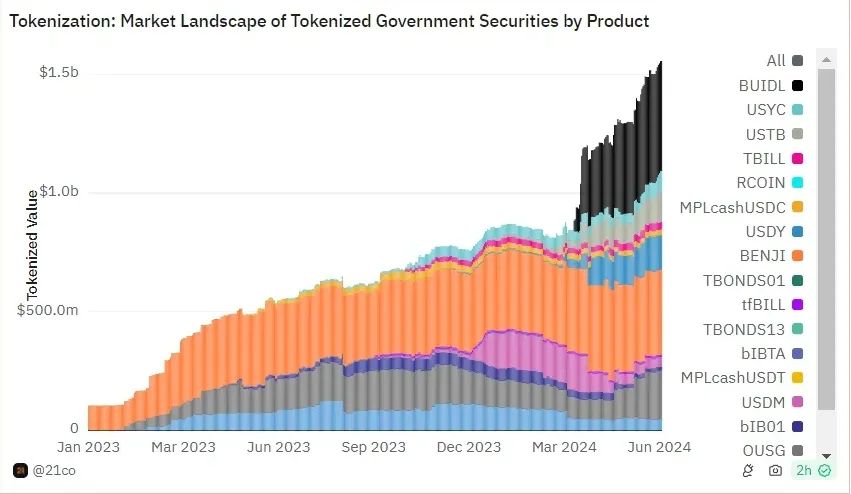
Similarly, Franklin Templeton has tokenized its FOBXX fund, which manages $346 million in assets. Recently, they announced the use of USDC as the entry and exit channel for the fund, meaning investors can now buy or sell fund shares using USDC around the clock.
2. Fintech Companies Pushing Stablecoin Payments
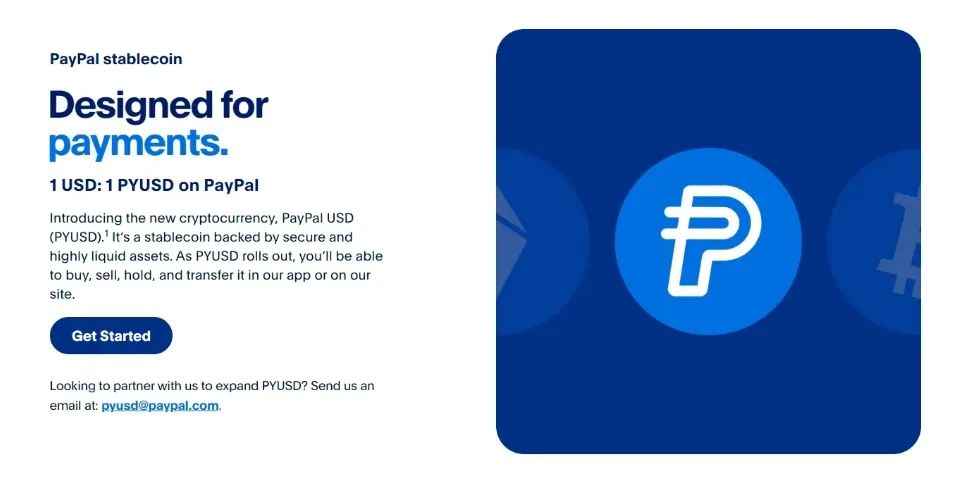
Fintech firms are actively promoting stablecoin payments. PayPal launched its own stablecoin, PayPal USD (PYUSD), which now has a market cap exceeding $400 million and is available across multiple public blockchains. PYUSD has been integrated into decentralized finance (DeFi) ecosystems, including decentralized exchanges and lending platforms. PayPal stated that PYUSD is designed to reduce friction in digital payments, enable fast value transfer, and support personal remittances and international payments.
As one of the world’s largest payment networks, Visa is also experimenting with stablecoin payments. Cuy Sheffield, Visa’s Head of Crypto, said they are leveraging stablecoins like USDC and global blockchain networks such as Solana and Ethereum to accelerate cross-border settlements. Visa is currently running real-time pilot programs enabling Visa card payments to be settled in USDC.

3. Real-World Applications in Financially Underserved Regions
1. Nigeria: High Demand for USDT
Nigeria is a country with particularly strong interest in cryptocurrencies, especially in areas where banking services are limited. There, USDT (Tether) has become the preferred choice.
In northern Nigerian states like Katsina and Borno, USDT is widely used. Residents find USDT more stable and reliable than local currency.
Bitcoin and Dogecoin are also popular in different regions. For instance, Bitcoin enjoys high popularity in Delta State, where financial services are more developed. In contrast, conservative northern states favor Dogecoin due to its low transaction fees and ease of use.
2. Argentina: Paxos International Launches Yield-Bearing Stablecoin USDL
Argentina is another country with high demand for stablecoins, primarily due to economic instability and severe inflation. Many people seek more stable stores of value.
Axos International launched the USDL stablecoin, allowing Argentine consumers to earn overnight yield. Holders earn returns through short-term, low-risk U.S. government securities and cash equivalents, managed under custody and safeguarding requirements set by the Abu Dhabi Global Market (ADGM) Financial Services Regulatory Authority (FSRA). This reserve structure mirrors other Paxos-issued dollar-pegged stablecoins backed 1:1. USDL is issued permissionlessly on Ethereum and programmatically distributes yield to token holders daily.
4. Global Regulation Becomes Increasingly Clear-Cut
1. EU's MiCA Regulations Imminent
The European Union’s Markets in Crypto-Assets (MiCA) regulation is about to take effect, marking a major step toward comprehensive oversight of stablecoins and other crypto assets. See detailed report: EU MiCA Report: In-Depth Analysis of Its Far-Reaching Impact on Web3, DeFi, Stablecoins, and ICO Projects
MiCA aims to ensure transparency and stability in crypto markets, requiring issuers to provide detailed disclosures and meet strict reserve and capital requirements.
These new rules will significantly impact stablecoin issuance and usage, particularly in safeguarding user funds and ensuring market stability.
2. Hong Kong's Regulatory Framework and "Sandbox" Program
The Hong Kong government is continuously refining its stablecoin regulatory framework to keep pace with rapid market changes.
The Hong Kong Monetary Authority (HKMA) has launched a “sandbox” program, allowing companies planning to issue stablecoins in Hong Kong to test their operations within a controlled environment.
This sandbox not only helps companies understand and comply with Hong Kong’s regulatory requirements but also fosters communication and collaboration between regulators and businesses, supporting healthy development of the stablecoin market.
3. U.S. Policy Developments
Both the U.S. and the EU are actively developing and implementing new stablecoin regulations to ensure healthy market growth.
The U.S. Securities and Exchange Commission (SEC) and the Commodity Futures Trading Commission (CFTC) are conducting rigorous reviews of stablecoin issuance and trading to prevent market manipulation and protect investor interests.
This week in the U.S., consumer protection groups launched a multi-million-dollar ad campaign focusing on Tether’s (USDT) business practices. Through TV ads, billboards, and other media, the campaign warns the public about potential risks associated with Tether, especially concerns over reserve audits. Such public advocacy and alerts are driving increased scrutiny of Tether and other stablecoins, pushing forward stricter regulatory measures to protect consumers from potential financial risks.
5. Future Trends
As more countries introduce stablecoin regulations, the market will become increasingly standardized and mature, attracting more institutional and individual users. Stablecoins are not only popular among individuals but also play key roles in corporate payments, cross-border remittances, and decentralized finance (DeFi) applications. Businesses can leverage stablecoins for faster, lower-cost international payments, while DeFi platforms use them to offer financial services such as lending and trading. Their adoption is growing rapidly not just in developed nations but also in developing countries, where stablecoins provide tools to combat inflation and economic instability.
Jeremy Allaire, CEO of Circle, predicts that over the next decade, stablecoins could account for 10% of the global economy’s money supply. While this forecast may sound exaggerated, he highlights several factors that could drive rapid adoption of stablecoins in the coming years.

In a post on June 19, Allaire pointed out that some of the world’s largest payment companies are adopting this technology and exploring ways to expand its use, as the advantages of public blockchains and stablecoins become increasingly evident.
He stated that the market potential is enormous—reaching into the "tens of billions." Using digital dollars on blockchains can fulfill the promise of providing financial services to the unbanked, reducing remittance costs, and enabling seamless cross-border trade. Moreover, he noted that stablecoins are becoming an increasingly popular form of digital currency and will constitute a "growing share" of the global $100 trillion electronic money market by the end of 2025.
Join TechFlow official community to stay tuned
Telegram:https://t.me/TechFlowDaily
X (Twitter):https://x.com/TechFlowPost
X (Twitter) EN:https://x.com/BlockFlow_News
 Aiying Compliance