
The "2023 Annual Shanghai Financial Prosecution White Paper" has been released. What are the new developments in the governance of virtual currency-related crimes?
TechFlow Selected TechFlow Selected
The "2023 Annual Shanghai Financial Prosecution White Paper" has been released. What are the new developments in the governance of virtual currency-related crimes?
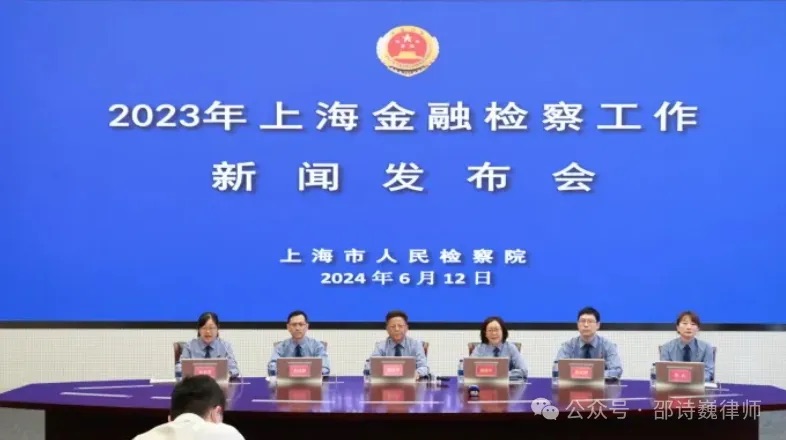
On June 12, 2024, Shanghai Procuratorate released the "Shanghai Financial Prosecution White Paper 2023" and related cases. It pointed out that crimes involving foreign exchange and illegal payment settlement have seen evolving methods, with risks and hidden dangers becoming increasingly prominent regarding the use of "virtual currency" to transfer assets across borders.
 Navigating Web3 tides with focused insights
Author: Shao Shiwei, Senior Lawyer at Shanghai Manqin Law Firm
On June 12, 2024, the Shanghai Procuratorate released the 2023 Shanghai Financial Prosecution White Paper and related case examples. It pointed out that criminal methods involving foreign exchange and illegal payment settlement have evolved, with risks increasingly evident in using "virtual currency" to transfer assets across borders.
As previously discussed by Attorney Shao in earlier articles, illegal business operations involving virtual currencies typically manifest as either “payment settlement-type” or “foreign exchange trading-type” offenses. By comparing the annual *Shanghai Financial Prosecution White Papers* published by the Shanghai Procuratorate from 2021 to 2023, one can clearly observe the increasing severity of judicial crackdowns on such cases over time.
01 Three-Year Overview
The *2021 Shanghai Financial Prosecution White Paper* noted that illegal financial business crimes often involve “using intermediate tools such as virtual currencies and game recharge cards as 'bridges' to conduct multi-level cross-border currency exchanges.”
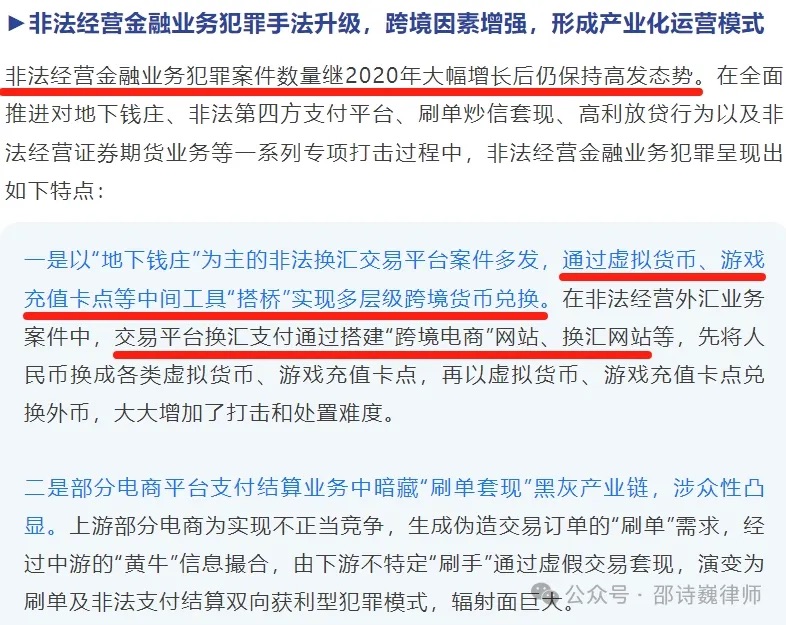
In other words, e-commerce platforms are not only exploited by criminals for money laundering but also for foreign exchange conversion. Thus, the white paper summarized that these platforms have evolved into a “dual-profit criminal model involving order brushing and illegal payment settlements.”
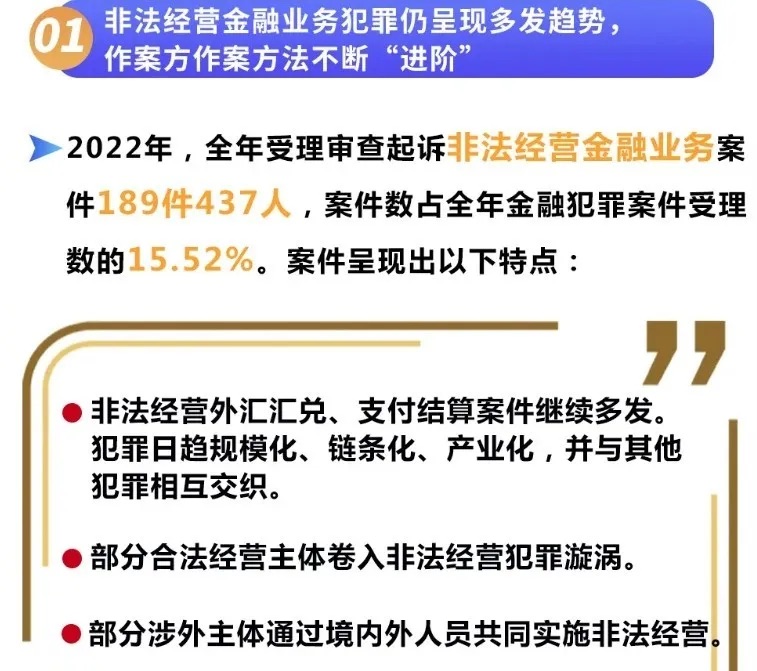
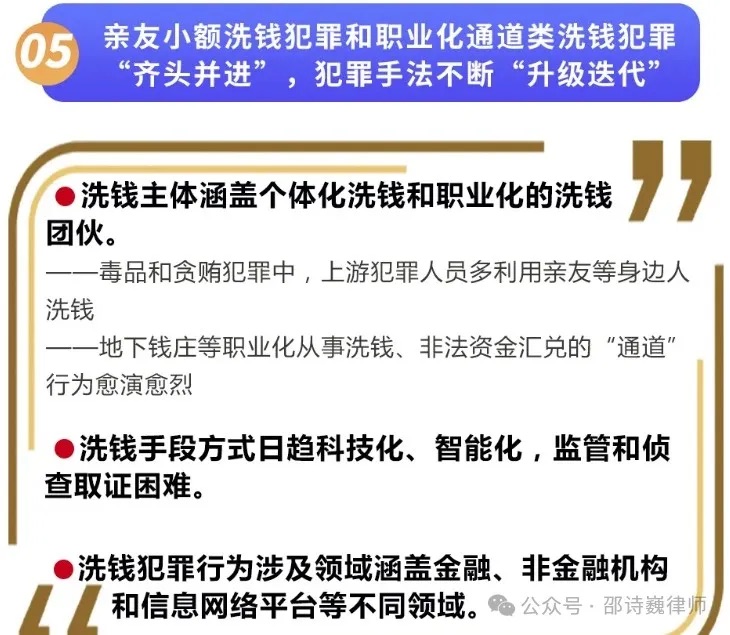
The *2022 Shanghai Financial Prosecution White Paper* indicated that illegal financial business crimes remained highly prevalent, with evolving tactics that have gradually formed industrialized chains—drawing legitimate businesses into their orbit as unintended accomplices.
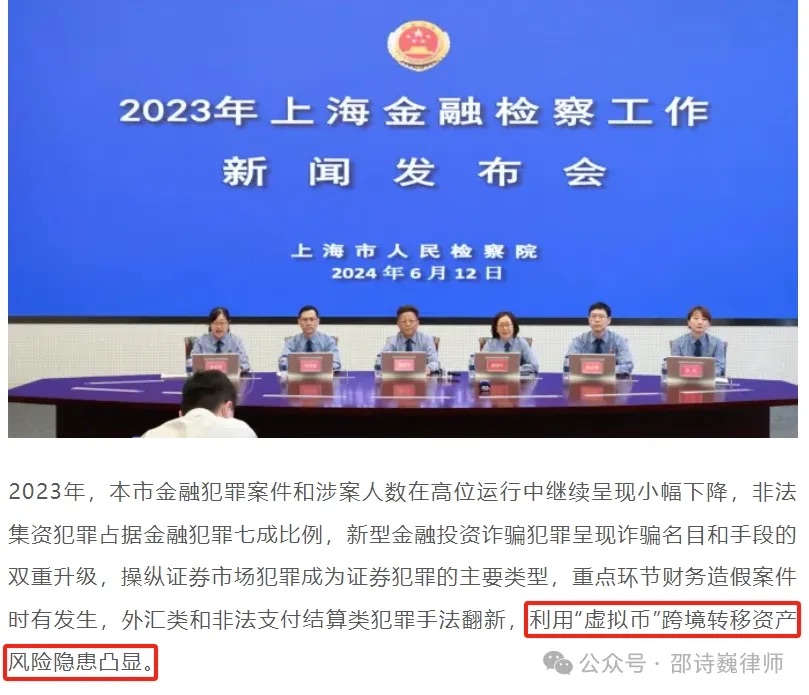
In the *2023 Shanghai Financial Prosecution White Paper*, released on June 12, 2024, special emphasis was placed on the risks associated with using “virtual currency” for cross-border asset transfers.
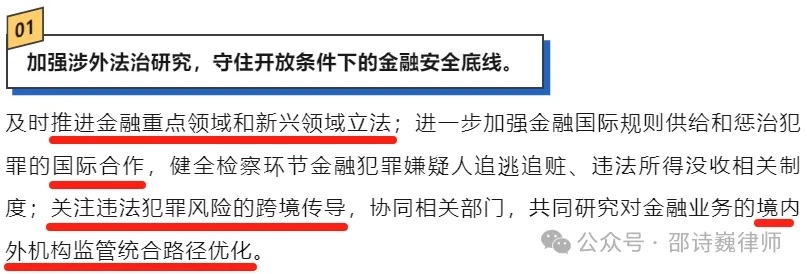
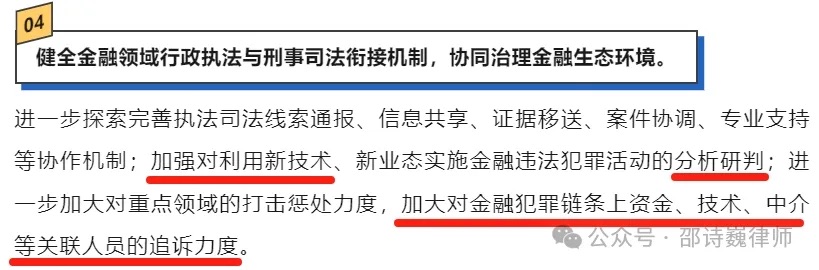
Moreover, the white paper proposed several recommendations regarding these issues—for instance, advancing legislation in emerging fields, studying regulatory frameworks for domestic and international financial institutions, strengthening analysis and judgment on financial crimes exploiting new technologies and business models, and intensifying prosecution efforts against individuals involved in finance crime chains, including those providing funding, technology, or intermediary services.
02 Some Reflections
From the white papers issued by the Shanghai Procuratorate over the past three years, it is evident that illegal financial business operations remain a key focus of judicial enforcement, with this underground industry having developed into a large-scale, organized chain.
Using virtual currencies to covertly exchange foreign currency, conduct fund payments and settlements, and thereby achieve cross-border asset transfers has long been a common practice across China. Judicial authorities nationwide have continuously reported similar cases over many years. However, in this year’s white paper, such criminal behavior is described merely as a “risk隐患,” which may seem somewhat downplayed—could this be an understatement?
On December 24, 2023, the State Administration of Foreign Exchange (SAFE) and Qingdao, Shandong Province jointly announced the resolution of a major underground bank case involving virtual currencies, with a staggering transaction volume of 15.8 billion RMB, spanning 17 provinces and municipalities. Article analysis: The SAFE Steps In! More U traders may face illegal business operation charges—the Qingdao police crack a 15.8-billion-RMB underground banking case. On December 27, 2023, the Supreme People's Procuratorate and SAFE jointly released typical cases involving virtual currencies. Article analysis: Is buying/selling U legal or not? Legal interpretation: The Supreme Procuratorate and SAFE jointly release criminal cases involving virtual currencies. On April 7, 2024, Beijing police cracked a serial virtual currency case involving 2 billion RMB. Authorities confirmed more than ten cryptocurrency wallets used for illicit transactions. Article analysis: Viewed through two recent cases of personal information leaks in virtual currency trading, what lessons can the lending industry learn?. On May 16, 2024, Chengdu Public Security Bureau disclosed another virtual currency-related case—the investigation of an underground bank money laundering network involving 13.8 billion RMB. → Case involving 13.8 billion RMB: Chengdu police solve major underground bank case.
Additionally, the suggestion in the white paper to “intensify prosecution of personnel linked to financial crime chains—including fund handlers, technical providers, intermediaries, etc.”—alongside calls for legislative advancement, regulatory research, and enhanced analytical capabilities—seems to reflect a sense of helplessness within the judiciary when confronting transnational virtual currency-related crimes.
Since the five ministries issued the “Notice on Preventing Bitcoin Risks” in 2013, over a decade has passed. Aside from periodic notices, announcements, and risk warnings, there has been no higher-level legal or administrative regulation enacted. Conservatively speaking, it may still be difficult to expect such comprehensive legislation in the coming years. In practice, there remain numerous real-world challenges in the judicial handling of virtual currency matters.
Why does the recommendation emphasize increased accountability for “technical” and “intermediary” personnel? Because servers and masterminds are usually located overseas. Although Chinese judicial authorities claim jurisdiction over extraterritorial crimes based on territoriality and nationality principles, unlike the U.S. approach of long-arm jurisdiction, China generally respects other nations’ sovereignty and maintains a relatively passive stance toward cross-border law enforcement. Another reason is simply that these behind-the-scenes figures are extremely difficult to apprehend. For example, as analyzed previously by Attorney Shao in two cases → Introduced by a friend to exchange foreign currency—the 'middleman' was convicted as a principal offender and sentenced to eight years. Is it unjust?—Do not assist others in foreign exchange trading, or you might be charged with illegal business operations! (Part 1), Viewed through two recent cases of personal information leaks in virtual currency trading, what lessons can the lending industry learn?.
When the ringleaders abroad cannot be captured, domestic actors who provide technical support or act as intermediaries collecting fees become the targets. Charges such as illegal business operations, aiding information network criminal activities (Helping Information Network Crime Activity罪), or concealing and disguising criminal proceeds can almost always apply.
03 Real-Life Cases
Alongside the release of the *2023 Shanghai Financial Prosecution White Paper*, the Shanghai Procuratorate also published nine illustrative cases. This article highlights two particularly representative ones—both highly common in actual practice.
Jian et al. Illegal Business Operations Case (Payment Settlement-Type)
Defendant Jian lacked any qualification for payment settlement services and knowingly sourced funds linked to gambling and fraud. He acquired shell companies and partnered with Shanghai H Company—an entity holding an internet payment settlement license—to connect upstream gambling fund channels with downstream fictitious merchant settlement networks, conducting illegal fund settlement operations. Investigations revealed that over 4 billion RMB in gambling-related funds were processed through the involved accounts.
Attorney Shao’s Analysis:
As mentioned in the 2022 white paper, “some legally operating entities are drawn into the vortex of illegal business operations.” Obtaining an internet payment settlement license is challenging, and given that H Company handles nearly a trillion RMB in payment transactions annually, it had little incentive to engage in illegal activities. Yet, as the saying goes, “a thief within the house is hard to guard against.” H Company failed to adequately supervise the legitimacy of its senior management’s cooperation with clients. This case occurred precisely because Yang, the company’s business development director, assisted Jian in registering merchants despite knowing about his illegal operations, deliberately circumventing H Company’s routine monitoring to prevent suspension or limits on the fraudulent merchant accounts.
Xiao et al. Concealment and Disguising of Criminal Proceeds Case
Xiao communicated with overseas principals via encrypted foreign messaging apps to facilitate the transfer of illicit funds. The specific flow of funds was as follows: Xiao contacted USDT traders to purchase cryptocurrency and sent it to accounts designated by the principal. Upon confirmation of receipt, the principal provided Xiao with digital RMB account details containing equivalent balances. Xiao then dispatched “runners” like Wang to withdraw cash from ATMs. Additionally, Xiao registered digital RMB accounts himself for use by the principal.
Through this method, Xiao withdrew over 10 million RMB from more than 900 digital RMB accounts, including over 800,000 RMB traced to fraud-related funds.

Attorney Shao’s Analysis:
This marks the first case of money laundering using digital RMB. Its distinguishing feature lies in the linkage between USDT—a virtual currency not recognized as legal tender in China—and Digital RMB, the central bank’s official digital currency. Otherwise, the modus operandi closely resembles typical cryptocurrency-based money laundering schemes.
In Conclusion:
By examining the Shanghai Procuratorate’s white papers over the past three years and drawing from Attorney Shao’s practical experience in handling cases, it is clear that China continues its sustained crackdown on cryptocurrency-related money laundering and illegal business operations.
From an ordinary citizen’s perspective, particular attention should be paid to the white paper’s call to “intensify prosecution of personnel connected to financial crime chains, including those involved in funding, technology, and intermediation.” In daily life, individuals must strengthen risk awareness to avoid becoming unwitting “white gloves” in others’ criminal activities.
Join TechFlow official community to stay tuned
Telegram:https://t.me/TechFlowDaily
X (Twitter):https://x.com/TechFlowPost
X (Twitter) EN:https://x.com/BlockFlow_News