Blockchain gaming investment surges by nearly $1 billion—what does this mean?
TechFlow Selected TechFlow Selected
Blockchain gaming investment surges by nearly $1 billion—what does this mean?
Tomorrow's blockchain will become a replacement for Web2—and a better one.
 Navigating Web3 tides with focused insights
Source: cryptoslate
Compiled by: Blockchain Knight
The first quarter of 2024 revitalized investor sentiment toward the crypto asset market. With a landmark lawsuit against the SEC (U.S. Securities and Exchange Commission) concluded, U.S. investors finally gained access to spot BTC ETFs.
This opened the door for major institutional investors into Web3: weekly net cash inflows into U.S. ETFs repeatedly exceeded initial forecasts, triggering a bull run in BTC that reached record-high prices.
While overall market sentiment remains positive, investment in Web3 gaming has remained cautious, with $288 million invested in the first quarter. Additionally, April brought an unexpected windfall to the sector—$988 million, the highest monthly investment since January 2021.
The underlying reason for this surge in investment appears similar to the situation in early 2021. Over three years ago, driven by emerging technologies like NFTs, the GameFi industry anticipated explosive growth.
From 2020 to 2021, the total market capitalization of NFTs surged 29-fold, while the total value locked in DeFi protocols also hit all-time highs.
Likewise, the sharp increase in committed investments in April 2024 was driven by Ethereum’s recently implemented Account Abstraction technology and the widespread emergence of Layer3 solutions.
Corporate activity is unusually active: A16z is raising a $600 million gaming fund, Bitcraft Ventures is following up with its third GameFi fund of $275 million, and Ubisoft studios are showing increasing interest in blockchain partnerships and joint ventures.
All signs indicate that Web3 gaming is poised for takeoff.
Exceptionally strong fundamental user engagement metrics support this. The average daily number of unique active wallets for gaming DApps has nearly reached 3 million, setting a new record high.
According to DAppRadar, in April one out of every three users logging into a DApp did so primarily for gaming, indicating strong interest in fair play, "play-to-earn," and "play-to-share" business models.
Meanwhile, the number of active blockchain gamers in 2024 grew by 83%, reaching 90.3 million users.
Why do market participants and venture investors equate the significance of Account Abstraction and Layer3 to the groundbreaking impact of NFTs and DeFi?
As early as 2021, blockchain games attempted to find a unique way to differentiate themselves from their Web2 predecessors.
This exploration of value propositions was embodied in NFTs, which gave users true data sovereignty and claims to digital asset ownership, while DeFi provided monetization pathways for numerous native GameFi tokens.
In 2024, what's holding back the future development of Web3 gaming is no longer technological novelty or lack of sustainable financial returns.
Ironically, users’ aversion isn’t due to disliking new technology, but rather frustration with its visibility and complexity.
Venture investors aren't betting on the technology itself or in-game economic layers. Instead, they view Account Abstraction and Layer3 solutions as technological catalysts enabling superior GameFi user experiences.
On paper, Account Abstraction (AA) replaces non-custodial wallets with programmable smart contracts. In practice, this gives DApp developers unprecedented flexibility.
For example, by eliminating reliance on seed phrases and introducing arbitrary validation, AA allows players to create trusted decentralized accounts using familiar options like email or Google accounts.
Secondly, it maintains the integrity of in-game experiences without compromising security, removing the need to separately approve each in-game purchase or conduct transactions from external wallets.
Finally, Account Abstraction introduces sponsored transactions, eliminating the most notorious aspect of the DApp user experience—the "Gas fee."
Even when network activity is low and gas fees are negligible, users’ cognitive bias against unpredictable and unexpected additional costs still hinders broader DApp adoption.
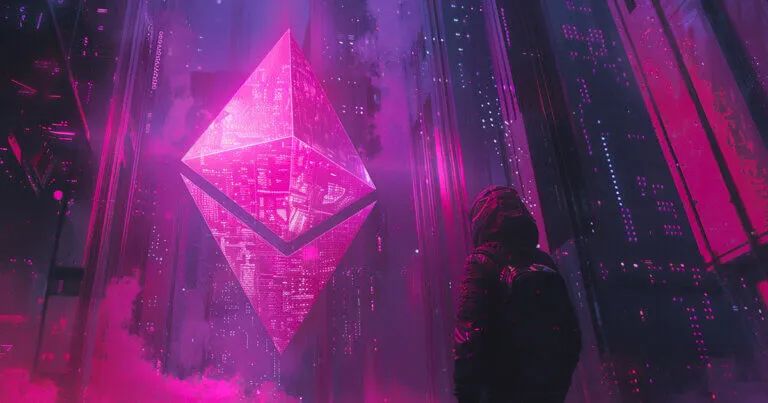
Linking fiat cards to seamlessly pay gas fees, or even allowing developers to directly cover transaction costs using their own funds, are significant steps toward better user experience and improved user retention.
Similarly, vertical scaling through Ethereum Layer3 solutions (also known as app-specific blockchains) can shorten transaction execution times and fundamentally reduce gas fees, enabling zero-gas features.
Layer3 solutions combined with Account Abstraction bring truly free, seamless experiences to GameFi, offering user experiences indistinguishable from those of Web2 games.
With the widespread adoption of new technologies and substantial funding breathing fresh life into the space, it's only a matter of time before these foundational elements become the next major wave of GameFi products.
If blockchain gaming becomes mainstream, it will stand at the forefront of a new development paradigm prioritizing user experience.
Technological advancements such as Layer3 solutions and Account Abstraction are entering the initial tech stacks of most GameFi products, signaling that Web3 is entering a new stage of broad adoption. Tomorrow’s blockchain will not just replace Web2—it will be a better alternative.
Join TechFlow official community to stay tuned
Telegram:https://t.me/TechFlowDaily
X (Twitter):https://x.com/TechFlowPost
X (Twitter) EN:https://x.com/BlockFlow_News
 @CryptoSlate