Why did Binance convert its entire SAFU Fund to USDC?
TechFlow Selected TechFlow Selected
Why did Binance convert its entire SAFU Fund to USDC?
Binance described USDC as a "trusted, audited, and transparent stablecoin" in a blog post, while Tether has long been controversial.
 Navigating Web3 tides with focused insights
Text: Ryan S. Gladwin, Decrypt
Translation: Alex Liu, Foresight News
Binance, the cryptocurrency exchange, has fully converted its Secure Asset Fund for Users (SAFU) into USDC—the second-largest dollar-pegged stablecoin by market capitalization after USDT.

Established in 2018 as an emergency insurance reserve for Binance users, SAFU is designed to compensate traders in cases where the exchange suffers losses of investor assets—such as during a hack.
The fund typically aims to maintain a value consistently above $1 billion. Prior to this conversion, SAFU held both Bitcoin (BTC) and Binance Coin (BNB). According to data from CoinGecko, these assets declined by 12.6% and 9.1%, respectively, over the past seven days. To avoid further price volatility, the cryptocurrency exchange decided to convert the entire fund into USDC to enhance "reliability and stability."
"SAFU is an emergency insurance fund established in 2018 to protect Binance users in extreme scenarios," Binance wrote in a blog post. "Over the years, we have continuously monitored the size of SAFU to ensure balances remain at levels sufficient to safeguard our users."
In this conversion, approximately $1 billion worth of Bitcoin was moved out of SAFU's Bitcoin wallet address, and slightly more than $740 million worth of BNB was transferred from its BSC wallet address. Blockchain tracking shows that both transfers ultimately ended up in Binance’s hot wallet addresses. SAFU now holds exactly 1 billion USDC on the Ethereum blockchain.
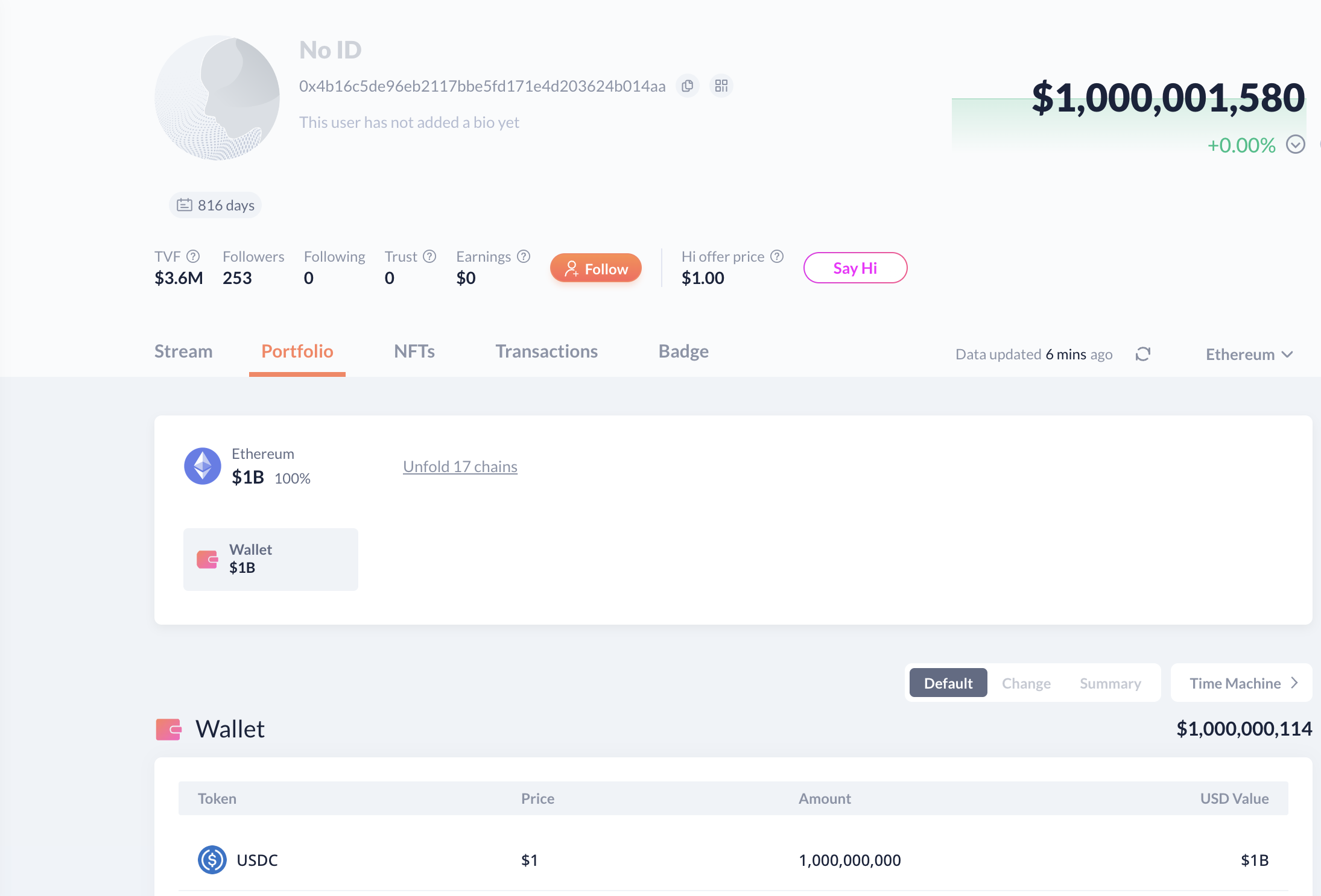
Crypto observers on Twitter speculated that the move may be less about deteriorating asset performance pushing the fund below $1 billion and more about Binance taking profits. Despite recent declines, both Bitcoin and Binance Coin are still trading significantly higher than their prices at the beginning of the year. Converting an insurance fund previously dominated by crypto holdings entirely into USDC at this stage could be seen as locking in gains.
Converting assets into stablecoins is a common strategy to increase fund stability, as stablecoins maintain a relatively steady value pegged to fiat currencies. Notably, Binance chose Circle’s USDC over the current market leader, USDT, which has a market cap $76 billion larger than USDC.

In its blog post, Binance emphasized the rationale behind the decision, describing USDC as a "trusted, audited, and transparent stablecoin." Tether (USDT), by contrast, has long been controversial, with critics claiming it is not fully backed by real U.S. dollars—leading it to occasionally lose its dollar peg.
Join TechFlow official community to stay tuned
Telegram:https://t.me/TechFlowDaily
X (Twitter):https://x.com/TechFlowPost
X (Twitter) EN:https://x.com/BlockFlow_News
 Decrypt