








Solana's New Killer Feature? How "Token Extensions" Change the Game Rules?
TechFlow Selected TechFlow Selected
Solana's New Killer Feature? How "Token Extensions" Change the Game Rules?
The new Solana SPL token standard "Token Extension" includes 19 different token standards, allowing developers to build customized token functionalities.
 Navigating Web3 tides with focused insights
Author: @hmalviya9
Translation: Frank, Foresight News
Editor's Note: In January, the Solana Foundation launched a new SPL token standard called "Token Extensions," opening up exciting possibilities for more complex on-chain use cases on the Solana network.
To get straight to the point, I believe the Solana ecosystem is entering a new phase of explosive growth, driven largely by developers pushing boundaries—especially with innovations like the newly launched "Token Extensions."
This article will briefly introduce the "Token Extensions" feature and explore its potential real-world applications.
What Are Token Extensions?
In one sentence: Token Extensions are the next-generation SPL token standard.
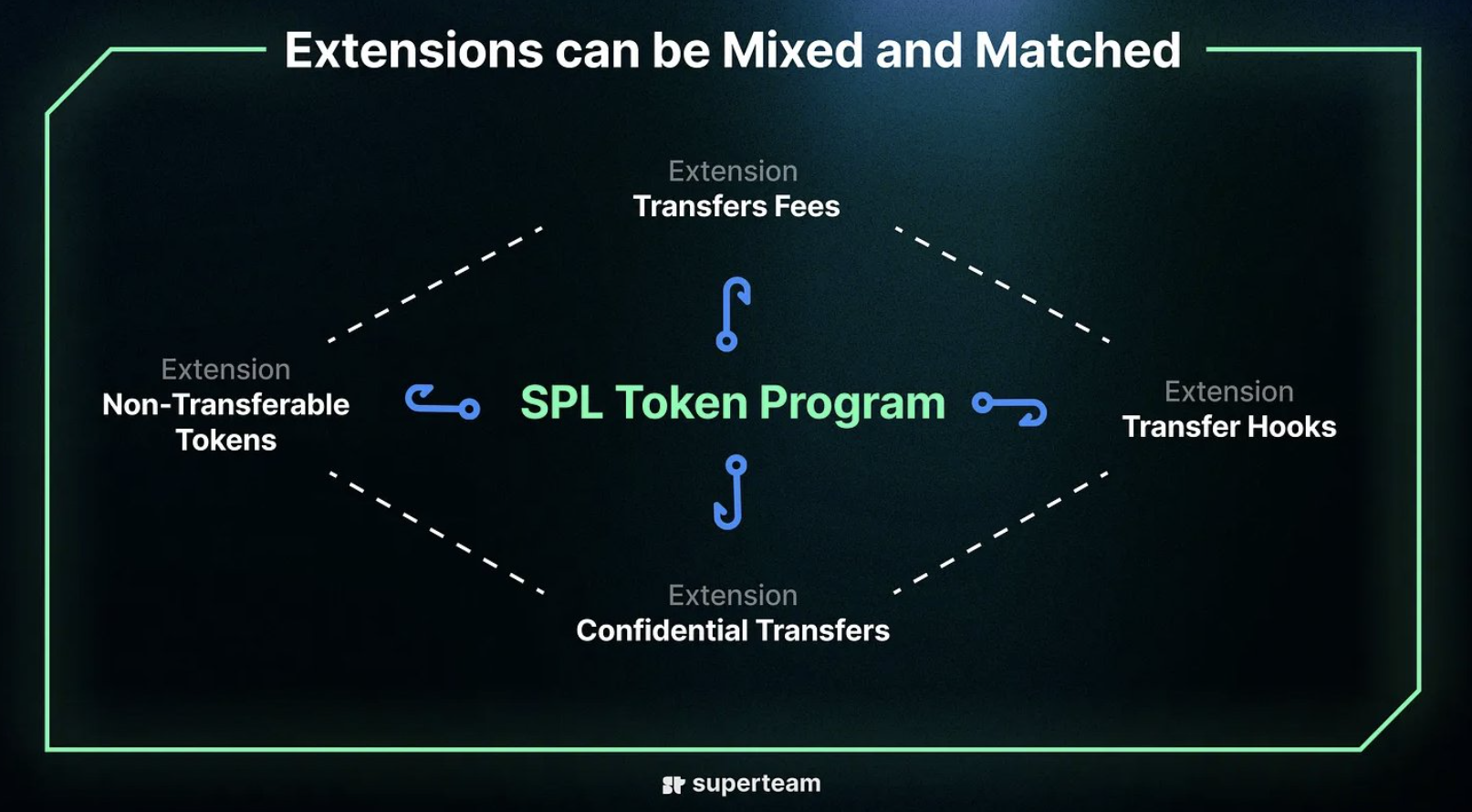
They allow developers to build custom token functionalities such as private transactions, transfer hooks, non-transferable tokens, interest-bearing assets, metadata, and more.
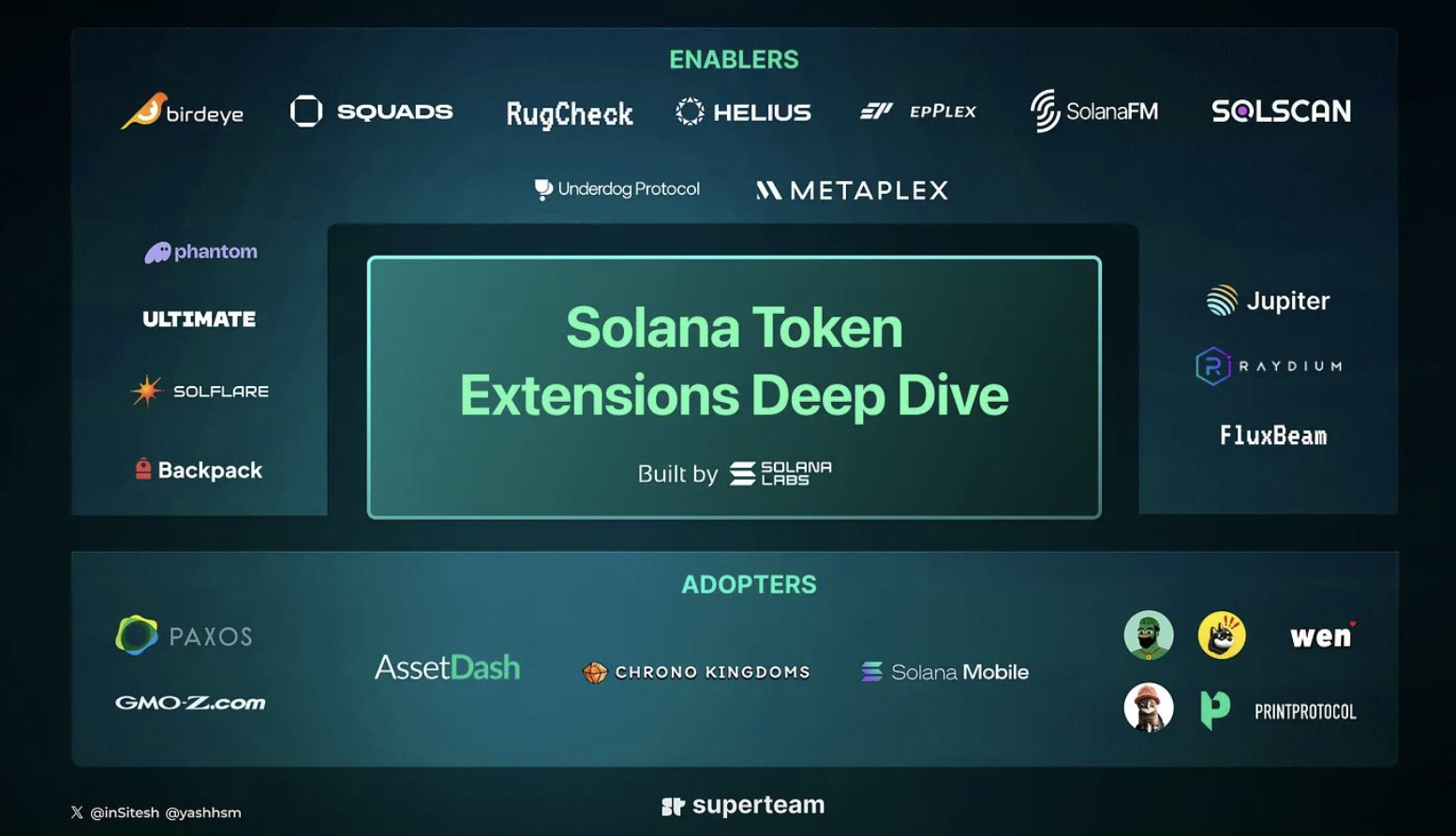
To simplify understanding, think of it as a library containing 19 different token standards, where specific features can be enabled based on the needs of each use case.
It’s like consolidating 19 Ethereum token standards into a single unified standard, allowing us to freely combine and use all 19 features as needed.
One of the biggest advantages is that, unlike Ethereum’s rigid ERC standards—which move slowly through governance proposals—developers using Token Extensions can experiment freely, even combining multiple extensions to build the next killer application.
Token Extension Use Cases
Next, let’s dive into five key use cases enabled by Token Extensions that I’m particularly excited about—and share project ideas around them. You could easily implement any of these at the next Solana hackathon.
1. Private Transactions
Token Extensions enable us to build DApps supporting private or confidential transactions. Demand for such applications will undoubtedly grow in the near future, as many degens genuinely want to conduct on-chain operations in a privacy-preserving environment.
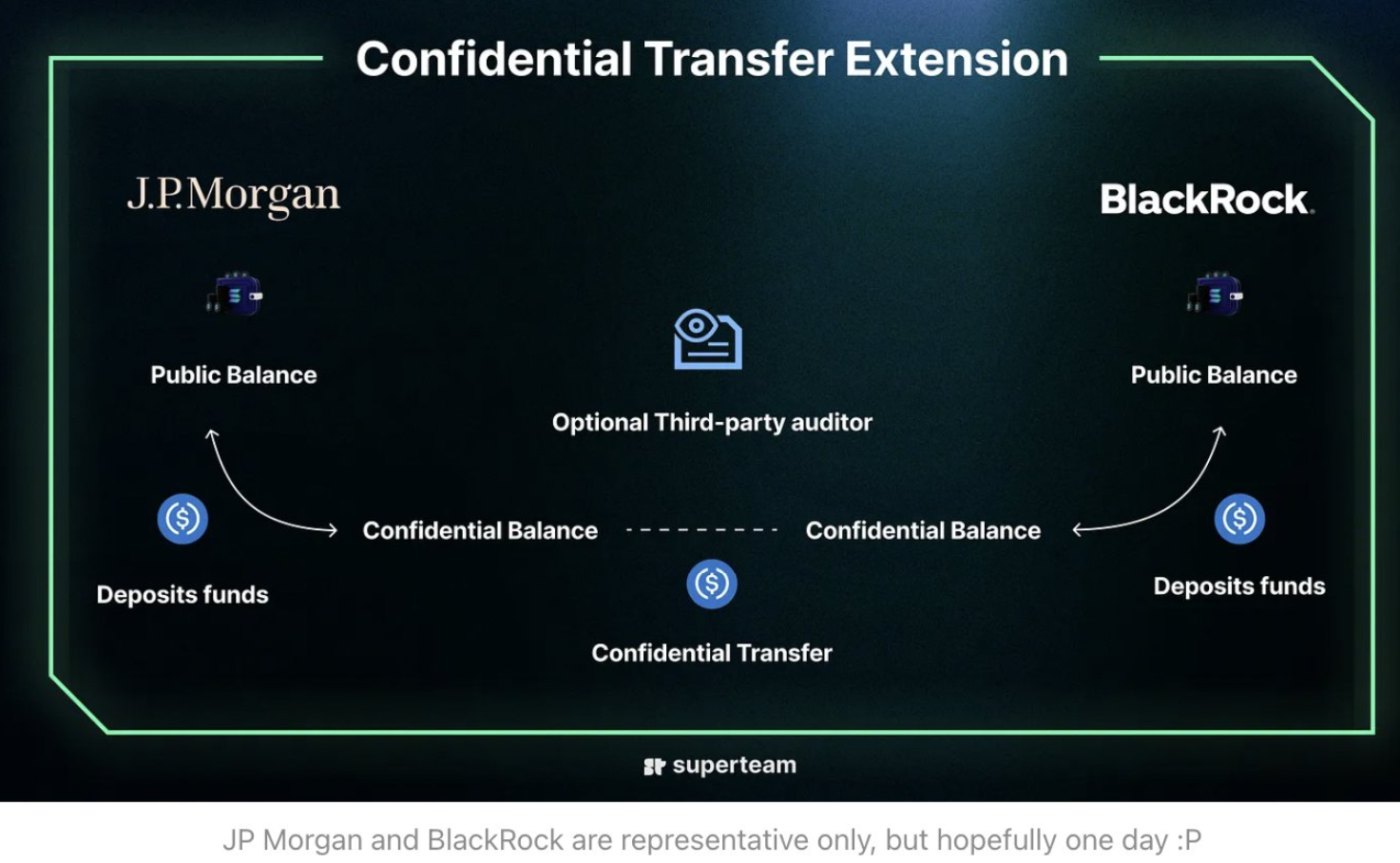
For example, we could create a privacy-focused DeFi protocol that allows users to swap one SPL token for another while keeping transaction amounts and balances completely private.
We could also explore building a cross-chain bridge between Solana and NeonEVM that supports private transactions across chains.
2. Transfer Hooks
Transfer Hooks are incredibly powerful—they allow rules to be enforced during token transfers.
For instance, they can enforce revenue splits for intermediaries, third-party KYC checks, compliance requirements, or provide token incentives for developers.
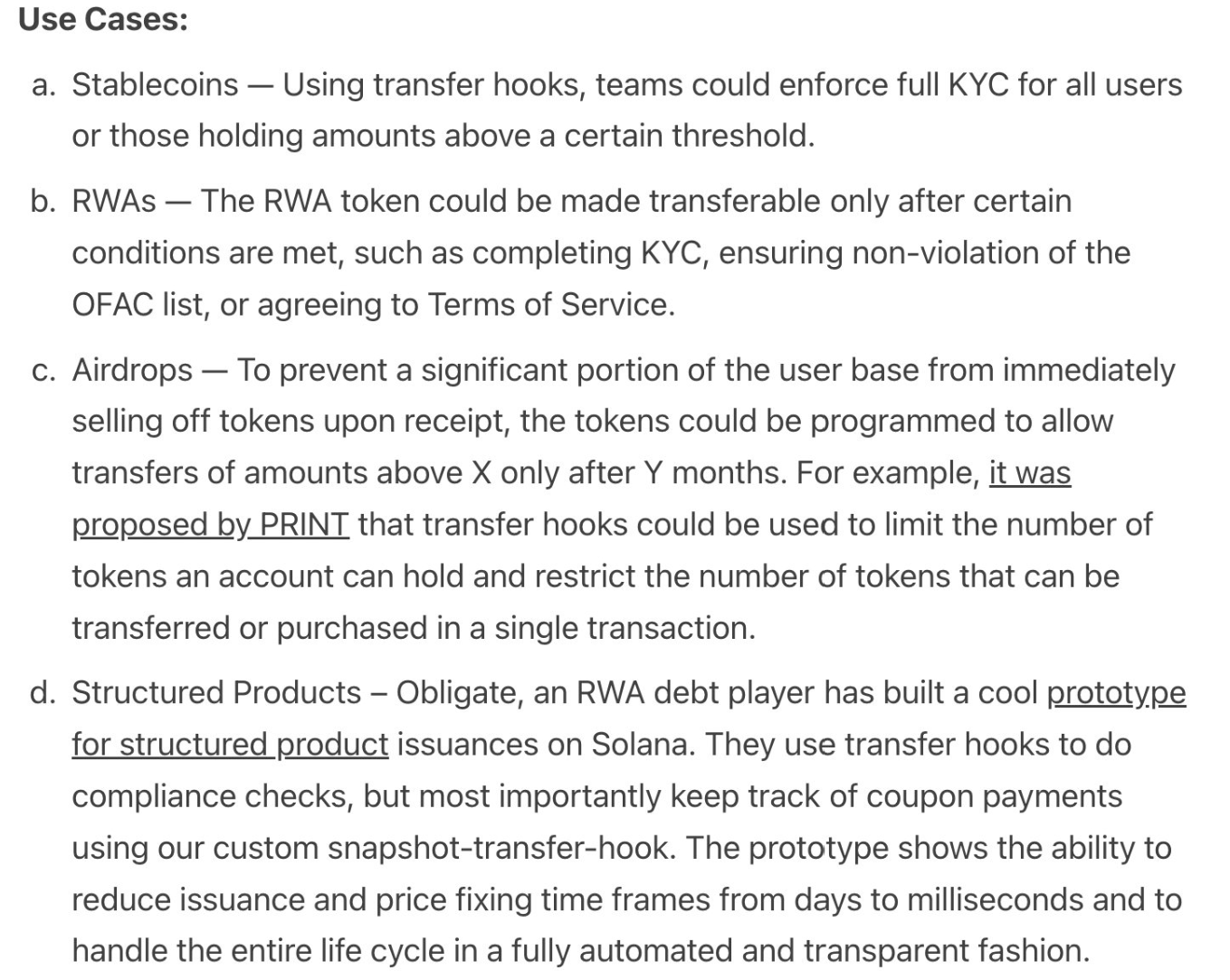
As an example, we could use Transfer Hooks to build a basic DeFi smart contract that pays SOL to the developer whenever someone uses the contract to transfer tokens—similar to how artists enforce royalties, ensuring sustainable developer incentives.
3. Non-Transferable Tokens
Non-transferable tokens (NTTs) are tokens that cannot be transferred—similar to Soulbound Tokens (SBTs). They’re expected to see broad adoption in use cases related to government documents and identity.
For example, a government agency could use this standard to launch a governance portal issuing non-transferable NFT national IDs. Citizens holding these NFTs would gain access to government benefits and services.
4. Interest-Bearing Assets
Interest-bearing assets are tokens that generate yield over time simply by being held.
With Token Extensions, we can create tokens that earn interest via staking or DeFi strategies, including liquid staking tokens, stablecoins, or even real-world assets (RWA) like U.S. Treasury bonds.
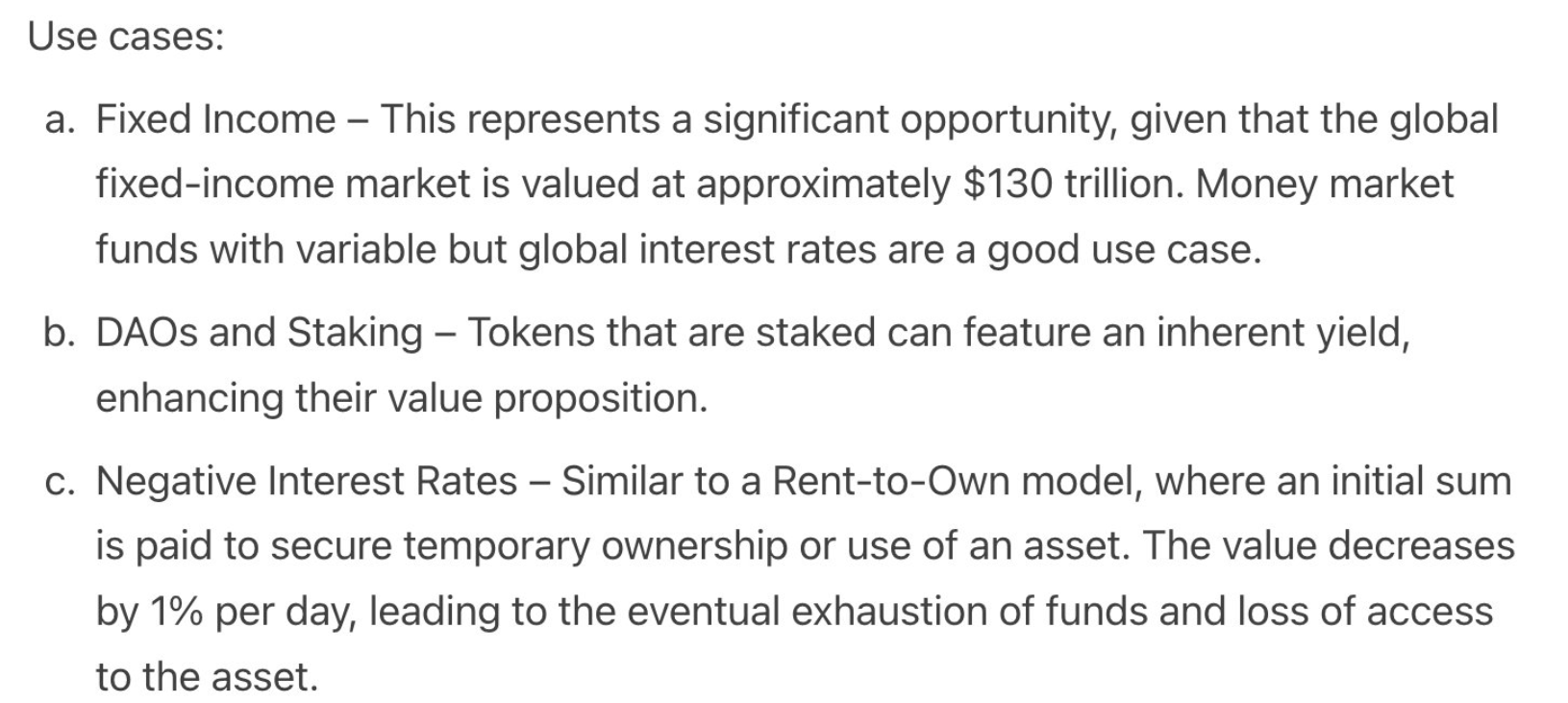
For example, we could launch a delta-neutral stablecoin similar to “Solana’s version of USDe,” where each user manages the peg by holding a jitoSOL position and opening a corresponding short position at a 1:1 ratio (see further reading: Is USDe, with a 27% APY higher than UST, a Ponzi scheme?).
The treasury could then earn yield from funding fees and staking rewards, using rebalancing strategies to maintain the peg.
5. Metadata
Thanks to Token Extensions, NFT metadata can now be stored directly within SPL tokens using Command Line or JavaScript.
This is significant because NFTs are becoming truly on-chain, which could drive demand for fully on-chain gaming experiences.
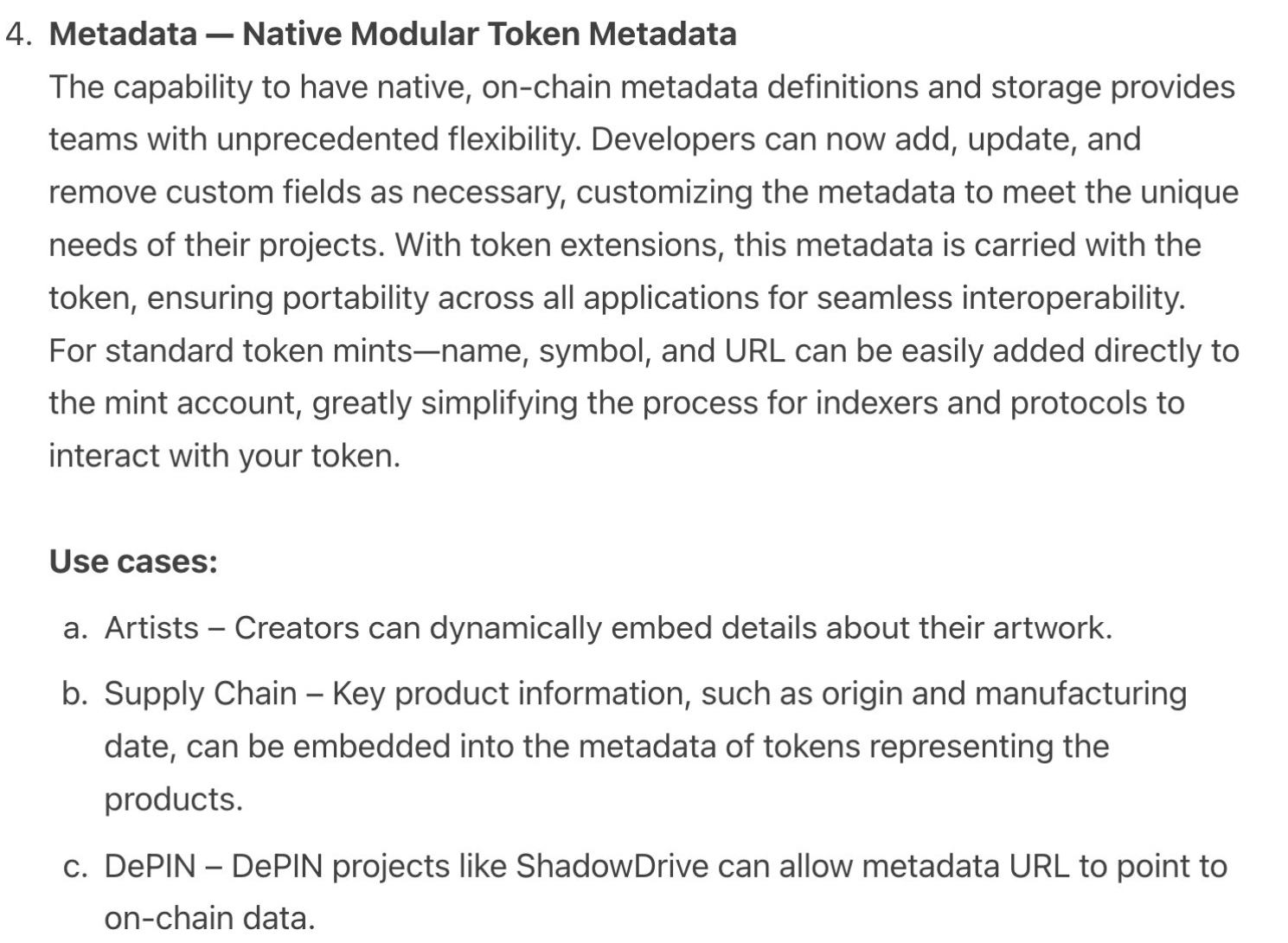
For example, we could build a simple logic-based game accessible only to players who hold on-chain NFTs or SBTs. Since Token Extensions allow combining all these capabilities, such a game could be built directly and natively on-chain.
A Combined Example
Let’s combine the five directions above into a comprehensive example:
We could build a DeFi lending app that only allows wallet addresses with a Nomis score above 500 to participate (enabled via Transfer Hooks). Users deposit jitoSOL and earn 7.5% annualized yield plus loyalty points (via interest-bearing tokens).
Personally, I’m extremely excited about the future of Token Extensions. I believe they are a game-changer that will empower developers to build the next generation of killer Web3 applications.
Join TechFlow official community to stay tuned
Telegram:https://t.me/TechFlowDaily
X (Twitter):https://x.com/TechFlowPost
X (Twitter) EN:https://x.com/BlockFlow_News
 hitesh.eth


