








The Ferryboat to Eternity Powered by Real Data: An Overview of Web3 Perpetual Storage Projects
TechFlow Selected TechFlow Selected
The Ferryboat to Eternity Powered by Real Data: An Overview of Web3 Perpetual Storage Projects
Data has gradually become a vital asset for individuals, and decentralized storage is emerging as the new guardian of private property.
 Navigating Web3 tides with focused insights
Author: Kyle @ Contributor of PermaDAO
Review: Sandy @ Contributor of PermaDAO
With the rise of DePIN, decentralized storage has once again drawn significant market attention. As a critical infrastructure in the Web3 space, decentralized storage remains abstract and difficult for ordinary users to fully appreciate. However, cloud drives have long been one of the most accessible ways for the public to experience storage services.
The earliest traditional internet cloud drive project, Xdrive, launched in 2002. Today’s leading solution, Google Drive, has been available for nearly 12 years and serves over 3 billion users. Cloud drives have truly entered everyday life. Yet, due to the centralized nature of these platforms, incidents of data loss or misuse continue to occur. Data is increasingly recognized as a vital personal asset, and decentralized storage is emerging as the new guardian of private property. Among various decentralized storage solutions, FIL—despite its higher market cap—is often the first that comes to mind. This article instead focuses on the more distinctive Arweave and its ecosystem's cloud drive projects.
Since launching its mainnet in 2018, Arweave has operated steadily for nearly six years. Designed specifically for permanent storage, it features a unique Blockweave data structure, an elegant SPoRA consensus mechanism, and a mature economic incentive model. Arweave also introduced SmartWeave, its native smart contract standard, enabling developers to build applications on top. Furthermore, Arweave is an open protocol that supports integration by any application requiring permanent storage.
As of early 2024, there were over 130 projects built around Arweave, spanning 12 distinct categories. Arweave now hosts a large and vibrant ecosystem. This article highlights four cloud drive projects within the Arweave ecosystem—WeWeave, ArDrive, Akord, and Moss—and provides a multidimensional comparative analysis.
WeWeave
WeWeave is a lightweight and user-friendly cloud drive with a minimalist web interface. Users can begin storing files immediately upon visiting the site, making it ideal for those who prioritize ease of use. Built on Arseeding (a lightweight gateway for Arweave) and leveraging ANS-104 (a transaction scaling protocol on Arweave), WeWeave is particularly suited for scenarios involving numerous small files.
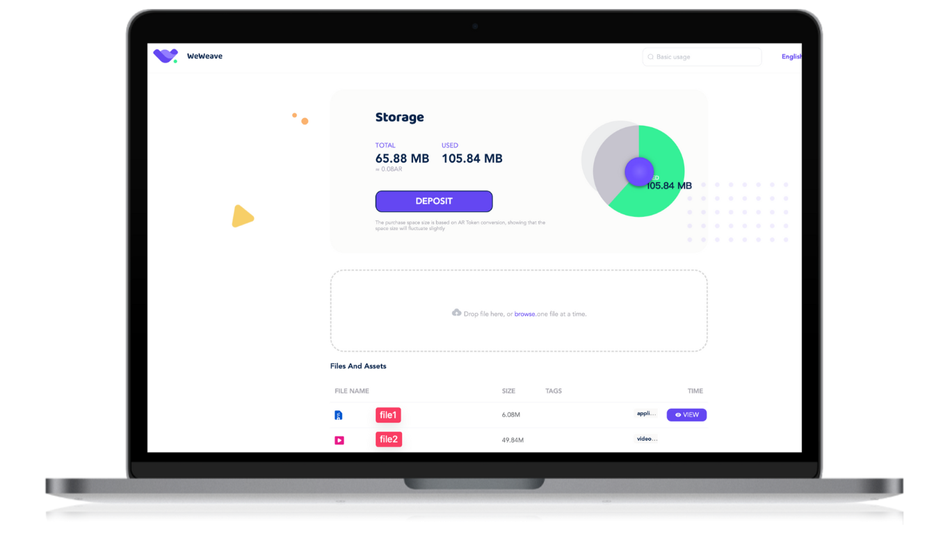
Currently, WeWeave only supports MetaMask wallets. Users may pay for storage using assets from three different blockchains: Ethereum (USDT, AR, ETH), BSC (BNB), and Moonbeam (GLMR).
WeWeave offers a seamless storage experience, allowing users to tag files during upload. It also supports indexing, enabling search via keywords or tags across all files stored through WeWeave. All uploads to WeWeave are currently public, meaning users can access their own files online or download files uploaded by others.
ArDrive
ArDrive, founded in 2020, is a relatively mature cloud drive project. In terms of interface and user experience, it closely resembles traditional cloud drives and can be seen as a Web3 equivalent of Dropbox or Baidu Cloud.
Users pay once to permanently store their data, with support for end-to-end encryption ensuring privacy. The platform also allows folder creation for organizing files. Developers can use the ArDrive CLI tool to upload data, monitor network status, and track transactions.
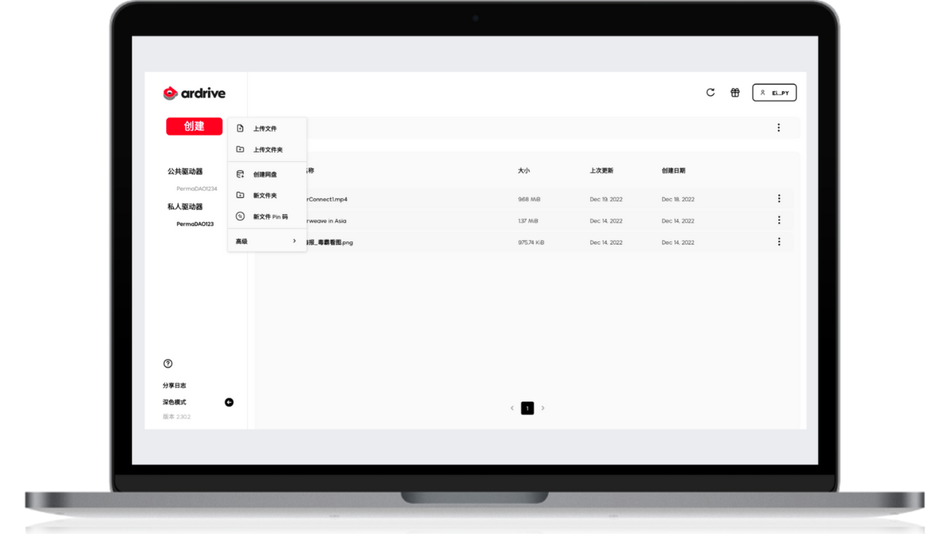
Currently, ArDrive only supports login via Arconnect—the native wallet for Arweave—and requires AR tokens to pay for storage. New users receive a 500KB free upload allowance. To reduce onboarding friction, ArDrive enables users to create a new Arconnect wallet directly within the app.
Additionally, through a partnership with payment provider Stripe, ArDrive offers ArDrive Turbo, allowing users to pay for storage using fiat currency via credit or debit card. In 2023, ArDrive launched its native token, ARDRIVE, which is tradable on the decentralized exchange Permaswap.
Akord
Akord is a collaborative cloud drive offering end-to-end encrypted storage, multi-user collaboration, and private messaging. More accurately described as a decentralized digital vault, Akord's functionality aligns closely with cloud drives. After a rebranding effort, Akord transitioned from a one-time payment model to a subscription-based approach, focusing its product direction on secure storage and content publishing—natural extensions of cloud drive capabilities.
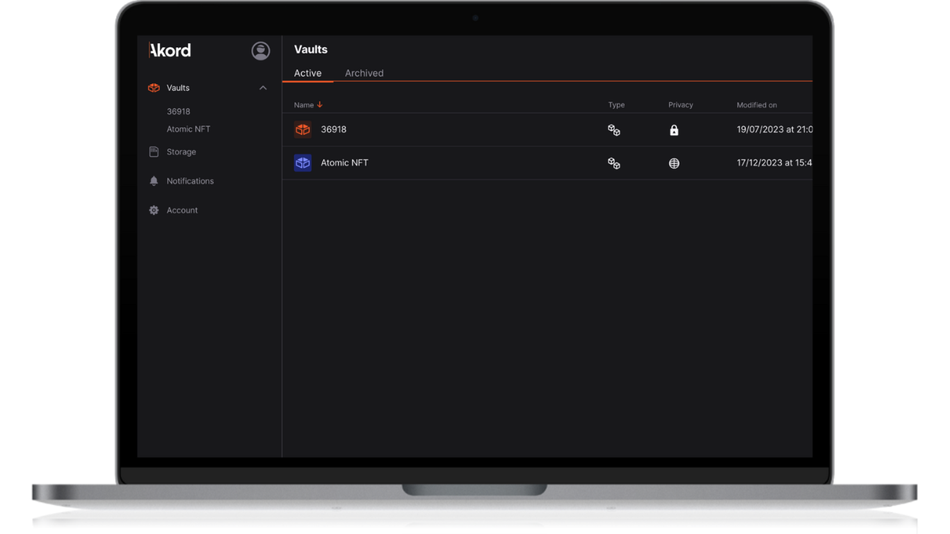
Akord is highly user-friendly for Web3 newcomers, requiring only simple account registration. It automatically generates recovery mnemonics for each successful registration. Additionally, Akord allows users to import files directly from Dropbox and Google Drive.
Beyond permanent storage, Akord recently introduced temporary storage, enabling users to store files on traditional cloud platforms and delete them at will—offering greater flexibility. It also launched token-gated access, allowing users to set custom access rules for stored files, thereby expanding its range of applications.
Moss
Moss is a social cloud drive developed by the 4EVERLAND team—a Web3 cloud computing platform—that combines both centralized and decentralized storage. Moss adopts a model similar to Friend.tech, encouraging creators to build communities and facilitate value exchange. While storage functionality is present, Moss’s core focus lies in its social features.
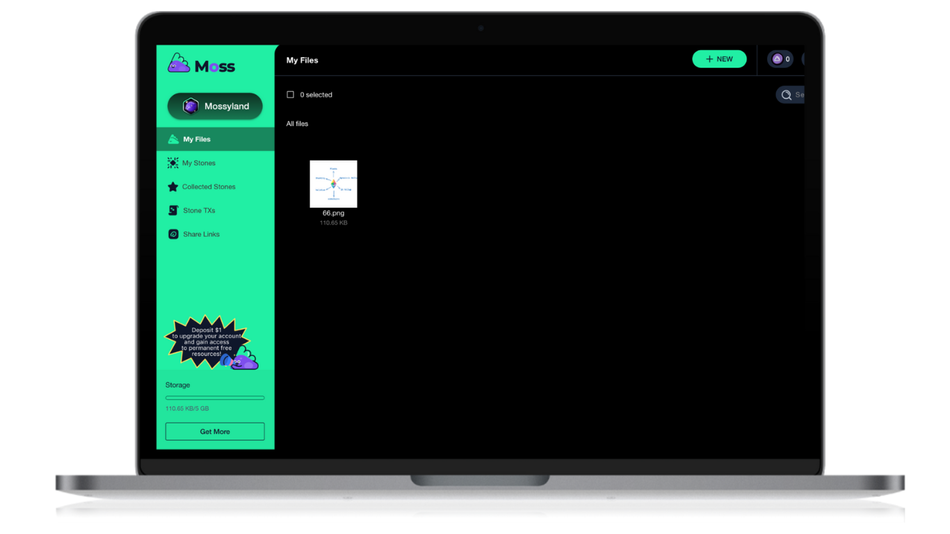
In terms of basic cloud drive functionality, Moss offers diverse options. For storage, users can choose between traditional cloud storage, temporary decentralized storage via IPFS, or permanent storage on Arweave. For file sharing, they can grant open access or set password protection.
Moss consists of several key components: Personal Folders, Mystery of Moss Origins NFT, Moss Stone, Key, and Mossyland.
-
Mystery of Moss Origins NFT: Holders gain the right to create a Moss Stone.
-
Moss Stone: A shared space on Moss where creators store valuable data and host built-in chat rooms.
-
Key: Each Moss Stone has a corresponding Key; users must purchase a Key to join.
-
Mossyland: A central plaza aggregating all Moss Stones, facilitating discovery and participation.
For regular users, Moss allows data storage and participation in interesting Moss Stones. For creators, the Key-based economic model incentivizes continuous delivery of high-value content, fostering a positive flywheel effect.
Cloud Drive Comparison
The following list summarizes the functions and features of the four cloud drive projects.

Based on their characteristics, here is a comparative analysis of WeWeave, ArDrive, Akord, and Moss across multiple dimensions:
-
Data Security: All four projects leverage Arweave for permanent, tamper-proof storage, ensuring strong data security.
-
Storage Compatibility: Akord supports traditional cloud storage; Moss supports both traditional cloud storage and temporary decentralized IPFS storage.
-
Multi-chain Support: Only WeWeave supports multi-chain payments, allowing users to pay with assets from multiple blockchains, although data is stored on Arweave.
-
Storage Cost: Current Arweave storage costs are approximately $9 per GB, a one-time payment for permanent storage (theoretically up to 200 years), equating to just $0.00375 per GB per month. ArDrive offers 500KB of free uploads, while Akord provides 100MB free uploads.
-
User Onboarding: Akord has the lowest barrier to entry, requiring only simple registration. WeWeave and Moss support the widely used MetaMask wallet, whereas ArDrive requires Arconnect, adding some user education overhead.
-
Core Features: All four offer batch uploads, online previews, file sharing, and downloads.
-
Search Capability: Among the four, only ArDrive currently lacks search/filter functionality. WeWeave integrates Adot—a large-model-powered Web3 search engine—providing full-chain indexing and enabling direct retrieval of mainstream content across the Arweave network.
-
Collaboration & Sharing: Moss includes chat rooms to foster community interaction. Akord excels further in collaboration, featuring built-in chat, access control settings, and usage logs—ideal for team-based workflows.
Conclusion
Web3 is more than hype—practical, usable products are now emerging. While Arweave dominates the permanent storage space, its low financialization often leads to market underestimation. As infrastructure focused on solving real problems, Arweave prioritizes long-term stability over short-term wealth generation.
Today, the Arweave ecosystem hosts a series of distinctive cloud drive projects—including WeWeave, ArDrive, Akord, and Moss—that directly address user needs. Decentralized cloud drives, though familiar in concept yet novel in execution, hold promise as gateways for users to explore decentralization, especially as new use cases continue to emerge.
Join TechFlow official community to stay tuned
Telegram:https://t.me/TechFlowDaily
X (Twitter):https://x.com/TechFlowPost
X (Twitter) EN:https://x.com/BlockFlow_News
 @perma_dao


