








a16z partner Chris Dixon: Curbing blockchain's "casino culture" and returning value to network participants
TechFlow Selected TechFlow Selected
a16z partner Chris Dixon: Curbing blockchain's "casino culture" and returning value to network participants
Blockchain has achieved technological breakthroughs, breaking the patterns of traditional networks and opening up new possibilities for innovation.
 Navigating Web3 tides with focused insights
Author: STANFORD BLOCKCHAIN CLUB
Translation: TechFlow
*Note: This article is from the Stanford Blockchain Review. TechFlow is an official partner of the Stanford Blockchain Review and has been exclusively authorized to translate and republish this content.
In this article, A16z partner Chris Dixon places blockchain within the broader context of internet history and network economics, discussing the significance of tokens, the "casino culture" and "computer culture" in the blockchain space, and how blockchain redefines the concept of digital ownership. In short, blockchain represents a technological breakthrough that returns value to users and creators of networks, breaking the traditional web paradigm and unlocking new possibilities for innovation.
Introduction
The internet is arguably one of the most important inventions of the postwar era and the technological foundation of modern life. Although the internet began as an open, nonprofit network, today most of its value is captured by a small number of large technology companies such as Google, Meta, and Amazon. However, in *Read Write Own*, we propose a perspective that views blockchain as a new turning point in the evolution of the internet.
(Editor’s note: *Read Write Own* is a book authored by A16z partner Chris Dixon, exploring blockchain’s power to reshape the future of the internet and how it impacts all of us.)

In this article, we will explore some of the key themes from *Read Write Own*, placing blockchain within the broader context of internet history and network economics, discussing the importance of tokens as a new digital tool, the “casino culture” and “computer culture” in crypto, and how blockchain reshapes the concept of digital ownership. In doing so, we will show how blockchain achieves a technological breakthrough by returning value to users, creators, and entrepreneurs at the “edges” of networks, redefining ownership dynamics and unlocking new possibilities for innovation.
Network Economics and Internet History
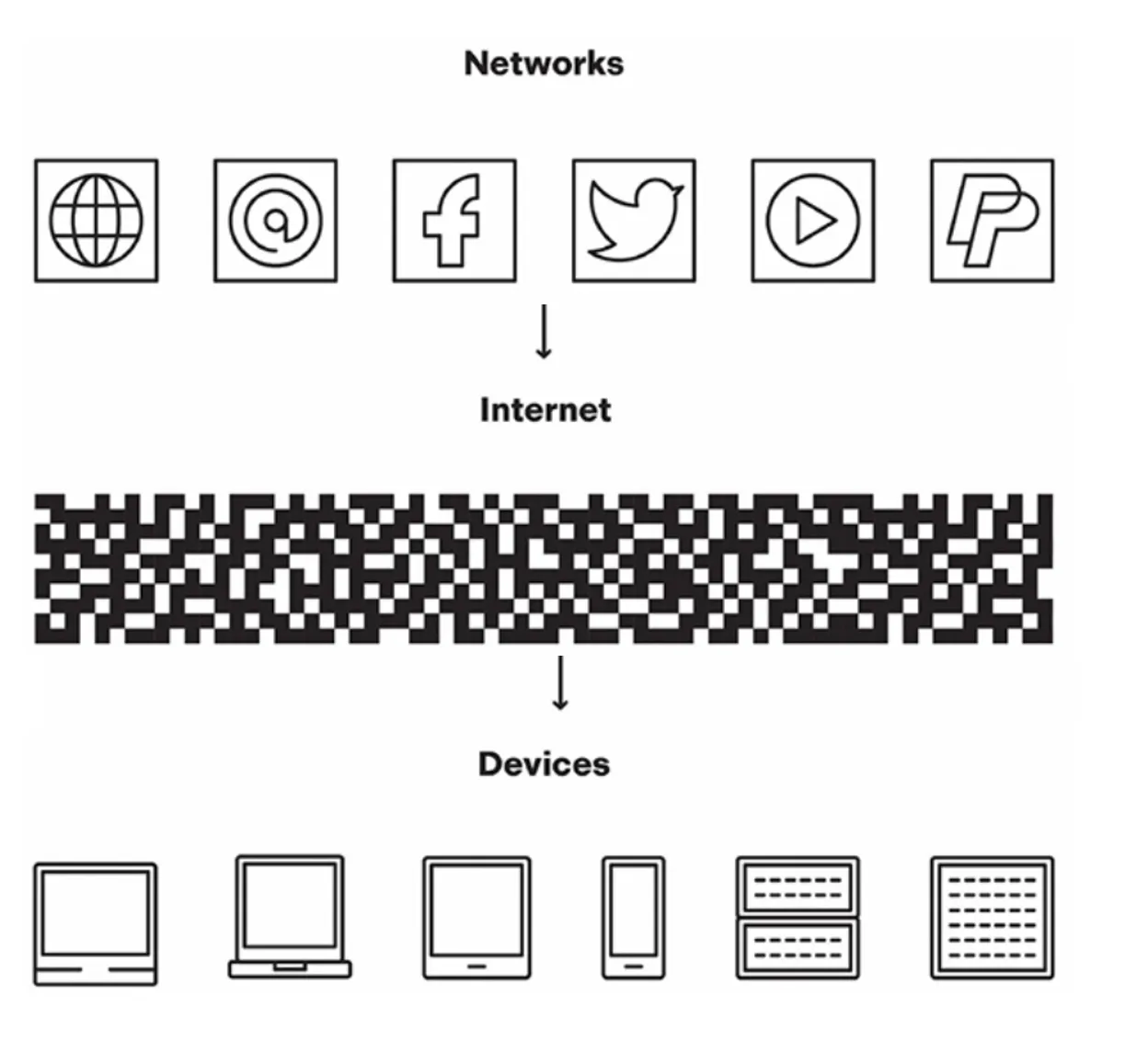
The Network Stack
To understand the technical and cultural significance of blockchain, we must place it within the broader context of internet history. Fundamentally, what we now call the “internet” is a complex “network of networks,” composed of multiple layers of network protocols forming the internet protocol stack. This ranges from basic transmission protocols like IP (Internet Protocol) to application-layer protocols such as SMTP (Simple Mail Transfer Protocol) for email or HTTP (HyperText Transfer Protocol) for the World Wide Web, and further to more abstract social networks embedded within specific applications, such as Facebook and X (formerly Twitter).
Much of the internet’s value—our social networks, financial histories, medical records—is recorded on these interconnected network structures. Therefore, to understand the modern internet, we must understand network design, as the structure of these networks directly influences how money and power flow through the system.
Before the emergence of blockchain technology, there were primarily two models of network economics: protocol networks and corporate networks.

Protocol and Corporate Networks
Protocol networks are defined by a set of open-source rules describing how different participants interact within the network. Because protocols are fully open-source, any participant can easily use the code to bootstrap applications, and all value accrues to the participants of the protocol rather than being extracted by a centralized entity charging high fees. Like all networks, the value of a protocol increases as more participants join. One classic example is RSS (Really Simple Syndication), an open-source feed format allowing users to subscribe to content from websites and individuals they follow. This open protocol is commonly used for subscribing to blog posts, news headlines, and podcast episodes.
In contrast, corporate networks like Facebook or Twitter are closed-source systems designed, maintained, and distributed by a single company to advance its own business interests. While these platforms support APIs and ecosystems of external developers and creators, their interests are subordinate to the core company's profit motives. As a result, many corporate networks have very high “take rates,” where most of the value created by creators, developers, and users is captured by the platform rather than returned to the users themselves.
As the modern internet matured, we’ve systematically seen closed corporate networks like Facebook and Twitter defeat open protocol networks like RSS. For instance, Twitter originally began as a user-friendly front-end for RSS, but gradually users became entirely dependent on Twitter’s platform and network instead of RSS itself. Eventually, Twitter completely replaced RSS in popularity, leading the company to discontinue RSS feed support in 2013.
A key reason these corporate networks could outcompete open protocol networks is their access to substantial funding and strategic design advantages. Platforms like Amazon, YouTube, and Uber were initially willing to operate at a loss to subsidize growth and attract users. In contrast, many protocol networks, due to their decentralized nature, lack systematic funding for sustained development and maintenance, often relying on goodwill from developers. Consequently, these open protocols couldn’t compete financially with well-funded corporate networks. This dynamic has significantly undermined the internet’s original spirit as an open public space for sharing and advancing knowledge.
Tokens, Computers, and Casinos
Blockchain introduces a new form of network economics, combining the openness of protocol networks with a funding mechanism that enables them to compete with corporate networks. This is achieved by introducing “tokens” as units representing ownership and value within blockchain applications.
Take Bitcoin, the oldest and most well-known blockchain project. The Bitcoin blockchain essentially functions as a massive, decentralized ledger (similar to an Excel spreadsheet), permanently recording all financial transactions across the network. This ledger is maintained and replicated across millions of computers worldwide known as “miners” or “validators.” They are rewarded with Bitcoin tokens for maintaining the ledger, with rewards determined by an algorithm called “proof-of-work.” Essentially, Bitcoin serves both as a unit of value and a measure of ownership, incentivizing network participants to act in specific ways—such as securing the decentralized financial ledger via proof-of-work.

Overview of the Proof-of-Work Algorithm
Tokens provide a flexible framework for coordinating large-scale behavior. We can easily replace Bitcoin’s proof-of-work reward algorithm with different mechanisms tailored to other applications. For example, Ethereum uses a “proof-of-stake” algorithm, extending Bitcoin’s Excel-like decentralized ledger into a fully Turing-complete global computer. This has given rise to a new discipline in the blockchain industry called “tokenomics,” which combines elements of computer science, economics, and game theory to design effective token-based incentive systems for blockchain applications.
Unfortunately, the concepts of “coin” and “token” in cryptocurrency often evoke negative associations, leading the public to view crypto as little more than an unregulated online casino. While the blockchain space does include bad actors—such as Terra’s Do Kwon and FTX’s Sam Bankman-Fried—who exploited the novelty of the industry for fraud, such behavior overshadows the real innovation and technological progress occurring within the field.
Broadly speaking, cryptocurrency can be described as having two distinct cultures: the “computer” culture and the “casino” culture. The “computer culture” consists of developers, entrepreneurs, and visionaries who situate crypto within the broader history of the internet and understand blockchain’s long-term technical significance. In contrast, the “casino culture” focuses on short-term gains and profiting from price volatility.
We hope that stronger regulation and greater legal clarity can mitigate the short-sighted and harmful effects of the “casino culture.” A potential solution may involve leveraging vesting schedules and time horizons, locking tokens for specified periods using technical mechanisms like staking or traditional legal contracts. This, in turn, could encourage longer-term thinking and help position blockchain technology as a force for societal good.
Redefining Digital Ownership
A key to fostering a healthy, vibrant culture in the blockchain industry is harnessing the power of the “computer culture” within the crypto movement. At its core, tokens enable blockchain to redefine the concept of ownership on digital networks. For many blockchain projects like Bitcoin and Ethereum, no individual or company owns the network; instead, anyone holding network tokens (such as ETH or BTC) is a partial owner. All protocol code—including algorithms determining token distribution—is open-source. Thus, blockchain naturally inherits the open, collaborative ethos of protocol networks. At the same time, because tokens like ETH and BTC represent units of value exchangeable for real-world currency, participants in blockchain networks can fund development and maintenance, enabling them to compete with corporate networks.
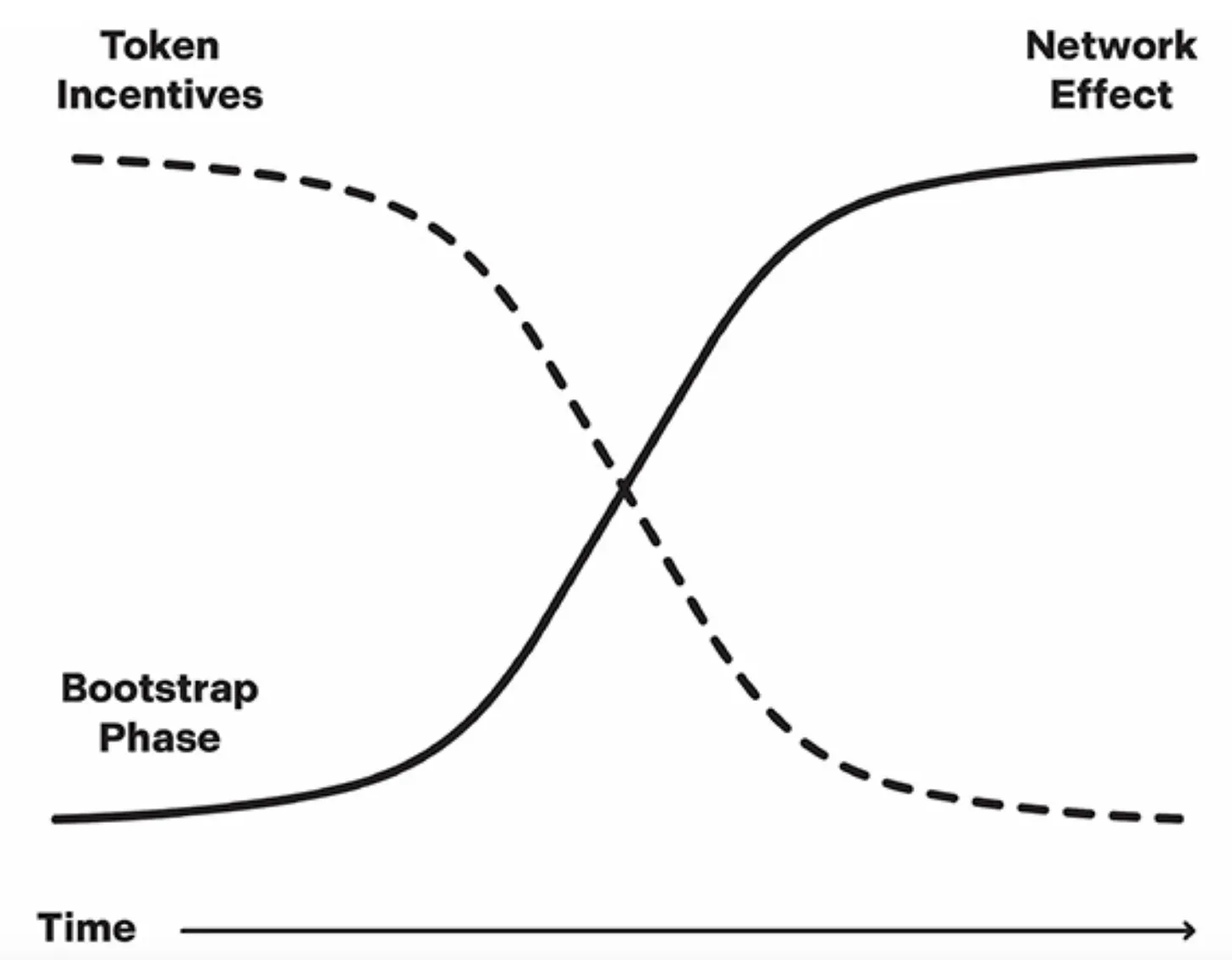
Token Incentives and Network Effects
We’ve already seen the potential of tokens and other blockchain technologies as forces for social good and community reinvestment. For example, Helium uses HNT tokens to reward users who set up wireless hotspots, providing internet connectivity to communities overlooked by traditional ISPs. By cleverly leveraging token incentives, Helium was able to bootstrap an interconnected network of hotspots, benefiting from strong network effects. This is a prime example of how tokens allow smaller organizations to overcome the traditional “cold start” problem and disrupt much larger incumbents like conventional internet service providers. As the project matures, HNT holders also gain the ability to participate in governance, giving early adopters a voice in shaping the project’s future direction.
Thus, blockchain structurally redefines the concept of digital ownership, redistributing network profits back to the users and communities who first create that value. By creating a new incentive structure for participants on open protocols, blockchain breaks the “winner-takes-all” model of corporate networks and returns the internet to its original ideals of freedom, decentralization, and democracy.
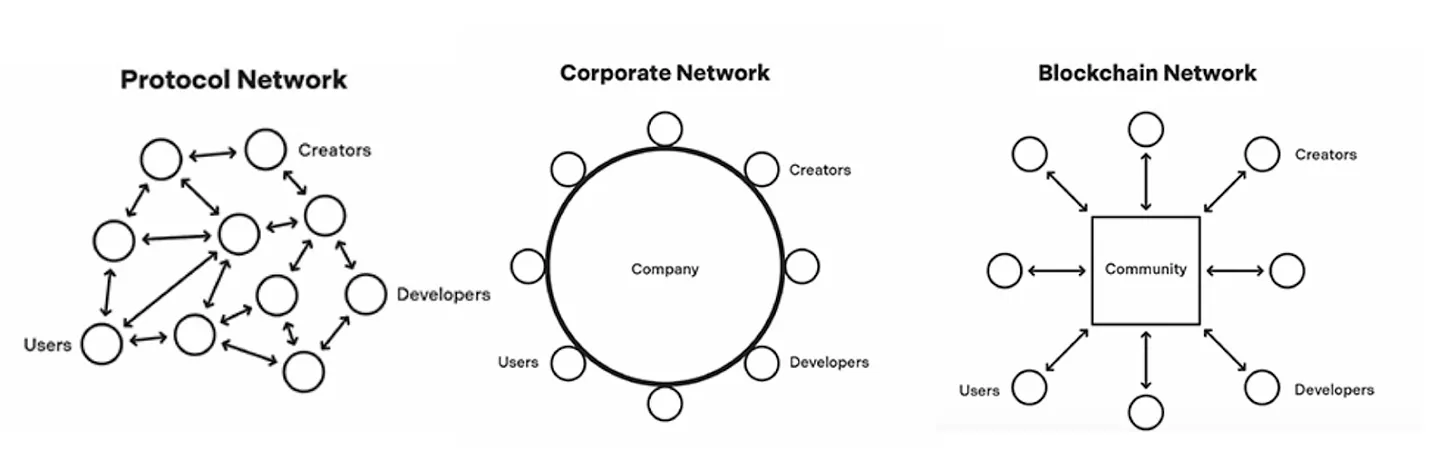
Protocol, Corporate, and Blockchain Networks
The Future of Blockchain
Today, we stand at a turning point in the cryptocurrency space. Over the past few years, blockchain infrastructure and technology have made systematic improvements across multiple dimensions—advancements in zero-knowledge proofs, modular blockchains, and interoperability solutions. Just as improvements in GPUs paved the way for killer applications like ChatGPT, we believe blockchain infrastructure may soon enable a similarly transformative “killer app” for crypto—an “iPhone moment” for the industry.
As the crypto industry turns the page from the series of collapses over the past year and a half, we look forward to seeing a new wave of blockchain projects emerge—innovative social networks, games and metaverses, open-source financial infrastructure, and AI-driven creator economies—that will drive the next phase of internet evolution.
Ultimately, blockchain today represents the cutting edge of computing, much like the internet did in the 1990s. Unlike other frontier technologies such as artificial intelligence and VR/AR, cryptocurrency represents a truly disruptive force—one that redistributes value to the edges of networks, empowers creators, users, and participants to become true owners of protocols, and builds a new “Read, Write, Own” economy in the digital realm.
Join TechFlow official community to stay tuned
Telegram:https://t.me/TechFlowDaily
X (Twitter):https://x.com/TechFlowPost
X (Twitter) EN:https://x.com/BlockFlow_News
 Stanford Blockchain Club











