DePIN Project MetaBlox: Global WiFi Nodes Surpass 40,000, Collaborating with CISCO and Boingo to Build New WiFi Standards
TechFlow Selected TechFlow Selected
DePIN Project MetaBlox: Global WiFi Nodes Surpass 40,000, Collaborating with CISCO and Boingo to Build New WiFi Standards
MetaBlox is not only a standout in the WBA alliance but also a dark horse in the DePIN sector.
 Navigating Web3 tides with focused insights
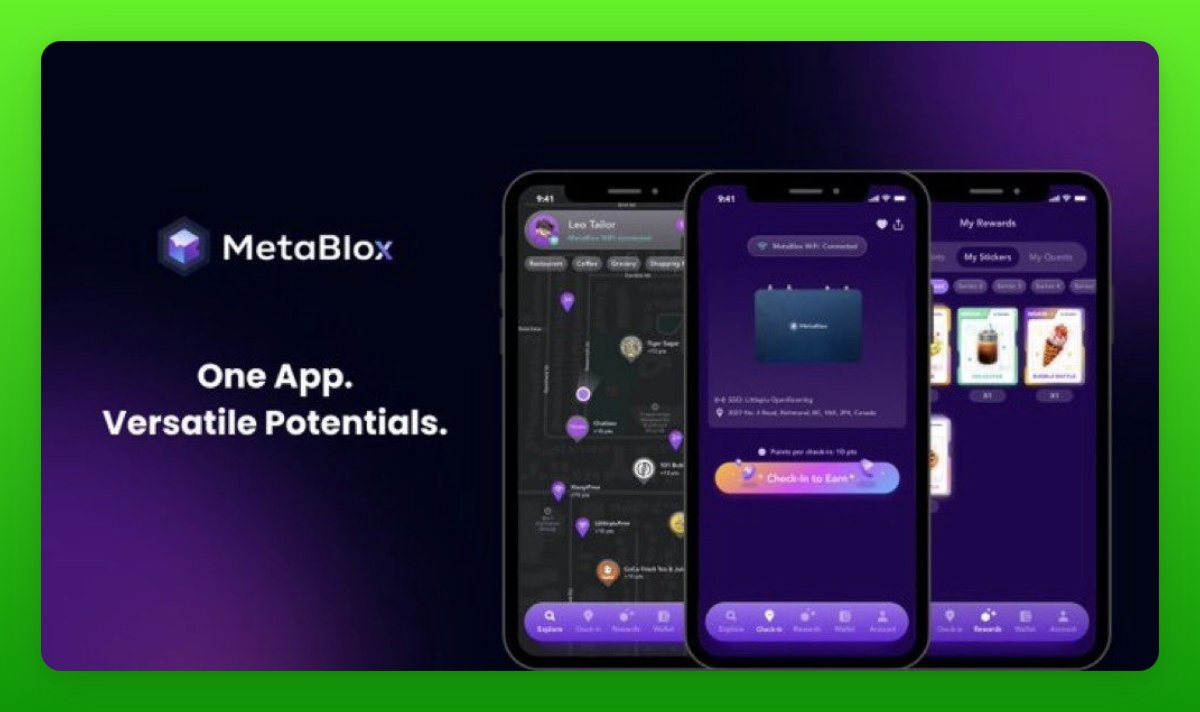
In the digital era, global network connectivity has become increasingly prevalent and crucial. As the only Web3 ID provider within the WBA Alliance, MetaBlox not only holds a unique position in the traditional networking space but is also one of the most anticipated projects in the DePIN sector. By integrating decentralized identifiers (DID), innovative mining mechanisms, and information service protocols, MetaBlox has redefined Web3 decentralized WiFi networks, transforming them into secure, user-friendly products enriched with social and gamified experiences.
MetaBlox’s Unique Position Within the WBA Alliance
The Wireless Broadband Alliance (WBA), a global standards-setting and coordination body for WiFi, plays a pivotal role in the wireless communications industry. Its membership includes renowned telecom giants and manufacturers such as AT&T and T-Mobile from the U.S., BT from the UK, Intel, and Cisco. The introduction of the WBA OpenRoaming open standard protocol bridges the gap between WiFi and cellular networks, enabling users to seamlessly and securely roam across OpenRoaming WiFi network nodes without repeated registration or login. This OpenRoaming initiative elevates the WiFi user experience to rival that of traditional cellular networks.
Currently, OpenRoaming has deployed over 3 million WiFi nodes globally. As the sole Web3 builder among the 11 alliance enterprises, MetaBlox collaborates with established leaders in traditional telecommunications—such as Boingo Wireless, Cisco, GlobalReach Technology, and Intel—to expand the coverage and user base of the OpenRoaming network, building an efficient, secure, and seamlessly connected global WiFi roaming infrastructure.
Among the 11 official service providers designated by the WBA Alliance, Boingo delivers WiFi services to more than 1,000 commercial aircraft and over 4,000 hotspot locations worldwide. Cisco, founded in 1984, is a long-standing leader in the communications industry with extensive reach and diversified operations. Global Reach has successfully deployed WiFi along 44 kilometers of the River Thames and on Thames Clippers river ferries in London, supporting over 30 million annual users. As the youngest contributor, MetaBlox has leveraged innovative Web3 models to deploy over 42,000 WiFi network nodes across more than 100 countries in just two years.
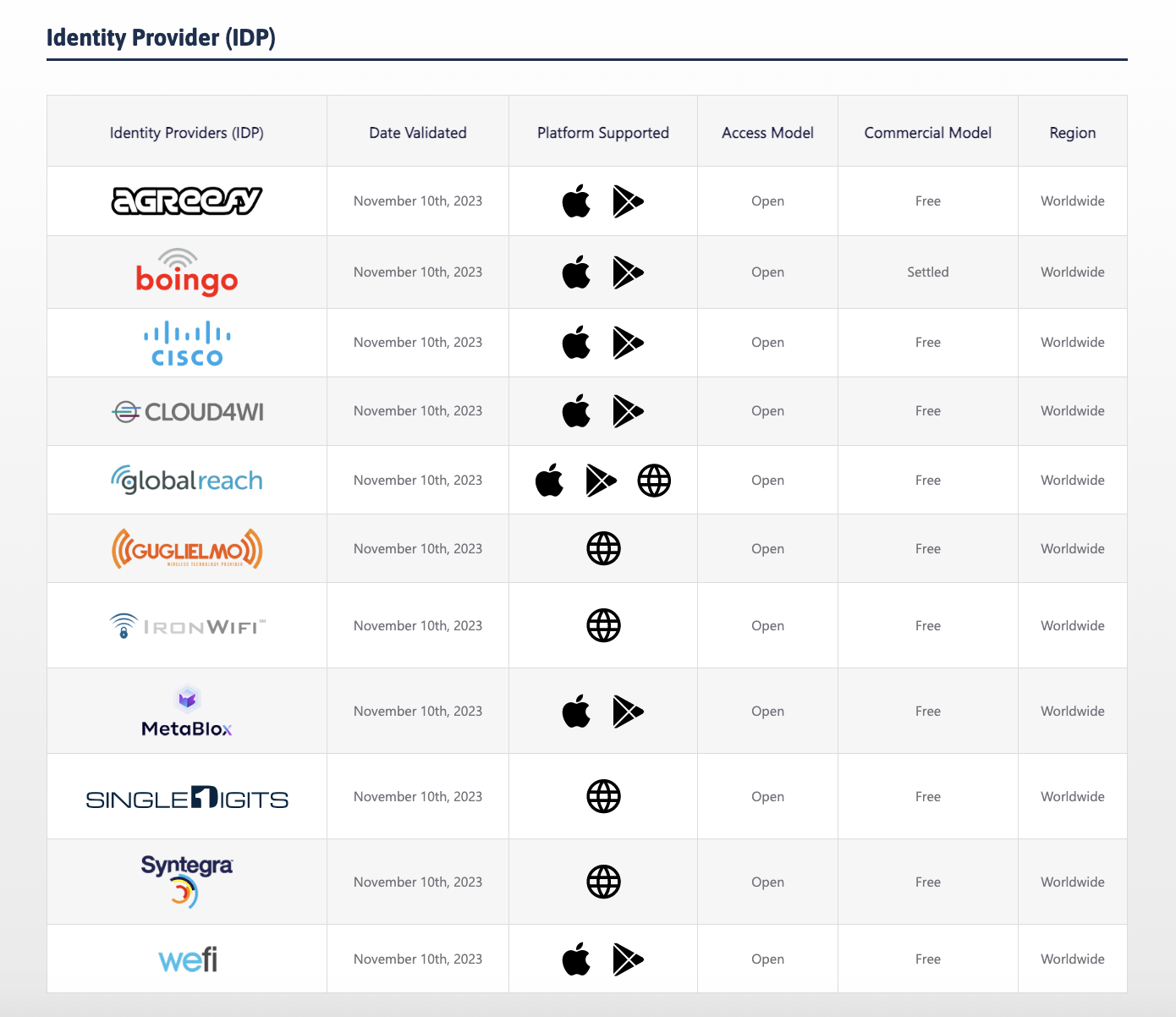
Image source: Wireless Broadband Alliance (WBA) official website
Unlike other WBA members focused on traditional models, MetaBlox builds upon Web3 technology, using decentralized identifiers (DID) and verifiable credentials (VCs) to enhance data privacy and network security. Its network co-construction rewards and validation mechanisms further amplify the expansion of WiFi nodes, enabling broader self-built network coverage and smoother user experiences. Ongoing community incentives not only ensure steady growth in node count but also drive consistent user acquisition, creating a positive feedback loop that autonomously propels MetaBlox’s development.
This flywheel effect relies on continuous ecosystem expansion, growing and sustainable returns, and a balance between utility and engagement—all critical factors that underscore MetaBlox’s strength as a leading contender in the Web3 DePIN landscape after two years of refinement.
MetaBlox’s Leadership in the DePIN Sector
MetaBlox aims to do more than offer secure and stable global WiFi roaming powered by DID and VCs. It seeks to collaborate with various Web3 projects to build a rich, user-centric ecosystem, serving as a robust platform for bidirectional interaction between Web2 and Web3 users and developers. Currently, the MetaBlox App supports access to over 3 million WBA OpenRoaming WiFi nodes worldwide, while its self-deployed network exceeds 42,000 nodes across more than 100 countries. Users can enjoy completely free, stable, and secure internet access at any of these locations globally.
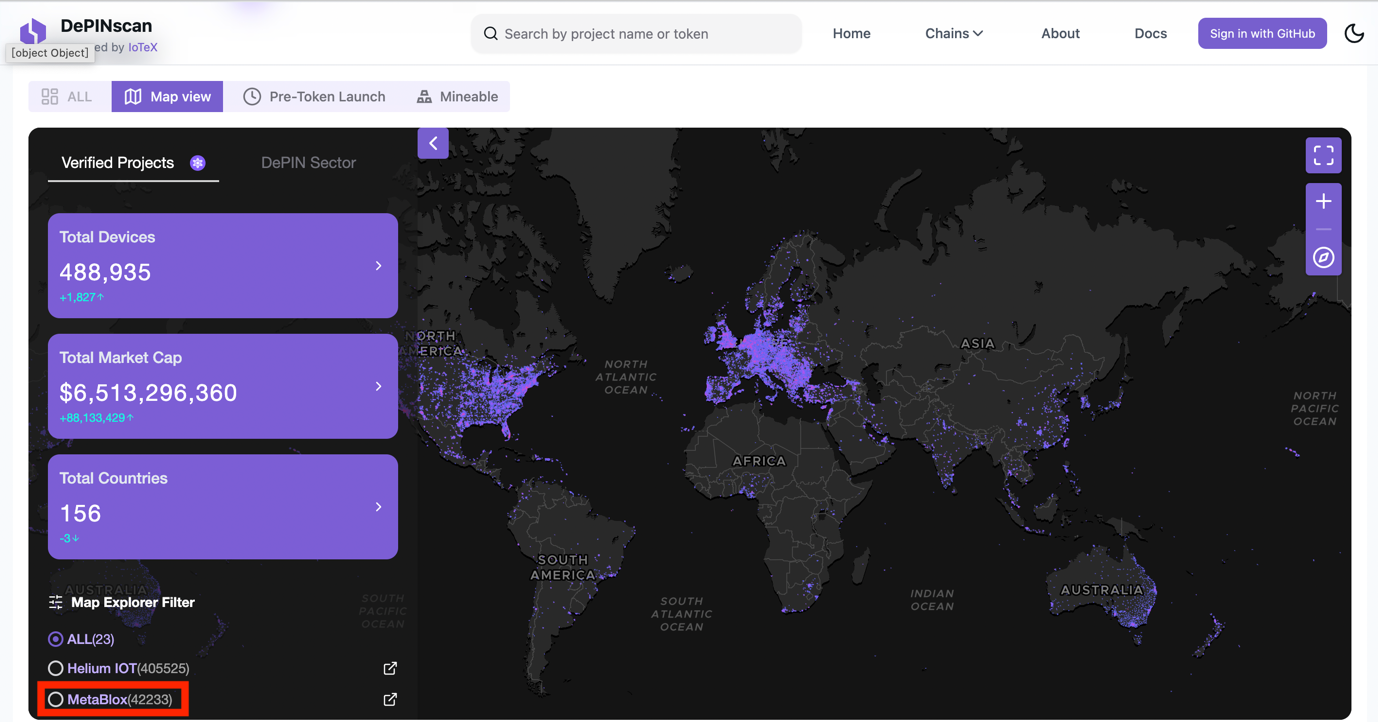
Data source: DePINscan official website
Beyond offering free wireless internet access, the MetaBlox App (IOS & Android) incorporates numerous native Web3 features.
Check-in-to-earn: Check-ins are one of the primary mining methods in the MetaBlox ecosystem. Users earn points by verifying the operational status of WiFi nodes and enabling others to connect to their hotspots. They can also collect digital sticker rewards. This location-based activity enhances both engagement and earning potential while preserving user privacy.
Connect-to-convert: This feature transforms connectivity into conversion opportunities. While providing incentives for users contributing to network growth, MetaBlox also serves as a traffic-driving platform for other Web3 projects. Project teams can conduct targeted airdrops based on specific criteria, helping them capture potential users early.
Location-based SocialFi: Leveraging geographic coordinates, this social functionality unlocks new dimensions of social interaction. As communities grow and networks expand, user-generated social graphs emerge—especially those rooted in physical proximity—enabling valuable connections among merchants, users, and influencers.
Infra-as-a-service: MetaBlox partners with other infrastructure projects to provide comprehensive infrastructure services. On the hardware side, collaborations allow multi-mining support through single devices, diversifying user income streams. At the protocol level, MetaBlox offers geolocation-based data support for relevant projects.
In terms of hardware innovation and device performance, MetaBlox’s GEN1 OG miner and GEN2 Volcano Series miners utilize cutting-edge industry technologies and top-tier performance standards. The second-generation Volcano Series WiFi router miner delivers AX6000-level performance at a comparable price point, while also offering enterprise-grade cybersecurity and mining capabilities.
Regarding economic design, MetaBlox employs a dual-token model. Users earn mPoints—a points-based token—through various engagement metrics. These mPoints have dedicated use cases within the ecosystem and can be converted into MetaBlox’s governance token via staking and burning mechanisms. As an emerging force in the DePIN space, MetaBlox has implemented precise mining parameter designs, including dynamic difficulty adjustments and token emissions tied directly to network conditions. This protects miners’ earnings during market downturns while incentivizing service provision in high-traffic areas, accelerating network deployment.
Conclusion
MetaBlox stands out not only as a unique participant in the WBA Alliance but also as a dark horse in the DePIN sector. Although its governance token has not yet launched, its technological innovations, thoughtful economic design, and anticipated value have already positioned it as one of the most promising projects in the DeWi space. As the only Web3 company in the WBA Alliance, bridging Web2 users and the Web3 world, MetaBlox is poised to inject fresh momentum into global wireless communications and the evolution of Web3.
To learn more about MetaBlox, visit its official website and public data platform.
Join TechFlow official community to stay tuned
Telegram:https://t.me/TechFlowDaily
X (Twitter):https://x.com/TechFlowPost
X (Twitter) EN:https://x.com/BlockFlow_News
 @metablox