
Beyond the Boundaries of Technology: The Future Path of AI+Web3
TechFlow Selected TechFlow Selected
Beyond the Boundaries of Technology: The Future Path of AI+Web3
This article explores the potential top ten trends for AI + Web3 in 2024 through ten representative AI + Web3 projects.
 Navigating Web3 tides with focused insights
Author: VION WILLIAMS
This is an article of extremely high information density and currently the most hardcore comprehensive analysis of AI+Web3 in the industry.
This article covers numerous disciplines, ranging from academic inquiry to business trends, offering profound philosophical insights. It identifies for the first time the root causes behind the myth of "decentralization," completing theoretical construction that brings AI+Web3 into a unified conceptual history domain.
Through 10 representative AI+Web3 projects, citing dozens of related articles and papers on AI and Web3, this article also explores ten possible development trends in AI+Web3 for 2024.
It is hoped that this article will help you clear away industry confusion about AI+Web3, eliminate past biases and cognitive misconceptions, and guide you toward future pathways in AI+Web3 development.
Preface
Over the past year, I have frequently encountered skepticism and criticism from friends in the AI field toward Web3; likewise, I often face conservatism and hesitation from those in the Web3 community regarding AI.
AI and Web3 are natural complements, and it’s unfortunate practitioners undermine each other due to prejudice.
Therefore, I attempt here to deeply investigate current technological route disagreements and the origins of bias through conceptual history and three historical time analysis methods, as well as linguistic analytic philosophy and cybernetic epistemology.
This article directly addresses criticisms raised by AI practitioners against the narrative of decentralization, dispels long-standing doubts among AI professionals, and reveals the fundamental reasons why the “decentralization faith” has created intellectual dilemmas within the Crypto/Web3 industry in recent years.
In summary, I aim to answer one truth—a response to this foundational question enables genuine integration between AI and Web3, clears ideological barriers, and achieves a paradigm shift at the level of epistemology.
Note
The author designed the writing logic and expression sequence with intent to construct for readers a deep-thinking reading environment amidst today's fragmented information overload.
The entire piece is divided into three major parts—from research paradigms and analytical logic, case studies and insights, to predictions on future trends—these sections are progressively interlinked, guiding you into a space conducive to deep reflection.
This article spans 20,000 words and took me half a month to complete—it’s worth your hour-long read.
Independent exploration of such a vast topic as AI+Web3 inevitably comes with shortcomings. Please bear with any imperfections, omissions, or inaccuracies.
1 Research Paradigm and Philosophical Insight
Insight into Current Discourse Contexts
How Do We Discuss AI+Web3?
Within today’s Chinese internet, serious thinking about AI+Web3 is rare, and the most common existing framework relies on historical materialist theories of social production—that productive forces determine relations of production.
AI represents productive forces; Web3 represents relations of production. As mutually influencing forces, AI+Web3 will create new systems of social production—a widely accepted discourse context, as elaborated in my previous article (long-form) on how AI agents will collaborate with humans in the future.
Another noteworthy AI+Web3 framework stems from the history of cybernetics—the historical interpretation of “Autonomous” and the technical-philosophical view of machine autonomy.
Through tracing its roots from cybernetics to computing, both AI and Web3 represent different paths toward achieving the same goal: autonomy. This perspective was notably articulated by Wang Chao (cross-domain investor in AI+Crypto) in his article “Historical Convergence of AI and Cryptocurrency.”
There exists a disciplinary gap between knowledge systems and historical concepts in current AI+Web3 epistemological paradigms, leading to fragmentation across academia, technology, and talent.
If we can fundamentally bridge these gaps, I believe the widely pursued convergence of AI+Web3+Metaverse would accelerate technological integration, drive industrial leaps forward, and further human progress in digital civilization.
In this article, I introduce additional frameworks—from interdisciplinary integration to cross-media narratives, from linguistic analytic philosophy to temporal analysis theory in conceptual history.
First Principles Approach to Building an AI+Web3 Research Paradigm
Finding Relevance and Possibility Within Thinking Spaces
Current discussions on AI+Web3 are mostly fragmented statements that lack contextual grounding and fail to establish independent, in-depth thinking spaces.
Without shared context or consensus fields, differing purposes and motivations naturally invite controversy across tech routes, making consensus difficult to achieve.
Due to mobile internet-induced information fragmentation and recommendation algorithms creating filter bubbles, online exchanges are generally dominated by unidirectional clashes of opinion filled with bias, shaping widespread cognitive fallacies in public discourse.
Any serious discussion requires deconstructing the surrounding information environment and rebuilding a two-way, deeply interactive thinking space.
From my experience, online or offline workshops are the best way to foster effective communication and thinking environments. High-value topics must be explored within high-quality information exchange and deep-thought settings.
AI+Web3 is an extremely complex yet highly valuable topic—avoid all superficial conversations.
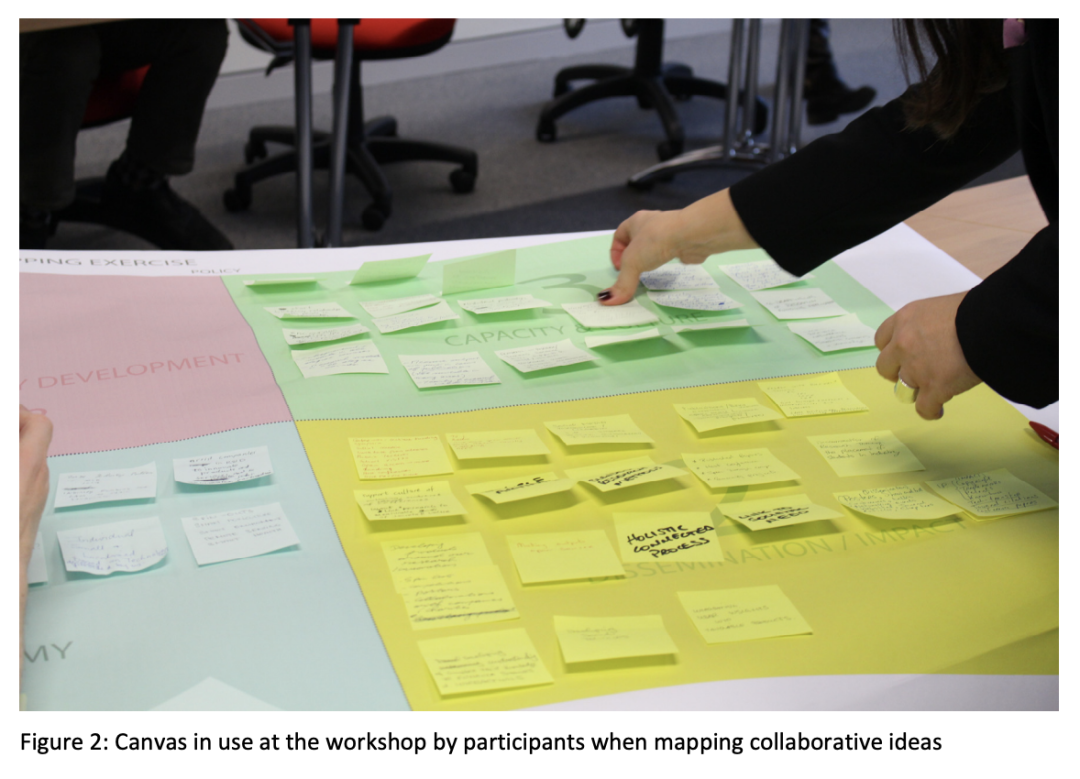
When we consciously build a space conducive to deep thinking, we can cultivate "reconciling differences through relevance" and "harmony in diversity."
Relevance is our basic method when studying any technology path—whether AI or Web3—including their historical formation, commercial applications, and societal implications.
Exploring as many relevant dimensions as possible is like throwing two stones into a lake of knowledge—the ripples eventually intersect and spread outward.
Each intersection among countless points of relevance signifies unique possibilities—some fleeting, others potentially realizable. Using intersections of relevance to capture possibilities helps us detect emerging trends and opportunities.
As you read this article, you're essentially engaging within the thinking space constructed by the author, continuously triggering reflections on relevance and possibility in AI+Web3.
Seeking More Comprehensive Understanding Through Interdisciplinary Integration
“Integration means combining or merging into a functional whole—not only aiming for a new entity or meaning, but more importantly enabling a fuller understanding.”
How to Conduct Interdisciplinary Research
In current industry discussions, AI and Web3 are typically analyzed separately, lacking deeper explanations of their relationship and systemic integration.
I believe that when entering an AI+Web3 thinking or discussion space, what truly matters is why AI+Web3 needs integration and how to integrate—it is precisely here where true value lies.
Developing a scientifically grounded interdisciplinary methodology based on communities is also a key step in exploring AI+Web3. The study “Co-design for Interdisciplinary Research Communities” offers methods for collaborative design within interdisciplinary communities.
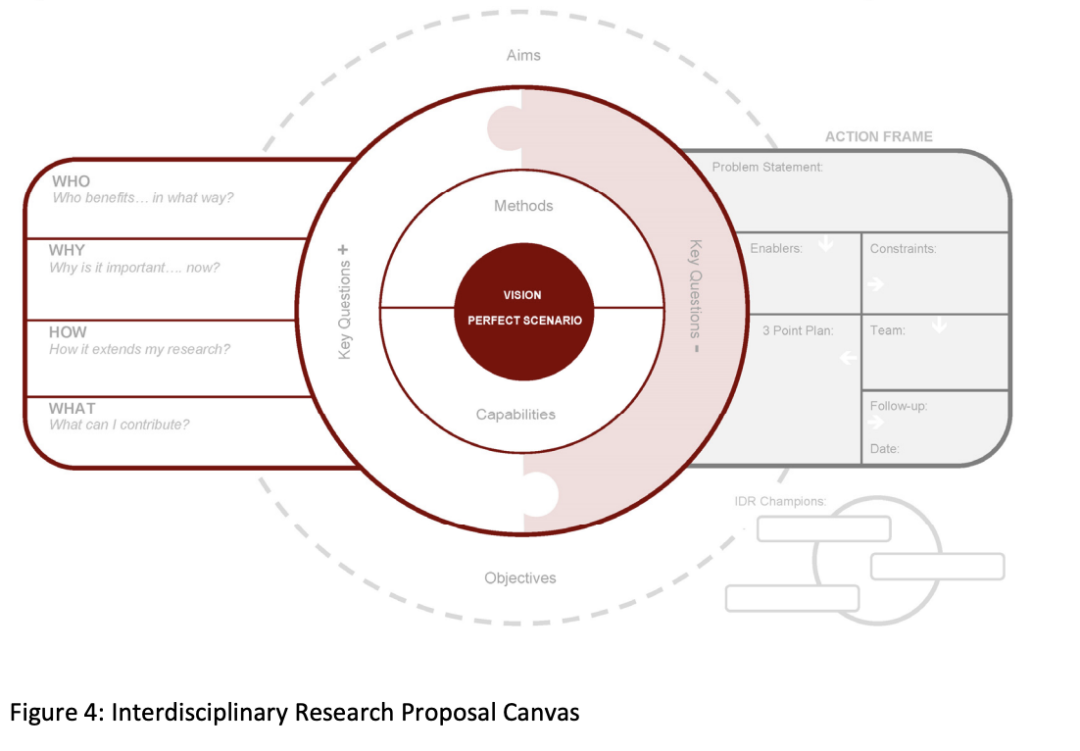
Interdisciplinary integration is a cognitive process of critically evaluating disciplinary insights (technical perspectives) and building consensus among them to form a more comprehensive understanding. Interdisciplinarity should be our foundational approach to exploring AI+Web3.
Because AI+Web3 isn't merely a surface-level combination—behind AI lie technologies like LLM, Transformer, AI Agents, COT, RAG—and behind Web3 are concepts like DAO, NFT, ZK, DeFi.
The value of interdisciplinary research lies in using scientific methods to integrate both technological systems, forming a fuller understanding and enabling novel innovations.
Understanding Worlds Built by Technology Through Cross-Media Narratives
Narrative, as an academic theory, is widely misused in Web3 as a marketing tool. Traditional tech talents often see it merely as storytelling for promotion—this reflects misunderstanding and bias toward narrative.
Narratology is the study of all possible forms of narrative, commonly understood as how stories are effectively conveyed and expressed.
Since narratology emerged from literary theory, narrative no longer depends solely on text. With symbolic media, it gained cross-media narrative capabilities.
The essence of contemporary narrative theory is constructing a possible world linked to and impactful upon reality through cross-media storytelling.
In “Possible Worlds in Video Games: From Classic Narrative to Meaningful Actions,” Antonio José Planells references Marie-Laure Ryan’s model diagram showing relationships between possible worlds and the real world.
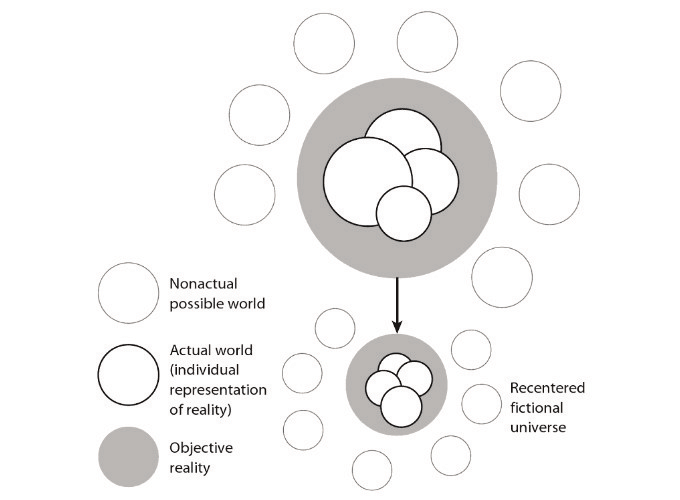
For AGI and Web3, narrative construction has clearly been completed today. The possible worlds envisioned by AGI and Web3 already exert influence over the real world.
The AI technology narrative represented by OpenAI aims to realize AGI—creating a world freeing humanity from repetitive labor. Meanwhile, one Crypto/Web3 narrative seeks to build a network nation of personal sovereignty starting from property ownership.
Indeed, both AGI and Web3 encompass multiple narratives, while technology serves as the medium carrying these narratives—both a tool and a pathway.
The value of narrative theory lies in providing philosophical guidance for visionary builders and evangelists pushing the industry forward during explorations of AI+Web3’s future forms.
Complex Systems as Epistemology Providing Continuity
While complex systems science is often categorized under interdisciplinary research, I treat it separately because within this article’s constructed thinking space, interdisciplinary integration leans more toward forming comprehensive cognition through “relevance and possibility” in technical systems.
Complex systems science itself is hard to define. As a philosophy, it incorporates epistemology and reductionism, treating abstract tools themselves as absorbable objects.
Thus, within this article’s thinking space, complex systems science acts as a supervisory mechanism and black box, providing continuity for unknown aspects not covered by interdisciplinary integration or cross-media narratives.
Starting From Historical Basic Concepts to Explore What We Mean Today
Koselleck and the Saddle Period Theory
When we recognize AGI and Web3 as highly symbolic technological concepts, we must employ conceptual history analysis—specifically Koselleck’s saddle period theory.
In his “Basic Historical Concepts,” Koselleck argues conceptual history investigates the relationship between concepts and facts—concepts are polysemous because meanings generated by historical events become embedded within them.
A concept is a nexus of experiences, expectations, viewpoints, and interpretations rooted in historical reality—not just vocabulary describing specific things.
Why analyze AGI and Web3 through conceptual history? Because these concepts align with core principles of conceptual history—that concepts are closely tied to changes in historical experience and social reality.
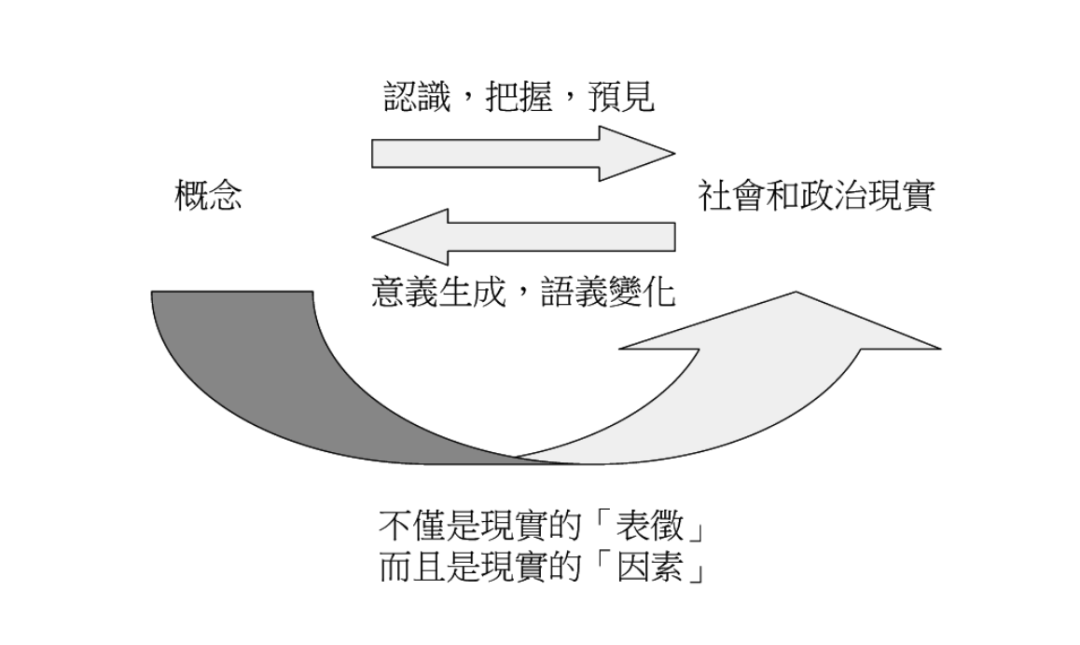
"Koselleck's famous 'Saddle Period' concept uses the image of a mountain pass (Bergsattel)—a transitional zone connecting two peaks—to describe Western historiography’s renowned 'Saddle Period' (German: Sattelzeit; English: saddle-time/saddle period), referring to transition eras or boundary times, sometimes called 'Threshold Periods' (Schwellenzeit), roughly spanning 1750–1850."
Conceptual History and Historical Time Theory: A Study Centered on Koselleck — Fang Weigui
Truly understanding a concept involves uncovering the attached history of technological development and semantic transformation during periods of change.
For example, the concept of AGI (Artificial General Intelligence) evolved from earlier notions of weak vs. strong AI, which are rarely discussed today.
Similarly, the evolution from Web2 to Web3, or from Crypto to Web3, shows how social events transform technical concepts over time.
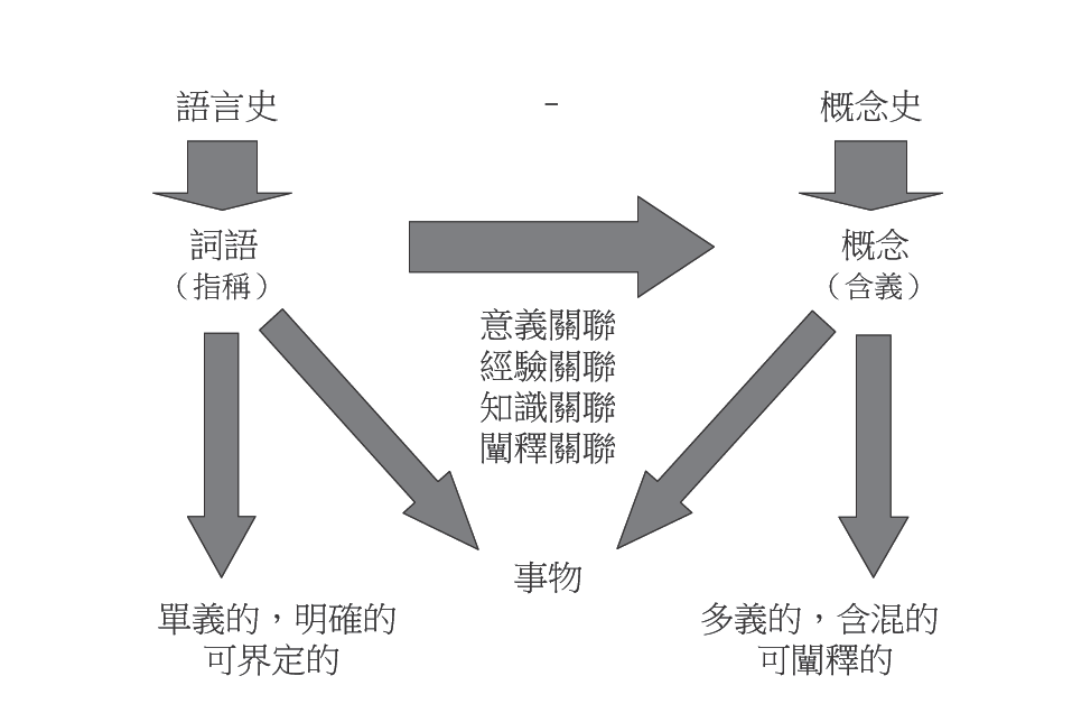
Thus, from a conceptual-historical perspective, AI and Web3 have arrived at a saddle period.
Our current discussions of AI+Web3 inherit experiential spaces from both AI and Web3, while the use of '+' expresses our horizon of expectation for their integration.
We use the compound term “AI+Web3” instead of inventing a new dual-meaning concept because we are still in a transitional phase at the frontier of converging technologies—we haven’t yet completed conceptual construction for that anticipated vision.
"Koselleck repeatedly emphasized that during the Saddle Period, an unprecedented historical gap emerged between traditional 'spaces of experience' (Erfahrungsraum) and future-oriented 'horizons of expectation' (Erwartungshorizont)." Quoted from: Conceptual History and Historical Time Theory: A Study Centered on Koselleck — Fang Weigui
Conceptual History and Historical Time Theory: A Study Centered on Koselleck — Fang Weigui
Today, as we explore AGI and Web3 convergence, we clearly stand at the bottom of the saddle. Our backward-looking space of experience and forward-facing horizon of expectation resonate vividly in present experience.
History Condenses in Specific Concepts: Diachrony and Synchrony
The general public understands AGI and Web3 diachronically. For instance, media capturing event-based information shapes public sentiment and discourse patterns, influencing our perception of these concepts.
Take the recent SEC approval of spot BTC ETFs—as a discursive marker, this signals Crypto’s entry into mainstream financial markets, redefining BTC beyond alternative assets and reshaping perceptions among previously skeptical market segments.
For qualified historians, discussing such topics requires mastery of both diachronic and synchronic modes; synchrony, in particular, captures the full manifestation of events across time flows.
For seasoned crypto enthusiasts, Bitcoin’s journey from the 2008 whitepaper to the 2024 SEC approval constitutes their synchronic understanding of Bitcoin;
For conservative finance professionals encountering Bitcoin only recently, the structural association of SEC/BTC forms their diachronic understanding.
In fact, synchrony is used in historical sociology to study cultural shifts—we can similarly examine cryptocurrency culture transitions through landmark turning points:
In 2008, Satoshi Nakamoto released the Bitcoin whitepaper, announcing a peer-to-peer electronic cash system designed to resist centralized financial monopolies;
In 2010, the purchase of pizza with BTC marked the first known cryptocurrency transaction, transforming Bitcoin from experiment to currency;
In 2017, Ethereum’s ERC20 standard empowered anyone to issue cryptocurrencies, fueling popularity of Austrian economic thought in crypto;
In 2022, the rise of DAOs and NFTs made data ownership, sovereign individuals via DAOs, and tokenized NFT assets dominant themes in crypto culture.
In 2024, SEC approval of spot Bitcoin ETFs injected traditional financial capital into a stagnant crypto bear market, historically integrating cryptocurrencies as legitimate financial assets within central finance systems.
In fact, the SEC event marks a major narrative turning point in crypto’s cultural consensus, shaking the very foundation of crypto culture.
The “decentralization” crypto-cultural movement born from Bitcoin is now self-deconstructing through Bitcoin itself.
Viewing diachrony through synchrony reveals how Crypto evolves within dual monetary-cultural systems due to specific events.
Temporal Structure of Complex Concepts: Simultaneity of the Non-Simultaneous
“Conceptual history reveals the simultaneity of the non-simultaneous fused within a single concept. Thus, historical depth unequal to chronological order reveals systematic or structural characteristics—diachrony and synchrony intertwine in conceptual history.”
Conceptual History and Historical Time Theory: A Study Centered on Koselleck — Fang Weigui
When analyzing AGI and Web3 temporally, we need a third analytical method—“simultaneity of the non-simultaneous”—because the socio-political-cultural connotations of these concepts are far more complex.
Simultaneity of the non-simultaneous is relatively complex, so I'll summarize it with simpler key points: temporal layers and historical depth.
Temporal layers refer to different meanings of a concept in sequential contexts, whereas historical depth refers to meanings from different sequences overlapping synchronically.
“Here, ‘historical depth’ means the co-synchronous layering of diachronic meanings and usage within a concept. In other words, many concepts transformed during the Saddle Period carry overlapping semantics—old and new meanings attached to one word—revealing simultaneity of the non-simultaneous. Saddle-period concepts possess various temporal layers, each with distinct timelines.”
For example, most political/social basic concepts retain ancient echoes—from classical Greece or Rome—even if outdated and displaced by newer meanings, their “historical depth” persists across two millennia.
Conversely, another temporal layer involving political/social change, transformation, and acceleration processes has shorter durations, but gradually replaces old-world political and semantic logics with new concepts.”
Conceptual History and Historical Time Theory: A Study Centered on Koselleck — Fang Weigui
To illustrate, consider a simultaneity-of-the-non-simultaneous analysis of Web3 in 2022:
In the traditional internet timeline, Web2 to Web3 signifies Web3 as the next-generation internet paradigm—with a chronological scope of 1969–2022;
In the Crypto-to-Web3 timeline, it represents the extension of “crypto ideology” into relations of production, driving narrative consensus around DAOs and NFTs—chronologically spanning 2008–2022 (starting from Bitcoin’s whitepaper);
The meaning formed by DAO and Web3 further deepens the narrative of individual sovereignty in “decentralized autonomous organizations,” emphasizing democratic-voting-governance structures, advancing broader public discourse and construction in crypto/digital worlds—with a timeline extending from 500 BCE to 2022.
These three distinct timelines collided in 2022, causing widespread disagreement on what Web3 actually means—leading to divergent interpretations and debates.
Web3’s temporal complexity cannot be fully grasped by diachrony or synchrony alone.
Only through the lens of “simultaneity of the non-simultaneous” can we untangle its layered temporal meanings and grasp the profound implications of the Web3 concept.
Likewise, we can apply these three temporal analyses to AGI. However, given AI’s longer historical scale, I won’t elaborate here due to length constraints.
Linguistic Analytic Philosophy on Subjective Construction of Symbols/Concepts/Metaphors
Conceptual Analogy and Knowledge Metaphors
When we seriously reflect on a concept, it’s like shining sunlight onto a multifaceted prism—the concept itself being such a prism.
The visible refracted light represents interpretations we perceive, but visible light is only part of the spectrum—vast invisible wavelengths constitute metaphorical spectrums hidden beneath.

Metaphor is a rhetorical device for concepts—in specific historical contexts, concepts often embed numerous metaphors, and group consensus built through interaction essentially constructs and maintains metaphorical spectra.
Our collective agreement on concepts originates from shared metaphorical spectra.
Many concepts serve as primary anchors in our knowledge systems—for instance, our understanding of AI and Web3 is intuitively composed of key concepts.
Conceptual metaphors form root metaphors of knowledge, appearing in knowledge systems as metaphorical spectra—part literal, but largely concealed via rhetorical substitution.
How Metaphors Are Embedded Into Concepts and Form Consensus
Take Web3—as a concept, its narrative of returning data ownership embeds the crypto-ideological metaphor of the sovereign individual.
This embedding occurs through deconstructing the Web3 concept, introducing the “sovereign individual” element into broad discussions of “democratic voting governance,” attaching it to phrases related to “democracy.”
Here I summarize a formula for embedding ideological metaphors:
Seize public opinion > Deconstruct concept > Public discussion > Broad context > Introduce elements > Attach utterances > Construct narrative > Cultural linkage > Collective consensus
Elements specify vocabulary within discussion contexts, thereby completing metaphorical rhetoric in specific communicative environments and becoming part of narrative consensus.
For example, when “citizen data” and “user data” appear, they’ve already established pre-contextual framing. “Citizen data” implies national citizens generating data within state boundaries.
Citizens’ activities are social, divisible into public and private data—this distinction informs national data protection policy.
All our expressions about Web3 reflect the complete structure of our Web3 knowledge system. Metaphors lie deeply embedded, often unnoticed.
AI practitioners outside Web3’s narrative discourse, when deconstructing Web3 technically, inevitably lose access to vast metaphors embedded in narrative contexts—precisely those metaphors forming Web3’s collective consensus.
This is the fundamental reason why AI practitioners generally fail to genuinely understand Web3.
Conceptual Analogy and Linguistic Degeneration
We often perform associative analogies on visible aspects of concepts—a neural instinct of the human brain. The human brain prioritizes establishing associations between concepts over causal connections.
When discussing decentralization, habitual cognition often emerges.
That is, decentralized organizations/institutions function spontaneously without central oversight, further analogized to grassroots, bottom-up civil groups, spawning a chain of associated concepts.
Untrained brains struggle to grasp profound meanings behind words, especially in today’s mobile internet era where fragmented attention is exploited by attention economies—information is optimized for efficiency by stripping lexical precision and nuance, reducing terms to simple labels.
We are living in an age of linguistic degeneration.
We lose the conceptual space to extend ideas within clusters of concepts or meaning groups. Losing this space means our thoughts lack grounding. Neural associations with simplistic label-concepts further cause semantic distortion of concepts in specific contexts.
Human thought becomes imprisoned within boundaries of labeled linguistic symbols.
Therefore, as tech practitioners, we must objectively acknowledge our current predicament with linguistic symbols—we constantly face threats of linguistic degeneration.
When seriously discussing AI and Web3, we need to understand language itself—what we express, imply, and the metaphors within concepts—so we can avoid traps of linguistic degeneration.
Effective, meaningful dialogue requires building a specific, protected thinking space.
Deconstructing the Historical Context of Decentralization
When discussing “decentralization,” we operate within Chinese linguistic discourse and must trace back to its English origin “decentralization.”
Translating “decentralization” inherently means the English morpheme does not equal the Chinese “去中心化” nor carries identical precise semantics.
Due to current linguistic symbol crises—fragmented knowledge and singular labeling—network users lose capacity to comprehend and master precise vocabulary.
“Decentralized” and “Decentralization” are often translated into Chinese as “去中心化,” but historically, as morphemes expressing conceptual metaphors, they mean redistribution of power structures—not dismantling or overthrowing existing ones to form entirely free, spontaneous new entities.
Decentralized remains within an overall bounded power structure—only altering the logic of power redistribution, rather than revolutionarily transforming or overturning the structure.
The essence of “Decentralized” is epistemological deconstruction—Decentralized is a product of deconstruction, not a constructive directive. (Key point!)
In Heinz von Foerster’s “Epistemology of Cybernetics,” he states: “Cybernetics of Epistemology” truly means “An Epistemology of Cybernetics”—not just a cybernetic epistemology, but any claim to a complete epistemology must take some form of cybernetics.”
Treating Decentralized as a constructive guide essentially misplaces epistemology as ontology—this is the root cause of the “decentralization” intellectual crisis. (Critical point)
Whether intentional or not, past narrative practices committed a fundamental error—treating “decentralization” as a subjectivity symbol anchoring consensus, making this symbol itself an existential subject shaping consensus, detaching it from its original role as an epistemological deconstructive function.
I believe translating “decentralized/decentralization” as “去中心化” and its widespread usage is a severely degenerated linguistic phenomenon.
Hence, you’ll find the narrative philosophy of the entire crypto space has seen no substantial philosophical advancement since 2009—Ethereum orthodoxy won’t save us.
It’s tragic—financial monopoly stems from capital’s inherent alienation laws; cryptocurrencies too remain trapped in money’s own alienation curse.
Recognizing this fundamental truth helps us position Crypto appropriately in history, preventing confusion with Web3 and drawing lessons for future Web3 narrative construction.
I suspect AI practitioners find it hard to believe—when Crypto begins self-deconstructing, the “decentralization faith” in Web3 becomes merely a metaphysical, symbolic prisoner’s dilemma caused by linguistic degeneration.
Whether upholding or demystifying this faith, one faces immense intellectual困境. These issues are unavoidable when assessing AI+Web3’s current state.
Combining above arguments, using historical time analysis we exposed “decentralization” in crypto culture beginning self-deconstruction, while using linguistic analytic philosophy we dissolve conceptual divides between “decentralization” and “centralization.”
Completing this theoretical work allows AI+Web3 to enter a unified historical conceptual field.
AI+Web3 enters a shared historical space of experience, jointly facing a common horizon of future expectation.
(Phew~ Not easy)
P.S. Having recently moved beyond philosophical myths of Decentralized and Autonomous, I believe I’ll soon overcome DAO’s theoretical困境. I aim to complete AI+Web3’s narrative philosophical unity within the next two years.
OK, having resolved ideological issues, let’s turn to practical realities!
2 Insights Into Industry Status and Trends
From my limited information scope, I selected 10 personally interesting cases—representative not of all AI+Web3 projects, hence explicitly stated.
A good representative project, in my view, possesses strong relevance—as explained in “Conceptual Analogy and Knowledge Metaphors”—where extended concepts help uncover hidden information and reveal greater possibilities.
Note: The following 10 representative projects are for learning reference only, not investment advice.
01 Infrastructure
Infrastructure determines the future commercial application ecosystem of AI+Web3. Its primary value lies in solving the challenge of AI on-chain. Prominent techniques include zkML (Zero-Knowledge Machine Learning)—a fusion of zero-knowledge proofs and machine learning capable of putting AI inference proofs on-chain.
In fact, AI on-chain is a cutting-edge proposition, depending on developers’ varying interpretations. Currently, AI ecosystems rest on large models, Web3 on public chains—building bridges or fusing models with blockchains will define the foundation of this crossover domain.
Bittensor
Bittensor is a protocol for decentralized subnets. Subnets exist to generate decentralized intelligence. Each subnet functions as an incentive-driven competitive market aiming to produce the best decentralized intelligence.
Subnets run on blockchain, forming the core of the Bittensor ecosystem. Participants in subnets receive rewards in TAO tokens.
Quoted from: https://bittensor.com/
From Bittensor’s whitepaper overview, we can glimpse its ambition—an intelligent peer-to-peer trading market.
Like other goods, markets help efficiently produce machine intelligence. We propose a market where intelligence is priced peer-to-peer by other intelligent systems on the internet.
Nodes rank each other by training neural networks, learning neighbors’ values. Scores accumulate on a digital ledger, and top-ranked nodes earn monetary rewards through increased weight in the network.
However, this peer-to-peer ranking lacks collusion resistance, potentially undermining mechanism accuracy. The solution is an incentive mechanism maximizing rewards for honest weight selection, making the system resistant to collusion up to 50% of network weight.
Result: A collectively operated intelligence market continuously generating new trained models and paying participants contributing informational value.
Quoted from: Bittensor: A Peer-to-Peer Intelligence Market
Cortex
The first distributed world computer capable of running artificial intelligence and AI-powered decentralized applications (dApps) on blockchain.
Cortex is an open-source, peer-to-peer, decentralized blockchain supporting upload and execution of AI models on a distributed network.
By providing an open-source AI platform, Cortex enables seamless integration of AI models into smart contracts, creating enhanced AI-powered dApps and democratizing AI.
Quoted from: https://www.cortexlabs.ai/
Spice AI
Spice AI is an infrastructure platform for composable, plug-and-play AI data, preloaded with Web3 data—accelerating development of next-gen intelligent software.
Spice AI’s enterprise solutions offer pre-filled, globally accessible data and AI infrastructure at a fraction of internal development time and cost.
Spice.ai provides building blocks for data- and AI-driven applications via a single interconnected AI backend service—including real-time and historical time-series data, custom ETL, machine learning training, and inference.
Quoted from: https://spice.ai/
Let's Workshop
Bittensor pays homage to Bitcoin by proposing a peer-to-peer intelligence trading market—an intriguing technical narrative because intelligence (computation × compute power) always seeks optimal market strategies. Yet current Bittensor feels like a lab toy; deeper technical insights may reveal exponential growth potential.
Both Bittensor and Cortex are heavily constrained by AI’s competitive landscape for computational resources—cost-effectiveness and ROI are decisive factors. In AI+Web3’s AI-on-chain commercial competition, both technical competitiveness and dual-system construction ability (compute power × financial currency) will be tested.
“GradientCoin: A Peer-to-Peer Decentralized Large Language Models” proposes a purely theoretical decentralized LLM operating like a Bitcoin Cash system—a theoretical framework integrating decentralized LLMs into transaction systems, allowing local LLM operation without data leaks, avoiding biased training by big tech, eliminating redundant model training, and optimizing overall resource allocation.
The paper introduces Gradient Coin, an incentive-based gradient cryptocurrency, defining Gradient Block and Chain of Gradient Block concepts.
Essentially a blockchain modification scheme better suited for distributed LLM training. I see this as a promising theoretical direction—even if impractical, it offers insights linking large models with financial systems.
Data and compute resources ultimately test global financial maneuverability over compute power—this will become big model companies’ next battlefield, though most haven’t positioned here yet.
Most pure-AI practitioners lack fintech awareness—AI+Web3 attracts more financial talent. We can preemptively strike at big models’ future financial ecosystems. Without compute advantages, big model application markets won’t thrive, diminishing capital value.
Spice AI reminds me of a hybrid of Langchain and HuggingFace in the AI+Web3 ecosystem. Their current strategy focuses on enterprise clients—no radical innovation yet, but clear business logic. If Spice AI provides modules for AI+Web3 developers to call multi-chain data, it could attract many in this emerging field.
Technically, Spice AI should be bolder—otherwise vulnerable to academic-to-engineering translation threats. For example, “Blockchain-Based Federated Learning: Incentivizing Data Sharing and Penalizing Dishonest Behavior” proposes an integrated framework combining blockchain, smart contracts, and IPFS—securely sharing incentivized data via federated learning while simultaneously training models using blockchain technology.
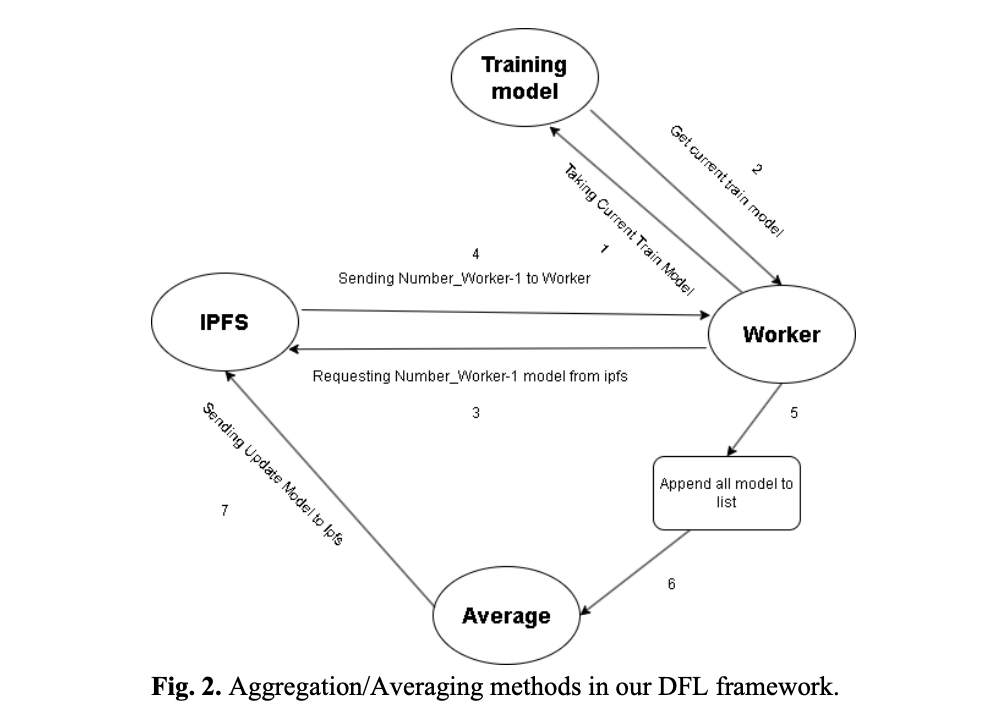
On the AI+Web3 path, academic research holds massive advantage. From Spice AI’s case, we see AI+Web3 demands a complete closed loop from academia-industry-research to commercial operations—every link must be perfected, or risk higher competitive exposure.
insight Talk
AI On-Chain is a concept ripe for seizing definitional authority today—it currently resides in a saddle period, possessing traditional “spaces of experience” and future “horizons of expectation.” Multiple factors—concept, narrative, technical features—will spark new possibilities.
AI on-chain isn’t just about putting models or inference on-chain—AI integrates multiple technologies, as does blockchain. From “simultaneity of the non-simultaneous,” we can mine intersecting meanings—e.g., blockchain’s consensus mechanisms and LLM’s reasoning-enhancing COT (Chain of Thought), RAG, etc.—all essentially aligning data structures.
02 Data Services
For both AI and Web3, high-quality data is essential for successful businesses—large models require diverse quality data sources, while Web3’s distributed storage and data-as-asset logic rely on quality commercial data.
AI primarily procures data from providers, while Web3 leverages financial market strengths in data transactions—accessing wider audiences—but suffers lower data quality compared to AI’s targeted procurement.
Measurable Data
MDT is a decentralized data value creation economy for AI—users, data providers, and buyers securely exchange data anonymously via blockchain. Founded in 2017, MDT has launched several successful products.
Consumer app RewardMe rewards users for contributing shopping data. Enterprise alternative data provider Measurable AI transforms anonymized transaction data into valuable consumer insights for brands and investors. To promote emerging use cases in decentralized finance, MDT launched Measurable Finance (MeFi) Oracle, bridging capital market financial data with the decentralized world.
Quoted from: https://mdt.io/
Let’s Workshop
Both AI and Web3 seek better business models—exploring intersections through business logic is viable. Data delivery and verification already have mature solutions—data-on-chain merely offers a sexier purist alternative, while asynchronous off-chain/on-chain transactions remain simpler and clearer.
At this stage, in data services, technology should follow business needs—how customers buy data, how providers deliver it.
Technology supplements business models since both AI and Web3 target the same quality data resources. This data-service business logic is what AI+Web3 projects should adopt.
In the paper “Decentralised, Scalable and Privacy-Preserving Synthetic Data Generation,” a system supporting decentralized, scalable, privacy-preserving synthetic data generation is proposed—allowing real data contributors to autonomously participate in differentially private synthetic data generation without trusted centers. Based on three key components:
Solid (social linked data), MPC (secure multi-party computation), and Trusted Execution Environments (TEEs). Solid allows secure data storage and access control; MPC uses cryptography for joint computation with private inputs; TEEs like Intel SGX rely on hardware to protect code and data confidentiality and integrity.
Effective integration of these three technologies solves challenges in synthetic data generation—contributor autonomy, decentralization, privacy, scalability.
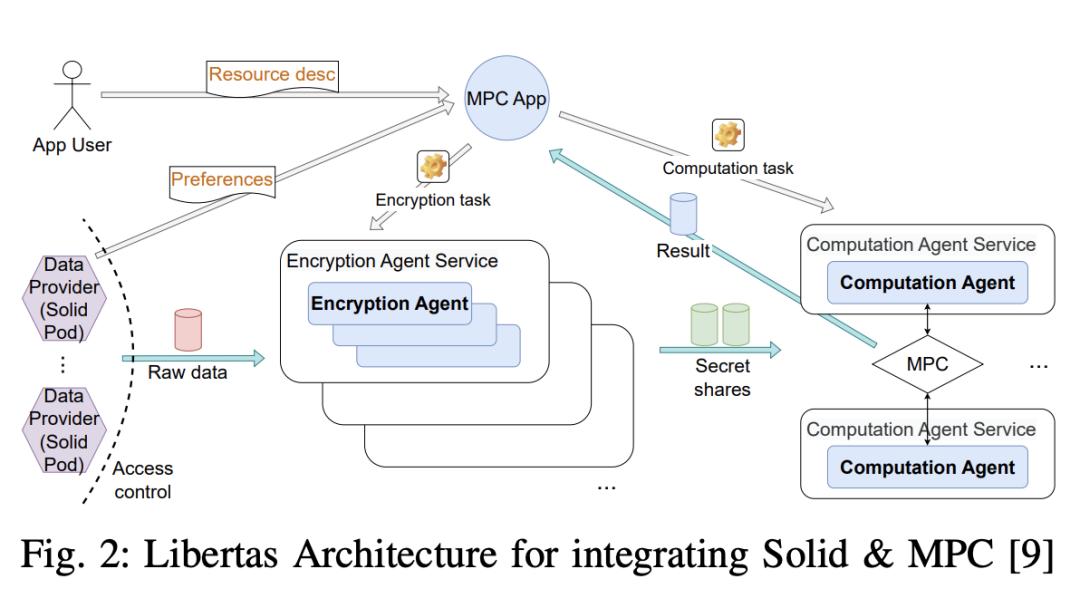
I believe “contributor autonomy, decentralization, privacy, and scalability” will become valuable directions for AI+Web3 data services. Web3’s strong community DNA makes community
Join TechFlow official community to stay tuned
Telegram:https://t.me/TechFlowDaily
X (Twitter):https://x.com/TechFlowPost
X (Twitter) EN:https://x.com/BlockFlow_News
 @Vion_Williams