The world is one giant meme, and rebels will keep emerging.
TechFlow Selected TechFlow Selected
The world is one giant meme, and rebels will keep emerging.
The birth of the word "meme" itself is the best illustration of meme culture.
 Navigating Web3 tides with focused insights
Author: Zuo Ye
January 3, 2009, marks the birth of Bitcoin. No special ceremony is needed to commemorate this day—just treat it as an ordinary day. Any attempt to seek or create meaning will ultimately fail. In the end, we’ll realize that the world is one giant Meme.
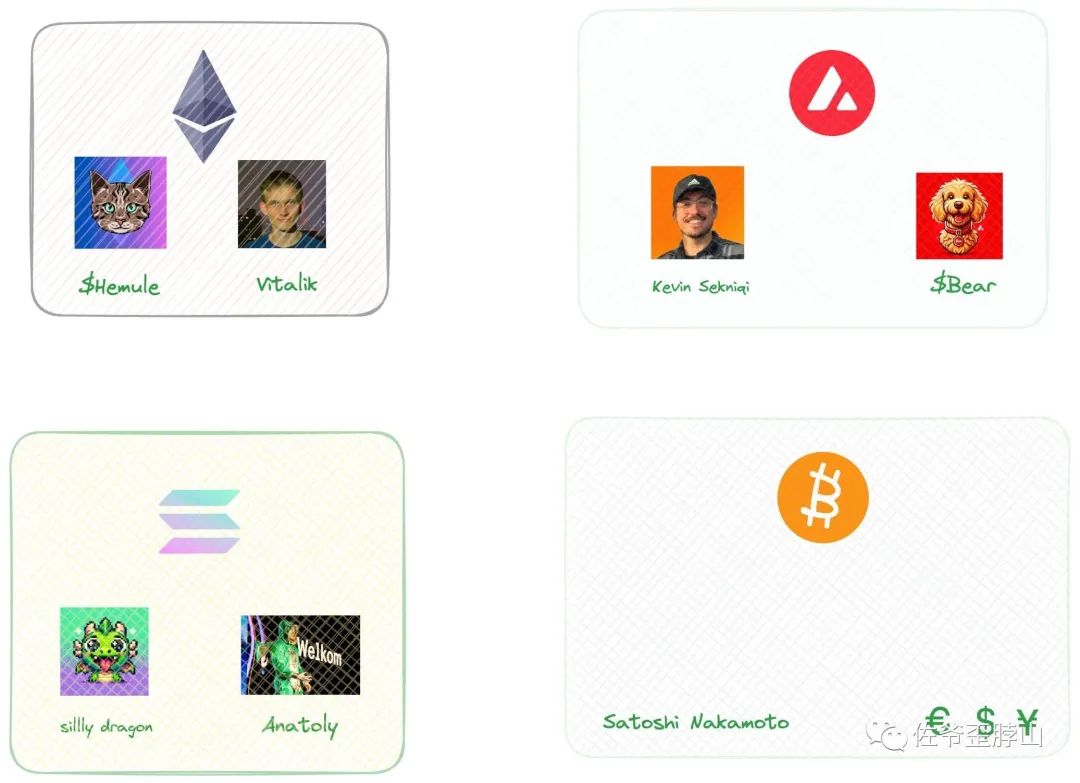
Meme coins are heating up again. After Elon Musk ignited the first "zoo" frenzy in 2021, by the end of 2023, cats, dogs, and dragons belonging to major blockchain founders became the stars of the second Meme wave. Love begets love—if you love Solana, take home the silly dragon. Early wishes for a happy Year of the Dragon.
So what was the earliest Meme coin? Was it Dogecoin from 2013, created as a parody of Bitcoin?
I believe it was when Satoshi Nakamoto inscribed "Chancellor on the Brink of Second Bailout for Banks"—on January 3, 2009, with the creation of Bitcoin’s genesis block, the earliest inscription and the first Meme coin were born simultaneously, symbolizing extreme disdain for fiat money, authority, and centralization.
The Decline of Charisma, the Rise of Meme Coins
Solana has launched repeated surprise attacks on Ethereum—not through DeFi, nor DePIN, but through founder-driven Meme identity. A new round of god-making is underway. Anatoly's community influence naturally couldn't compare with Vitalik's—back then!

The origin of the word 'Meme' itself is the best illustration of Meme culture.
The term 'Meme' was coined by Richard Dawkins in his book The Selfish Gene, adapting the Greek word Mimema ("that which is imitated") in imitation of 'Gene.' It refers to the most basic unit of human culture—an idea, a meme image, or indeed, a token or NFT.
In Chinese, Meme is translated as “moyin” (模因), which perfectly captures its meaning.
Cultural elements among humans are rarely original—they mostly come from imitation and adaptation. Solana can have its silly dragon, but only at the cost of $Bonk’s decline. Even within the Meme赛道, only a tiny minority survive; most are merely runners-up.
If I had to summarize the characteristics of Meme coins, two points come to mind:
-
Viral, viral marketing. Widely spreading viruses require low toxicity and long incubation periods; if the host dies too quickly, the virus cannot propagate. Whether it's long-standing coins like Bitcoin and Dogecoin, or newer ones like the silly dragon or Avalanche chicken, they all emphasize community ownership, with almost no obvious "whales" or centralized controllers.
-
Deconstruction—rebuilding existing structures. Established authority systems form tight, clearly defined hierarchies. Meme coins, however, scorn all existing authorities and don’t even consider themselves as potential replacements.
Meme coins represent the latest interpretation of memes. No one had ever tried combining memes with cryptocurrency before—even Dogecoin didn’t explode until eight years later. This wasn’t the result of steady accumulation or long-term effort, but rather a mockery of fate during a pandemic.
Infinite parallel universes—everything is meaningless.
Forcing meaning onto any particular thing, blockchain, or person will inevitably lead to collapse, bringing endless pain—financially and emotionally—to supporters. When Elon Musk’s long-term support for Dogecoin became public, rational people should have left and sought new targets, because Dogecoin had already become authoritative. But irrational people should stay, precisely because it now carries the endorsement of the world’s richest man.
In a single thought, everything is self-defined.
The world is one giant Meme—the rebels will keep emerging
Solana’s silly dragon and Avalanche’s COQ (Avalanche Chicken) are both acts of resistance against Ethereum. For years, whether in DeFi or NFTs, the EVM has dominated completely. People only bring up other L1s when they remember the word "decentralization," then quickly return to their ETH positions and analyze V God’s latest pronouncements.
In the crypto world, Satoshi represents tradition and legitimacy, but Vitalik is the living crypto prophet. Every move he makes offers room for deep interpretation—from taking budget flights to Singapore, to the rationale behind PoS, even changes in his MKR holdings are seen as a "damnation" of MakerDAO’s pivot to Solana.
This is a classic figure of authority, maximum personal charisma. In the New Testament, such figures include Moses—individuals with superhuman will and action. In China’s crypto community, while “V God” is clearly used mockingly, there’s also widespread acknowledgment of Vitalik’s almost supernatural, sacred qualities.
But now things are different—V God is about to become Little V.
Anti-authoritarianism is the defining trait of Meme coins in 2023, surpassing even inscriptions in boldness.
Inscriptions, especially those on Bitcoin, are typical examples of leveraging authority to elevate oneself. Meme coins, however, only recognize rebellion against authority itself:
-
Bitcoin resists fiat—not just inflationary dollars, but all forms of centralized currency;
-
Ethereum resists Bitcoin—when the Bitcoin community rejected Vitalik’s proposals, Ethereum positioned itself around smart contracts;
-
Now it’s Ethereum’s turn to be the “revolutionized”
Revolutionaries are forever young. Meme coins aren’t religious totems of their founders, but symbols of young Gen Z’s resistance against all rigid systems. Every time Elon Musk “shilled” Dogecoin, he personally planted the seeds of various Meme communities. Two years later, in the Year of the Dragon, there’s the silly dragon—touch it and prosperity grows.
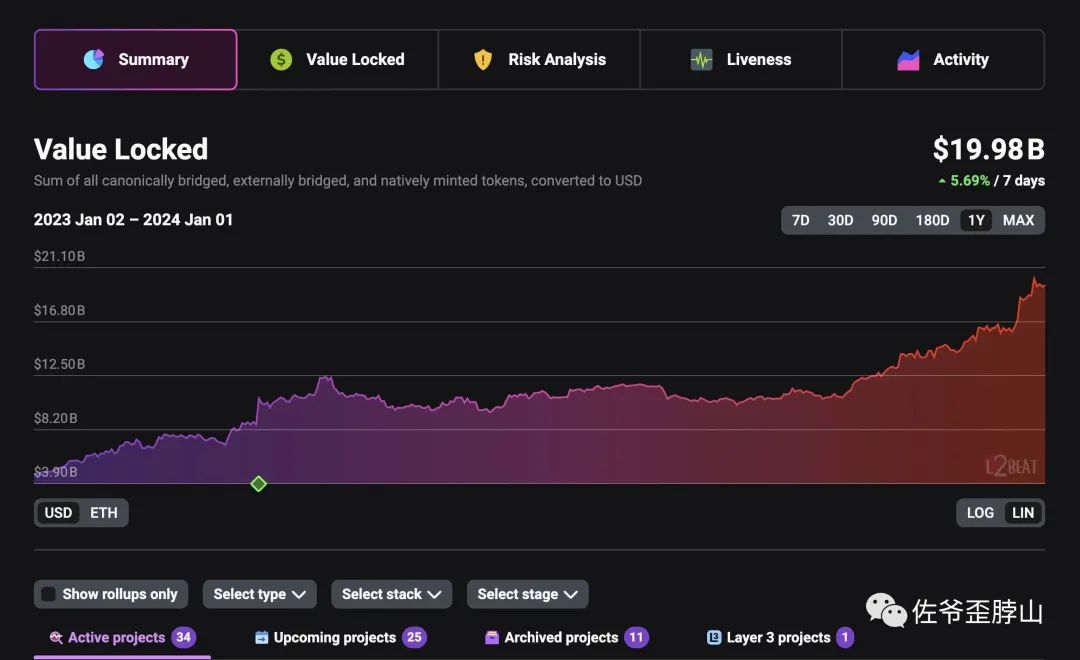
Currently, there are over 30 L1 blockchains and more than 70 Ethereum L2s, yet innovation seems increasingly concentrated within Ethereum’s orbit. Internal blockchain innovations are dwindling. Technologies like ZK, AI, FHE, and DVT exist primarily as components serving Ethereum, giving off a sense of needing V’s blessing to gain legitimacy.
This shouldn’t be what the crypto world looks like.
Conclusion
Bitcoin → Dogecoin → Silly Dragon—these mark the three stages of Meme coins. Bitcoin is where it all began, and every story afterward is just the selfish crypto gene trying to replicate its own boring narrative.
A game, a dream. Meme coins are unique in preserving the original spirit of crypto. They aren’t as grand as blockchains—their role is simple: sustaining community identity. That’s why they can run wild, fully embracing their humorous side. Like the Xpet recently flooding comment sections—just spam it if you want. It should be that simple. We’ve made blockchain too complicated.
Join TechFlow official community to stay tuned
Telegram:https://t.me/TechFlowDaily
X (Twitter):https://x.com/TechFlowPost
X (Twitter) EN:https://x.com/BlockFlow_News
 @zuoyeweb3