The Lord of the Rings, OpenAI, and Ethereum: Why Wasn't Vitalik Ousted from Ethereum?
TechFlow Selected TechFlow Selected
The Lord of the Rings, OpenAI, and Ethereum: Why Wasn't Vitalik Ousted from Ethereum?
In short, founders want OpenAI to be their Frodo, carrying the "One Ring" for them.
 Navigating Web3 tides with focused insights
Author: 0xAlpha
Translation: GaryMa, Wu Shuo Blockchain
Recently, we watched the "movie" *The Lord of AI*, a trilogy drama funded by Silicon Valley’s elite VCs and tech giants with over $10 billion. It consists of three episodes: *AI's Companion*, *Two Paths*, and *The Return of the King*. Many applauded Sam Altman’s return to the “throne,” even comparing it to Steve Jobs’ comeback at Apple.
However, these two events are fundamentally incomparable. *The Lord of AI* tells a completely different story—one about a battle between two paths: to pursue profit, or not? That is the real question!
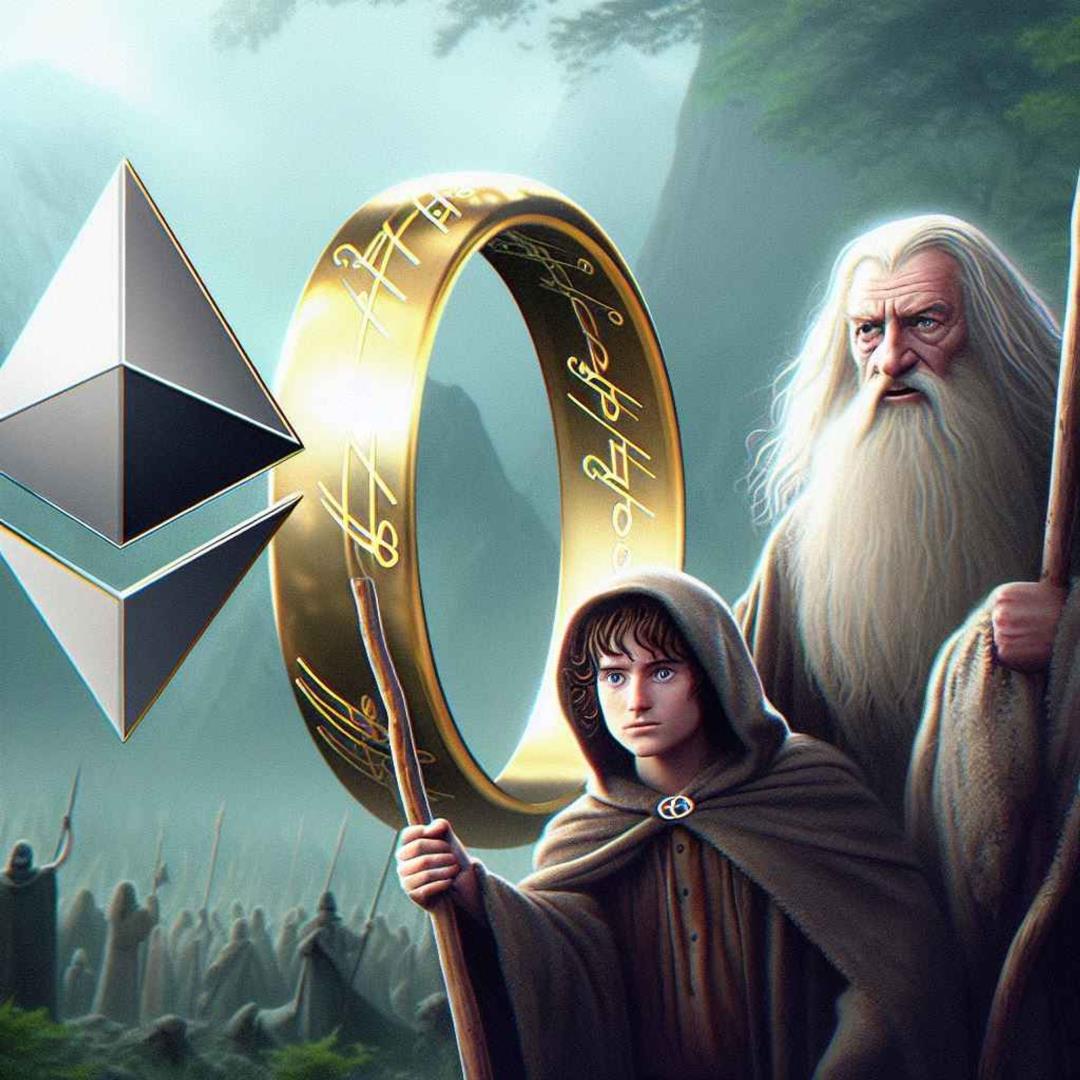
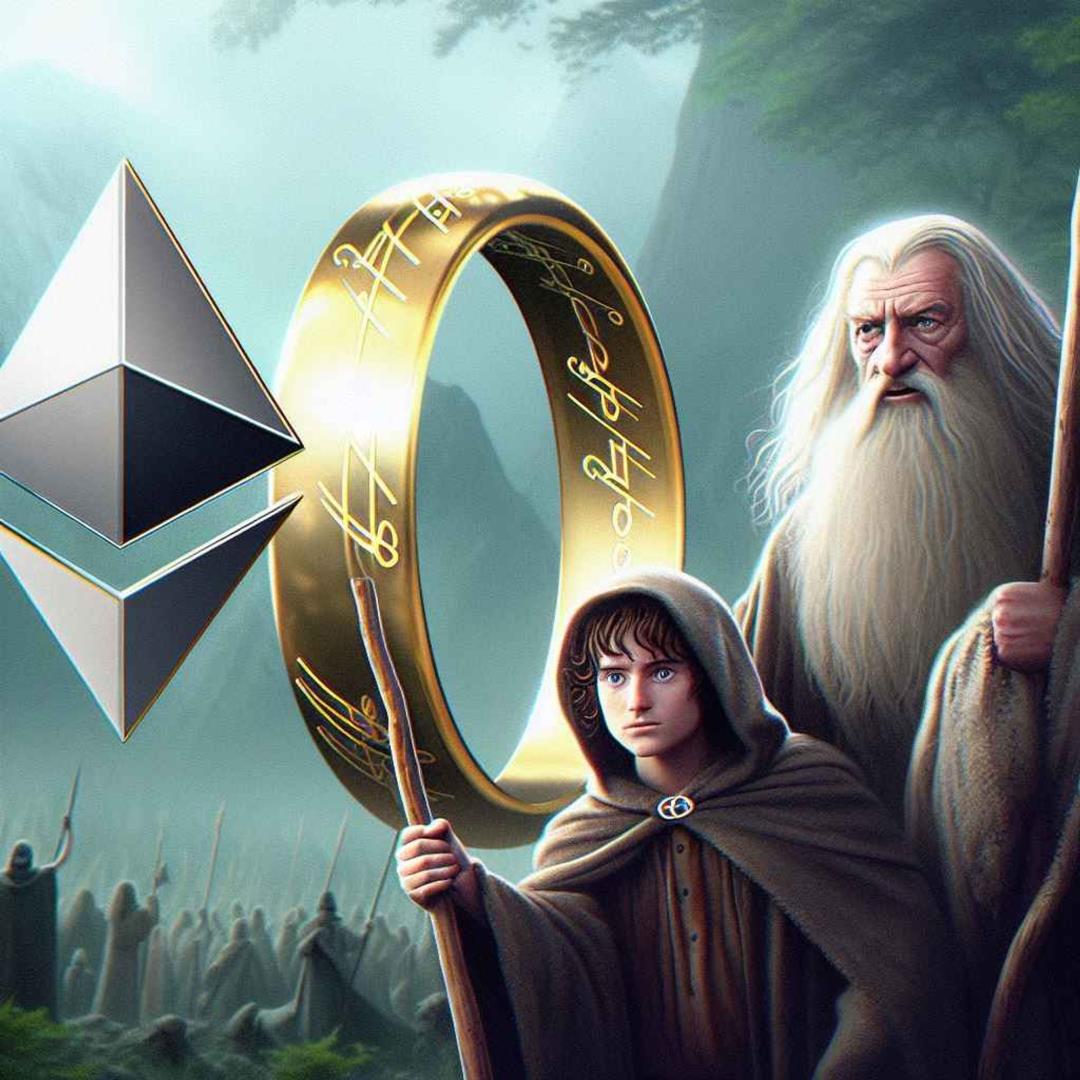
Let’s revisit the beginning of *The Lord of the Rings*. When Gandalf sees the One Ring at his uncle Bilbo’s home, he quickly realizes that such a powerful object cannot be handled by ordinary people. Only someone sacred and otherworldly—someone like Frodo—can carry it. This is why Frodo is central to the Fellowship: he is the only one capable of bearing such power without being consumed by it. Not Gandalf, not Aragorn, not Legolas, not Gimli—only Frodo. The entire narrative of *The Lord of the Rings* hinges on Frodo’s unique nature.
Note: Sam Altman is CEO of OpenAI; Ilya Sutskever is one of OpenAI’s co-founders (he diverged from Sam Altman on OpenAI’s strategic direction and was eventually marginalized); Greg Brockman is OpenAI’s CTO. Reid Hoffman is a renowned entrepreneur and venture capitalist, formerly co-founder of LinkedIn. Jessica Livingston is a founding partner at Y Combinator. Peter Thiel is a well-known entrepreneur and VC, also a co-founder of PayPal.
Now switch back to the opening scene of *The Lord of AI*. In 2015, Sam Altman, Greg Brockman, Reid Hoffman, Jessica Livingston, Peter Thiel, Elon Musk, and several tech companies announced the creation of OpenAI, pledging over $1 billion in funding to this venture. These were some of the brightest minds on Earth—almost as wise as Gandalf. They knew they were building something immensely powerful—like the One Ring—that should not fall into the hands of anyone driven by self-interest. It had to be entrusted to selfless individuals, like Frodo. Therefore, instead of launching a for-profit company, they established OpenAI as a nonprofit research organization, supposedly mission-driven rather than profit-driven.
This belief—"such powerful technology must not be controlled by profit-seeking corporations"—may have been more than just a shared principle among OpenAI’s co-founders. It might have been precisely why they came together in the first place. Before OpenAI existed, Google had already demonstrated its potential to wield this kind of superpower. Thus, OpenAI appeared as a "league of protectors," visionary "guardians of humanity" uniting to counter Google’s transformation into an AI monster—an entity pursuing profits above all. Ilya may have been convinced to leave Google specifically because of this ideal. From any rational perspective, his move made no sense. Back in 2015, no one could offer a better AI development platform than Google. Although OpenAI’s founders were Silicon Valley titans, none of them were AI practitioners (they didn’t code). And financially, OpenAI was clearly outmatched: Google had vastly deeper pockets. The founders pledged $1 billion, but only about 10% was delivered (Elon Musk’s $100 million or $30 million from other donors). Financially, a nonprofit couldn’t possibly match what Ilya earned at Google. The only conceivable reason that could have persuaded Ilya to leave Google and lead OpenAI’s research was this very ideology. Ilya’s philosophical views aren’t as publicly known as those of his PhD advisor. Geoffrey Hinton left Google in 2023, disillusioned by Reagan-era politics and military funding of AI.
In short, the founders wanted OpenAI itself to become their Frodo—to carry the "One Ring" for them.
But life in sci-fi movies is much easier. In films, solutions are simple. Tolkien merely invented Frodo—a selfless character who resists the Ring’s temptation—and surrounded him with the Fellowship to protect him from physical threats.
To make Frodo more believable and natural, Tolkien even created an entire race—Hobbits—who are inherently innocent, kind, and altruistic. As a typical upright and good-hearted Hobbit, Frodo naturally becomes the chosen one, able to resist temptations that even wise Gandalf cannot withstand. If Frodo’s nature stems from racial traits, then Tolkien’s solution to the Fellowship’s greatest challenge essentially carries a hint of racism—placing humanity’s hope on the noble character of a particular race. As a non-racist, while I can enjoy superhero (or super-race) narratives solving problems in fiction or film, I can’t naively believe the real world works so simply. In reality, I don’t trust this solution.
The real world is far more complex. Take OpenAI as an example: most models built by OpenAI (especially the GPT series) are computational monsters relying on power-driven chips (primarily GPUs). In a capitalist world, this means they require massive capital. Without capital’s blessing, OpenAI’s models could never have evolved into what they are today. In this sense, Sam Altman—as the company’s hub of resources—is a pivotal figure. Thanks to Sam’s Silicon Valley connections, OpenAI received strong support from investors and hardware suppliers.
The resources flowing into OpenAI to fuel its models exist for one reason: profit. Wait—wasn’t OpenAI a nonprofit? Well, technically yes—but something changed underneath. While maintaining its nominal nonprofit structure, OpenAI has increasingly shifted toward becoming a for-profit entity. This began in 2019 with the launch of OpenAI Global LLC, a for-profit subsidiary created to legally attract venture capital and grant employee equity. This clever maneuver aligned OpenAI with investor interests (this time not donors, so likely profit-driven). Through this alignment, OpenAI grew under capital’s favor. OpenAI Global LLC profoundly impacted OpenAI’s growth, especially through its alliance with Microsoft, securing a $1 billion investment (later tens of billions), and running its computational beasts on Microsoft’s Azure-powered supercomputing platform. We all know a successful AI model requires three things: algorithms, data, and computing power. OpenAI gathered top global AI experts for their algorithmic work (note: this too depends on capital—OpenAI’s expert team isn’t cheap). ChatGPT’s data comes largely from the open internet, so it’s not a bottleneck. But computing power, built on chips and electricity, is extremely costly. In short, half of these three critical elements are primarily enabled by OpenAI Global LLC’s for-profit structure. Without this continuous fuel supply, relying solely on donations, OpenAI could never have reached this point.
But there’s a price. Remaining independent while enjoying capital’s blessings is nearly impossible. Today’s so-called nonprofit framework is more nominal than real.
Many signs suggest the conflict between Ilya and Sam was exactly about this path choice: Ilya seemed determined to prevent OpenAI from straying off its original course.
There’s also talk that Sam made a mistake during the so-called Q-model breakthrough incident, triggering the failed coup. But I don’t believe OpenAI’s board would fire a highly successful CEO just for mishandling a specific issue. Even if such a mistake occurred, it was at most a trigger.
The real problem may be that OpenAI has deviated from its original path. In 2018, Elon Musk parted ways with Sam for the same reason. And seemingly in 2021, the same cause led a group of former members to leave OpenAI and found Anthropic. Furthermore, during the unfolding drama, Elon Musk posted an anonymous letter on X pointing directly at this issue.
Profit or not? This question seems answered at the end of *The Return of the King*: with Sam’s return and Ilya’s exile, the road conflict ends. OpenAI is destined to become a de facto for-profit company (perhaps still cloaked in a nonprofit shell).
But don’t misunderstand me. I’m not saying Sam is bad and Ilya is good. I’m simply pointing out that OpenAI faces a dilemma—the so-called "super-corporation paradox":
A corporation operating for profit risks being controlled by the capital invested in it—which brings dangers, especially when building an extremely powerful tool. Yet if it doesn’t operate for profit, it may face resource shortages. In capital-intensive fields, this means it might not be able to build anything at all.
In fact, the emergence of any super-powerful tool inevitably raises similar concerns about control—not limited to corporations. Consider the recently released film *Oppenheimer*. When the atomic bomb successfully detonated, Oppenheimer felt more fear than joy. At the time, scientists hoped to establish a supranational body to monopolize nuclear power. This idea resembled OpenAI founders’ original vision—the notion that something as powerful as an atomic bomb shouldn’t be held by any single organization, not even the U.S. government. It wasn’t just theoretical; actions were taken. Manhattan Project physicist Theodore Hall leaked key details of the bomb to the Soviet Union. In a 1997 statement, he admitted that “a U.S. monopoly on nuclear weapons” was “dangerous and should be avoided.” In other words, Theodore Hall helped decentralize nuclear technology. Clearly, leaking secrets to the Soviets to decentralize nuclear power was controversial (the Rosenbergs were executed in the electric chair for espionage, though evidence suggests they were wrongfully convicted), yet it reflected a consensus among scientists—including the father of the atomic bomb, Oppenheimer—that such immense power must not be monopolized! However, I won’t delve further into how to handle super-powerful tools, as that’s too broad a topic. Let’s refocus on the specific issue of super-powerful tools controlled by profit-driven corporations.
So far, we haven’t mentioned Vitalik, the name in the article’s title. What does Vitalik have to do with OpenAI or the One Ring?
Because Vitalik and Ethereum’s founders once faced a remarkably similar situation.
In 2014, when Ethereum’s founders launched the project, they disagreed on whether the legal entity should be a nonprofit or a for-profit company. Like OpenAI at its inception, they ultimately chose a nonprofit—the Ethereum Foundation. The disagreement among Ethereum’s founders may have been even greater than that within OpenAI, leading to some co-founders leaving. By contrast, establishing OpenAI as a nonprofit was a consensus among all founders. Disagreements about OpenAI’s direction emerged later.
As an outsider, I don’t know whether Ethereum founders’ disagreements stemmed from their anticipation that Ethereum would become a super-powerful "One Ring," thus unfit for control by a profit-driven entity. But that doesn’t matter. What matters is: although Ethereum has grown into something powerful, the Ethereum Foundation remains a nonprofit to this day—and hasn’t faced OpenAI’s existential dilemma. In fact, whether the Ethereum Foundation is nonprofit or for-profit is no longer particularly significant. Perhaps it mattered more when Ethereum first launched, but not anymore. The powerful Ethereum itself now has an autonomous life, beyond the foundation’s control. During its development, the Ethereum Foundation did face financing challenges similar to OpenAI’s. For instance, I once heard Xiao Feng—one of Ethereum’s early donors—complain at a seminar that the foundation was too poor to adequately fund developers. I don’t know exactly how financially constrained the foundation truly is, but such limitations apparently haven’t hindered the ecosystem’s growth. Conversely, some well-funded blockchain foundations have failed to cultivate thriving ecosystems despite burning cash. In this world, capital still matters—but only up to a point. In OpenAI’s case, however, without capital? No chance!
Ethereum and artificial intelligence are, of course, entirely different technologies. But one thing is similar: both depend heavily on large-scale resource investment (or capital input). (Note: developing Ethereum’s code alone may not require much capital, but here I refer to building the entire Ethereum system.) To attract such massive capital, OpenAI had to quietly abandon its original intent and transform into a de facto for-profit company. On the other hand, despite attracting vast amounts of capital into its ecosystem, Ethereum remains uncontrolled by any for-profit organization. Thriving under capital’s blessing yet free from its control—this is almost miraculous!
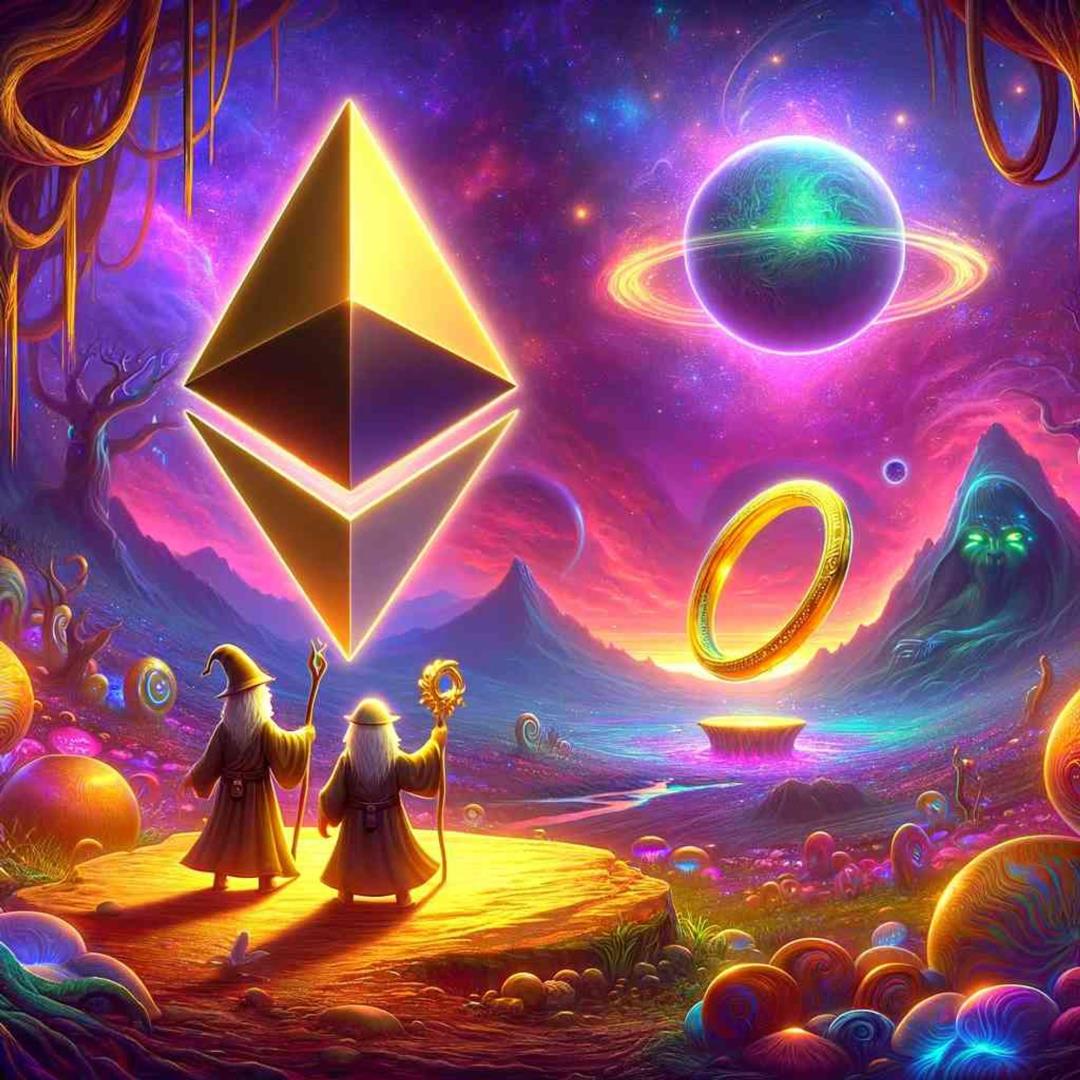
Vitalik succeeded because he had his own Frodo—blockchain!
Let’s categorize technologies based on whether they produce tangible outputs: productive technologies versus connective technologies. Artificial intelligence belongs to the former; blockchain to the latter. AI performs many productive tasks—for example, ChatGPT generating text, Midjourney creating images, or robots manufacturing cars in Tesla’s fully automated factories.
Technically speaking, blockchain produces nothing. It is merely a state machine, incapable even of initiating operations autonomously. But as a connective technology, its significance lies in enabling a new paradigm for large-scale human collaboration that transcends traditional for-profit corporations. Fundamentally, a corporation is a set of contracts among shareholders, creditors, boards, and management. The enforceability of these contracts relies on courts: if one party breaches, the other can sue. The effectiveness of such lawsuits depends on enforcement via a state machine (so-called law enforcement). Thus, at root, corporations are contractual relationships enforced by a state machine. Now, blockchain introduces a new way of enforcing contracts—technologically enforced agreements. While Bitcoin’s blockchain-based contracts remain functionally narrow (intentionally so), Ethereum’s smart contracts generalize this new mechanism. Essentially, Ethereum enables humans to collaborate at scale across many domains in entirely new ways, distinct from traditional profit-driven firms. For example, DeFi represents a novel mode of cooperation in finance.
In this sense, blockchain is a “super-corporation”! Precisely due to this “super-corporation” paradigm, Ethereum has flourished without facing OpenAI’s corporate dilemma. Blockchain is Vitalik’s Frodo—carrying the “One Ring” without being consumed by its power.
So now you see, Frodo has always been the key character behind all these stories:
-
Gandalf was lucky—he had Frodo as a friend in the fantasy world.
-
Vitalik was lucky—he had his Frodo in the new world—blockchain.
-
Ilya and the other OpenAI founders weren’t so lucky—they live in an old world where no Frodo exists.
Join TechFlow official community to stay tuned
Telegram:https://t.me/TechFlowDaily
X (Twitter):https://x.com/TechFlowPost
X (Twitter) EN:https://x.com/BlockFlow_News