








Wicrypt: Tapping Undeveloped DePin Markets, Aiming to Be the "African" Helium
TechFlow Selected TechFlow Selected
Wicrypt: Tapping Undeveloped DePin Markets, Aiming to Be the "African" Helium
Wicrypt focuses on decentralized wireless WiFi networks and is Africa's first blockchain-based decentralized wireless infrastructure project.
 Navigating Web3 tides with focused insights
Written by: TechFlow
Over the past year, the DePin sector has remained a hot narrative in the crypto space.
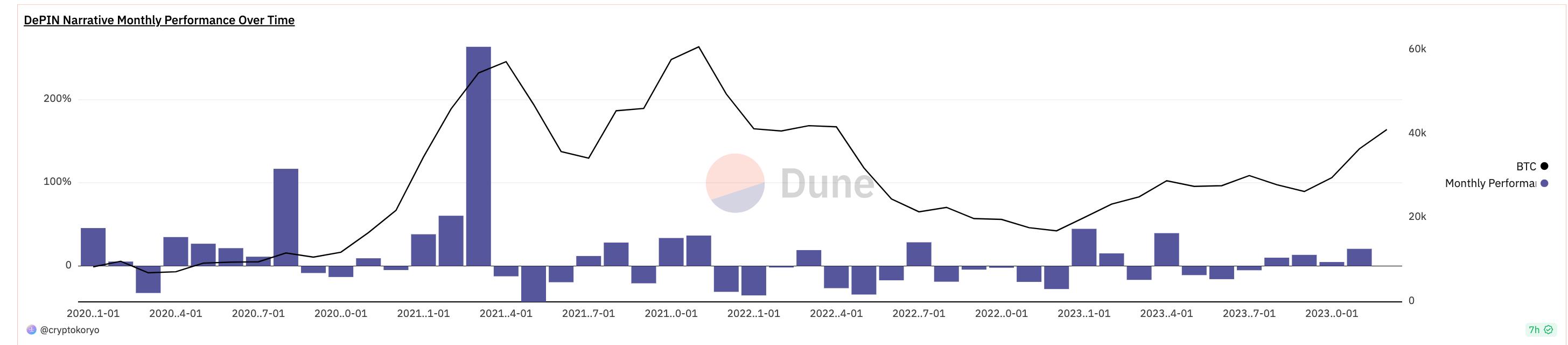
Recently, with significant price increases seen in related projects such as Honey, Hnt, and Iotex, the DePin sector has once again drawn widespread attention.
However, the market cap of leading projects like HNT has already approached $700 million, significantly reducing opportunities for generating alpha returns.
This raises a new question for the market: amid sustained interest in the broader DePin sector, is there a lower-market-cap project with greater potential that could serve as an appealing “alternative” for degens?
From this perspective, Wicrypt may be one such candidate.
Similar to Helium, Wicrypt provides physical hardware—primarily smart wireless WiFi hotspots—but it targets a much broader blue ocean: Africa.
In this underdeveloped region, DePin has yet to gain significant traction. Yet precisely because it remains largely unexplored, it may also harbor far greater opportunities.
Wicrypt Business Overview
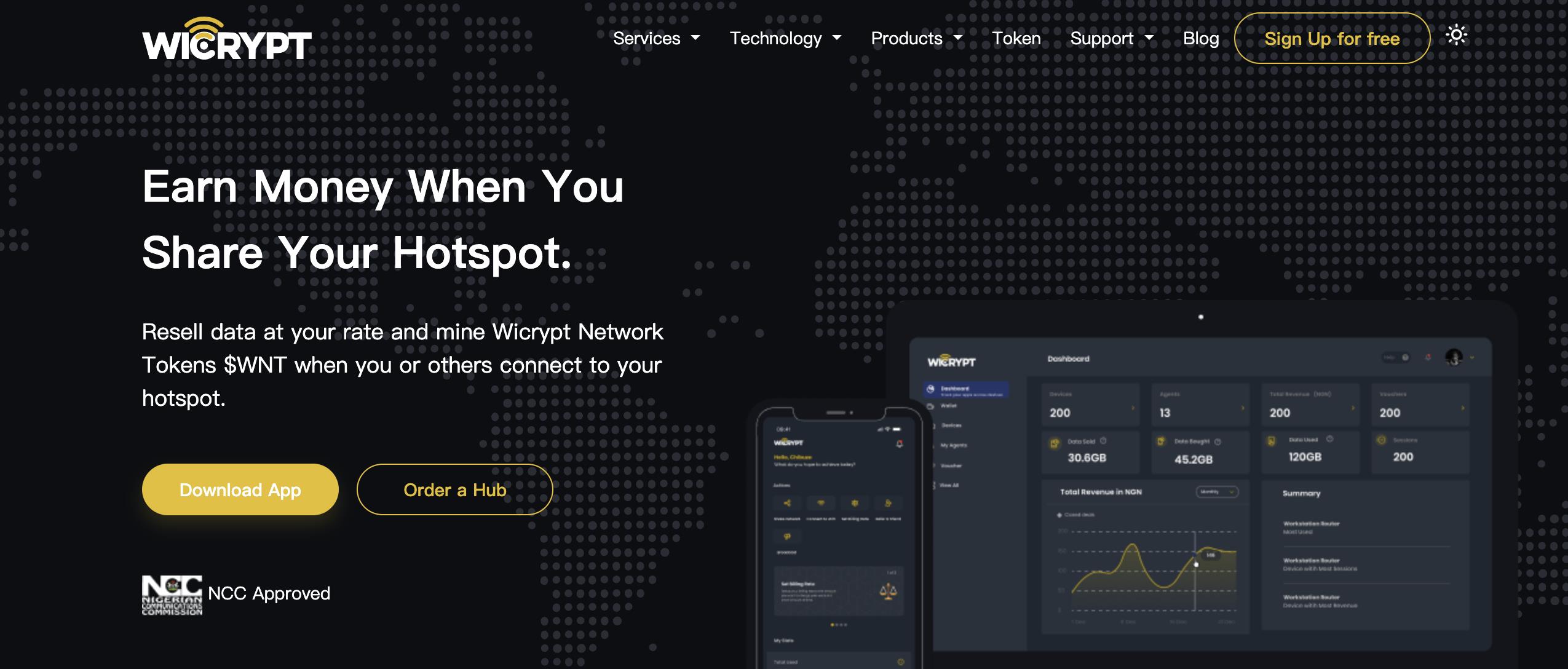
Like Helium, Wicrypt focuses on decentralized wireless WiFi networks, offering token incentives to hotspot providers. It is also the first blockchain-based decentralized wireless infrastructure project in Africa.
The Wicrypt team believes that censorship-controlled internet services have led to highly distorted news and information online. For example, during events such as the pandemic and the Russia-Ukraine conflict, citizens in different countries often received heavily filtered versions of the truth, leaving many increasingly disconnected from reality. This, they argue, clearly violates people's right to access fair and unbiased information.
One of Wicrypt’s core missions is to free people from this “Truman Show”-like environment. Through its unique infrastructure hardware, Wicrypt enables anyone to become a sub-retailer of an ISP (Internet Service Provider), helping build a globally distributed internet ecosystem.
And the first stop for this ecosystem is Africa—a region with underdeveloped internet infrastructure.
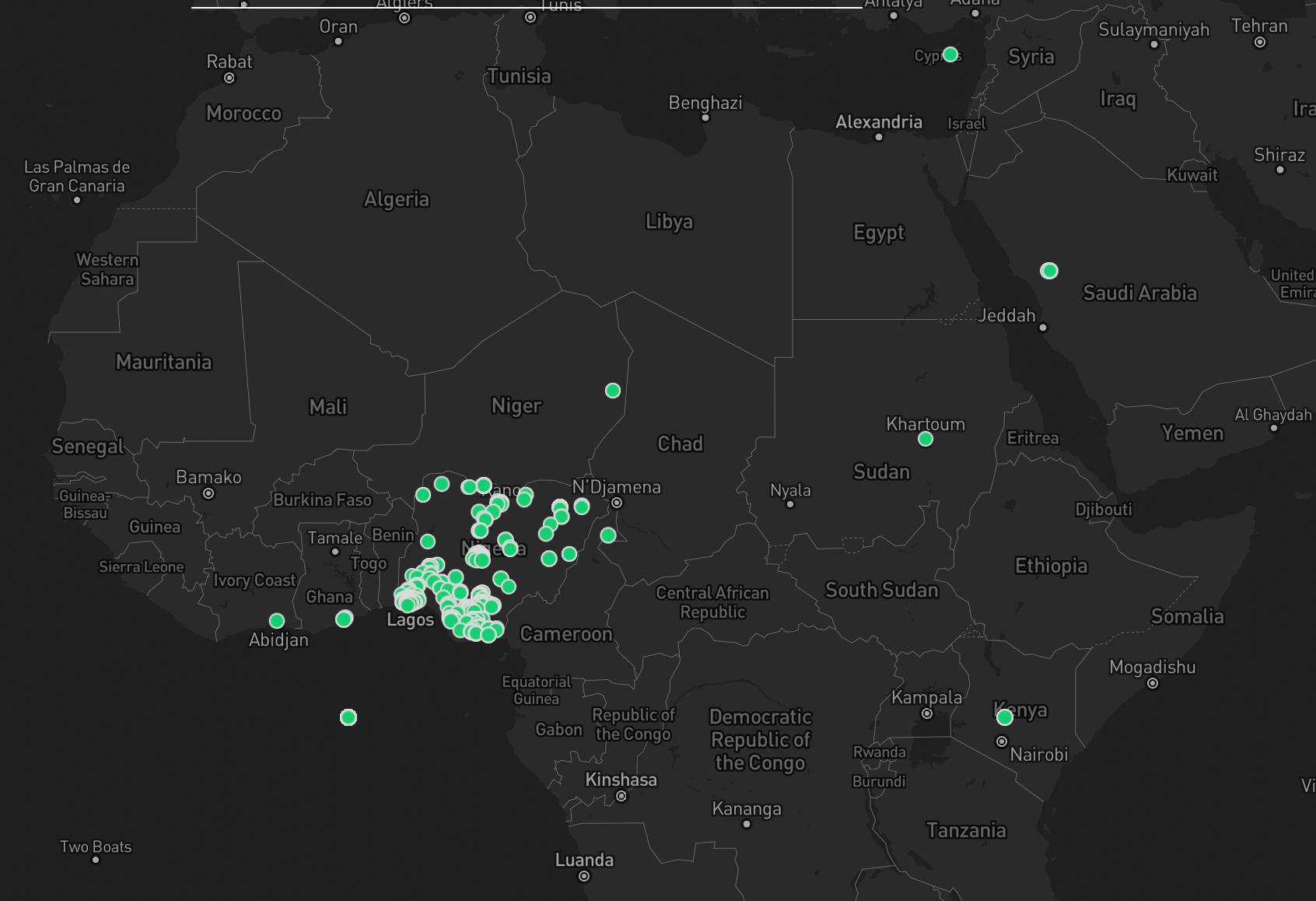
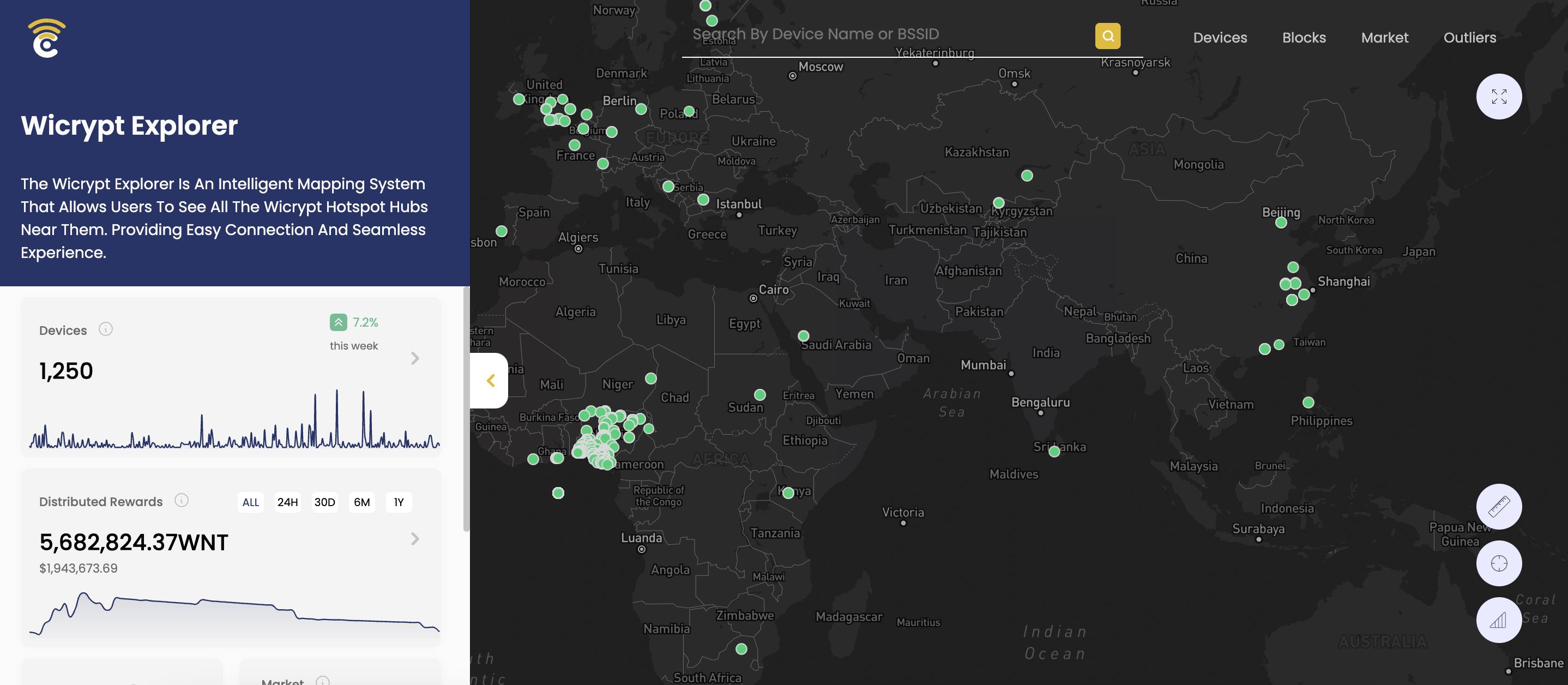
According to Wicrypt’s official browser map, decentralized hotspots are currently densely concentrated in Nigeria, Africa.
A report on Nigeria’s wireless market provided by Mobility Foresights forecasts significant growth in the Nigerian wireless market between 2023 and 2030.
The report notes that Wi-Fi is the most popular form of wireless networking in Nigeria due to its ease of setup and cost efficiency. Additionally, setting up a Wi-Fi network is far simpler than laying physical cables across buildings, saving both time and energy.
This insight broadly reflects the widespread demand for Wi-Fi across underdeveloped regions in Africa.
Thus, Wicrypt’s strategy of expanding into Africa aligns with the region’s transition from zero to one in internet infrastructure development. While the project also has nodes in Europe and Asia, their density remains far lower than in Africa.
Wicrypt’s Hardware Products
Wicrypt currently offers two types of hotspot hardware for data distributors: Lynx and Spider.
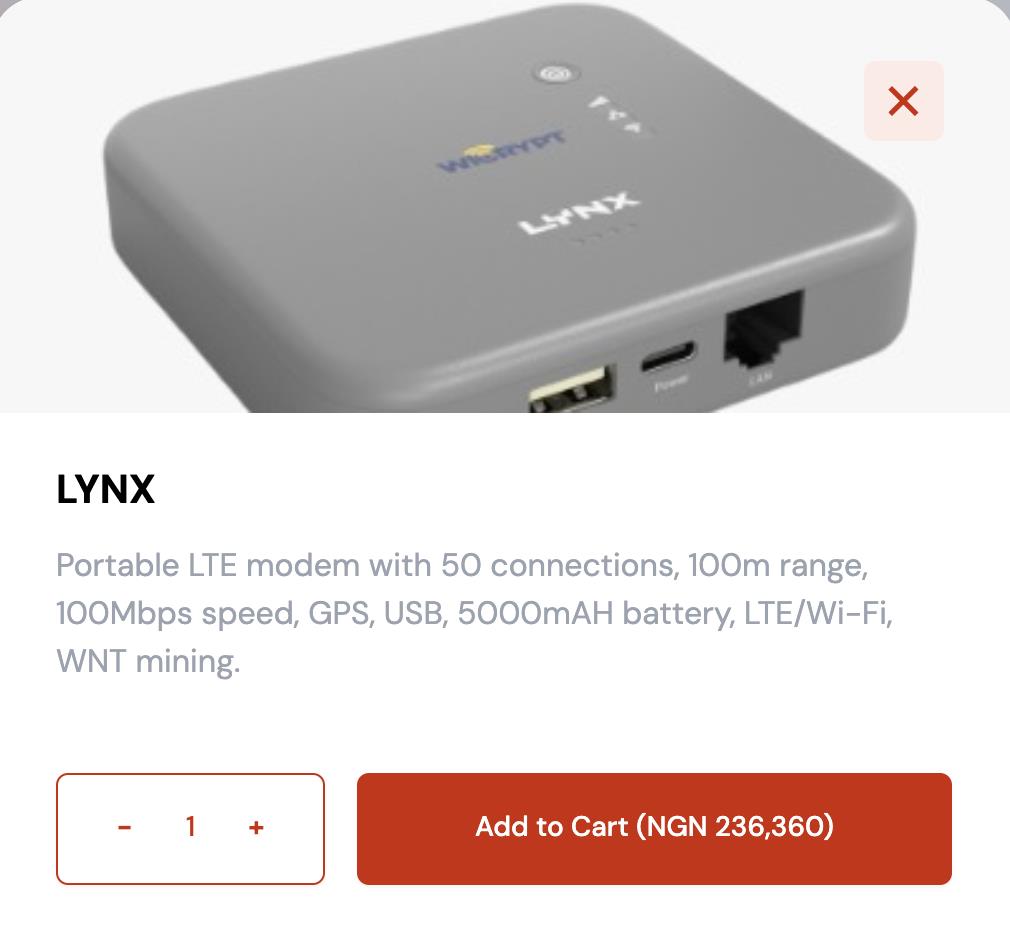
LYNX is an entry-level device capable of supporting up to 50 concurrent client connections. It delivers speeds of up to 100 Mbps, covers a radius of approximately 100 meters, and is priced around $300.
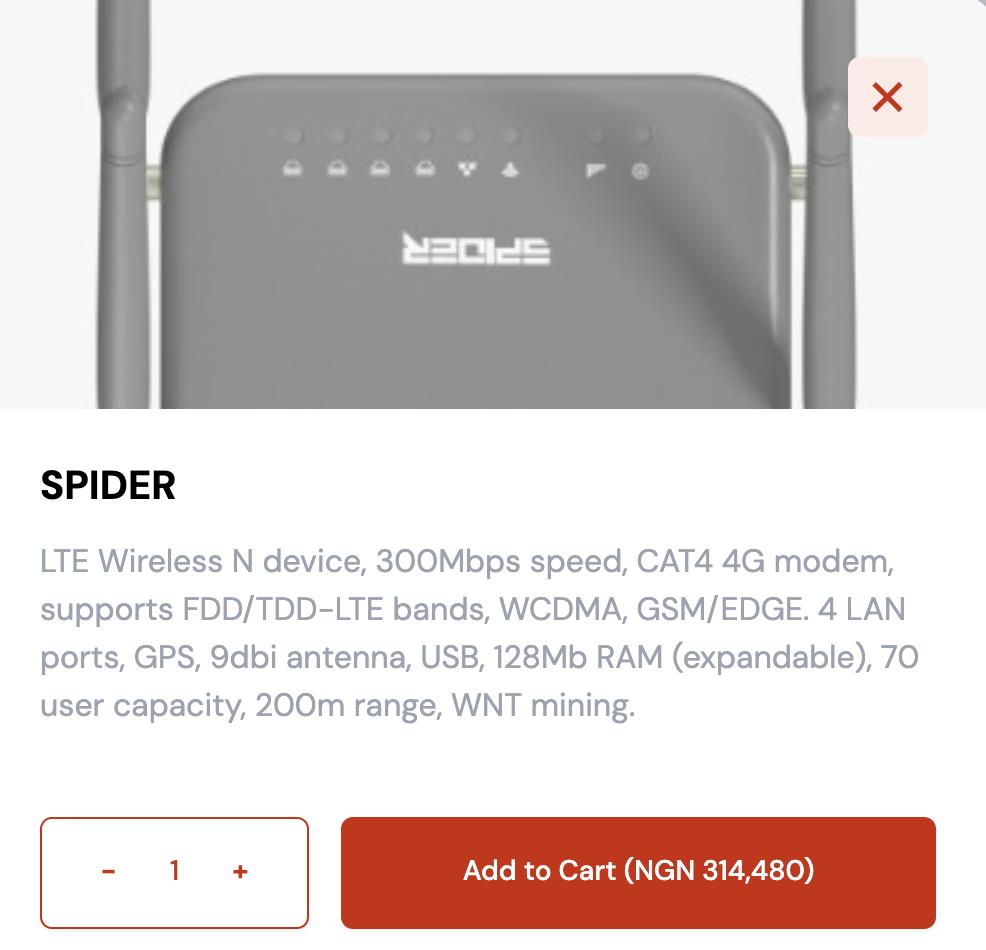
Spider is an upgraded version of LYNX. Compared to LYNX, it offers higher capacity—supporting up to 70 concurrent clients—with faster speeds of up to 300 Mbps and a coverage range of about 200 meters. It is priced at around $400.
Both devices are eligible to participate in mining the project’s native token.
Each device connected to Wicrypt generates an NFT as its on-chain representation. Data transmitted through the device is recorded in real-time on the blockchain via the Wicrypt block explorer. The block explorer also functions as a map system, allowing users to easily check whether Wicrypt hotspots are available nearby.
Tokenomics
WNT is Wicrypt’s native token, launched on Polygon. The total supply is 200 million tokens, with 33 million currently in circulation. Wicrypt will gradually release tokens to ecosystem participants, investors, the community, and reserves according to the following schedule:
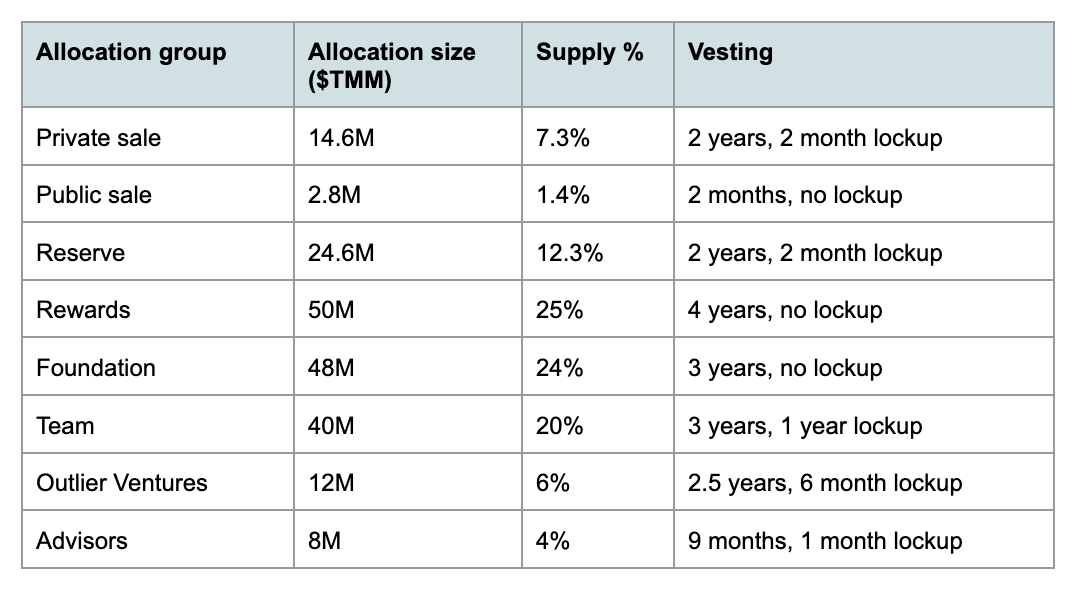
As shown, 25% of the supply is allocated to incentives, which are further distributed among three groups:
-
Network providers operating the two aforementioned devices (50%);
-
Users consuming hotspot services (20%);
-
Stakers (30%).
Due to differences in hardware and geographic location among hotspot providers, Wicrypt uses the following formula to calculate miner rewards:

Where:
-
Hdr = Final reward;
-
Pv = Percentage of a miner’s sales out of total Wicrypt miner sales;
-
Pwv = Weighted sales volume (calculated by multiplying each hub’s sales by its rank weight, location bonus, user rank modifier, and quality check modifier, resulting in cumulative weighted volume);
-
Hwv = Total weighted volume generated by an individual miner;
-
Rd = Reward coefficient.
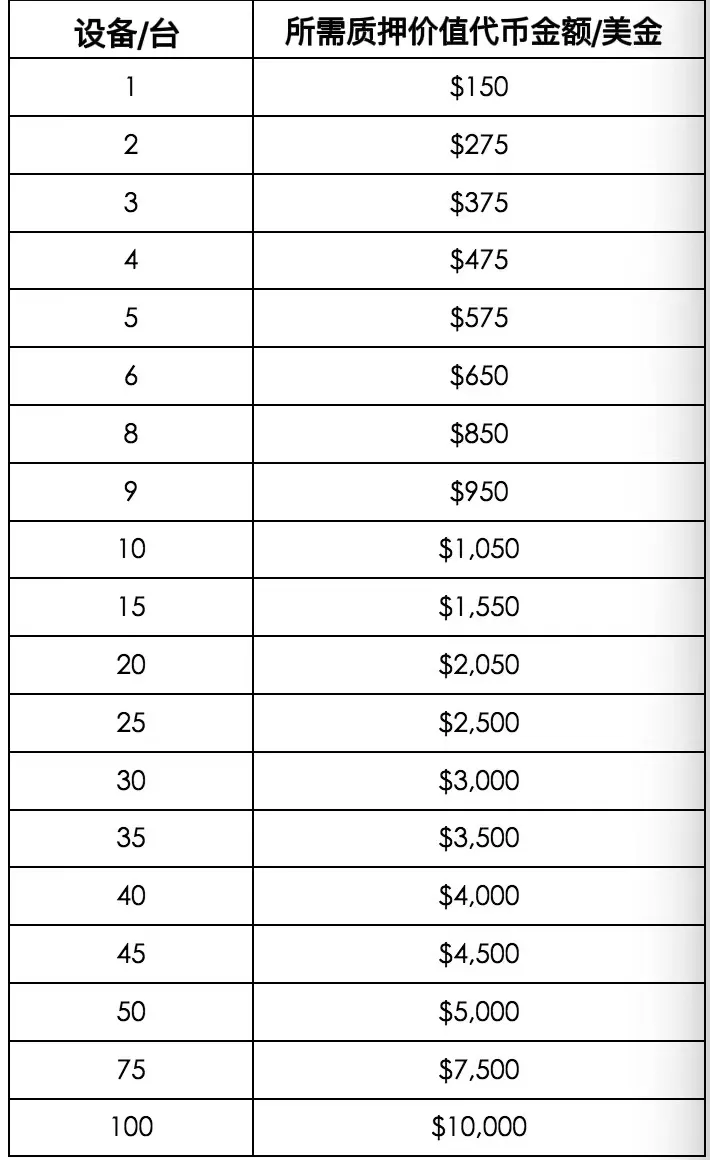
Each mining device must stake a certain amount of WNT to operate. Miners can choose lock-up periods of 3, 6, or 12 months. Once staked, tokens cannot be withdrawn before the period ends. The annualized returns are 500% for 3 months, 1000% for 6 months, and 3000% for 12 months. These yields fluctuate based on changes in user numbers or network device counts.
This also explains why the circulating supply of the project’s token remains extremely low in its early stages.
Recent Catalysts
Recently, Wicrypt received grants of $150,000 from Microsoft and $200,000 from Google, serving as strong long-term tailwinds for the project and contributing to a 280.9% price increase over the past 30 days.
On November 30, the official Twitter account announced that to expand its reach and accommodate growing user demand, Wicrypt will soon deploy to Arbitrum, opening access to a larger user base.

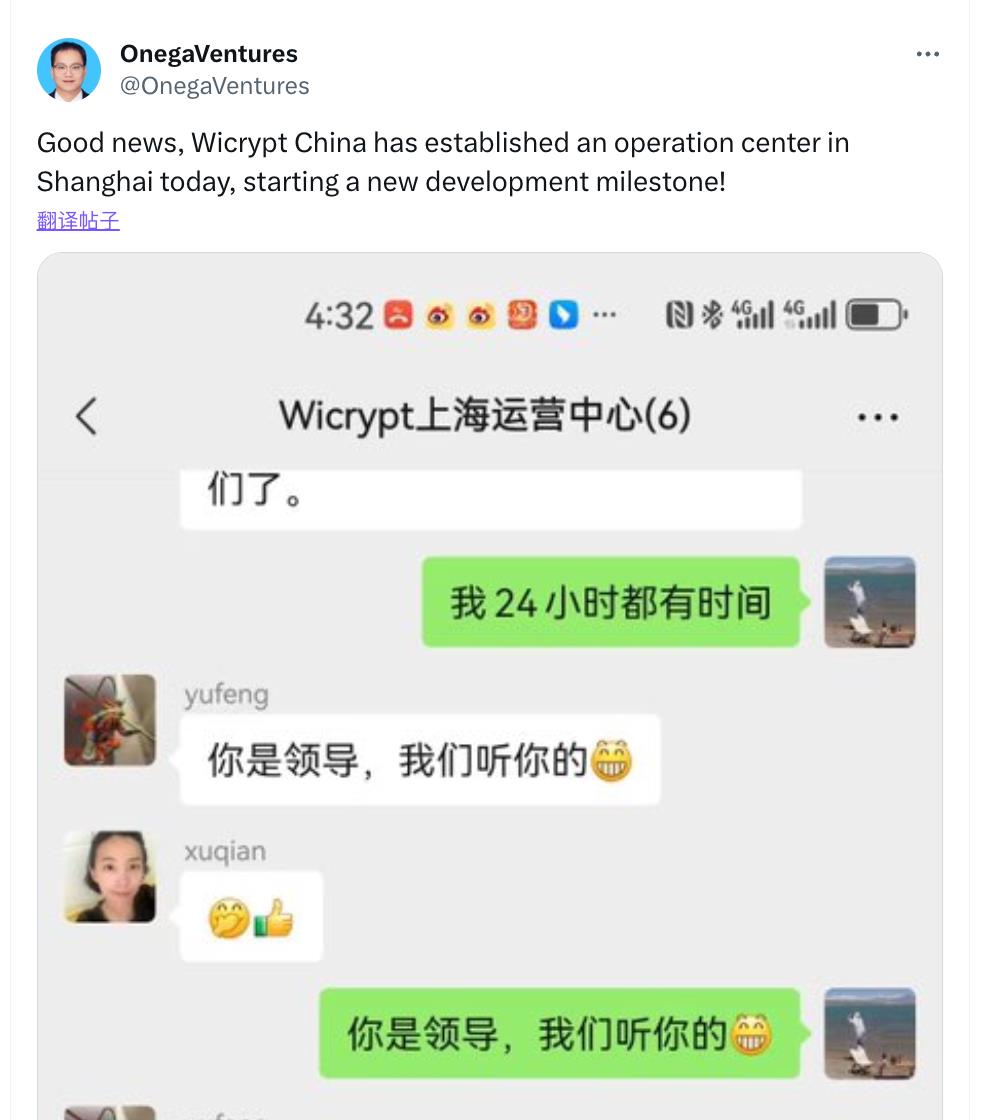
Additionally, according to tweets from Polychain and Borderless Capital LP, along with @OnegaVentures, Wicrypt’s China regional representative, Wicrypt established an operations center in Shanghai on the 30th of last month. Related activities may operate within the boundaries permitted by domestic regulations.
Although specific operational models and products remain unclear, this move undoubtedly brings the project closer to Chinese users.
Whether in terms of business expansion or tokenomic design, Wicrypt demonstrates strong potential. An African version of Helium may well be on its way.
Investors may want to keep a close eye on how far Wicrypt can go. Only time will tell.
Join TechFlow official community to stay tuned
Telegram:https://t.me/TechFlowDaily
X (Twitter):https://x.com/TechFlowPost
X (Twitter) EN:https://x.com/BlockFlow_News
 深潮TechFlow


