Turkey Cryptocurrency Market Research Report
TechFlow Selected TechFlow Selected
Turkey Cryptocurrency Market Research Report
Turkey could become a haven for crypto professionals.
 Navigating Web3 tides with focused insights
Preface
Turkey is one of the countries with the highest cryptocurrency adoption rates in the world. According to data from HedgewithCrypto, adoption has more than doubled over the past three years, rising from 16% to 40% of the population. It's estimated that nearly two out of every five citizens hold some form of cryptocurrency. Chainalysis ranks Turkey as the fourth-largest crypto market globally by transaction volume, ahead of other major economies.
November 2023 belonged to Istanbul, Turkey — a two-week period featuring nearly 300 blockchain-related events, drawing professionals and crypto enthusiasts from the Americas, Asia, Europe, and the Middle East for deep exchanges focused entirely on the Turkish market.
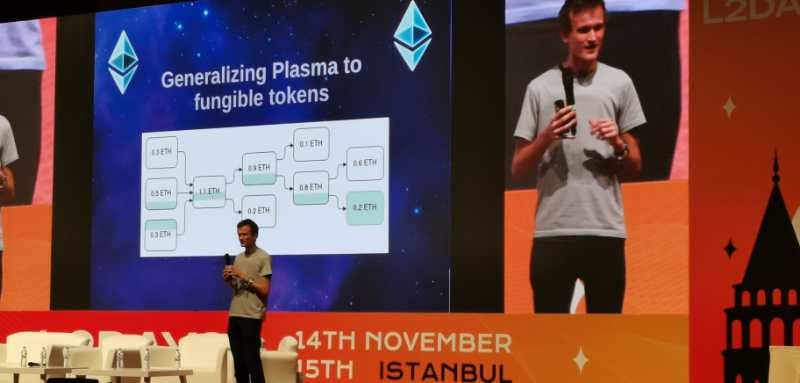
Vitalik Buterin delivering a speech on plasma at Istanbul Congress Center

MIIX CAPITAL invited to a roundtable hosted by TVH and 3WW3, discussing how capital firms empower project development across bull and bear markets
1. Macroeconomic Indicators and Current Situation
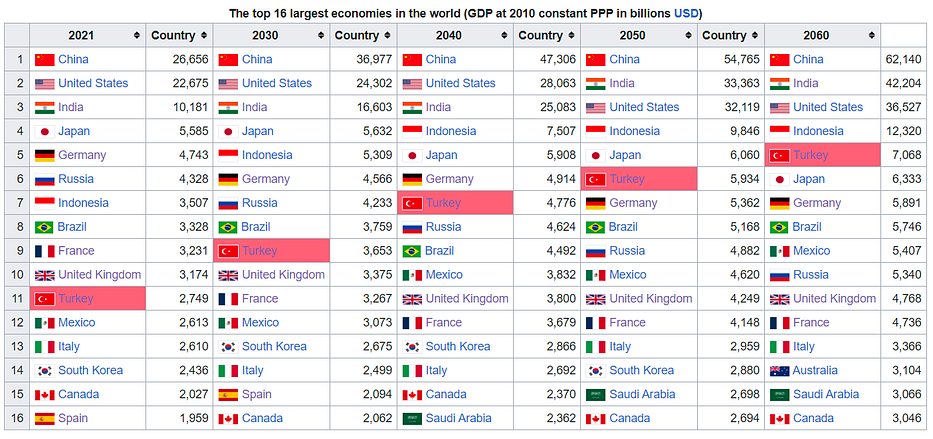
Turkey ranks as the 11th largest economy by GDP globally, is a founding member of the Organisation for Economic Co-operation and Development (OECD), a member of the G20, and has been part of the EU Customs Union since December 31, 1995. It is also a candidate country for EU membership.
1.1 Land and Population Size
Turkey spans both the Asian and European continents, with its capital in Ankara and a total land area of 783,356 square kilometers, divided into 81 provinces. As recorded, Turkey’s population reached 85,279,553 in 2022, with 93.4% living in provincial and regional centers, and only 6.6% in towns and villages, resulting in an average population density of 111 people per square kilometer. Between 1950 and 2020, Turkey’s population more than quadrupled, increasing from 20.9 million to 83.6 million.
1.2 Economy and Related Indicators
The World Bank classified Turkey as an upper-middle-income country based on its 2007 per capita GDP. The CIA categorizes Turkey as a "nearly developed" nation, while economists and political scientists often describe it as an emerging industrialized country. Merrill Lynch, the World Bank, and The Economist classify it as an emerging market.
Turkey ranks 17th globally by nominal GDP and 11th by purchasing power parity (PPP). According to IMF estimates, Turkey’s per capita GDP was $41,412 PPP and $11,932 nominal in 2023.
As of 2019, approximately 11.7% of Turks faced risks of poverty or social exclusion. Turkey’s unemployment rate stood at 12% in 2021. According to the World Bank, about 41% of Turkey’s population belongs to the middle class.
1.3 High Economic Growth Alongside High Inflation
Turkey has a well-developed banking sector, with over 50 banks. As of March 2023, the Central Bank of Turkey held $62.6 billion in foreign exchange reserves (up 2.3% MoM), $52.2 billion in gold reserves (up 7.2% MoM), and $122.4 billion in official reserve assets (up 4.3% MoM).
In the first quarter of this year, Turkey’s GDP surged by 84.4%, while the lira depreciated by 26%, pushing the country’s quarterly GDP to a record high of $245.5 billion.
Meanwhile, according to data released by the Turkish Statistical Institute on November 3, 2023, inflation hit 61.36% in October. The central bank revised its inflation forecast upward from 58% to 65% for this year and from 33% to 36% for 2024, making Turkey one of the most inflation-stricken countries globally.
1.4 Outlook for Turkey’s Economic Development
In February 2022, the OECD projected long-term GDP growth for the top 16 global economies from 2030 to 2060 using PPP exchange rates. Due to ongoing population growth and urbanization, Turkey is expected to maintain robust GDP expansion, potentially ranking among the top five economies by 2060.
Since early 2023, despite various measures taken by the government to combat inflation, prices continue to rise. The rapid depreciation of the Turkish lira has intensified domestic economic instability, making imports more expensive and creating additional challenges for economic stability.
In the long term, persistent inflation is worsening household poverty. According to official forecasts, consumer prices are expected to peak, leading to even worse conditions in 2024. "Faced with staggering inflation, many households earn too little—poverty has become a major issue in Turkey," said Istanbul-based economist Iris Cibre, noting that nearly 60% of workers earn the minimum monthly wage of 11,400 lira ($405), far below the poverty line.
2. Geopolitical and Economic Impacts on the Industry
2.1 Geopolitical Position Fuels a Diverse Crypto Market
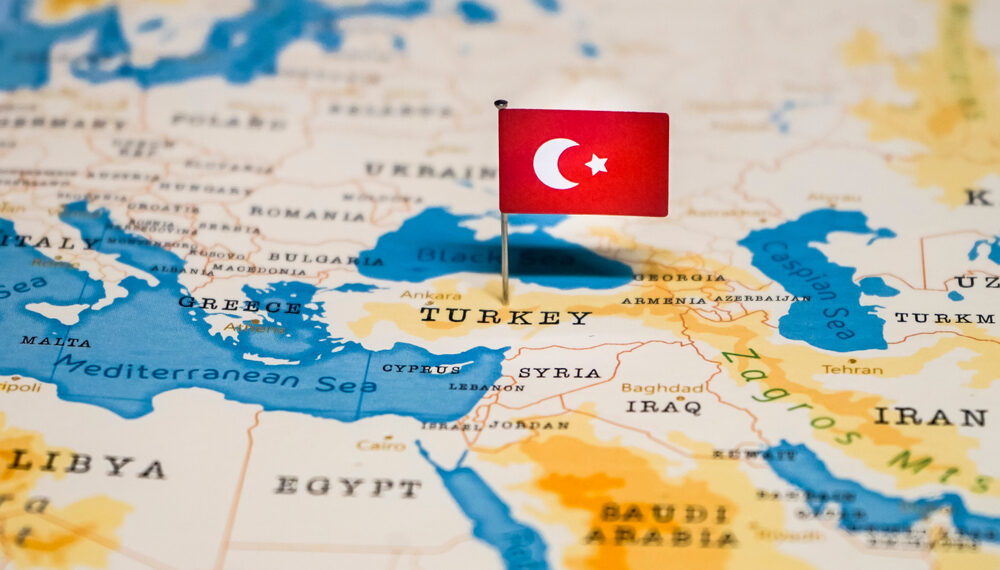
Located at the crossroads of Asia and Europe, Turkey enjoys strategic geographic advantages as a bridge and hub. It also serves as a critical energy transit route between the Middle East and Europe, controlling access to and from the Black Sea. This gives Turkey strategic importance in energy supply and geopolitics. Its relations with countries like Iran and Russia significantly impact regional stability, while it remains influenced by dynamics in the Middle East, the Russia-Ukraine conflict, and cultural shifts.
This geopolitical positioning has made Turkey an informal hub connecting Russia and the Middle East in the Web3 space. Cultural, economic, and financial influences flow in all directions, making Turkey a key node for interaction, convergence, and integration for blockchain professionals across Eurasia. Under these influences, users are more exposed to and accepting of diverse industry trends, fostering a vibrant and diversified crypto market.
2.2 Socioeconomic Conditions Driving Deeper Adoption of Crypto
Over the past five years, Turkey has endured significant economic hardship. Recent reports show inflation exceeding 83%, the highest in 24 years. Due to unorthodox monetary policies involving interest rate cuts, the lira has hit record lows against the dollar. "With shocking inflation, many families can’t make ends meet—poverty has become a major problem in Turkey," says Istanbul economist Iris Cibre, adding that nearly 60% of workers earn a monthly minimum wage of 11,400 lira ($405), well below the poverty line.
Capital with sharp market instincts naturally seeks safe havens and higher returns amid domestic economic decline and the contrasting crypto bull cycle. Converting to and purchasing crypto assets has become the optimal choice. Exposure to the crypto industry through digital assets has sparked strong interest in new technologies among youth and driven broader public participation, accelerating the deepening development of the Web3 industry. What began as a niche sector aligned with public needs has evolved into a widely embraced, cutting-edge industry.
3. Current State of the Regional Crypto Market
3.1 The Fourth-Largest Global Cryptocurrency Market
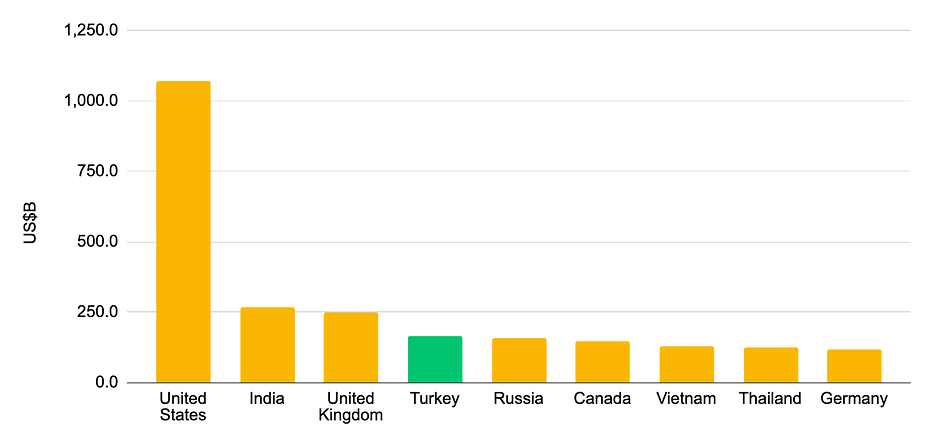
Recently (November 2023), Binance Research released a report titled "State of the Turkish Crypto Market," revealing that 40% of citizens have exposure to crypto investments, and 73% of surveyed Turks believe the number of crypto investors will grow over the next five years. As the world’s fourth-largest crypto trading market, Turkey’s trading volume surpasses that of several other major economies. Internal trading data from Binance also shows that in early September, the Turkish lira (TRY), the local fiat currency, topped the list of fiat pairs on the exchange, accounting for a staggering 75% of trades.
Additionally, Turkish citizens’ acceptance of crypto is on par with leading nations. Using the same crypto adoption index, Turkey ranks 12th globally. Considering its position within the global geopolitical economy and relatively small economic size compared to others, Turkey demonstrates remarkably high crypto adoption.
3.2 Strong and Widespread Crypto Market Culture
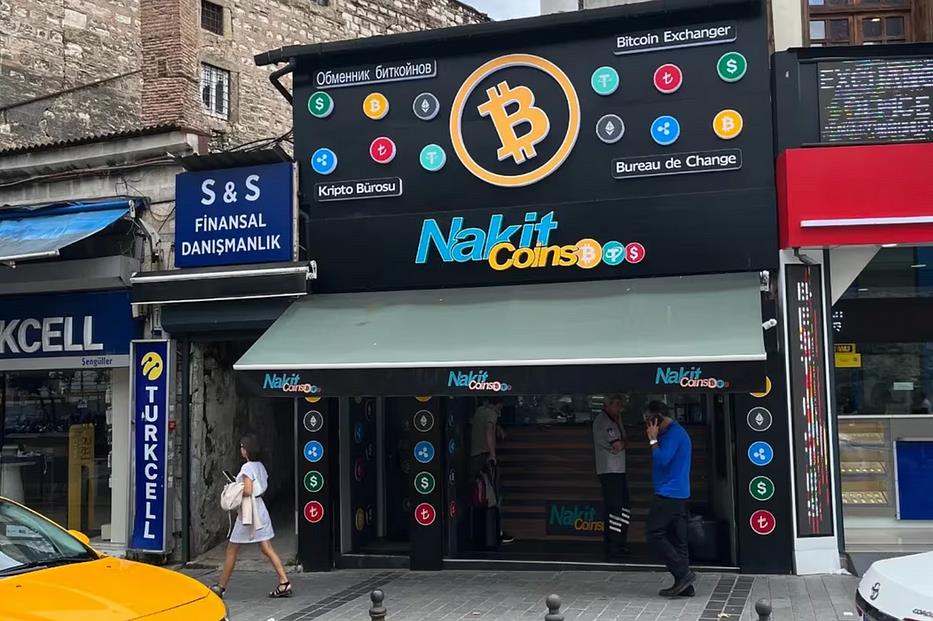
Survey data indicates that Web3 and cryptocurrencies are deeply integrated into daily life in Turkey:
-
Teller machines along sidewalks (similar to Chinese bank deposit machines) support cryptocurrency transactions;
-
Airport jet bridges and outdoor billboards feature numerous ads from local exchanges;
-
Many physical OTC crypto exchange locations exist;
-
Real estate transactions and restaurant payments accept cryptocurrency;
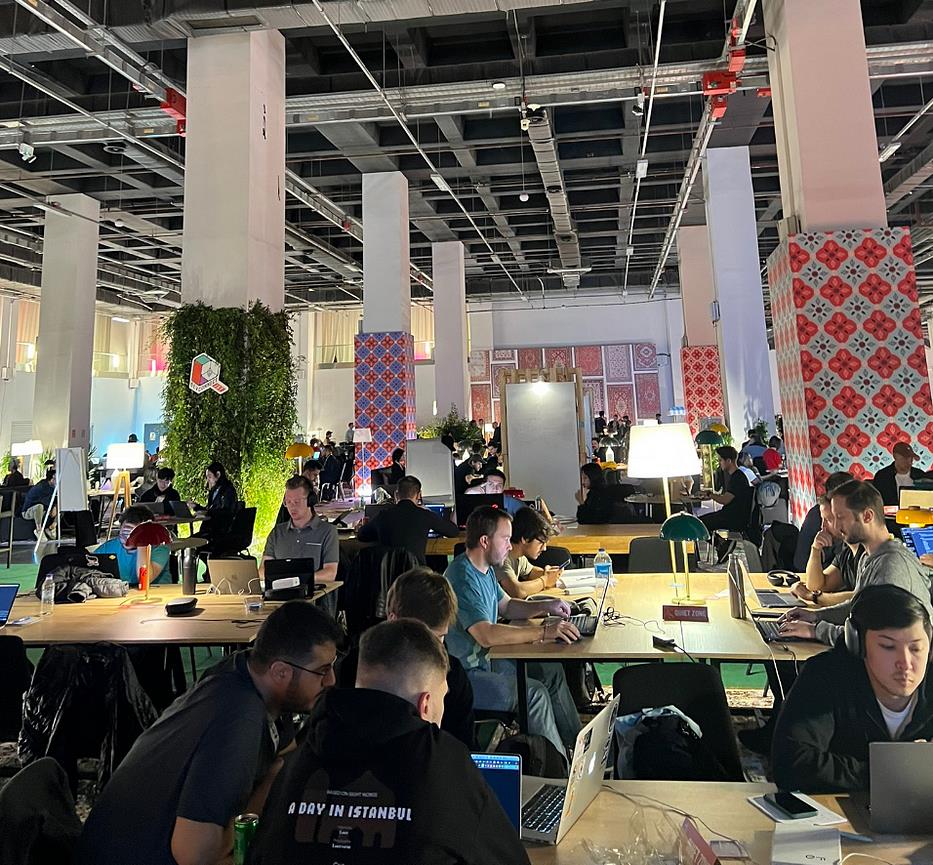
Cowork Space at ICC
Many young people hang Bitcoin-themed decorations in their bedrooms, and Bitcoin is frequently discussed on television programs. A growing number of youth see Web3 as a key to taking control of and changing their destinies, enthusiastically sharing knowledge and cultivating a strong technical culture.
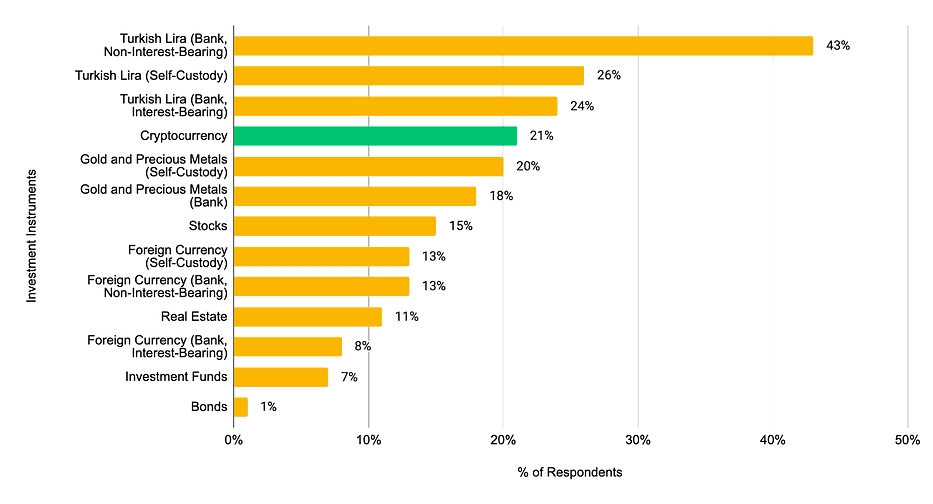
According to a survey commissioned by Binance and conducted by consumer research firm Twentify, over one-fifth (21%) of respondents have invested in cryptocurrency. In terms of investment tool popularity, crypto ranks second only to the Turkish lira. Notably, crypto adoption exceeds that of traditional asset classes such as precious metals, stocks, and bonds.

A side event during Blockchain Week drew massive crowds, highlighting the scene’s vibrancy.
3.3 CEX Usage Far Exceeds That of Non-Custodial Wallets
Turkish users heavily rely on centralized exchanges (CEXs). Daily active traders across all CEXs peaked between 500,000 and 700,000 in December 2021. As market conditions cooled, this number dropped to between 270,000 and 410,000 by February 2023. Among global CEXs, Binance, Bybit, OKX, and KuCoin are the most trusted and popular in Turkey, offering Turkish language support and TRY deposit/withdrawal services. Local platforms Paribu and CoinTR either operate from Turkey or have obtained registration with MASAK (Turkey’s Financial Crimes Investigation Board) and partnered with two state-owned banks, Ziraat Bank and Vakif Bank, to enable fiat transactions.
In contrast, non-custodial wallet usage remains relatively low. Recently (November 2023), Binance officially launched its Web3 wallet during Turkey Blockchain Week, and Bitget Wallet announced plans to initiate ecosystem development in Turkey. Given the convenience and profit potential of Web3 wallets, along with growing interest in NFTs and metaverse concepts, these developments may catalyze increased adoption of decentralized wallets, enhancing market diversity and maturity.
3.4 Popular Sectors and Applications in Turkey
Most users remain concentrated on CEXs, so DeFi projects are rare. However, gaming projects are extremely popular, with GameFi, SocialFi, and NFTs widely favored by ordinary users. There are also a few infrastructure projects, but due to limited venture capital presence and even fewer Web3-focused investors, fundraising capabilities lag significantly behind those in the Asia-Pacific and Western regions.
Notably, the Scientific and Technological Research Council of Turkey (TÜBİTAK) Blockchain Institute views applications of digital currencies positively, particularly favoring decentralized identity (DID) and smart contract-based government data on-chain solutions.
Data shows that nearly 16% of Lens Protocol’s website traffic comes from Turkey. Turkish users frequently search Google for “free Bitcoin,” seeking small rewards through task-based websites. This reflects the popularity of SocialFi and airdrop hunting behaviors in Turkey.
Source: Insights from 3WW3 Latin America & Africa Research Institute during a Space event
4. Regional User Profile Analysis
Binance’s research report shows that 71% of surveyed investors check market conditions multiple times a day, and 46% conduct at least one trade daily, indicating high engagement. Of those investing, 66% cite expected returns as their primary motivation, followed by portfolio diversification and technological optimism.
4.1 Younger Demographics Show Greater Investment Interest
Turkey’s crypto market is dynamic and rapidly evolving. Currently, 27% of investors entered the space within the past year—meaning over a quarter joined during the recent bear market—and are predominantly under 30 years old.
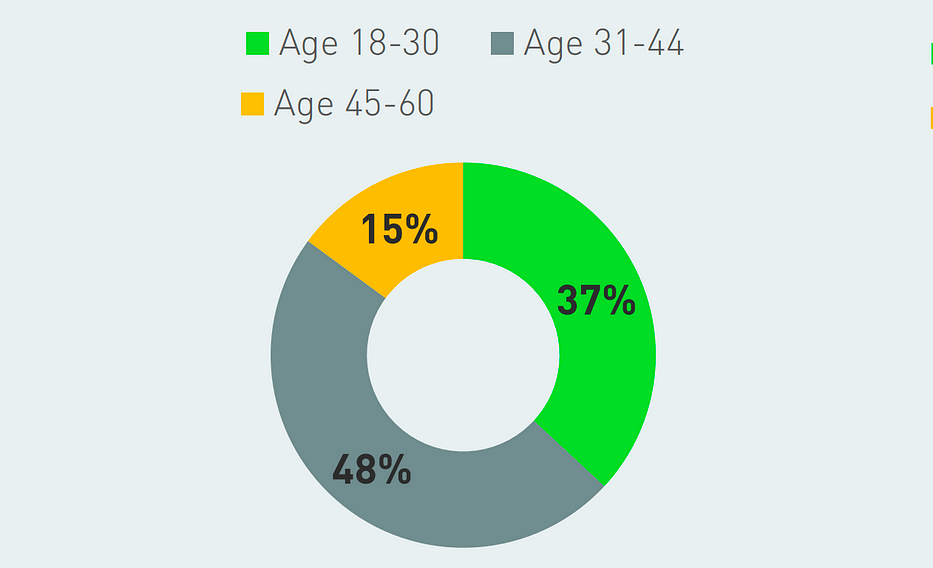
According to KuCoin’s latest survey data on Turkish users, younger generations show stronger investment intent. Among crypto investors, 48% are aged 31–44, and 37% are aged 18–30. The Turkish crypto market continues to grow dynamically, with a majority of under-30 investors entering within the last year.
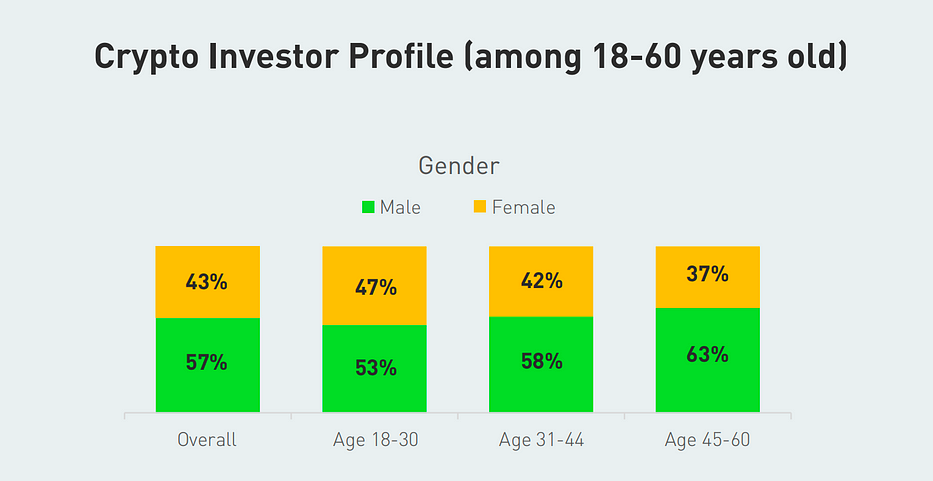
Although male investors still account for 57% of all crypto investors, female participation among younger demographics is rising. Women make up only 37% of investors over 45, but nearly half (47%) of those aged 18–30 are women, suggesting a narrowing gender gap as crypto adoption becomes mainstream.
4.2 Age-Based Differences in Investment Preferences
In Turkey, 58% of respondents stated their main motivation for investing in crypto is long-term wealth accumulation—a consistent priority across age groups who believe crypto can appreciate over time.
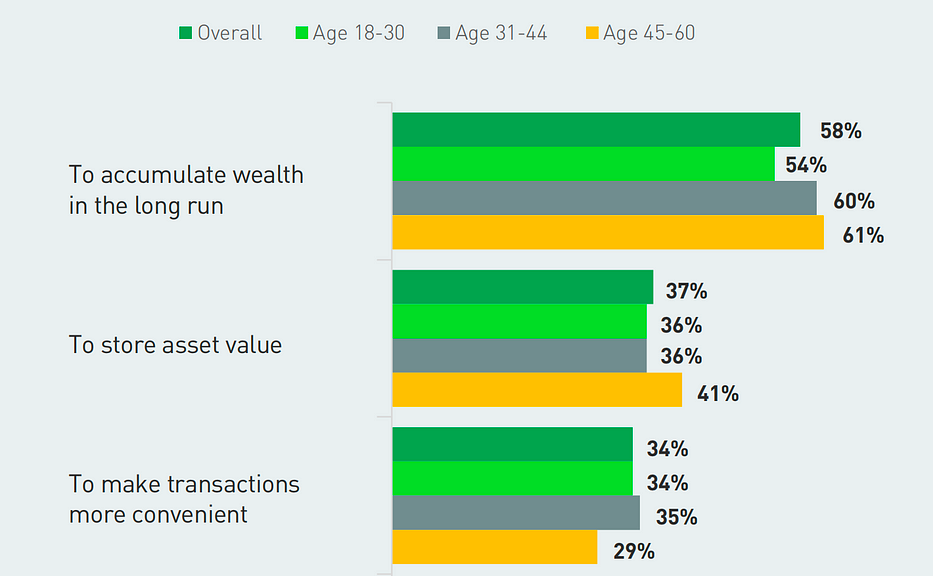
Clear differences emerge in investment strategies across age groups: older investors prioritize value storage and portfolio diversification, while younger users emphasize trading convenience and short-term gains.
-
37% cited asset value preservation as a key reason, and 25% view portfolio diversification as a primary motive, recognizing crypto’s risk-mitigation benefits—mostly investors over 45;
-
34% hold crypto for easier transactions, reflecting recognition of crypto’s efficiency and speed;
-
17% admit their motivation is short-term profit-seeking and pure enjoyment of the investment process, aligning with the experimental nature of the crypto market;
-
this sentiment is more pronounced among younger users;
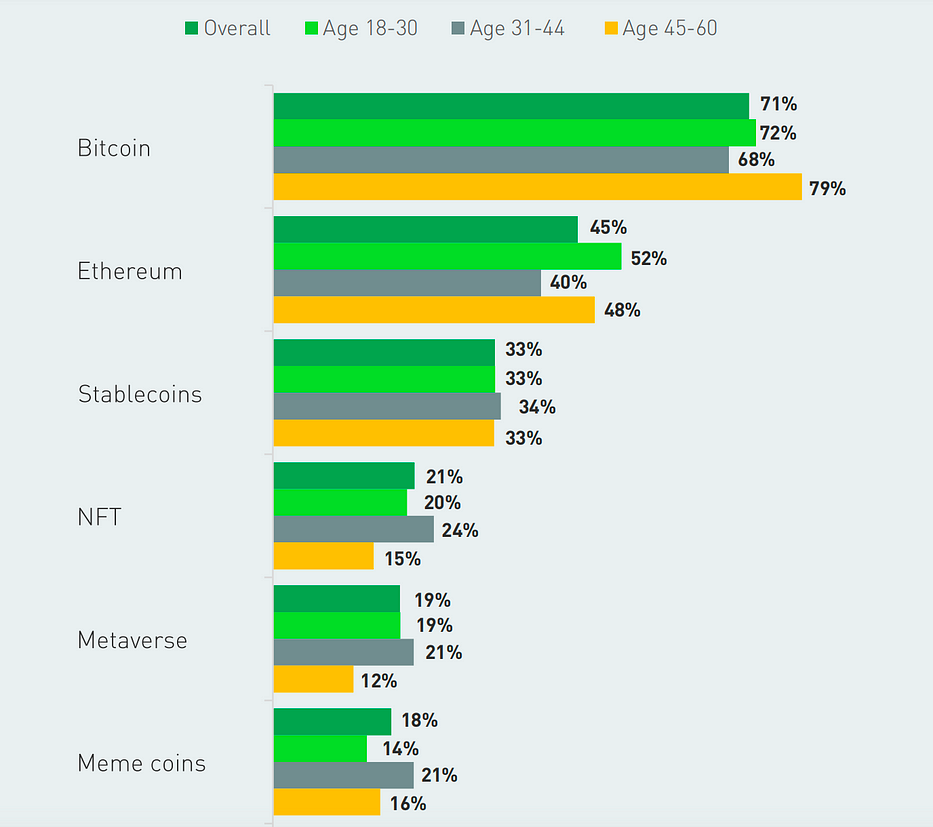
Bitcoin is highly popular among adult crypto investors in Turkey, with 71% expressing interest—rising to 79% among older investors. Meanwhile, 45% express interest in ETH, increasing to 52% among younger investors.
Additionally, about 33% of investors are interested in stablecoins, 21% in NFTs, 19% in the metaverse, and 18% in emerging categories like meme coins.
4.3 Word-of-Mouth Plays a Key Role
Surveys reveal that 57% were introduced to crypto through friends or family, and 35% through communities, highlighting the critical role of personal networks in sparking curiosity and encouraging newcomers to enter the digital finance world.
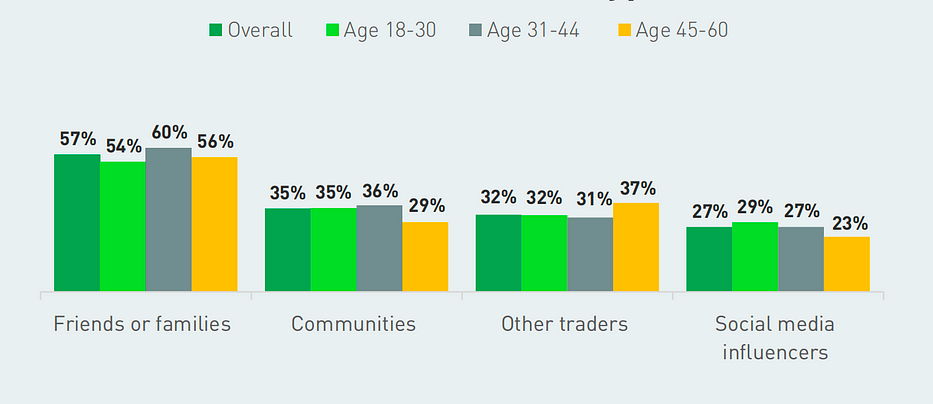
Whether through online forums, social groups, or local meetups, communities provide supportive environments for individuals to learn and explore crypto concepts, reflecting the collaborative nature of Turkey’s crypto community. 32% of respondents noted that other traders played a role in their journey, underscoring the interconnectedness of the trading environment—those starting their crypto journey often find guidance and inspiration from peers navigating the same uncharted territory.
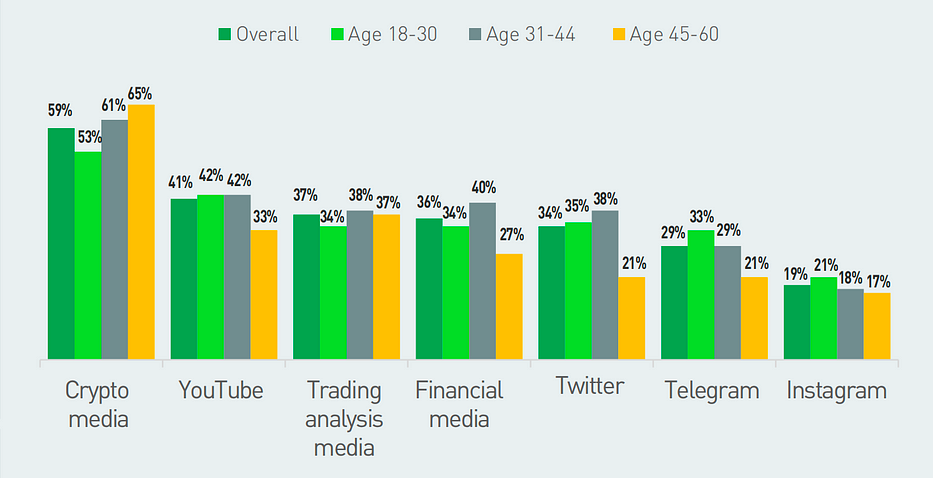
Finally, social media plays a significant role: 27% of respondents credit influencers for their entry into crypto. YouTube, Twitter, Telegram, and Instagram are trusted by Turkish crypto investors—especially younger users—as reliable information sources.
5. Regulatory Policies in the Region
Turkey is already a highly receptive and renowned market for blockchain and cryptocurrency. Major global exchanges like Binance and Huobi have moved to establish local operations. The government envisions building a national blockchain infrastructure and launching a central bank digital currency (CBDC). Despite high public interest, however, Turkey currently lacks dedicated regulations for the crypto market.
5.1 Open Yet Cautious, With Relatively Loose Policies
For a long time, the Turkish government’s stance on Web3 remained ambiguous. Although the Ministry of Digital Transformation mentioned building a National Blockchain Infrastructure in its 2018 strategy paper, no major implementation followed.
In 2021, the central bank issued a policy banning citizens from purchasing or receiving crypto-based services. However, the head of the Presidential Digital Transformation Office clarified: “The central bank’s policy did not prohibit Turkish citizens from owning crypto assets.”
Overall, the Turkish government maintains a cautious yet open approach—neither imposing strict restrictions nor actively pushing compliance. This creates a freer environment conducive to rapid development and widespread adoption of the crypto industry.
5.2 Regulatory Framework to Be Systematically Implemented
In October, Turkish Finance Minister Mehmet Şimşek announced that Turkey will introduce new legislation covering crypto assets to comply with FATF recommendations. This move aims to remove Turkey from the FATF grey list, as inclusion could negatively impact the country’s investment ratings and reputation. On October 27, Cointelegraph reported that Turkey’s Official Gazette published the 2024 Presidential Annual Program, targeting completion of crypto regulations within the next year.
Bora Erdamar, director of BlockchainIST, a blockchain R&D center, stated: “Introducing licensing standards will be one of the top priorities of the new regulations.” He added that “the framework may also include capital adequacy requirements, enhanced digital security measures, custodial services, and proof of reserves.”
The push for regulation signals that the crypto market has taken root in Turkey. As more businesses enter and interactions intensify, regulatory frameworks will support market prosperity and development, offering greater convenience and security for participants and users alike.
5.3 Proposal to Establish a Central Crypto Custodian Bank
To prevent exchange failures and fund losses, Turkey’s Ministry of Treasury plans to implement a central crypto custodian bank mechanism. If realized, Turkey would become the first country globally to formally incorporate crypto custody into institutional banking, with the central bank overseeing crypto storage and circulation.
In the long run, establishing a central crypto custodian bank offers a solution to secure the crypto market. It would enhance asset security on exchanges and ensure stable market operations, steering the industry toward greater robustness and transparency.
However, asset security, operational soundness, and user privacy must all be carefully balanced in management. The crypto market is still in its early stages, and its governance path requires ongoing exploration and refinement through collective effort.
6. Conclusion
Spanning both Asia and Europe, Turkey ranks highly in global GDP and has recently experienced high growth alongside soaring inflation. The rapid depreciation of the Turkish lira has intensified domestic economic turmoil, posing additional challenges to economic stability. Yet paradoxically, this has accelerated the adoption and prosperity of cryptocurrencies. In terms of trading volume, Turkey is now the world’s fourth-largest crypto market, trailing only the U.S., India, and the U.K.
Moreover, Turkey’s population size and geopolitical position make it an ideal hub for blockchain professionals from all continents to connect and collaborate. Across age groups, a large proportion of the population engages in crypto as a means of wealth preservation and appreciation, integrating it into their investment portfolios. An increasing number of young people are showing strong interest in Web3 technology and entrepreneurship, actively participating in learning and innovation.
As Web3 technologies gain wider use and sharing in the region, and as regulatory policies gradually take shape, Turkey’s vibrant community, demographic scale, and strategic location will ensure it plays a pivotal role in the future of the crypto industry. Turkey may well become a promised land for crypto practitioners.
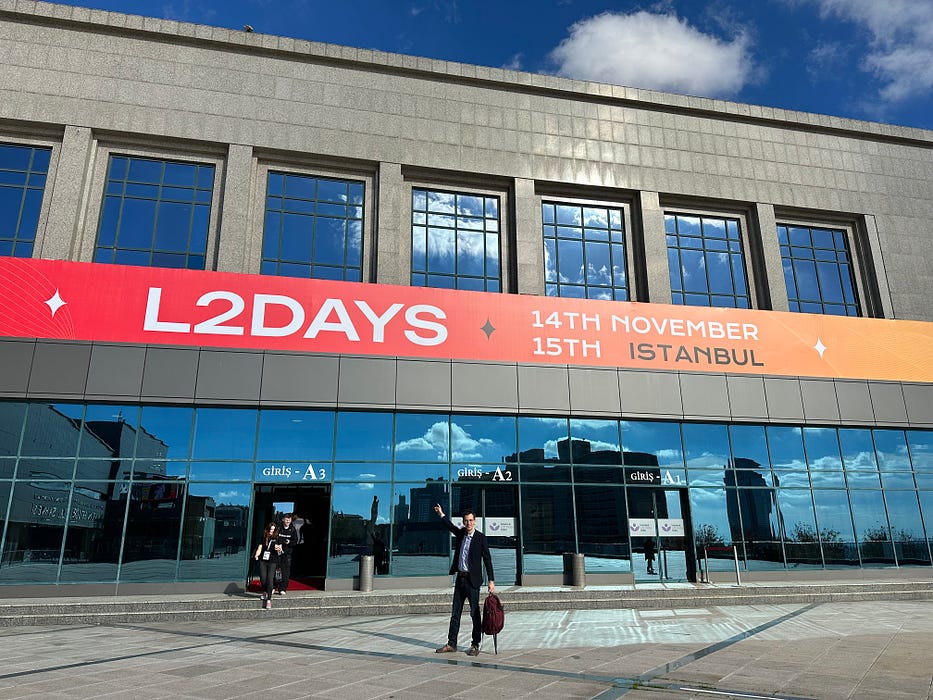
Mark, MIIX CAPITAL’s research analyst, at an event
MIIX CAPITAL’s trip to Istanbul was highly rewarding—we connected with professionals from around the world, gained deep insights into various sectors, and found every new encounter like opening a mystery box. The crypto industry is truly blossoming everywhere, thriving and full of promise! Looking forward to seeing you again in Turkey!
Note: All views expressed above are for informational purposes only and do not constitute investment advice. Errors and omissions welcome—please comment to correct or supplement.
Join TechFlow official community to stay tuned
Telegram:https://t.me/TechFlowDaily
X (Twitter):https://x.com/TechFlowPost
X (Twitter) EN:https://x.com/BlockFlow_News
 @MIIXCapital_CN