
Chaos and Legal Risks in the Judicial Disposal of Virtual Currencies in China
TechFlow Selected TechFlow Selected
Chaos and Legal Risks in the Judicial Disposal of Virtual Currencies in China
How are virtual currencies seized and confiscated by Chinese judicial authorities converted into lawful RMB in the national treasury?
 Navigating Web3 tides with focused insights
Author: Lawyer Liu Honglin
Introduction
On a certain night in a certain month and year, police officers took Zhang San, an experienced cryptocurrency investor, from southern China to the north.
Recalling the sudden raid by police that night, Zhang San still feels uneasy—almost as if it were surreal. Accompanying the officers during the home arrest was reportedly a technical staff member from a cybersecurity firm. With their professional assistance, law enforcement seized Zhang San’s phones, computers, cold wallets, foreign currency bank cards, and other items.
At the police station, officers worked overtime interrogating Zhang San. During this process, they asked him to sign an authorization letter stating that, for the purpose of combating crime and preventing victims’ financial losses, he voluntarily authorized the police to conduct judicial disposal of the virtual currencies in his cold wallet and exchange accounts.
Although Zhang San felt something was off—after all, the investigation hadn’t even been completed—he decided cooperation was necessary, considering it a civic duty. He signed the authorization form and provided login credentials for his cryptocurrency exchange accounts. Subsequently, the virtual assets in both his cold wallet and exchange accounts were transferred and sold off by the security company.
Several days later, after meeting with a lawyer and multiple rounds of communication between the lawyer and the police, Zhang San was released on bail. After getting out, he reached out to friends within the crypto community and learned that the company assisting local police in disposing of the digital assets earned over one million RMB in service fees from this single case.
It should be noted that the above story is fictional, but the elements composing it are real. Similar scenarios may be happening every day among cryptocurrency users.
01 The Blockchain Industry's Untold Secret
In September 2021, ten Chinese government departments jointly issued the "Notice on Further Preventing and Addressing Risks of Virtual Currency Trading and Speculation" (commonly known as the “September 24 Policy”). This document defined virtual currencies and related activities as illegal financial operations; stated that virtual currencies do not have legal status equivalent to fiat money; clarified that providing overseas virtual currency exchange services to mainland residents via the internet also constitutes illegal activity; and warned that participation in virtual currency investment and trading carries legal risks. Those engaging in such illegal financial activities may face criminal liability if their actions constitute crimes.
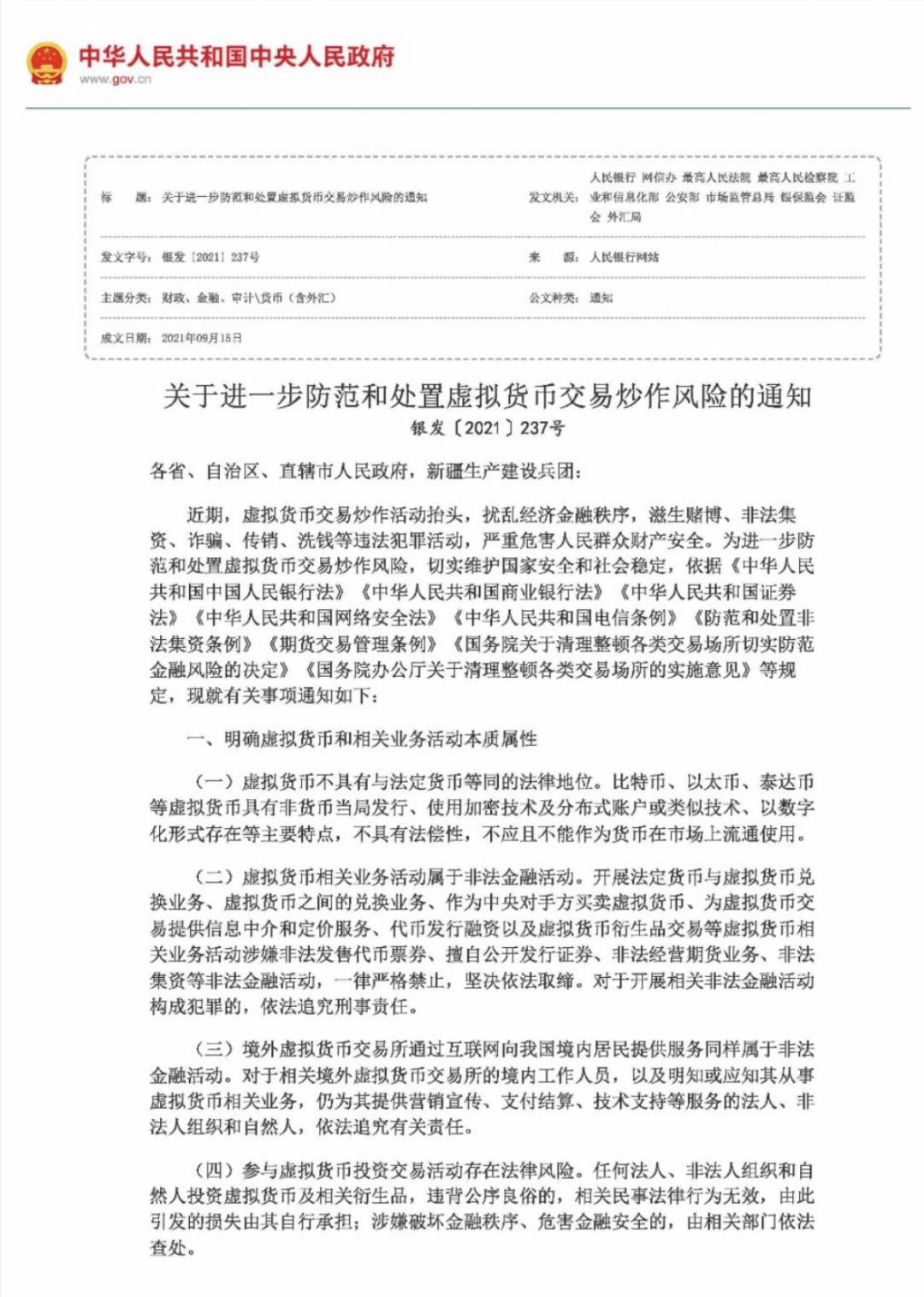
The introduction of the September 24 Policy declared that companies or individuals conducting commercial services involving virtual currencies and RMB transactions within mainland China are operating illegally. However, as criminal groups increasingly use cryptocurrencies, criminal cases involving digital assets have surged in number and scale.
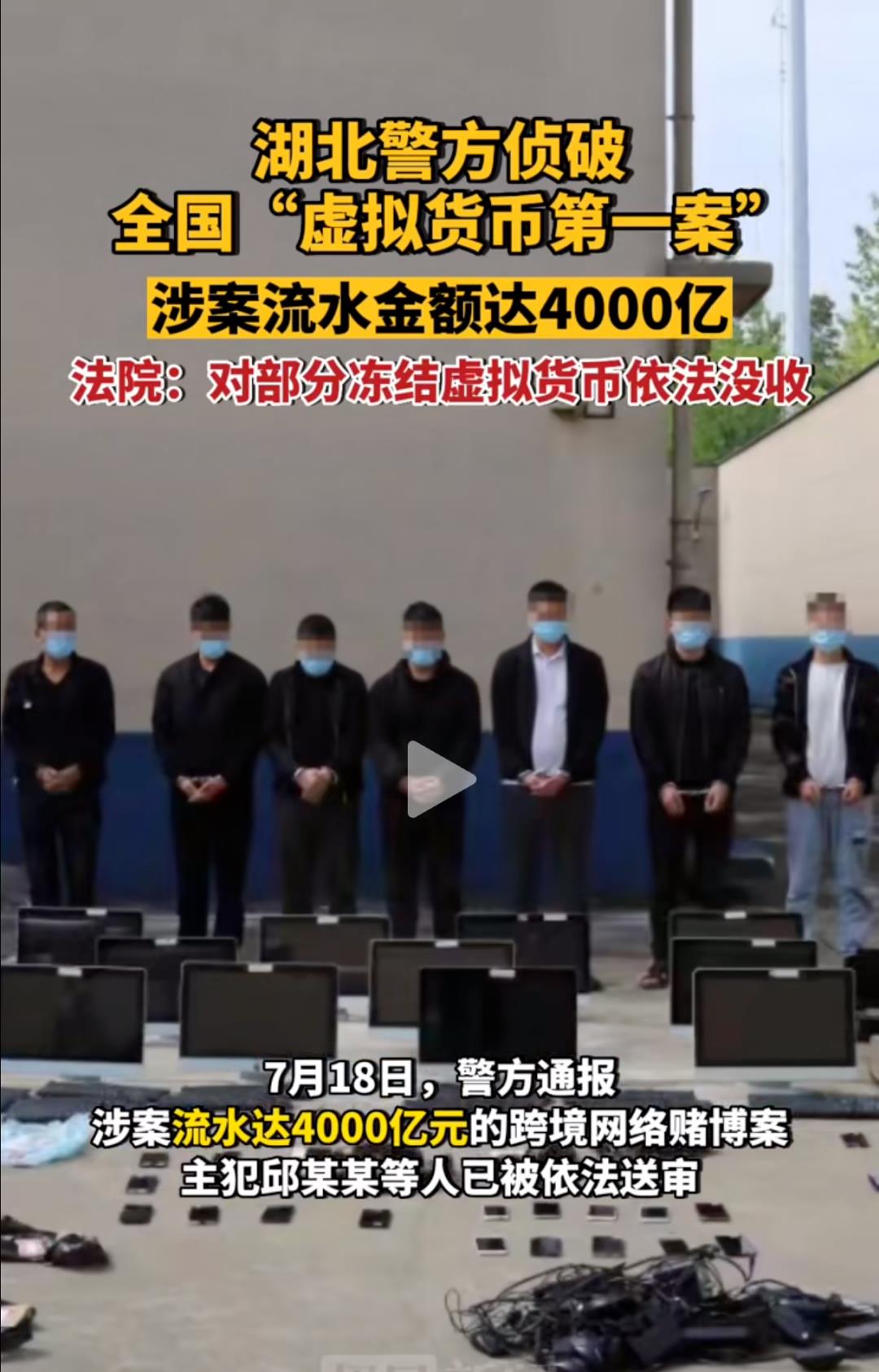
On July 18, 2023, the Shayang County Public Security Bureau in Jingmen City, Hubei Province, officially submitted the main suspect in a cross-border online gambling case for prosecution. All gambling transactions were settled using cryptocurrencies, with transaction volumes reaching 400 billion RMB. During the investigation, authorities successfully traced and froze approximately $160 million (over 1 billion RMB) worth of涉案 virtual currencies. In October 2022, the Shayang County People's Court ruled to legally confiscate part of the frozen digital assets. This became the first nationwide case where virtual currencies were confiscated through a court ruling—the so-called “First Virtual Currency Case.”
(For more details, see Lawyer Liu Honglin’s article: Crypto Enthusiasts Should Know: Hubei Police Crack Nation’s “First Virtual Currency Case,” with Transaction Volume Reaching 400 Billion!)
Due to our focus on blockchain-related legal services, colleagues at Manqin Law Firm—including Lawyer Liu Honglin—frequently receive legal inquiries and collaboration proposals regarding the judicial handling of seized virtual currencies. These come not only from law enforcement agencies and courts across the country but also from quiet yet highly profitable players in the blockchain industry. The amounts involved in individual cases range from millions to tens of billions of RMB. Indeed, the cases keep getting bigger, and the sums keep growing larger.
So here comes the question: If conducting virtual currency and RMB trading within China is illegal, how do these seized cryptocurrencies become legally deposited RMB in state coffers?
Driven by this fundamental curiosity, we conducted specialized research, exchanging views with multiple virtual asset disposition providers both inside and outside China. We attempted to map out common practices and the full industrial chain behind the judicial disposal of cryptocurrencies in China. Frankly speaking, the findings shocked us—there are things that cannot be said aloud, yet many things are being done quietly.
We hope that articles like this one from Manqin will draw attention from peers in the industry—to protect citizens’ lawful property rights before formal judicial judgment, while promoting transparency and compliance in China’s blockchain-related judicial disposal processes.
Please note: This article reflects only the personal opinions of Lawyer Liu Honglin and does not constitute legal advice or recommendations on any specific matter. It is not an endorsement or recommendation of any commercial entity. This is purely for academic discussion—please don’t read too much into it.
02 Common Paths for Judicial Disposal of Cryptocurrencies in China
Based on Manqin Law Firm’s industry research, overall, whether it's law enforcement obtaining written authorization from suspects during investigations or post-trial confiscation orders from courts, there exist widespread issues of procedural illegality, lack of detailed regulations, and inconsistent execution methods.
There are currently three common approaches to disposing of virtual currencies:
Method One: After obtaining authorization from suspects or a court verdict, public security organs commission specialized tech companies to handle the disposal. Without undergoing formal judicial valuation procedures, these third-party agents open accounts on cryptocurrency exchanges and directly sell the digital assets to OTC merchants via over-the-counter trades. The OTC merchants pay RMB to the agent company, which then deducts its service fee (negotiable, with extremely wide pricing ranges) before transferring the remainder to a designated fiscal account of the judicial authority. Given that large-volume trades can crash market prices, this method suits smaller-value disposals or cases where time constraints aren't strict.
Method Two: After signing a contract with the agent company, police send a small test amount of cryptocurrency to verify wallet access. Then, the agent locates cash-rich buyers in cities like Yiwu or Shenzhen. After deducting its fee, the agent delivers or deposits the cash into a designated government fiscal account. Once law enforcement confirms receipt, they transfer the corresponding volume of cryptocurrency to the agent’s specified receiving address. These cash-heavy buyers often have close ties to underground banks.
Method Three: After signing a contract, the agent collaborates with domestic foreign trade firms, fabricating export trade contracts. Overseas entities wire funds according to these contracts, which are then converted into RMB through the PBOC’s foreign exchange administration system and handed over to the agent. After deducting its service fee, the agent transfers the funds to the judicial authority’s designated fiscal account. Upon confirmation of each payment, the judicial body sends the corresponding amount of cryptocurrency to the agent’s designated wallet.
03 Compliance Efforts by Third-Party Disposal Companies
To reduce concerns about legality and compliance from judicial authorities, an increasing number of disposal companies now emphasize compliance—but based on Manqin’s assessment, the current level of compliance efforts is best described as: present, but insufficient.
Currently, common compliance measures adopted by these companies include:
1. Obtaining Written Authorization from Police
After establishing cooperation with judicial authorities, disposal companies request official letters explaining the situation or granting authorization for asset disposal. If during the investigation phase, they also collect signed authorization forms from suspects. Alongside the authorization letter, they sign cooperation agreements with public security departments outlining key terms such as transaction volume, pricing basis, and completion deadlines. Typically, these contracts and authorizations are concise, with most legal risks explicitly borne by the disposal company—conveniently shielding judicial personnel.
2. Providing Proof of Fund Legitimacy
To demonstrate fund origin and liquidity, disposal companies proactively provide bank deposit certificates from multiple institutions, emphasizing the legitimacy and cleanliness of their capital. Depending on the required recovery ratio from judicial bodies, they match different funding channels. Generally, the higher the proof of legitimacy, the higher the disposal cost.
3. Shell Companies That Operate Temporarily
To enhance compliance appearances, disposal companies often pre-establish or control several shell companies with only one natural person shareholder. These are typically registered as technology firms, with nominees such as “80-year-old elders” or “cancer patients” serving as legal representatives and shareholders. After completing one disposal job, the associated company is dissolved to avoid future legal accountability.
4. Partnering for Fake Auction Bidding
To meet procedural requirements of judicial organs, disposal companies propose conducting “auctions” for cryptocurrency disposal. They arrange third-party partner companies to participate in bidding processes, ensure their own victory, and then sign formal contracts. Due to the sensitivity of the matter, auction information is not publicly disclosed on official government platforms.
04 Legal Risk Analysis of Current Cryptocurrency Judicial Disposal Practices
1. What Are the Legal Risks for Disposal Companies?
As previously mentioned, most current disposal companies are merely standard limited liability enterprises registered under general business categories, usually labeled as tech firms. While their business scope might include blockchain-related technical development or consulting, they rarely mention judicial valuation or disposal of virtual currencies. Moreover, they hold no special financial licenses or relevant operating qualifications, nor do they engage in any substantial business operations. In short, these companies exist solely for the purpose of handling judicial disposal of cryptocurrencies.
According to our understanding of China’s September 24 Policy, ordinary private companies registered in mainland China are clearly violating the law when providing cryptocurrency-to-RMB exchange or brokerage services without special permits—even if authorized by grassroots-level judicial bodies or backed by contractual agreements. Thus, the core operations of many so-called judicial disposal firms effectively create channels between virtual currencies and RMB, clearly contravening the September 24 Policy and potentially constituting illegal business operations.
More critically, disposal companies must eventually find outlets for the received cryptocurrencies. For security reasons, they often employ technical means to “clean” the blockchain trail of the seized funds—for example, using mixers to obscure on-chain addresses before breaking them into smaller amounts and selling them to domestic foreign trade businesses or high-net-worth individuals. Alternatively, they may liquidate the assets overseas through gray-market channels, then repatriate the proceeds via “underground banks” or “fictitious trade” schemes, applying for foreign exchange settlement through SAFE. Such practices frequently violate anti-money laundering laws and foreign exchange control regulations, carrying significant criminal risks.
2. What Are the Legal Risks for Judicial Personnel Involved?
(1) Risk of Loss of Seized Assets
For most judicial personnel, cryptocurrencies remain unfamiliar territory. Grassroots staff often lack knowledge about market prices and trading mechanisms. How much should one coin be sold for? Where should the sale take place? These questions are typically left unanswered. As a result, most disposals proceed without formal judicial appraisal or evaluation procedures. Instead, pricing often relies solely on the daily trading price from an exchange recommended by the disposal company. However, exchange manipulation by large-capital players makes such benchmarks unreliable, leading to potential undervaluation and loss of recovered state funds.
(2) Risk of Tainted Proceeds
Every industry faces competition, and cryptocurrency disposal is no exception. Beyond offering varying degrees of “clean” capital, most disposal companies alleviate police concerns about sending coins without receiving payment by adopting a “pay first, deliver later” model.
Daily disposal capacity of up to 500 million RMB is common among such firms, yet normal private trading companies rarely maintain such idle balances. Consequently, situations arise where multiple accounts controlled by disposal companies make transfers to the same recipient account. There have been cases domestically where funds paid by disposal companies turned out to be monies targeted for freezing in another ongoing investigation elsewhere—essentially, one arm of the state unknowingly interfering with another.
(3) Risk of Improper Duty Performance and Accountability
Given the novelty of the field and the ever-increasing value of seized assets, more and more intermediaries are eyeing the lucrative business of cryptocurrency judicial disposal. We often receive client inquiries claiming they have access to hundreds of millions in seized crypto assets needing disposal. But when we ask details, they say they’re just relaying information for someone higher up—a classic Russian nesting doll structure, layer upon layer. Some joke that if you haven’t had anyone approach you about crypto disposal deals, you’re definitely not truly “in the circle.”
Inevitably, extensive rent-seeking opportunities emerge—solving one problem while creating another. Government officials, lacking expertise in the field, may be led astray by third-party disposal companies hiding behind a façade of compliance. If investigated later by disciplinary inspection commissions, the resulting scenario could turn deeply surreal.
Join TechFlow official community to stay tuned
Telegram:https://t.me/TechFlowDaily
X (Twitter):https://x.com/TechFlowPost
X (Twitter) EN:https://x.com/BlockFlow_News