








Exclusive Interview with SubstanceX CEO: Most CEXs Can't Achieve 100% Ledger Alignment; The Cancun Upgrade Will Be a Key Opportunity for DEX Breakthrough
TechFlow Selected TechFlow Selected
Exclusive Interview with SubstanceX CEO: Most CEXs Can't Achieve 100% Ledger Alignment; The Cancun Upgrade Will Be a Key Opportunity for DEX Breakthrough
"The best product is one that can bring the CEX perpetual contract experience to Arbitrum exactly as it is."
 Navigating Web3 tides with focused insights
Written by: TechFlow Intern
After a series of trust crises involving CEXs and centralized institutions, we now desire more than ever the rise of DEXs. At the same time, we see numerous DEX products emerging, among which the most frequently mentioned concept is "delivering decentralized products that match the user experience of centralized exchanges." However, achieving this parity in experience requires the indispensable contribution of industry insiders.
Insiders who have worked at exchanges often have deeper insights into how existing CEX products operate, their inherent flaws, the shortcomings of current DEXs, and where user experience can be further improved.
In this feature, we’ve invited Roger—a seasoned professional with years of experience in traditional finance and centralized exchanges. He has also launched his new product—Substance Exchange (hereinafter referred to as SubstanceX), a DEX that surpasses existing competitors in product quality and user experience.
How should a decentralized exchange build its product? Which users should it target? And how can it seize the golden window of regulatory ambiguity and rapid growth to achieve long-term success?
As CEO & Founder of SubstanceX, Roger will share his profound insights on both centralized and decentralized exchanges based on extensive industry experience and firsthand user research. He will also reveal how SubstanceX is building superior product capabilities in pursuit of becoming a top-tier DEX.
Vision and Choice: Make Something People Want
TechFlow: Could you briefly introduce your background and what you’re currently working on?
Roger:
Hi everyone, I’m Roger, CEO and Founder of SubstanceX. My interest and career in the cryptocurrency space began over a decade ago.
Back in 2013, while pursuing my undergraduate degree in Physics at the University of Waterloo, I started trading futures contracts on a domestic platform called 796—one of the earliest cryptocurrency exchanges to support derivatives trading.
In 2017, I officially entered the crypto industry, starting as a market maker at OKX. At that time, my team and I ranked among the top in trading volume for many major coin-margined quarterly futures pairs.
From OKX onward, I continued working at centralized exchanges, primarily focusing on derivative trading products. In mid-2022, I became CEO of a top 20 CEX listed on CMC and CGC*, serving in that role for about six months. (*CMC and CGC: CoinMarketCap / CoinGecko)
I left in January this year to found Substance Exchange. That’s my personal background and what I’m doing now. We completed our fundraising in March and April, and on July 25, our testnet version launched on Arbitrum Goerli. We’ve also prepared generous rewards—feel free to try it out and give us feedback.
TechFlow: Based on your background, you could be considered a successful “industry insider.” Why then did you choose to start another venture in the DEX space? What’s your motivation? Any unfulfilled aspirations?
Roger:
I think this comes down to my personality, market conditions, and timing.
First, if I were to summarize my personality, I’d say I have a rebellious spirit. I genuinely believe in the philosophy of decentralization. I don’t want to do centralized things under a decentralized facade.
Yet, some DEXs today are actually built by CEX teams—their matching engines remain off-chain, using only on-chain wallets to ensure relative asset security, while prices and order matching happen off-chain. In such cases, the off-chain accounting cannot be independently verified, making it essentially a centralized black box where user assets aren't truly secure.
There are mainly two types of teams building DEXs:
- The first are purely decentralized teams—they have large user bases and have iterated their products multiple times, but may prioritize efficiency over fairness.
- The second are pure Web3 teams—they may lack product polish and deep understanding of real user needs due to limited exposure to sustained user feedback and absence of an effective iteration mechanism.
Our team sits between these two. We aim not only to deliver excellent products, but also to build a fair and transparent system atop them.
Finally, the trust crisis triggered by the collapse of FTX and other CEXs, coupled with the maturing performance of Layer 2 solutions, has created a favorable external environment for entering this space. I believe the timing is ideal—that’s why I chose to re-enter this field.
TechFlow: What do you see as your or your team’s advantage in this space? Where does your competitiveness lie, and how do you maintain it long-term?
Roger:
I believe our core advantages lie in strong technical capability and shared vision.
Technically, our team consists largely of members from centralized exchanges like OKX and Bybit, with years of collaboration and deep mutual trust.
Over the past 5–6 years, we’ve collectively managed full project lifecycles—from conception to development, testing, public beta, launch, and continuous iteration—for products including ETFs, options, and perpetual contracts, serving millions of users. This gives us a significant edge in technical and engineering capability compared to native Web3 teams.
Additionally, we share a unified vision—Make Something People Want. This is precisely what motivated us to leave relatively high-paying CEX roles to pursue this venture.
We feel that current offerings—whether GMX or certain CEX products—are either insufficiently transparent on the CEX side or lack product strength on the decentralized side. So we’re building something users will genuinely like and adopt.

Regarding long-term competitiveness, I believe the key lies in having an effective feedback loop and direct access to unfiltered customer needs.
From my CEX experience, much of the user feedback I received had already been filtered through multiple layers. Customer service teams, often influenced by subjective judgment, collect and organize feedback—resulting in information that significantly deviates from original user input.
Now, even though our team is only 20–30 people, I require every member to deeply trade and experience all competing products—including GNS, Level Finance, GMX, and others.
From design and product to development, operations, and marketing, our entire team has followed each competitor from their first tweet, through testnet, to mainnet launch. We are arguably the most experienced users of these competing products.
Because of this hands-on involvement, we can directly engage with user needs, understand the product deeply, and iterate effectively based on genuine feedback to create a product that truly meets user demands.
Without being personally involved, you simply can’t detect subtle but critical usability issues.
For example, when GMX deducts borrowing fees, it takes them directly from the user’s margin. Although the fee is small, this design causes the margin to linearly decrease from the moment a position is opened, gradually raising the liquidation price—sometimes the difference of a few dollars in margin is the difference between survival and liquidation.
This example shows that merely reviewing UI/UX or reading documentation won’t reveal such subtle yet impactful issues.
Therefore, maintaining long-term competitive advantage means thoroughly understanding both your competitors and your users’ true needs—and accessing unfiltered information whenever possible.
TechFlow: Many projects claim to offer a “CEX-like experience.” In your view, what truly constitutes a “CEX-like decentralized experience”?
Roger:
Let’s use GMX as an example again.
GMX has grown significantly and attracted massive user traffic—it was one of the first DEXs to eliminate market makers by introducing an LP-vs-Trader betting model. But I don’t consider GMX a great exchange, nor do I think its BTC-USDT perpetual contract is a good product.
Compare it to any CEX BTC-USDT perpetual pair—its product quality falls short. On CEXs, costs are limited to trading fees and funding rates.
But GMX V2 charges funding fees, borrowing fees, impact fees (due to slippage and market depth), and on-chain gas fees—all adding up.
Moreover, comparing UI/UX, you’ll find many不合理 designs—making it feel like a low-end trial version compared to CEX platforms.
If you look deeper into CEX perpetual contracts, you’ll realize this system has been iterated for nearly 10 years, refined by thousands of engineers serving millions of users. For now, CEX perpetuals may represent the ultimate form.
Given this, we believe: bringing the entire CEX perpetual contract experience—authentically, in terms of user experience—onto Arbitrum is the best possible product.
But we must make matching, settlement, and price feeds fully decentralized. The product remains the same—but its mechanics become decentralized. That, to me, is the endgame.
To summarize, a “CEX-like decentralized experience” means not innovating on the product itself—just porting a 10-year-optimized, near-perfect product onto the blockchain and making its mechanisms decentralized. If done right, users will embrace it. That’s Make Something People Want.
If login experience and product quality between DEXs and CEXs become indistinguishable, users have no reason to keep funds in a black box dependent on someone’s ethics or corporate reputation. The on-chain approach is inherently safer.
Product and Strategy: Lowering Barriers, Crafting the Best DEX Experience
TechFlow: From a product perspective, what are SubstanceX’s core advantages?
Roger:
I’d summarize our advantages in several key areas:
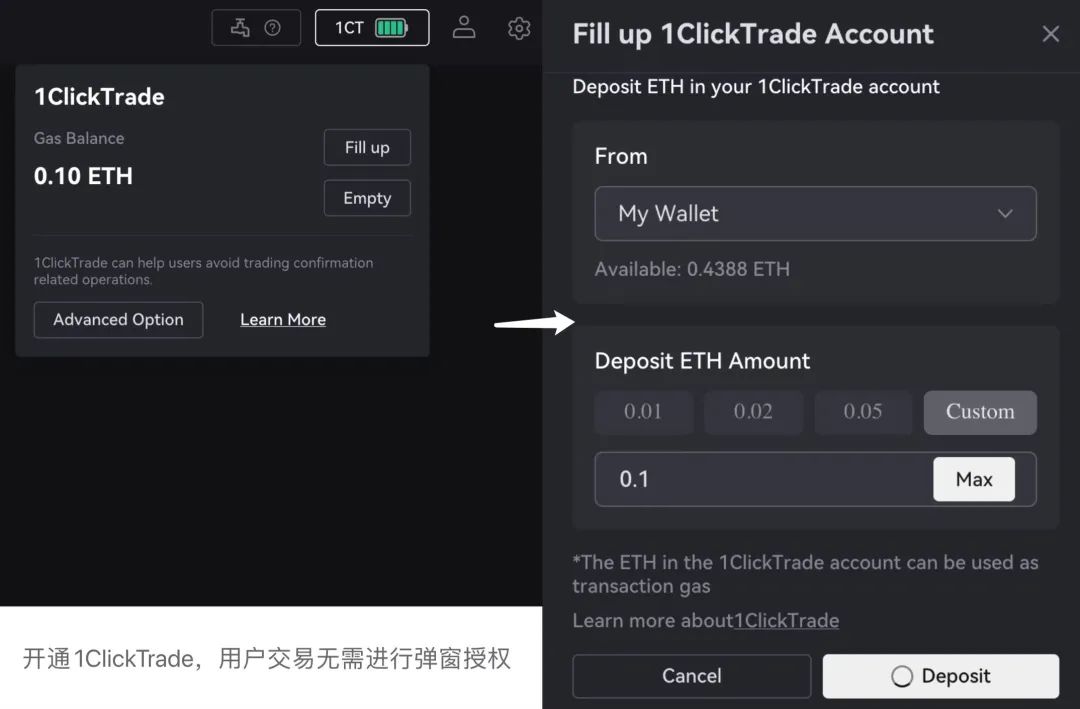
- Login Experience: Supports Web2 login and bank card deposits, enables one-click trading with no confirmation popups. Features multi-level referral and VIP tiers, with VIPs enjoying reduced fees;
- Fee Deduction Method: Fees are deducted from balance first, protecting users’ initial margin;
- Liquidation Mechanism: Prioritizes LP protection during liquidations;
- Fee Collection Model: Charged only upon opening positions, reducing total fees;
- Open Interest (OI) Calculation: More reasonable design reduces user borrowing costs. We offer a 1/3 discount below market lending rates, subsidized by $SEX (SubstanceX’s native token), resulting in higher LP yields;
We can also dive into design differences.
Some so-called “CEX-like” DEXs are just forks of GMX’s code. Since GMX is open-source, launching a similar DEX functionally takes very little time—changing the UI and copying GMX’s smart contracts could get you live in about two weeks.
But SubstanceX didn’t take that route.
While we took inspiration from GMX’s LP vs. Trader betting model in design, our entire trading logic and codebase are built entirely in-house, with no forks—and significantly different from GMX.
We officially started SubstanceX in February and spent five months iterating through four versions until the July launch. I believe our product surpassed GMX starting from V3, but we kept refining to V4—this reflects the “benefit” of a bear market: we had time to perfect the product before launch.
The public testnet version is our internal V4. Whether we move to V5 depends on user feedback. But in terms of current version, our underlying mechanisms already far exceed GMX.
Take fee structure and liquidation: we’ve optimized trading fees, borrowing fees, and funding fees—all deducted from user balance, not margin.
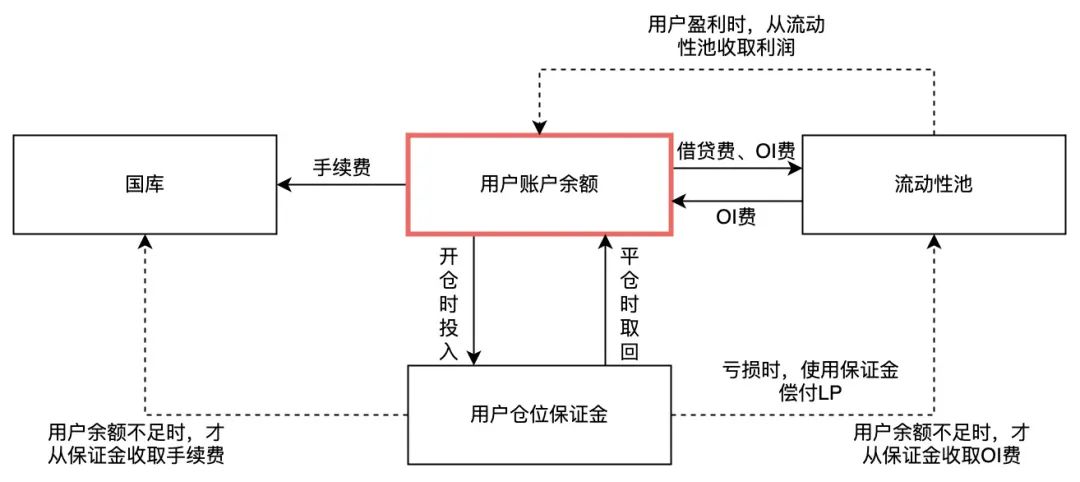
Additionally, near liquidation, we have a more rational process: user fees are charged last, and we prioritize closing positions at favorable prices. When users are liquidated, we first repay LP borrowing costs and counterparty funding fees. Team fees are paid last in priority.
These design advantages manifest in subtle ways: opening the same position at the same time and price, SubstanceX’s liquidation price is slightly lower than GMX’s—and that slight difference can determine whether a user gets liquidated.
We also have unique features like one-click trading, enabling popup-free transactions. Our auditors from Halborn remarked: “If one-click trading goes live, it will be significantly stronger than existing competitors in both product quality and security,” thanks to rigorous encryption across frontend, backend, and user sharding.
So in summary, I’m extremely confident in SubstanceX’s product strength—across execution efficiency, transaction validity, concurrency handling, security, and liquidation priority. I believe we’re the best team in the market at the foundational level.
Of course, market adoption depends on future operations, marketing, and user feedback. Ultimately, we’ll open-source our product, retaining copyright for 2–3 years, preventing large-scale commercial reuse by others.
TechFlow: We understand SubstanceX primarily targets users from “mid-tier centralized exchanges.” Can you elaborate on this user segmentation? And what do you see as the biggest challenge in attracting these users?
Roger:
We target mid-tier CEX users for two main reasons.
First, top-tier CEXs like Bybit, OKX, and Binance have powerful matching engines as moats, capable of supporting millions—even tens of millions—of users. Current blockchains simply can’t handle that scale. Even if we acquired their users, the network would likely crash.
Second, mid-tier CEXs carry greater trust risks. A dollar held there is effectively worth less than a dollar—most can’t fully redeem all user funds. Meanwhile, their user base and matching capacity are smaller, allowing us to offer comparable UX while solving their trust issues.
The biggest challenge in onboarding these users is accessibility. Currently, using a DEX involves complex steps: downloading MetaMask, creating a wallet, securing private keys or seed phrases, topping up gas, signing multiple contracts. It’s time-consuming, and any mistake risks losing assets. In contrast, CEXs allow registration to trading in under five minutes.
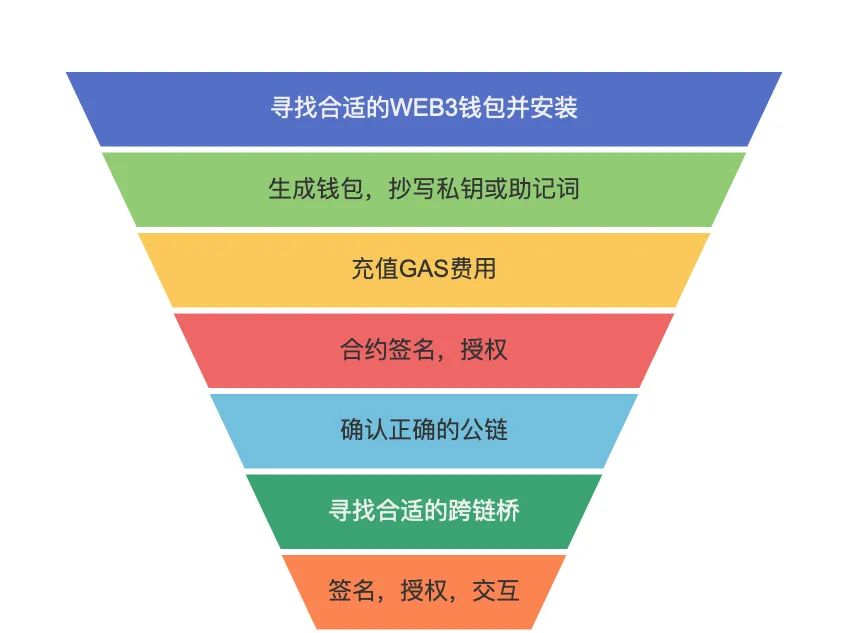
Many overlook this: 90% of users don’t avoid GMX because they tried it and disliked it—they never even reach the point of opening a position, deterred by the complex setup.
Hence, our primary mission is bringing Web2-style login flows fully into DEXs, letting users complete all pre-trading steps with maximum ease. We’ve integrated multiple Web2 login wallets, selecting the two best, and partnered with MoonPay and Alchemy Pay for OTC, enabling direct C2C trades. Our goal is lowering the barrier to entry and improving UX.
TechFlow: Uniswap and GMX dominate the DEX landscape. Do you aim to surpass them? And if so, how?
Roger:
Our goal isn’t to carve out a slice from GMX’s market, but to grow the overall pie.
Our primary target is users from CEXs like MEXC, LBank, and BitMart—we want to bring them onto the Arbitrum chain. We’ve noticed these exchanges expanding on-chain and hope to find mutually beneficial collaborations. If we capture just 30–40% of a single tier-two CEX’s user base, we’d already surpass GMX’s current user count.
Of course, revenue depends on user volume multiplied by average spend. Our strategy isn’t to compete for Arbitrum-native traffic, but to redirect CEX users to DEXs and onto Arbitrum. That’s why many of our partnered KOLs are those who lead trades, drive referrals, and offer rebates on CEXs. Similarly, many of our ecosystem partners already collaborate with centralized exchanges.
To surpass them, I believe two things are essential—as partly answered earlier:
- First, we must lower entry barriers so more users can join SubstanceX.
- Second, we must offer superior product quality compared to GMX and peers to attract and retain users.
The multiplicative effect of these two efforts forms our strategy to surpass GMX and other competitors.
TechFlow: Long-term, how big do you see the DEX market becoming, and what share might SubstanceX capture?
Roger:
I believe top-tier CEXs like Binance, OKX, and Bybit will persist due to their performance and efficiency advantages.
However, second- and third-tier CEXs may be forced to transition toward decentralization. I observe a trend: user funds flow either to top-tier CEXs or on-chain. Rarely does a user withdraw from one mid-tier CEX to deposit into another similarly ranked one.
I believe the DEX market will continue growing—especially in decentralized derivatives, where the opportunity is expanding.
- In spot trading, DEXs have already partially replaced CEXs. New projects typically launch first on Uniswap before possibly getting listed on Binance via their centralized listing process.
- However, in contracts and other high-margin derivatives, CEXs still hold an edge—though whether this advantage will erode remains to be seen.
As for SubstanceX’s potential market share, it depends on our product strength and market strategy. Our goal is to attract and retain more users by offering superior products and services. We aim to secure a meaningful position in this evolving landscape.
Industry and Future: Seizing the DEX Golden Window
TechFlow: On the “DEX” track, what can only be achieved in a “decentralized” way but not in a “centralized” one? What unique opportunities or characteristics will allow SubstanceX to stand out?
Roger:
On the DEX track, I see two key advantages that centralized exchanges simply cannot replicate.
- First, DEXs enable atomic-level reconciliation of accounts. CEXs manage numerous tokens, each with distinct burn mechanisms and tokenomics, making accounting highly complex and opaque—accessible only to a few. DEXs, by contrast, have fully transparent ledgers, enabling atomic-level alignment impossible in centralized systems.
- Second, DEXs can avoid regulatory hurdles. CEXs require legal entities, employees, and compliance with local laws—costing significant time and resources to obtain licenses. DEXs bypass these challenges. Moreover, given the current regulatory landscape, authorities often lack bandwidth to monitor DEXs closely—providing a golden window for rapid growth.
These two advantages are key to SubstanceX’s differentiation. We offer transparent accounting and medium-term freedom from regulatory pressure—things CEXs can’t match. This is why I chose this path.
TechFlow: Looking back at SEC actions and CEX collapses, these events have pushed users toward decentralized solutions. What future events might further accelerate this shift?
Roger:
I believe decentralized exchanges represent a fundamentally better business model. I often use this analogy: CEX problems are like squeezing water from a sponge, while DEXs are a better bucket to catch it.
In CEXs, vast human and financial resources are repeatedly spent on maintaining matching engines and upgrading risk controls—work that can be handled by public chain infrastructure in DEXs, eliminating redundant reinvention and resource waste.
Future catalysts may include further improvements in public chain technology. Arbitrum, for instance, has undergone two upgrades, and with the upcoming Cancun upgrade, fees will drop significantly. This is like improving our “bucket” to better catch the “water” squeezed from the “sponge.” I hope Arbitrum’s team continues improving the base layer to match—or even surpass—the performance of top-tier CEXs.
Meanwhile, projects like ours must build better products on this improved foundation—lowering barriers and enhancing UX. As long as the base layer is efficient, low-cost, and the product is excellent, users will naturally migrate to DEXs. So rather than waiting for more CEX failures, we should focus on building better decentralized systems and infrastructure.
TechFlow: Final question—what do you envision for SubstanceX’s ultimate form, and how do you want users to perceive it?
Roger:
I hope SubstanceX delivers a seamless experience—where users, from logging in and registering to trading, settling, and withdrawing, feel the same level of service excellence as on a top CEX.
Yet, if users dig deeper, they’ll discover that our settlement, execution, and asset ownership are fully decentralized and entirely on Arbitrum. So within the greatest feasible decentralization, we deliver maximum product power. That’s the impression I want users to have of SubstanceX.
Finally, through this interview, we’ve gained insight into Roger’s deep understanding—as an industry insider—of CEX/DEX business models, persistent pain points, and future directions, along with his meticulous attention to competitor analysis and UX details.
As industry observers, we look forward to seeing more projects like SubstanceX emerge—offering CEX-competitive experiences while preserving decentralization. We also anticipate continued advancements in public chain technology and higher-quality decentralized products, driving the entire industry toward greater transparency, security, and user-friendliness.
Join TechFlow official community to stay tuned
Telegram:https://t.me/TechFlowDaily
X (Twitter):https://x.com/TechFlowPost
X (Twitter) EN:https://x.com/BlockFlow_News
 深潮TechFlow


