
Crypto Geeks Discussion and Web3 Winter Survival Guide
TechFlow Selected TechFlow Selected
Crypto Geeks Discussion and Web3 Winter Survival Guide
Whether we are developers or investors, we are pioneers at the forefront of our time.
 Navigating Web3 tides with focused insights
Preface
On July 5th, under a drizzling sky reflecting the lukewarm crypto market sentiment, YBB ChainXplore: Geek Symposium 01 successfully concluded. We were honored to invite numerous heavyweight guests—seasoned technical experts and founders dedicated to solving pressing industry needs—to engage in face-to-face discussions with us.
At the event, speakers shared insights on critical topics such as ensuring fund security and preventing hacker attacks; where developers can access cloud-based API services; how to find efficient and reliable RPC services tailored to specific needs; and what scalable cross-chain interoperability protocols based on MPC, ZKP, and TEE look like. Below, let’s explore the sparks ignited by these geeks from diverse research backgrounds.
Different Perspectives on the Crypto Winter
2022 was a prolonged bear market. In 2023, despite hopes for recovery following the end of the pandemic, continuous U.S. interest rate hikes and increasingly stringent regulatory scrutiny from the SEC toward crypto exchanges have once again cast uncertainty over what had seemed a promising year. As industry veterans who've weathered multiple bull and bear cycles, how do we envision the future of this space? And from our respective positions, how should we endure this "winter"? At the beginning of the event, John, Co-founder of YBB Capital, invited panelists to share their survival strategies. Below are the key takeaways from the guests.
Hugh, Co-founder of YBB Capital: From late 2020 through the end of 2022, during the last bull cycle, we observed a strong positive correlation between capital inflows and technological advancement. Institutional participation, such as Grayscale's large-scale investments, further fueled upward momentum. However, as macro policies tightened and liquidity drained from the market, each previous cycle showed a certain periodicity, much like interlocking gears. For crypto, long-term progress ultimately hinges on technological breakthroughs that attract major capital.
From my experience at EDCON in Montenegro, there was heightened focus on advancements in ZK technology and the convergence of AI with blockchain. Regarding AI, most attendees adopted a defeatist stance, believing AI will dominate and expressing pessimism. Nonetheless, it was fascinating to witness such diverse ideas collide. Overall, we’re still searching for the next compelling narrative to drive the next bull market.
Joshua, Investment Manager at Kernel Ventures: After Hong Kong released its compliance framework in April, alignment with regulatory standards became more crucial due to liquidity considerations. Liquidity remains a top factor for exchange category management, making both project liquidity and market热度 (heat) particularly important. From a VC perspective in early-stage investing, while our investment pace has slowed, we continue seeking collaborations—offering product guidance, enhancing asset liquidity, and facilitating key resource connections. Providing such value-added support is currently one of the most meaningful contributions we can make to the ecosystem.
Liquid, Data Engineer at Chainbase: How should individuals survive this bear market? My advice: avoid leverage. When fundraising, projects must first consider how to survive across market cycles and prepare accordingly. Strengthen operational capabilities in cost control and user acquisition to ensure sustainability throughout the bear market. Looking at broader market trends, past bull runs were typically led by major cryptocurrencies. However, given Bitcoin and Ethereum's current scale, the next bull cycle will likely require several regulatory catalysts—such as BlackRock’s ETH ETF application approval or a clear pivot in U.S. interest rate policy—before capital flows back into crypto.
Haichao Zhu, Co-founder of Rooch Network: The primary market remains in a cooling-off phase. There's a noticeable sense of restlessness, even absurdity—projects without genuine innovation can still attract VC attention simply by attaching buzzwords like ZK, Layer2, EVM, or GameFi, along with claims of over 100,000 users. Nevertheless, we remain committed to building foundational infrastructure and contributing meaningfully in ways we excel at.
Hugh, Co-founder of YBB Capital: We also observe a stark polarization in today’s market: top-tier projects are oversubscribed despite high competition, while grounded yet less technically sophisticated projects struggle to secure funding even at low valuations. Most investment decisions are currently driven by sentiment rather than fundamentals. Even leading institutions like a16z have seen many of their portfolio projects underperform post-launch. Still, we should maintain optimism and keep passionately pursuing new technological frontiers.
Zhengxue Dai, Head of Developer Relations at Chainbase: My view differs slightly—I don’t think the winter has truly begun. With global recessionary pressures and structural population decline domestically, many have reduced investments in early-stage ventures due to weak consumer demand and shrinking capital pools.
We also see developer numbers continuing to grow. Jokingly, perhaps only when I personally decide to leave the industry will the crypto winter truly be nearing its end. We monitor on-chain developer counts and contract deployment rates, which have significantly declined compared to last year. Most public chains now aim to hoard developers. Despite Layer2s boasting massive TVL, the majority consist of mercenary yield farmers who contribute little to ecosystems. So allow me to pose a question: where are today’s developers actually located?
YaJin Zhou, Co-founder of BlockSec: Where are Web3 developers? We’ve been pondering this too, as our primary clients are projects themselves. It’s a classic chicken-and-egg problem: developers build applications for users; users create demand; demand drives projects; projects attract developers. Without compelling Web3 use cases gaining mainstream traction, mass user adoption remains unrealistic.
So the real challenge returns to attracting users—what needs does Web3 actually fulfill for them? And in the current bear market, what kind of applications could bring users in? Personally, I remain optimistic. This market downturn helps eliminate weaker projects. Amid repeated centralized exchange collapses, more funds are flowing into decentralized exchanges. This entire process represents a period of accumulation—only after consolidation can superior products emerge.
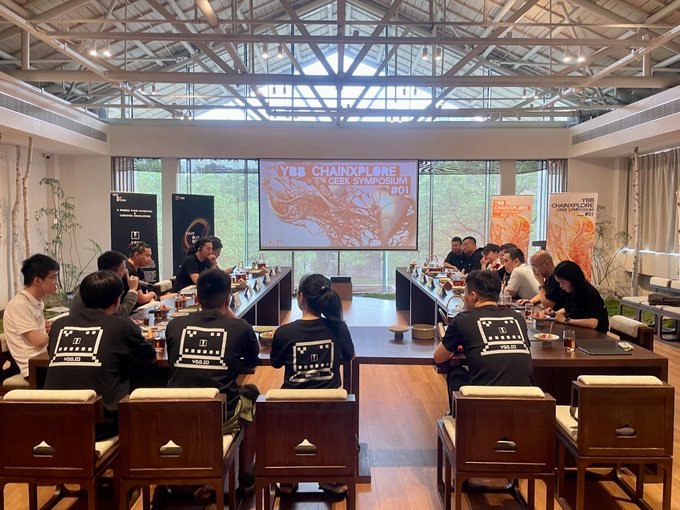
Image source: live shooting
The Dark Forest and the Knights of Light
According to SlowMist's Hacked.slowmist statistics, from January 2012 to July 14, 2023, total losses from blockchain hacks exceeded $30 billion across 1,108 incidents!
No matter our role in Web3, we cannot escape the constraints of the dark forest. Compared to Web2, the decentralized nature of Web3 networks inherently sacrifices some level of security. Just as Ethereum Layer2 enhances scalability, Web3 now requires its own "knights" to expand network security.
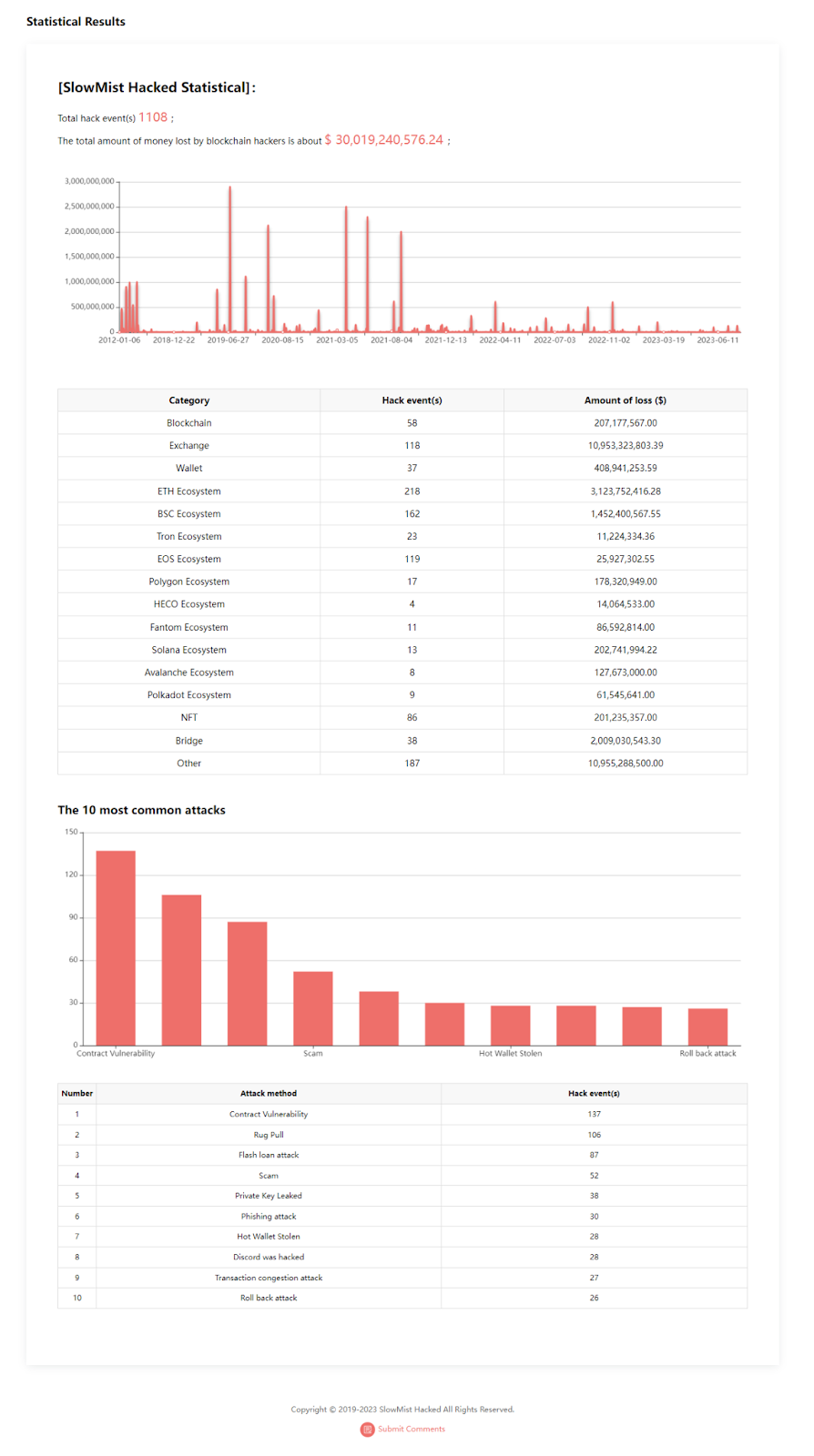
Data source: SlowMist official website
Guardians of User and Project Security
Security remains the industry’s biggest pain point. Among various forms of asset theft, user wallets, project teams, and cross-chain bridges are the most vulnerable targets. To reduce attack frequency, YBB Capital invited two security-focused projects—smart contract auditor BlockSec and decentralized signature bridge solution Bool Network—to share their approaches at the event.
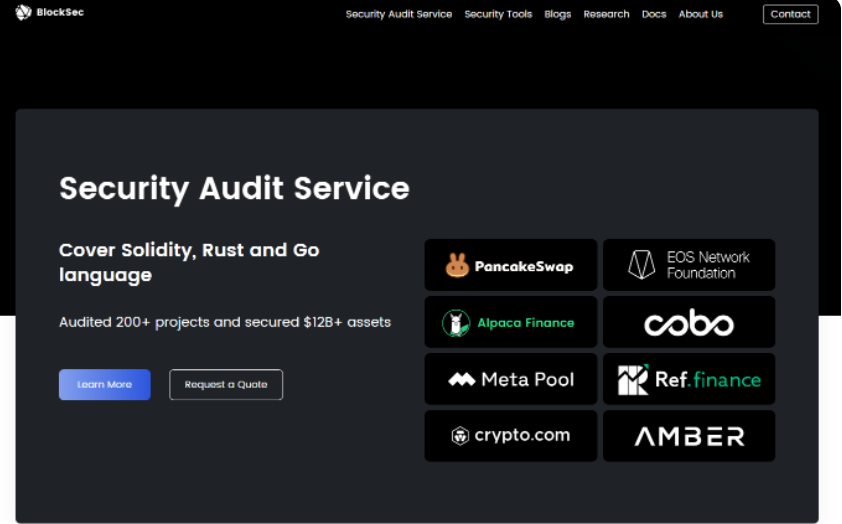
Image source: BlockSec official
BlockSec is a blockchain security service team offering full lifecycle security solutions for blockchain developers—from pre-deployment (e.g., code audits) to post-deployment (e.g., monitoring and attack prevention). Its monitoring and attack mitigation technologies have gained broad community recognition and partnerships with major projects, including recently co-developing an attack detection system for Compound V3 contracts. Committed to providing security infrastructure, BlockSec has launched a suite of tools including Phalcon—a development, testing, and monitoring toolkit for projects; MetaDock—a security toolbox for Web3 users; and MetaSleuth—a cross-chain fund tracking platform.
Beyond Code Audits: Enhancing Security Post-Deployment
Developer-Centric Development, Testing & Monitoring Suite: Phalcon (Phalcon.xyz)
Phalcon is a security-focused development, testing, and monitoring suite developed by BlockSec for crypto projects. Recognizing that code audits alone cannot solve Web3 security challenges—given the scarcity of high-quality audit services and the evolving nature of attack vectors—BlockSec developed Phalcon after extensive real-world testing and productization efforts, aiming to introduce a new security paradigm for Web3.
Phalcon comprises three core modules:
1) Phalcon Explorer: A powerful blockchain transaction explorer featuring transaction parsing, simulation execution, and debugging;
2) Phalcon Fork: A private environment mirroring mainnet state for secure testing, embedded with security toolkits for initial vulnerability screening, supporting team collaboration and public testnets;
3) Phalcon Block: An active threat defense system offering unique capabilities in monitoring, alerting, and blocking (pausing or frontrunning) hacker attacks. Notably, BlockSec has successfully intercepted attacks and recovered over $14 million in assets, making it the only security firm in the industry with proven success in proactive defense.
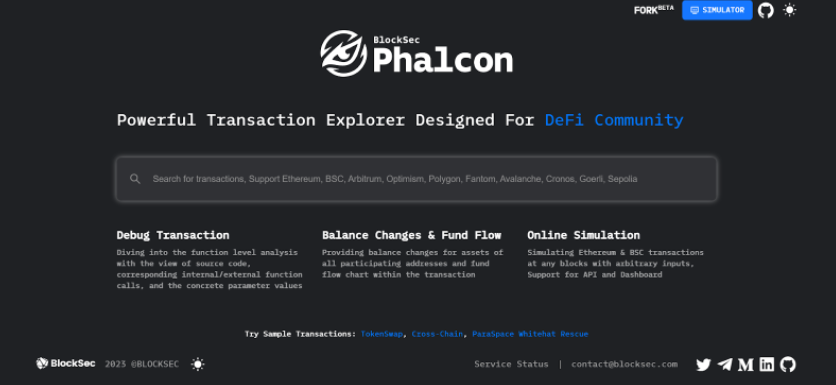
Image source: Phalcon official
Web3 User Security Toolkit: MetaDock (blocksec.com/metadock)
MetaDock is a completely free, open-source, ad-free browser extension that enhances blockchain explorers like Etherscan. Through innovative design, it seamlessly integrates shortcuts to over ten practical tools, serving as a high-efficiency companion for security researchers, data analysts, and crypto users. Features include built-in GPT functionality to quickly understand transaction details, one-click address fund flow visualization, NFT risk assessment, and enhanced labeling and scoring for contract addresses. It has received five-star ratings and editorial picks on both Chrome and Firefox extensions stores.
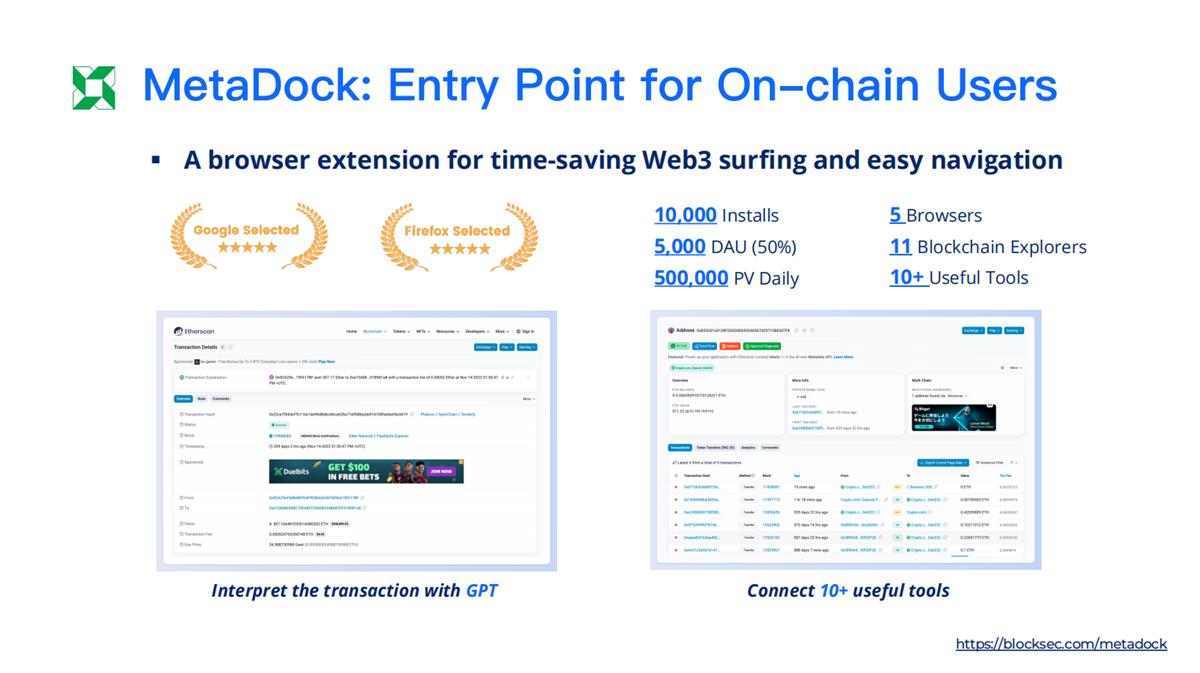
Image source: MetaDock official
Cross-Chain Fund Flow Tracking Platform: MetaSleuth (metasleuth.io)
MetaSleuth is a visual analytics platform for cross-chain crypto assets. By inputting a wallet address, users can visualize all related on-chain asset movements. It has become a frequently used tool among “on-chain detectives,” enabling comprehensive monitoring of fund trajectories across ten integrated blockchains.
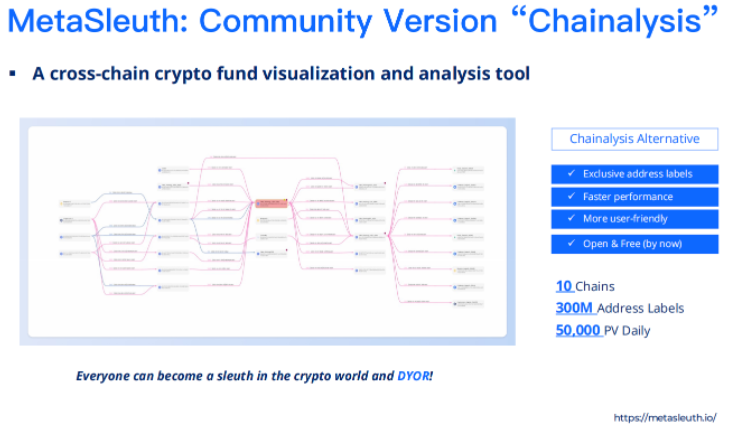
Image source: MetaSleuth official
A Novel Approach to Securing Cross-Chain—the Industry’s Other Attack Hotspot
Bool Network is a permissionless, fully trustless, and highly scalable decentralized signing network based on Multi-Party Computation (MPC), Zero-Knowledge Proofs (ZKP), and Trusted Execution Environments (TEE). It serves as a foundation for universal cross-chain interoperability protocols, enabling arbitrary message transmission and digital asset transfers across heterogeneous networks.
Technical Architecture
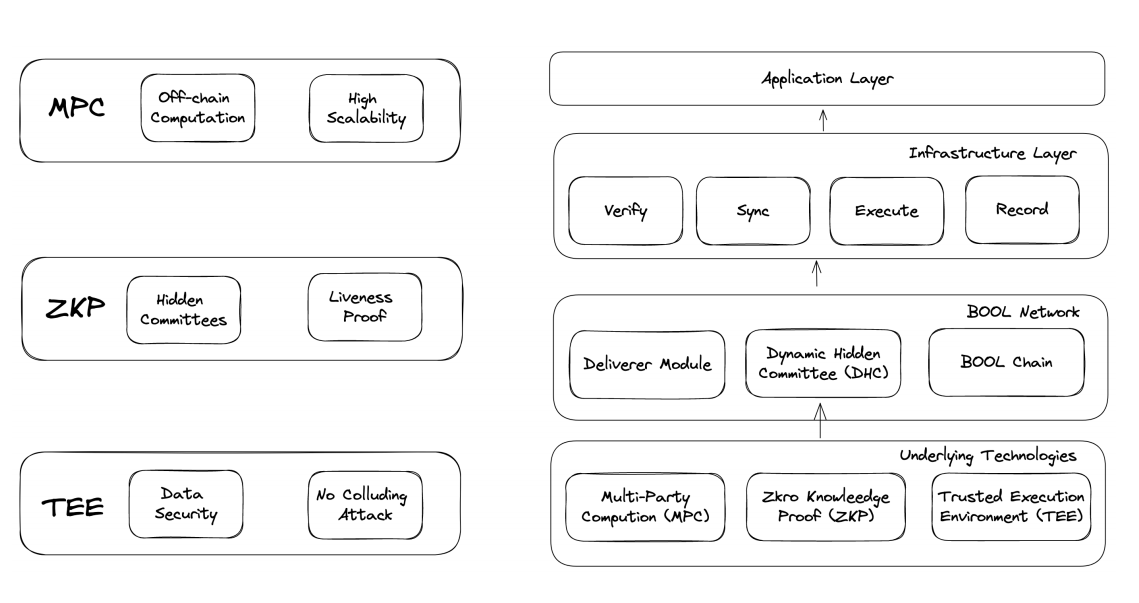
Image source: Bool Network official
The core component of cross-chain systems is the relayer. Yet no truly secure and decentralized relayer exists today, which explains why most attacks target cross-chain bridges. Most current relayers operate in centralized models, primarily due to improper private key management and exposure. Traditional solutions like multisig or MPC still rely on partially centralized entities, failing to resolve security issues fundamentally. Bool Network introduces a decentralized signing network architecture, ensuring private keys remain outside third-party control, thereby addressing this root cause.
To achieve this, Bool Network introduced the concept of a “Dynamic Hidden Committee.” Each committee manages private keys on specific blockchains to facilitate any form of cross-chain transactions and information transfer. Leveraging its proprietary Ring Verifiable Random Function (Ring VRF) election algorithm ensures committee members’ identities remain private. Importantly, all committee programs run within TEE environments, guaranteeing confidentiality and integrity of components.
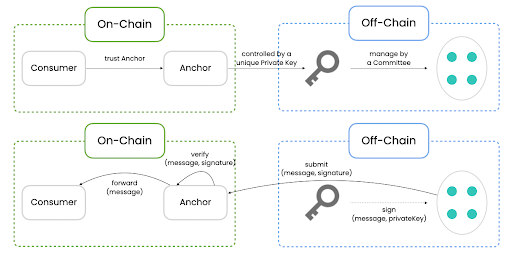
Image source: Bool Network official
MPC: Enables data holders to collaboratively compute and output results without mutual trust. Unlike multisig, MPC offers higher privacy, stronger security, greater flexibility, and wider applicability.
ZKP: Provides a uniquely secure verification method. Using Ring VRF, the actual public key is hidden within a ring structure, allowing provers to demonstrate ownership of a corresponding private key via non-interactive ZKP without revealing sensitive information.
TEE: A secure region within mobile device CPUs designed to protect computation confidentiality and safety. In Bool Network, TEE acts as an isolated environment capable not only of storing sensitive data but also offering verifiability—validators can confirm that core code and business logic running inside TEE have not been tampered with, thus ensuring security.
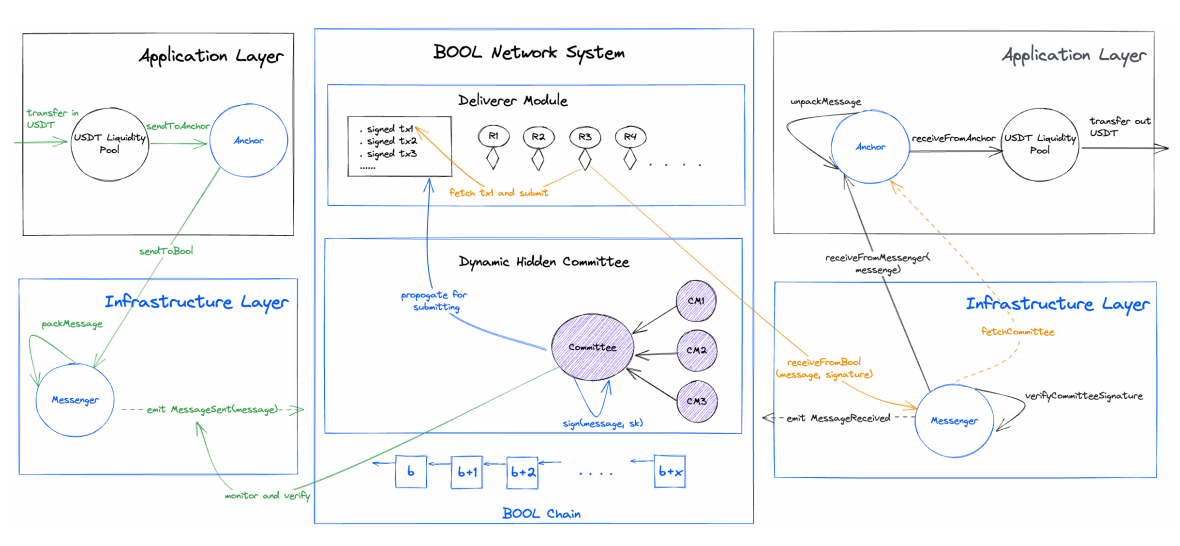
Image source: Bool Network official
During the initialization phase, suppose 21 nodes are randomly selected from 10,000 TEE nodes. First, the committee-controlled private key is split into 21 fragments using DKG algorithms. These shards are then encrypted and stored via trusted hardware, rendering them inaccessible even to malicious nodes, eliminating incentives for collusion at the source. During this process, the Ring VRF protocol conceals the true identities of committee members, preventing internal collusion and increasing external attack costs—attackers would need to identify the 21 chosen hidden members among 10,000 total nodes.
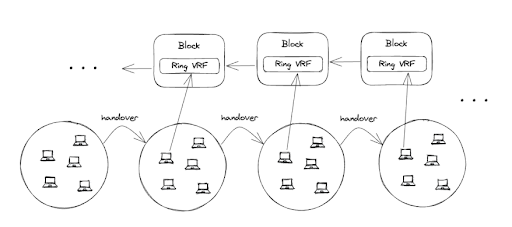
Image source: Bool Network official
Finally, using secure multi-party computation, digital signatures are generated from the private key shards. A notable feature of MPC is its resilience—even if some nodes go offline abnormally, signing operations can still complete. Additionally, Bool defines fixed time intervals called “epochs.” A selected group of nodes controls a committee only within one epoch. Afterward, management rights are transferred to a new node group. This rotation mechanism, facilitated by the Ring VRF algorithm, continuously strengthens the security of committee-managed private keys.
Bool Network: Secure Infrastructure for Private Key Management
Bool Network functions as foundational infrastructure for the industry—an infrastructure service proposed to secure cross-chain communications, such as managing endpoint private keys for DeFi bridging applications built atop Bool Network. Furthermore, Bool Network is extensible, capable of providing off-chain consensus for decentralized oracle services operating in more distributed models.
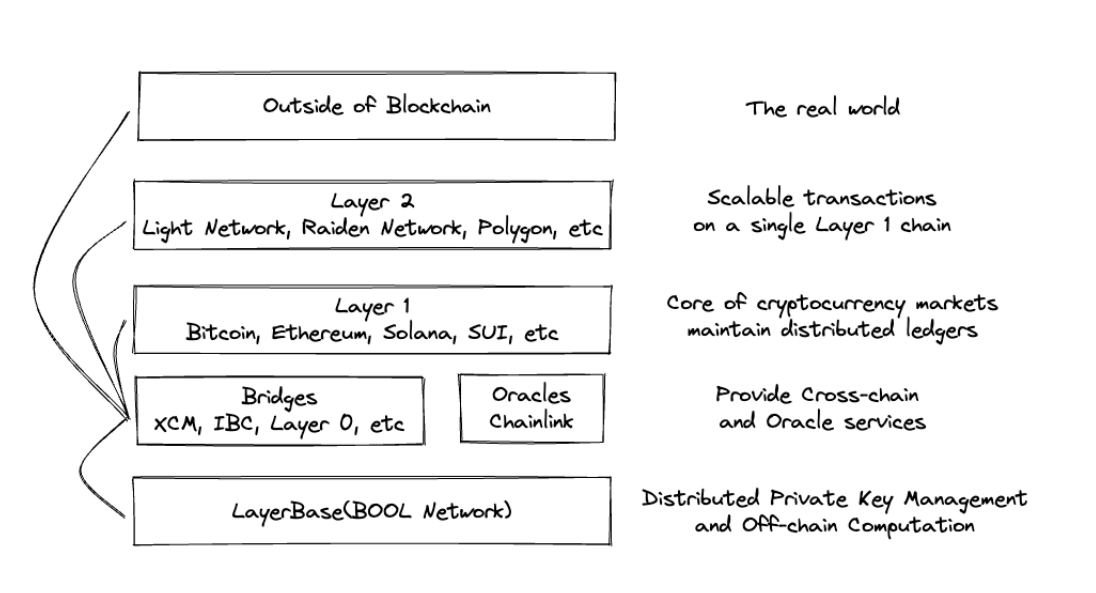
Image source: Bool Network official
In summary, Bool Network distinguishes itself from other cross-chain protocols by leveraging Ring VRF to enable dynamic, private committee management of private keys, achieving full composability for arbitrary information transfer between heterogeneous blockchains. Notably, Bool Network’s academic research has been accepted by IEEE Transactions on Information Forensics and Security (TIFS). The team plans to support additional blockchain networks in the future.
Currently, the product supports networks including Bitcoin, EVM, Solana, Sui, and Filecoin. The team also intends to offer security solutions for wallets and asset management platforms. By Q4 2023, over 1,000 nodes are expected to operate on the Bool Network—the more nodes participating, the stronger the network’s security and decentralization.
Accelerating Developer Efficiency with RPC Services
Technically speaking, a blockchain node is a high-performance computer or server connected to a decentralized peer-to-peer network, responsible for storing and updating blockchain data. More simply, blockchain protocols—like Ethereum’s EVM or Bitcoin’s native protocol—when run on your machine, turn you into a node. But nodes come in various types.
RPC (Remote Procedure Call) refers to a communication protocol. An RPC service involves running blockchain node clients on servers, exposing HTTP or WebSocket interfaces through DNS domain resolution.
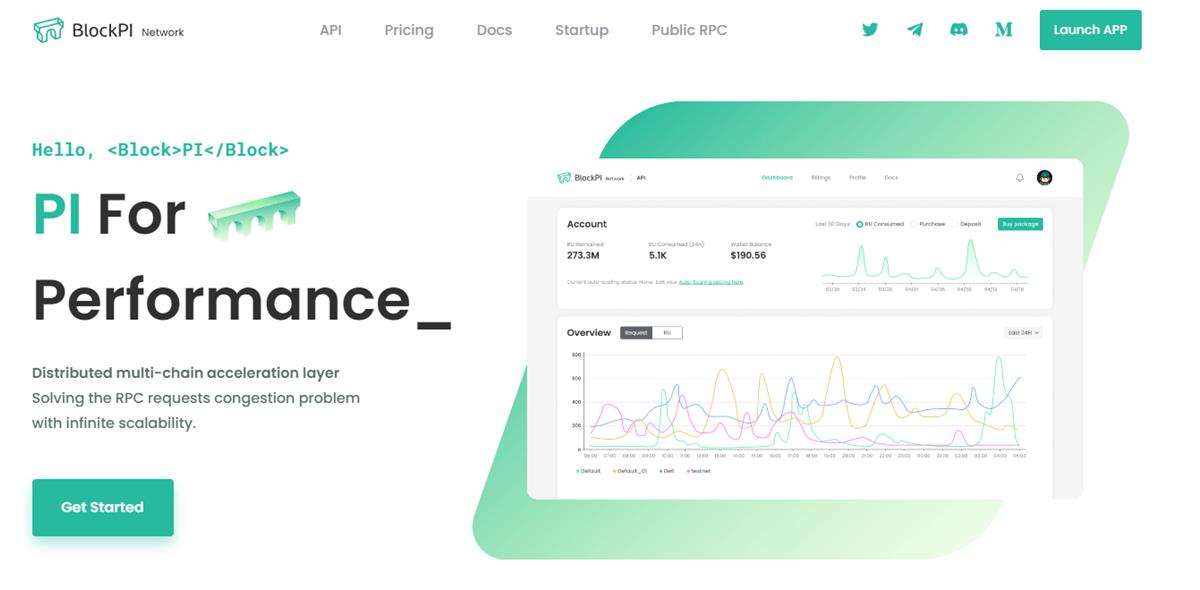
Image source: BlockPI official
Technical Architecture:
BlockPI Network is a blockchain infrastructure project whose technical architecture consists of five interconnected components: BlockPI Hub, HyperNode, Gateway, FisherMan, and Validator. Together, they form a cohesive network.
1) BlockPI Hub
The central hub integrating user management, node rating, authentication systems, and account management. It stores user registration, account, and KYC information. It also continuously tests nodes, feeding performance data into BlockPI’s load balancer. All network revenue, expenses, and role-based reward distributions occur within the Hub, making it a cornerstone of the system.
2) Gateway
Responsible for collecting and categorizing user requests, routing them via the BlockPI load balancer to appropriate HyperNodes. The Gateway’s load balancer continuously assesses backend HyperNode health, dynamically allocating workloads to maintain optimal network performance.
3) HyperNode
The terminal node processing RPC requests and returning responses to users via Gateway. HyperNodes typically run alongside full nodes of the target blockchain (the RPC destination). During testnet phases, BlockPI allowed third-party operators to join as HyperNode runners, validating the decentralized architecture. Currently supports 24 blockchain networks.
4) Validator
Independent blockchain nodes acting as “police” to monitor the network. Using verifiable random functions, Validators verify workload data from HyperNodes and Gateways, writing results onto blocks. Consensus protocols ensure other Validators validate and record this data, creating mutual accountability.
5) FisherMan
Another specialized security role akin to Validator. FisherMan impersonates Gateways and Users, sending RPC requests to HyperNodes and Gateways, then comparing outcomes to detect discrepancies and report anomalies.
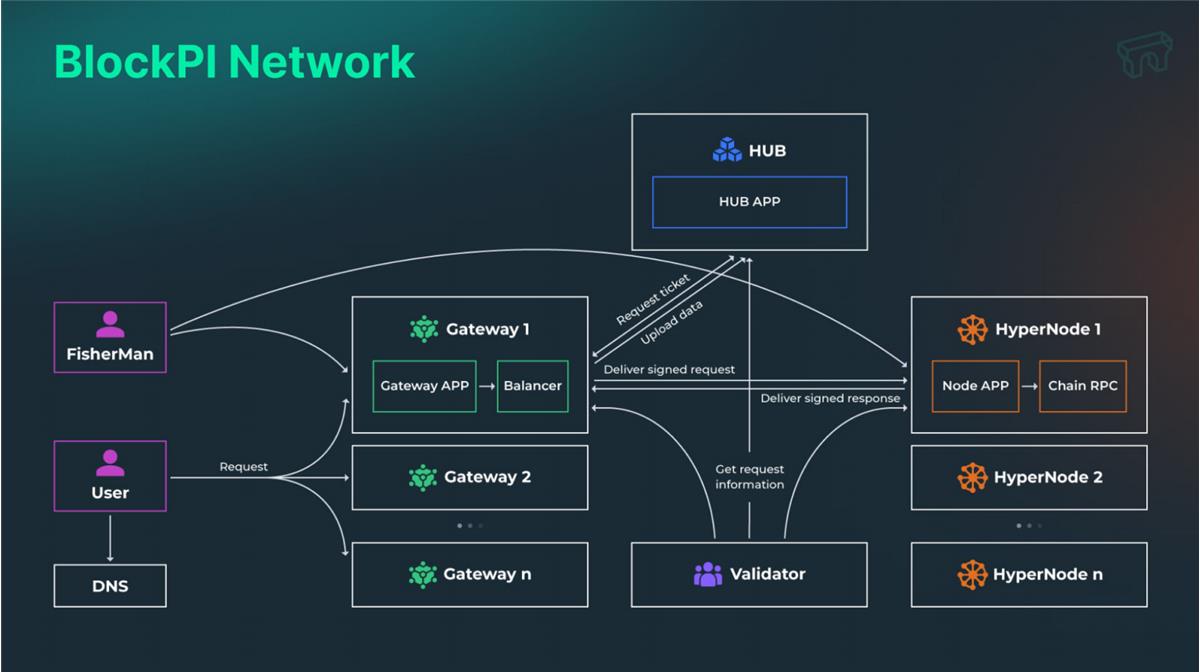
Image source: BlockPI official
Winter and Outlook
Since its inception, the blockchain industry has consistently attracted newcomers with its unique appeal. Regardless of our roles today, we persist forward with conviction. Though still in early development with many technological gaps, we firmly believe that if the internet reshapes the world again, blockchain technology will lead the charge.
Whether we're in winter or summer, industry progress depends on every developer’s contribution and innovation. YBB Capital remains steadfast in its value investment philosophy centered on technological advancement, continuously supporting outstanding projects with funding. We believe blockchain’s evolution relies on continuous technical breakthroughs to create a larger, more robust market environment. We are deeply grateful to all the exceptional developers and builders who joined us in advancing the blockchain ecosystem—leveraging innovation to solve real market challenges. Whether developers or investors, we are all pioneers at the forefront of our time. Finally, sincere thanks to all our distinguished guests for attending.
Join TechFlow official community to stay tuned
Telegram:https://t.me/TechFlowDaily
X (Twitter):https://x.com/TechFlowPost
X (Twitter) EN:https://x.com/BlockFlow_News
 @YBBCapital