
Vitalik: Defending Bitcoin Minimalism
TechFlow Selected TechFlow Selected
Vitalik: Defending Bitcoin Minimalism
Be a minimalist.
 Navigating Web3 tides with focused insights
Author: Vitalik Buterin
Published on: April 1, 2022
For years people have said that blockchain is the future, not Bitcoin.
The future of the world won't be dominated by one major cryptocurrency, or even a few, but by many cryptocurrencies — the winners being those with strong leadership to quickly adapt to user demands for scale. Bitcoin is an emerging token, and Ethereum will soon follow; they will be newer, more dynamic assets attracting fresh waves of mainstream users. These users don't care about strange ideas or so-called "self-sovereign validation"; they are open-minded and focused on building fast and effective blockchain DeFi applications and games.
But what if this entire narrative is completely wrong — and what if Bitcoin's philosophy of minimalism, its habits and practices, are actually very close to being correct? What if Bitcoin isn't just a fleeting "meme coin" riding network effects that has already become obsolete? What if Bitcoin maximalists deeply understand that they're operating in a hostile and uncertain world, one they must fight to survive in — and their behaviors, personalities, and views on protocol design profoundly reflect this reality? What if we live in a world of honest cryptocurrencies (few) and scam cryptocurrencies (many), where a healthy intolerance is necessary to prevent the former from slipping into the latter? That is the argument this article will make.
We live in a dangerous world, and protecting freedom is serious business
At its core, blockchain is a security technology — a technology fundamentally designed to protect people and help them survive in such an unfriendly world. Like Galadriel’s vial (from *The Lord of the Rings*, translator's note), it is “a light when all other lights go out.” It is not a low-cost light, not a fluorescent energy-saving bulb, nor a high-performance lamp. It is a light that sacrifices all these dimensions, optimized for one thing and one thing only: when you face your hardest challenge, and a terrifying twenty-foot spider is staring you in the face.

Source: https://www.blackgate.com/2014/12/23/frodo-baggins-lady-galadriel-and-the-games-of-the-mighty/
Blockchains are used daily by the unbanked (and underbanked), activists, refugees, and many other groups. Many use them as primary life support and savings accounts.
To achieve this, public blockchains sacrifice much for security:
- Blockchain requires every transaction to be independently verified thousands of times before acceptance.
- Unlike centralized systems that confirm transactions within hundreds of milliseconds, blockchains require users to wait 10 seconds to 10 minutes for confirmation.
- Blockchain places full responsibility for security verification on users: if you lose your key, you lose your tokens.
- Blockchain sacrifices privacy, requiring more extreme and expensive technologies to restore it.
What are these sacrifices for?
In short, to create a system capable of surviving in a hostile world, truly becoming “a light when all other lights go out.”
Doing this well requires two key elements: (i) strong and defensible technology, and (ii) strong and defensible culture. The hallmark of strong, defensible technology is focus on simplicity and deep mathematical purity: 1 MB block size, 21 million hard cap, and the simple Nakamoto consensus proof-of-work mechanism understandable even by high school students. Protocol design must be provably secure and remain so for decades or centuries. Technology and parameter choices must be art.
The second element is uncompromising, steadfast minimalism as a culture. This must be a culture capable of fiercely defending itself against corporate and government actors attempting to absorb the ecosystem from the outside, and against bad actors within the crypto space seeking to exploit it for personal gain — and there are many such individuals.
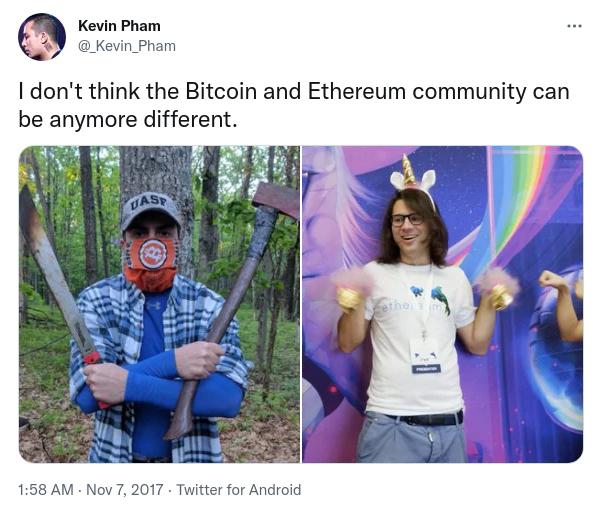
Now, what do Bitcoin and Ethereum cultures actually look like? Well, let’s ask Kevin Pham (a representative figure of Bitcoin minimalism and advocate of Bitcoin SV, translator's note):
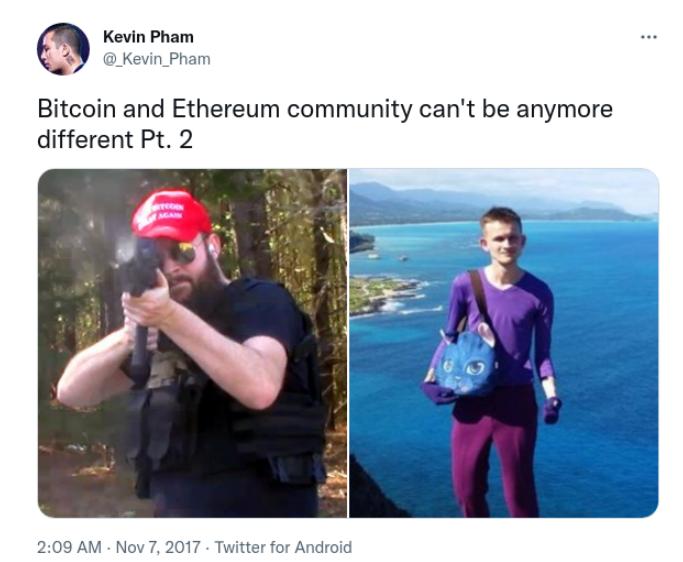
Don’t believe this is representative? Well, let’s ask Kevin Pham again:
Now, you might say this is just Ethereum people playing around, and eventually they’ll realize what they must do and what they’re dealing with. But what about them? Let’s see who Ethereum founder Vitalik Buterin hangs out with:
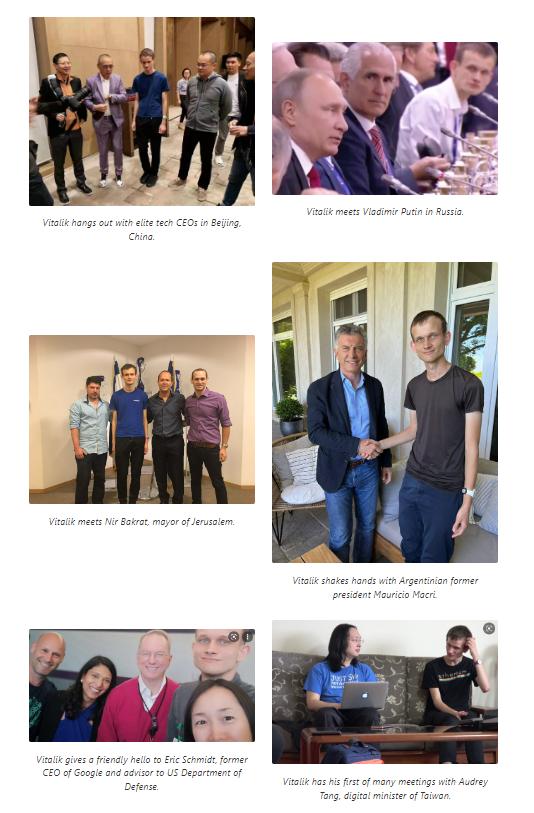
And this is just a small selection. Anyone seeing this should immediately ask: what is the point of publicly associating with all these people? Some are perfectly decent entrepreneurs and politicians, but others actively engage in serious behavior that Vitalik surely does not support. Doesn’t Vitalik realize how many of these figures are geopolitically at each other’s throats?
Perhaps Vitalik is simply an idealist who believes in talking to people to help bring world peace, following Frederick Douglass’s maxim of “associating with everyone for good; never with anyone for evil” (Frederick Douglass, African-American social reformer, translator's note). But there’s a simpler hypothesis: Vitalik is a hippie-like globe-trotting status-seeker who greatly enjoys meeting important people and feeling respected. Not just Vitalik; companies like ConsenSys are happy to work with Saudi Arabia, and the entire ecosystem constantly seeks mainstream validation through data.
Now ask yourself: when the time comes and truly important things are happening on blockchains — things that actually offend powerful people — which ecosystem will stand firm and refuse censorship, no matter how much pressure is applied? The ecosystem filled with globetrotting nomads who genuinely want to be friends with everyone, or the one filled with people whose hobbies include AR15s and axes (referring to Kevin Pham’s Twitter profile images, translator's note)?
Money isn’t just blockchain’s “first application.” It’s by far the most successful one
Many supporters of “blockchain, not Bitcoin” argue that cryptocurrency was blockchain’s first application, but a very boring one, while blockchain’s real potential lies in bigger, more exciting things. Let’s review the list of applications in the Ethereum whitepaper:
• Token issuance
• Financial derivatives
• Stablecoins
• Identity and reputation systems
• Decentralized file storage
• Decentralized autonomous organizations (DAOs)
• Prediction markets
Many of these applications have launched and have at least some users. Crypto enthusiasts often emphasize empowering the poor in the “Global South” (a term referring to economically underdeveloped regions in Asia, Africa, Latin America, etc., translator's note). But which of these applications actually have significant user bases in the Global South?
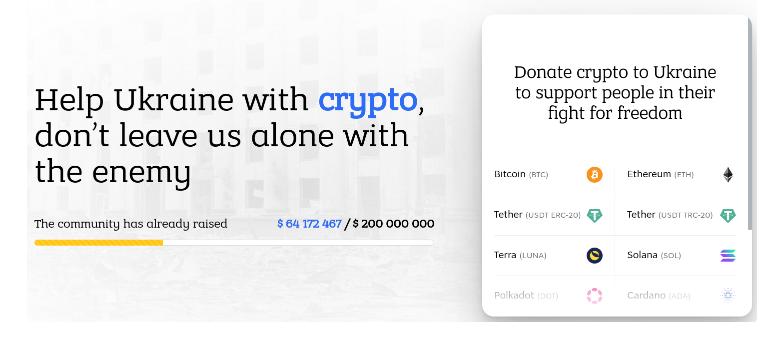
It turns out the most successful applications so far are savings and payments. 3% of Argentinians, 6% of Nigerians, and 12% of Ukrainians own cryptocurrency.
Are there any other applications approaching this level of real-world adoption anywhere? Perhaps ENS comes closest. DAOs are real and evolving, but today too many attract wealthy individuals from rich countries whose main interest is having fun and using cartoon avatars to satisfy their first-world need for self-expression, rather than building schools, hospitals, and solving other real-world problems.
Thus, we can clearly see two sides: the “blockchain” teams — privileged individuals from wealthy nations who love virtue signaling — “beyond money and capitalism” — thus getting excited about “decentralized governance experiments” as hobbies. And the “Bitcoin” teams — highly diverse groups of rich and poor from many countries including the “Global South” — who are actually using capitalist tools, sovereign-free money, to deliver real value to humanity today.
Focusing on making money helps you make better money
A common misconception about why Bitcoin doesn’t support “richly stateful” smart contracts goes like this: Bitcoin values simplicity, especially low technical complexity, to reduce the chance of things going wrong. Therefore, it doesn’t want to add more complex features and opcodes required to support the more sophisticated smart contracts seen in Ethereum.
This misconception is simply false. In fact, there are many ways to add rich statefulness to Bitcoin; search the Bitcoin mailing archives for “covenants” and you’ll find numerous proposals under discussion. Many of these suggestions are quite simple. The reason covenants haven’t been added isn’t because Bitcoin developers saw the value of rich statefulness but couldn’t tolerate slightly higher protocol complexity. Rather, Bitcoin developers fear that rich statefulness could introduce systemic complexity risks to the ecosystem!
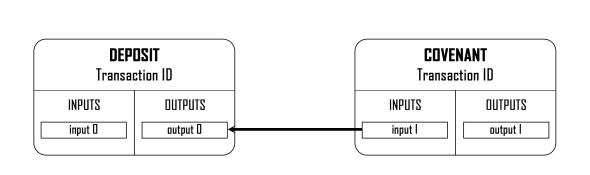
A recent paper by Bitcoin researchers describes several methods for introducing covenants, adding a degree of rich statefulness to Bitcoin.
Ethereum’s struggle with miner-extractable value (MEV) is a great example of this issue in practice. On Ethereum, it’s easy to build applications where the next person interacting with a contract gets a substantial reward, leading traders and miners to race for that reward, greatly increasing network centralization risk and requiring complex mitigation strategies. On Bitcoin, building such systemically risky applications is difficult, largely because Bitcoin lacks rich statefulness and focuses on simple (and MEV-free) use cases — namely, money.
Systemic contagion can also occur in non-technical ways. Bitcoin being just money means it needs relatively few developers, helping reduce the risk of developers demanding free funds to build new protocol features. Bitcoin being just money reduces pressure on core developers to constantly add features to “keep up with competition” and “meet developer demands.”
In many ways, systemic effects are real: money cannot “enable” a highly complex and risk-distributed application ecosystem without that complexity eventually biting back. Bitcoin is the safe choice. If Ethereum continues its layer-2-centric approach, ETH-the-currency may remain somewhat insulated from the application ecosystems it enables, gaining some protection. On the other hand, so-called high-performance layer-1 platforms have no such chance.
Generally, the earliest projects in an industry are the most “authentic”
Many industries and fields follow a similar pattern. First, some exciting new technology is either invented or dramatically improved to the point it becomes practically useful. Initially, the technology is clunky, too risky for almost anyone to treat as an investment, and lacks “social proof” that people can succeed with it. Thus, the first participants are idealists, tech geeks, and others genuinely excited about the technology and its potential to improve society.
However, once the technology proves itself sufficiently, norms shift — in internet culture, this event is often called “eternal September.” These aren’t just ordinary nice folks wanting to feel part of something exciting, but business-oriented types in suits who start hunting for profit-making opportunities within the ecosystem — backed by armies of venture capitalists eager to print their own money off-chain to support them. In extreme cases, outright scammers enter, creating blockchains with no social or technical value, essentially borderline frauds. But the reality is, the line between “altruistic idealists” and “scammers” is really a spectrum. The longer an ecosystem runs, the harder it becomes for any new altruistic project to get started.
A noisy proxy for the blockchain industry slowly replacing philosophical and idealistic values with short-term profit-seeking values is the growing size of pre-mines: allocations of cryptocurrency given by developers to themselves.
 Source: https://twitter.com/RyanWatkins_/status/1394283802009145348
Which blockchain communities deeply value self-sovereignty, privacy, and decentralization, and are making huge sacrifices to achieve them? Which blockchain communities just want to boost their market cap and make money for founders and investors? The above chart makes it clear.
Intolerance is good
The above explains why Bitcoin’s status as the first cryptocurrency gives it unique advantages that any cryptocurrency created in the past five years would struggle to replicate. But now we come to the biggest objection to Bitcoin’s minimalist culture: why is it so toxic?
The case for Bitcoin’s toxicity stems from Conquest’s Second Law. In Robert Conquest’s original formulation, “Any organization not explicitly right-wing will eventually become left-wing.” But in reality, this is just a special case of a more general pattern — one increasingly relevant in today’s age of relentless homogenization and conformity on social media:
If you want to maintain an identity different from the mainstream, you need a truly strong culture that actively resists and rejects attempts by the mainstream to assert dominance and assimilate you.
As I mentioned above, blockchain is a deeply and explicitly countercultural movement trying to create and preserve something different from the mainstream. At a time when the world is splitting into blocs of major powers actively suppressing social and economic interaction between them, blockchain remains one of the few things that can stay global. When more and more people seek censorship to defeat their short-term enemies, blockchain stands firm in refusing to censor anything.

The only correct response to “rational adults” telling you to “go mainstream” by compromising on your “extreme” values. Because once you compromise once, there’s no stopping.
Blockchain communities must also fight bad actors from within. These bad actors include:
- Scammers who create and sell projects that ultimately have no value (or worse, are harmful), yet cling to the “crypto” and “decentralized” brand (along with highly abstract notions of humanism and friendship) for legitimacy.
- Cooperators who loudly signal virtue by advocating collaboration with governments, and actively try to convince governments to use coercive force against their competitors.
- Corporatists who attempt to use their resources to take over blockchain development, often pushing protocol changes toward centralization.
One could oppose all these actors with a smile, politely explaining to the world why one “disagrees with their priorities.” But this is unrealistic: bad actors will work hard to integrate into your community, and by then, criticizing them with the necessary degree of contempt becomes psychologically difficult — the people you criticize are your friends’ friends. Thus, any culture valuing friendliness will easily give in under pressure, leaving scammers free to roam in innocent newcomers’ wallets.
What kind of culture won’t be overrun? One willing and eager to tell both internal scammers and powerful external adversaries: unless they resort to force, they won’t succeed.
The weird crusade against seed oils is a good thing
A powerful bonding tool to help a community maintain internal cohesion around its unique values and avoid sinking into the mainstream mire is embracing quirky beliefs and crusades of similar spirit, even if not directly related to the core mission. Ideally, these crusades should be at least partially correct, exposing real blind spots or inconsistencies in mainstream values.
The Bitcoin community excels at this. Their latest crusade is the war against seed oils — oils extracted from plant seeds, high in omega-6 fatty acids, which are harmful to human health.

This Bitcoin movement is mocked in the media, but when “respected” tech companies address the topic, media attitudes are much kinder. This crusade helps remind Bitcoiners that mainstream media is fundamentally tribal and hypocritical — and thus media attacks accusing crypto of mainly enabling money laundering and terrorism should be met with equal contempt.
Be a minimalism
Minimalism is often ridiculed in the media as a dangerous concept, and there’s a belief that once other cryptocurrencies enter and take over, Bitcoin’s supreme network effect will vanish. But the reality is, the arguments for minimalism I’ve described above are entirely independent of network effects. Network effects do grow logarithmically, not quadratically: once a cryptocurrency is “big enough,” it has sufficient liquidity to function, and multi-crypto payment processors can easily add it to their offerings. However, the claim that Bitcoin is an outdated pet rock whose value comes entirely from a zombie-like network effect that could collapse with just a little push — this too is completely wrong.
Cryptocurrencies like Bitcoin possess real cultural and structural advantages, making them strong assets worth holding and using. Bitcoin is a prime example of this category, though certainly not the only one. Other respectable cryptocurrencies do exist, and minimalists are willing to support and use them. Minimalism isn’t about Bitcoin for Bitcoin’s sake; rather, it’s a very real recognition that most other crypto assets are scams, that a culture of intolerance is unavoidable and necessary to protect newcomers and ensure at least one corner of this space remains livable.
Better to mislead ten newbies to avoid one outcome where a scammer bankrupts a newcomer.
Better to keep your protocol overly simple —宁愿 simple to the point of failing to serve ten low-value gambling dapps, than overly complex to the point of failing to serve the core robust monetary use case that supports everything else.
Better to boldly stand for what you believe in and offend millions, than to try pleasing everyone and end up achieving nothing.
Be brave. Fight for your values. Be a minimalism.
Join TechFlow official community to stay tuned
Telegram:https://t.me/TechFlowDaily
X (Twitter):https://x.com/TechFlowPost
X (Twitter) EN:https://x.com/BlockFlow_News
 @VitalikButerin