Hackers Leak GTA 6 and Launch a Token: Leaked Footage Becomes $CYBERLEEK Ad Space—Buy Tokens to Vote Before Watching the Next Clip
Author: Claude, TechFlow
TechFlow Guide: On August 18, an anonymous account called CyberLeek began releasing what appears to be gameplay footage from a development build of GTA 6, with each video bearing an advertisement to buy the namesake memecoin $CyberLeek.
On-chain records show that the token was created 7 hours and 47 minutes before the first leaked footage appeared, with a single wallet covering all startup costs. The hackers will decide which game scene and gameplay features to leak next based on token holders' votes.
To date, the token has seen $15 million in trading volume on its first day, generating $30,000 in fees alone, while the actual upfront costs amounted to less than $30,000. As a blockbuster game capable of influencing its developer's stock price, hackers have turned GTA 6 into a gimmick to capture attention, while the memecoin market has become an additional revenue stream.

What level of impact does GTA 6 represent? It is the most anticipated game in the industry over the past decade, with a trailer surpassing 100 million views on a single YouTube video. Any minor news can instantly dominate global social media. Developed by Take-Two Interactive, it is scheduled for release on November 19, 2026, and Netflix will host an official extended gameplay preview on August 27.
However, an anonymous hacking group calling itself CyberLeek claims to have acquired an early copy of the game and released partial gameplay and playthrough clips. These are no longer trailers but rather playable bootlegs; meanwhile, the hackers threaten to release all leaked versions entirely if their security is threatened, which would deal a devastating blow to the developer's legitimate sales.
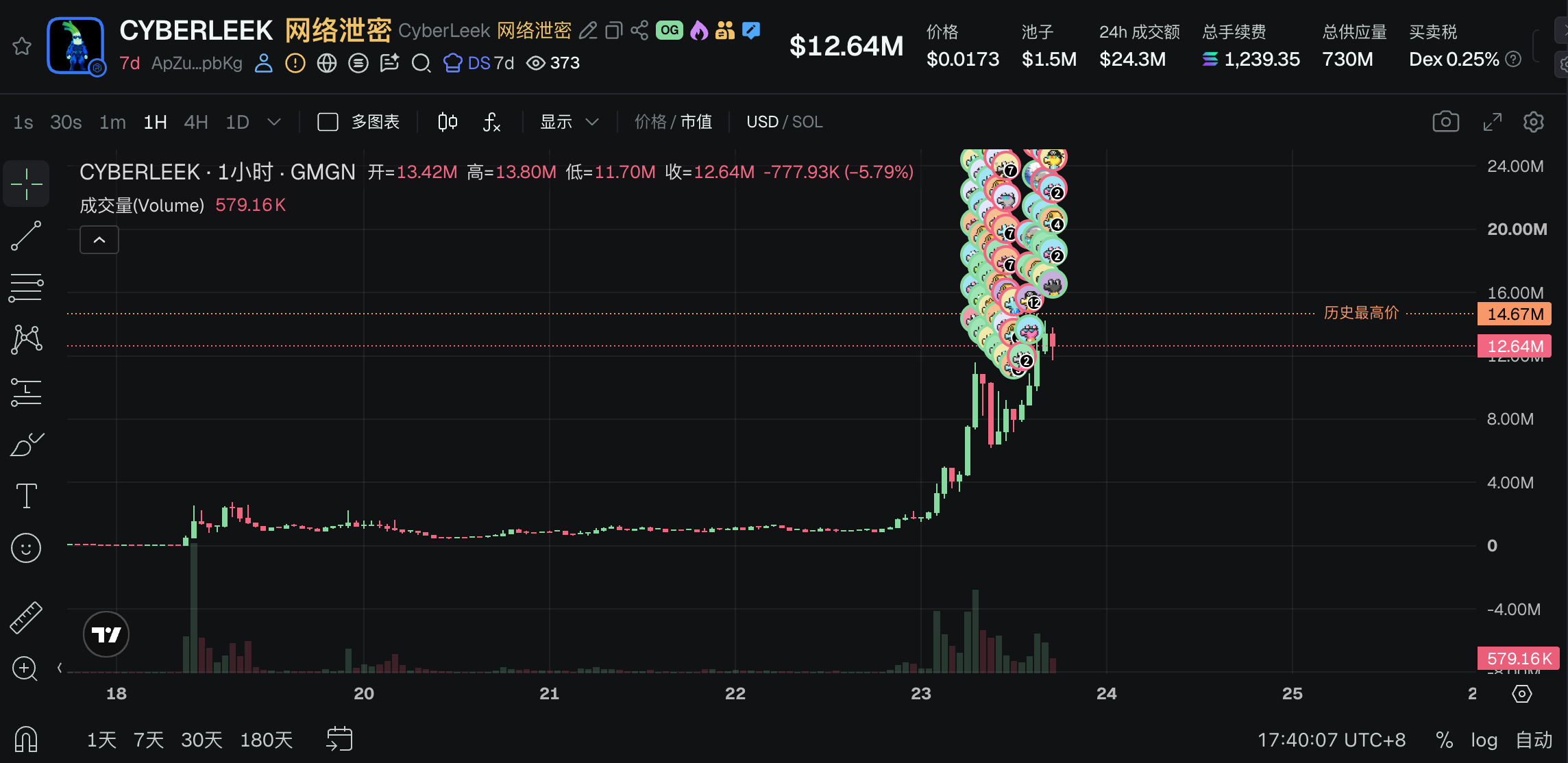
Additionally, the organization launched a token. On August 15, the namesake memecoin $CYBERLEEK went live on Solana, reaching a market cap peak of $15M and sitting around $12M prior to publication.
Currently, every frame of the leaked gameplay bears a CYBERLEEK watermark along with the text "Please purchase this MEME coin," and these leaked videos are currently spreading like wildfire across overseas social media platforms.
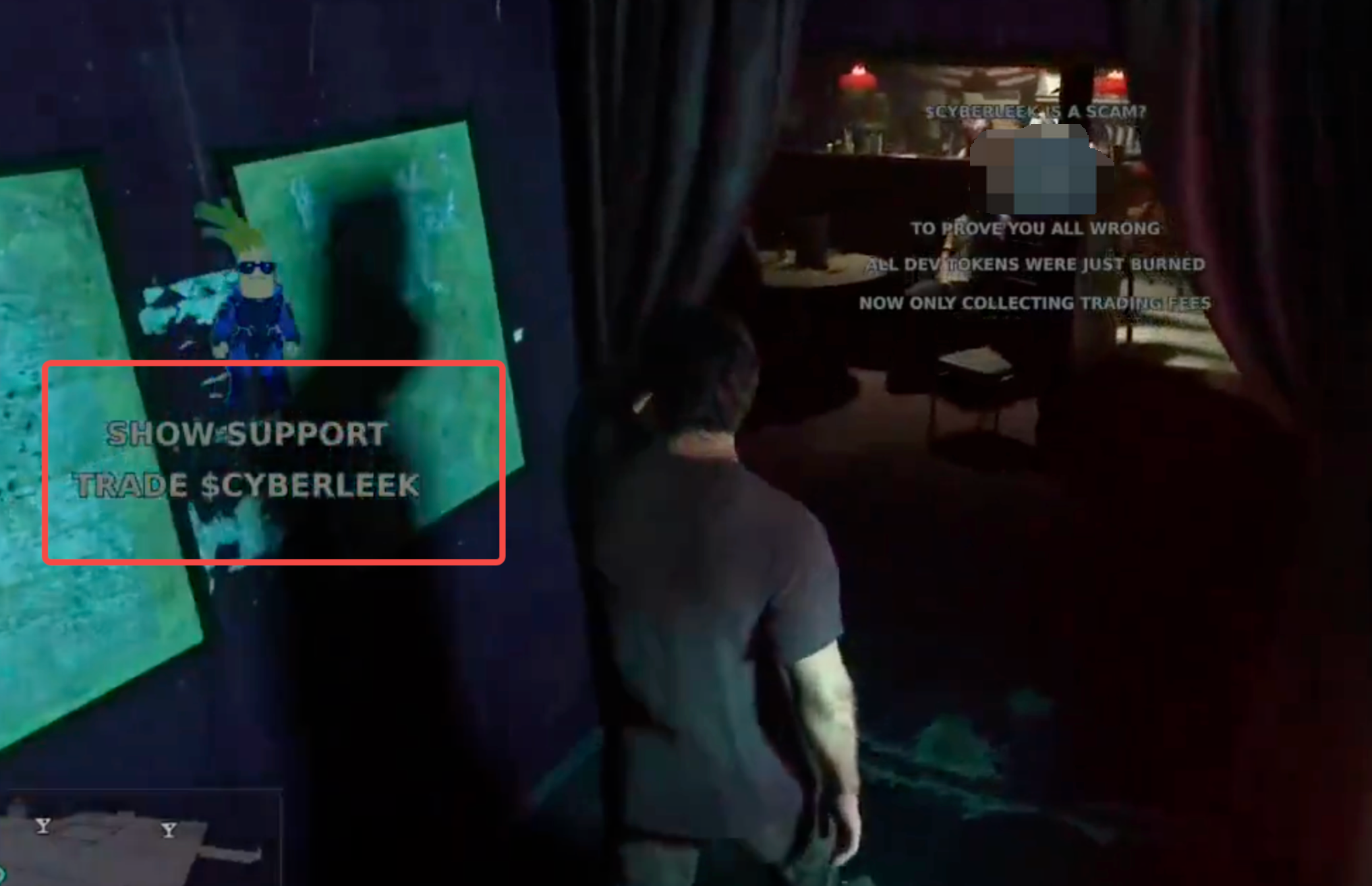
CyberLeek publicly claims to be acting in justice for players, expressing dissatisfaction that publishers only push digital purchases without physical discs (which could be resold after playing to offset costs) and extract content that should have been included in the game to charge for it again.
But on-chain records tell a different story. The namesake memecoin has clearly already made them money.
The Token Was Created Long Before the Game Leaks Dropped
On-chain records reveal that the preparation process for the entire operation can be reconstructed down to the minute.
A Solana wallet starting with 「3YLNDXnV」 made 10 separate transfers between August 14 and 15 to settle three payments.
The first payment was 1.0 SOL (approximately $80) to register the CyberLeek website domain; the second was 39.69 SOL (approximately $3,000) to create the token and set up a liquidity pool; the third was 4.61 SOL (approximately $400) sent to an account used later for distributing leaked content.
All three payments originated from the same wallet. The domain, the token, and the distribution accounts for the leaked content were all set up by the same group of people.
On August 15 at 17:20, the $CYBERLEEK token was created on Solana. At 17:23, 1 billion tokens were minted in one transaction, and at 17:30, 270 million tokens (27%) were transferred to a separate reserve account.
Late that day, the creator renounced minting authority. At 00:07 on August 16, the liquidity pool went live with an injection of 730 million tokens plus 330 SOL (approximately $27,000), which was locked 19 minutes later.
At 1:08, the first piece of leaked game content appeared: a screenshot of a game map.
The gap between the token creation and the first visual drop was 7 hours and 47 minutes. The entire structure was built in less than a day.
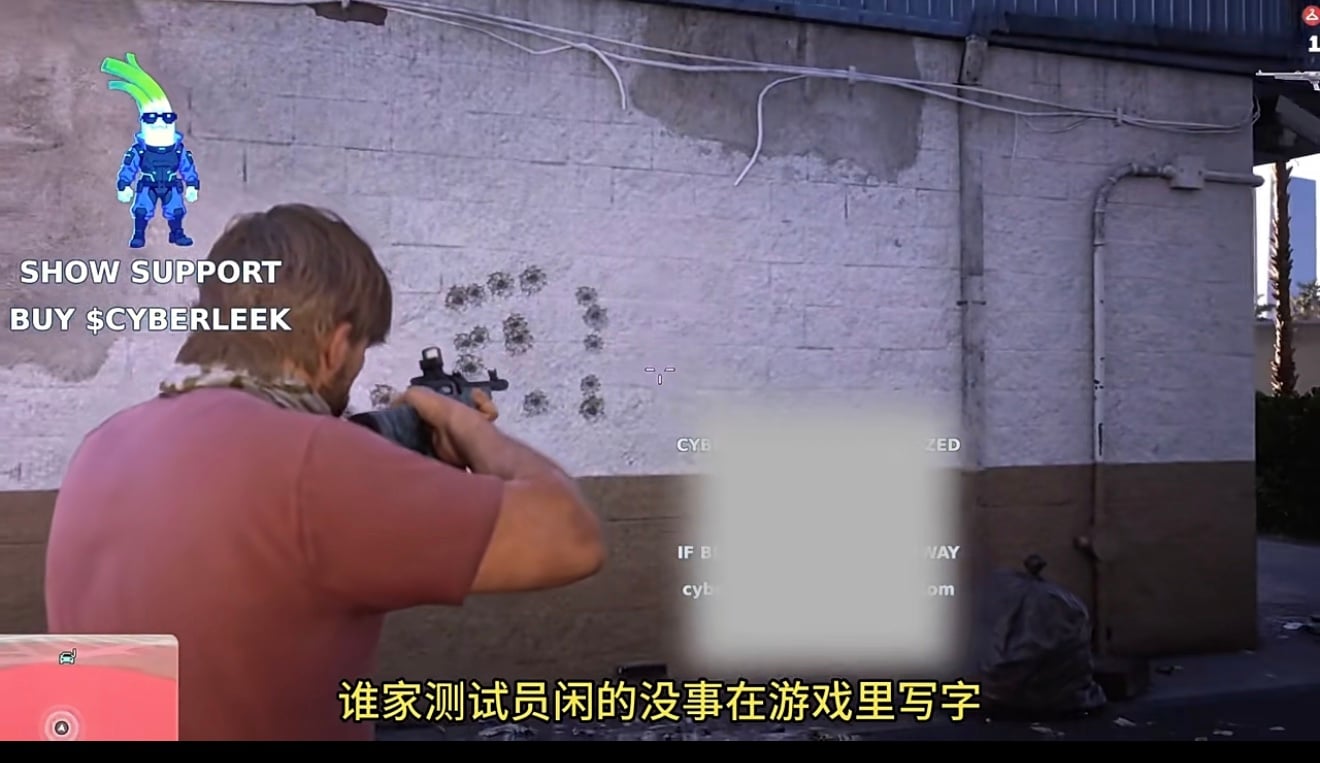
Every video released afterward carried a 「BUY $CYBERLEEK ON SOLANA」 banner. The banner isn't just text pinned to the description; it's burned directly into the video frames themselves, drifting around the screen and impossible to crop out.
According to gaming media vgtimes, several videos were processed using the same software prior to release, which is when the banners were embedded.
By August 22, CyberLeek had released eight pieces of GTA real-gameplay footage. Supercar driving, combat, indoor and outdoor scenes—all clips feature the same watermark, the same QR code, and link to the same token.
In one clip's outro, to prove the game they acquired is genuine and interactive, the hacker used the controlled protagonist to shoot the letters "LEEK" into a wall.
Voting Means Transferring Funds: Buy Tokens to See the Next Clip
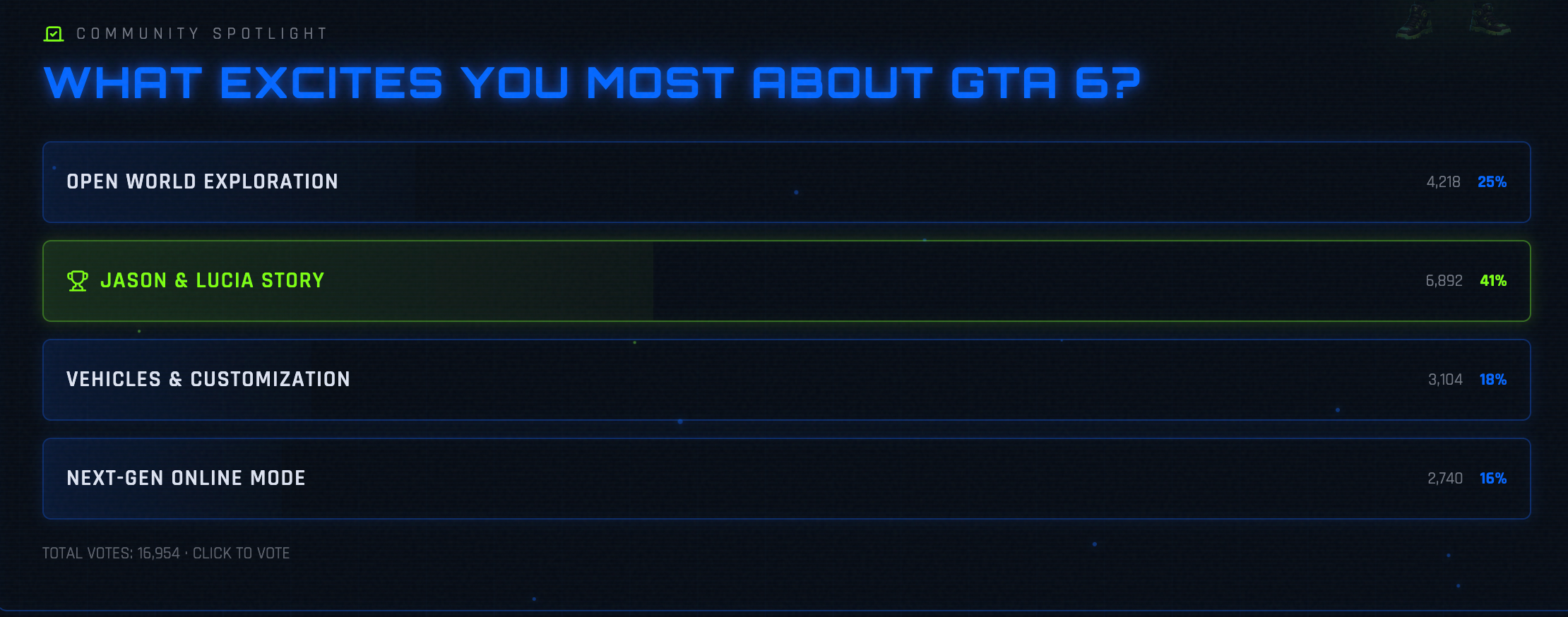
The CyberLeek website features a voting function that lets you decide what content gets dropped next. To vote, you send $CYBERLEEK tokens to a designated wallet specified by the project, with one token equaling one vote. Once sent, the tokens belong to the project team.
Tech media Comic Vibe documented a complete voting round. There were four options: daytime cars, nighttime cars, nighttime motorcycles, and daytime airplanes. The airplane option won, receiving over 147,000 tokens, accounting for 64.4% of total votes. CyberLeek subsequently released footage of a plane flying over Vice City, ending with the customary "LEEK" signature.
Comic Vibe's conclusion is straightforward: this is a self-sustaining business model. Leaks of GTA 6 spark interest in the token, and anyone wishing to influence the next leak must purchase and spend it.
The token's parameters are also carefully designed. With a total supply of 1 billion tokens, the LP is locked, minting rights are renounced, and freeze authority is revoked; the website prominently displays these three points as "proof of integrity."
On the surface, it certainly doesn't look like a typical low-quality memecoin prone to sudden rug pulls. The top ten wallets hold 51.6% of the supply, some of which may belong to trading pools or bot accounts, but this concentration means a small number of wallets can significantly drive price movements.
$15 Million Trading Volume on Day One, Generating $30,000 Solely from Fees
GTAForums user Vice Cit dug deep into the dark web to calculate the financial model of the entire scheme. He estimates that CyberLeek's initial investment was approximately $29,000, primarily used for building the website, launching the token, and injecting liquidity.
Revenue comes from trading fees. For every $CYBERLEEK trade executed, the project takes a cut of 0.21% to 0.25%. On its launch day, the token hit $15 million in trading volume, generating roughly $30,000 in fee revenue alone.
The numbers get even sharper. Of the $29,000 invested, $27,000 was injected into the liquidity pool; although locked, the tokens remain theirs. The actual cash spent was only $80 for the domain, $3,000 for token creation, and $400 transferred to the distribution account, totaling less than $3,500. Day one's fee revenue was more than eight times the total expenditure.
Since then, daily trading volume has stabilized at around $2.1 million, bringing in approximately $4,400 per day. As of August 22, cumulative fee income is estimated between $40,000 and $60,000. This doesn't even factor in the 270 million tokens in the reserve account, valued at approximately $390,000 at prevailing market prices.
Hackers Wage a Psychological War via Token Burns While the Fee Printing Machine Rolls On Uninterrupted
Between August 22 and 23, facing accusations of "harvesting retail investors," CyberLeek did something that appeared highly aggressive. It sent approximately 270 million developer-reserved tokens to a dead wallet for permanent burning, representing 27% of the total supply, with a book value of roughly $1.04 million to $1.5 million at market prices.
On-chain screenshots show the valuation of this transaction was precise down to $1,043,550.95. The official rationale was "to prove we won't dump and run."
These tokens were inherently difficult to liquidate in one go anyway; a massive sell-off would cause the price to collapse, meaning they'd likely have to be slowly dumped over time. Rather than carrying a "dump anytime" ticking time bomb, destroying them swapped that risk for a trust signal: "we aren't running away."
Burning the developer tokens locked away cash-out routes, but the token's built-in buy/sell fee mechanism has already allowed CyberLeek to rake in $40,000 to $70,000 in real cash within days purely from retail trading friction fees.
On one hand, burning millions in book-value tokens to provide a trust endorsement; on the other, holding onto a revenue pipeline generating thousands in daily fees. The true intentions are mathematically clear.
When a Super IP Gets Bundled as the Underlying Asset for a Memecoin
This hacking group has also opened a second monetization channel: ad placement sponsorships. If advertisers want to feature ads in future leak videos, they must first pay a $165,000 consulting fee, which only buys a single email reply opportunity.
By this stage, the logic behind the entire operation needs no guessing.
Leaked content is dropped in a gradual drip pace; each clip released triggers another trading volume spike and corresponding fee collection. Setting a market cap threshold before releasing new content is essentially telling the market directly: if you want to see the next clip, pump the token price first.
Legal action from game developer Take-Two is also underway. It has filed a subpoena application with the U.S. District Court for the Southern District of New York, demanding Microsoft and Discord hand over identity information for the involved accounts; the court has approved the subpoena against Microsoft.
According to posts on overseas gaming forums, users reported that the funding source for the token-launch wallet can be traced back to a cryptocurrency exchange requiring identity verification. Once the exchange receives a judicial subpoena, the account holder's identity and complete transaction records should theoretically be obtainable. CyberLeek's website is currently inaccessible, and its Telegram channel has been shut down.
These accountability moves come too late. The on-chain profits have already been secured.
The scale of $CYBERLEEK isn't actually large, but it successfully executed a complete playbook. An anonymous group obtained leak content from a global-tier IP, launched a token first, and then released material in batches to prolong the hype cycle. The voting mechanism turns bystanders into buyers, the burn action stabilizes outside trust, and the market cap threshold directly drives buying pressure. With actual spending of less than $3,500, they leveraged a first-day trading volume of $15 million.
It is highly likely that future leaks involving global-tier IPs will see others replicate this exact method. Memecoins lack intrinsic utility; their value relies entirely on attention and sentiment. When the hype fades or legal pressure hits, only those entering later will be left holding the bag.
Join TechFlow official community to stay tuned
Telegram:https://t.me/TechFlowDaily
X (Twitter):https://x.com/TechFlowPost
X (Twitter) EN:https://x.com/BlockFlow_News
 深潮TechFlow