Crypto Morning Brief: SBF Officially Applies for Trump Pardon; U.S. House to Review Seven Crypto Tax Reform Proposals This Week
TechFlow Selected TechFlow Selected
Crypto Morning Brief: SBF Officially Applies for Trump Pardon; U.S. House to Review Seven Crypto Tax Reform Proposals This Week
Strategy purchased 1,550 BTC last week, bringing its total holdings to 845,256 BTC.
 Navigating Web3 tides with focused insights
Author: TechFlow
Yesterday’s Market Highlights
Bloomberg: FTX Co-Founder SBF Formally Applies for Trump Pardon
According to Bloomberg, FTX co-founder SBF has formally applied for a pardon from Donald Trump.
House Ways and Means Committee to Review Seven Crypto Tax Reform Proposals This Week; Negotiations on the “Clarity Act” Continue
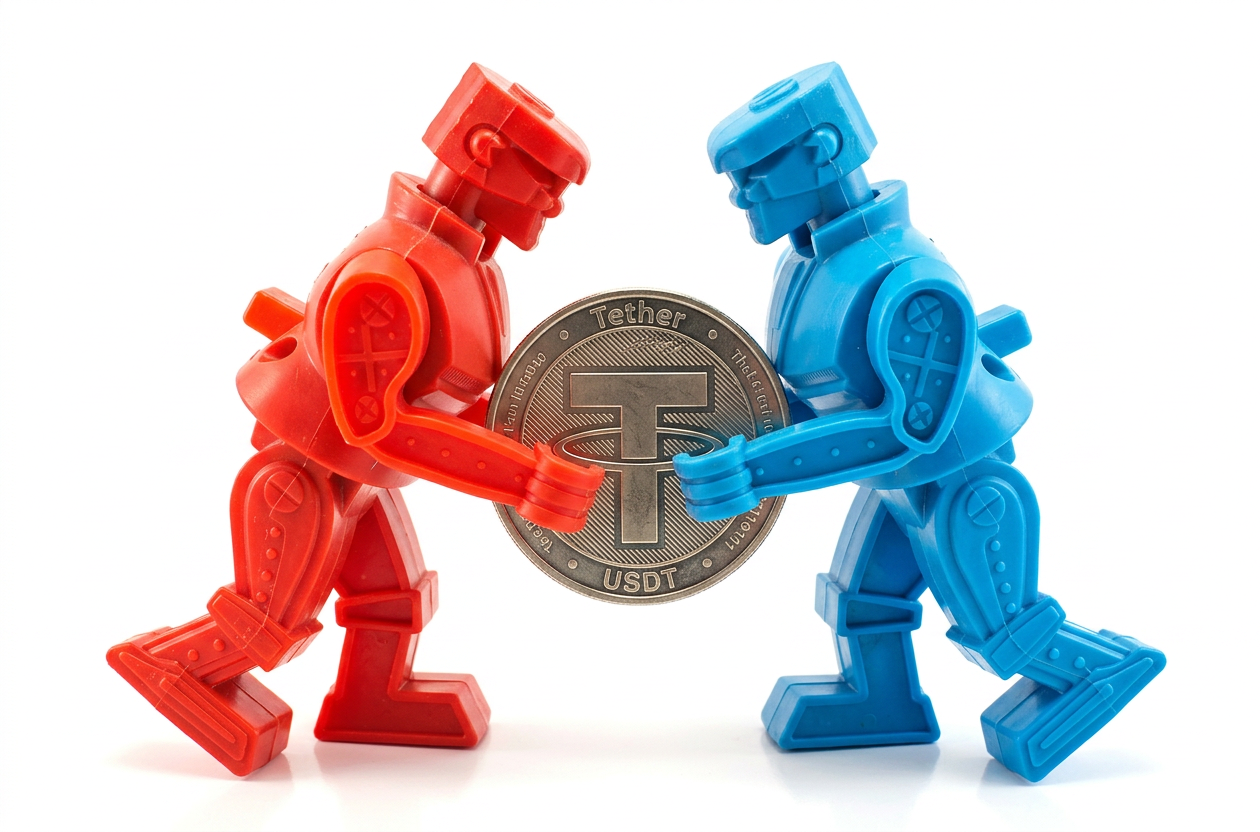
Per Crypto in America, the U.S. House Ways and Means Committee will hold a hearing this Tuesday on cryptocurrency tax reform, reviewing seven draft proposals covering topics including stablecoin transactions, mining and staking, crypto lending, wash-sale rules, charitable donations, and taxpayer disclosure requirements. In practice, this effort effectively splits the previously proposed “Digital Asset Equal Treatment Act” into multiple standalone bills.
Meanwhile, negotiations on the Senate’s “Clarity Act” continue. Senator Cynthia Lummis indicated the bill is more likely to advance after Congress reconvenes on July 13. Key sticking points include ethics provisions, regulatory language targeting DeFi, and stablecoin yield rules. The banking industry continues lobbying against provisions permitting stablecoin yields, while over 200 crypto organizations have jointly written to urge swift passage of the bill. Separately, Illinois proposes a 0.2% tax on digital asset transactions—a move that has drawn strong opposition from industry groups warning it could drive crypto firms out of the state.
OpenAI Plans to Transform ChatGPT into a “Super App” Ahead of IPO
According to the Financial Times, OpenAI is preparing a major overhaul of its platform, aiming to shift ChatGPT from a standard Q&A chatbot to a “super app” within the coming weeks—strengthening its competitive position ahead of a highly anticipated IPO later this year. Citing unnamed current and former employees, the report states this move is intended to better compete with rivals such as Anthropic.
SpaceX’s Nasdaq IPO Receives Massive Oversubscription; Subscription Period to Close After Wednesday’s Market Close
SpaceX’s Nasdaq IPO has reportedly received massive oversubscription. SpaceX plans to close the subscription period after Wednesday’s market close.
StepFun Expected to File HKEX IPO Application as Early as Today, Valuation Potentially Reaching $12 Billion
According to the Wall Street Journal, citing informed sources, Chinese AI large-model company StepFun is expected to file its IPO application with the Hong Kong Stock Exchange as early as June 8, with investors valuing the company at approximately $12 billion. The IPO aims to raise roughly $500 million. StepFun has already engaged multiple financial advisors on listing preparations. Previously, the company began dismantling its offshore VIE structure to pave the way for a Hong Kong listing.
Bitmine Acquired 126,971 ETH Last Week, Raising Total Holdings to ~5.543 Million ETH
Per PRNewswire, Ethereum treasury firm Bitmine Immersion Technologies disclosed it acquired 126,971 ETH last week. Its current crypto holdings include 5,543,872 ETH, 204 BTC, $88 million worth of Eightco Holdings equity, and $180 million worth of Beast Industries shares. Additionally, the firm has staked 4,718,677 ETH (valued at $7.7 billion, assuming $1,630 per ETH).
Strategy Purchased 1,550 BTC Last Week, Raising Total Holdings to 845,256 BTC
Strategy acquired 1,550 BTC for approximately $101 million, bringing its total Bitcoin reserves to 845,256 BTC. Concurrently, the company increased its USD cash reserves by $100 million, to $1 billion.
Revolut Plans Secondary Share Sale, Valuation Potentially Reaching $115 Billion
According to Bloomberg, digital bank Revolut is planning a secondary share sale valued at approximately $115 billion. Sources familiar with the matter said the move aims to provide early investors and employees with an exit channel. Formal procedures could begin as early as this month, though final details remain undecided, and the company is still in preliminary discussions with potential investors.
Moonshot AI Reportedly Seeking Up to $2 Billion in New Funding, Targeting $30 Billion Valuation
Per Bloomberg, Moonshot AI is in preliminary talks with potential investors for a new funding round, seeking over $1 billion and up to $2 billion, with a target valuation of $30 billion. The report notes this would be the company’s third funding round within six months, aimed at navigating intensifying AI competition in China.
Sources indicate Moonshot AI’s valuation is expected to reach $20 billion upon completion of a new round led by Meituan; if this round closes successfully, its valuation would increase nearly sevenfold from over $4 billion as of December 2025.
KOSPI Index Plunges 8.4% at Open; Samsung and SK Hynix Both Down 10%
The Korean KOSPI Index fell 8.4% at open, triggering a circuit breaker and halting trading for 20 minutes. Samsung Electronics and SK Hynix both dropped 10%.
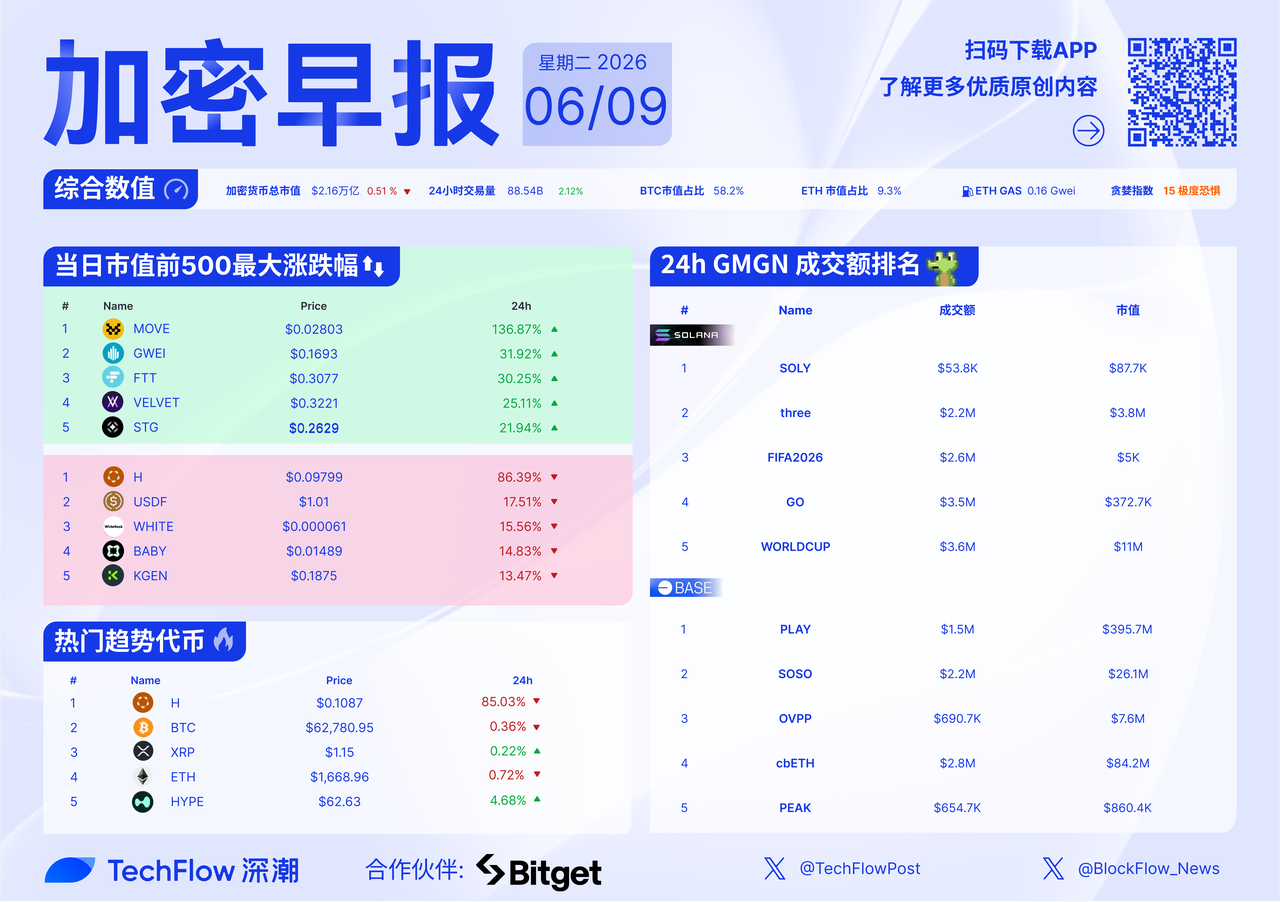
Market Data
Recommended Reading
KOSPI Plunges 8.37% at Open, Triggering Circuit Breaker: The “Two Stocks” That Propped Up the Bull Market Turn Against It in One Day
https://www.techflowpost.com/article/31948
On June 8, South Korea’s KOSPI Index plunged 8.37% just 3 minutes and 42 seconds after opening, triggering Level 1 circuit breaker rules. Samsung Electronics and SK Hynix both fell over 10%. This sharp decline reflects the concentrated risk stemming from excessive reliance on two chip giants in the Korean stock market.
Over the past year, Samsung Electronics and SK Hynix accounted for roughly 70% of the KOSPI’s gains and collectively represent over half the index’s total market capitalization. When Broadcom’s AI business guidance disappointed even the most optimistic market expectations, triggering a global semiconductor sector re-rating, selling pressure quickly spilled over from U.S. markets to Korea.
Meanwhile, record-high margin debt of 38 trillion won, 2x-leveraged ETFs, and algorithmic trading combined to amplify the sell-off. A persistently weakening Korean won further accelerated foreign investor outflows.
This circuit breaker event was not merely an emotional market reaction—it exposed structural vulnerabilities in Korea’s bull market, which has become dangerously dependent on just two AI-chip leaders. When the “two pillars” supporting the index begin to wobble, the entire market struggles to remain unscathed.
Overseas Analyst Recommendations: Look Abroad—These 5 Stocks Are Poised to Outperform the S&P
https://www.techflowpost.com/article/31947
In its latest podcast, Main Street Research CIO James Demmert stated that international equities are likely to outperform U.S. stocks over the next several years, recommending five international stocks benefiting from the AI wave yet trading at significantly lower valuations than their U.S. peers.
His top pick is Dutch chip equipment giant ASML, which he considers his single-stock choice for the next five years. He also highlights HSBC—trading at a mere ~9x P/E ratio—BHP (benefiting from surging copper demand for data centers), Siemens Energy (a grid infrastructure leader), and AstraZeneca (an undervalued pharmaceutical heavyweight).
Demmert argues that Europe and Japan are stepping up with fiscal stimulus to sustain global growth, whereas the U.S. has entered a phase of fiscal tightening. Driven by innovation in AI, energy, and healthcare, international markets may enjoy a multi-year period of relative outperformance.
His allocation recommendation is notably aggressive: ~45% in international assets and 55% in U.S. markets. For long-term investors, the next big opportunity may not lie solely in U.S. equities.
Reddit’s Weekly U.S. Stock Discussion: RKLB/LUNR/ASTS All Decline—Is the Space Sector Still Worth Considering?
https://www.techflowpost.com/article/31946
With SpaceX’s IPO approaching, Reddit’s U.S. stock community has reignited discussion around space investments. Yet contrary to expectations of broad-based gains, space-related stocks recently diverged sharply: SPCE surged, while RKLB, LUNR, and ASTS all pulled back.
The article identifies three main drivers behind this pullback: Blue Origin’s recent rocket test failure, capital “siphoning” effects from the impending SpaceX IPO, and profit-taking following outsized gains across the sector over the past year.
Among the four leading space companies, the author favors Rocket Lab most. Its rationale includes real revenue, a $2.2 billion order backlog, and Neutron—the core catalyst for future growth—positioning Rocket Lab as the closest publicly traded analogue to SpaceX.
In contrast, AST SpaceMobile offers compelling upside via satellite-to-phone connectivity but faces launch schedule risks; Intuitive Machines’ prospects hinge on performance in upcoming lunar missions; and Virgin Galactic’s recent rally stems largely from short squeezes and sentiment-driven speculation, with limited fundamental support.
The article concludes that the long-term thesis for the space industry remains intact—but near-term valuations still require digestion. Should the sector continue correcting, Rocket Lab may be the first to enter a more attractive entry zone.
J.P. Morgan Mid-Year Report Interpretation: The AI Supercycle Is Far From Over—Reduce Cash Holdings, Increase Real Assets
https://www.techflowpost.com/article/31943
While market participants begin questioning whether the AI narrative has peaked, J.P. Morgan’s latest mid-year outlook delivers the opposite verdict: the AI supercycle is far from over. The report notes that tech giants’ capital expenditures continue accelerating, and concerns about AI investment returns are overstated. Meanwhile, persistent inflation may keep long-term rates elevated, causing cash and traditional bonds to erode in real value. Accordingly, JPM recommends continuing exposure to AI infrastructure, emerging markets, and real assets like gold—and reducing cash allocations. It also highlights potential opportunities in key AI supply-chain markets, including China, South Korea, and Taiwan.
Why Does Crypto Keep Building “Casinos,” But Rarely Products People Can’t Live Without?
https://www.techflowpost.com/article/31945
While internet giants lock users into ecosystems through convenience, crypto has yet to produce truly indispensable consumer products. Drawing on the concept of the “sofalarity” introduced in *The Internet Con*, this article explores why speculation—not daily utility—remains crypto’s most successful consumer use case after fifteen years. The author argues blockchain solves underlying financial problems invisible to most users, rather than addressing immediate, life-improving pain points. Meanwhile, Web2 platforms leverage data, habits, and convenience to build formidable moats—while crypto lacks comparable user stickiness. The piece further reflects on RWA tokenization, platform monopolies, and financial sovereignty, suggesting crypto’s true value may lie not in becoming the next “super app,” but in building open, decentralized foundational infrastructure.
Join TechFlow official community to stay tuned
Telegram:https://t.me/TechFlowDaily
X (Twitter):https://x.com/TechFlowPost
X (Twitter) EN:https://x.com/BlockFlow_News
 深潮TechFlow