This bear market has completed the transfer of power in the crypto market.
TechFlow Selected TechFlow Selected
This bear market has completed the transfer of power in the crypto market.
When retail investors return en masse, they will face an entirely different market.
 Navigating Web3 tides with focused insights
By: Stacy Muur
Translated by: Chopper, Foresight News
This bear market isn’t just another cycle—it’s fundamentally different from any we’ve seen before.
Having lived through multiple crypto cycles, I know precisely when bear-market sentiment starts to feel abnormal. That moment is now.
It’s not about price action—that part is familiar to everyone—but rather the eerie shift in Crypto Twitter and overall market sentiment.
In past bear markets, many of us held bold visions and worked passionately toward them. Today, Crypto Twitter is eerily silent:
- Fewer builders
- Timelines saturated with disappointment
- Many people opting out, believing it’s no longer worth risking their time or capital in this industry
DefiIgnas put it perfectly: “I’ll admit—I’ve become lazier in this bear market. In previous bear markets, I remained hungry for yields and eager to learn. I conducted research, tested dozens of apps daily, read documentation, and hunted for the next bull-run narrative. Now? I barely want to touch anything.”
DefiIgnas previously maintained strong motivation to learn and build during bear markets—but this time, his enthusiasm has nearly vanished. I relate deeply, having felt exactly the same.
A series of events over the past one to two years has left many people victimized.
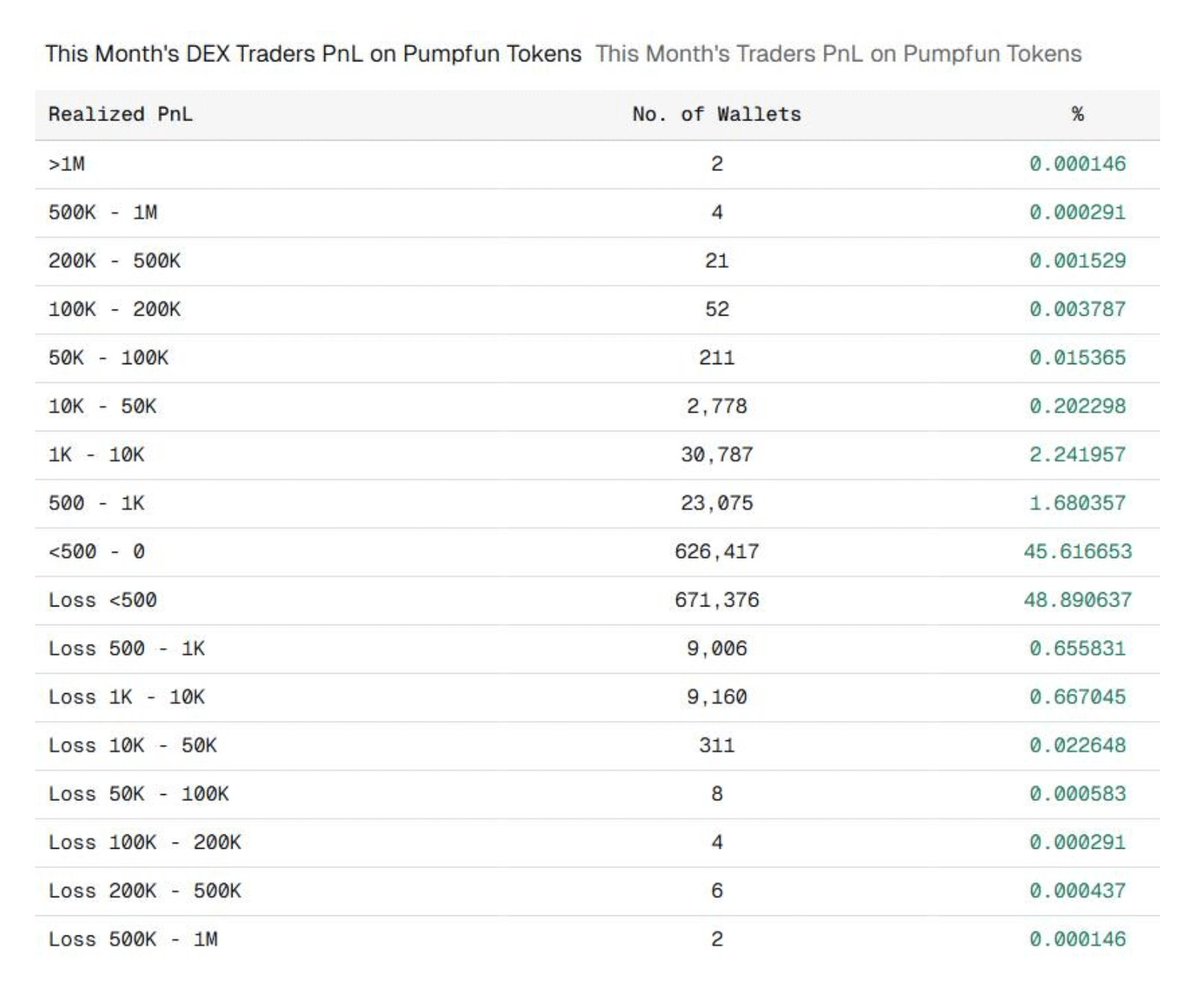
Between September and December 2024, millions of wallets were created for a single purpose: trading memecoins launched on Pump.fun. During that period, KOLs flaunted screenshots of 100x and 1,000x returns, fueling extreme FOMO among retail investors. Many of those screenshots were deliberately fabricated for personal gain—a point we won’t delve into here.
The result? A massive drain on retail capital. The data is staggering:
- Over 99% of memecoins went to zero within 60–90 days
- As of March 2026, among the 1.37 million wallets trading on Pump.fun, only ~4% turned a profit exceeding $500; most users lost money
For the vast majority, profitability was never realistically possible from the outset.
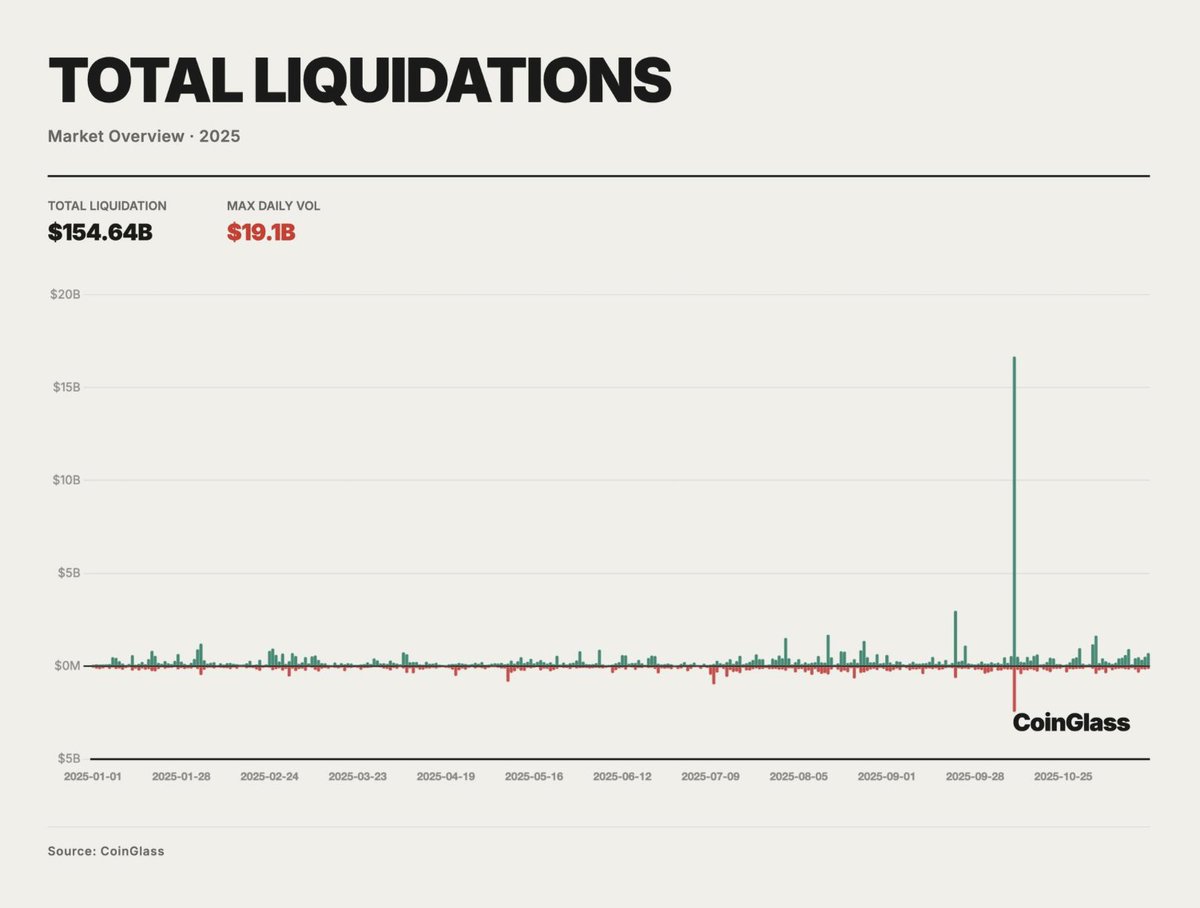
Then came the Great Liquidation on October 10, 2025.
A flash crash triggered over $20 billion in liquidations across 1.66 million traders—the largest such event in crypto history, surpassing even the FTX and Luna collapses. Countless wallets were wiped out entirely, forcing large numbers of participants to leave the industry permanently.
Frankly, I can’t blame them at all.
What retail investors experienced this cycle wasn’t just a bear market—it was systemic extraction:
- High FDV (fully diluted valuation) token launches, with only 5–15% circulating supply
- Insiders dumping immediately upon listing to front-run retail
- Teams going completely idle after TGE
- Frequent security incidents in short succession (ByBit, Drift Protocol, Resolv, etc.)
- $2.17 billion stolen in H1 2025—exceeding the full-year 2024 total
At this point, industry-wide sentiment has coalesced into one unified belief: “Everyone wants to take my money—project teams are greedy, and even the U.S. President is exploiting this space to extract value.”
Retail has largely exited. What about institutions?
This time, things have changed.
In every prior bear market, retail exit meant total market exit—no one could fill that vacuum. Markets simply waited quietly for retail to return, as they were the sole source of buying pressure.
This time, institutions are stepping in to support the floor.
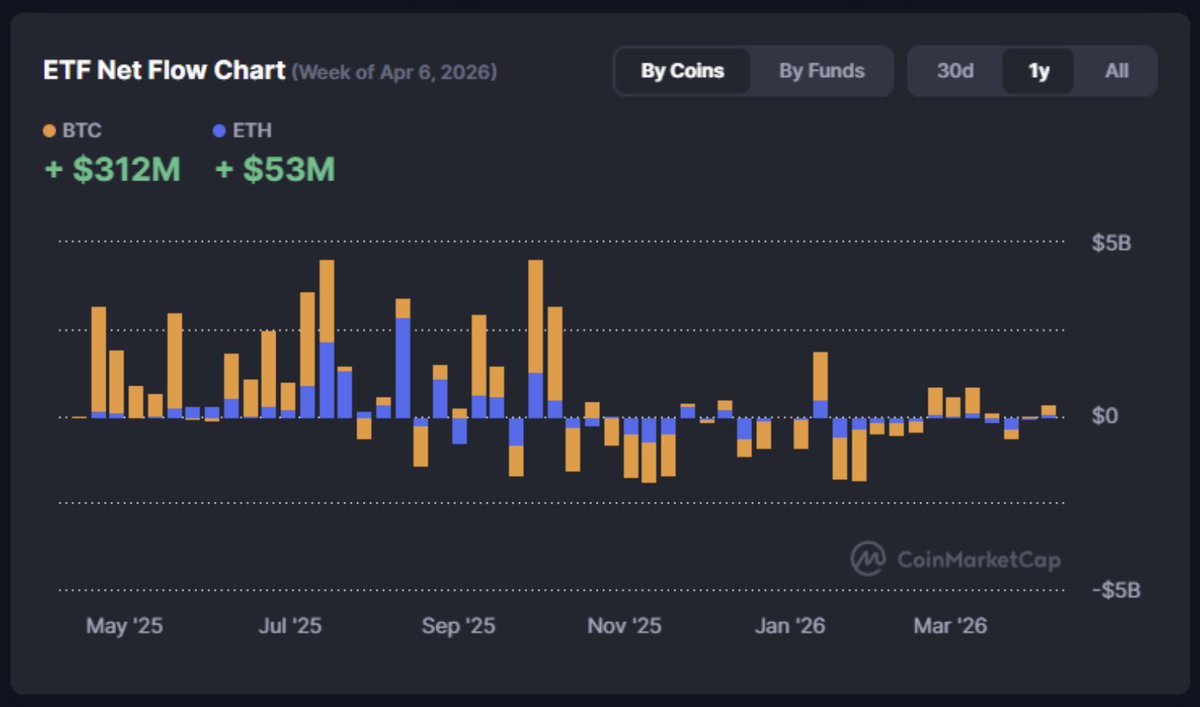
In 2025 alone, U.S. crypto ETFs attracted $31.77 billion in net inflows:
- BlackRock purchased $24.7 billion in Bitcoin
- Ethereum spot ETF inflows grew nearly 4x year-on-year (from $2.4 billion to $9.6 billion)
- Solana spot ETF pulled in $568 million over its first 20 days of listing
Even now—while 90% of retail remains mired in extreme fear—positive net inflow bars for ETFs remain common.
And ETFs represent just the tip of the iceberg. Zoom out further:
- Canton Network—backed by Goldman Sachs, JPMorgan, HSBC, and Visa—processes over $9 trillion in tokenized real-world assets (RWA) monthly
- Stripe and Paradigm are building Tempo, a dedicated payments-focused L1
- Figure has issued $22 billion in real-world loans on-chain and is expanding into auto lending
- Stablecoin market cap reached $317 billion
These are substantial, real business investments by major institutions. Companies of this scale don’t commit serious capital to fields lacking exponential growth potential.
On-chain data reflects this shift too: In March 2026, Bitcoin exchange balances fell to their lowest level in nearly two years. Of Bitcoin flowing into exchanges, 64% originated from the top 10 wallets.
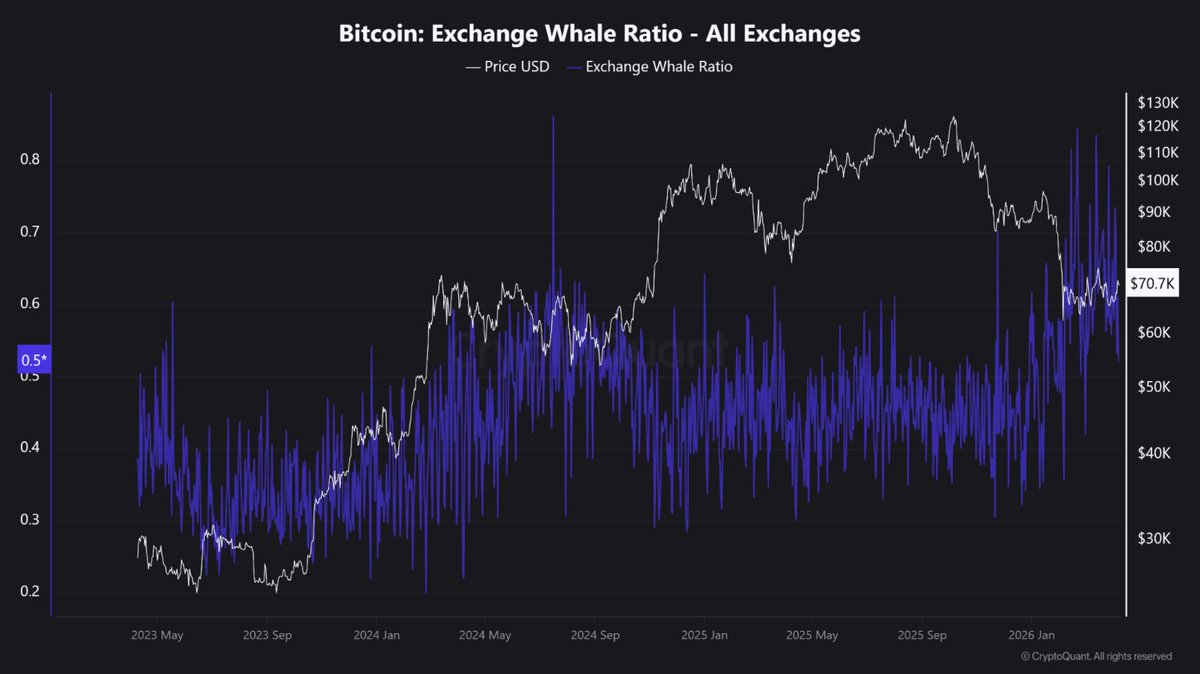
The core narrative of this cycle is: Retail is losing; institutions are accumulating. This has fundamentally reshaped the entire crypto landscape.
When retail returns en masse, they’ll face an entirely different market—one underpinned by institutional capital, settled in stablecoins for trillions of dollars, and where protocols survive only by delivering genuine product-market fit.
And I’ll be here to witness it all unfold.
Join TechFlow official community to stay tuned
Telegram:https://t.me/TechFlowDaily
X (Twitter):https://x.com/TechFlowPost
X (Twitter) EN:https://x.com/BlockFlow_News
 @stacy_muur