What AI services are crypto companies offering?
TechFlow Selected TechFlow Selected
What AI services are crypto companies offering?
Artificial intelligence has evolved from a conceptual buzzword into an operational necessity.
 Navigating Web3 tides with focused insights
Author: Tiger Research
Translated by AididiaoJP, Foresight News
Fear of missing out (FOMO) is sweeping the crypto industry. From exchanges to security firms, institutions across the board are rolling out AI-powered services. This article explores why companies have chosen this particular moment to make such moves.
Key Takeaways
- Crypto enterprises spanning exchanges, security, payments, and research are simultaneously launching AI-related services.
- Unlike previous cycles, current frontrunners are established leaders—such as Coinbase and Binance—with mature, profitable business models. AI has evolved from conceptual hype into an operational necessity.
- Motivations for AI adoption differ across sectors: exchanges aim to reduce user churn; security firms seek to close audit blind spots; and payment infrastructure providers target the emerging agent economy.
- There remains a gap between feature rollout and real-world application. FOMO and competitive pressure are driving companies to accelerate deployments beyond actual demand.
- Genuine need and competitive anxiety jointly fuel this wave. The core question is how to distinguish truly value-creating applications from superficial rebranding efforts.
Crypto Enterprises Are Rapidly Launching AI Services
AI is currently the most closely watched field globally. General-purpose tools like ChatGPT and Claude have already entered daily life, while platforms like OpenClaw have further lowered the technical barriers to building agents.
Although the crypto industry reacted somewhat belatedly to this wave, it is now rapidly integrating AI capabilities across verticals.
What specific AI services are these enterprises launching—and what motivates them to enter this space?
How Crypto Enterprises Are Applying AI
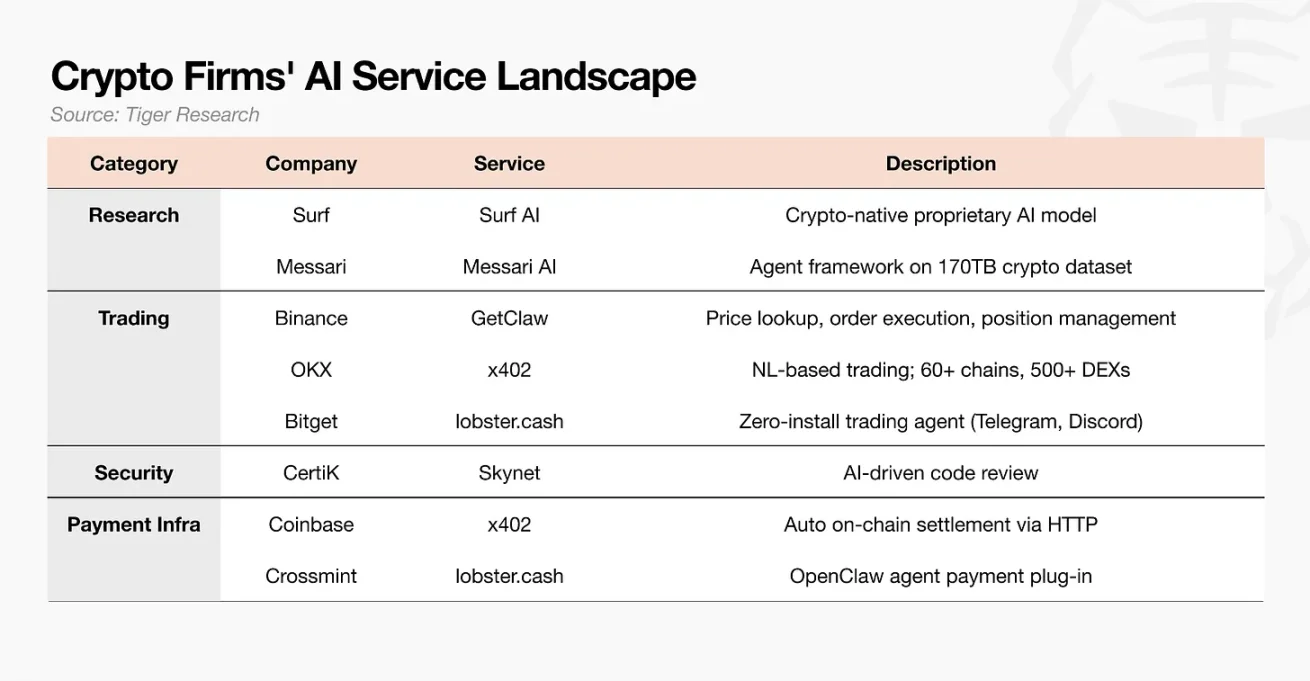
Research
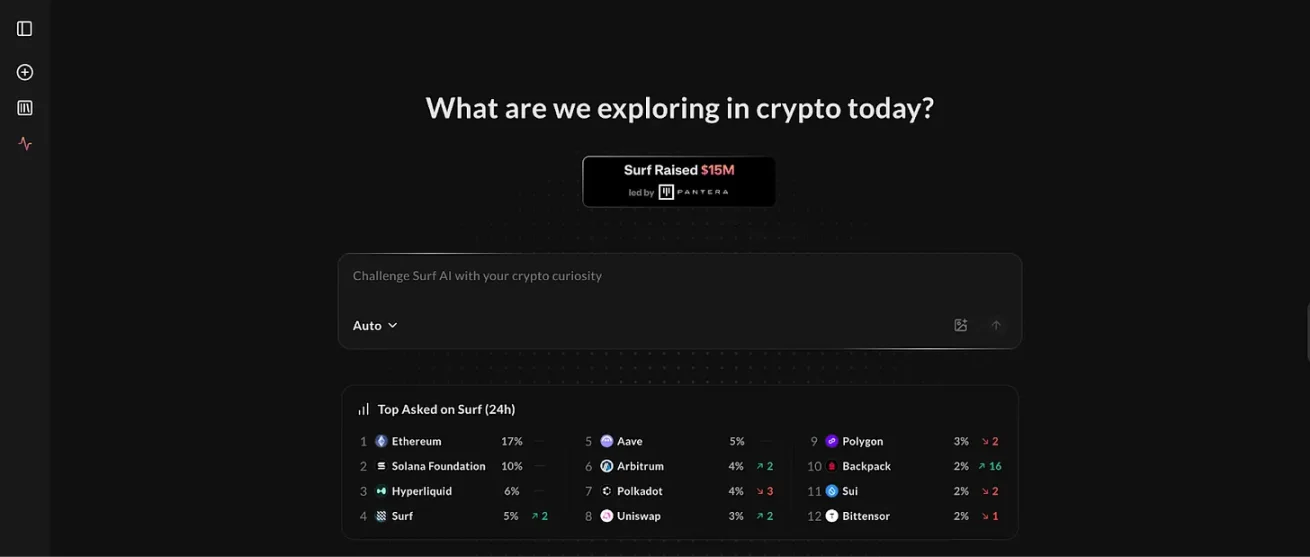
Source: Surf AI
Crypto research faces structural challenges: on-chain data, market sentiment, and key metrics are scattered across disparate platforms, making verification difficult. General-purpose AI often delivers inaccurate answers when handling crypto-specific questions.
To address this, projects like Surf have launched domain-specific AI research tools that unify fragmented data sources. Among all crypto AI use cases, research tools present the lowest barrier to entry for ordinary users—requiring neither programming nor trading experience.
Trading

Source: Bitget
Exchanges lead in AI adoption.
Their approaches vary. Some directly expose proprietary trading data to users; others enable users to issue natural-language instructions to AI agents, which then handle analysis and execution end-to-end.
Exchanges have offered API services for years. The recent shift lies in adding an interaction layer: via interfaces such as MCP and AI Skills, non-developers can now invoke exchange functionality through AI agents. Tools once reserved for developers are now operable via natural language.
This evolution aligns with shifting user demographics. An increasing number of users without programming backgrounds are now leveraging AI agents to build automated trading strategies—describing their ideas in plain language, and letting agents construct and execute the algorithms.
For exchanges, this trend presents both opportunity and challenge. As AI-driven users grow, their platform loyalty declines, since agents can seamlessly execute trades across multiple exchanges. Exchanges’ core motivation for embracing AI is thus to rapidly attract users and boost engagement within their ecosystems.
Unlike information-query applications, trading involves real asset management—demanding higher judgment rigor and accountability mechanisms. Yet as usability barriers fall, this domain, too, is opening up to mainstream users.
Security & Auditing
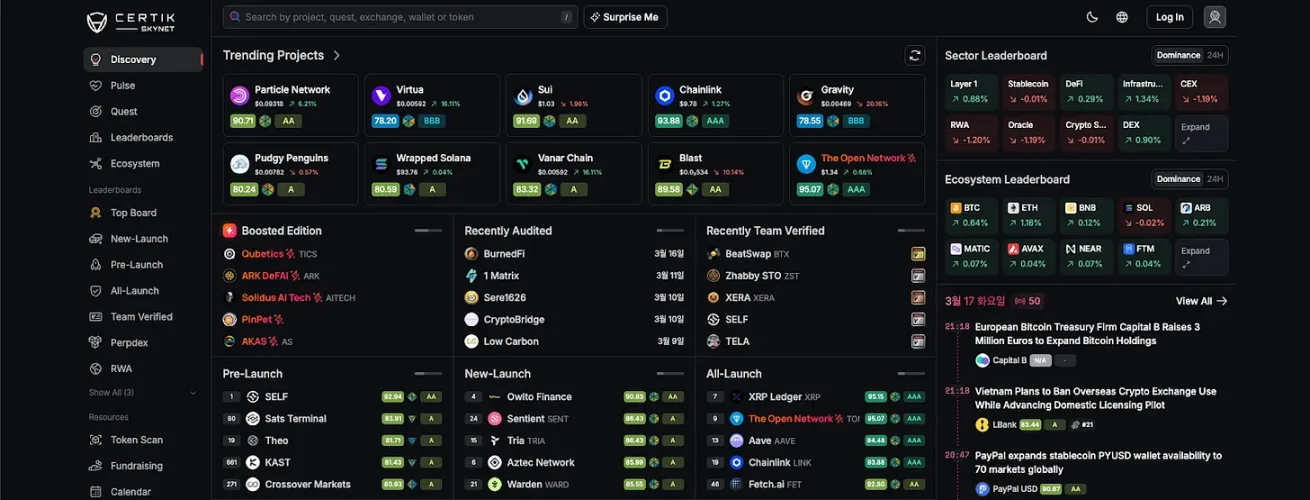
Source: CertiK
Traditional smart contract auditing relies on manual line-by-line code review—a slow, costly process with variable quality depending on the auditor. Today, AI is being integrated into workflows: AI first scans code, after which auditors conduct targeted deep reviews. This boosts efficiency and coverage without replacing human auditors.
CertiK is a representative player in this space. It previously faced criticism after some audited projects later suffered security incidents. However, many such incidents occurred outside the audit scope—audits cover only code at a specific point in time and exclude ongoing monitoring.
CertiK uses AI to fill this gap. It introduced real-time monitoring post-audit, publicly displaying results via dashboards. Because this expanded monitoring capability is AI-driven—not labor-intensive—it benefits both CertiK and its clients.
In security, AI isn’t meant to disrupt existing services but to extend human capabilities: improving audit precision and bridging post-audit monitoring gaps. For blockchain security firms, AI isn’t a new business line—it’s a tool to solve persistent operational pain points.
Payment Infrastructure
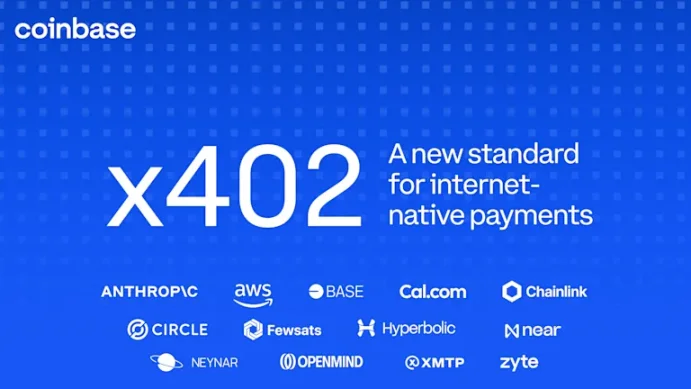
Source: Coinbase
For AI agents to participate in economic activity, they require accessible payment channels—for example, paying for APIs, purchasing data, or procuring services from other agents. The most suitable payment method for agents is stablecoin-linked on-chain wallets.
Two primary models currently exist. The first is a universal protocol embedding payment functionality directly into HTTP requests—enabling agents to settle on-chain while calling paid APIs. The second is agent-specific payment plugins, where agents execute payments only within human-defined permissions and spending limits.
Payment infrastructure is the domain most tightly coupled with stablecoins. Yet because the payers are AI agents—not humans—no fully mature operating model yet exists.
Source: Circle
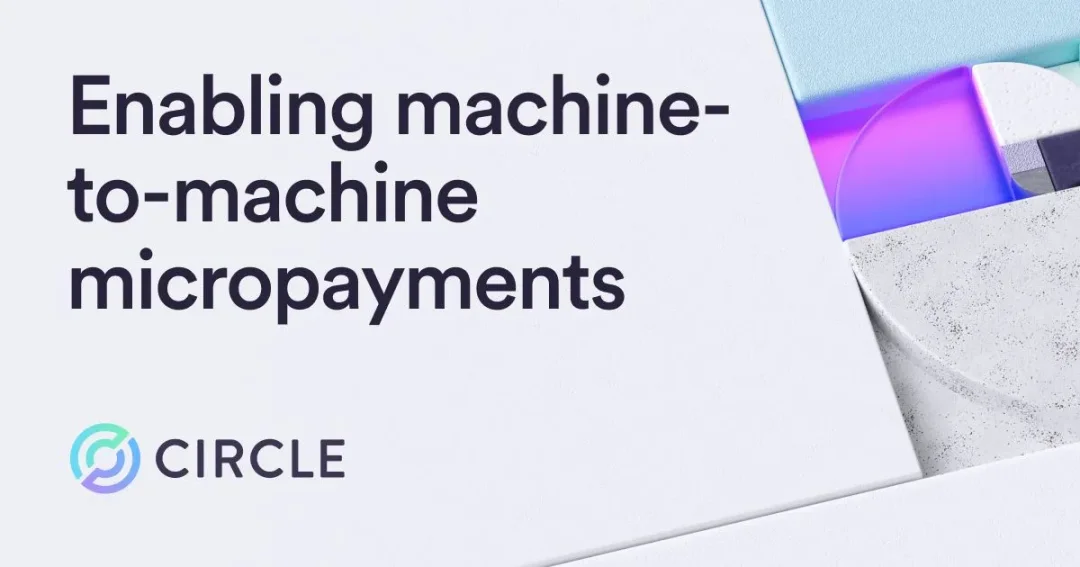
Circle—the issuer of USDC stablecoin—is also attracting attention. It has published a proposal to integrate its Gateway payment infrastructure with the x402 protocol and invited developers and researchers to review and co-build it.
This sector remains immature, yet market expectations are already priced in. One major driver behind Circle’s stock price surge is the narrative around AI-agent payments. Compared to earlier domains, payment infrastructure will take longer to mature—but it has already emerged as one of the most critical macro themes in today’s market.
Why Crypto Enterprises Are Entering the AI Space Now
When ChatGPT launched in November 2022, neither AI nor crypto was mature. AI models demonstrated potential but lacked reliability for mission-critical tasks; meanwhile, the crypto industry was reeling from the FTX collapse and suffering a severe trust crisis.
Since then, AI technology has advanced significantly. Over the past year, mainstream models have seen marked improvements in capability and practical utility. By contrast, the crypto industry largely remained in a phase of “borrowing” AI concepts—evidenced by AI-themed memecoins, functionless AI agents, and marketing-driven narratives. Decentralized AI infrastructure projects continue to emerge, yet their product quality lags noticeably behind native AI services.
The gap is widening further. In AI, the maturation of infrastructure—including MCP (which enables agents to directly call external tools) and OpenClaw (which supports no-code agent development)—has shifted the agent era from concept to reality. Crypto enterprises are only now beginning substantive adoption.
A pivotal distinction in this cycle is the identity of the actors. Frontrunners are no longer nascent projects using AI for branding—they’re established leaders with stable revenue streams: Coinbase, Binance, Bitget, and others. These firms have no incentive to treat AI services as marketing gimmicks. Their core driver isn’t immediate profit, but rather anxiety over falling behind—the fear of missing out.

Source: FORTUNE
This urgency is evident in Coinbase CEO Brian Armstrong’s actions—he mandated all engineers complete hands-on training with AI coding tools within one week, threatening termination for those who failed to meet the bar.
Yet prudence remains essential. Consider automated trading: AI agents can fetch prices and suggest strategies—but how many users are truly willing to entrust real funds to agents for live trading? Has the x402 protocol entered real-world deployment?
Overall, crypto’s AI push isn’t about chasing short-term fads. As the contours of the AI era become clearer, enterprises are acting swiftly to secure their positions. A gap persists between feature launch and real-world usage—but the very identity of the actors involved carries profound significance.
Think of the AI industry as a swimming pool filling with water. Early entrants included many who merely pretended to swim. Today’s entrants are seasoned swimmers with deep expertise. How high the water will rise—and whether the pool will expand into an ocean—remains uncertain. What is certain is that crypto will not be sidelined in this wave.
Join TechFlow official community to stay tuned
Telegram:https://t.me/TechFlowDaily
X (Twitter):https://x.com/TechFlowPost
X (Twitter) EN:https://x.com/BlockFlow_News
 @tiger_research