Thousands of people worldwide are selling their identities to train AI—what is the cost?
TechFlow Selected TechFlow Selected
Thousands of people worldwide are selling their identities to train AI—what is the cost?
When AI companies’ data hunger converges with global economic disparities, it is creating an unequal exchange.
 Navigating Web3 tides with focused insights
Author: The Guardian
Translation & Compilation: TechFlow
TechFlow Intro: This investigative report uncovers a rapidly growing gray market: thousands of people worldwide are selling their voices, faces, phone call records, and everyday videos to earn money for AI training.
This is not a generic discussion about privacy concerns—it’s an investigation grounded in real people, real sums of money, and real consequences. One actor sold his face, only to later see “himself” promoting obscure medical products on Instagram, with commenters evaluating his “appearance.”
When AI companies’ insatiable data hunger collides with global economic inequality, it is producing profoundly unequal transactions.
Full Text Below:
One morning last year, Jacobus Louw, who lives in Cape Town, South Africa, went out for his usual walk along the waterfront, feeding seagulls as he strolled. This time, however, he recorded several short videos—footage capturing his footsteps and field of view as he walked along the sidewalk. That footage earned him $14—roughly ten times South Africa’s minimum wage and equivalent to half a week’s worth of groceries for the 27-year-old.
This was a “city navigation” task completed on Kled AI, an app that pays users to upload photos, videos, and other data for AI model training. Within just a few weeks, Louw earned $50 by uploading everyday photos and videos from his life.
Thousands of miles away, in Ranchi, India, 22-year-old student Sahil Tigga regularly earns money through Silencio—a crowdsourcing app that collects audio data for AI training. Silencio accesses his smartphone microphone to capture ambient noise from restaurants or busy intersections, and he also uploads recordings of his own voice. Sahil deliberately visits unique locations—such as hotel lobbies not yet mapped on Silencio’s platform—to gather distinctive soundscapes. He now earns over $100 per month—enough to cover all his food expenses.
In Chicago, 18-year-old welding apprentice Ramelio Hill sold private text-message conversations with friends and family to Neon Mobile—a conversational AI training platform that pays $0.50 per minute—and earned several hundred dollars. For Hill, the math was simple: he believed tech companies already held vast amounts of his personal data anyway, so why not claim a share of the value himself?
These “AI training gig workers”—uploading scenes from their surroundings, their own photos, videos, and audio—stand at the front lines of a new global data gold rush. As Silicon Valley’s appetite for high-quality human data outstrips what can be scraped from the open internet, a thriving data marketplace industry has emerged to fill the gap. From Cape Town to Chicago, thousands of people are micro-licensing their biometric identities and intimate personal data to power the next generation of AI.
But this new gig economy comes at a cost. Behind those few dollars lies a deeper reality: these trainers are fueling an industry that may ultimately render their own skills obsolete—and exposing themselves to future risks of deepfakes, identity theft, and digital exploitation, risks they are only beginning to grasp.
Keeping the AI Gears Turning
AI language models like ChatGPT and Gemini require massive volumes of learning material to keep improving—but they’re running low on data. The most widely used training datasets—C4, RefinedWeb, and Dolma—comprise roughly one-quarter of the highest-quality web-based data available, and many are now restricting generative AI companies’ use of their data for model training. Researchers estimate AI firms could exhaust all remaining fresh, high-quality text as early as 2026. While some labs have begun feeding AI-generated synthetic data back into training pipelines, this recursive process often floods outputs with erroneous “garbage,” eventually triggering model collapse.
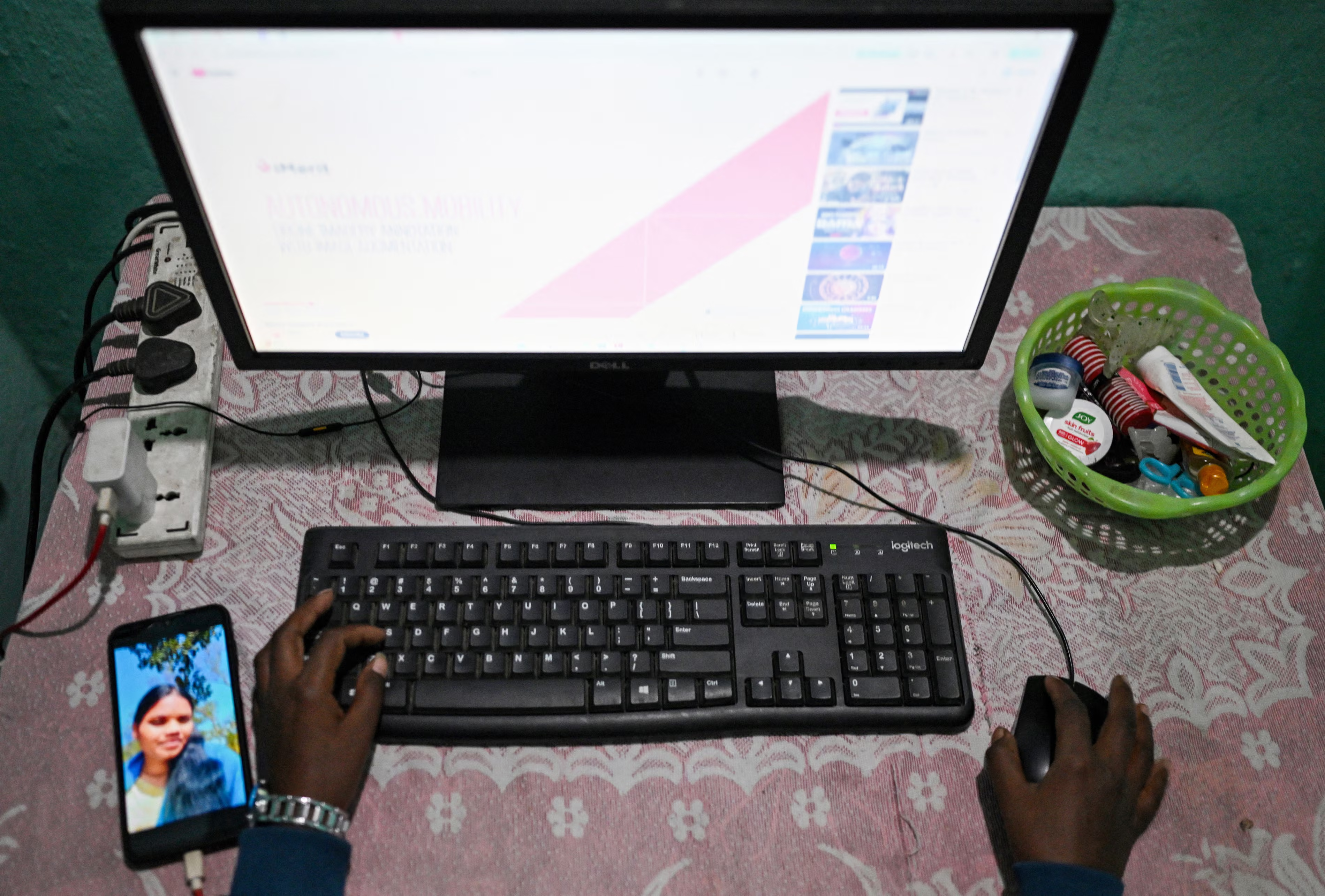
This is where apps like Kled AI and Silencio step in. Within these data marketplaces, millions of people are feeding and training AI by selling their identity data. Beyond Kled AI, Silencio, and Neon Mobile, AI trainers have numerous options: Luel AI—backed by the prominent accelerator Y Combinator—acquires multilingual dialogue samples at roughly $0.15 per minute; ElevenLabs allows users to digitally clone their voices and license them to others at a base rate of $0.02 per minute.
Bouke Klein Teeselink, Professor of Economics at King’s College London, says AI training gig work is an emerging occupational category poised for rapid growth.
AI companies know paying individuals for data licensing helps them sidestep copyright disputes that might arise from relying solely on web scraping, Teeselink explains. AI researcher Veniamin Veselovsky adds that such firms also need high-quality data to model new, improved system behaviors. “At present, human-sourced data remains the gold standard for sampling outside the model’s existing distribution,” Veselovsky notes.
The humans powering these machines—especially those in developing countries—often need the money and have little alternative. For many AI training gig workers, taking on this work is a pragmatic response to economic disparity. In countries with high unemployment and depreciating local currencies, earning U.S. dollars is often more stable and lucrative than local employment. Some struggle to land entry-level jobs and turn to AI training simply to survive. Even in wealthier nations, rising living costs make selling one’s own data a logical financial choice.
Cape Town-based AI trainer Louw is acutely aware of the privacy trade-offs involved. Though income is inconsistent and insufficient to cover all his monthly expenses, he accepts these conditions to earn money. Having lived with a neurological condition for years, he’s been unable to find formal employment—but earnings from AI data marketplaces—including Kled AI—enabled him to save $500 and enroll in a spa therapy training course to become a massage therapist.
“As a South African, receiving U.S. dollars means far more than people realize,” Louw says.
Mark Graham, Professor of Internet Geography at Oxford University and author of Feeding the Machine, acknowledges that such payments may hold tangible short-term value for individuals in developing countries—but warns, “Structurally, this work is unstable, offers no upward mobility, and is effectively a dead end.”
Graham adds that AI data markets rely on a “race to the bottom” in wages and on “temporary demand for human data.” Once that demand shifts, “workers will have no safeguards, no transferable skills, and no safety net.”
Graham states that the sole winners are “Northern Hemisphere platforms that capture all lasting value.”

Blanket Authorization
Chicago-based AI trainer Hill feels conflicted about selling his private phone conversations to Neon Mobile. Roughly 11 hours of call content earned him $200—but he says the app frequently goes offline and delays payments. “Neon has always seemed suspicious to me, but I kept using it anyway—just to scrape together extra cash to pay my bills,” Hill says.
Now he’s starting to reconsider whether that money truly came so easily. In September last year—just weeks after Neon Mobile launched—TechCrunch uncovered a security vulnerability allowing anyone to access users’ phone numbers, call recordings, and transcripts. Hill says Neon Mobile never notified him of the breach, and he’s now deeply concerned his voice could be misused online.
Jennifer King, a data privacy researcher at Stanford University’s Institute for Human-Centered Artificial Intelligence, worries that AI data marketplaces offer little clarity about how or where user data will be used. She adds that, without understanding their rights—or having any meaningful opportunity to negotiate them—“consumers face the risk of their data being reused in ways they dislike, don’t understand, or never anticipated, with virtually no recourse.”
When AI trainers share data on Neon Mobile and Kled AI, they grant a blanket authorization—worldwide, exclusive, irrevocable, transferable, and royalty-free—permitting platforms to sell, use, publicly display, store, and even create derivative works based on their likenesses.
Avi Patel, founder of Kled AI, says his company’s data agreement restricts usage strictly to AI training and research purposes. “Our entire business model depends on user trust. If contributors believe their data could be abused, the platform simply won’t function.” He says the company vets buyers before selling datasets and avoids partnerships with organizations deemed “suspicious”—including the adult industry and government agencies the company believes might misuse data in ways that violate that trust.
Neon Mobile did not respond to requests for comment.
Enrico Bonadio, Professor of Law at City, University of London and St George’s, University of London, points out that such agreement terms allow platforms—and their clients—“to do almost anything with this material, permanently and without additional payment, while contributors lack any practical way to withdraw consent or renegotiate terms.”
Even more alarming risks include trainers’ data being used to generate deepfakes and impersonations. Although data marketplaces claim to strip identifying information—such as names and locations—from datasets before sale, Bonadio adds that biometric patterns are inherently resistant to meaningful anonymization.
Seller’s Regret
Even if AI trainers could negotiate more granular protections around how their data is used, they might still regret the decision. In 2024, New York actor Adam Coy sold his likeness to Captions—a now-rebranded AI video-editing software formerly known as Mirage—for $1,000. His agreement stipulated his identity would not be used for political purposes, nor to promote alcohol, tobacco, or adult content, and that the license would last one year.
Captions did not respond to requests for comment.
Soon afterward, Coy’s friends began forwarding videos they’d found online featuring his face and voice—amassing millions of views. In one Instagram video, Coy’s AI replica introduced itself as a “vaginal doctor,” promoting unproven medical supplements for pregnant and postpartum women.
“It’s embarrassing explaining this to people,” Coy says.
“The comments are strange—people are commenting on my appearance, but it’s not actually me,” Coy adds. “When I made the decision [to sell my likeness], I figured most models were going to scrape data and images off the internet anyway, so at least I’d get paid.”
Coy says he hasn’t taken on any further AI data gigs since then. He says he’d only consider doing so again if offered a substantial payment by a particular company.
Join TechFlow official community to stay tuned
Telegram:https://t.me/TechFlowDaily
X (Twitter):https://x.com/TechFlowPost
X (Twitter) EN:https://x.com/BlockFlow_News
 @guardiannews