a16z: Prediction markets are becoming the new key to traffic
TechFlow Selected TechFlow Selected
a16z: Prediction markets are becoming the new key to traffic
Each prediction contract tells a story.
 Navigating Web3 tides with focused insights
By: Alex Danco
Translated by: TechFlow
In the mid-2010s, a new form of visual content began appearing around elections, sporting events, and playoff races: charts showing "probability over time." These charts were compelling because they told an engaging story: what was initially expected to happen, and then what actually happened.
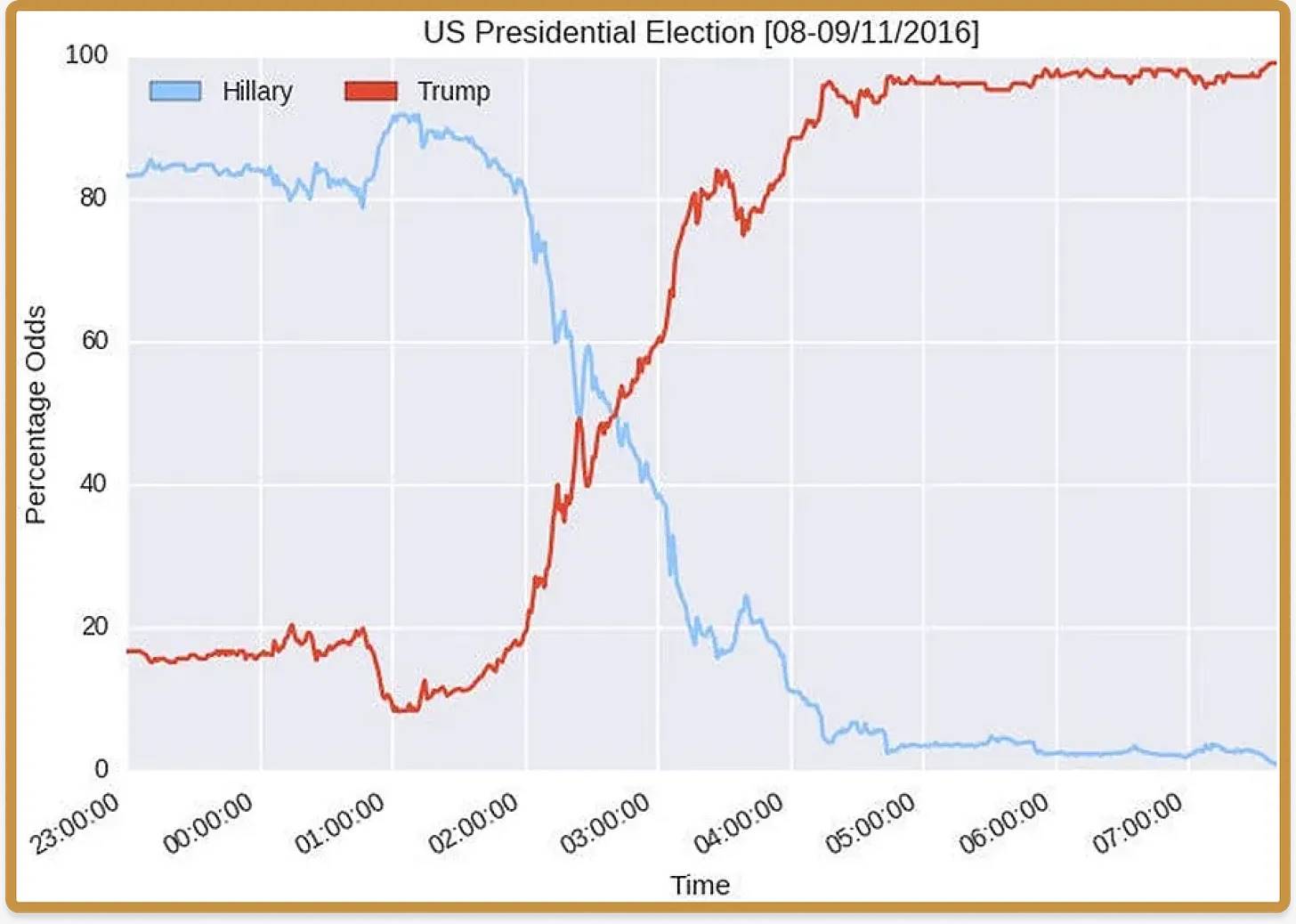
With these images, you can tell many captivating stories. From probability shifts alone, you can narrate tales of collapse, redemption, or underdog triumph. (Kurt Vonnegut famously named many such story shapes: “Man in a Hole,” “Boy Meets Girl,” and “Fall & Fall Again,” each with its own distinct arc.) These images are a kind of “meme”: they compress vast amounts of information into a small space and transmit the full story intact when shared.
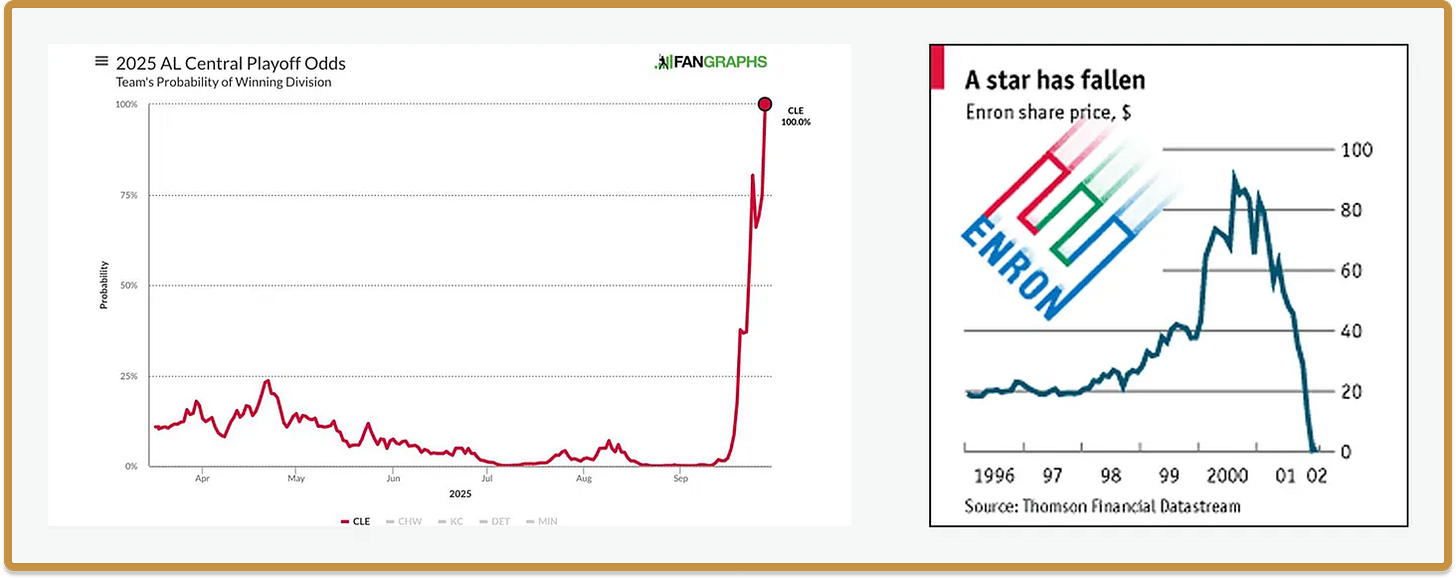
Despite their appeal, these charts have one major limitation: they exist almost exclusively within politics, sports, or financial markets. The reason is clear: such charts require widely accepted prediction odds that can be legally used. Financial markets have always had them; elections can leverage polling data, allowing analysts like Nate Silver to construct these probability paths. Sports seasons (and even individual games) have defined structures and enough historical data to confidently forecast teams’ chances of making the playoffs. Beyond these domains, the “story shape” format hasn’t extended much further into popular culture.
The Slow Arrival of Prediction Markets
Prediction markets solve this problem in an obvious way. As long as you can define a contract and its resolution terms, we now have a method for bringing these “prediction arcs” into any unfolding story in the world. Pop culture predictions—the essential starting ingredient for such stories—have gone from scarce to abundant.
In practice, these markets didn’t emerge overnight, nor did they start strong. In early 2024, the magazine *Works in Progress* published an article titled “Why Prediction Markets Aren’t Popular.” It argued that “there’s little natural demand for prediction market contracts,” because the three traditional groups that make up market participants—savers (seeking wealth accumulation), thrill bettors (betting for excitement), and savvy traders (trying to profit from distortions created by the first two groups)—had no particular reason to engage with prediction markets. Savers might buy market indices to grow wealth over time, but they had no incentive to bet on presidential election outcomes. Thrill bettors might be more inclined, but they often found more exciting ways to speculate (like day trading, meme coins, or sports betting) than predicting state senate races. And because the first two groups participated minimally, savvy traders saw little opportunity to profit.
Due to limited participation from all three groups, prediction markets were destined to remain illiquid and relatively useless at forecasting the future. This view was further reinforced by their poor performance predicting the 2022 midterm elections.
Yet, in the year and a half since that article, something interesting has changed: prediction markets have rapidly entered mainstream pop culture. As predicted by massive betting volumes around weekly sports events, the largest markets are in sports. But they’ve successfully expanded into broader culture—even becoming the subject of a *South Park* episode—covering everything from New York City mayoral elections to the Fed's interest rate path, and even Taylor Swift’s potential wedding timeline.
Breaking the “Fourth Wall”
What changed over the past two years? There may not be a single silver bullet. The 2024 election certainly helped: Americans have a long history of betting on elections, and prediction market volume grew 42-fold between early June and the end of the election cycle. But the momentum didn’t fade after the election concluded.
A key player in this positive feedback loop is a new type of market participant—one that barely existed a few years ago but is now everywhere. This participant resembles promoters in traditional betting scenes, like Las Vegas boxing promoters. They are ordinary social media users—and a new kind of meme: sharing screenshots of prediction trajectories.
Prediction markets today aren’t just about classic market dynamics; they’re also driven by viral social media spread. The key behavioral mechanism is posting screenshot updates when a prediction contract becomes topical, drawing attention and injecting liquidity into the contract.
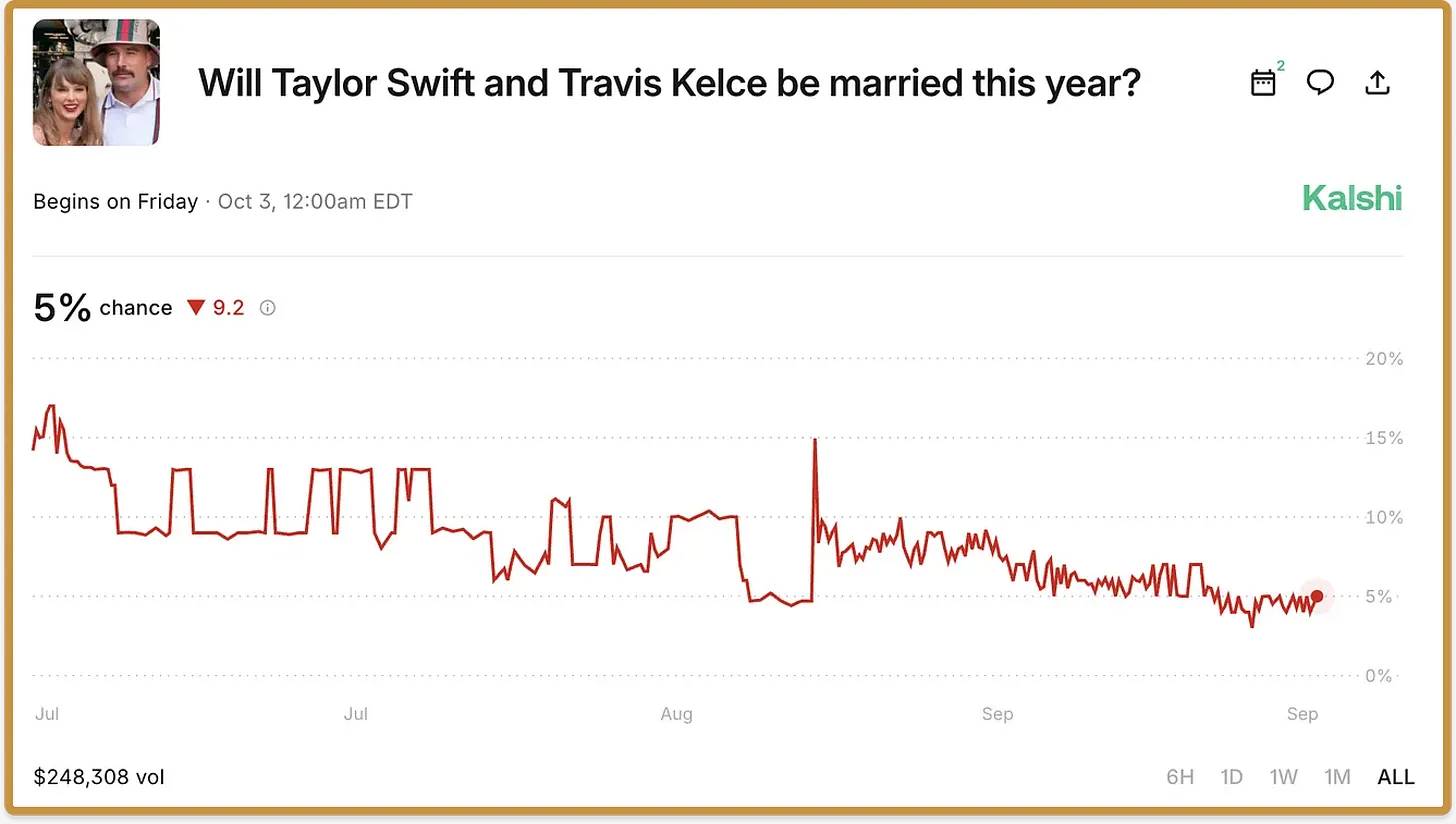
A great example is a pop culture contract on Kalshi: “Will Taylor Swift and Travis Kelce get married in 2025?” If you examine the chart, you’ll notice two important things happening on August 26, when Swift and Kelce announced their engagement on Instagram. First, a sharp spike in odds; second, a significant surge in liquidity as people began paying attention to the contract. While some liquidity increase would have occurred regardless, there’s no doubt that these timely shared screenshots contributed directly to the contract’s virality and served as entry points for new bets. This “breaking the fourth wall” phenomenon suddenly makes a wider audience aware of the meme (or more precisely, aware of why they should care about the contract), adding a fascinating new meta-layer to future narratives.
New “Protagonists” on the Timeline
Betting on the pope is said to be the “original prediction market,” and recently it made a glorious comeback. For Catholics worldwide, it was a momentous occasion as Cardinal Robert Prevost became the first American pope—Pope Leo XIV. For betting markets, it was equally momentous, as few considered him a competitive candidate: most attention was focused on frontrunners like Pietro Parolin and Luis Antonio Tagle.
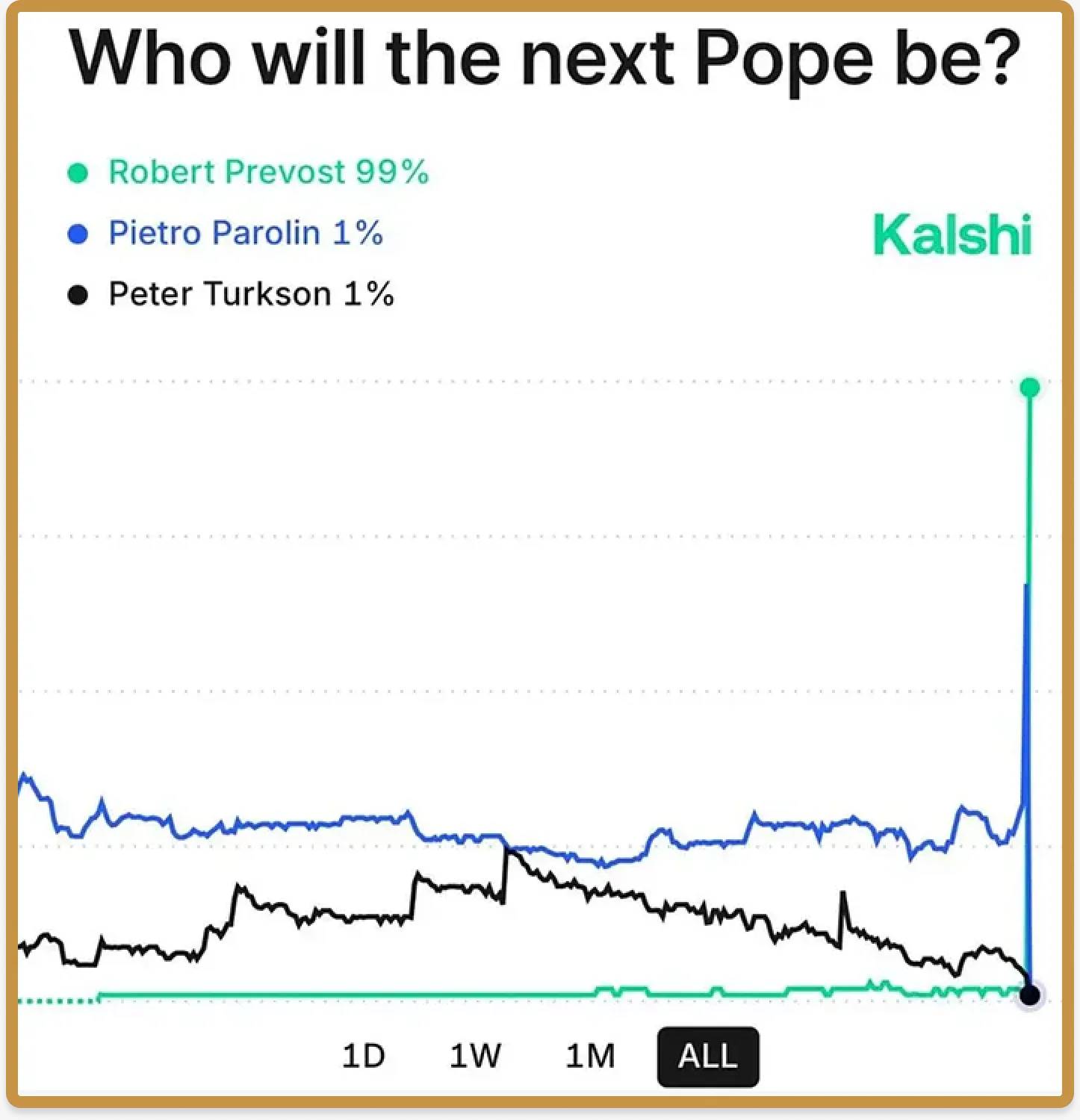
The day after the smoke cleared, @Domahhhh on X shared the real gem: a detailed breakdown of his thought process and bet sizing in the days leading up to the conclave and during the critical window between decision and announcement.
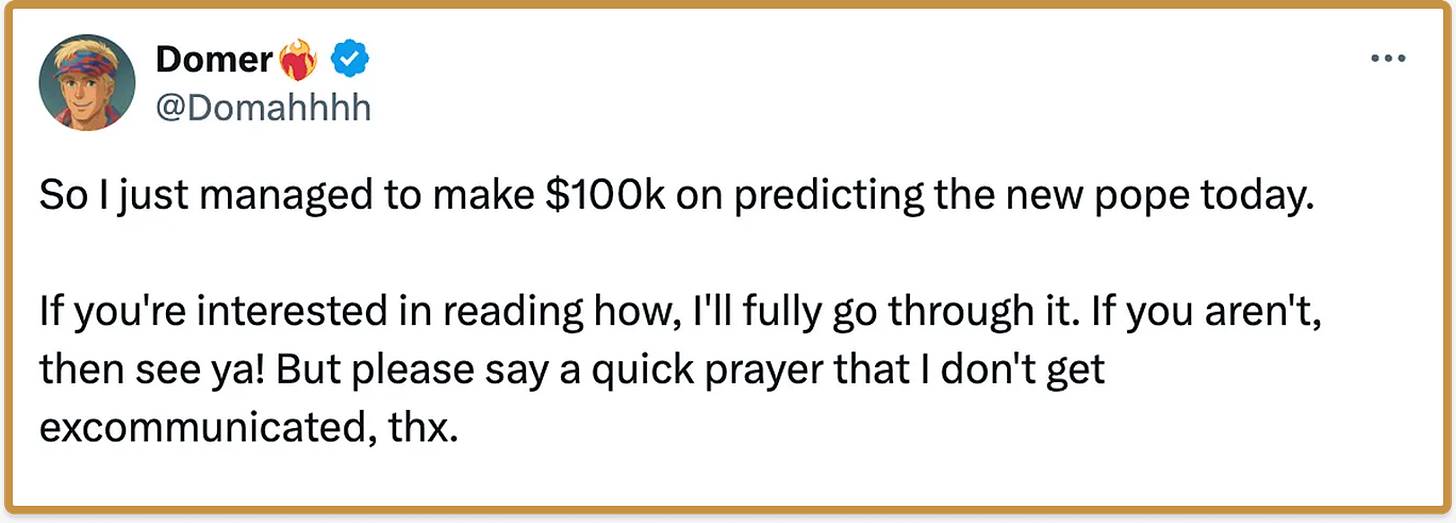
In his words: “As a directional bet, I decided to place a large amount of money on the next pope not being [Parolin or Tagle, the two frontrunners].
After the fourth round of voting, white smoke rose (indicating a successful election). That was relatively fast. The logical conclusion (which I immediately drew) was that this meant someone who performed strongly in the first round had consolidated support and become pope. Parolin’s odds rose to about 65%. Tagle stayed around 20%. Together, they had an 85% chance of being pope. Honestly, although this price now looks extremely wrong in hindsight, it was hard at the time to believe it was so off. I was sure I’d lost a lot of money! I decided not to chase bad money, not to bet more on Tagle/Parolin. I’d accept my loss like a good boy.
But I did scroll through the list of other options. When two people were trading above 85%, everyone else was in the clearance bin. I went digging in the bargain section and found Tarcisio at 100-to-1, Prevost at 200-to-1. In hindsight, I should’ve bought Grech at his price too.
I knew one piece of information: only four ballots. That’s too fast for longshots. Toss all those lottery tickets in the trash. You need someone capable of gathering two-thirds of the votes in a relatively short time. And those two were exactly who I picked. While other traders focused on Tagle/Parolin, I bought thousands of shares in each.
Minutes later, I was stunned to see Prevost—someone I had just bought at 200-to-1, 20 minutes earlier—step onto the balcony as pope.”
There used to be a joke: “Every day, there’s one main character on the timeline, and the goal is never to be that person.” This “winning predictor poster” is a new kind of main character—one who briefly becomes a certified hero.
Betting In
The 2024 presidential election gave prediction markets a well-deserved redemption arc. It began with Biden’s long withdrawal from the race, during which prediction markets provided a useful quantitative tool for measuring how various events affected the likelihood of his exit. From journalists to Wall Street traders, everyone started relying on prediction markets alongside traditional polls and commentary. Ultimately, despite criticism throughout the campaign for being influenced by “whale” traders, the markets outperformed the polls. A year later, Kalshi’s daily trading volume now exceeds even its 2024 election highs (at least during football season).
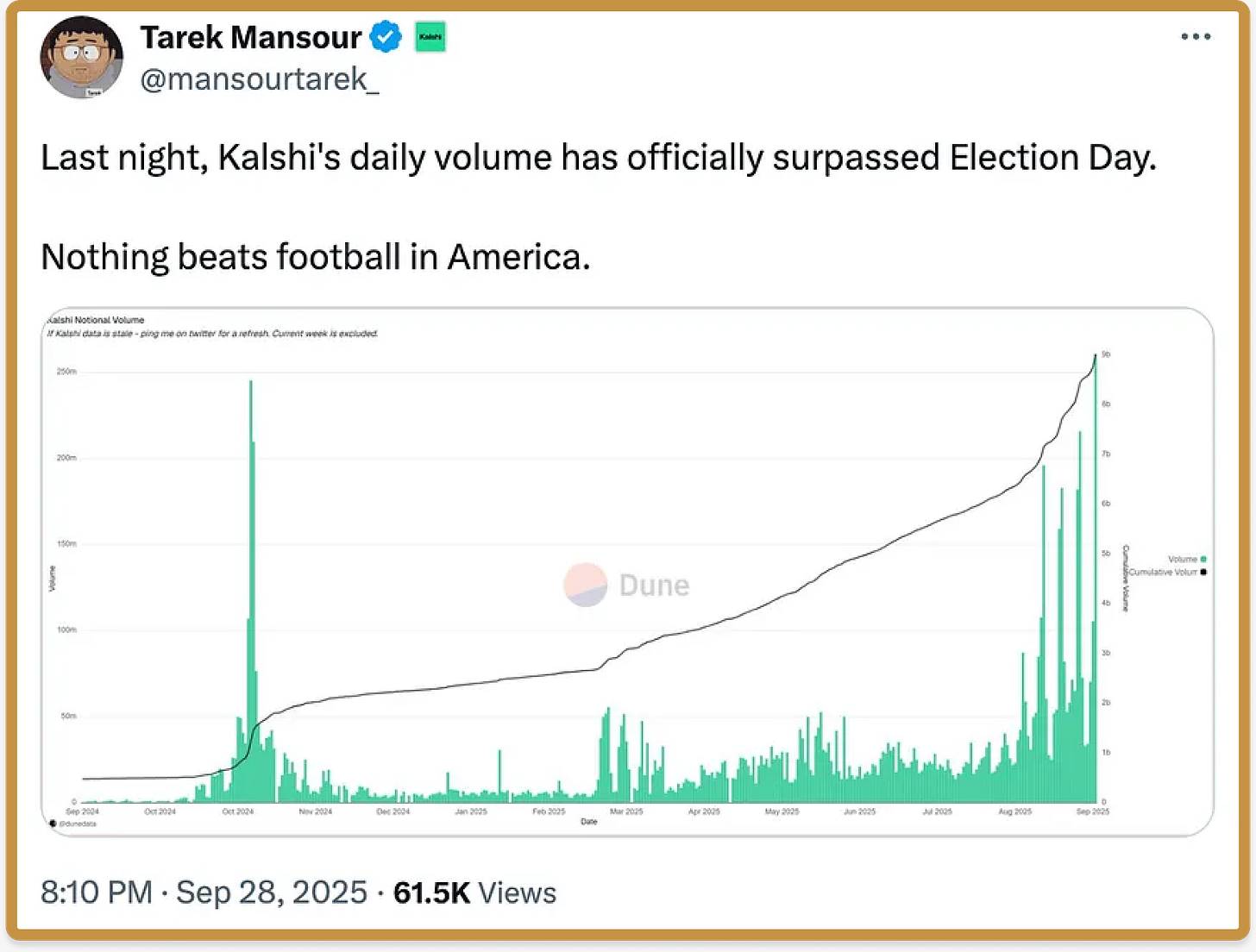
Prediction markets now represent something significant—not just in terms of utility as a financial tool or information source. They represent accountability, and a new role on the timeline: “the hero who made a bold call,” “the fool who made a bad one.” These individuals are now thrust into the spotlight, cartoonish in the Vonnegutian sense, like characters from his short stories.
Across politics, business, and culture, we demand that our leaders and public figures truly guide our institutions toward a successful future. And that means making bold decisions and being proven right. For decades, the public has generally felt we’ve slipped into a culture lacking accountability among leaders—and when individuals step forward to resist this trend, we appreciate them all the more.
This may be the primary mechanism by which prediction markets are poised to shift the trajectory of popular culture: not just because betting itself is an information flow that directs attention where it’s needed, but because the path from prediction start to finish brings new memes onto the timeline and pushes new roles into the spotlight.
Join TechFlow official community to stay tuned
Telegram:https://t.me/TechFlowDaily
X (Twitter):https://x.com/TechFlowPost
X (Twitter) EN:https://x.com/BlockFlow_News
 a16z
a16z