Ilya Appears at Graduation Speech: How to Survive the AI Era—Here Are My Rules
TechFlow Selected TechFlow Selected
Ilya Appears at Graduation Speech: How to Survive the AI Era—Here Are My Rules
"This is the 'fourth degree' I've earned at my alma mater."
 Navigating Web3 tides with focused insights
Compiled by: Quantum Bit
After over a year of silence, Ilya Sutskever has finally reappeared!
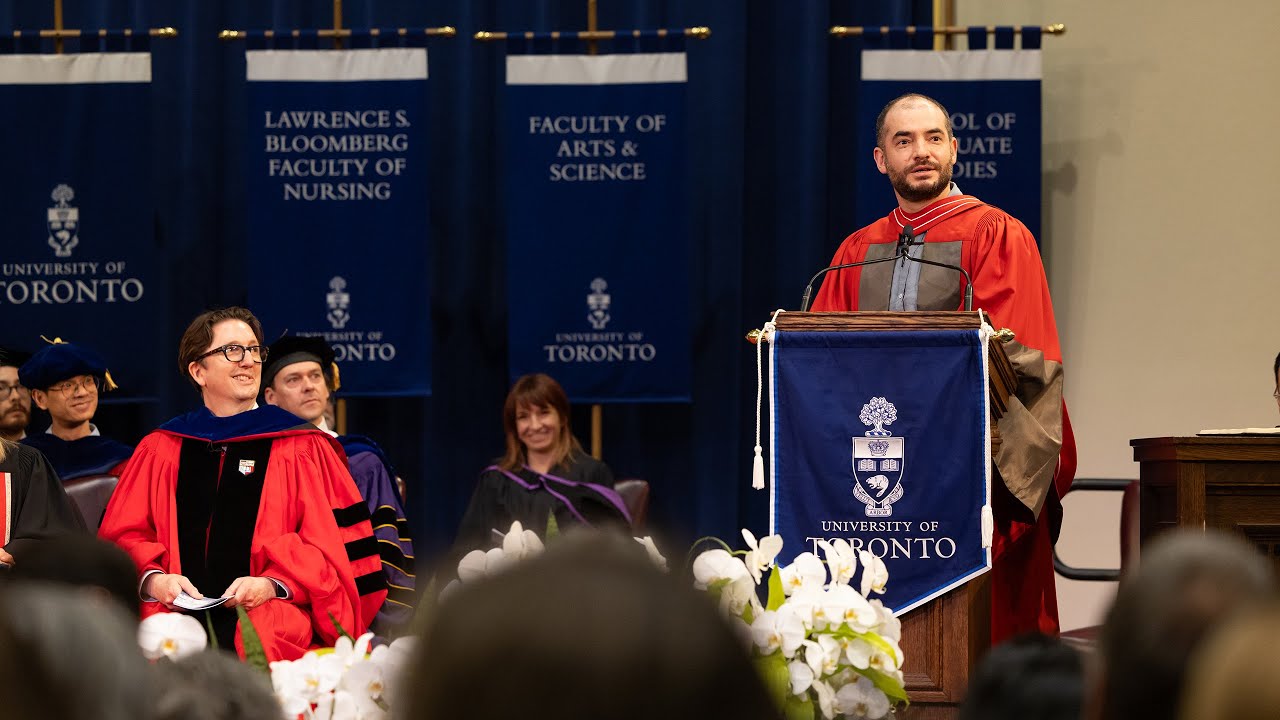
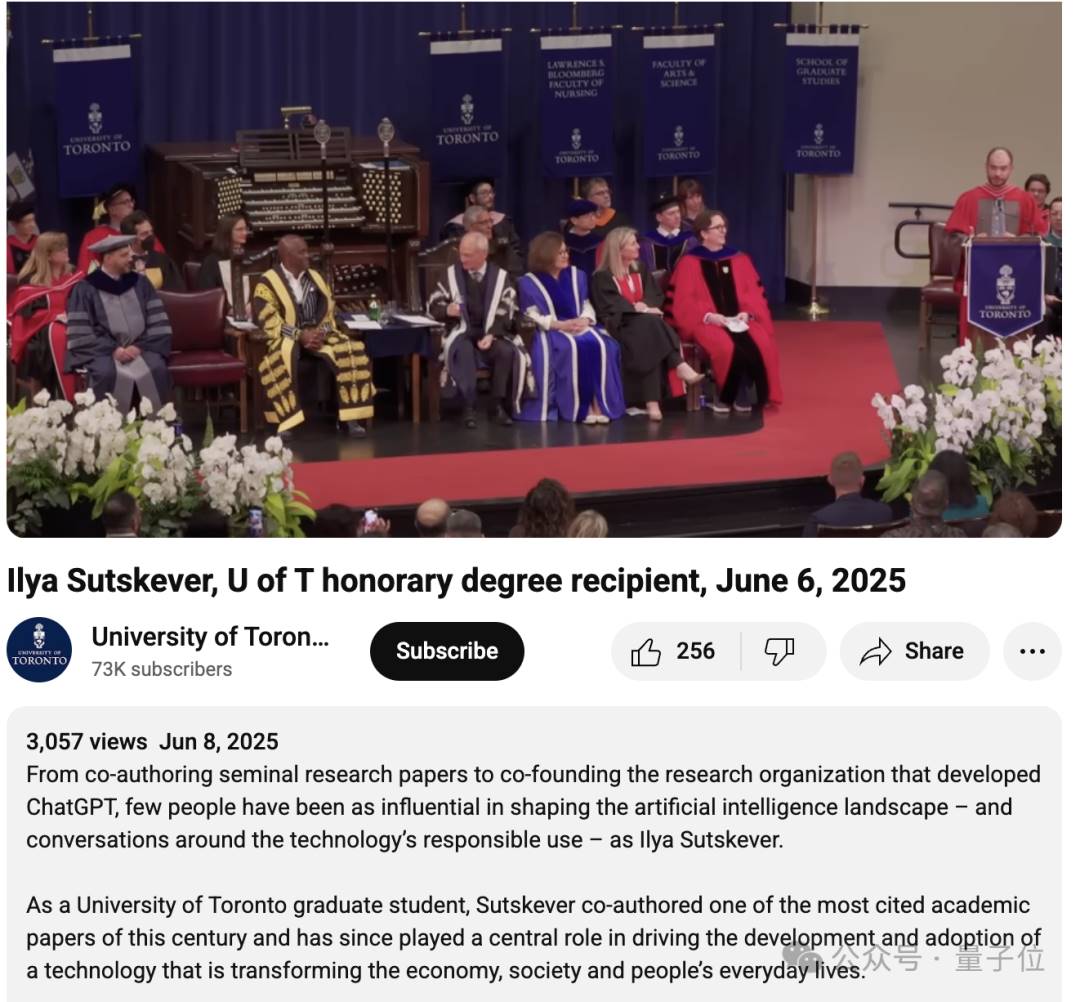
He returned to the same university stage where he graduated two decades ago—delivering a speech as an honorary doctorate recipient. He referred to this as his "fourth degree" from his alma mater, the University of Toronto.
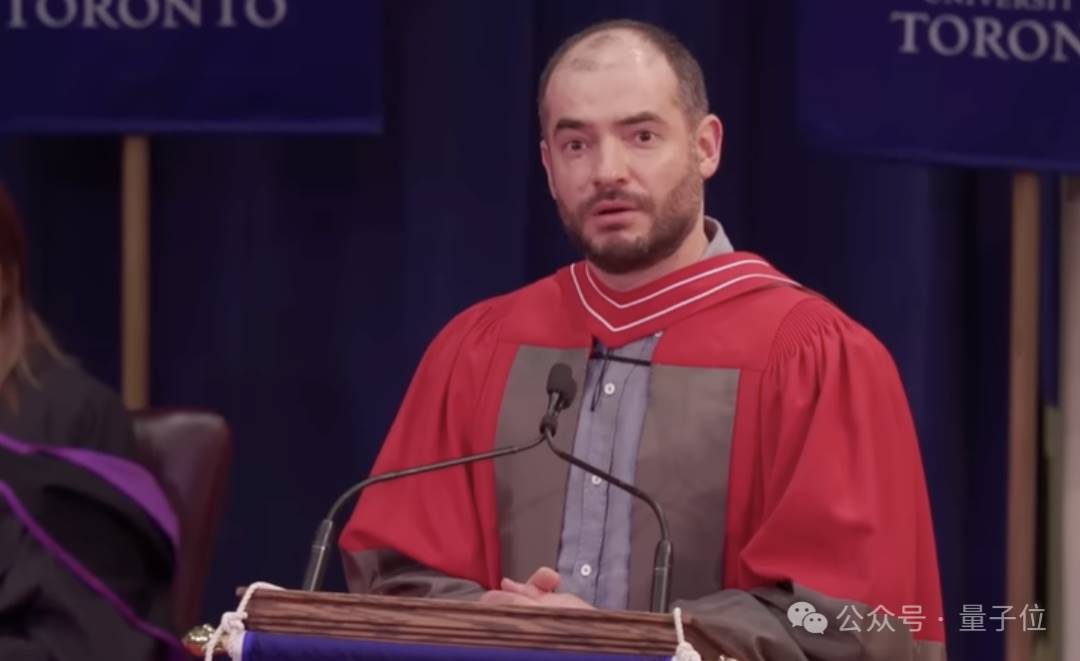
He didn't mention updates about his startup or timelines for AGI. Instead, he focused on sharing insights with the audience about how to better survive and thrive in an AI-driven world.
Someday, AI will be able to do everything we humans can do today.
His personal mindset? Accept reality as it is, avoid dwelling on past regrets, and focus on improving the present.
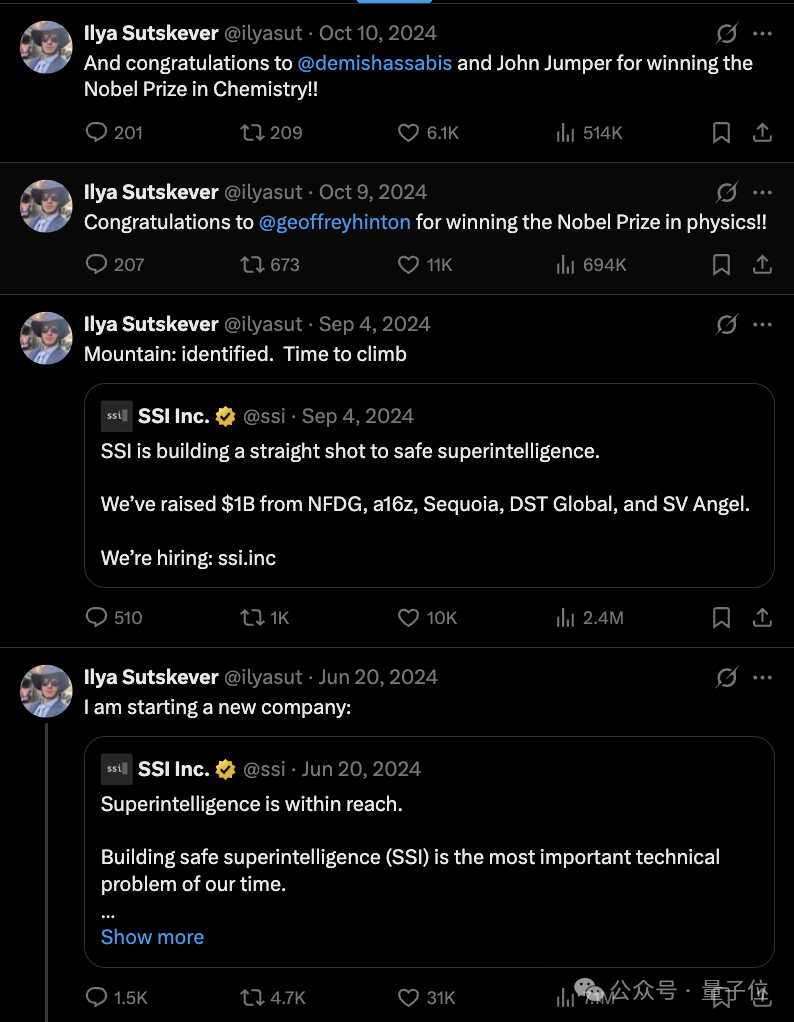
Notably, this marks his first public appearance since leaving OpenAI. His most recent tweet was a congratulatory message for last year’s Nobel Prize winners, and earlier still was his announcement about starting a new venture.
The honorary Doctor of Science degree awarded by his alma mater recognizes his foundational work and global impact as a computer scientist and AI pioneer, as well as his outstanding contributions as an advocate for safe and responsible AI.
Though his commencement speech lasted only ten minutes, it deeply inspired many online.
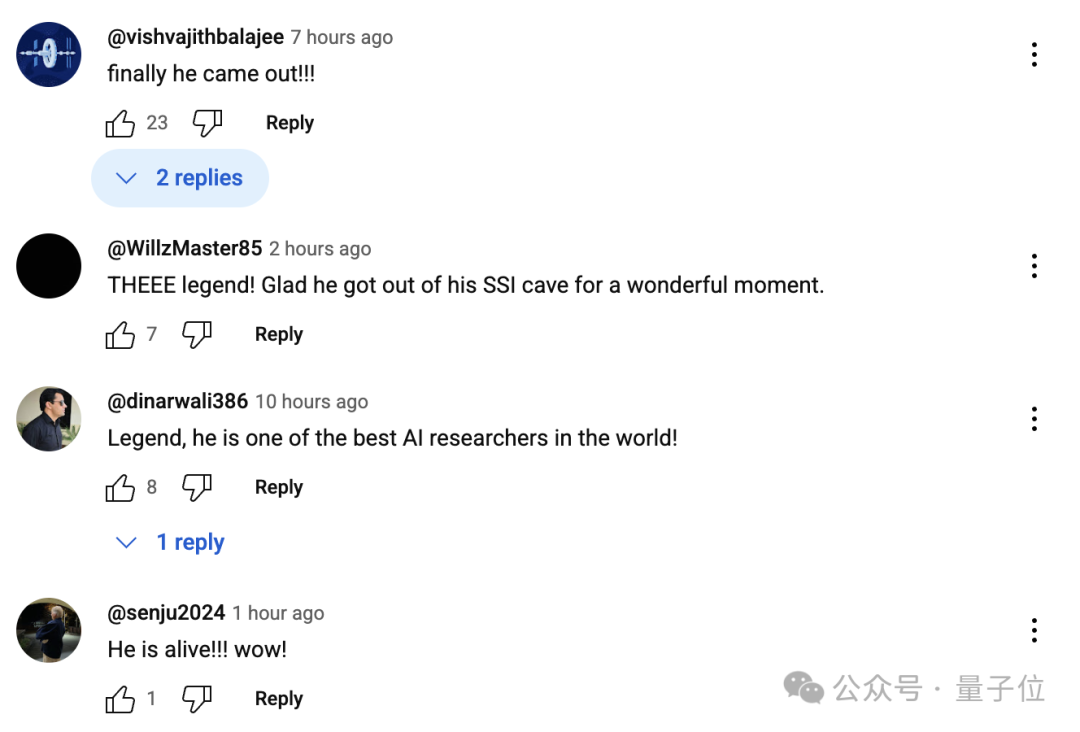
He's back! He has emerged from the cave of SSI!! He's alive!
DeepSeek has compiled the following transcript, preserving the original meaning while adapting it naturally for Chinese readers.
Full Text of Ilya's Commencement Speech
Hello everyone, I'm very happy to be here. Thank you all for organizing such a wonderful event and ceremony, and for granting me this honorary degree. This honor means a great deal to me.
Twenty years ago today, I stood in this very hall receiving my bachelor's degree from the University of Toronto. And now, this makes four degrees I’ve earned from my alma mater.
The decade I spent here was truly wonderful. My undergraduate studies were incredibly enriching; then came graduate school, which was equally remarkable. I was able to dive deep into what fascinated me and eventually become a researcher. Studying under Professor Hinton was a tremendous privilege. He taught at this university, and having him as my mentor was one of the greatest strokes of luck in my life. For that, I am profoundly grateful.
I firmly believe there is no better path to becoming a scientist—one that fosters growth, maturity, and intellectual development.
When I was a student here at the University of Toronto, our AI research was among the best in the world, home to the most revolutionary ideas and exciting work. I feel incredibly fortunate to have contributed during those early graduate years. But that was a long time ago.
I understand that graduation speeches are supposed to offer some wise advice. I’ll give a little—but only a little—because this speech will be somewhat different.
I’d like to share one useful mindset: accept reality as it is, don’t dwell on past regrets, and focus on improving the present.
With this mindset, everything becomes much easier. I mention it because it’s so hard to actually practice. We often get stuck ruminating over past decisions we wish we hadn’t made, misfortunes we’ve suffered, or perceived injustices, spending too much emotional energy on them. A more effective approach is simply to acknowledge the current situation and ask: “What is the best next action?” I’ve found that whenever I do this, things go much more smoothly.
But it’s difficult—really difficult. It’s an endless struggle against your own emotions. That’s why I’m bringing it up. Maybe some of you will adopt it yourselves. Consider this both a reminder to try and maintain this mindset, and a reminder to myself. It’s an ongoing battle.
That said, this won’t be the most traditional commencement speech because something extraordinary is happening right now. All of you are about to leave, and we’re all living through an unprecedented era.
People say that every generation, but I think this time it’s true.
And it’s true because of AI, right? Clearly, as far as I know, AI has already significantly changed what it means to be a student. Of course, its impact goes far beyond that. What will happen to the work we do? It’s already beginning to change in unknown and unpredictable ways. Some jobs may feel the impact soon; others may take longer.
Take today’s AI as an example: browse Twitter, see what people are saying about what AI can do, and you might get a small taste. You start wondering: hey, which skills still matter? Which ones are becoming less relevant? These questions are likely on your minds.
So, one could say the immediate challenge is: How will this affect our careers and livelihoods?
But the real challenge posed by AI is truly historic and extremely serious. The future will be vastly different from today. We’ve all seen AI—we’ve all talked to computers, and they’ve responded. That’s new. Computers didn’t used to do that, but now they do. You speak to a machine, it understands you, replies to you, communicates via voice, writes code. It’s pretty wild. Yet it still can’t do so many things—it’s still very limited.
So yes, it still has a long way to catch up. But it’s already thought-provoking enough. It’s good enough that you can imagine: okay, in a few years—some say three, some five, some ten, predictions vary (forecasting the future is tough)—but regardless of pace, AI will keep advancing.
Someday, AI will be able to do everything we can do today. Not just parts of it—everything. Anything I can learn, anything any one of you can learn—AI will be able to do it too.
By the way, how do we know this? How can I be so sure? Because we all have brains, and the brain is a biological computer. So why shouldn’t a digital computer—a digital brain—be capable of doing the same thing? This is the core logic behind why AI will ultimately be able to do everything: human intelligence arises from a biological computer (the brain), and digital computers have the potential to replicate that functionality.
Then you begin to wonder: what happens when computers can do all our jobs? It’s a huge, dramatic question. Think about it for a moment, and you might feel uneasy. But that’s only part of the tension—because what else will happen? What will humanity collectively decide to use these AIs for? More labor? Economic growth? Research and development? AI research itself? Progress will accelerate at an incredible rate for a period of time.
These are extreme and unimaginable scenarios. Right now, I’m trying to gently guide you into that mental space—an extreme, radical future shaped by AI. But it’s genuinely hard to emotionally grasp and believe—even I struggle with it. Yet logically, it seems highly probable.
So in such a world, what should humans do? There’s a famous saying: “You may not be interested in politics, but politics is interested in you.” The same applies to AI—and even more so.
I believe that simply using AI and seeing what the most advanced models can do today gives you an intuition. As AI continues to improve over the next year, two, or three, that intuition will grow stronger. Many of the things we talk about now will feel far more real, less abstract. Ultimately, no paper or explanation can replace firsthand experience—seeing it, hearing it.
Especially with AI, and especially with future AIs that will be extremely intelligent or even superintelligent—how do we ensure they remain aligned, truthful, and consistent? That will be an extraordinarily profound question. I’m condensing a lot of information here very quickly.
But overall, by paying attention to AI’s capabilities and not turning away when critical moments arrive, we can generate the necessary energy to overcome the immense challenges AI presents. In a sense, the challenge of AI is the greatest challenge humanity has ever faced. Overcoming it will bring the greatest reward.
Whether you like it or not, your life will be profoundly shaped by AI. Therefore, paying attention, staying aware, and channeling energy toward solving the resulting problems—that will be the main task ahead.
That’s all I wanted to say. Thank you very much.
Join TechFlow official community to stay tuned
Telegram:https://t.me/TechFlowDaily
X (Twitter):https://x.com/TechFlowPost
X (Twitter) EN:https://x.com/BlockFlow_News