Hong Kong's潮玩King and the Meme Coin Rising Star: The Rise of Labubu's Dual Empire
TechFlow Selected TechFlow Selected
Hong Kong's潮玩King and the Meme Coin Rising Star: The Rise of Labubu's Dual Empire
Labubu has not only gained popularity in the physical collectible market but also sparked an investment boom in the virtual world, becoming a global cultural icon.
 Navigating Web3 tides with focused insights
Author: Oliver, Mars Finance
In 2025, financial markets witnessed a unique phenomenon: the convergence of Hong Kong stocks and Meme coins. On May 27, Pop Mart (9992.HK) surged to a record high of HK$229, up 155% year-to-date, with its market capitalization briefly surpassing HK$300 billion. Simultaneously, $LABUBU, a Solana-based Meme coin inspired by its IP Labubu, exceeded a market cap of $45 million, with a 24-hour surge of 58.85%. This sharp-eared, fanged Nordic forest elf with a mischievous grin has not only sparked buying frenzies in the physical collectibles market but also ignited investment fervor in the virtual world, becoming a super symbol bridging culture and capital. How exactly has Labubu propelled Pop Mart from a Chinese trendy toy brand into a global cultural giant? What new consumer landscape do its underlying capital logic and cultural narrative reveal?
Meme Coin Mania: Labubu's Virtual Journey
As the barometer of the 2025 crypto market, Meme coins saw their total market capitalization explode from $20 billion in 2024 to $120 billion—an increase of 500%. Although $LABUBU is not officially issued by Pop Mart, it quickly rose to stardom within the Solana ecosystem by leveraging Labubu’s global IP popularity. On May 27, $LABUBU reached a peak market cap of $45 million, currently standing at $40.6 million, with a 24-hour trading volume as high as $9.5 million. Viral social media propagation served as the core engine behind its breakout. From Thai Princess Sirivannavari hanging Labubu on her Hermès Birkin bag, to BLACKPINK’s Lisa sharing photos with it on Instagram, to David Beckham posting about his daughter gifting him a Labubu keychain, this little creature repeatedly appeared in celebrity circles, triggering a global imitation trend.
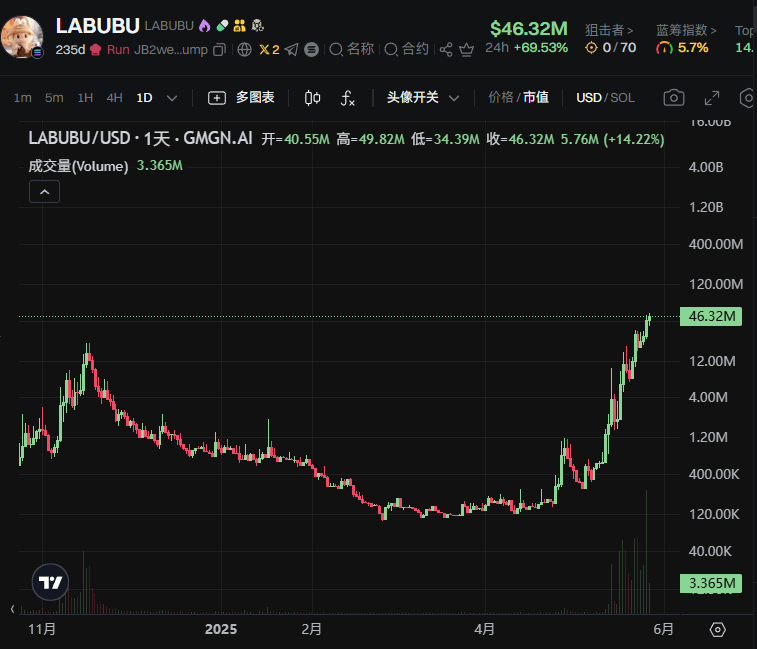
In Thailand especially, Labubu has become a cultural phenomenon. In 2024, the Tourism Authority of Thailand appointed it as an "Amazing Thailand Experience Ambassador," hosting a grand welcome ceremony attended personally by the Minister of Tourism and Sports. Labubu-themed clothing, tattoos, and custom merchandise proliferated across Bangkok streets, underscoring its influence as a trendsetting cultural icon. This cultural momentum rapidly spilled over into the crypto market. Prominent crypto KOLs like Ansem posted Labubu-related content on X, sparking strong community resonance. According to Holderscan data, since May 14, the number of $LABUBU token holders increased by over 30%, reflecting sustained growth in market participation and community enthusiasm.
However, the high volatility and potential risks of Meme coins cannot be ignored. On May 26, Pop Mart issued a statement via X clarifying that it has never launched any Meme coin and warning users against scams, reserving the right to pursue legal action. Nonetheless, the $LABUBU craze showed no signs of cooling down. Success stories of unofficial Meme coins such as Chillguy and Pnut have encouraged investors to bet on $LABUBU. Founder Wang Ning’s philosophy—“useless things are useful”—as he put it, “If we make dolls useful, sales will definitely drop,” aligns perfectly with the emotion-driven logic of Meme coins, attracting Gen Z to chase Labubu’s symbolic value in the virtual world. Moving forward, regulatory risk remains a key variable; the U.S. SEC has warned against promoting unregistered Meme coins, and $LABUBU may face compliance challenges amid tightening regulations.
The Vast Horizon of Hong Kong Stocks: Pop Mart’s Global Ambition
Matching the virtual frenzy of Meme coins, Pop Mart’s performance in the Hong Kong stock market has been equally dazzling. In the first quarter of 2025, the company reported revenue growth of 165%–170% year-on-year, far exceeding market expectations. Revenue in mainland China grew 95%–100%, while overseas sales skyrocketed 475%–480%. JPMorgan initiated coverage on Pop Mart with an “Overweight” rating and a target price of HK$250, forecasting a 152% year-on-year increase in overseas sales for 2025 and a compound annual growth rate of 42% from 2025 to 2027. By 2027, overseas revenue is expected to account for 65% of total sales. Goldman Sachs, BofA Securities, and other institutions have also raised their price targets, collectively expressing confidence in global demand for Labubu and Pop Mart’s international strategy.
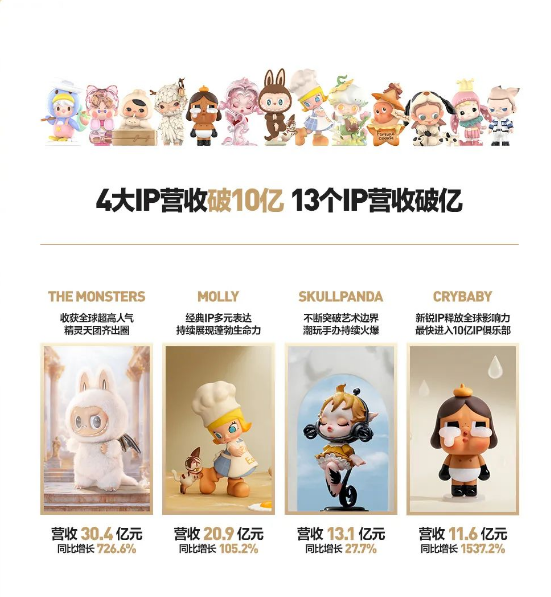
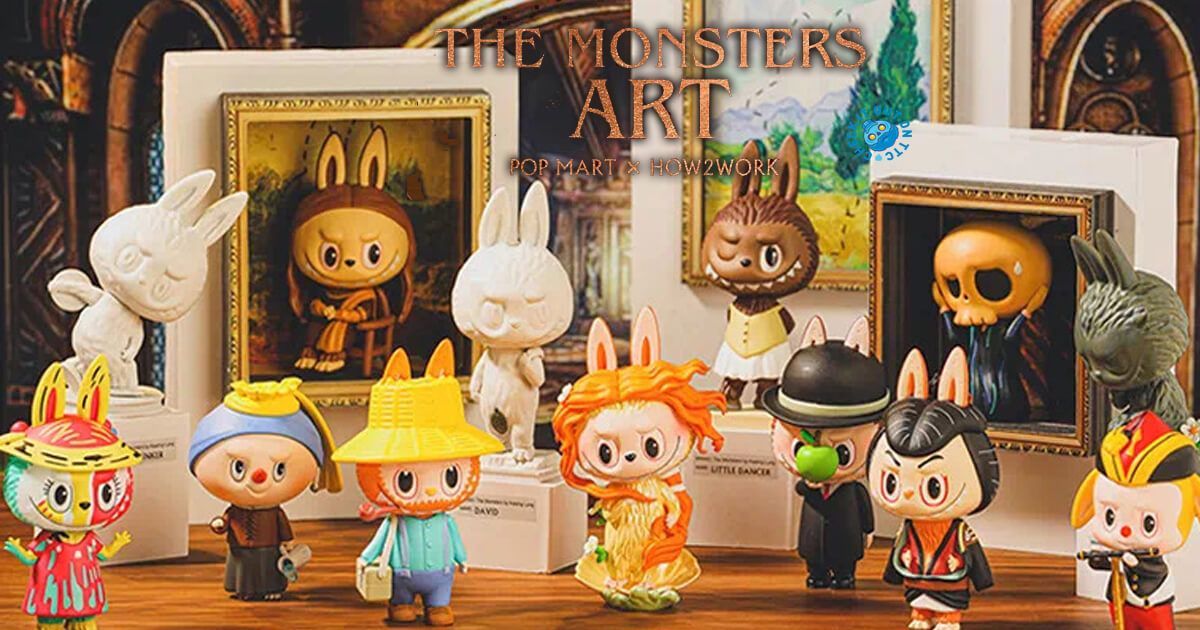
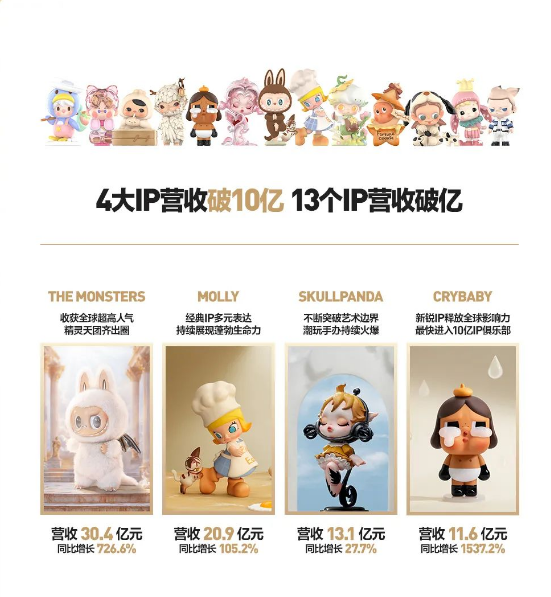
Labubu’s success owes much to product innovation. In 2024, THE MONSTERS series featuring Labubu generated RMB 3.04 billion in revenue, a 726.6% year-on-year increase, accounting for 23.3% of total company revenue. The breakthrough lies in the “soft vinyl plush” technique: combining the fine facial details of vinyl with the soft texture of plush, Labubu evolved from static figurines into portable “bag charms.” This innovation endowed Labubu with dual attributes: both a collectible and a “social currency” for expressing individuality and presence. At night markets in Bangkok, fans trade rare Labubu figures for luxury bags; at Harrods in London, collectors exchange Hermès Kelly bags for limited editions; at Coachella in Los Angeles, fans use Labubu to obtain festival passes. This barter economy highlights Labubu’s unique charm as a global cultural symbol.
Pop Mart’s globalization strategy further amplified Labubu’s impact. In 2024, overseas revenue reached RMB 5.07 billion, up 375.2% year-on-year, representing 38.9% of total revenue. Southeast Asia contributed RMB 2.4 billion, a 619.1% increase, accounting for 47.4% of overseas income. In Q1 2025, revenue in the Asia-Pacific region grew 345%–350%, the Americas surged 895%–900%, and Europe climbed 600%–605%. The company plans to double its U.S. store count to 50 in 2025, targeting flagship locations in New York’s Times Square and Fifth Avenue. On April 14, 2024, Wang Ning released an all-hands letter announcing the establishment of four regional headquarters—Greater China, Americas, Asia-Pacific, and Europe—to optimize resource allocation and enhance global operational efficiency. The Pop Mart app topped the U.S. App Store shopping chart and soared to fourth place on the free apps list, demonstrating Labubu’s powerful global appeal.
Market Volatility and the Longevity Code of IPs
Pop Mart’s stock journey has been dramatic. From a market cap of hundreds of billions at its 2020 IPO, to a low of HK$9.8 in 2022, then back to surpass HK$300 billion in 2025, the company has endured repeated market trials. In 2024, the Labubu craze drove the stock to new highs, but share reductions by early investors stirred debate. Fengqiao Capital fully exited its position of 11.91 million shares, cashing out RMB 2.11 billion, citing fund maturity as the reason. Fengqiao founder Tu Zheng posted on X: “From Series A to full exit, accompanying Pop Mart for 14 years—it’s been a magnificent journey.” Additionally, Wang Ning indirectly holds shares through GWF Holding and Pop Mart Hehuo Holding Limited. After reducing his stake on October 24, 2024, his ownership dropped from 50.34% to 48.73%, though his stake remains worth nearly HK$80 billion. Such high-level sell-offs have raised investor concerns: Can the Labubu hype last? How can Pop Mart sustain IP vitality after the spotlight fades?
Wang Ning offered an early response: “Many think Labubu came out of nowhere, but 2026 marks its 10th anniversary, and 2027 will be Molly’s 20th. IP lifecycles are very long—we might be one of the longest-lasting companies.” Pop Mart’s IP matrix strategy provides solid support. In 2024, the top five IPs—Labubu, Molly, Skullpanda, Crybaby, and Dimoo—collectively generated over RMB 8.5 billion in revenue, contributing 65% of total revenue. Among them, Crybaby became the fastest IP to surpass RMB 1 billion, growing 1537.2%; Skullpanda and Dimoo brought in RMB 1.52 billion and RMB 1.28 billion respectively. Thirteen IPs including DIMOO WORLD, HIRONO, and Zsiga surpassed the RMB 100 million mark, showcasing the company’s strong IP incubation capabilities.
Pop Mart’s secret to IP longevity lies in its precise grasp of “emotional value.” Labubu’s success stems not just from product design but from its role as a vessel for Gen Z identity and self-expression. In 2024, co-branded blind boxes with *Ne Zha 2* sold over 100,000 units, and licensed IP revenue is expected to grow further in the first half of 2025. Western Securities’ research report notes that Pop Mart has built a robust brand moat through its IP portfolio and category expansion. In 2024, figure revenue reached RMB 6.94 billion, up 44.7% year-on-year, remaining the largest category; plush revenue surged 1289% to RMB 2.83 billion, becoming the year’s breakout hit. This diversified approach not only mitigates risks from reliance on a single IP but also expands market influence through a dual engine of “offline experiences + online reach.”
From Trendy Toys to Cultural Economy: Labubu’s Dual Narrative
Labubu’s rise reflects the shared cultural economic logic between trendy toys and Meme coins: both center on emotional value and achieve rapid breakout through viral social media spread and community identity. On TikTok and Instagram, unboxing videos, outfit pairings, and “doll wall” displays under the #Labubu hashtag have attracted millions of followers, with some accounts gaining millions of followers in short periods. Google Trends shows that in May 2025, Labubu’s global search热度 far exceeded that of Meme coin-related IPs like PEPE and DOGE, highlighting its status as a global cultural icon.
Labubu has evolved from a single trendy toy into a “social currency.” In 2024, the “High Alert Ahead” blind box series sold out instantly on domestic e-commerce platforms and triggered overnight queues at stores in Chicago, London, and Tokyo’s Harajuku. Standard versions priced at RMB 99 were resold for 10%–200%, while hidden editions fetched as high as RMB 2,300—a premium over 20 times. In Bangkok night markets, players traded rare Labubu figures for luxury goods; at Harrods in London, collectors swapped Hermès Kelly bags for rare editions; at Shanghai’s潮流 exhibition, fans exchanged three iPhone 14 Pros for a hidden edition. This barter culture not only validates Labubu’s collectible value but elevates it to the status of an “alternative financial instrument.” The $LABUBU Meme coin craze further amplifies its cultural influence—though unofficially issued, it stands out in the Solana ecosystem due to the IP’s global appeal.
Pop Mart’s channel innovation also supports its cultural export. In 2024, 38 new stores opened in mainland China, bringing the total to 401, with 2,300 robot stores deployed. Online, Douyin platform revenue grew 112.2%, while overseas e-commerce performed even stronger—official website revenue surged 1246.2%, and TikTok platform revenue exploded by 5779.8%. This “offline experience + online reach” model not only boosts customer stickiness but leverages viral social media spread to bring Labubu into the sights of young people worldwide.
Outlook: Opportunities and Challenges Ahead
Labubu’s popularity has given Pop Mart unprecedented growth momentum, but future challenges remain. High base effects may slow subsequent growth, and rising costs from overseas expansion add pressure. Regulatory risks in the Meme coin market are also significant—the SEC has already warned against promoting unregistered Meme coins, and tighter oversight could affect $LABUBU’s trading environment. Moreover, maintaining IP热度 after the initial buzz fades is a challenge Pop Mart must overcome.
Yet opportunities are equally evident. In 2024, the company launched new categories such as the game *Dream Home* and collectible cards, revealing potential for category expansion. JPMorgan predicts that voice recognition and augmented reality technologies will enhance interactivity in trendy toys. Western Securities forecasts over 50% revenue growth for Pop Mart in 2025, with overseas growth exceeding 100%, and plans to open 100 new stores, expanding into Mexico and Canada. Labubu’s success demonstrates the company’s core competitiveness in IP management and global deployment, with its universal cultural value offering vast room for global expansion.
Conclusion
From a Hong Kong-listed giant with a hundred-billion-dollar market cap to a multi-million-dollar Meme coin sensation, Labubu, in the form of a forest elf, has connected the physical and digital worlds, igniting passion among youth globally. Through 15 years of accumulation, Pop Mart has proven that trendy toys are not fleeting trends but a long-term arena承载 cultural and emotional value. The simultaneous rise of Hong Kong stocks and Meme coins is not merely a capital market celebration but a microcosm of Gen Z’s cultural economy. Whether Pop Mart can continue riding the waves and whether Labubu can become the next Hello Kitty—time will tell.
Join TechFlow official community to stay tuned
Telegram:https://t.me/TechFlowDaily
X (Twitter):https://x.com/TechFlowPost
X (Twitter) EN:https://x.com/BlockFlow_News