Uncovering the Witkoff Family: Trump's Friend, Middle East Envoy, and Crypto Millionaire
TechFlow Selected TechFlow Selected
Uncovering the Witkoff Family: Trump's Friend, Middle East Envoy, and Crypto Millionaire
Steve Witkoff's son Zach is promoting overseas transactions for World Liberty Financial.
 Navigating Web3 tides with focused insights
By Rebecca Ballhaus, Angus Berwick, The Wall Street Journal
Translated by Luffy, Foresight News
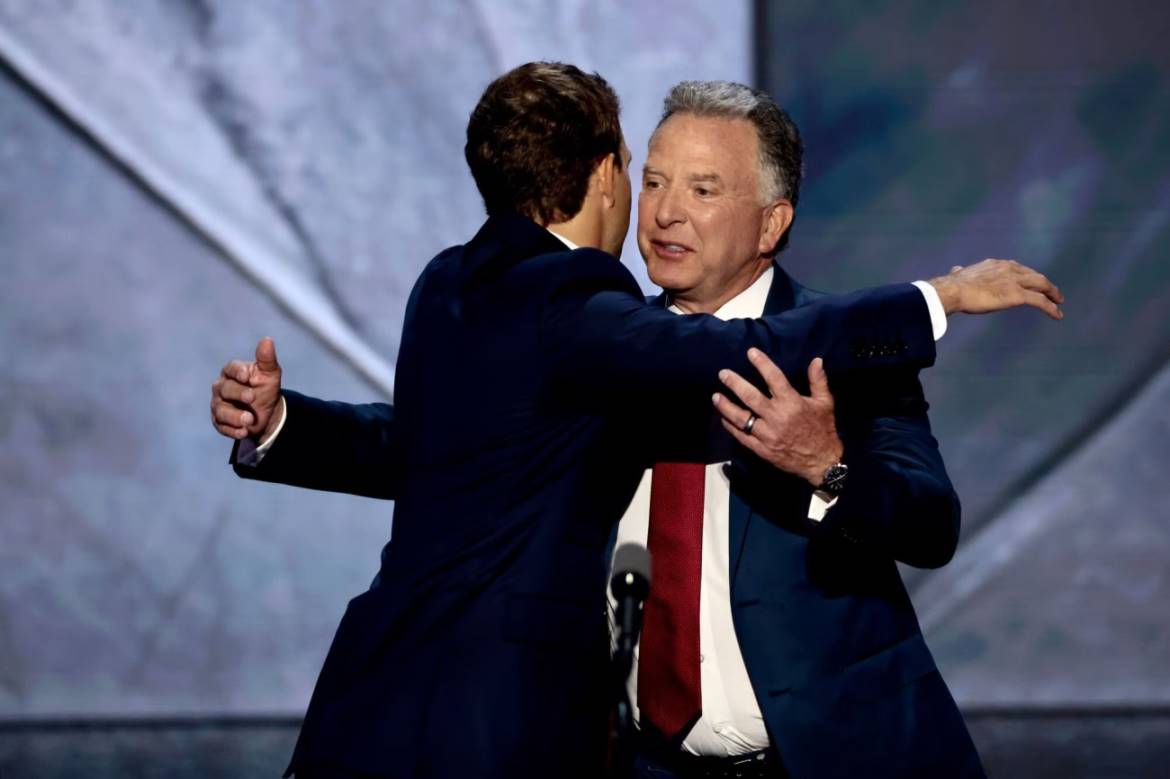
Steve Witkoff and his son, cryptocurrency entrepreneur Zach Witkoff, at the Republican National Convention last July. Photo: Bloomberg
About a month before President Trump’s inauguration, Middle East envoy Steve Witkoff flew to the UAE with two goals: to discuss regional issues with Abu Dhabi royal Tahnoon bin Zayed al Nahyan, and to attend a cryptocurrency conference.
Less than five months later, Witkoff’s son Zach Witkoff, co-founder of the crypto firm World Liberty Financial, announced at a Dubai event that the company had reached an agreement with Tahnoon’s enterprise for the latter to purchase $2 billion worth of World Liberty-issued cryptocurrency. The Witkoffs and the Trump family (which holds a 60% stake in World Liberty Financial) are expected to receive tens of millions of dollars in annual profits.
On May 15, senior Witkoff met again with Tahnoon to unveil a long-sought agreement for the oil-rich Gulf monarchy to obtain millions of advanced U.S.-made computer chips.
Steve Witkoff, 68, a longtime friend of Trump, has been traveling globally handling diplomatic matters since becoming envoy. Meanwhile, his 32-year-old son Zach Witkoff and his advisory team have traveled to at least four countries advancing crypto deals aimed at making World Liberty Financial an industry leader.
The father and son’s parallel dealings in the UAE vividly illustrate how World Liberty Financial’s business efforts are intertwined with government duties.
According to people familiar with the matter, Zach Witkoff compared Trump to a “godfather” during promotional calls with crypto investors, saying World Liberty would capitalize on increasingly favorable U.S. crypto regulatory changes. His posts on X frequently reference his father’s work for the White House.
The blending of government negotiations and private business deals is rewriting diplomatic rules for some nations seeking ties with Trump’s new administration. The commercial pursuits of Trump associates, including the Witkoffs, across the Persian Gulf and elsewhere since Trump took office have not previously been reported.
Meeting photos and videos posted on social media, along with insider accounts, show that countries seeking to advance their agendas are engaging not only by hiring American lobbyists and sending delegations to Washington to improve relations with the Trump White House, but also by meeting with relatives and associates of U.S. officials. For example, a senior Pakistani finance minister met with Pete Hegseth, the U.S. defense secretary’s sister-in-law, and the 19-year-old son of Donald Trump Jr.’s close friend to discuss digital assets.
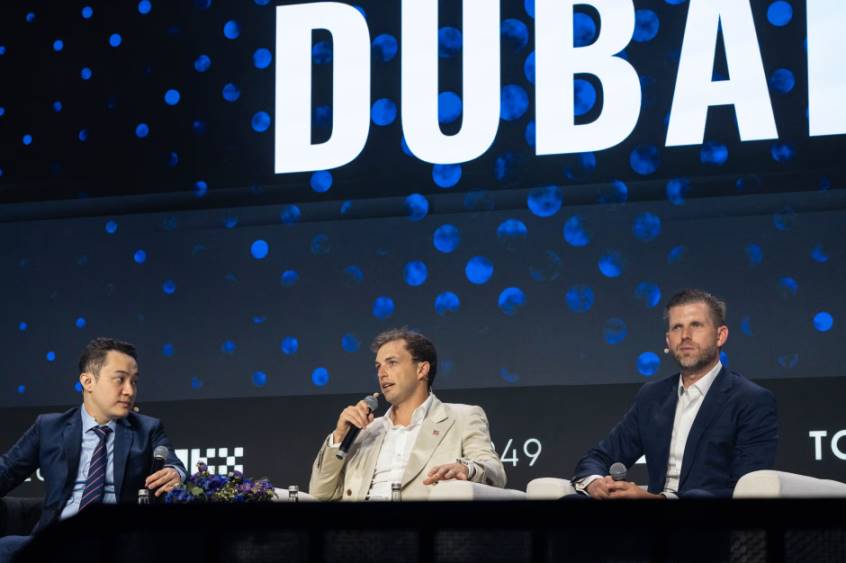
Zach Witkoff (center), co-founder of World Liberty Financial, cryptocurrency entrepreneur Justin Sun (left), and Eric Trump (right), second son of President Trump, attend the Token2049 crypto conference in Dubai on May 1. Photo: The Wall Street Journal
White House deputy press secretary Anna Kelly said Steve Witkoff is divesting his assets, including World Liberty, holds no “operational role” in the company, and will not discuss company or personal matters while serving in government. She said Trump “is incredibly proud of what Steve has accomplished.” Witkoff does not draw a government salary, travels the world via private jet, and has not publicly disclosed his finances. He has said he will transfer all his assets to his sons.
World Liberty spokesman David Wachsman said the company’s business deals are unrelated to the U.S. government and that it “does not even have the ability to discuss official government affairs.” He said attempts to frame meetings involving both World Liberty and Ambassador Witkoff in the same country as a conflict of interest are incorrect, adding there is “no connection whatsoever.”
He denied Zach Witkoff referred to Trump as a godfather and noted that Witkoff is Jewish and has no such religious figure.
The Trump Organization pledged during Trump’s presidency not to enter new deals with foreign governments. World Liberty has made no such commitment.
Prior to entering crypto, Zach Witkoff worked as a project manager at his father’s New York real estate firm, the Witkoff Group. In 2020, he took over the family office and, according to his LinkedIn profile, began focusing on blockchain. He co-founded World Liberty with his father and others in September, seven weeks before the presidential election.
World Liberty issues a dollar-pegged cryptocurrency called USD1, designed to help businesses and individuals transfer funds across borders outside the banking system. People who have worked with the company say it has marketed the token to foreign governments eager to improve ties with the U.S.
Besides meeting UAE officials, Zach Witkoff met senior Pakistani government figures who weeks later negotiated a ceasefire with India through the Trump administration. He told them World Liberty could use blockchain technology to “tokenize” the buying and selling of Pakistan’s rare earth minerals. Meanwhile, according to a lobbyist involved in the deal, Pakistan has been negotiating with the U.S. on a potential trillions-of-dollars agreement for rare earths and other minerals.
A World Liberty spokesperson said its meetings in Pakistan were “entirely unrelated” to any agreements Pakistan might negotiate with the Trump administration.
Zach Witkoff’s advisors and colleagues have also met Malaysia’s foreign minister and prime minister, as well as the president of Kyrgyzstan, and spoke at a Moscow crypto event attended by a Russian deputy finance minister.
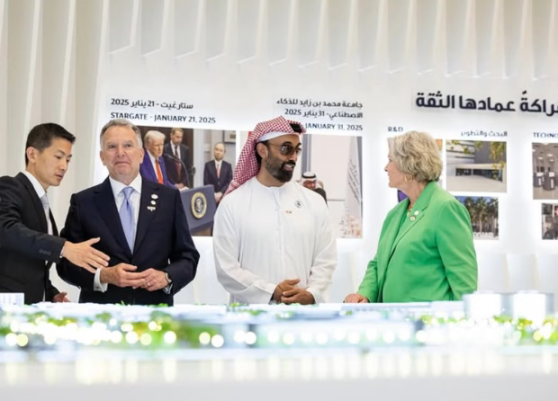
Steve Witkoff (second from left) met Sheikh Tahnoon bin Zayed al Nahyan (second from right) in Abu Dhabi this month. Photo posted on the Sheikh’s Instagram account
Crypto exchange Binance founder Changpeng Zhao helped introduce World Liberty on its overseas trips. In 2023, Zhao and Binance admitted violating U.S. anti-money laundering laws. Zhao has been seeking a Trump administration pardon to allow his company to re-enter the U.S. market and lift compliance obligations imposed after settling with the Justice Department. A World Liberty spokesman said Zhao and Zach Witkoff are friends but Zhao is not an intermediary.
A Binance spokesperson said Zhao has been pushing for “global innovation” in the crypto industry and the company is “proud to help make the U.S. the global capital of cryptocurrency.”
World Liberty has not disclosed its token buyers but has raised over $550 million through token sales this year. Buyers who have disclosed purchases include DWF Labs, an Abu Dhabi-based crypto trading firm that bought $25 million worth of tokens, and Chinese-born crypto entrepreneur Justin Sun, who invested $75 million and now serves as an advisor. On Thursday night, Sun attended a crypto-related dinner with Trump as a guest of honor.
People familiar with the matter said the World Liberty team has held talks with other Gulf firms about potential symbolic purchases, suggesting such deals could aid its U.S. expansion plans. A World Liberty spokesman denied the company claimed such transactions could support its U.S. expansion.
Since Trump took office, he has moved to weaken government regulation of the crypto industry. The U.S. Securities and Exchange Commission (SEC) has dropped over a dozen cases against crypto companies, including one against Justin Sun, World Liberty’s largest known external investor.
World Liberty’s business is thriving. Thanks to its UAE partnership, USD1 became the world’s fifth-largest stablecoin by market value just one month after launch. Binance listed USD1 trading on Thursday, which could boost demand for the token.
“This is just the beginning,” Zach Witkoff posted on X in May.
Crypto Connections
Weeks after Trump won the 2024 election, Steve Witkoff, a longtime friend from the New York real estate scene, embarked on a Middle East trip. Shortly after Trump’s victory, he was appointed Middle East envoy and told Biden administration officials he wanted to begin rebuilding relationships in the region, according to people familiar with the matter.
In Abu Dhabi, Witkoff attended a crypto conference and privately connected with other crypto entrepreneurs who later became key figures at World Liberty, including Justin Sun and Changpeng Zhao. Witkoff told attendees that cryptocurrencies would flourish under Trump.
Zach Witkoff was not present, as his wife was giving birth. They named their son Don, after the president. He and his brother Alex have taken over World Liberty.
According to The Wall Street Journal, Steve Witkoff, then unfamiliar with crypto technology, was involved in negotiations between Zhao’s exchange Binance and representatives of the Trump family. Both Witkoff and Zhao deny involvement in those talks.
As Trump’s inauguration approached, some countries began exploring new ways to build ties. During Trump’s first term, U.S.-Pakistan relations were strained; the U.S. suspended $300 million in military aid in 2018, and Trump repeatedly criticized Pakistan for insufficient action against extremist groups.
To seek a fresh start, Pakistan hired U.S. lobbyists in early January to arrange Washington meetings around Trump’s inauguration, where its interior minister called for greater American investment.
Late January, Texas financier Gentry Beach, a friend of Donald Trump Jr., led an investor delegation to meet Pakistani Prime Minister Shehbaz Sharif and his cabinet, expressing interest in investing billions in luxury real estate and Pakistan’s mineral sector, rich in lithium and other rare earths. Earlier that month, at an event at Mar-a-Lago, Beach boasted that after Trump’s victory, foreign leaders treated him like the president. “They treat me like President Trump,” he said.
In February, Beach’s 20-year-old son, Gentry Beach Jr., met in Islamabad with Pakistani Finance Minister Muhammad Aurangzeb, a former JPMorgan executive, to discuss opportunities to develop Pakistan’s crypto industry. The Pakistani finance ministry sees crypto as a way to attract cautious foreign investors and revive its sluggish economy.
Others attending the meeting with Beach Jr. included a Dubai sheikh, a Russian tech executive, and a co-founder of the IslamicCoin crypto project. Beach said his son didn’t know the others and never presented himself as representing the U.S. government.
Another American linked to the Trump administration attended: Keli Whitlock, chief commercial officer of a U.S. blockchain firm. His sister is married to U.S. Defense Secretary Hegseth.
A person familiar with the matter said Pakistani officials did not see Beach as the right person to help Pakistan become a regional crypto leader. The finance minister ordered the creation of a national crypto committee to oversee the drafting of crypto regulations, hoping to attract investors. He appointed Pakistani tech entrepreneur Bilal bin Saqib to lead it—someone who attended Binance’s yacht party in Abu Dhabi last December and the UAE crypto conference attended by Steve Witkoff.
Pakistan Outreach
Pakistan has reason to expect improved ties with the Trump administration. In late February, the U.S. exempted $397 million in security assistance to Pakistan from a foreign aid freeze. Trump praised Pakistan in his State of the Union address for helping arrest a terrorist, delighting Pakistani officials.
Lobbying records show that in April, Pakistan signed agreements to pay Trump’s former bodyguard Keith Schiller and former Trump Organization chief lawyer George Sorial $200,000 per month each as advisors to help build a “long-term economic partnership” with the U.S., especially in rare earths and critical minerals.
Almost simultaneously, Binance’s Zhao traveled to Pakistan and was appointed strategic advisor to Pakistan’s crypto council.
About a week later, World Liberty named Pakistani tech entrepreneur Bilal bin Saqib as an advisor, citing his experience working with governments.
Now, Pakistan has connections to Trump.
On April 26, a private jet carrying World Liberty executives landed in Islamabad. Zach Witkoff and co-founders Zak Folkman and Chase Herro were greeted on the tarmac by Saqib. At a subsequent ceremony with Pakistan’s finance ministry, Witkoff signed a memorandum of understanding under which World Liberty would help Pakistan become a global crypto leader and use its USD1 stablecoin for remittances and trade, according to the ministry.
Later that day, the delegation flew to Lahore, escorted by police vehicles to a century-old castle for an evening celebration. Fireworks lit the sky in their honor, and Coldplay’s “Fix You” played throughout the night. During a “fireside chat” recorded at Lahore’s Shalimar Gardens, Witkoff said: “You sit on trillions of dollars in rare earth minerals.”
A spokesperson for the U.S. Embassy in Pakistan said supporting digital asset development is a policy of the Trump administration and described it as a “new area of diplomatic engagement” for the U.S. mission in Pakistan. Pakistan’s finance ministry declined to comment; its embassy in Washington did not respond to a request for comment.
Lobbying records show that while meeting with World Liberty, the finance minister was also trying to arrange talks with the Trump administration. An American lobbying firm hired by Pakistan at $25,000 per month in April contacted a ministry official in early May to discuss setting up a call with the minister.
Pakistani lobbyist Robert Seiden said negotiations on rare earth mineral deals with the U.S. are moving quickly. “Under the new administration, countries recognize there is now a path forward if they’re willing to do business with the U.S.,” he said.
Trump continues to speak positively about Pakistan, saying on Fox News last week: “They’re smart people, making incredible products.”
Controversy and Regulatory Scrutiny
From Pakistan, Zach Witkoff traveled to Abu Dhabi for a private Binance meeting with Zhao, then to Dubai for the Token2049 conference, where he and Eric Trump announced that Sheikh Tahnoon’s company MGX would make its $2 billion investment in Binance using World Liberty’s USD1 stablecoin.
Zhao continues to open doors for World Liberty. In May, he visited Kyrgyzstan to meet the president and formally joined the country’s national crypto council. He and a World Liberty advisor also met Malaysian government officials to discuss “digital financial cooperation” on crypto regulation.
Some Democratic lawmakers are investigating whether World Liberty’s interactions with foreign governments and citizens violate laws.
Last week, Zach Witkoff posted a letter on X responding to inquiries from Connecticut Democratic Senator Richard Blumenthal. Blumenthal had requested financial details of World Liberty, communications with the Trump administration, and other policy information.
In the letter, Witkoff said World Liberty has conducted “rigorous due diligence” to comply with laws but did not provide the requested records.
The letter was signed by Teresa Goody Guillén, a lawyer at BakerHostetler, who has also been lobbying for Binance since February.
Join TechFlow official community to stay tuned
Telegram:https://t.me/TechFlowDaily
X (Twitter):https://x.com/TechFlowPost
X (Twitter) EN:https://x.com/BlockFlow_News