The rebound ends; will the next boost come from Trump firing Powell?
TechFlow Selected TechFlow Selected
The rebound ends; will the next boost come from Trump firing Powell?
Markets are watching whether Trump will fire Federal Reserve Chair Powell to rescue the market, but legal, procedural, and economic implications make this move highly uncertain.
 Navigating Web3 tides with focused insights
Author: Luke, Mars Finance
U.S. financial markets are experiencing intense turbulence. March CPI data unexpectedly showed cooling inflation, with core CPI year-on-year growth hitting its lowest in four years and month-on-month decline marking the first drop in five years. However, the threat of high tariffs from the Trump administration quickly overshadowed this positive news, reigniting fears of an escalating trade war. Stocks, the dollar, and cryptocurrencies were sold off, while safe-haven assets like gold, the yen, and the Swiss franc surged. Amid market panic, a bold speculation has emerged: Could firing Federal Reserve Chair Jerome Powell be the key to rescuing the market? This article analyzes this possibility by examining current market conditions, legal frameworks, procedural hurdles, and potential impacts, revealing the deeper conflict between Trump and the Fed.
CPI Gains Overshadowed by Tariff Fears, Market Panic Returns
The March U.S. CPI report should have boosted market confidence. Core CPI rose at its slowest annual pace in four years, and the monthly decline was the first in five years—signaling easing inflationary pressures. Yet, Trump’s proposed 145% tariff on China and threats of steep tariffs on Mexico and Canada triggered global fears of a full-blown trade war. Expectations that tariffs could drive up prices swiftly overwhelmed the positive inflation data, prompting investors to flee to safety.

On Thursday, Wall Street failed to extend Wednesday’s rebound. The S&P 500 dropped over 6% intraday, nearing the circuit breaker threshold, and closed down 3.46%. Tech stocks led the losses, with Tesla plunging more than 7%. Cryptocurrencies also slumped—Bitcoin fell 5.2%, while Ethereum dropped sharply by 11.7%. The U.S. dollar index recorded its largest single-day decline since 2022, falling over 2% during the session. Safe-haven currencies rallied: the Swiss franc gained nearly 4% against the dollar, posting its biggest intraday rise since 2015; the yen also rebounded. Gold shone brightly, with spot prices breaking above $3,170 per ounce, reaching a new all-time high and rising about 3%.
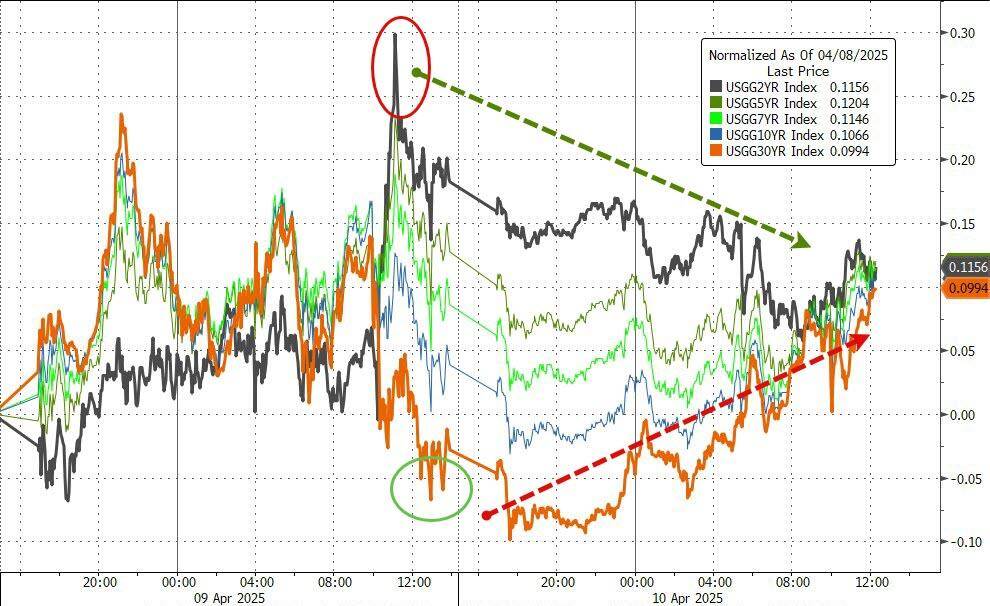
Bond markets reflected mixed sentiment. The 10-year Treasury yield initially rose more than 10 basis points, reflecting renewed inflation concerns. After the CPI release, the 2-year yield tumbled over 10 bps as short-term rates pulled back. Market turmoil stems from the dual threat posed by trade wars: higher prices and slower growth. This dynamic has intensified scrutiny on Fed policy, placing the tension between Trump and Powell squarely in the spotlight.
Could Firing Powell Save the Market?
Amid the downturn, some investors see Trump firing Powell as a potential turning point. The idea is that replacing Powell with a more dovish chair could prompt faster rate cuts, alleviating pressure on equities and crypto from prolonged high interest rates. If tariffs strengthen the dollar, a new Fed chair might cooperate with currency intervention to boost export competitiveness. Such expectations hold strong appeal amid growing demand for looser monetary policy.
However, reality is far more complex. Dismissing Powell could undermine the Fed’s independence and trigger severe market volatility. A new chair may not fully align with Trump’s agenda—historically, leadership transitions at the Fed bring uncertainty rather than immediate benefits. Moreover, inflationary pressures stemming from tariffs could limit room for rate cuts. Whether firing Powell can truly serve as a "market rescue remedy" requires careful analysis of legal and procedural realities.
The Feud Between Trump and the Fed: Why They’re At Odds
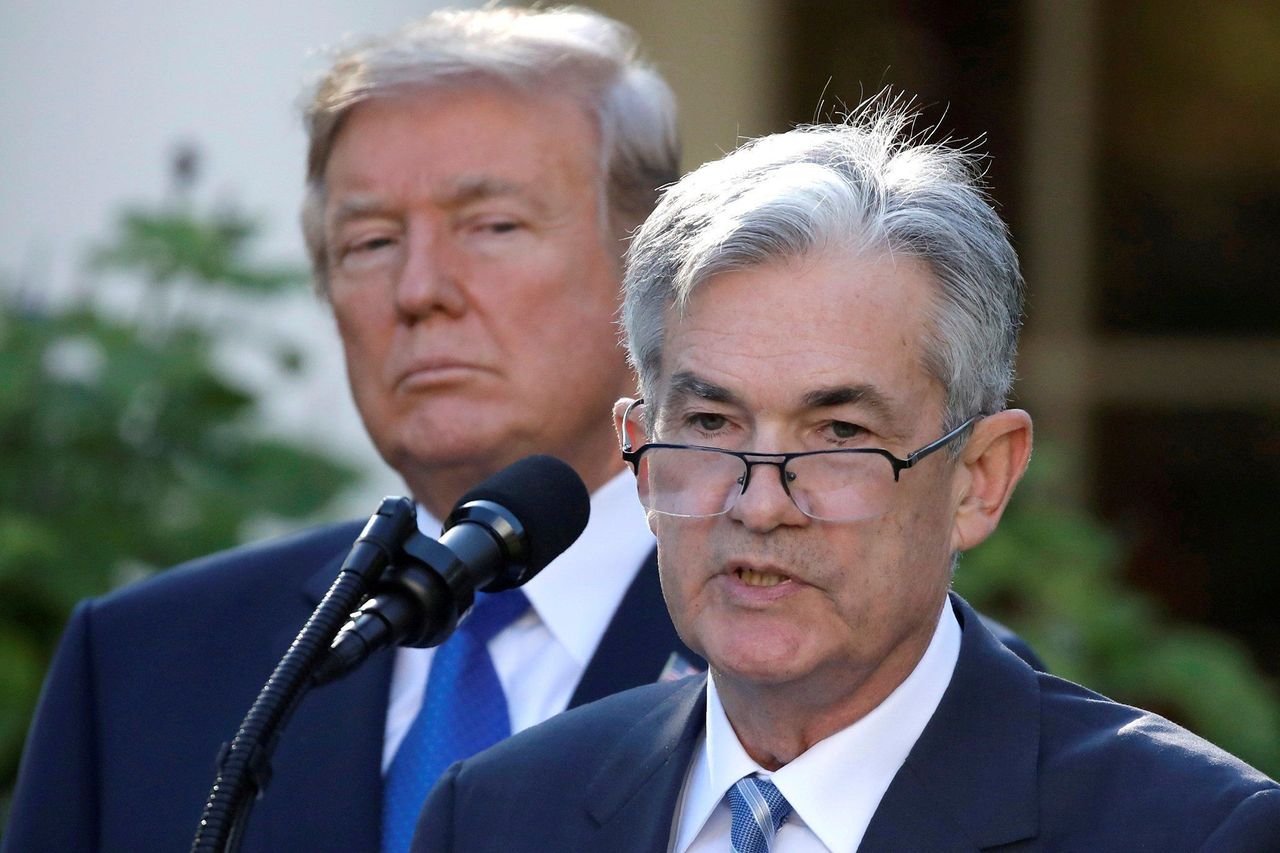
The clash between Trump and the Federal Reserve is an open political battle, rooted in his belief that under Powell, the Fed deliberately “favors Biden and targets me.” This perception arises not only from policy disagreements but also from Trump’s deep fixation on political loyalty and suspicion of “establishment” manipulation.
Evidence of "Bias" in Trump's Eyes
Trump has repeatedly accused the Fed of being overly accommodating during Biden’s presidency. From 2021 to 2022, the Fed maintained low interest rates to support post-pandemic recovery, coinciding with Biden’s push for large-scale stimulus packages—actions Trump interprets as covert support for Democratic policies. In contrast, during Trump’s term, Powell gradually raised rates starting in 2018 and maintained high rates in 2023–2024 due to elevated inflation, which Trump believes undermined his economic promises and trade war strategy. At campaign rallies in 2024, he frequently claimed: “Powell listens to Biden but sabotages me.” While lacking direct evidence, this narrative resonates with supporters’ distrust of the “deep state,” reinforcing Trump’s image as a challenger to the establishment.
The Illusion of "Political Motives" at the Fed
From a political standpoint, the very concept of central bank independence makes the Fed a target for Trump. Although Powell insists decisions are data-driven, Trump views this as a “political facade.” He sees the Fed as part of the Washington elite, inherently inclined to uphold Democratic-preferred stability rather than support his radical “America First” agenda. For example, the Fed’s tolerance of inflation early in Biden’s term is seen by Trump as “giving Democrats a free pass,” while high rates during his own tenure are interpreted as deliberate obstruction. This cognitive bias stems from Trump’s extreme demand for loyalty—any institution not fully aligned is labeled “hostile.”
Historical Context Amplifying Distrust
Trump’s skepticism isn’t baseless. Historical friction exists between Republican presidents and the Fed, such as Reagan’s criticism of Volcker. But Trump’s situation is unique: he entered office as an “anti-establishment” figure, viewing the Fed as a symbol of elite power. Powell, though appointed by Trump, failed to demonstrate expected loyalty and instead emphasized institutional independence in public statements. In 2023, he even suggested policy wouldn’t bend to White House pressure. This sense of betrayal convinces Trump that Powell-led Fed actively opposes him politically, continuing a moderate Democratic policy line.
Resonance with Voter Sentiment
Trump frames the Fed as a bureaucratic machine disconnected from public will, fueling grassroots anger toward elite institutions. He claims Powell “makes workers and businesses suffer,” blaming high interest rates on a “betrayal of ordinary Americans.” This rhetoric strengthens his image as a fighter while obscuring the nuanced importance of central bank independence, further entrenching the narrative of systemic bias against him.
Trump’s Attempts to Remove Powell and Historical Precedents
Trump’s dissatisfaction with Powell has long been public. During his 2024 campaign, he repeatedly threatened to fire Powell. In February, he accused Powell of “misjudging inflation” and warned, “I’ll fire him if he doesn’t listen.” By July, he said the Fed chair should act “like an advisor” taking orders. These comments previously caused fluctuations in the dollar and Treasury yields, showing market sensitivity to his intentions.
Trump’s actions go beyond words. On April 9, Chief Justice Roberts signed an order temporarily allowing Trump to remove members of the NLRB and MSPB, suspending lower court rulings that had reinstated them, and requiring responses from involved parties by April 15. This case challenges the *Humphrey's Executor* precedent, aiming to expand presidential control over independent agencies. If successful, it could create a legal opening for removing Powell. During his first term, Trump attempted to influence the Fed by pressuring it to cut rates and appointing loyalists to the Board—efforts that met limited success—revealing his long-standing goal of reshaping executive authority.
Whether Trump can fire Powell depends on three factors: legal constraints, procedural feasibility, and market reaction. Each is analyzed below.
1. Legal Constraints and the Supreme Court’s Decisive Role
The *Humphrey's Executor* decision holds that leaders of independent agencies can only be removed for “cause,” such as misconduct. The Federal Reserve Act grants similar protection to the Fed chair, whose term runs until May 2026. Trump’s legal argument asserts that agencies like the NLRB exercise “significant executive power” and therefore should not enjoy removal protections. He may apply a similar rationale to the Fed, arguing that given the profound impact of monetary policy, the chair must answer directly to the president.
In recent years, the Supreme Court has trended toward expanding presidential power. The 2020 *Seila Law* decision ruled that for single-director agencies like the CFPB, for-cause removal restrictions are unconstitutional. The 2021 *Collins* case further narrowed such protections. However, the Fed is governed by a seven-member Board, fitting the *Humphrey's Executor* model of a “multi-member expert commission,” making its independence harder to dismantle. The April 9 interim order suggests openness to Trump’s position, but the final ruling (expected summer 2025) may be limited to NLRB/MSPB and not extend to the Fed.
If *Humphrey's Executor* is overturned, Trump might attempt to dismiss Powell over policy differences, but would still need to justify “cause.” Given Powell’s data-driven approach, proving misconduct would be difficult. Any dismissal would likely trigger litigation, delaying the process.
2. Procedural and Political Obstacles
After firing Powell, Trump would need to nominate a successor and secure Senate confirmation. With Republicans holding the Senate, confirmation seems feasible—but moderate members may resist an extreme nominee, potentially prolonging the process for months. During the transition, the vice chair or another board member would serve as acting chair, likely maintaining existing policy continuity, thus weakening the intended impact.
Politically, firing Powell could divide the GOP. Some Republicans value Fed independence and fear economic instability from politicization. Powell enjoys credibility in financial circles; his removal could spark backlash. Internationally, damage to the Fed’s autonomy might erode confidence in the dollar and affect capital inflows.
3. Market and Economic Consequences
Firing Powell could trigger short-term market chaos. The dollar might fall on concerns over Fed independence, while stocks could rally briefly on rate-cut hopes. However, Treasury yields may rise due to inflation expectations. In the long run, politically driven monetary policy risks losing inflation control, undermining economic stability. With trade wars already stoking inflation, a new chair who enables rate cuts or currency intervention might ease dollar overvaluation, but would amplify inflation risks.
4. Likelihood Assessment
-
High probability (25%): The Supreme Court overturns *Humphrey's Executor*, enabling Trump to attempt Powell’s removal, though legal challenges and Senate resistance may block it.
-
Moderate probability (55%): The Court narrows removal protections, leading Trump to pressure Powell into resigning, though outright firing remains difficult.
-
Low probability (20%): The Court upholds precedent, leaving Trump able to influence the Fed only indirectly through board appointments.
Conclusion
Stocks and cryptocurrencies are mired in weakness, caught between cooling inflation and intensifying trade war risks, with safe-haven assets attracting capital flows. Firing Powell is seen by some as a potential catalyst for recovery, but legal and procedural barriers make the outcome highly uncertain. The Supreme Court’s upcoming decision will shape the extent of presidential authority over independent agencies. Powell’s fate hinges on Trump’s strategic choices and market reactions. In the near term, markets will grapple with uncertainty. Whether removing Powell can reverse the downturn remains to be seen.
Join TechFlow official community to stay tuned
Telegram:https://t.me/TechFlowDaily
X (Twitter):https://x.com/TechFlowPost
X (Twitter) EN:https://x.com/BlockFlow_News