








How KGeN is Redefining User Acquisition: A Proof for Gamers
TechFlow Selected TechFlow Selected
How KGeN is Redefining User Acquisition: A Proof for Gamers
KGeN has become one of the largest gaming networks in Web3, managing over 270 million data attributes and covering more than 13 million registered accounts.
 Navigating Web3 tides with focused insights
1. Introduction
The gaming industry has now surpassed both film and music in scale, with overall growth trends continuing upward. However, it faces significant challenges in recent years. After record growth during the pandemic, the sector experienced waves of layoffs and consolidation in 2023–2024, accompanied by soaring development costs and sharply reduced investment.
Additionally, game distribution and publishing have become increasingly difficult. With AI-generated content flooding platforms already saturated, and players favoring established IPs, new projects struggle to stand out. Acquiring highly engaged users has become an unprecedented challenge.
Despite these headwinds, major opportunities remain. Gen Z and Gen Alpha—digital natives raised in virtual worlds like Roblox and Minecraft—are entering their prime spending years, driving sustained market expansion.
Meanwhile, the long-overlooked "Global South" is experiencing explosive growth. Driven by smartphone adoption, improved internet infrastructure, and rising incomes, these regions are poised to become key sources of future growth for the gaming industry over the next decade.
This report first examines the latest challenges in game publishing and analyzes high-growth opportunities in the Global South. The second half focuses on KGeN—a blockchain-based gaming network redefining incentives between publishers and players. We also assess the viability of Web3 task platforms and explore structural shifts in value distribution across the gaming ecosystem.
2. Challenges in Publishing
One of the most widely recognized challenges facing the current gaming industry is undoubtedly publishing. Changes in consumer behavior, regulatory adjustments, lower barriers to entry, and continuous content saturation have made successfully launching a game to millions of users more difficult than ever before.
Players tend to spend most of their time on familiar games or franchises, making it hard for new titles to break through. In 2023, the top ten games by average monthly active users (MAU) had all been released over seven years ago. Moreover, 60% of player time spent on new games still goes to established series that release annual sequels.
In 2024, despite Steam welcoming a record 19,000 new games, titles released that year accounted for only 15% of total gameplay time.
Mobile gaming once offered a mature publishing model. The rise of mobile ad networks such as Facebook and Google, combined with widespread smartphone adoption, enabled many games to reach hundreds of millions of users and generate billions in annual revenue. However, Apple and Google’s major privacy policy changes in 2021 directly impacted how publishers reach target audiences.
While these changes did not end mobile advertising, they significantly disrupted user acquisition (UA) strategies and business models for mobile games. Many publishers have adapted with new scaling methods on mobile, but the market is increasingly favoring well-funded companies, leaving smaller teams under greater competitive pressure.
Looking ahead, the environment appears unlikely to improve. AI can make UA campaign management more efficient, but it also lowers entry barriers, increasing content volume dramatically. UGC platforms like Roblox and Fortnite Creative have become common testing grounds for indie developers, yet they themselves face growing challenges in content curation and promotion—problems exacerbated by the spread of AI tools.
This leads us to the Web3 gaming market, where development teams must overcome additional hurdles. Beyond the aforementioned issues, Web3 games face stricter policies on mobile, Steam (the largest PC game platform), and console platforms. In some key markets—including South Korea and China—Web3 games are outright banned.
Notably, the situation for Web3 game publishing on consoles is gradually changing. The recent launch of Off The Grid set a precedent for Web3 games entering what was once considered a “forbidden” space, and we hope to see more titles follow this path in the future.
Moreover, the Web3 gaming market remains a niche segment within the broader industry, with approximately 6–7 million active wallet addresses interacting with over 3,000 on-chain game protocols. However, these figures do not account for the large number of bot accounts prevalent in the Web3 space. Only about 200 protocols have more than 100 genuinely active on-chain accounts.
For a relatively small market—compared to over 3 billion global gamers—the challenges have intensified due to the surge of new Web3 gaming ecosystems over the past two years. According to Game7 data, while the number of new Web3 games declined by an average of 45% since 2021, the number of new networks grew by 187%. In 2024 alone, 104 new networks or ecosystems were announced, compared to just 263 new Web3 games launched.
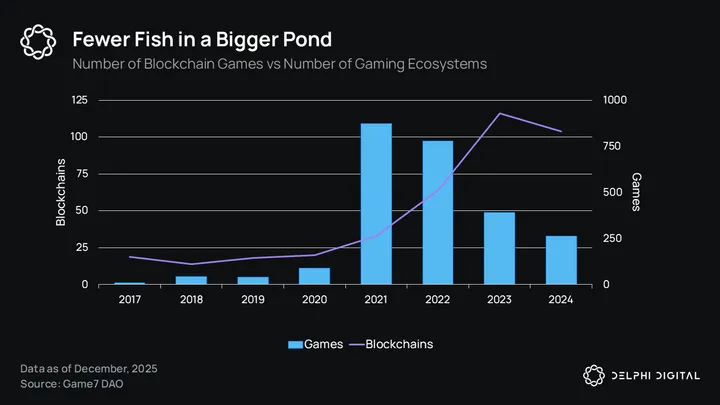
The issue lies in the fact that most of these emerging networks fail to attract new players. All of these factors culminate in a phenomenon we’ve explored in depth across multiple reports—the battle for player liquidity. As competition intensifies across the entire gaming landscape, Web3 projects are vying for the same limited pool of wallet users, with few effective means to break beyond this constraint and achieve scalable growth.
Amid these challenges, a wave of Web3 companies is exploring novel blockchain-based user acquisition (UA) models. Innovative incentive structures and on-chain reputation systems are becoming potential avenues for gaining competitive advantage through Web3 integration.
Many Web3 companies are demonstrating strong product-market fit (PMF) in emerging markets. Compared to the increasingly saturated Tier-1 markets dominated by Web2 giants, businesses that leverage blockchain's global payment network to unlock emerging markets may hold immense growth potential.
Among these regions, one area consistently growing faster than average and showing strong acceptance of blockchain applications is the Global South.
3. The Global South
The term "Global South" refers to countries and regions with relatively lower levels of economic development, typically located south of industrialized nations. Thanks to rapid improvements in internet infrastructure, high smartphone penetration, and rising disposable income, this vast region is widely seen as an underpenetrated but highly promising gaming market.
The gaming market in the Global South is characterized by a large player base, heavy reliance on mobile devices, and generally low willingness to pay. Historically, these markets have often been used by publishers for soft launches, user acquisition testing, and front-end data optimization.
However, the younger generation in these regions are the first to grow up with smartphones and exhibit extremely high engagement with gaming content—including games, videos, and esports. As this cohort ages and benefits from economic development and higher incomes, many believe they will become the next generation of paying players, pushing the industry to new heights.
Below are key characteristics of several major markets within the Global South, illustrating their growing importance in the future of gaming.
India
Despite a relatively late start, India is rapidly emerging as the largest gaming market in the Global South. In 2017, the country had only 44.9 million gamers, but today that number has grown to approximately 466 million, projected to surpass 640 million by 2027.
Market revenue is expected to grow 13.6% in 2024 (reaching $943 million), exceed $1 billion in 2025, and reach $1.4 billion by 2028, representing a five-year compound annual growth rate (CAGR) of 11.1%. This growth is driven primarily by improving in-app purchase habits and rising per-user average revenue (ARPU) due to increased disposable income nationwide.
The Indian market shows a strong preference for mobile gaming, fueled by being one of the fastest-growing 5G markets globally and possessing robust digital payment infrastructure—the Unified Payments Interface (UPI). UPI transaction volume surged from 10.78 billion in 2019 to 83.75 billion in 2023, reflecting the rapid rise of the digital economy. Internet penetration has also risen significantly—from 14% in 2015 to 52% today—still below other major Global South gaming markets, indicating substantial room for future growth.
These technological advances are supported by strong macroeconomic fundamentals, including 7–9% annual GDP growth over the past three years and rising incomes among a young, expanding middle class.
Gaming preferences in India differ uniquely from other major markets:
- Mobile games dominate, accounting for 77.9% of total revenue;
- PC and console games contribute only 14.5% and 7.7%, respectively.
In terms of revenue breakdown by game type:
- Real Money Games (RMG) form the largest segment, generating $2 billion annually;
- Casual and hyper-casual games follow closely, with total revenue of $700 million;
- Other categories collectively generate around $400 million.
Southeast Asia (SEA)
Southeast Asia (SEA)—comprising Indonesia, Malaysia, the Philippines, Singapore, Thailand, and Vietnam—is one of the most mature gaming markets in the Global South. According to Niko Partners, regional game revenue reached $5.1 billion in 2023, up 8.8% year-on-year, and is projected to grow to $7.1 billion by 2028, at a five-year CAGR of 6.7%. In 2023, SEA had 277 million gamers, expected to reach 332 million by 2028, a five-year CAGR of 3.7%.
According to Sensor Tower’s H1 2024 report:
- Indonesia leads in mobile game downloads with 2.4 billion (41% of the regional total);
- Thailand generates the highest IAP revenue at $400 million, followed by Indonesia at $300 million.
Despite regional differences, community and competitive culture are shared traits. Word-of-mouth is the primary source of information, and top-performing games usually feature strong social elements.
Like most countries in the Global South, smartphone adoption and broadband infrastructure are key drivers of market growth. Southeast Asia stands out in this regard:
- By 2022, all major countries exceeded 80% smartphone penetration;
- Average penetration is expected to reach 90.1% by 2026.
Latin America (LATAM)
Latin America (LATAM) is another market worth watching, with a large population and vibrant gaming culture, especially in esports. In 2022, the region had an estimated 316 million gamers, heavily concentrated in Brazil, which had 101 million players and generated $2.7 billion in game revenue that year.
Brazil shows particularly strong mobile gaming preferences:
- 60% of players have played a mobile game in the past six months;
- Smartphone penetration is expected to reach 83% by 2025, suggesting significant room for further mobile market growth.
In terms of monetization, Brazilian players demonstrate strong spending habits: 43% engage in in-game purchases, primarily motivated by unlocking exclusive content (39%), character customization (35%), and game progression (30%). This indicates a maturing market moving beyond basic monetization models. These consumption patterns suggest a shift toward more sophisticated in-game economies.
Brazil will continue to lead LATAM gaming growth, supported by 1,400 universities offering over 4,000 game-related courses, 1,042 game studios nationwide generating ~$251.6 million in revenue, and newly passed legislation formally recognizing game development as a profession and offering tax incentives.
Africa
Africa's gaming market is at a critical stage of development, expected to surpass $1 billion in revenue in 2024, up steadily from $863 million in 2022. Mobile gaming drives the core of this market, capturing nearly 90% of market share—reflecting both infrastructural realities and consumer preferences.
Domestic research shows 92% of African gamers use phones to play, while desktops (51%) and consoles (31%) are less common. While this mobile-first approach is partially validated, the study sample size of only 2,588 limits its ability to fully represent the continent.
Key challenges: high data costs (42%) are the biggest barrier, followed by hardware prices (31%) and connectivity issues (31%).
Payment systems present both a challenge and opportunity: although 63% of players make in-game purchases, payment methods vary by region. Kenya leads in mobile payments, with 67% using mobile wallets for gaming. Credit cards (45%) and mobile payments (40%) are the most common payment methods across Africa.
Middle East and North Africa (MENA)
The MENA (Middle East and North Africa) region is the world’s fastest-growing gaming market, with revenue growing 4.7% in 2023 to $7.1 billion—far outpacing the global average of 0.6%. It is expected to maintain rapid growth, with a projected CAGR of 9.4% from 2024 to 2030.
By 2027, the core markets of Saudi Arabia, UAE, and Egypt—collectively known as MENA-3—are projected to reach $2.9 billion in revenue, growing at a CAGR of 8.3%. Key drivers include a young population boosting market activity, massive increases in internet penetration in Qatar and UAE, and broad adoption of new technologies.
The region’s gaming landscape is dominated by three strong markets—Saudi Arabia, UAE, and Egypt—which demonstrated outstanding performance, growing 7.8% year-on-year to $1.92 billion in 2023, and projected to reach $2.9 billion by 2028, at a five-year CAGR of 8.3%. Saudi Arabia leads the pack, accounting for 60.6% of total gaming revenue and 30.3% of all MENA gamers, underscoring its dominant role in the regional ecosystem.
4. What Is KGeN
KGeN is a blockchain-powered gaming network that leverages on-chain and off-chain data, incentivized task platforms, and decentralized reputation systems to drive user engagement across different games. Unlike traditional user acquisition (UA) platforms, KGeN returns publisher funds directly to users, fueling its growth flywheel.
At its core, KGeN operates a decentralized player data network spanning millions of micro-gaming communities (KGeN tribes). It uses a novel data model called the Proof of Gamer (PoG) engine to create a cross-chain player reputation layer, offering publishers access to highly engaged target audiences at a cost far below many existing networks.
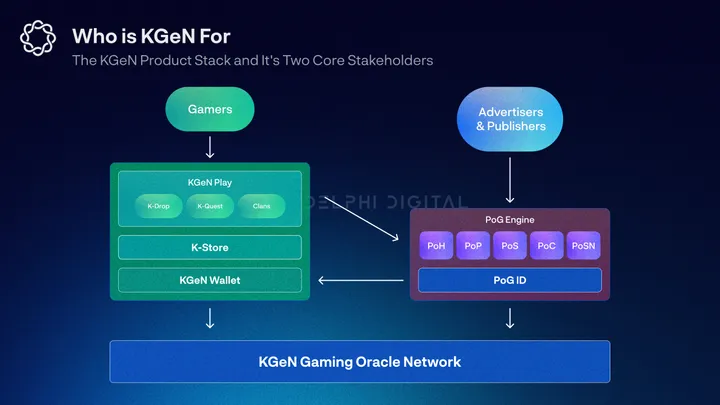
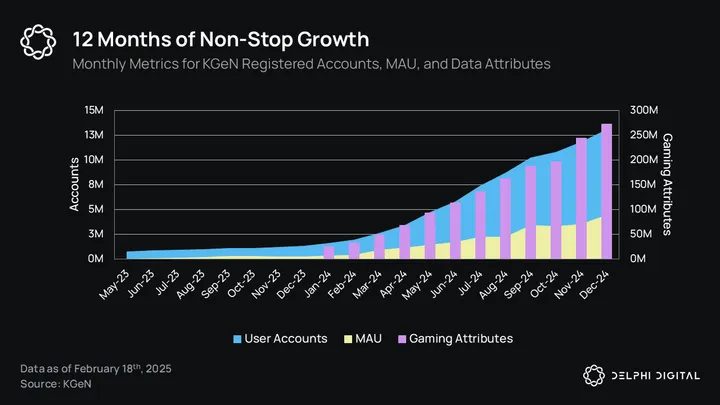
As more players join KGeN and the PoG dataset expands, more game studios and publisher partnerships are formed. This further fuels ecosystem rewards, increasing the value of participating players. Since January 2024, this growth flywheel has shown significant results: registered accounts have grown over 700%, monthly active users (MAU) by 1333%, and total data attributes by 992%, making KGeN the most active Web3 task and player reputation network in the market.
The KGeN ecosystem is progressively decentralizing, using a distributed oracle network to secure the PoG engine and provide greater transparency for all core stakeholders. This oracle network and the KGeN Store are powered by the KGEN token.
4.1 Grassroots Growth
The foundation of KGeN’s growth lies in its grassroots tribe and tribal leader network—one of the key reasons for its strong traction in the Global South. Tribes represent thousands of micro-communities that join the KGeN ecosystem, such as coworkers, esports organizations, influencers, and game-focused social groups. As of December 2024, KGeN reported 2,525 tribes, with 152 having over 100 members each.
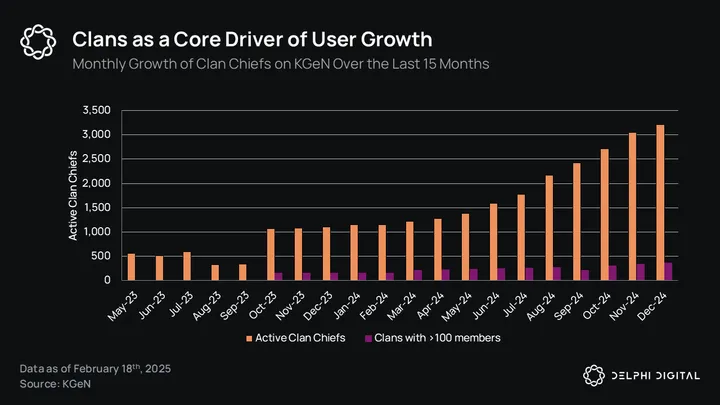
Tribes are central to KGeN’s referral-based user acquisition strategy. When creating a tribe, tribal leaders earn points by inviting up to five members and getting them to complete at least one task. These points feed into the KGeN leaderboard, one of the platform’s main reward systems (detailed later). This incentive-driven funnel has proven highly effective—approximately 1.7 million KYC-verified KGeN accounts (39% of MAU, 13% of total registrations) were acquired through tribes.
Tribal leaders are incentivized not only to bring in new members but also to coordinate activities and maintain community engagement to maximize earnings. A portion of the tribe’s total rewards flows back to the leader, forming one of the ecosystem’s key growth incentives.
KGeN’s largest market today is India, benefiting from the company’s origins and strong presence in local micro-gaming communities. However, over 30% of independent active wallets and transactions occur on Kaia, LINE’s proprietary blockchain. LINE’s largest markets are Japan (86 million users), Thailand (47 million), Taiwan (21 million), and Indonesia (13 million), indicating strong growth potential for KGeN across Asia.
To replicate its success in other Global South markets, KGeN is encouraged to adopt similar grassroots strategies—partnering with local micro-gaming communities such as schools, internet cafes, small esports orgs, and online forums—to gradually expand its reach while creating deeper social dynamics that boost engagement and retention.
Another potential issue is the relative lack of social features within KGeN’s PC portal and mobile app. As we’ll discuss in detail, enhancing social functionality is a way to increase ecosystem engagement. The longer users stay engaged, the richer their data becomes, increasing opportunities to interact with K-Quest and K-Drop features and expanding monetization potential.
4.2 Incentivizing Engagement via KGeN Play
KGeN Play serves as the front-end interface where most players engage with the ecosystem, hosting all reward tasks. It typically marks the beginning of the user journey and functions as the primary gateway for interaction with the KGeN network while building their PoG reputation score.
KGeN Play is accessible via PC portal or mobile app. The PC portal offers the best experience, while the mobile app provides a quick solution for users on the go and will play a crucial role in expanding into the Global South.
Upon account creation, a blockchain wallet is automatically created in the background, storing all user assets and a non-tradable player reputation NFT. Once the minimum withdrawal threshold is met, users are prompted to verify their phone number via OTP and gain full control of their wallet—this is a key step toward direct input into the PoG engine. The KGeN wallet has limited functionality but offers a smooth onboarding flow, supports multi-chain and gasless transactions, and executes its three main functions (balance check, transaction history, withdrawal) with low friction.
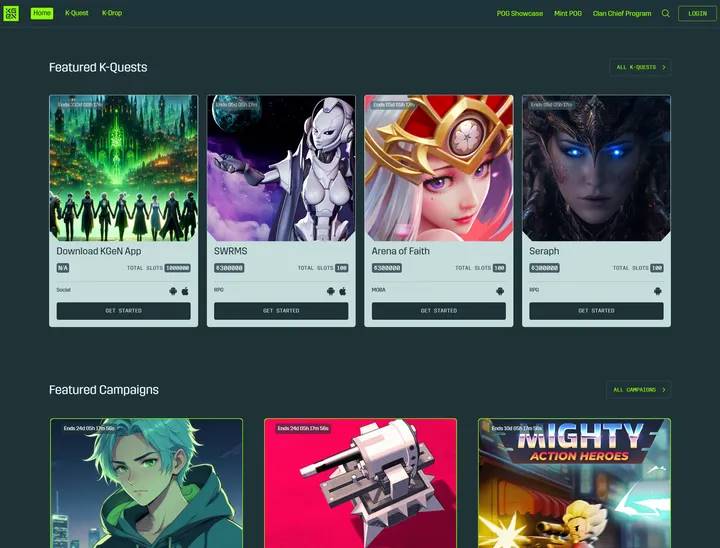
Before realizing they have a blockchain wallet, users must first start earning rewards. To do so, they participate in various activities hosted on the KGeN Play portal. Tasks are categorized into K-Drops and K-Quests.
Both K-Drops and K-Quests are limited-time, limited-quantity events rewarding participants with K-Points, leaderboard achievements, K-Cash, or tokens. The key difference is that K-Drops use endpoint API integration for automatic real-time verification, while K-Quests rely on manual validation processes.
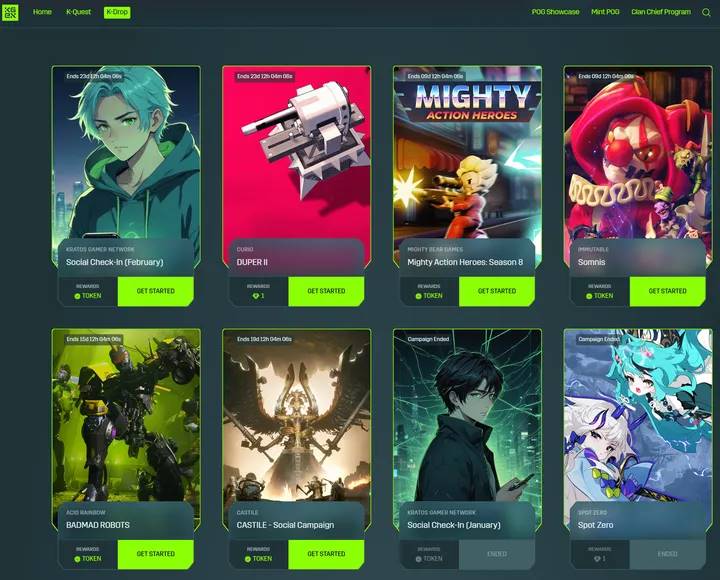
Unsurprisingly, task platforms offering real-world financial incentives—especially those targeting Global South users—see above-average completion rates. KGeN’s uniqueness lies in integrating KGeN Play with the PoG engine to deliver high-conversion targeted campaigns.
4.3 The PoG Engine
The PoG engine is a decentralized player scoring system hosted by a distributed network of nodes. PoG consists of five core pillars, each containing five to ten attributes. These data points track player skill, “humanness,” engagement, wealth, and social networks to build a multifaceted, cross-chain reputation system.
The result is a PoG vanity score. Leveraging blockchain’s inherent composability, players can showcase their gamer ID across different ecosystems. Meanwhile, publishers and advertisers can use the PoG engine to access competitively priced, highly engaged players in the Global South.
The five core pillars are Proof of Humanity (PoH), Proof of Participation (PoP), Proof of Skill (PoS), Proof of Contribution (PoC), and Proof of Social Network (PoSN).
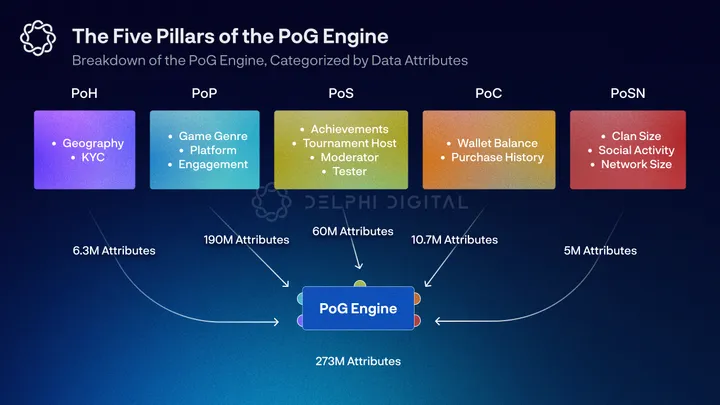
- PoH, as the name suggests, tracks various data points to reduce the likelihood of users being bots. This could include KYC status or the number of connected social apps, and is one of the most valuable attributes in publishers’ eyes. Beyond tracking “humanness,” PoH further segments users based on platform preference and geography. This pillar enhances both targeting accuracy and trust in user quality and the overall network.
- PoP determines a player’s level of engagement with the KGeN network and the types of games they play. It tracks metrics related to retention, gameplay modes, preferences, and user habits. This pillar improves targeting by further segmenting user types and is another set of attributes highly valued by publishers.
- PoS recognizes a player’s abilities, competitiveness, engagement, and achievements over time. It pulls data from in-game accomplishments, tournaments, and ecosystem activities to rank players. This pillar highlights the most active players and grants them social capital.
- PoC identifies a user’s monetization potential. This may come from direct purchases, on-chain transactions, on-chain history, or net worth. Not only does this increase the efficiency of targeting and UA campaigns, but it also reveals different ways users add value. Beyond early-stage activities (like game testing), PoC is ultimately expected to become the most valuable dataset for post-IDFA-era publishers.
- PoSN maps the scale of a user’s social profile and builds their social graph within the KGeN network. This pillar filters out non-gaming data, tracking social accounts, tribe activity, and network size to understand their social preferences, influence, and impact within gaming communities.
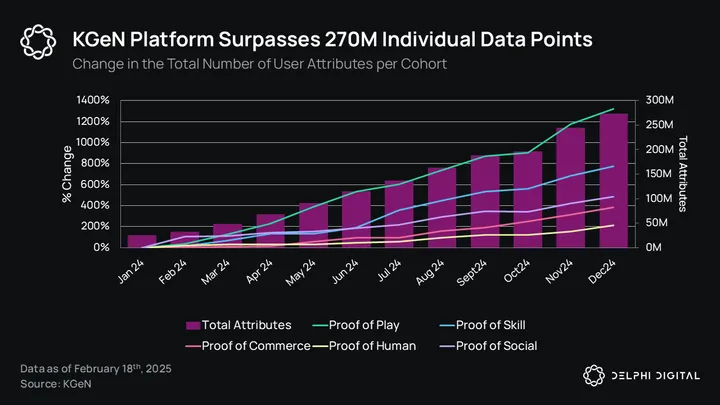
The PoG engine currently comprises over 270 million data attributes drawn from more than 13 million registered accounts and 4.4 million MAUs. Since January 2024, the PoH, PoP, PoS, PoC, and PoSN datasets have grown by approximately 214%, 1320%, 777%, 384%, and 487%, respectively. The particularly strong growth in PoP and PoS data highlights how ecosystem engagement continues to increase over time.
Using the PoG engine, KGeN is pioneering an alternative UA framework known as “effective Customer Acquisition Cost” (eCAC). Instead of charging for simple impressions or top-of-funnel installs, KGeN charges only for active users who reach the middle or bottom of the conversion funnel.
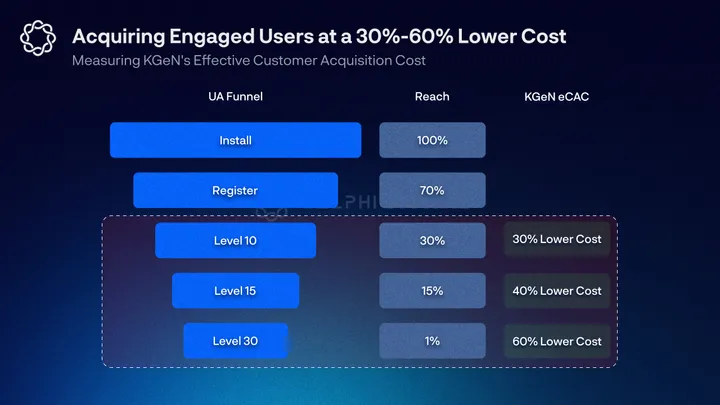
For example, in a campaign with Karate Combat, KGeN reported a nearly 40% reduction in eCAC, charging nothing for top-of-funnel installs and achieving a 5% bottom-funnel conversion rate. In a four-week campaign with Game7, KGeN claimed to have brought in 50,000 PoH-verified users at an eCAC 55% lower than competitors. Events such as user registration, wallet connection, and avatar creation are free, meaning clients only pay for users who complete at least four tasks and mint an SBT (estimated 20% conversion rate).
The PoH and PoP datasets are especially valuable because they offer commercial clients relatively high engagement ROI. This is particularly important for Web3 projects that rely on financial incentives and often suffer from bad actors and bots. However, even these data points aren’t perfect—KYC, for instance, can still be manipulated.
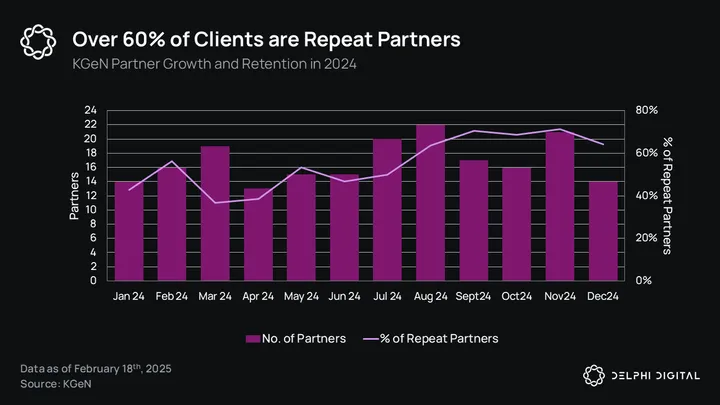
Nevertheless, KGeN’s ability to confidently determine user quality brings significant added value to its partners. As we’ll explain in detail, ad fraud wastes approximately $84 billion in digital ad spending annually. This is a key reason why over 60% of KGeN’s partners have returned since August 2024.
Over time, the growth flywheel critical to KGeN’s future expansion will gain momentum. As long as there is demand for positive PoG scores, engagement on KGeN Play will increase (further accelerated by financial incentives tied to PoG scores). This activity will enhance the PoG engine, increasing the total number of attributes and enriching KGeN’s user database. More publishers will then be attracted to the ecosystem, expanding the range of products on KGeN Play and the KGeN Store, drawing in even more users.
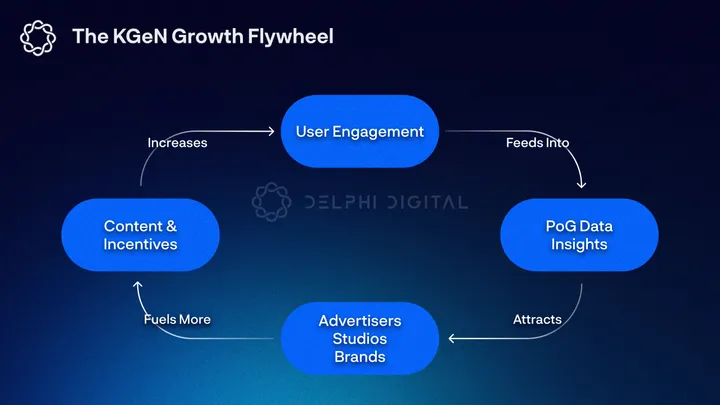
The PoG score is central to KGeN’s business model and key to delivering competitively low eCAC to clients. A critical question remains: what motivates this user behavior?
As long as incentives are financial, the platform will undoubtedly show promising results. However, this creates extrinsic motivation, shaping how users interact with the platform and its partners.
Extrinsically motivated users are unlikely to continue playing games they initially joined for rewards. Moreover, research shows that offering external rewards for intrinsically rewarding behaviors reduces intrinsic motivation—a phenomenon known as the overjustification effect.
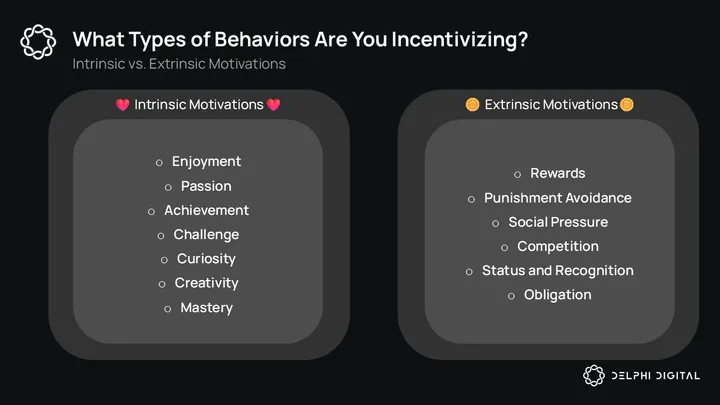
Intrinsically motivated users find value in things they enjoy—such as social interaction, recognition and respect, progress, and fun. If, over time, strong network effects transform the core value proposition of PoG scores into something rooted in social capital and enjoyment, motivation will gradually become intrinsic, thereby increasing the potential value offered to partner publishers.
4.4 KGeN Tokenomics
KGeN’s economy will consist of two core assets: KCash and the KGEN token. KCash has been live for some time as an off-chain reward currency, though it can also be purchased directly with fiat. Its primary use is in the KStore, where it can be spent on in-app purchases (IAP), gift cards, or VIP tournaments and missions.
The asset powering KGeN’s growth flywheel is the KGEN token. This utility token allocates 40% to the community (with 8% unlocked at TGE), and has a four-year lock-up for team and investors. At TGE, 12.6% of the total token supply will be unlocked, excluding circulating supply held by market makers or exchanges.
Recently, it was announced that prior to TGE, KGeN will run a K-Points → rKGEN airdrop event. rKGEN allocation is based on a user’s total K-Points, time spent on KGeN, and connectedness. Once the token launches, rKGEN can be converted 1:1 into KGEN tokens. However, certain users will be able to stake rKGEN before TGE to earn additional token yields.
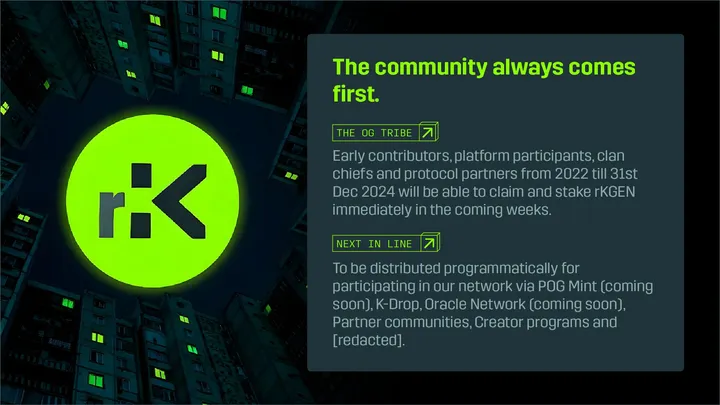
The K-Points → rKGEN airdrop model prioritizes transparency and clear communication to maximize community sentiment and token distribution before TGE. If executed successfully, this could help build momentum at launch and secure additional CEX listings, though it carries inherent risks.
Opaque reward systems have been shown to increase participation across various domains. Pure point-based airdrops, while less transparent, offer teams greater flexibility in token distribution. This raises a key question: after TGE, will KGeN Play activities use a K-Points → KGEN reward system, or move directly to token payouts?
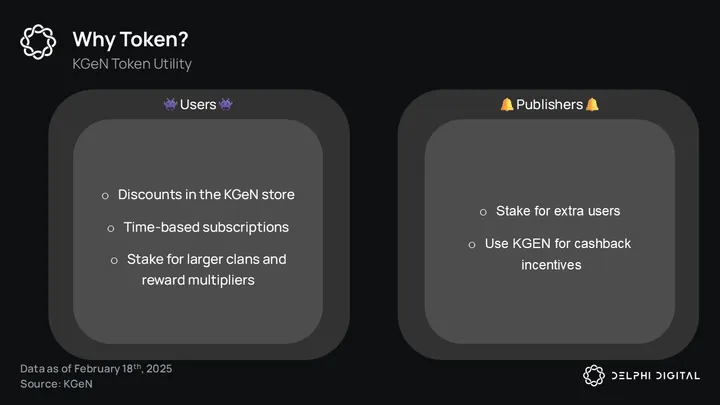
At launch, we assume KGEN tokens will primarily be used for incentives. Over time, as the network matures, we expect more users to spend tokens in the KGeN Store, enjoying better discounts than fiat purchases.
Another potential token sink could be subscription fees. As users grow more reliant on the network to host their reputation scores, game achievements, and social touchpoints, KGeN might limit the number of tasks available to free users. This would effectively cap much of the network’s earning potential and serve as an additional bot protection measure.
Nevertheless, unless non-financial rewards carry significant intrinsic value, many users won’t spend tokens unless they achieve a positive ROI. To prevent this from becoming an inflationary sink (i.e., releasing more tokens than are removed), KGeN should offer third-party tokens, KCash, or NFTs. Ultimately, the most sustainable sinks are those driven by intrinsic motivation—such as entertainment and social capital.
Beyond direct token sinks, staking will also exist. Beyond users seeking simple yield, tribal leaders can stake tokens to increase their member caps and gain access to additional platform tools. Publishers can also participate in tiered staking programs to receive more free top-of-funnel users in their UA campaigns—we expect this feature to gain increasing attention if the platform maintains its current growth trajectory.
Typical token staking follows an inflationary model, eventually diluting supply in exchange for delayed sell pressure. While there may be short-term benefits, it’s encouraging to see KGeN utilize non-inflationary staking incentives for tribal leaders and publishers.
4.5 Oracle Network
The KGeN oracle network is a distributed network of permissioned nodes that together form the backbone of the PoG engine. Each oracle’s role is to store PoG data, compute PoG scores (and jointly verify their accuracy), and submit these scores to the Aptos blockchain for settlement. In return for providing this service, oracle operators will receive fixed KGEN token rewards based on revenue projections, plus stablecoin yields tied to the amount invested in the oracle.
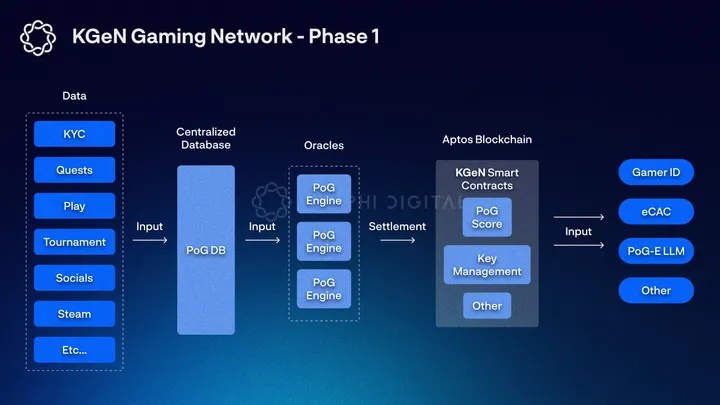
The oracle network decentralizes a process typically conducted centrally. This will be a gradual transition, expected to take at least three
Join TechFlow official community to stay tuned
Telegram:https://t.me/TechFlowDaily
X (Twitter):https://x.com/TechFlowPost
X (Twitter) EN:https://x.com/BlockFlow_News
 KGeN
KGeN


