Monad vs. Ethereum: Can This Emerging L1 Disrupt the Market?
TechFlow Selected TechFlow Selected
Monad vs. Ethereum: Can This Emerging L1 Disrupt the Market?
Monad is compatible with the Ethereum Virtual Machine (EVM), allowing dApps on Ethereum to be deployed directly onto Monad with minimal code changes, lowering the development barrier.
 Navigating Web3 tides with focused insights
Key Takeaways
-
– High-performance L1 blockchain challenging Ethereum – Monad aims to solve Ethereum's scalability issues by offering 10,000 TPS, 1-second block finality, and ultra-low fees, positioning itself as a faster and cheaper alternative.
-
– Full EVM compatibility enables seamless developer migration – Monad is fully compatible with the Ethereum Virtual Machine (EVM), allowing dApps on Ethereum to be deployed on Monad with minimal code changes, lowering the development barrier.
-
– Innovative technical architecture enhances performance – Through the MonadBFT consensus mechanism, parallel transaction processing, and the dedicated MonadDB database, Monad achieves faster transactions, lower fees, and greater blockchain stability.
-
– Token launch timeline remains undetermined – Originally planned for Q4 2024, the MONAD token launch has no confirmed date yet. Details regarding staking, governance, and token distribution remain unclear.
-
– Well-funded but highly competitive – Raised $225 million in Series A funding, but faces strong competition from Solana, Avalanche, and Ethereum Layer 2 solutions. Success will depend on developer adoption, ecosystem growth, and mainnet launch progress.
Blockchain technology has evolved from a niche concept into a core tool across finance, gaming, and e-commerce. However, mainstream blockchains like Ethereum still face high transaction fees, slow speeds, and limited throughput. These bottlenecks not only degrade user experience but also constrain developers, hindering widespread adoption of decentralized applications (dApps).
Monad offers a new solution. This Layer 1 blockchain combines full EVM compatibility with ultra-fast transaction speeds and minimal fees. Leveraging parallel execution, an innovative consensus mechanism, and a custom data storage system, Monad aims to build an efficient, user-friendly network capable of supporting large-scale real-world applications.
This article explores Monad’s origins, technical architecture, and roadmap. Whether you’re a developer seeking a more efficient blockchain or someone interested in the future of the Web3 ecosystem, this piece will help you understand Monad’s significance and its potential to reshape the market landscape.
Who Founded Monad?
Monad’s journey began in February 2022 when three experts in blockchain and fintech co-founded the project to address current blockchain scalability challenges:
-
– Keone Hon (Chief Executive Officer, CEO) – A seasoned blockchain researcher and mathematician focused on developing innovative technologies to overcome blockchain performance bottlenecks.
-
– James Hunsaker (Chief Technology Officer, CTO) – An expert in cryptographic protocols and distributed systems, responsible for Monad’s technical strategy to achieve optimal speed and scalability.
-
– Eunice Giarta (Chief Operating Officer, COO) – Oversees Monad’s operational structure, managing resource allocation, partnerships, and strategic planning to ensure stable project development.
These three founders bring extensive experience in blockchain technology and finance. Their shared vision is to build a fast, stable, low-cost blockchain platform that maintains full Ethereum Virtual Machine (EVM) compatibility, enabling developers to seamlessly migrate existing applications and easily deploy new dApps.
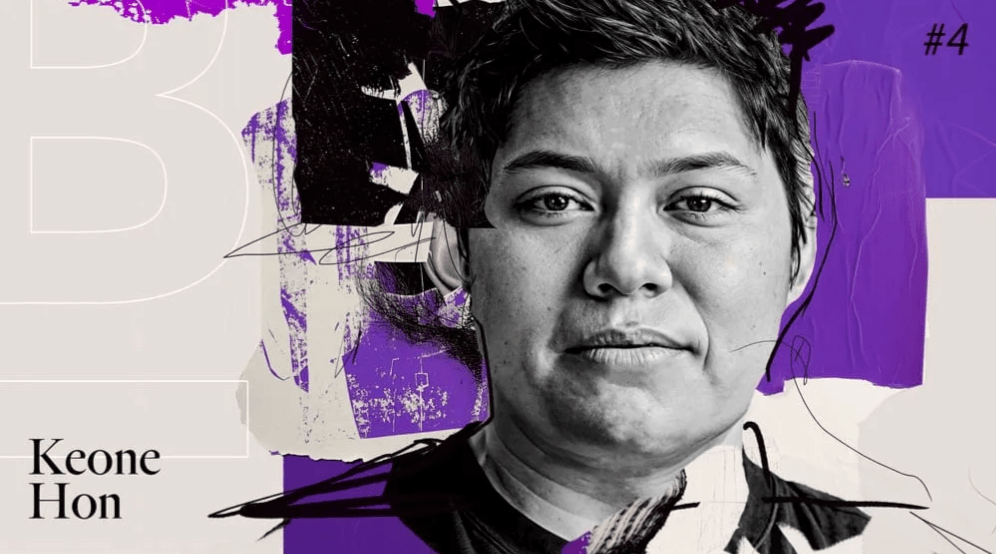
Image Credit: Bankless
What is Monad?
At its core, Monad is a Layer 1 (L1) public blockchain designed to solve two major industry challenges: low scalability and high transaction fees. Through technological innovation, Monad aims to stand out in a crowded market by delivering:
-
– High Throughput: Targeting 10,000 transactions per second (TPS), significantly exceeding Ethereum’s current ~15 TPS.
-
– Low Latency: 1-second block time with support for single-slot finality, ensuring near-instant transaction confirmation.
-
– Minimal Fees: Reduced transaction costs make DeFi, NFTs, and GameFi applications more accessible and affordable.
-
– Full EVM Compatibility: Developers can migrate existing Ethereum smart contracts to Monad with minimal modifications, lowering technical barriers.
By prioritizing speed and accessibility, Monad aims to become a versatile blockchain platform capable of supporting decentralized finance (DeFi), NFT ecosystems, and enterprise-grade applications alike.
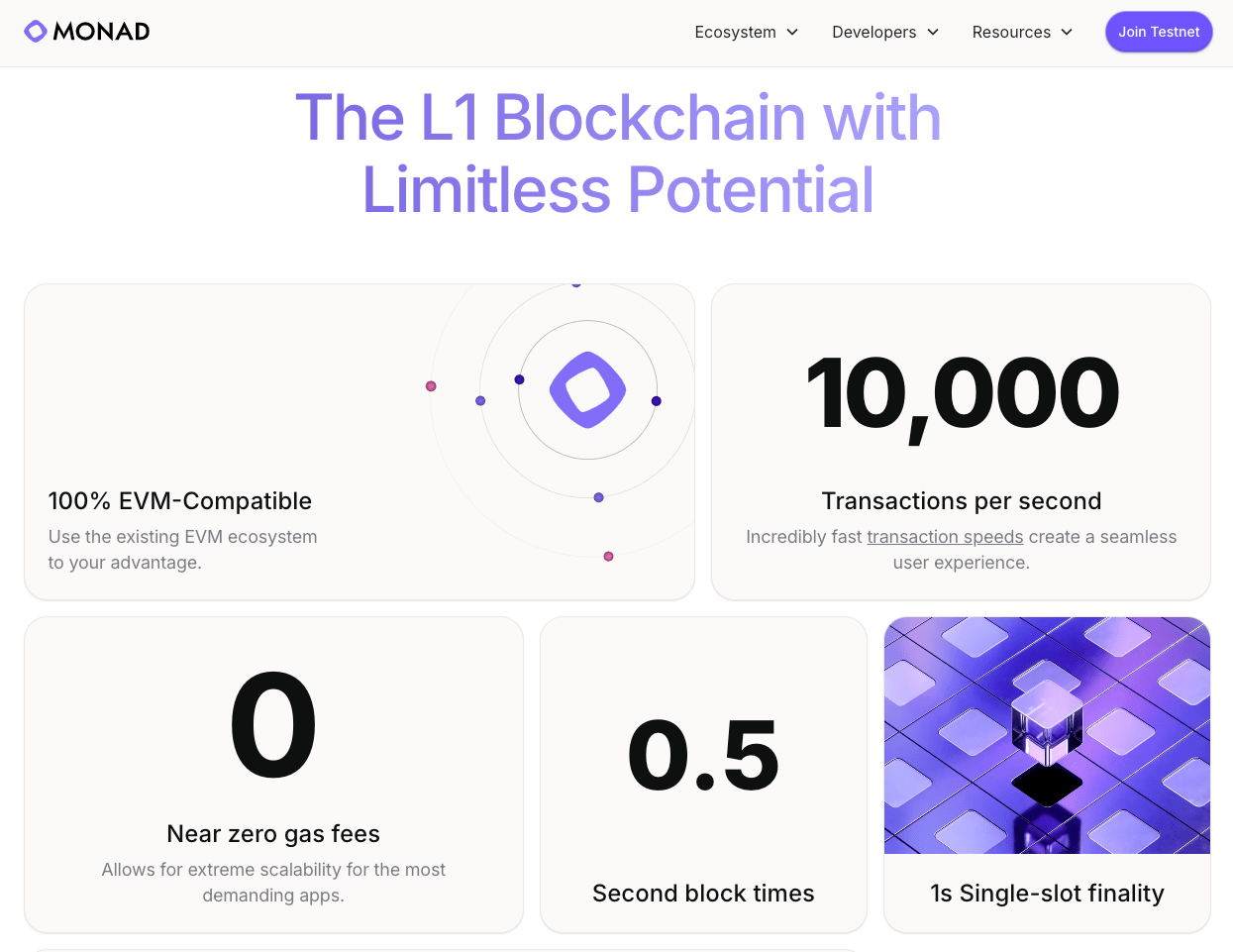
Image Credit: Monad
Development Timeline and Current Status
Monad’s development traces back to 2022, progressing from early concept design to testnet launch, steadily building toward a complete blockchain ecosystem.
-
– February 2022: The Monad founding team began conceptualizing and designing the foundational protocol.
-
– February 2023: Secured $19 million in seed funding, accelerating early R&D including consensus mechanism development and prototype testing.
-
– April 2024: Completed a $225 million Series A round, reflecting strong investor confidence and further fueling technical development and community expansion.
-
– December 2024: Established the Monad Foundation to oversee protocol governance, developer grants, ecosystem development, and technical upgrades. Like many open-source blockchain projects, the foundation ensures long-term sustainability and stable community growth.
-
– February 2025: Launched the Public Testnet, providing developers with an EVM-compatible environment to deploy and test dApps ahead of mainnet. This marks a critical step in optimizing system stability and developer experience.
Although the mainnet was initially expected to launch in Q4 2024, the official release date has not yet been confirmed. Additionally, details about the native MONAD token—including its tokenomics, staking mechanisms, and distribution—remain undisclosed.
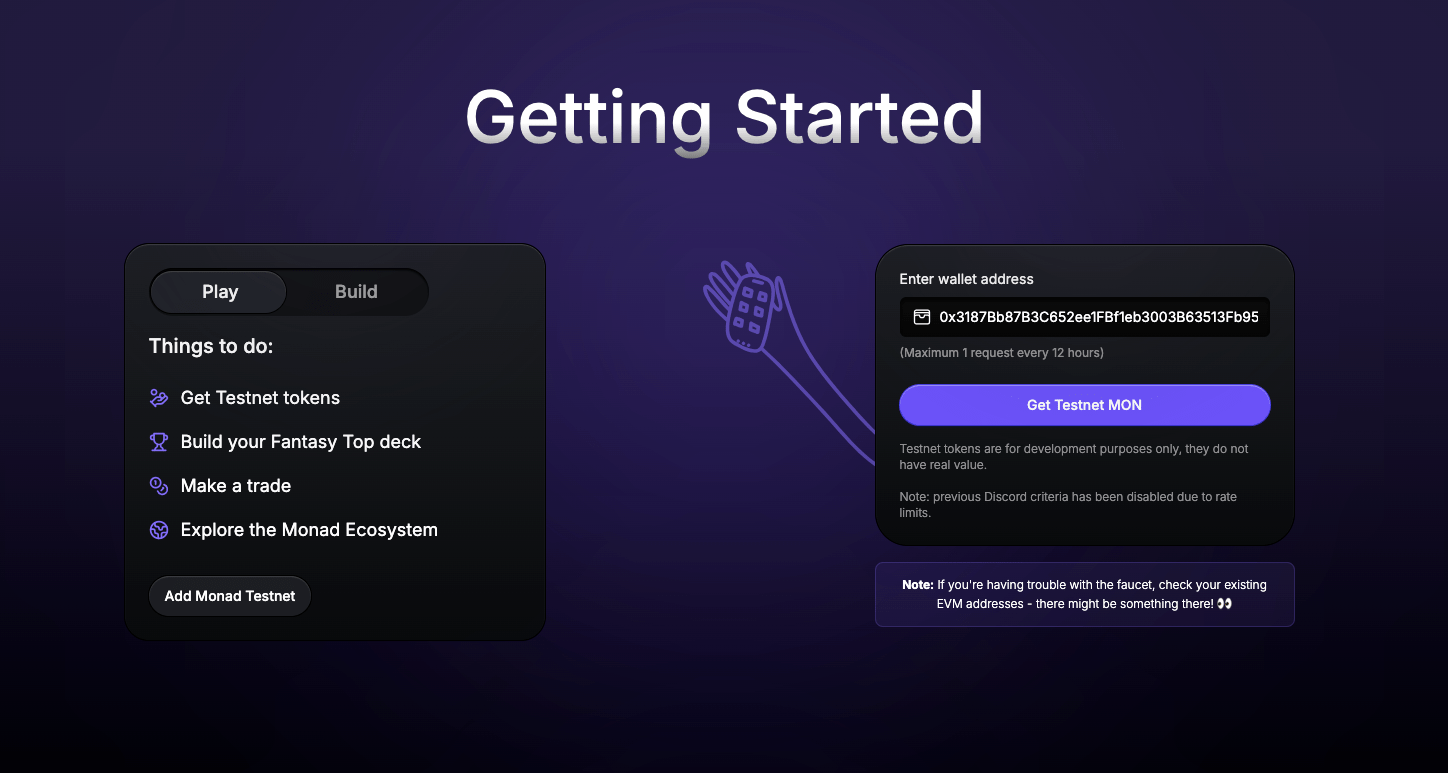
Image Credit: Monad Testnet
Monad’s Position in the Blockchain Ecosystem
The blockchain space is fiercely competitive, with various solutions striving to overcome the limitations of Ethereum. Whether through Layer 2 scaling solutions (e.g., Arbitrum, Optimism) or other high-performance Layer 1 chains (e.g., Solana, Avalanche), all are vying for developer and user adoption.
Monad occupies a unique position by combining two core advantages:
-
– Native Scalability: Unlike Layer 2 solutions that rely on Ethereum’s security and bridging mechanisms, Monad is an independent Layer 1 chain designed from the ground up for high throughput (10,000 TPS), eliminating the need for additional scaling layers.
-
– Seamless EVM Compatibility: Full compatibility with Ethereum means developers can migrate existing smart contracts and dApps to Monad with minimal code changes, reducing migration costs and technical friction.
These features make Monad particularly suitable for applications requiring high performance and low fees, such as:
-
– Decentralized Finance (DeFi) – High-frequency trading, liquidity mining, and automated market makers (AMMs) benefit from low latency and high throughput, both of which align with Monad’s architecture.
-
– Blockchain Gaming (GameFi) – Frequent in-game transactions and item transfers favor low-fee, instant-settlement blockchains, making Monad an attractive option for game developers.
-
– NFT Ecosystems – From minting to marketplace trading, Monad’s low-cost, high-performance design ensures users aren’t deterred by gas fees, enhancing liquidity and engagement.
With this positioning, Monad aims to become a preferred platform for developers and enterprises building blockchain applications, challenging dominant L1 and L2 solutions.
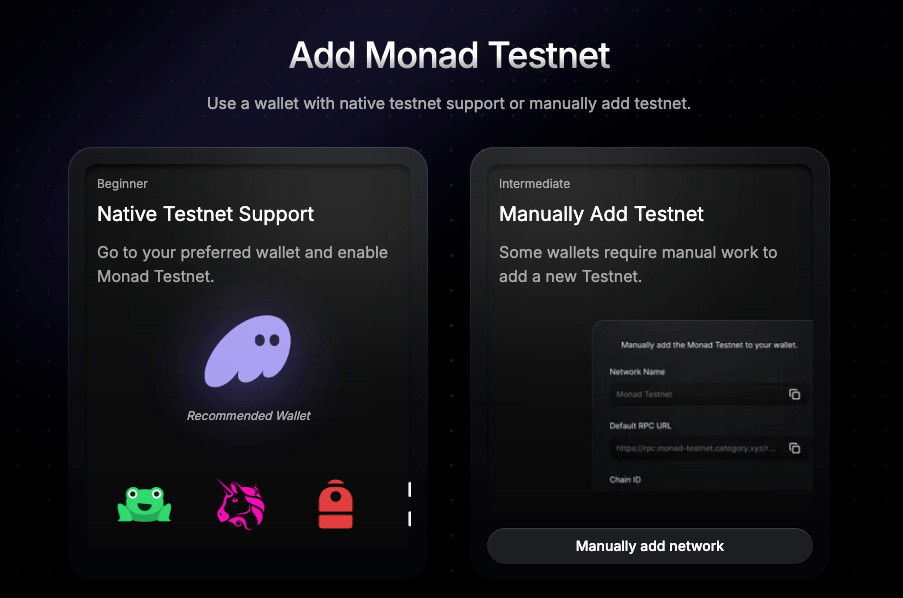
Image Credit: Monad
Why is Monad Important?
Solving Scalability Issues
Ethereum's network congestion often leads to slower transaction speeds and soaring gas fees, especially during NFT mints or popular DeFi events. These bottlenecks render small transactions economically unviable and limit mass adoption of Web3 applications.
Monad’s 10,000 TPS architecture aims to resolve this, providing scalable, smooth infrastructure for DeFi platforms, GameFi ecosystems, and even enterprise solutions—accelerating broader Web3 adoption.
Enhancing User Experience
With 1-second block times and single-slot finality, transactions on Monad can be confirmed almost instantly, unlike Ethereum, which requires multiple confirmations.
This low-latency capability is crucial for everyday users, especially in applications requiring rapid response—such as decentralized exchanges (DEXs), in-game transactions, and NFT marketplaces—delivering a smoother, more responsive experience.
Lowering Barriers and Costs
Ethereum’s high gas fees have become a major obstacle to Web3 adoption. Many small investors and gamers avoid participation due to prohibitive transaction costs. For example, buying a $5 NFT on Ethereum might incur over $20 in fees, deterring users from transacting.
Monad’s low-fee model makes micro-transactions and frequent interactions feasible. Whether users are engaging in DeFi, playing games, or simply exploring Web3, they can participate at a fraction of the cost, expanding the overall user base.
Maintaining Familiar Developer Tools and Environment
Developers prefer working with familiar frameworks and tools. Monad’s full compatibility with Ethereum’s EVM (Ethereum Virtual Machine) means:
-
– Existing smart contracts require little to no modification to run on Monad.
-
– dApp developers can continue using familiar tools like Solidity, Hardhat, and Remix without learning new languages or architectures.
-
– Lower technical migration costs make Monad a more attractive Ethereum alternative.
This EVM compatibility lowers the entry barrier for developers, accelerates ecosystem growth, and drives wider Web3 adoption.
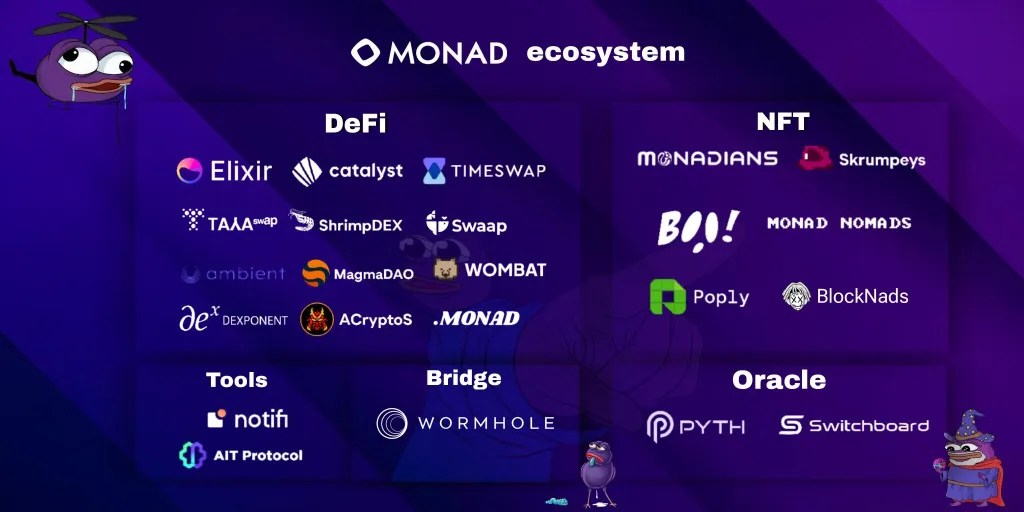
Image Credit: The Coinomist
How Does Monad Work?
Monad achieves high performance through three core technological innovations that work together to enhance speed, throughput, and scalability:
MonadBFT Consensus Mechanism
Monad uses a Byzantine Fault Tolerant (BFT) consensus mechanism, ensuring secure operation and fast transaction finality even if up to one-third of nodes fail or act maliciously.
BFT-based consensus enables low latency, allowing rapid block production and immediate finality. With MonadBFT, Monad achieves 1-second block times, enabling near-instant transaction confirmation and significantly improving user experience.
Parallel Execution
Traditional blockchains process transactions sequentially, confirming each one after another—a bottleneck under high traffic.
Monad implements parallel execution, decoupling transaction ordering from execution. Non-conflicting transactions are processed simultaneously, dramatically increasing throughput and enabling the 10,000 TPS target.
MonadDB (Blockchain-Optimized Database)
Data storage is often an overlooked bottleneck in blockchain infrastructure. Traditional storage methods can overload nodes and degrade performance.
Monad developed MonadDB, a key-value storage system optimized specifically for blockchain validation and queries. Key features include:
-
– Fast Read/Write: Enables real-time data access, minimizing latency.
-
– Authenticated Storage: Cryptographic verification ensures data integrity, maintaining blockchain security.
-
– Optimized Hardware Efficiency: Reduces reliance on high-end hardware, enabling efficient operation on standard devices.
Together, these three core technologies enable Monad to deliver a high-throughput, low-latency blockchain environment while maintaining security and stability—ideal for DeFi, NFTs, GameFi, and beyond.

Image Credit: The Coinomist
Potential and Use Cases of the MONAD Token
Despite high market anticipation, the official tokenomics and launch timeline for the MONAD token have not been released.
The initial plan was to launch the token alongside the mainnet, but the schedule remains uncertain, and details on supply and distribution are still unavailable.
Potential Use Cases
If launched, the MONAD token is expected to serve several key functions:
-
– Transaction Fees: MONAD may be used to pay gas fees, incentivizing validators and preventing spam transactions.
-
– Staking and Network Security: Token holders may stake MONAD within the MonadBFT consensus to support network operations and earn staking rewards.
-
– Community Governance: Similar to other blockchain projects, MONAD holders may participate in decentralized governance, voting on protocol upgrades, fund allocations, and community proposals.
Unanswered Questions
Despite growing interest, several key aspects of the MONAD token remain unknown:
Supply & Distribution:
-
– What will be the total supply of MONAD tokens?
-
– Will there be a public sale, or will tokens be primarily allocated to private investors?
Release Schedule:
-
– What is the vesting schedule for team members, early investors, and developer grant funds?
-
– Will there be a pre-mine or community airdrop?
Investor Confidence vs. Market Uncertainty
Monad raised $225 million in its Series A round, signaling strong investor confidence in its potential. However, until the official token whitepaper is released, the market remains cautious about the specifics of its tokenomics.
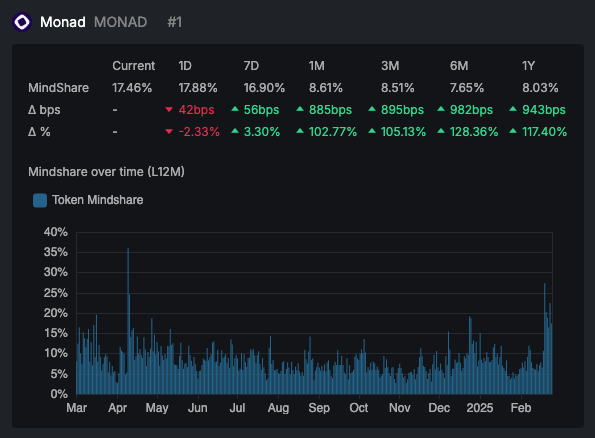
Image Credit: Kaito AI
Challenges and Future Outlook
Competitive Pressure
Monad enters a highly competitive landscape. Numerous high-throughput blockchains and Layer 2 solutions are already competing for developers and users, including:
-
– Solana – Known for high speed and low fees, with an established DeFi and NFT ecosystem.
-
– Avalanche – Offers high scalability via subnets, attracting enterprise and gaming projects.
-
– Aptos & Sui – Built on the Move programming language, targeting next-gen high-performance blockchains.
-
– Layer 2 Solutions (e.g., Arbitrum, Optimism) – Leverage Ethereum’s security while drastically reducing costs and increasing speed, making them top choices for developers.
To stand out, Monad must emphasize its unique combination of parallel execution and EVM compatibility, clearly demonstrating its technical edge to developers.
Developer Adoption
A blockchain’s success depends on the quantity and quality of its ecosystem applications. Currently, developers are reluctant to leave Ethereum or other L1/L2 chains. To attract them, Monad must invest heavily in initiatives such as:
-
– DeFi Protocols – DEXs, lending platforms, derivatives markets—core components of any robust blockchain ecosystem.
-
– NFT Platforms – Marketplaces, digital art, identity verification—all benefit from low fees and high throughput.
-
– Blockchain Games (GameFi) – High-frequency gameplay demands a fast, low-cost chain for optimal user experience.
Monad needs to host hackathons, launch developer grant programs, and improve development tools to stimulate ecosystem growth. Only with an active dApp community can it truly compete with other blockchains.
Regulatory Environment
Global regulatory shifts could impact Monad’s development, particularly in the following areas:
-
– Token Launch – Strict regulations in many countries govern new token launches. If MONAD is classified as a security token, it could affect its circulation and trading.
-
– Staking – Certain jurisdictions impose regulatory requirements on staking, potentially limiting MONAD’s availability in those regions.
-
– Decentralized Governance – DAO-based governance models may face scrutiny from regulators in the U.S., EU, and elsewhere.
If regulations tighten, Monad may need to adjust its tokenomics or legal structure to maintain compliance.
Uncertain Roadmap
Currently, Monad has not announced an official mainnet launch date—an uncertainty for both investors and developers.
Without transparent updates on development progress and testnet milestones, many developers may hesitate or shift focus to competing chains. To maintain market confidence, the Monad team should:
-
– Regularly update on testnet progress
-
– Actively collect community feedback
-
– Publicly share mainnet deployment plans
Only through consistent transparency can Monad sustain long-term trust from investors and developers.

Image Credit: Monad
Conclusion
Monad is an ambitious project aiming to solve long-standing blockchain scalability challenges.
By combining EVM compatibility with high-performance technologies—such as parallel execution and the MonadBFT consensus—Monad seeks to deliver a fast, low-cost transaction environment suitable for diverse real-world applications.
However, despite its promising technology, Monad still faces significant hurdles:
-
– Unclear mainnet and token launch timelines create uncertainty for market and developer adoption.
-
– Undisclosed tokenomics and governance mechanisms weaken investor confidence.
-
– Fierce competition from mature Layer 1s (e.g., Solana, Avalanche) and Layer 2s (e.g., Arbitrum, Optimism), all of which already have established ecosystems and user bases.
Nevertheless, Monad possesses several strong advantages that could position it as a key player in the next generation of blockchain platforms:
-
– Experienced founding team
-
– $225 million in Series A funding, providing ample resources for development
-
– Focus on EVM compatibility and high throughput, offering a superior alternative within the Ethereum ecosystem
If Monad successfully delivers on its technical promises and fosters strong developer participation, it could emerge as a leading innovator in the blockchain space, securing a prominent place in the Web3 ecosystem.
Join TechFlow official community to stay tuned
Telegram:https://t.me/TechFlowDaily
X (Twitter):https://x.com/TechFlowPost
X (Twitter) EN:https://x.com/BlockFlow_News
 @XTexchange