








Token Economy Report: $82 billion unlocked throughout 2024, MEME offers high returns but 97% ultimately "die"
TechFlow Selected TechFlow Selected
Token Economy Report: $82 billion unlocked throughout 2024, MEME offers high returns but 97% ultimately "die"
More than $150 billion worth of tokens are expected to be unlocked from 2024 to 2025, with approximately $82 billion absorbed in 2024 alone.
 Navigating Web3 tides with focused insights
Author: Tokenomist
Translation: Nancy, PANews
In late January this year, Tokenomist released the "Tokenomist Annual Report 2024," covering key trends such as token unlocks, low-circulation high-FDV tokens, Memecoins, and AI agents, revealing their impact on market liquidity, investor sentiment, and long-term value capture.
The report noted that 2024 began with major project launches featuring low circulation and high FDV (fully diluted valuation), setting the tone for the industry's development trajectory. However, market sentiment shifted mid-year. From short-term, low-market-cap tokens with locked vesting schedules to fully unlocked, community-driven memecoins, this reflected a divergence in investor preferences. By year-end, the "super MEME cycle" had become the dominant narrative, attracting widespread attention.
Key Takeaways:
-
Over $150 billion in tokens are expected to unlock between 2024 and 2025, with approximately $82 billion absorbed in 2024 alone;
-
By the end of 2024, the average circulation/FDV ratio at token launch rose to 35%;
-
The MEME sector achieved a return of 536% in 2024, significantly outperforming Bitcoin and Ethereum;
-
Long-term success rates for Memecoins are very low, with 97% ultimately dying, averaging about one year in lifespan, and many disappearing even sooner;
-
Autonomous entities combining MEME, AI, and social media have emerged as a new crypto trend, with frameworks like Virtuals and ai16z leading innovation.
Top Five Unlock Events in 2024
Token unlock events are critical milestones in the crypto market. Releasing locked tokens into circulation according to predetermined vesting schedules can influence price and funding rates, especially in the short term. Therefore, this section analyzes the five largest unlock events of 2024, focusing on price impact and funding rate trends within a 60-day window (-30 to +30 days). By analyzing the relationship between funding rates and price movements, we can assess whether market expectations (as reflected in derivative positions) align with actual price trends. This provides valuable insights into market sentiment, particularly around pivotal events like token unlocks.
1. Arbitrum (ARB): $2.22 Billion Unlocked
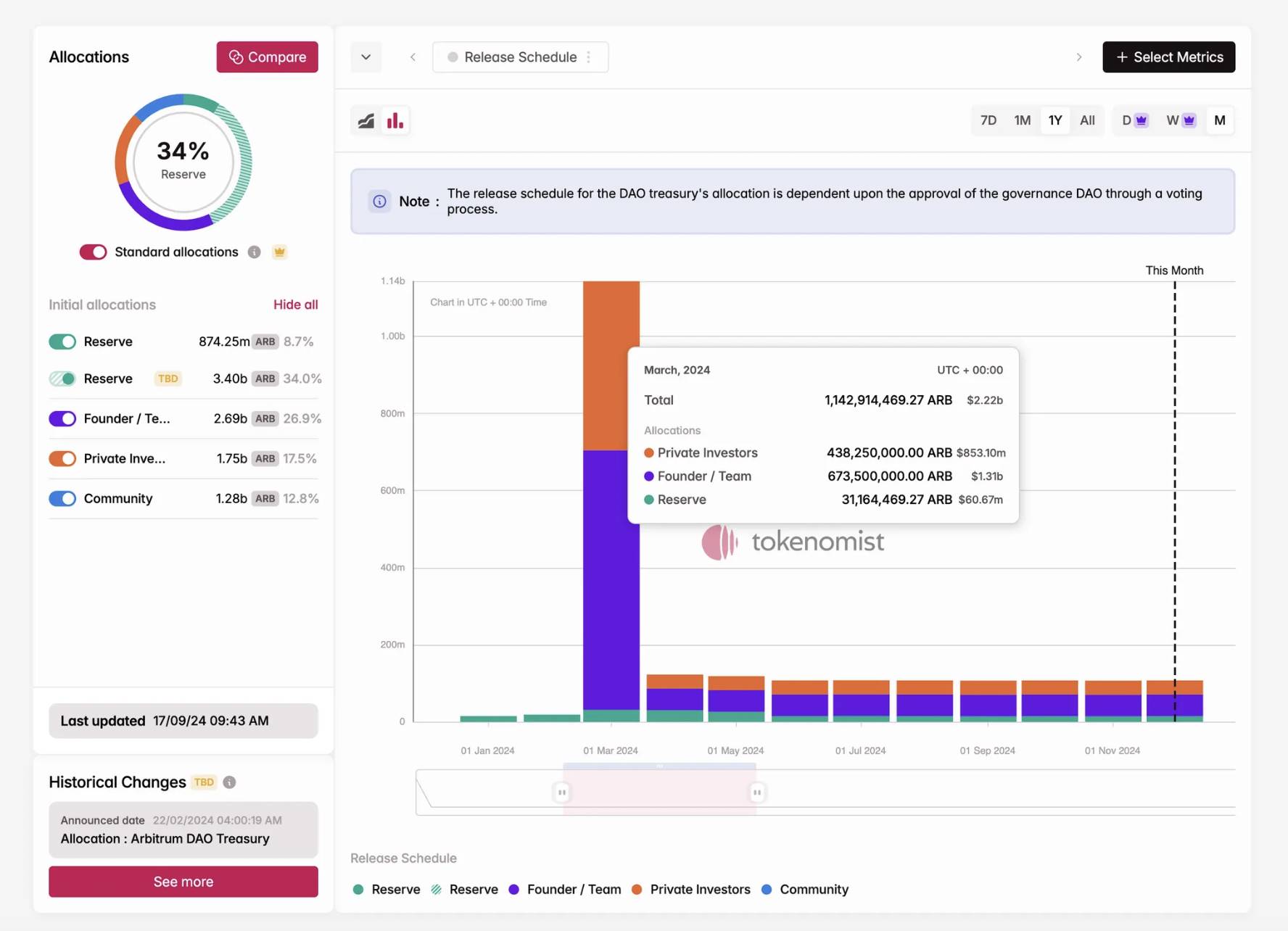
In March 2024, when Bitcoin hit a new all-time high of $74,000, Arbitrum (ARB) initiated its largest monthly token unlock event of the year, unlocking $2.22 billion worth of tokens. This marked the first unlock for Arbitrum’s private investors and founders/team, introducing a large volume of new token supply into the market.
In terms of price impact, ARB’s price impact steadily declined before the unlock date, likely reflecting cautious trading behavior due to anticipated increased supply. Within 30 days post-unlock, ARB’s price impact continued to drop by 33.8%, possibly linked to further market inflow of supply.
Regarding funding rates, ARB’s funding rate closely tracked BTC’s over the 60-day period but remained consistently higher, indicating strong demand for leveraged positions during that time.

2. Sui (SUI): $1.21 Billion Unlocked
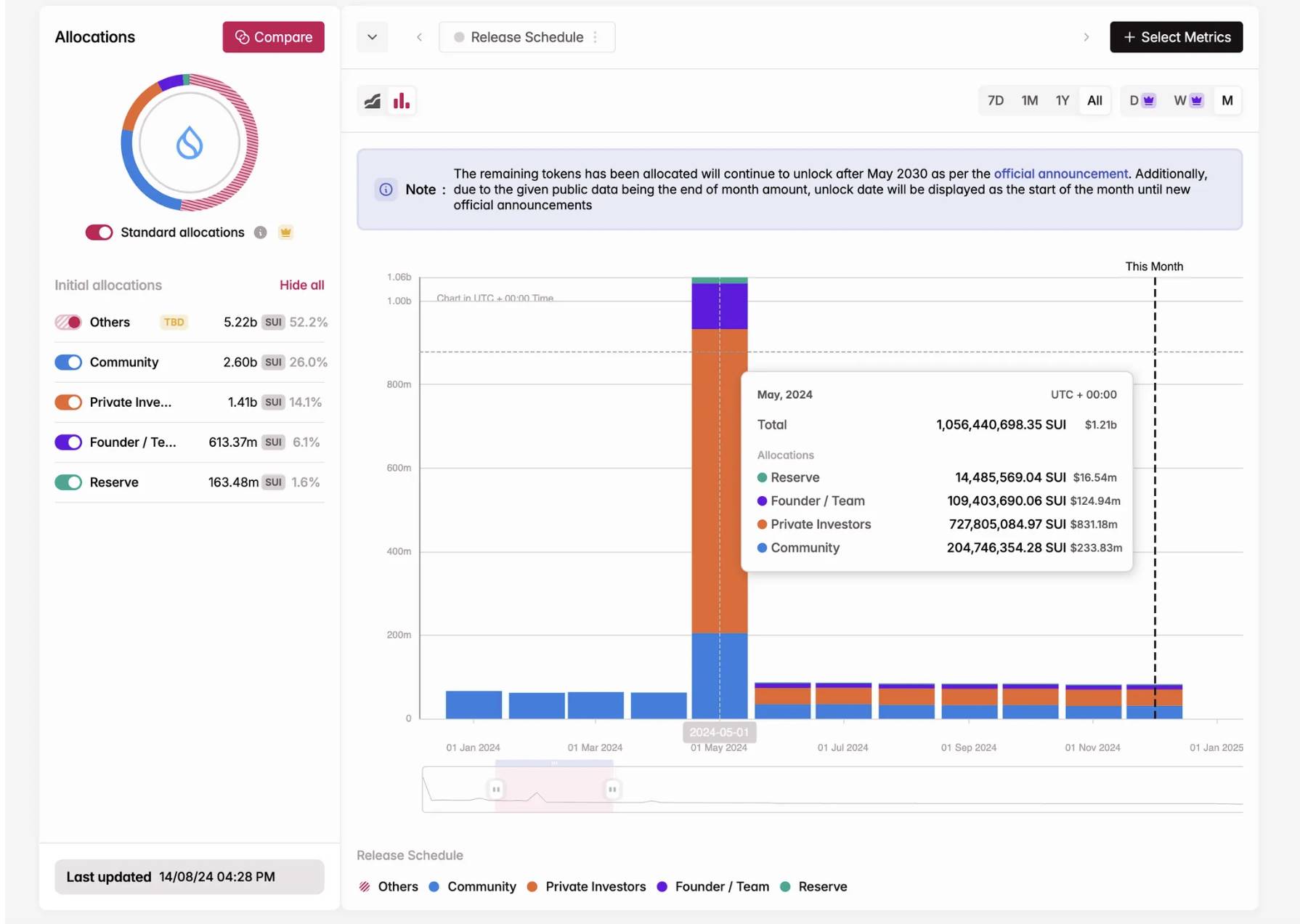
In May 2024, Sui (SUI) was the second-largest annual unlock event, releasing $1.21 billion worth of tokens. This unlock released a significant amount of token supply, mostly allocated to private investors.
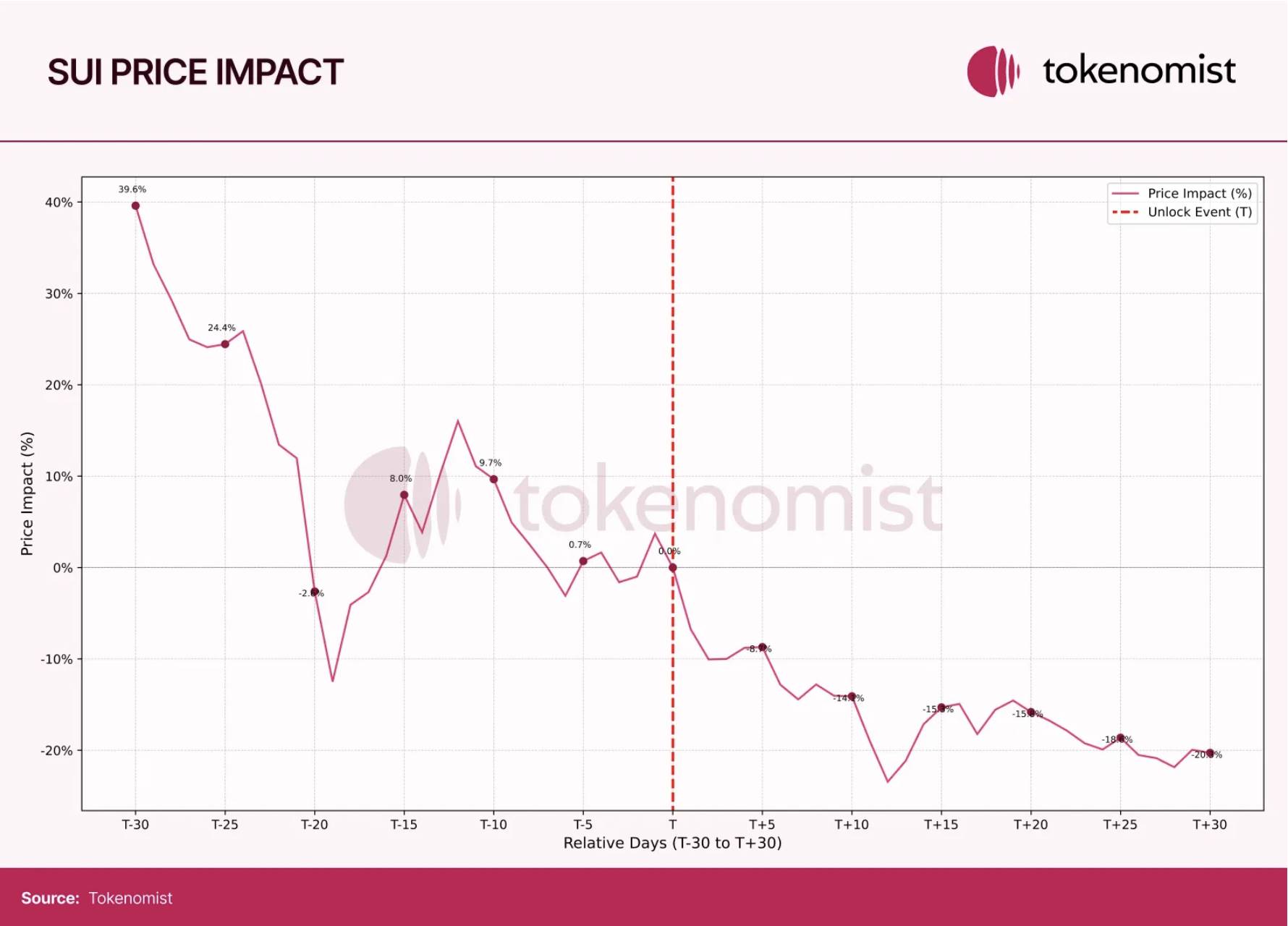
Analyzing price impact, SUI’s price rose 39.6% in the 30 days before the unlock but fell 20.3% in the 30 days after.
In terms of funding rates, SUI entered negative territory 20 days before the unlock and reached -34.1% on the day of the unlock, reflecting bearish sentiment ahead of the event. About 20 days after the unlock, SUI’s funding rate recovered and aligned with BTC’s (around 11.0%).
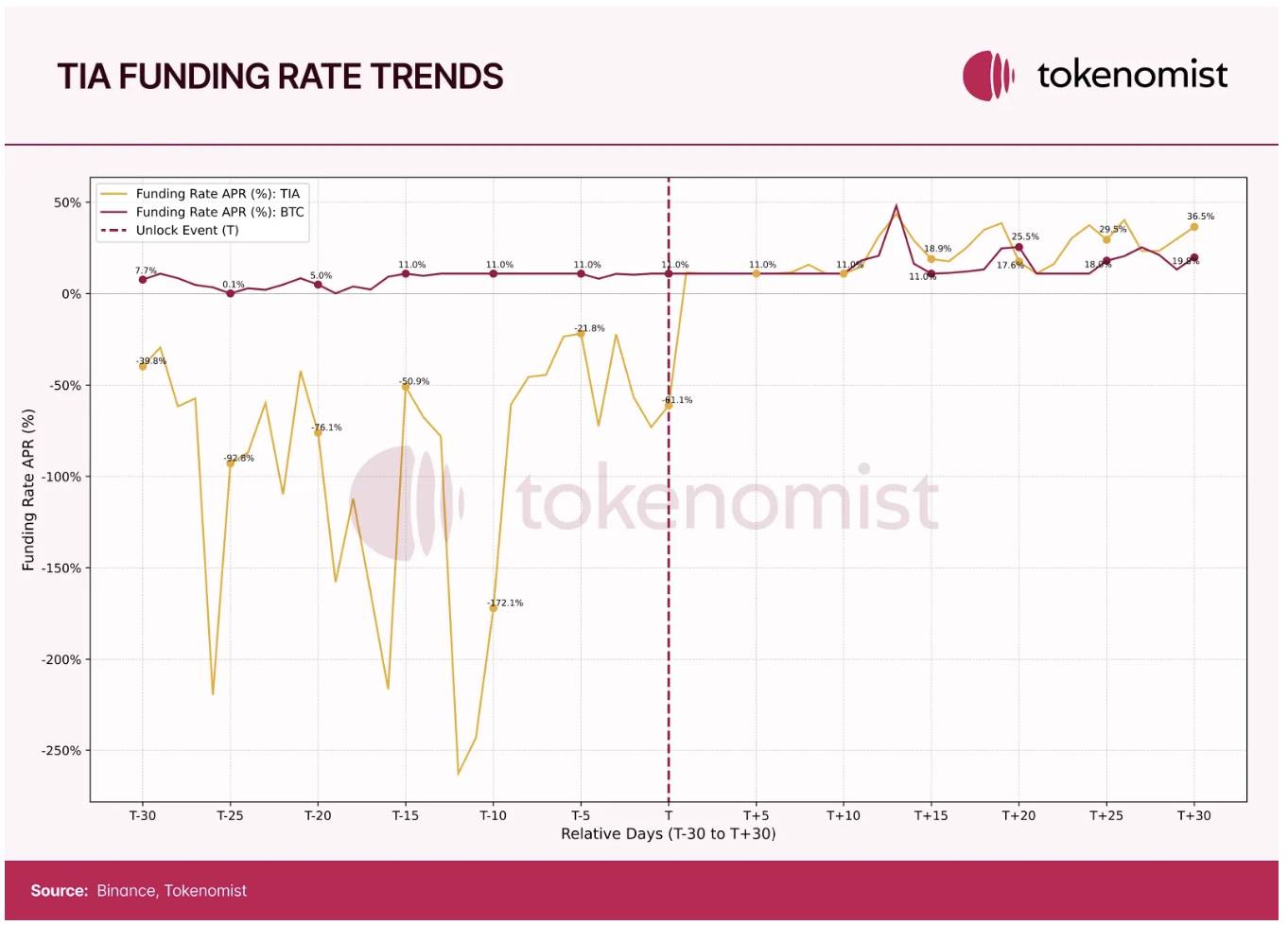
3. Celestia (TIA): $977.44 Million Unlocked
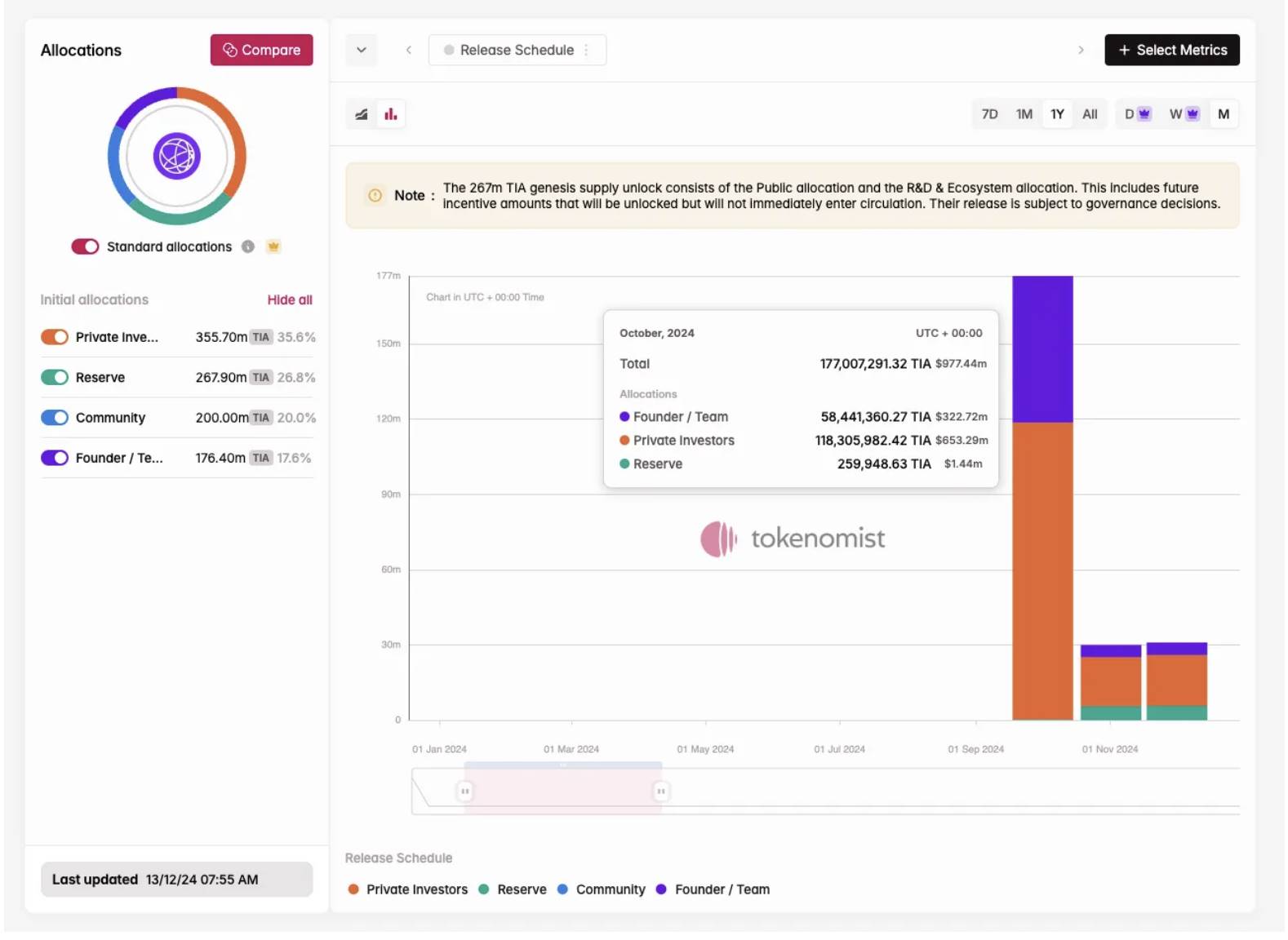
In October 2024, Celestia (TIA) launched a significant unlock event valued at $977.44 million. This was TIA’s first major unlock since its TGE, making it one of the largest token unlocks of the year, with the vast majority allocated to private investors and founders/team. The dominance of unlocks for private investors and founders/team ensured ongoing incentives for long-term contributors and early supporters.
Regarding price impact, TIA’s price continuously declined before the unlock and dropped 25% within 20 days after. However, it quickly rebounded, outperforming BTC by 19.2% 30 days post-unlock.
TIA’s funding rate chart was more volatile than other tokens. On the day of the unlock, TIA’s funding rate remained in negative territory (-61.1%), but it turned positive within days and rapidly aligned with BTC’s funding rate.
4. Jito (JTO): $563.91 Million Unlocked
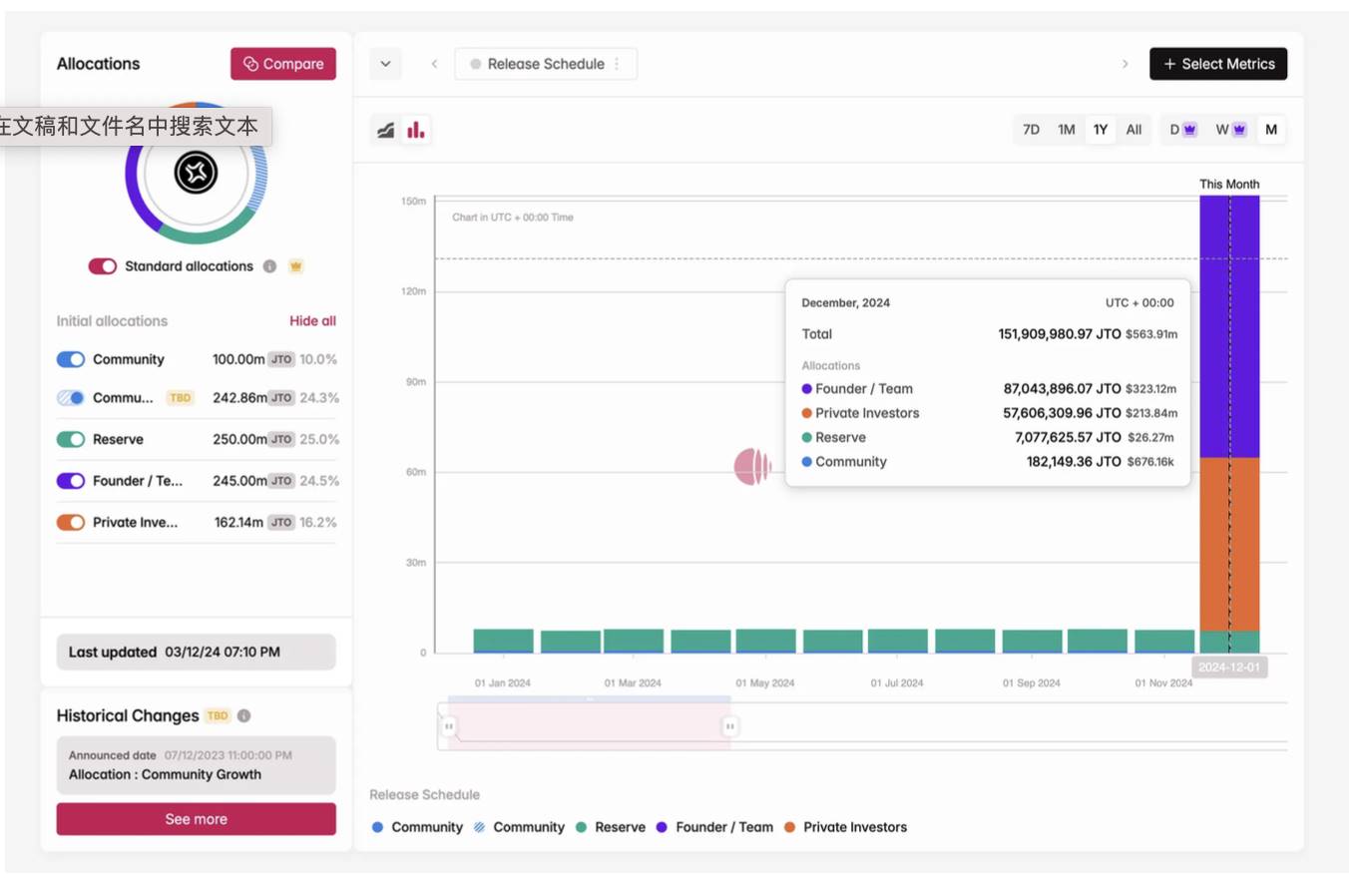
In December 2024, JTO concluded the year with a major unlock event worth $563.91 million, releasing 151,909,981 JTO into circulation. The founding team led the unlock with 57.3%, followed by private investors at 37.9%. This was not surprising.
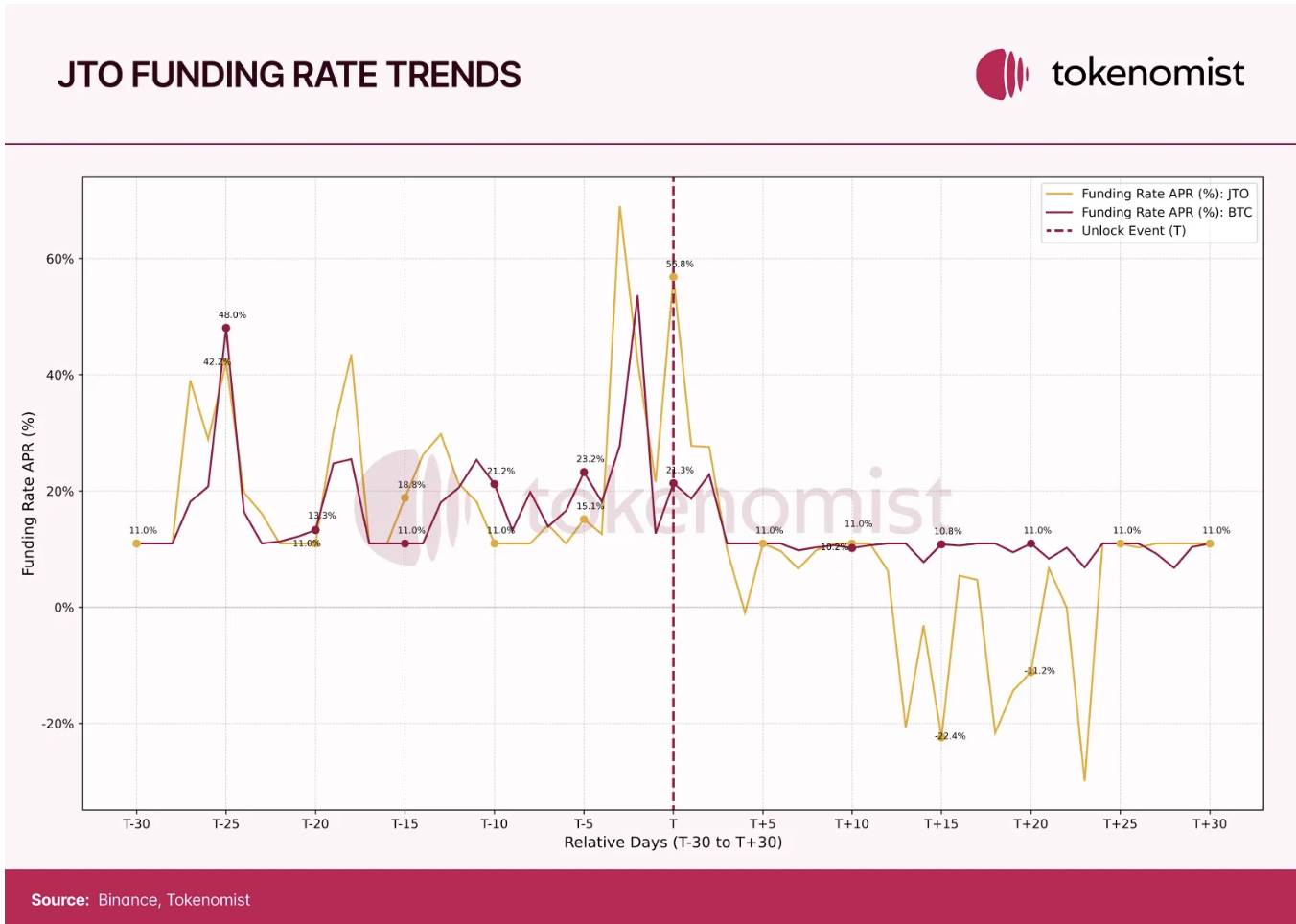
Due to significant market volatility at the time, observing price impact showed JTO’s price impact turning from negative to positive twice before the unlock. After the unlock, price impact continued rising, then sharply dropped to around -15%. At the 30-day mark, it turned negative again from positive.
Funding rate trends also reflected this volatility. In the 30 days before the unlock, JTO’s funding rate roughly matched BTC’s, sometimes exceeding and sometimes falling below it. However, in the 30 days post-unlock, JTO’s funding rate showed continuous fluctuations while BTC remained relatively calm.
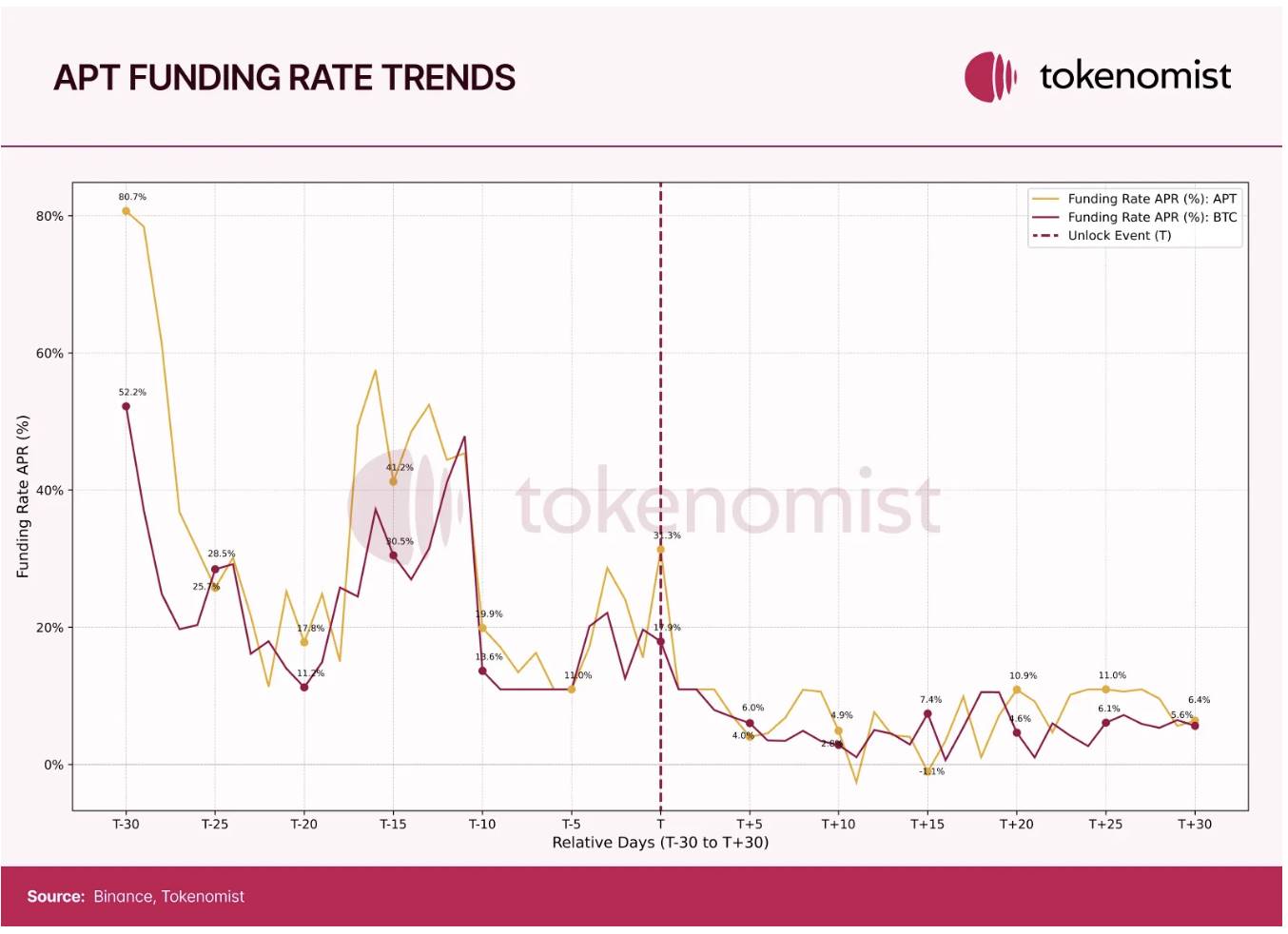
5. Aptos (APT): $423.6 Million Unlocked
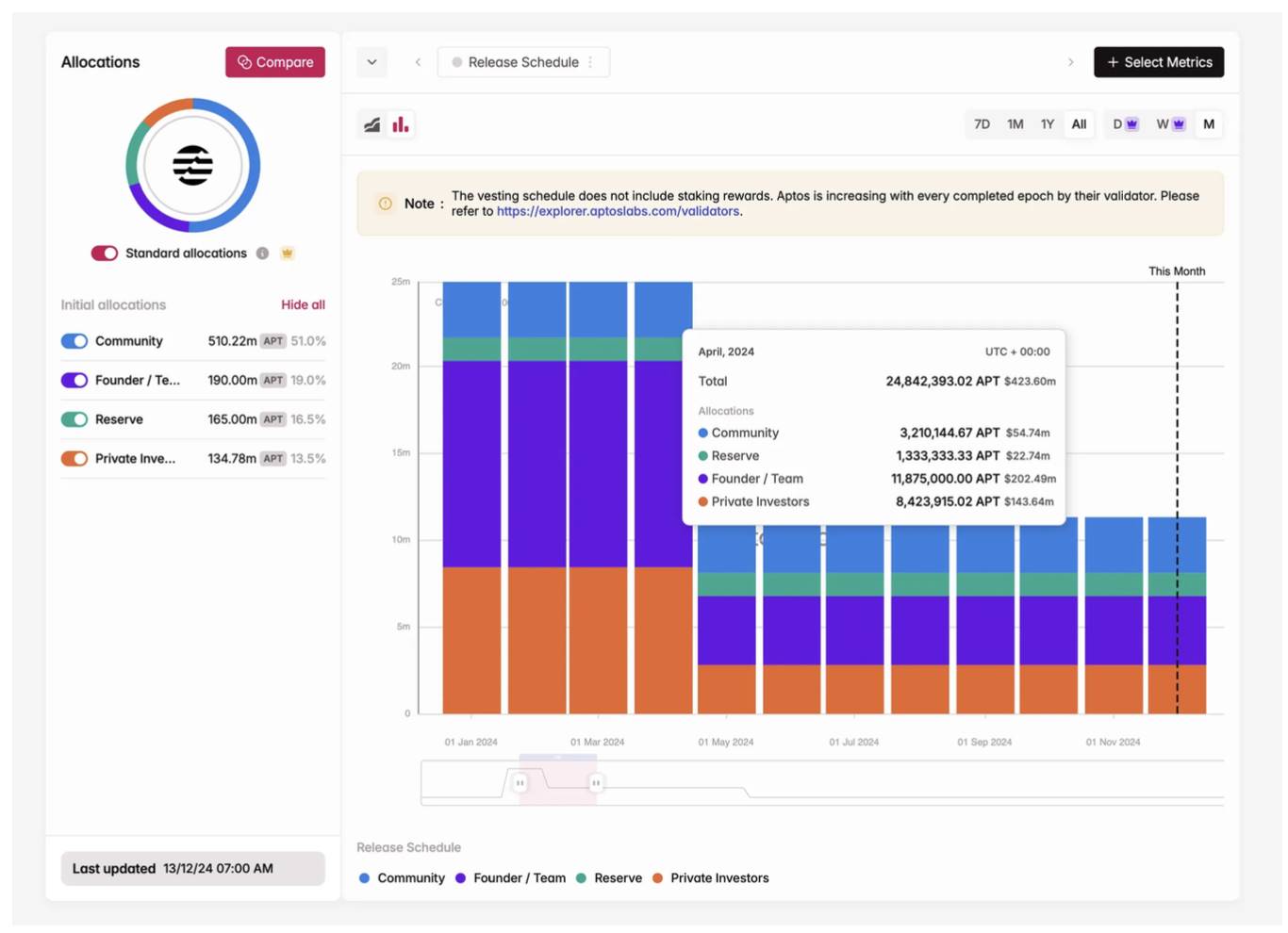
The fifth-largest unlock event of the year occurred in April 2024, when Aptos (APT) conducted an unlock worth $423.6 million. Founders/team and private investors held the largest share of the unlock, but about 13% was allocated to the community.
APT’s price impact surged approximately 51.7% within five days before the unlock (from 20 to 15 days prior), driven by heightened trading activity and speculation. However, starting from 15 days before the unlock, price impact began a steady decline. During the post-unlock period, price impact turned negative and remained so over the next 30 days. Over this period, the broader crypto market also showed a downward trend.
APT’s funding rate trend was very similar to BTC’s, resembling ARB’s funding rate pattern. This suggests that price impact may have been more influenced by macro factors affecting the entire market.
Analysis
Through analyzing these token unlock events, it is clear that pre- and post-unlock market sentiment varies depending on unlock scale, market expectations, macroeconomic conditions, and other factors. Predicting outcomes based on these factors is inherently complex, but they offer observations that help us understand how key drivers influence market behavior during unlock events.
It is important to analyze market expectations as unlock events approach, observable through price impact and funding rates. Pre-unlock price declines may reflect concerns about increased supply, while price increases could indicate optimism or speculative behavior. Before SUI’s May 2024 unlock and TIA’s October 2024 unlock, both showed notably pessimistic signals in price impact and funding rates. This aligns with the view that unlock events are typically bearish, diluting supply and increasing selling pressure. However, the opposite sometimes occurs; unlocks can be bullish signals, releasing more supply for buyers to absorb. In ARB’s case, funding rates reached +115.8% before the unlock, indicating growing leverage demand from long positions and optimistic market sentiment.
While these factors provide valuable insights, we must also consider overall market conditions. During bear markets, larger forces may dominate a token’s price movement, as seen in the cases of JITO and APT. Both tokens’ funding rates either closely tracked BTC’s changes or exhibited significant volatility while BTC’s funding rate remained relatively stable.
Low Circulation High FDV Tokens
Circulation, defined as the ratio of circulating supply to maximum supply, has become an increasingly important metric when considering supply data. Low-circulation high-FDV (fully diluted valuation) tokens, characterized by low initial circulating supply but high overall valuation at launch, have grown increasingly prominent in recent years. This model enables rapid price appreciation due to limited liquidity but faces criticism over long-term sustainability due to downward market pressure from subsequent token unlocks. This section aims to examine the historical context, trends, and impacts of this tokenomic model, offering a data-driven perspective on its viability.
Although recently surging in popularity, this model is not new. It first gained notable attention during the 2020–2021 bull run. A prominent example is Curve (CRV), launched in August 2020, which famous crypto investor Jason Choi used to highlight the risks of this model. Within seven hours of trading, CRV’s market cap jumped from $2 million to $6 million. However, its FDV at launch was nearly half of Bitcoin’s market cap, proving the valuation unsustainable. Early investors suffered heavy losses, with prices dropping 50% shortly after launch due to inflation and early sellers exiting their holdings.
The CRV case revealed a critical issue: the initial price trajectory of low-circulation high-FDV tokens can mislead investors who overlook the long-term effects of future dilution. Despite CRV’s exaggerated inflation mechanism, it laid the foundation for broader trends that developed afterward.
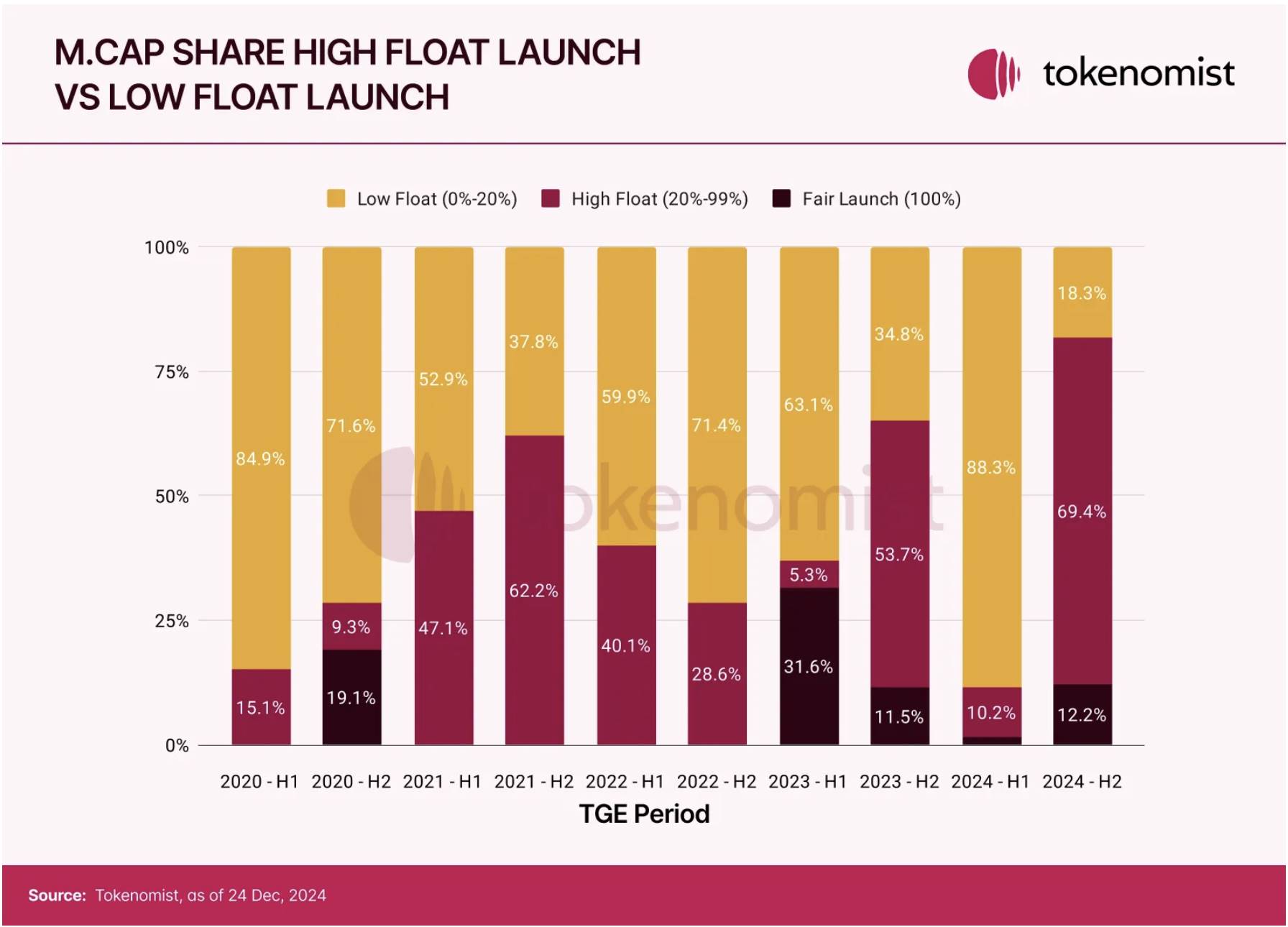
Analysis of token launches from 2020 to 2024 shows a clear pattern in the adoption of the low-circulation high-FDV model. These tokens were particularly common at the end of 2020 and beginning of 2024, just before Bitcoin halvings and subsequent bull runs.
Over time, the crypto community has become increasingly aware of the risks associated with this model, prompting recent projects to adapt their tokenomics. A clear trend is the shift in circulation/FDV ratios at launch. By the end of 2024, the average ratio had risen to approximately 35%, reflecting greater investor caution. For example, Binance introduced listing standards that consider TGE (token generation event) circulation, encouraging projects to prioritize sustainable tokenomics.

To further understand the impact of the low-circulation high-FDV model, we analyzed the performance of altcoins launched in 2024. We aggregated key metrics including FDV, market cap, circulation at TGE, price performance, and price changes for the top 25 altcoins ranked by FDV at TGE.
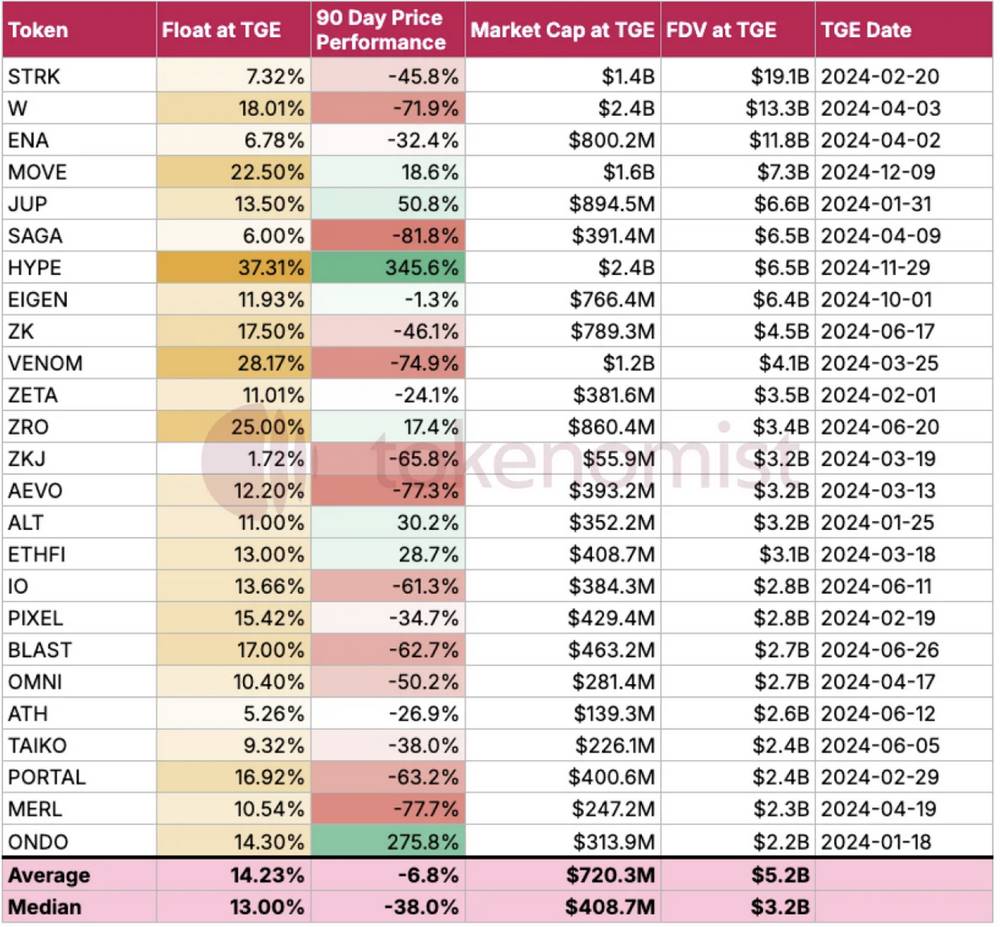
After excluding outliers like Hyperliquid and Ondo Finance, data shows no strong correlation between circulation at TGE and price performance this year, visualized in the scatterplot below. There are several possible reasons. Most notably, increased demand and liquidity, along with greater focus on hype-driven/emotion-based narratives in the recent bull cycle, may have reduced the relevance of circulation to price performance. Alternatively, for some tokens, evolving tokenomics—including inflationary or deflationary mechanisms and staking—may have diluted the impact of initial circulation.
Scatterplot showing 90-day price performance vs. circulation/FDV ratio at initial pricing date. Outliers like HYPE and ONDO excluded.
As mentioned, there are exceptions. Hyperliquid launched without VC unlocks, allocating 33% of its token supply to community airdrops. This approach promoted decentralization and community participation, setting a benchmark for fair token distribution.
The chart below shows total token unlock value from 2020 to 2030, revealing notable patterns across the past two bull cycles. Total unlock value peaked at $136.7 billion in 2021, over eight times that of 2020 ($16.9 billion). Though less dramatic, 2024’s total unlock value ($82 billion) was roughly double the previous year ($47 billion). This peak coincided with the height of the last bull run, when many projects launched with large locked allocations for future release.
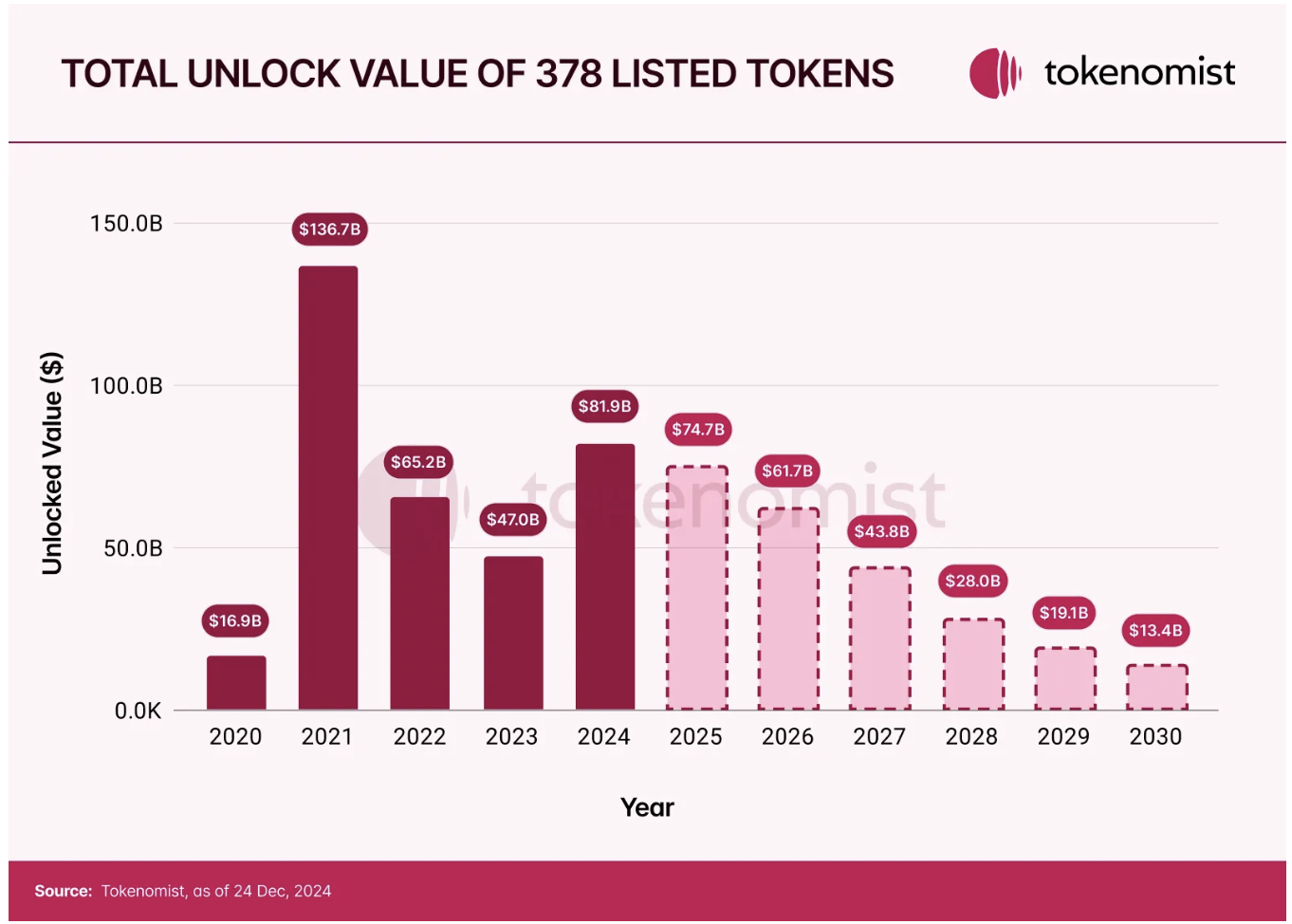
Looking ahead, the market will face significant unlock pressure. Between 2024 and 2025, over $150 billion in tokens are expected to unlock, with 2024 alone absorbing about $82 billion. This poses short-term risks to market stability. However, as vesting schedules conclude, reduced unlock pressure could support long-term market stability.
The low-circulation high-FDV token model has proven to be a double-edged sword. While it can drive rapid price appreciation, it carries significant risks from future dilution and unsustainable valuations. As the crypto market matures, both investors and project teams must carefully evaluate tokenomics to ensure alignment with long-term goals. Evolving distribution mechanisms like those of Hyperliquid offer promising alternatives focused on fairness and sustainability.
It should be noted that these projections are based on data from 378 tokens tracked by Tokenomist, representing only a portion of the market. New token launches and changes in existing tokenomics, such as re-locking or burn mechanisms, could alter these dynamics.
Meme and AI Agents
Throughout 2024, Bitcoin maintained its dominance in the crypto market, attracting increasing investment from traditional finance. However, sentiment grew regarding poor altcoin performance. Despite a surge in growth at year-end, many altcoins failed to follow Bitcoin’s lead.
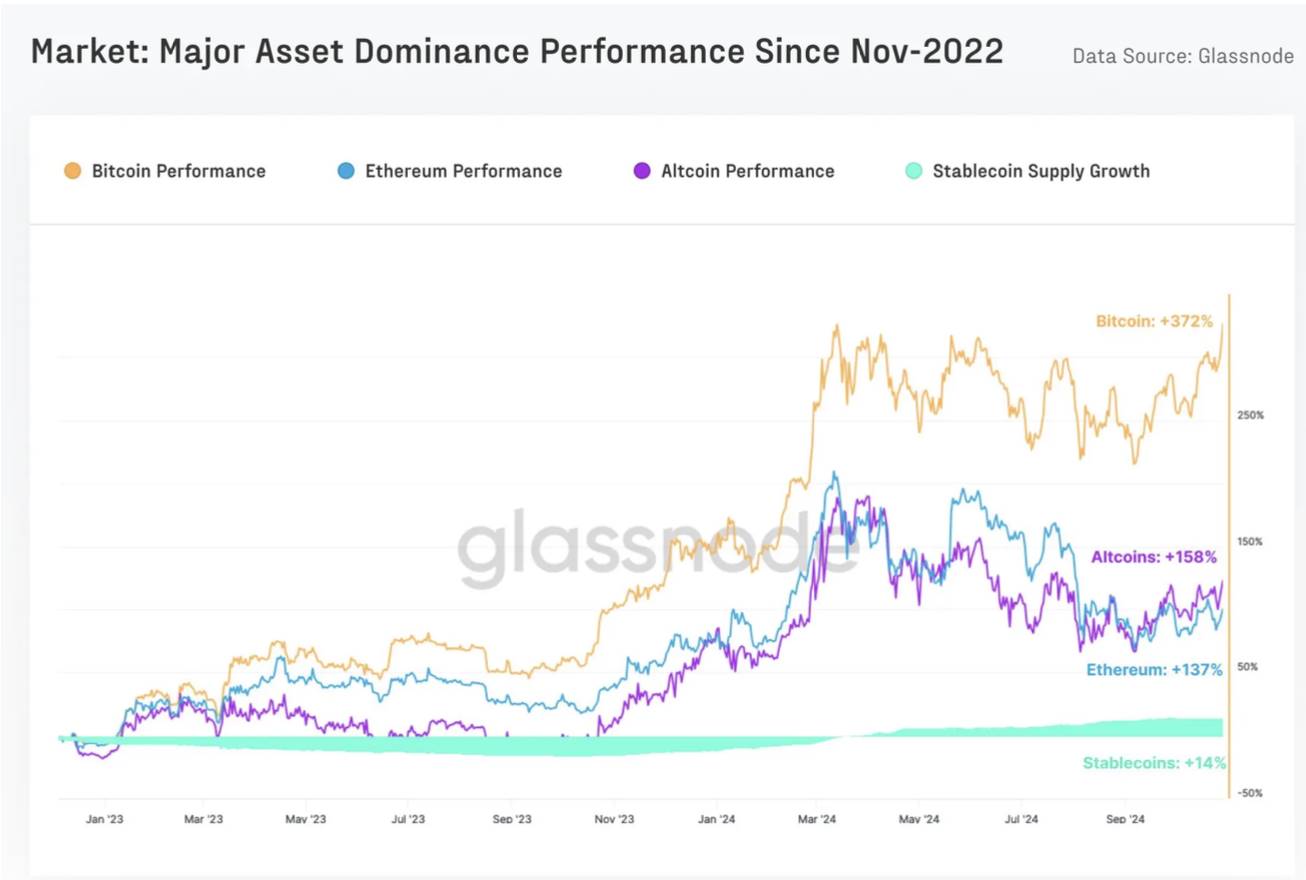
Source: Glassnode x Fasanara_Digital Assets Report Q4 2024
Data analysis shows that among the top 250 altcoins by market cap, only 28.1% outperformed Bitcoin, while 45.5% outperformed Ethereum.
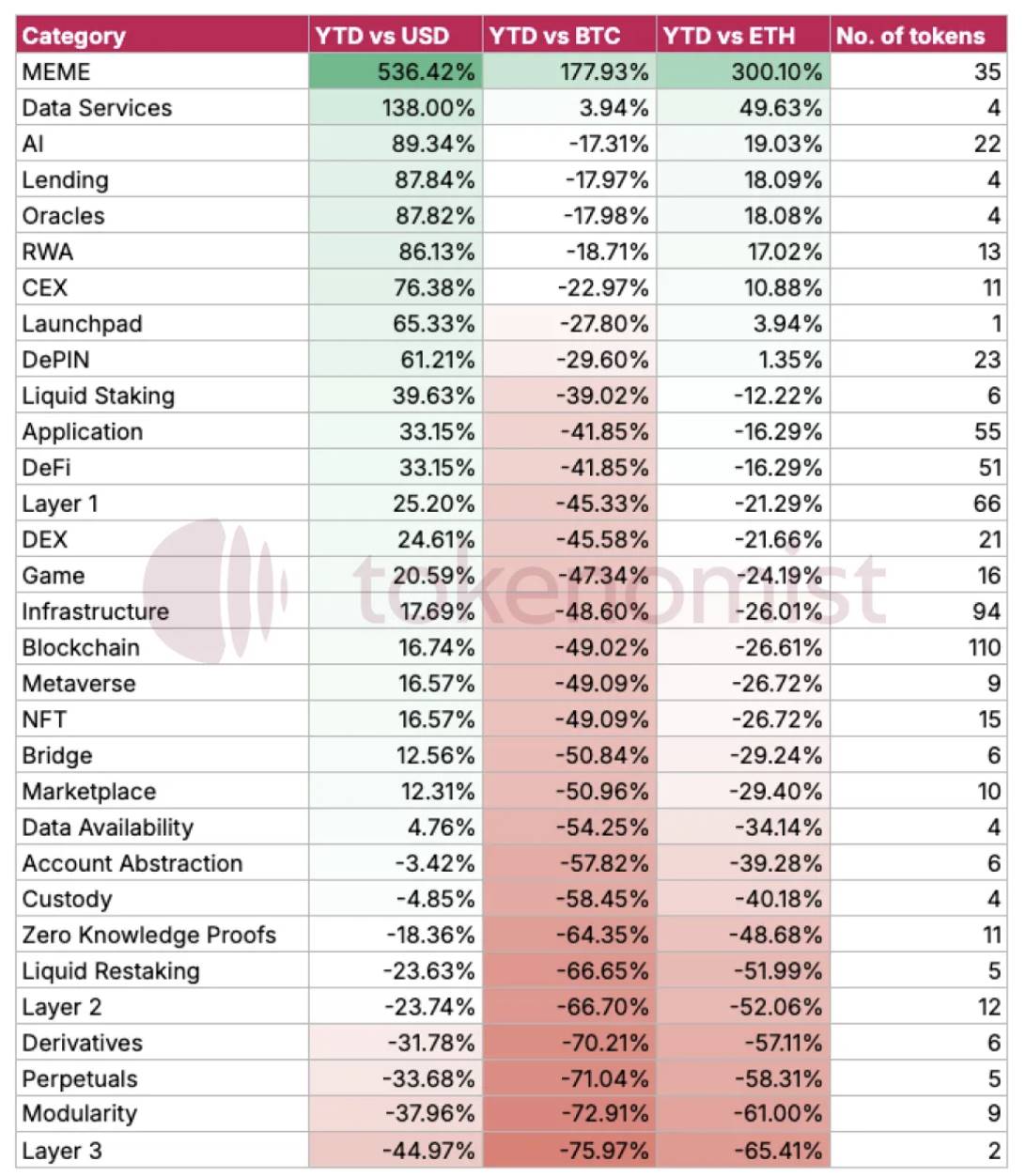
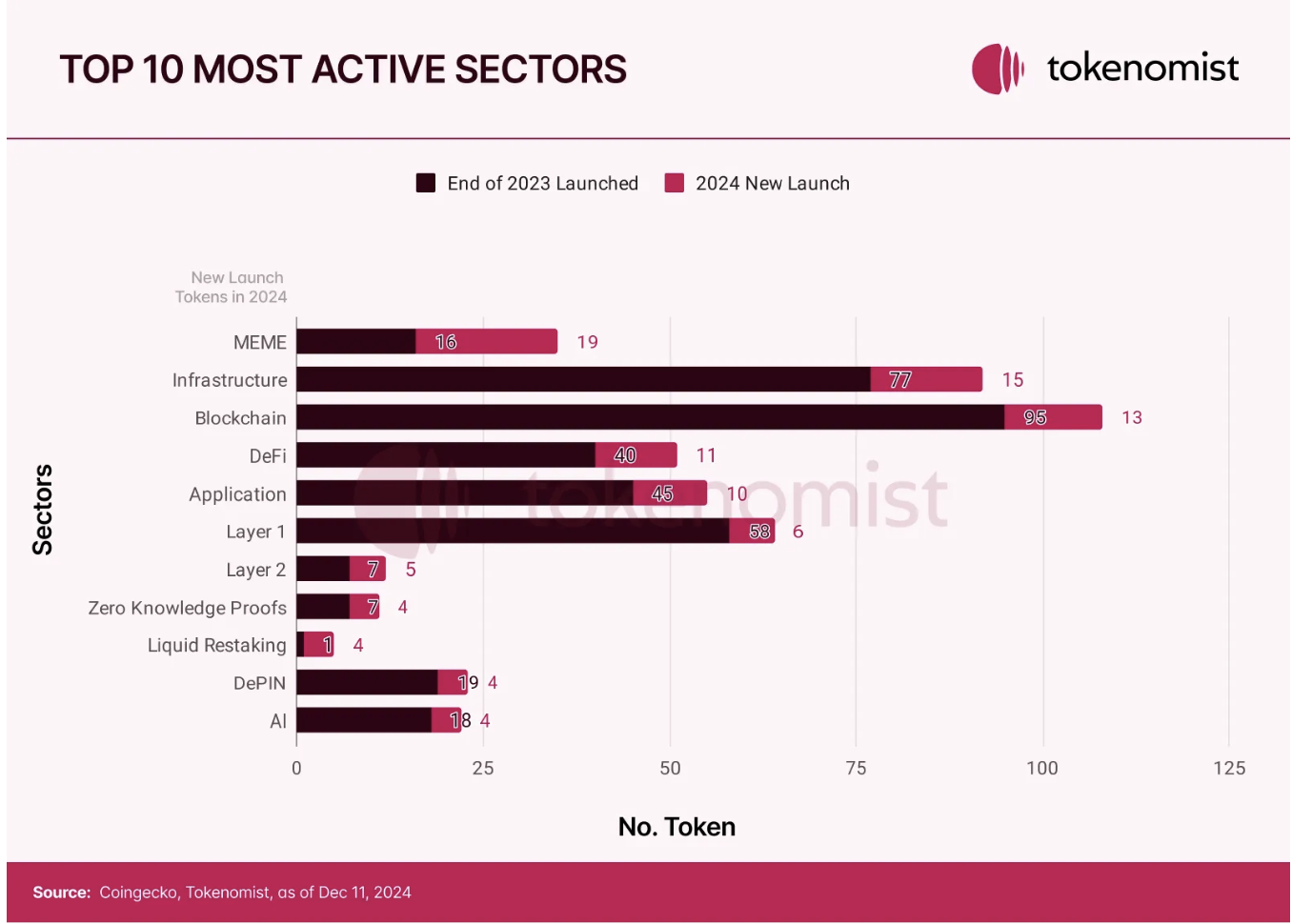
In contrast to the broader altcoin market, one sector significantly outperformed its peers: Memecoins. This sector demonstrated extraordinary growth in 2024, achieving a year-to-date return of 536%—outperforming Bitcoin and Ethereum by 177% and 300%, respectively. Notably, 19 of the top 54 market-cap tokens launched this year were Memecoins.
The Appeal of Memecoins
The remarkable success of Memecoins raises important questions about their appeal and sustained popularity. This section explores the data and motivations behind this unique phenomenon.
-
Fair Launch Model
One of the main drivers of Memecoin appeal is their fair launch model, providing the full token supply to the community from day one. This approach ensures 100% circulation, aligning with core crypto principles: fairness, transparency, and decentralization. Unlike many other projects, Memecoins avoid excessive team allocations or privileges for early investors, promoting equitable participation.
This fair launch model strongly resonates with investors, especially amid growing dissatisfaction with venture capital-backed projects, which are sometimes criticized for complex tokenomics and allocation structures that appear to favor early stakeholders.
Additionally, Memecoins offer a simpler, more accessible narrative compared to other altcoins, which often require substantial technical expertise to evaluate. By focusing on community engagement and cultural relevance, Memecoins serve as effective tools for attracting new users to crypto.
-
Long-Term Community Incentive Alignment
Traditional Web3 community-building methods primarily rely on token airdrops to incentivize early contributors. These rewards typically target individuals who create content, participate in Discord, or engage in protocol-specific activities. While this model effectively sparks initial interest, our analysis reveals significant shortcomings in long-term community retention. Studies show that airdrop hunters often sell immediately upon receiving tokens, especially when allocations fall short of expectations, leading to declining engagement and potential negative sentiment toward the protocol.
Our research indicates that Memecoin projects have shown notable success in building sustainable communities through innovative incentive alignment. These projects effectively align team and community interests, creating what market participants describe as “the best marketing is a rising price.” Drawing on Murad’s framework, successful crypto communities often resemble cult-like followings, with loyal supporters and shared belief systems. This fosters intense collective enthusiasm among participants, improving retention and driving organic growth through community-led initiatives. This approach creates a gamified environment where users feel directly tied to the project’s success, motivating sustained long-term involvement.
-
Community Takeover: A New Paradigm
An emerging trend in protocol governance is Community Takeover (CTO). This occurs when a project’s original developers abandon it, and community users and token holders assume control over its future direction and management. When a project transitions to community ownership, token holders become both owners and operators. This dual role fundamentally transforms their relationship with the project. Community members must actively participate in governance, development, and marketing to maintain and enhance the value of their holdings.
-
Growth Catalysts
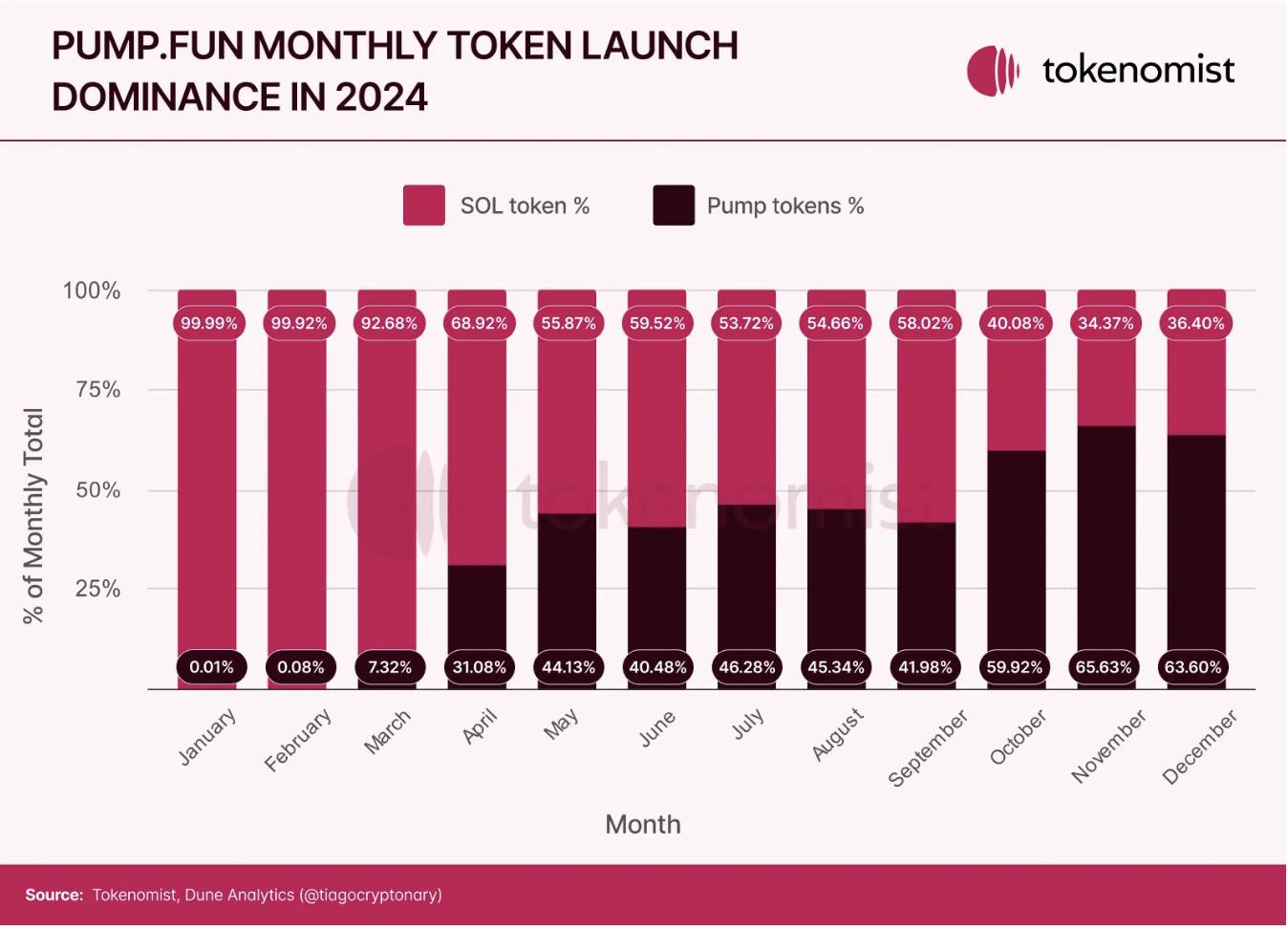
A major catalyst for the Memecoin phenomenon in 2024 was pump.fun, designed to make it easy for anyone to create and trade their own tokens, drastically lowering entry barriers. Since launching in January 2024, over 5,581,665 tokens had been created on pump.fun by January 6, 2025. As shown in the chart below, most Solana-based tokens are now issued via pump.fun rather than traditional methods. pump.fun’s success has also spurred competition, with other blockchain ecosystems exploring similar platforms to capitalize on growing interest in fair-launch tokens.
-
Risks and Limitations
Despite their popularity in 2024, Memecoins still carry inherent risks. Like fads, Memecoins are inherently trendy, often experiencing rapid rises and equally swift declines. Additionally, oversaturation from repetitive Memecoins may diminish their impact, as illustrated by Murad’s “Memecoin Pyramid,” where successful Memecoins represent only a small fraction compared to those that fade away.
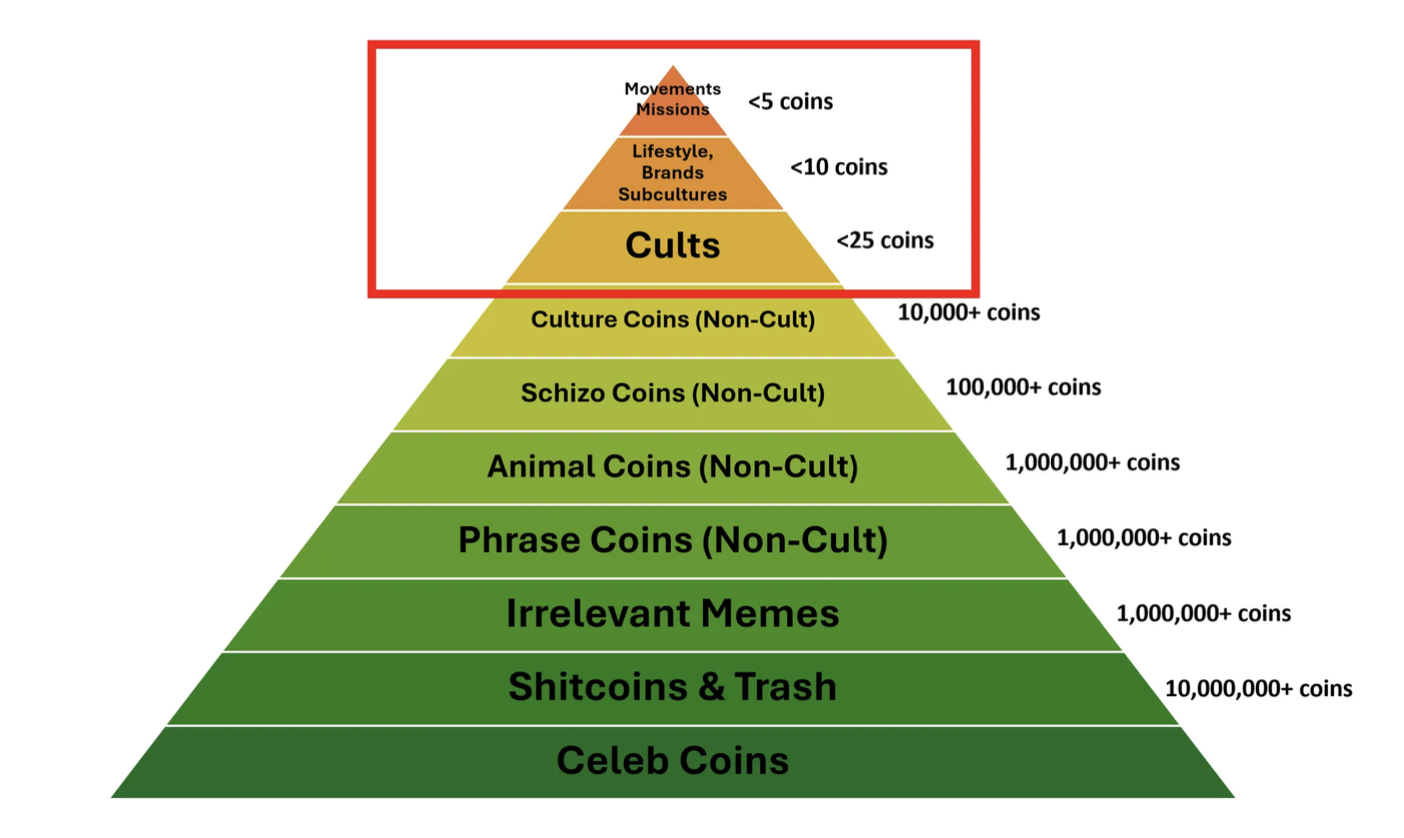
Murad’s Memecoin Pyramid Source: Meme Coin Super Cycle - TOKEN2049
Long-term success rates for Memecoins are notably low. According to Chainplay’s "State of Memecoins 2024" report, the average Memecoin lifespan is one year, with 97% eventually considered “dead” (defined as 24-hour trading volume below $1,000, liquidity under $50,000, and no Twitter updates in three months). Currently, only one Memecoin on pump.fun has a market cap over $1 billion, and eight exceed $100 million.
Another key risk involves potential malicious activity. Despite fair launches, insiders or developers may still control most tokens, undermining decentralization and enabling pump-and-dump schemes. Although pump.fun combats this with bond curve mechanics and a “graduation” process to Raydium, scams may still go undetected. Even fairly launched Memecoins have seen cases where teams or insiders used fake wallets to snipe memes. It is advisable to consult sites like gmgn.ai for risk analysis metrics such as top 10 holders, blacklists, developer activity, and bubble charts.
AI Agents
Another standout area in 2024 was AI agents. AI agents are essentially autonomous entities capable of performing tasks and interacting with other users/agents, leveraging blockchain technology for on-chain operations. They are likened to enhanced Memecoins, combining memes, AI, and social media elements to create autonomous entities that interact with users and self-propagate. In 2024, major players like Virtuals and ai16z emerged, providing frameworks for developing and deploying AI agents.
In an article on 2025 crypto predictions, Dragonfly Capital managing partner Haseeb Qureshi predicted that tokens related to AI agents would surpass Memecoins in the coming year. He argued that unlike KOLs and influencers, AI agents never rest, conform to majority opinions, and act less out of self-interest. They also excel at aggregating and amplifying real-time information. Current agents like aixbt, which scrape social media data to produce alpha feeds, suggest possible incremental improvements over the next one to two years.
Nonetheless, Qureshi predicted that over time, innovation in these agents may wane. An oversupply of AI agents could trigger a reversal in sentiment, with the crypto community potentially reverting to supporting humans. Of course, this is part of natural trend evolution. However, Qureshi suggested that truly transformative impact in this space will come from software engineering agents, which have the potential to fundamentally change blockchain project development and security.
Broad Implications
Additionally, DeFi has continued innovating over the past year. OG projects like Aave maintained strong performance, setting record-high deposit levels this year. Meanwhile, new projects like Ethena attracted growing interest from traditional finance. RWA projects like Ondo Finance exceeded expectations this year, possibly driven by increasing demand for financial product tokenization.
The success of Memecoins and their community-driven tokenomic models has inspired other sectors to adopt similar fair-launch practices, such as DeSci tokens. There is also a clear trend of projects allocating larger shares to communities during token issuance.
Another promising potential trend is the convergence of Memecoins and utility. User @hmalivya9 on X proposed the concept of “community clusters.” This model suggests partnerships between Memecoin projects and utility-token projects via a staking system, where Memecoin holders stake tokens to earn rewards from multiple utility-token projects. The system would be enhanced by requiring active social media participation, essentially gamifying brand awareness for utility tokens. hmalivya9 envisions this symbiotic relationship as a blueprint for future crypto community structures, where entertainment and utility intertwine—a concept not entirely new. For instance, holders of Hyperliquid’s native spot token $PURR receive airdrops from other spot tokens within the Hyperliquid ecosystem and earn Hyperliquid points. $PURR can only be traded on Hyperliquid, greatly expanding its user base.
In the coming year, AI agents will continue evolving. ai16z proposes a tokenomic model where token staking serves as a validation system, granting platform access, enabling governance participation, and establishing accountability through potential penalty conditions. In this evolved staking model, stakeholders’ economic interests are directly tied to their contributions to ecosystem quality and growth.
2025 will undoubtedly be an exciting year, whether through the evolution of existing trends or the emergence of new ones.
Join TechFlow official community to stay tuned
Telegram:https://t.me/TechFlowDaily
X (Twitter):https://x.com/TechFlowPost
X (Twitter) EN:https://x.com/BlockFlow_News
 @Tokenomist_ai






