Stripe acquires Bridge for $1.1 billion: A game changer for cryptocurrency and stablecoin adoption?
TechFlow Selected TechFlow Selected
Stripe acquires Bridge for $1.1 billion: A game changer for cryptocurrency and stablecoin adoption?
Stripe believes stablecoins have the potential to be the perfect medium for smooth and efficient asset transfers.
 Navigating Web3 tides with focused insights
By: IOSG Ventures
1. What Does Stripe's Largest Acquisition, Bridge, Mean for the Crypto Industry?
Stripe is one of the world’s largest online payment service providers and processors. The platform helps businesses accept online and in-person payments through its developer-friendly API. In 2023 alone, Stripe processed over $1 trillion in transaction volume, ranking second only to ApplePay in adoption.
Last month, Stripe made a major acquisition by purchasing stablecoin platform Bridge for $1.1 billion—marking the largest acquisition in cryptocurrency history.
Recent crypto M&A activity, such as Robinhood’s $200 million acquisition of Bitstamp, reflects growing demand among tech and financial giants for 2B and 2C crypto businesses that prioritize compliance and possess established user bases. Bridge is no exception.
You may have noticed that stablecoin adoption is surging globally. According to an a16z report, stablecoins reached $8.5 trillion in transaction volume during Q2 2024—more than double Visa’s $3.9 trillion during the same period.
Stripe sees stablecoins as having the potential to be the ideal medium for seamless and efficient asset transfers. Although Bridge generates only $10–15 million in annual revenue, Stripe paid nearly a 100x premium for the company. This highlights that Stripe’s motivation extends beyond Bridge’s current revenue, focusing instead on the compliance framework, partnerships, and technology it can bring into the Stripe ecosystem.
2. What Is Bridge?
Bridge is a stablecoin platform enabling businesses or users to transfer tokenized dollars using blockchain. Users can deposit fiat currency via wire/ACH transfers to whitelisted banks to purchase crypto, or sell crypto for fiat by sending assets to designated wallets. It also offers custodial wallets, allowing businesses to accept, store, or transfer stablecoins through a simple set of APIs.
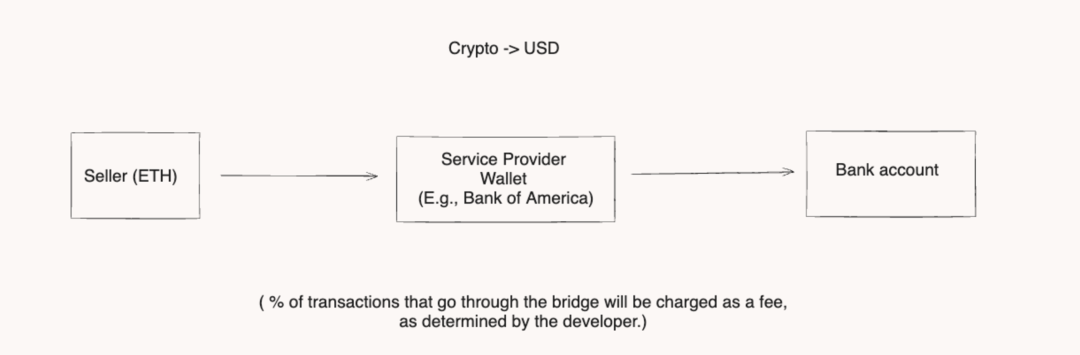
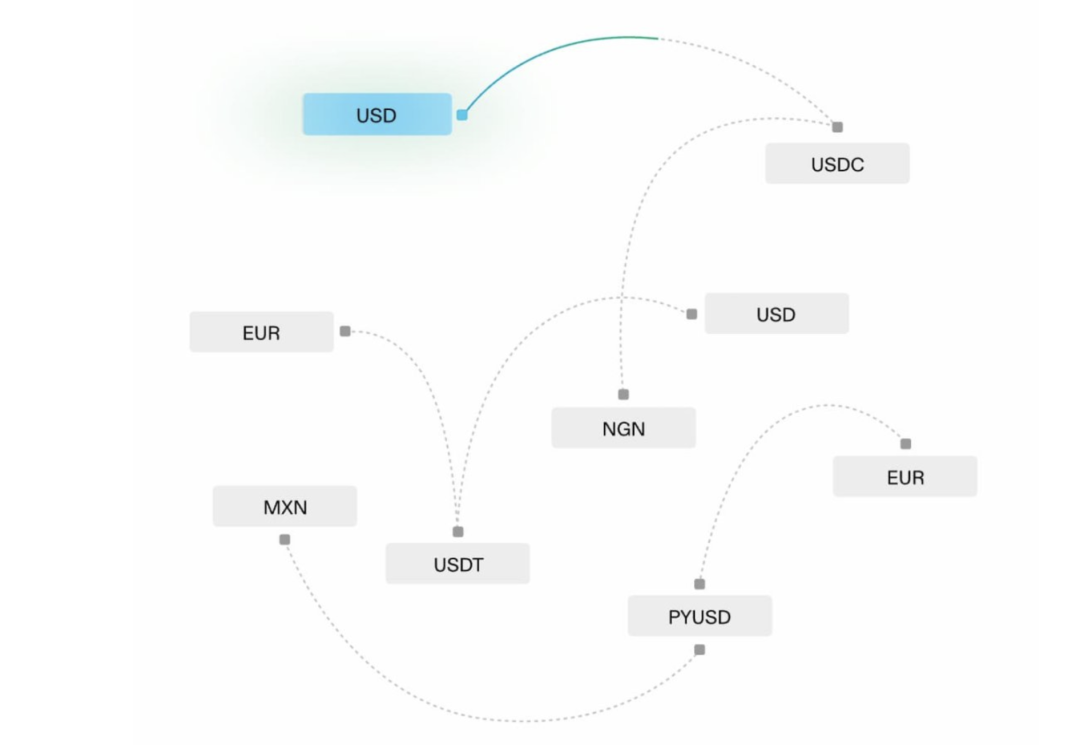
Behind the scenes, Bridge handles KYC, regulatory compliance, and more, enabling businesses to easily integrate and begin accepting crypto as a payment method. Currently, Bridge supports USD and EUR as fiat currencies and accepts five stablecoins across nine different blockchains.
The founding team, Zach Abrams and Sean Yu, previously worked at Coinbase as Head of Consumer Products and Senior Developer, respectively. Prior to acquisition, Bridge raised a total of $58 million from various venture capital firms, with approximately $40 million coming from Sequoia Capital—indicating strong investor confidence even before the acquisition.
2.1 Bridge’s Advantages and Moat:
Bridge is not the first product to address cross-border transaction services. Ripple (XRP), for example, has been offering cross-border transfers and payments over the past three years, but relies on its own native currency as an intermediary, exposing users to downside risk. However, in an era where regulated stablecoins like USDC offer greater protection and resilience, such solutions are becoming outdated. Bridge solves this issue more efficiently and compliantly.
2.2 Compliance and Partnerships
Bridge’s strength lies in its compliance credentials and strategic partnerships. According to a Sequoia report, Bridge complies with all U.S. and European financial regulations and anti-money laundering laws, holds money transmission licenses in 22 states, and collaborates with the U.S. Department of State and Treasury for asset transfers. Before integration, enterprises must provide ownership and incorporation documents to verify legitimacy. As SY Lee, founder of Story Protocol, pointed out, content businesses typically lack network effects, forcing them to rely heavily on content creation and marketing budgets to survive. This overwhelming imbalance in bargaining power makes it difficult for smaller IPs to profit, often leading to failure before launch. Even large IP studios hesitate to develop new IPs, preferring instead to expand existing ones.

The credibility and reputation gained from compliance significantly enhance and expand Bridge’s business channels, as evidenced by its recent collaboration with SpaceX—where Bridge will manage stablecoins for global financial operations (source: Ledger).
Beyond compliance, Bridge allows businesses to customize and issue stablecoins via its orchestration API, with underlying dollar reserves invested in U.S. Treasuries yielding up to 5%, or held idle. This opens possibilities for enterprises—and even CBDCs—to create and tailor their own tokenized dollars for various use cases while remaining compliant, with all reserves held in cash and T-bills within Bridge.
2.3 Use Cases for Bridge:
2.4 In Today’s Payment Landscape:
Demand for digital payment solutions is rising globally, with the industry projected to grow at 9.9% annually, reaching a market size of $90 billion.
Current digital payment solutions, especially in the U.S., charge high processing fees ranging from 1.5% to 3.5% per transaction (Visa charges 1.5–3.5%, Stripe charges 3.4%, European caps at ~0.3%, and global payments like PayPal cap at ~2%).
Bridge’s fees are expected to be significantly lower, consisting primarily of blockchain transaction costs plus developer or issuer fees.
In October, Stripe launched a feature called “Pay with Stablecoins” in its customer checkout product, charging a 1.5% transaction fee. While it hasn't been confirmed whether this feature was co-developed with Bridge or if the fee structure was designed by Stripe, it signals that Bridge could offer a more cost-effective alternative for digital payments.
Additionally, data breaches have long plagued traditional electronic payment systems. The tamper-proof nature and security of smart contracts can effectively mitigate these risks. Beyond cost savings, Bridge unlocks access to $180 billion in stablecoin liquidity within the blockchain ecosystem, allowing Stripe to extend its influence into the crypto market.
-
In unbanked regions:
Bridge can provide underserved regions with solutions, allowing businesses to hold USD or EUR in custodial wallets and build better systems for transferring, paying, or investing in tokenized dollars based on their needs.
Moreover, financial institutions can begin offering more sophisticated structured products by accepting stablecoins as deposits, creating new commercial opportunities to leverage on-chain capital.
Since these transactions occur on-chain, selected blockchains can also benefit from associated transaction fees. Thus, Bridge can boost on-chain transaction activity and potentially increase returns for validators and stakers.
-
In DeFi:
Businesses can also participate in DeFi to earn additional yield. For instance, they can lend or borrow tokenized dollars on platforms like Aave to earn interest, or gain potential returns through crypto investments.
Alternatively, users can provide liquidity for stablecoin pairs on Uniswap V2/V3 to earn trading fees. While DeFi investments carry significant risks, they offer opportunities to maximize capital efficiency for idle assets.
Given the market dominance of USDC and USDT, I believe Bridge’s integration could further solidify their role in the evolving crypto landscape.
3. Market Outlook
-
Until recently, cryptocurrency use cases were largely hindered by limited adoption as a payment solution. However, Stripe’s acquisition of Bridge has the potential to shift this trend, making crypto payments as seamless and indistinguishable from traditional fiat transactions—and possibly serving as a cornerstone of future PayFi.
-
The largest M&A deal in crypto history underscores that stablecoins and regulated payment infrastructures have achieved clear product-market fit and undeniable utility. Value transfer remains crypto’s most compelling use case, with regulated stablecoins emerging as the primary medium for payments.
4. Key Takeaways
-
Bridge is a stablecoin platform enabling businesses and users to transfer, store, and pay with tokenized dollars using blockchain technology. Bridge manages all compliance and regulatory requirements behind the scenes.
-
Bridge’s key advantage lies in its compliance framework and established partnerships. It adheres to all U.S. and European financial regulations and AML laws, and partners with reputable institutions such as the U.S. Department of State and Treasury.
-
Regions without direct access to financial systems can greatly benefit from Bridge due to the economic stability offered by the U.S. dollar.
-
Businesses can now engage in DeFi to maximize capital efficiency of idle assets. Bridge acts as a bridge injecting more capital into stablecoins, expected to fuel the broader DeFi economy.
-
Compared to today’s digital payment solutions, lower fees, faster settlements, and enhanced data security are among blockchain’s key advantages. Bridge has the potential to replace—or serve as a superior alternative to—existing payment systems.
Join TechFlow official community to stay tuned
Telegram:https://t.me/TechFlowDaily
X (Twitter):https://x.com/TechFlowPost
X (Twitter) EN:https://x.com/BlockFlow_News
 IOSG Ventures