When we talk about consumer-grade crypto applications, what are we actually talking about?
TechFlow Selected TechFlow Selected
When we talk about consumer-grade crypto applications, what are we actually talking about?
Consumer-grade crypto is the last blue ocean in this industry.
 Navigating Web3 tides with focused insights
Author: Luca Netz
Compiled by: TechFlow
In this article, I want to explore my understanding of consumer-grade crypto, why we haven't achieved its widespread adoption yet, and why I believe consumer-grade crypto represents the final blue ocean in this industry.
What is Consumer-Grade Crypto?
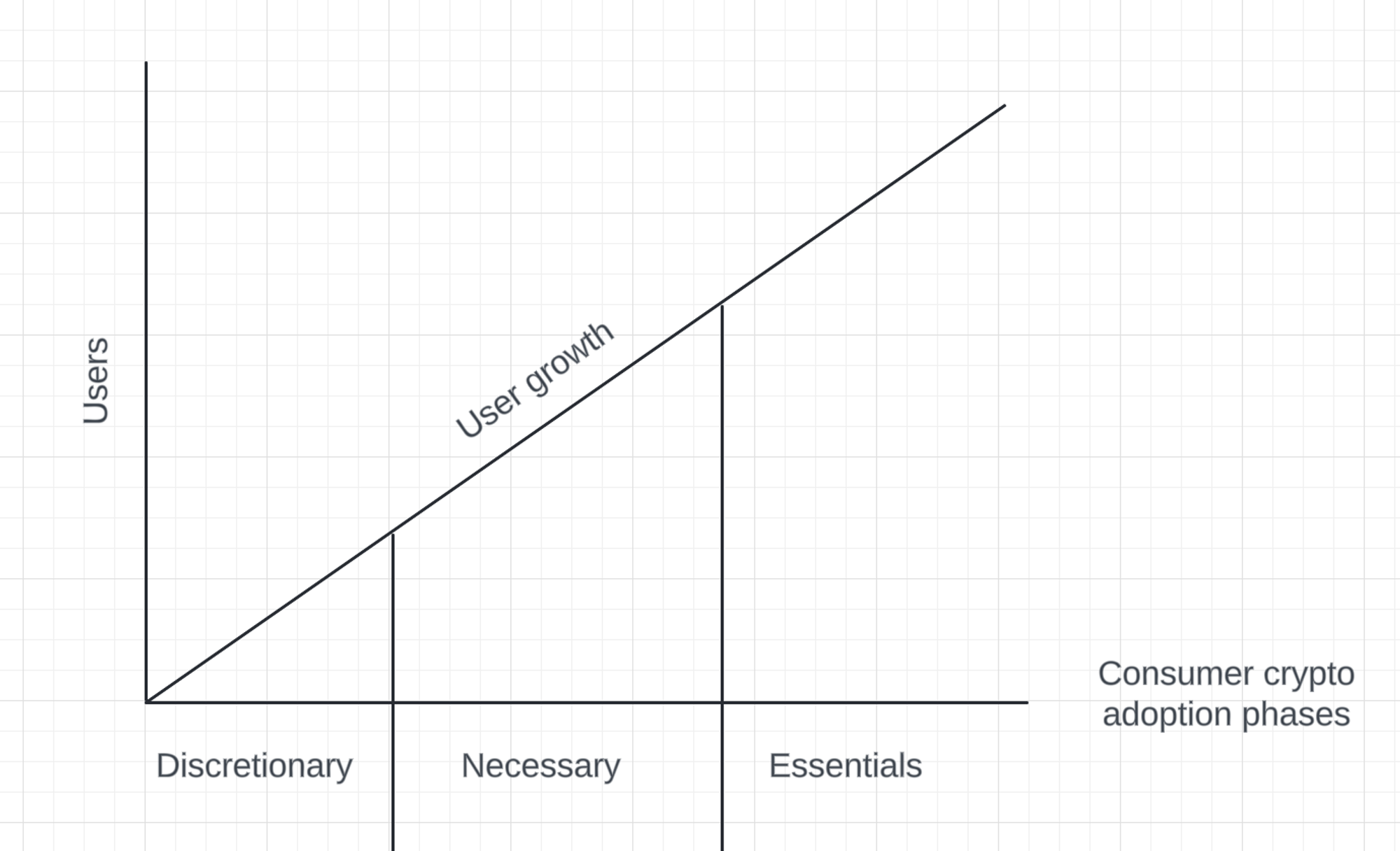
I define consumer-grade crypto as blockchain-powered applications used daily by billions of individuals. However, this definition is broad. To be more specific, I believe adoption will unfold across three stages, which I categorize based on types of consumer spending:
-
Stage 1: Discretionary consumption
-
Stage 2: Necessary consumption
-
Stage 3: Essential consumption
The following image illustrates how each stage relates to user growth:
Discretionary Consumption – The First 50 Million Users
The initial phase of the consumer-grade crypto revolution will focus on discretionary consumption—consumer-facing businesses built around non-essential or recreational spending. In other words, apps that occupy people's free time. These applications will be the first to break through because they are easier to make go viral, simpler to market to consumers, and can solve problems that Web2 applications cannot address when built on blockchains.
Businesses focused on discretionary consumption are often centered around "fun." However, in consumer markets, "fun" faces significant barriers to entry such as payment processing issues, geographic restrictions, and rules that hinder internet companies from scaling. Consider the challenges faced by some current consumer-oriented Web2 businesses:
-
Fees: Traditional payment processors charge high fees, typically ranging from 2.9% to 10%, and exert excessive control over merchants. The higher the perceived risk (common in entertainment apps), the higher the fees.
-
Geographic limitations: Operating within one’s home country is relatively simple, but global expansion is extremely difficult, especially when complying with regional regulations. Most apps cannot expand beyond their current jurisdiction. While “fun” is universal, unfortunately, Web2 infrastructure is not.
-
Chargeback risks: Current Web2 apps face consumption caps. Processor-imposed limits prevent businesses from fully tapping into their core user base, restricting users from spending freely.
-
Censorship risks: Companies may face censorship from service providers, hindering aggressive expansion or limiting their full potential.
Building consumer applications around discretionary consumption is the lowest-hanging fruit in the consumer crypto ecosystem and will be the first stage to achieve mass adoption, as entrepreneurs find it easier to build fun products on blockchains. To clarify further, here are the consumer categories best positioned for disruption:
-
Gaming
-
Social (creator platforms)
-
Trading
-
Casinos
-
Betting
-
Digital collectibles
-
Tokenized culture: transforming intangible assets into tangible, tradable, exchangeable, and permanent assets.
I believe these categories have the potential to drive consumer crypto adoption to the first 50 million active users. Supporting this view, here are some of the most prominent consumer crypto applications today—all falling under the category of businesses targeting discretionary spending:
-
OpenSea – Digital collectibles
-
Topshot – Digital collectibles
-
Polymarket – Betting
-
pump.fun – Social and tokenized culture
-
Uniswap – Trading
-
Rollbit – Casino
-
Pudgy Penguins – Digital collectibles
-
Friendtech – Social
-
StepN – Social
-
Axie – Gaming
Necessary Consumption – The Path to 250 Million Users
After surpassing the first 50 million users, the focus will shift toward capturing necessary consumption—integrating crypto into more aspects of life beyond leisure time. Applications in this stage include:
-
DeFi
-
DePin
-
SaaS
-
Digital media
-
Digital commerce
-
Payments
Essential Consumption – The On-Chain World
After overcoming the barriers of necessary consumption, we will see widespread adoption of essential consumption. This means consumer apps will be built around fundamental needs, enabling users to do everything on-chain that they currently do off-chain. Examples include:
-
Online banking
-
Credit
-
Tokenization (RWAs)
-
Insurance
-
Data
-
Internet of Things
-
Identity
-
Voting
Now that the path to success is clear, why haven’t we achieved mass adoption? And how can we get there?
Problem: Why Haven’t We Achieved Breakthrough Adoption?
Over the past decade, the responsibility of driving consumer adoption has fallen on blockchain projects that raised tens of billions of dollars. Unfortunately, only a few have succeeded. I believe the reason lies in their foundational philosophy. Many blockchain companies pursued a "general-purpose" strategy—from zero to one hundred—ambitiously aiming to become the infrastructure of the next-generation internet economy. Below is an illustration showing how general-purpose blockchains prioritize growth.
General-purpose blockchain:
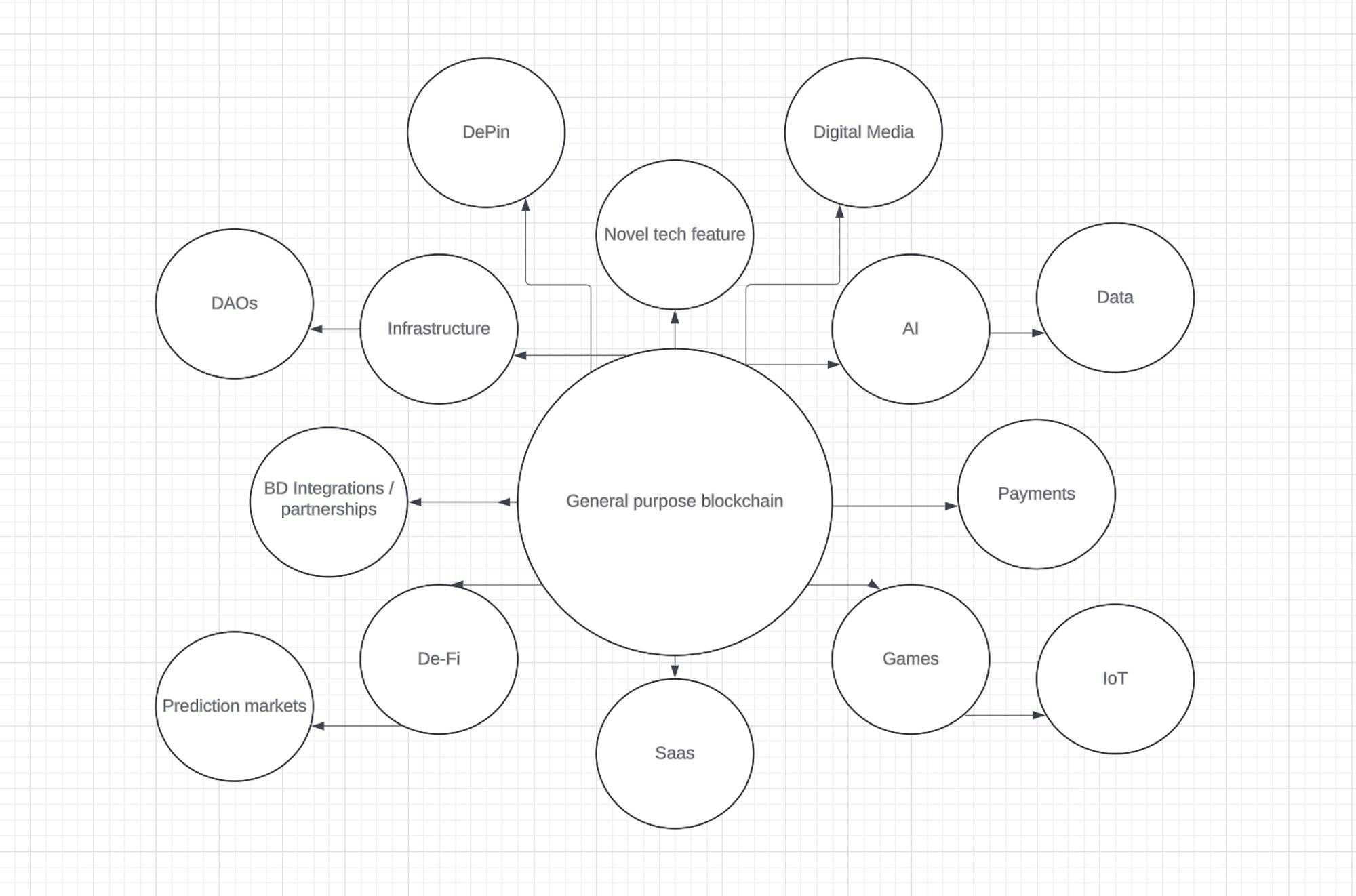
The general model shows a classic case of fragmentation. Unfortunately, mass-market penetration and fragmentation don’t go hand in hand. While ambitious, the effort required to execute this approach is enormous. Teams lacking sufficient talent or resources pursuing this method are likely to run out of runway earlier, wasting time, energy, and capital that could have been used to achieve scale.
Solution: Focus Is Key to Mass Adoption
I believe blockchains are like cities. Like all cities, their demand is driven by the attractions and activities they offer. Therefore, I believe breakthrough consumer adoption will come from teams focusing on building top-tier attractions within their “city.” Once you have one compelling attraction that draws people into your ecosystem, you can build an entire city around it.
Consumer-specific blockchain:
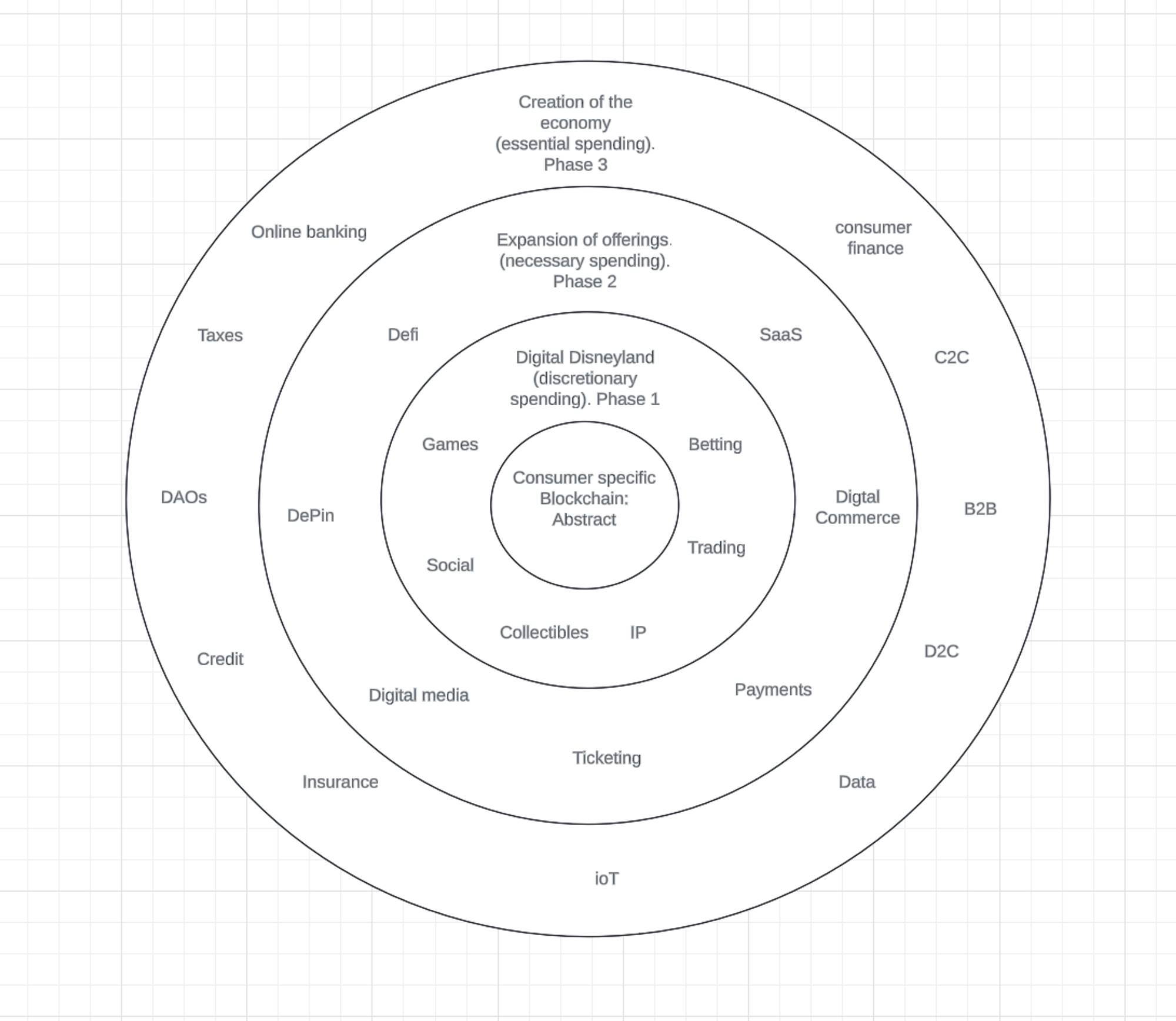
Based on the above, I conclude that our lack of mass adoption isn’t due to inability, but rather a lack of focus on the right approach. General-purpose blockchains and consumer-centric blockchains are not interchangeable. Building a “consumer chain” isn’t just a catchy slogan—it’s a fundamental goal and mindset that hasn’t been fully embraced. Recognizing this gap revealed a unique opportunity in the blockchain space, prompting Igloo to acquire the Frame team to help build Abstract.
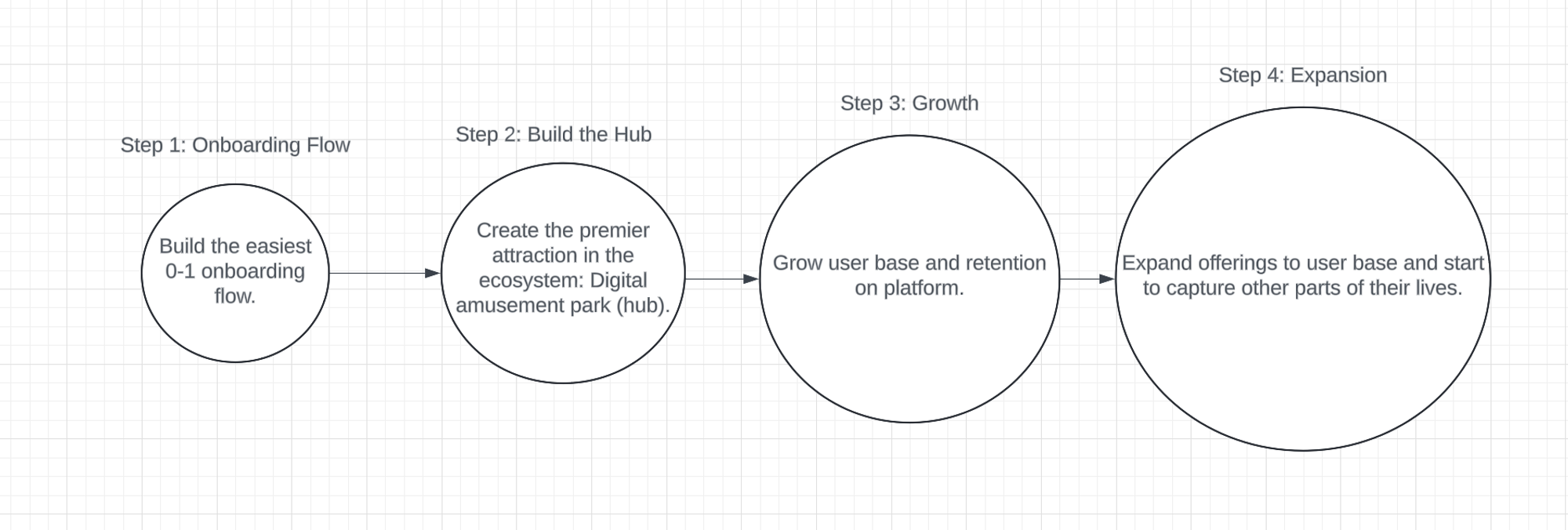
Our team is committed to creating a premier destination on-chain—a place designed to be the most entertaining corner of the internet, what I call the “digital amusement park of crypto” or the “Disneyland of the internet.” The diagram below highlights our unwavering commitment to delivering an exceptional 0-to-1 consumer experience, undistracted by other priorities. Over time, after building a loyal user base by introducing new products covering various aspects of life, we can gradually evolve into a general-purpose chain. For us, this highly concentrated strategy—achieving concrete success first before expanding—is superior to the fragmented approach of general-purpose chains.
The path to Abstract's success:
Consumer Crypto Is the Last Major Frontier in Cryptocurrency
The current crypto market resembles the early 2000s internet boom. During the first decade of that era, innovative infrastructure companies emerged, but only a few achieved widespread acceptance. Over time, only those achieving breakout adoption survived and thrived. Today, crypto is at a similar inflection point. After ten years of infrastructure development, the industry needs to move toward the mainstream.
However, public sentiment around crypto remains fragile. Currently, the space risks being seen as a haven for gambling and high-risk financial behavior. As more people suffer losses, the perception of crypto as a scam targeting reckless gamblers solidifies in the public consciousness. While this might seem humorous to seasoned crypto users, it’s a very real concern for the average person—and unfortunately, it’s the prevailing narrative today. I worry that if we fail to achieve meaningful mass adoption soon, the entire industry’s potential could be constrained. Therefore, I believe consumer crypto is the most critical and final frontier in the lifecycle of cryptocurrency.
Community Questions
To wrap up, I asked my X community if they had any questions about consumer crypto. Below are some of their questions and my responses.
Question 1
Nejmo @ExpensiveJPEG: What untapped niches in the crypto consumer market are worth exploring?
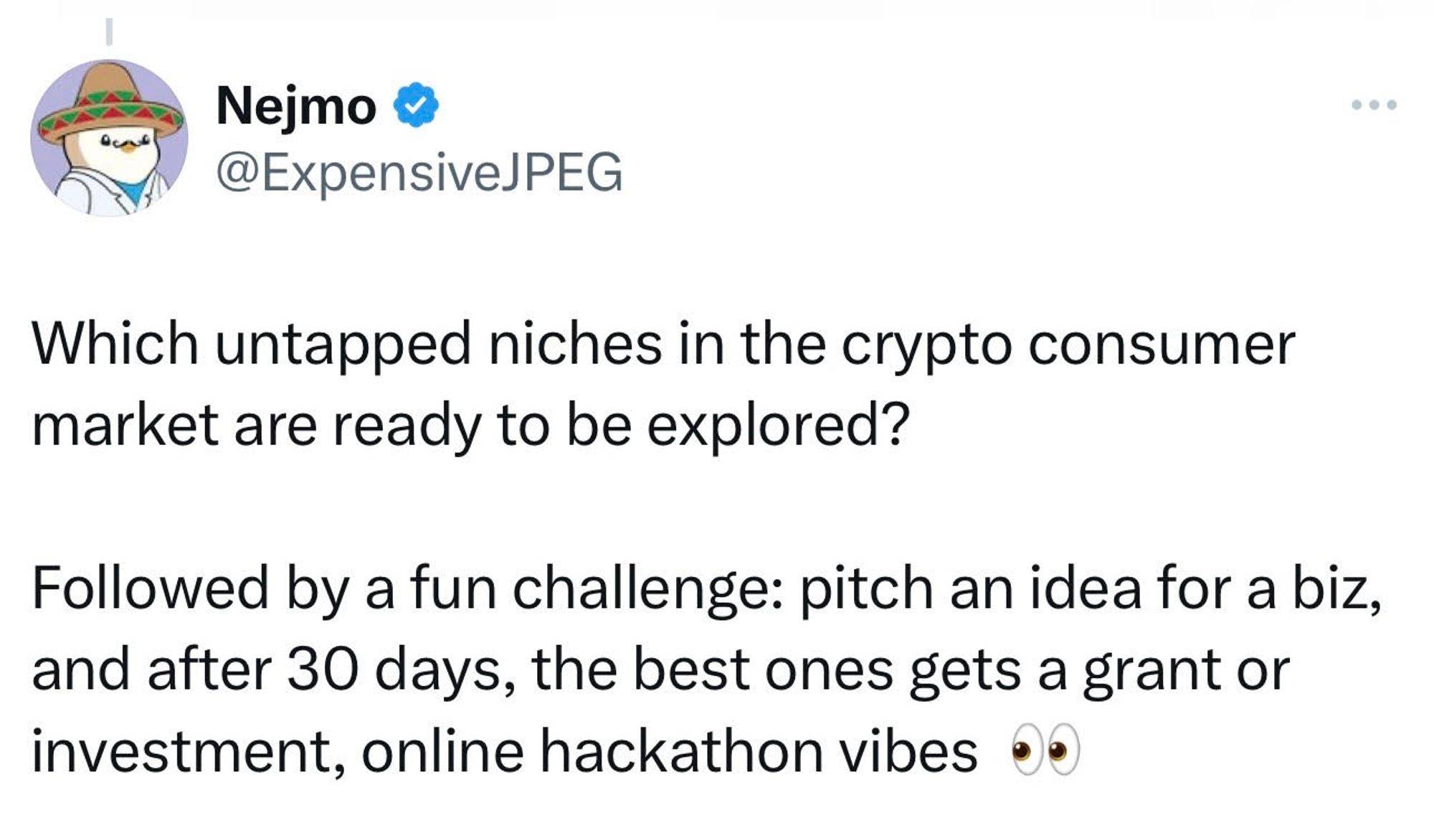
Answer: Tangibility.
One major breakthrough of tokenization is making intangible things tangible. A huge potential innovation in crypto may lie in influencing and extracting value from culture through tokenization. Let me explain: since ancient times, investors have tied their investment allocations to tangible value, P/E ratios, or future projections. Only with crypto did symbolic value emerge as a new concept—but until now, I haven’t heard anyone describe it this way. To me, a new asset class has been unlocked, marking a paradigm shift where intangible elements of culture can now become tangible. I believe the biggest opportunity in tokenization lies in tokenizing influence and ultimately making influence tangible. In the past, we’ve seen products like Bitclout and Friendtech attempt to crack this. But I don’t think any truly succeeded. In my view, combining pump.fun with Bitclout, Polymarket, and an Instagram-like product could create one of the most valuable companies in crypto.
Question 2:
Fifi @fifilechien: Is creating entirely new products really more efficient than improving existing ones?
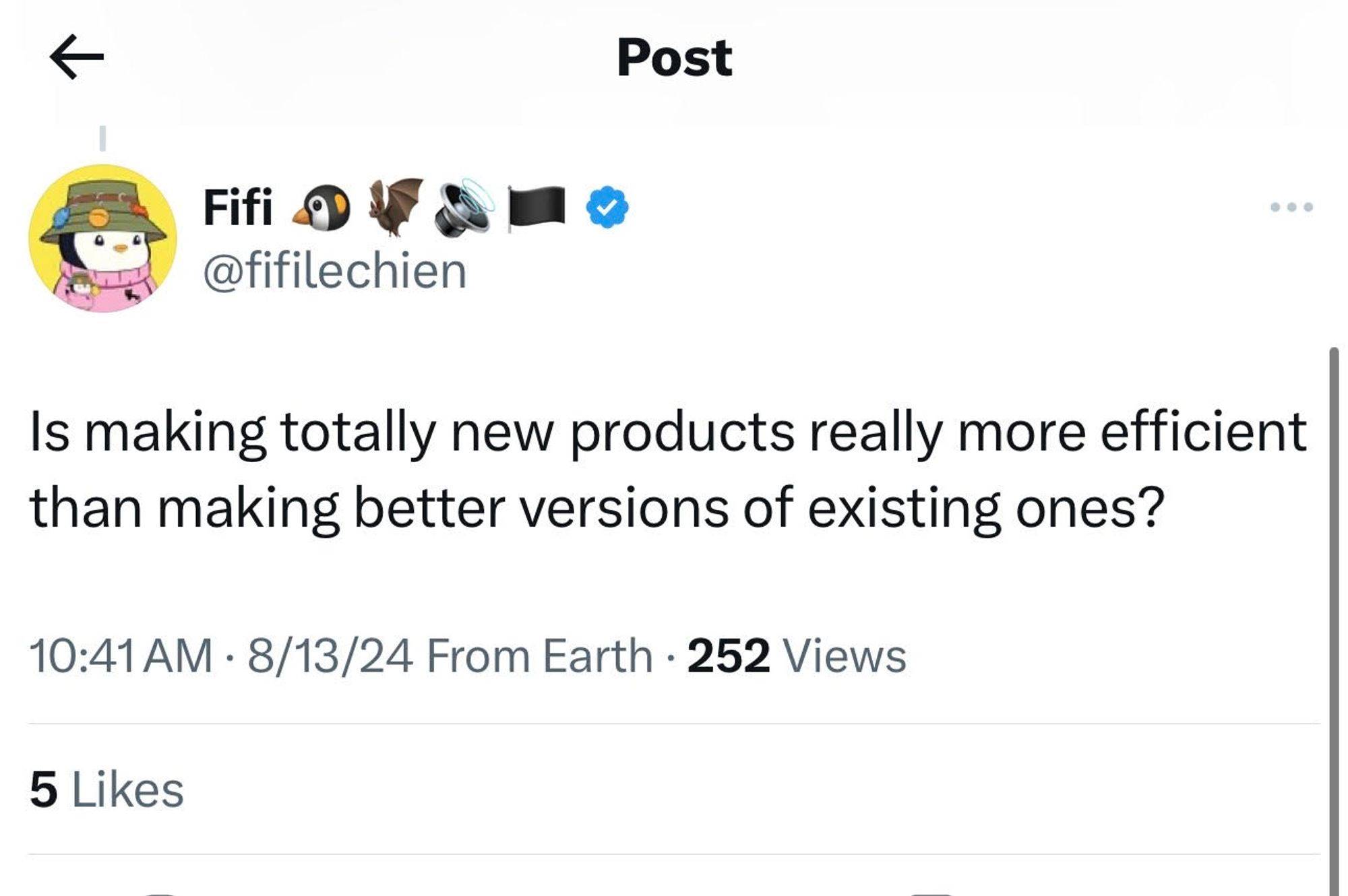
Answer: Don’t reinvent the wheel—for now.
Developers in crypto often try too hard to reinvent foundational technologies. Today, there are breakthrough consumer products that, if enhanced with crypto’s infrastructure and incentive mechanisms, could scale tenfold. Instead of trying to invent a completely new model, build on existing models and add crypto on top. I believe many consumer crypto applications remain undeveloped, while their Web2 counterparts await unlocking massive growth potential through crypto integration.
Join TechFlow official community to stay tuned
Telegram:https://t.me/TechFlowDaily
X (Twitter):https://x.com/TechFlowPost
X (Twitter) EN:https://x.com/BlockFlow_News
 @AbstractChain