








Quick Look: Solayer, Solana's New Restaking Star Project
TechFlow Selected TechFlow Selected
Quick Look: Solayer, Solana's New Restaking Star Project
Solayer, as a restaking protocol within the Solana ecosystem, leverages decentralized cloud infrastructure to provide users with restaking opportunities to earn yields.
 Navigating Web3 tides with focused insights
By shaofaye123, Foresight News
As the market gradually recovers, Sanctum’s airdrop has landed but failed to meet expectations. With a large amount of capital being “unlocked,” what project within the Solana ecosystem will capture attention and attract significant inflows next?
Solayer, an emerging restaking project on Solana, announced on July 2 the completion of its Builders Round, backed by a strong lineup of investors. By July 15, its platform TVL had surpassed $120 million. With airdrop anticipation building, can Solayer attract more capital? How does one participate? This article provides a quick overview of this rising star in Solana’s restaking space.
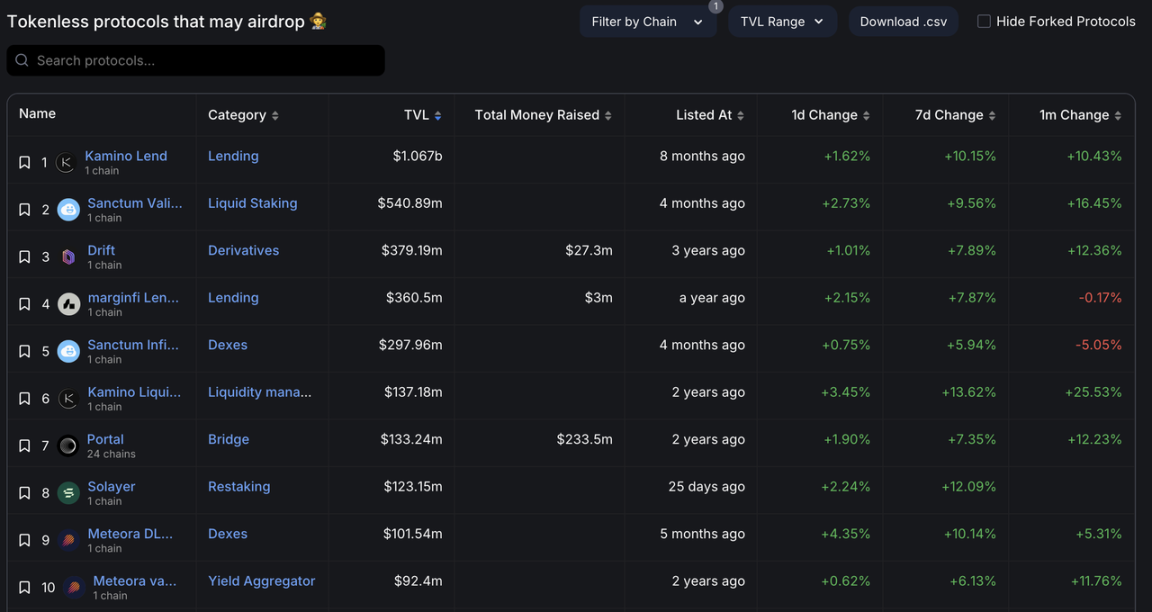
Source: https://defillama.com/airdrops?chain=Solana
What is Solayer?
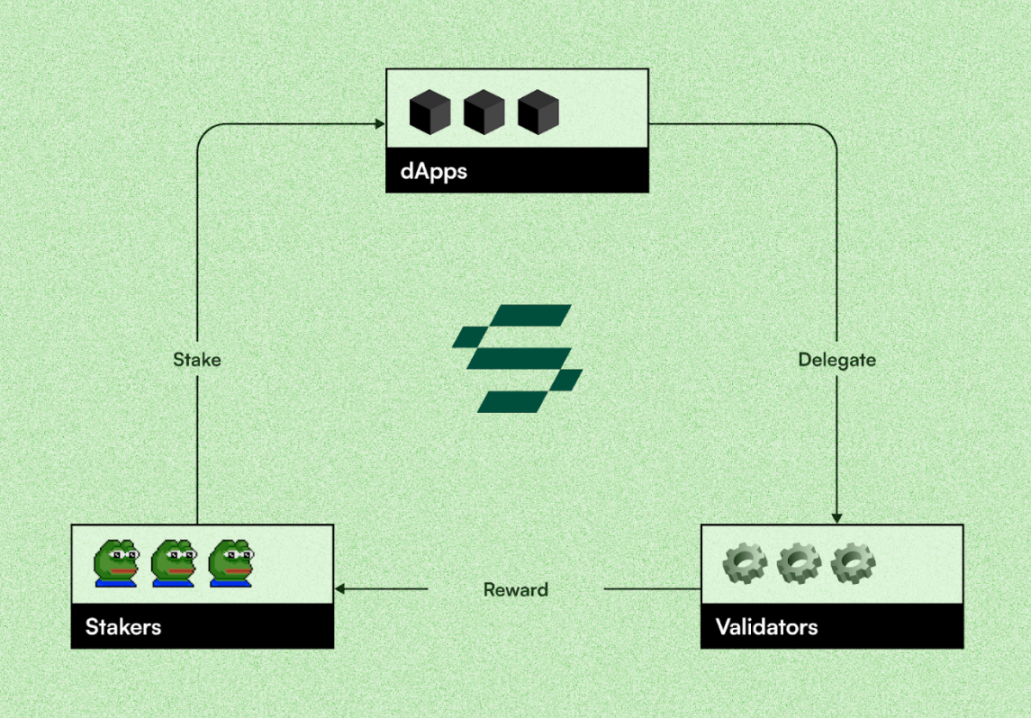
Solayer is a restaking protocol in the Solana ecosystem that leverages its advantage as decentralized cloud infrastructure, enabling SOL holders to stake their assets into other protocols or DApp services within the Solana ecosystem that require security and trust. In addition to POS staking rewards, users can also earn MEV and AVS-related yields. Currently, Solayer supports deposits of native SOL, mSOL, JitoSOL, and other assets.
Solayer uses Solana stakers as validators, providing high decentralization and security while avoiding the trust risks associated with centralized service providers or proprietary tokens. It offers decentralized applications (DApps) a simple way to create their own AVS LSTs. These tokens receive base rewards from Solana's native staking yield, plus additional MEV revenue. DApps can also earn a portion of staking commissions and, in the future, configure underlying operators for delegation.
Source: https://docs.solayer.org/
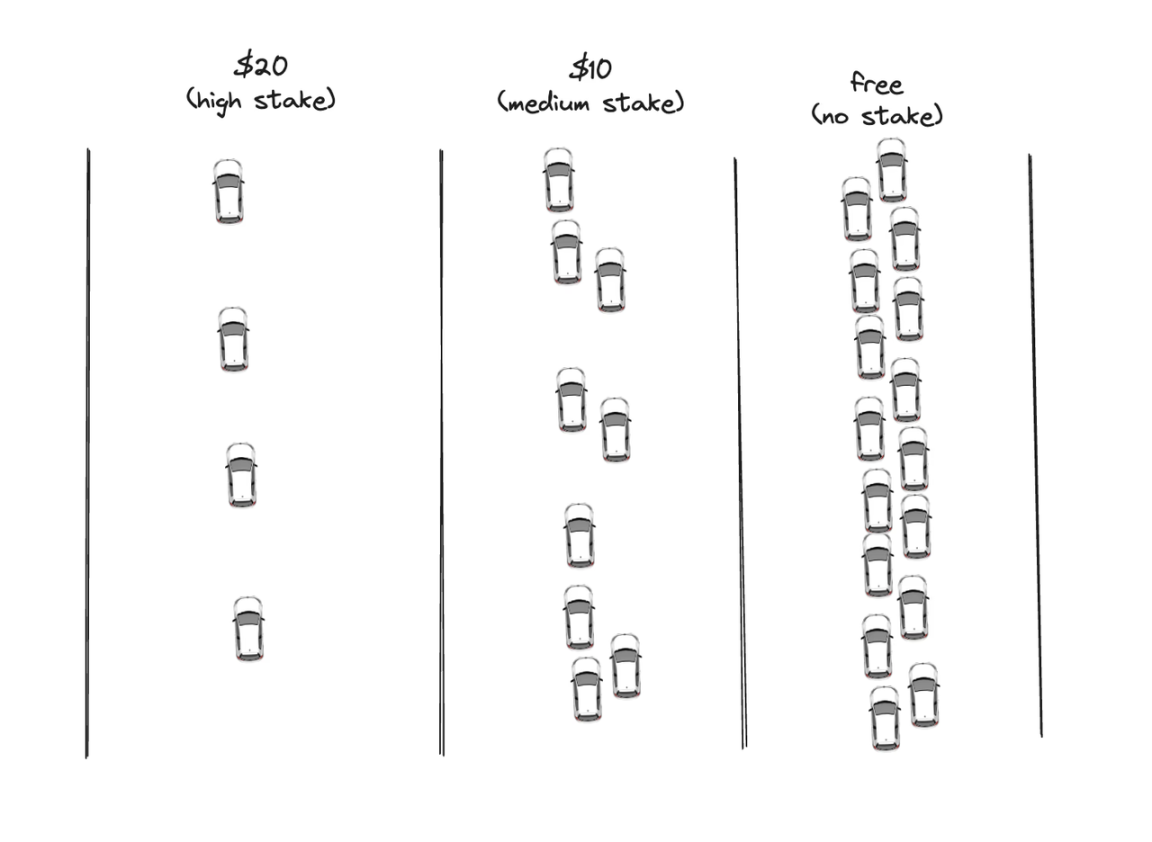
Solayer’s role can be described in simpler terms. Imagine Solana as a highway, where different lanes have varying tolls and congestion levels, and different DApps are vehicles with differing speed requirements and acceptable toll costs. Solayer acts as a coordinator between users’ funds, the highway, toll collectors, and other parties.
Source: https://docs.solayer.org/
Funding Overview
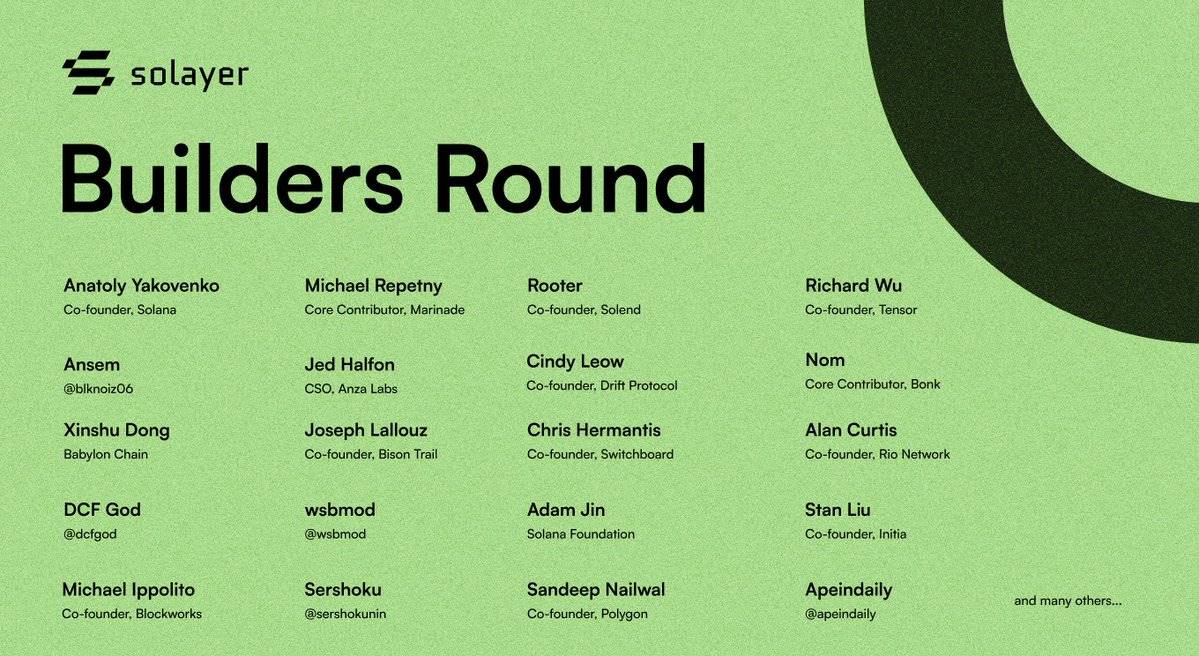
Solayer has not yet received institutional investment. However, its recently announced Builders Round on July 2 features a powerful group of individual backers, including Anatoly Yakovenko, co-founder of Solana Labs; Rooter, founder of Solend; Richard Wu, co-founder of Tensor; and Sandeep Nailwal, co-founder of Polygon.
Source: https://x.com/solayer_labs/status/1807797264934678588
EigenLayer on Solana: Exogenous AVS vs. Endogenous AVS
Functionally similar to EigenLayer, the key difference lies in the primary problems each restaking system aims to solve.
EigenLayer’s restaking primarily serves Ethereum scaling solutions. But since Solana is an integrated blockchain—unlike modular Ethereum—it doesn’t rely on Layer 2s, so its restaking system must focus more on applications. Solayer supports not only exogenous AVS (Exogenous - Actively Validated Services), but especially emphasizes endogenous AVS (Endogenous - Actively Validated Services) on the Solana blockchain. Its goal is to provide greater block space and priority transaction inclusion possibilities for decentralized applications (DApps) on Solana.
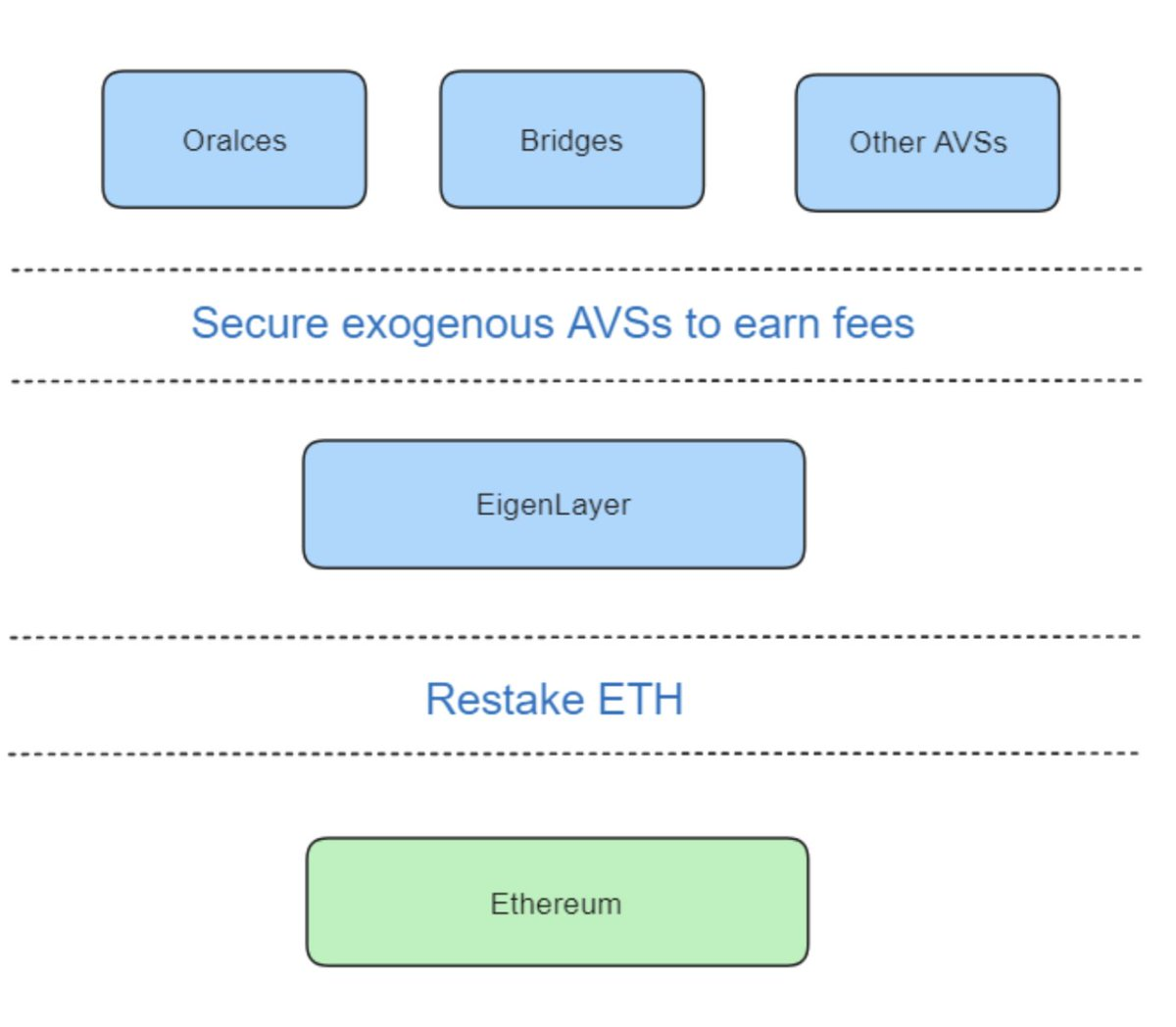
Solayer refers to EigenLayer’s restaking design as exogenous actively validated services (AVS). These systems operate off-chain or outside Ethereum’s mainnet, leveraging Ethereum’s proof-of-stake security.
Defined as Exogenous AVS: Off-chain or external-to-mainnet systems that share proof-of-stake security.
Examples include cross-chain bridges, shared sequencers, and oracle networks.
Source: https://docs.solayer.org/
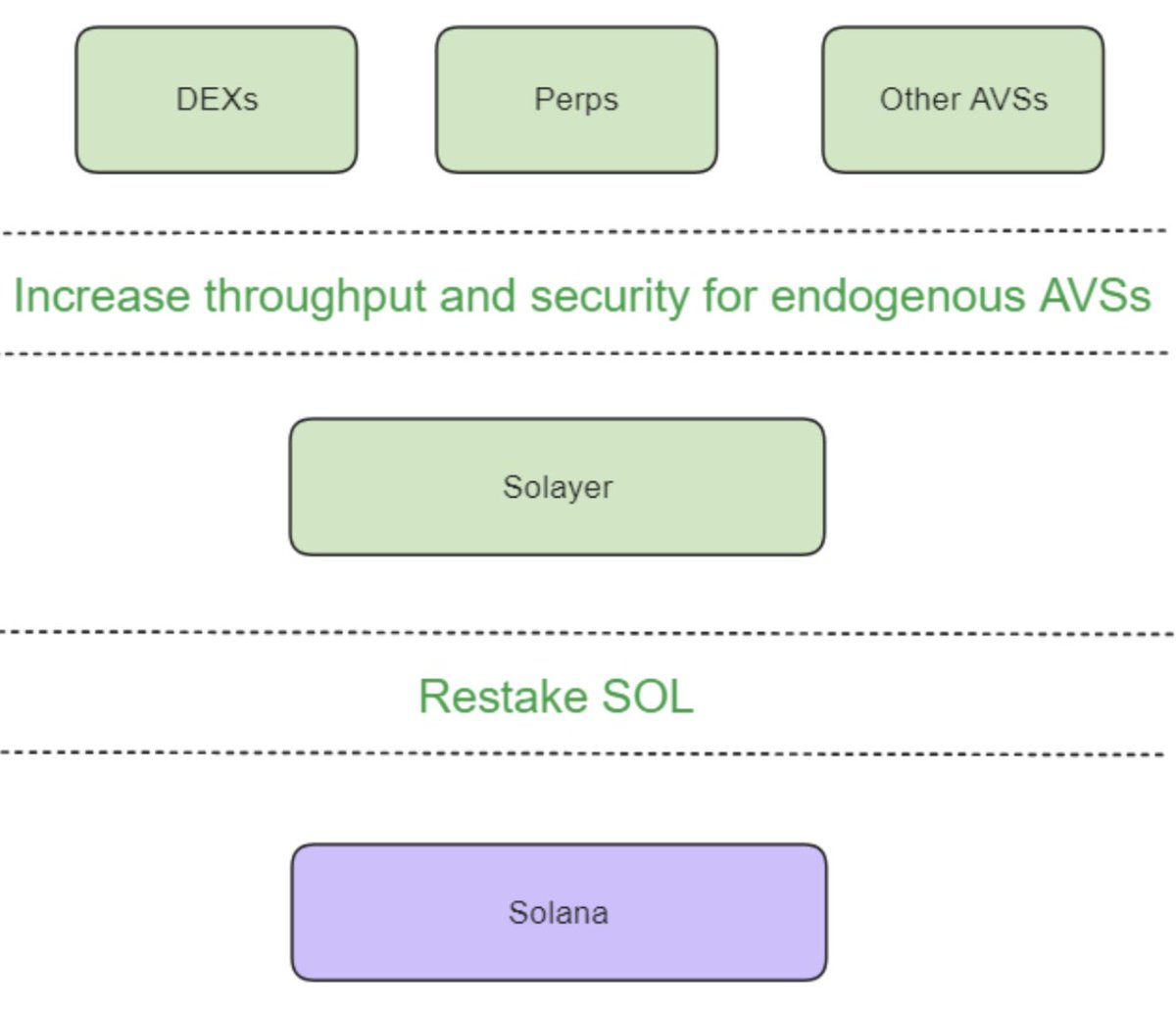
Solayer redefines restaking for Solana, simultaneously addressing developers’ needs for security and performance—especially as congestion increases on the base L1 network. It introduces endogenous AVS: native Solana programs using SOL PoS to configure application-level security and throughput.
Defined as Endogenous AVS: Designed to support on-chain decentralized applications (DApps). The goal is to offer DApps greater guaranteed block space and prioritize transaction inclusion.
Source: https://docs.solayer.org/
Additionally, the AVS unbonding process is managed separately by a delegation manager. To provide greater flexibility, Solayer allows custom unbonding processes, with a maximum duration of no more than two days. Solayer will also implement an emergency exit mechanism to release user-staked assets if an AVS ceases operation.
How to Restake on Solayer?
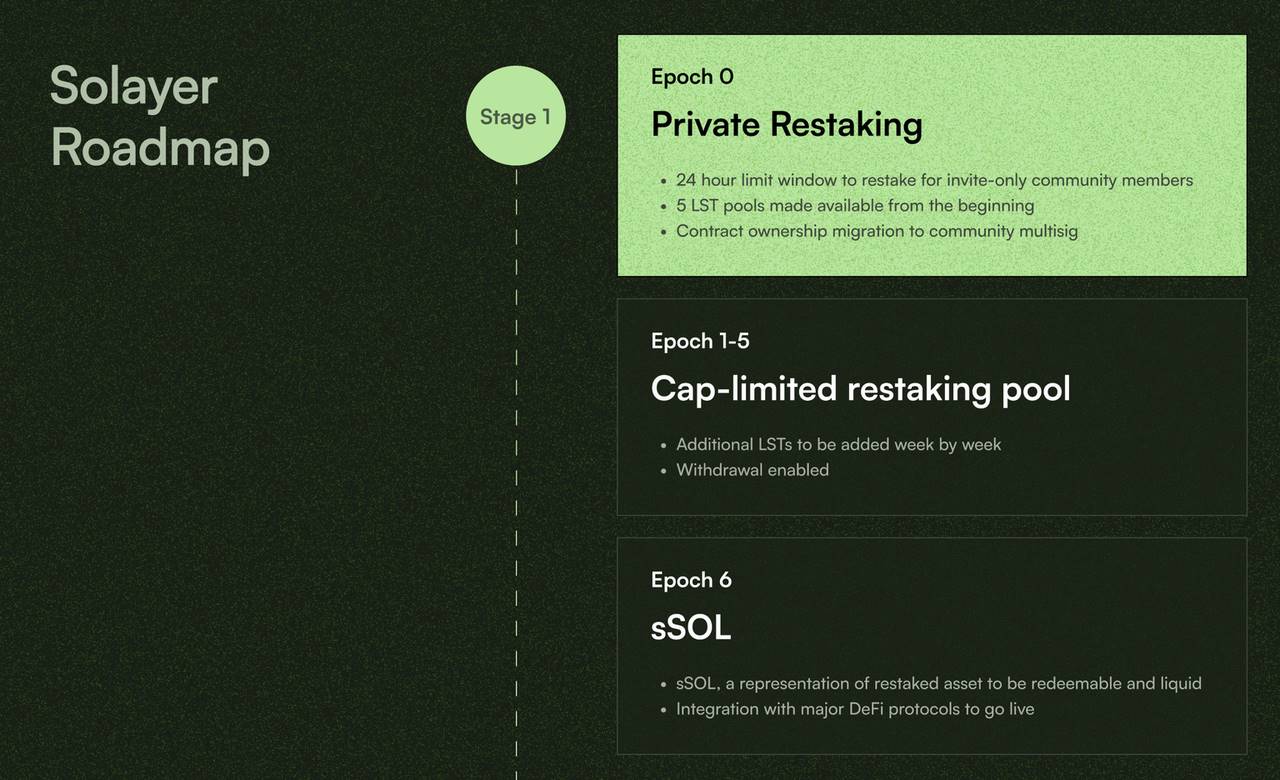
Solayer Labs is developing a multi-phase points program, prioritizing early participants. The earliest depositors (on the Early Supporters whitelist) have a 24-hour window to deposit any amount and receive higher point multipliers.
Phase One began on May 27, with a total value locked (TVL) cap of $50 million for Cycle 1. The cap was reached by June 15. During this period, depositing over 10 SOL unlocked a permanent referral code. Users could enter the task interface and complete three or more tasks to earn more points. Tasks were similar to those of other projects—inviting friends, depositing LSTs, maintaining deposits across multiple phases, etc.
Currently, the protocol has entered Phase Three, with no TVL cap and open staking. Depositing native SOL earns more points compared to other tokens.
Restaking Security and Future Outlook
Restaking projects, built atop liquid staking, allow idle staked assets to generate additional returns and expand base-layer security for networks like Ethereum. However, there remains significant skepticism about whether Solana even needs restaking. Ryan Connor of Blockworks Research notes that Ethereum is a "modular" blockchain relying on Layer 2s, with a vast staking base making restaking highly practical. In contrast, Solana is an "integrated" blockchain whose demand for restaking is far smaller than Ethereum’s or other modular systems. Furthermore, inherent protocol and composability risks in restaking make many users wary—lack of trust in protocols, fear of hacks, and so on—are ticking time bombs. Yet Solayer, as currently the highest TVL restaking protocol on Solana, still deserves attention.
Join TechFlow official community to stay tuned
Telegram:https://t.me/TechFlowDaily
X (Twitter):https://x.com/TechFlowPost
X (Twitter) EN:https://x.com/BlockFlow_News
 Foresight News






