Crypto Industry Trends in the First Half of 2024: Ethereum Dominance, Rise of Non-Western Startups, and Diversified Talent Backgrounds
TechFlow Selected TechFlow Selected
Crypto Industry Trends in the First Half of 2024: Ethereum Dominance, Rise of Non-Western Startups, and Diversified Talent Backgrounds
20-30% of unicorn companies are founded by solo founders.
 Navigating Web3 tides with focused insights
Author: @QwQiao & @xyczzcyx
Translated by: TechFlow
At @alliancedao, we receive approximately 3,000 applications each year to join our crypto startup accelerator. We collect data such as the blockchains they use, product types, and geographic locations. Given the large sample size and our neutral stance on these factors, we are able to gain unique insights into industry trends.
Blockchains
Layer 1
Ethereum remains the dominant ecosystem. However, Solana is recovering after hitting a low in the second half of 2022, possibly linked to FTX's collapse around the same time. Bitcoin is experiencing a resurgence driven by the ordinals, runes, and Bitcoin L2 technology boom.
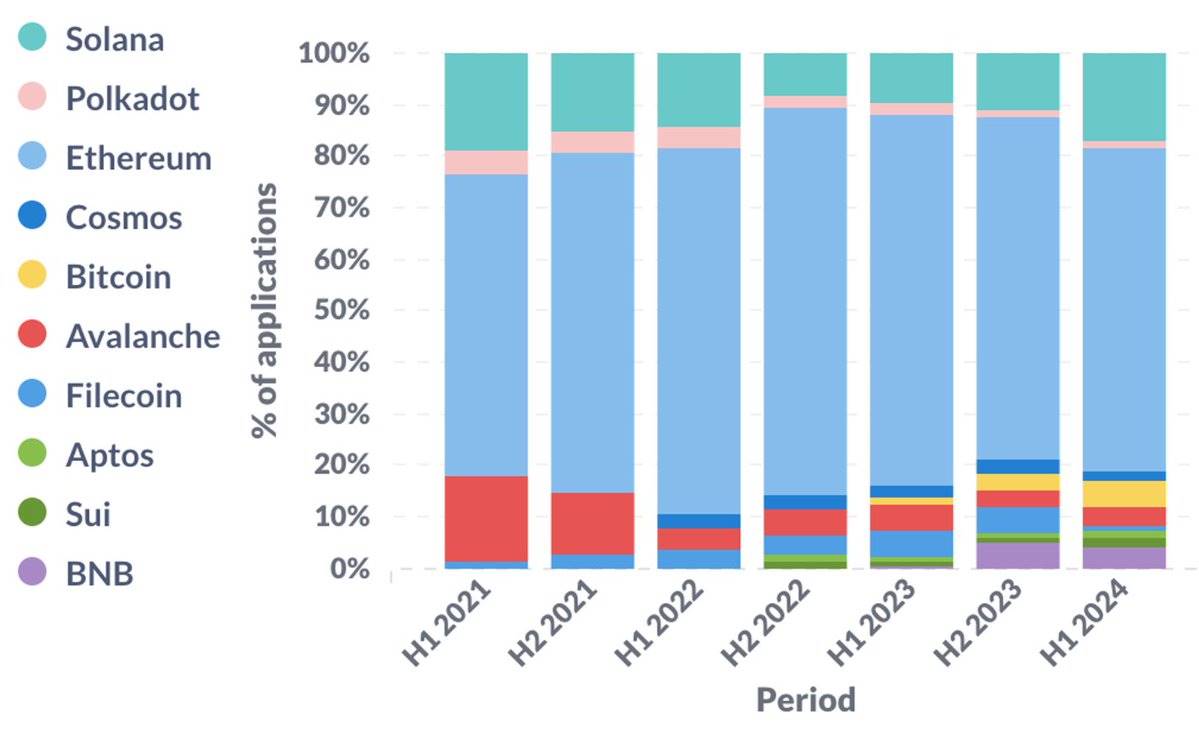
L1 share changes over time
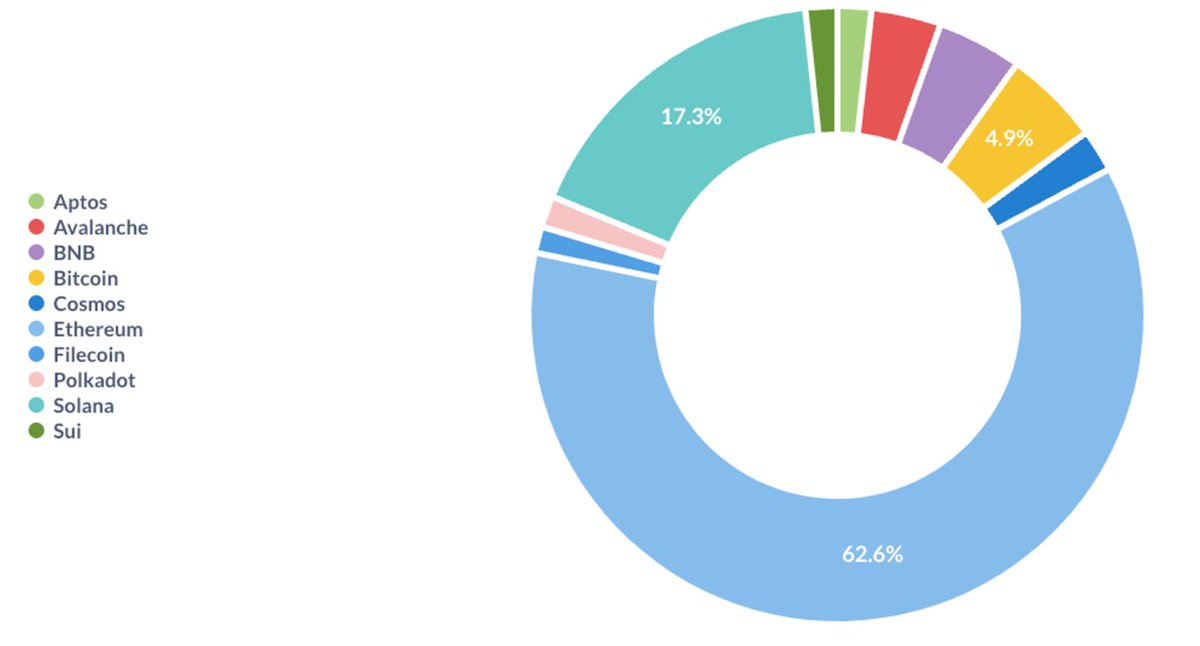
L1 distribution in H1 2024
Ethereum Layer 2
Focusing on Ethereum L2s (and sidechains), Optimistic rollups have gradually gained more traction over the past three years. Notably, in the first half of 2024, Base accounted for over a quarter of startups building on Ethereum L2s.
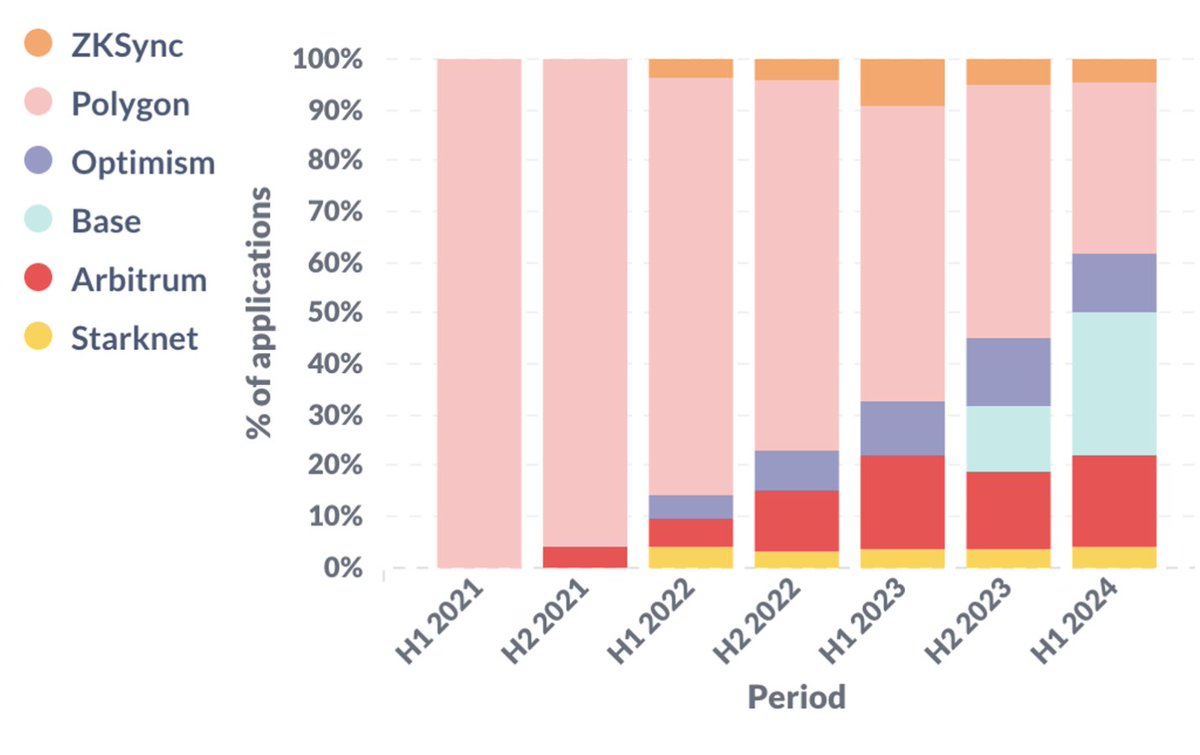
L2 evolution over time
Product Trends
An increasing number of startups are focusing on infrastructure, DeFi, payments, and the intersection of AI and crypto—often at the expense of NFTs. Within these areas, growth in infrastructure and AI aligns with public discourse. However, the rise of DeFi and payments may surprise many, as these areas have received little public attention. Coincidentally, we believe these two sectors are among the few verticals where crypto has found clear product-market fit (PMF).
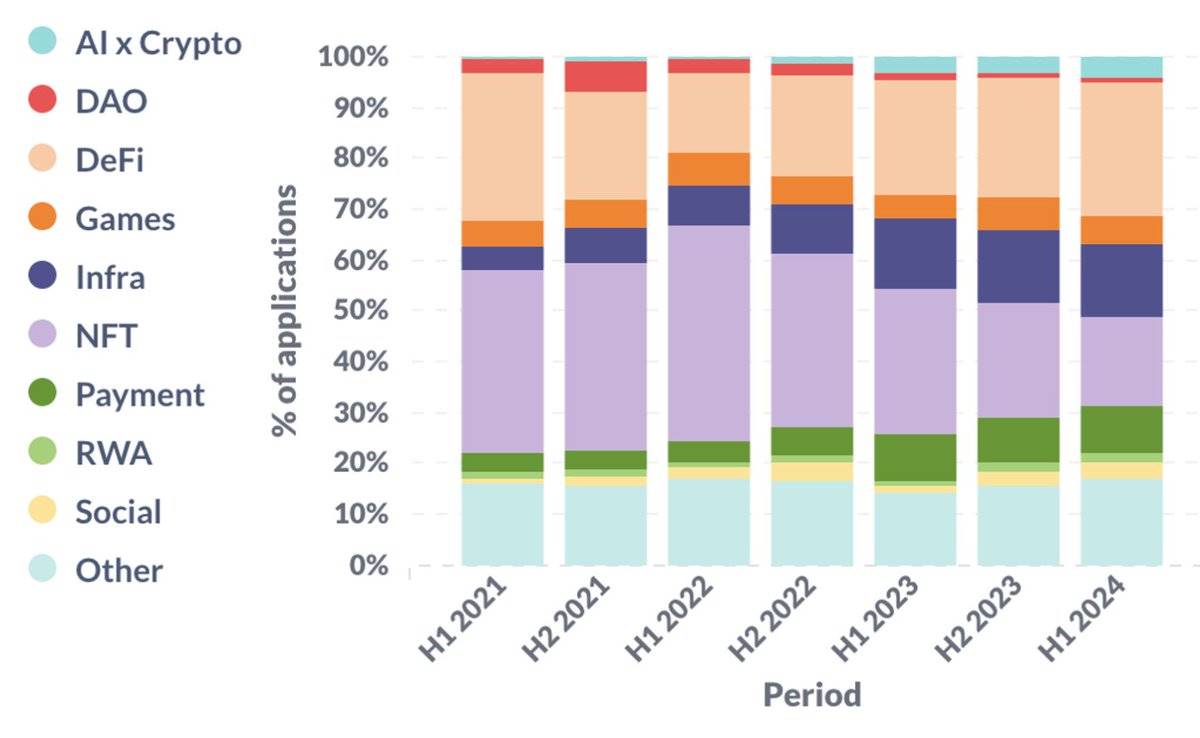
Product category distribution over time
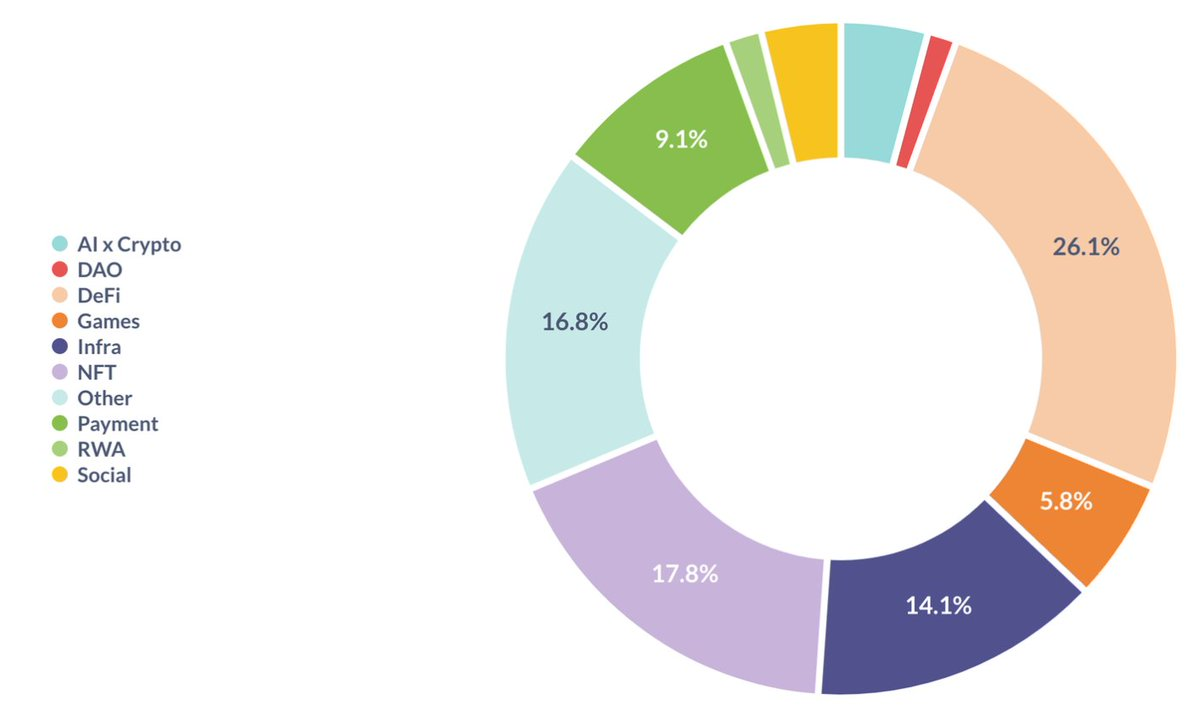
Product distribution in H1 2024
Note that this product categorization method is imperfect, as categories are not mutually exclusive. For example, a startup might operate in both gaming and NFTs—in which case we assign 0.5 weight to each category.
Geographic Distribution
In the first half of 2024, we observed a record low proportion of startups from the United States and Canada, while startups from Asia and Africa reached record highs. This shift may be due to 1) increased regulatory uncertainty in the U.S., and 2) growing real-world adoption of crypto in emerging markets.
Overall, North America, Europe, and Asia remain the three major regions, each contributing between one-quarter and one-third of all startups.
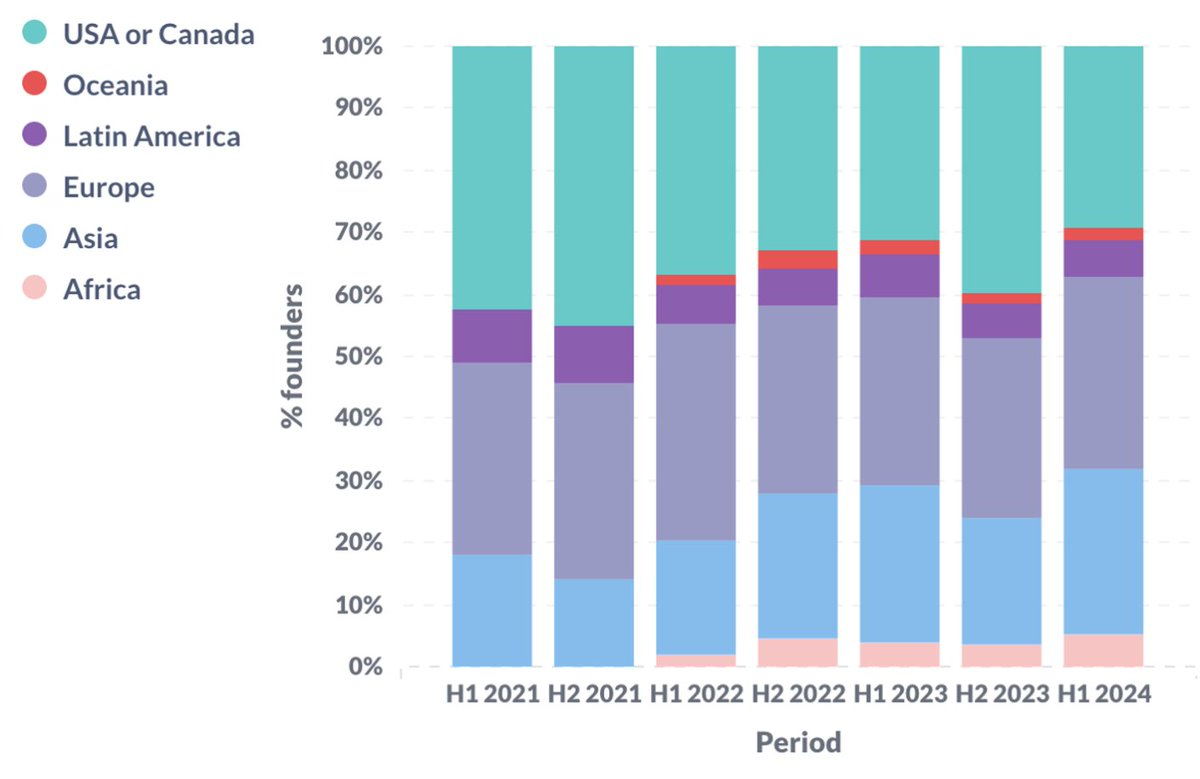
Geographic distribution over time
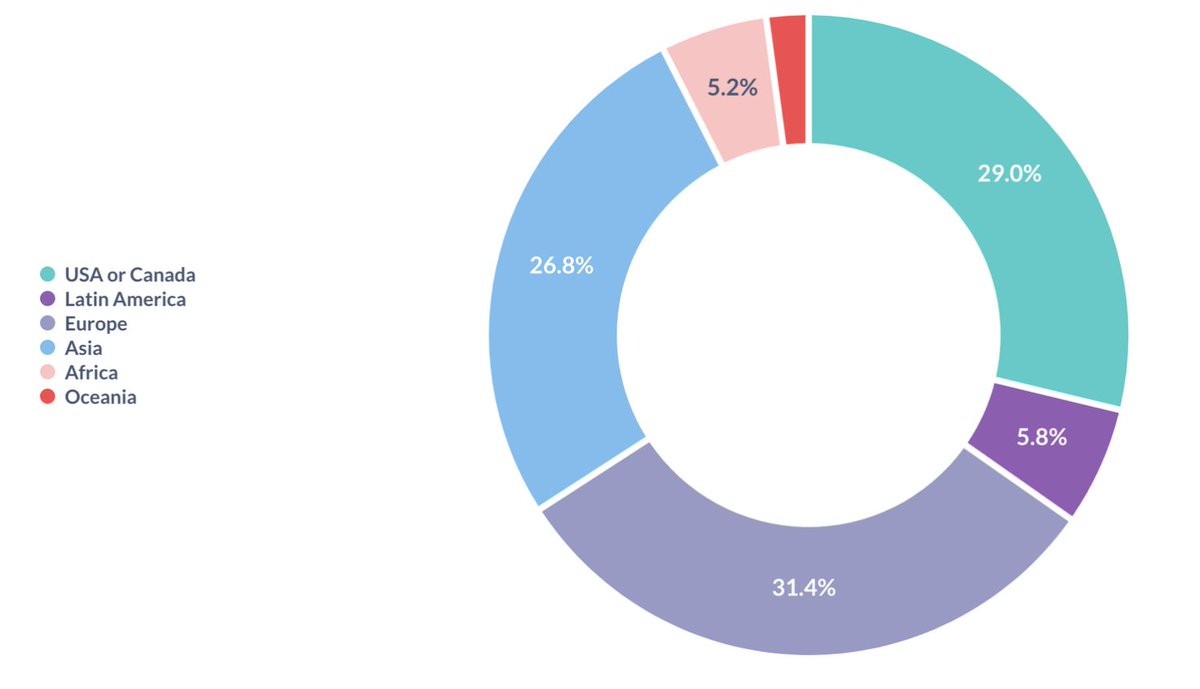
Geographic distribution in H1 2024
The following content may be particularly relevant to founders and venture investors. If you fall into either category, please continue reading.
Founder Backgrounds
Big Tech
The proportion of founders with big tech backgrounds peaked in 2021 and currently stands at 30%. We define big tech companies as technology firms within the S&P 500 index. The exact definition matters less than the trend over time.
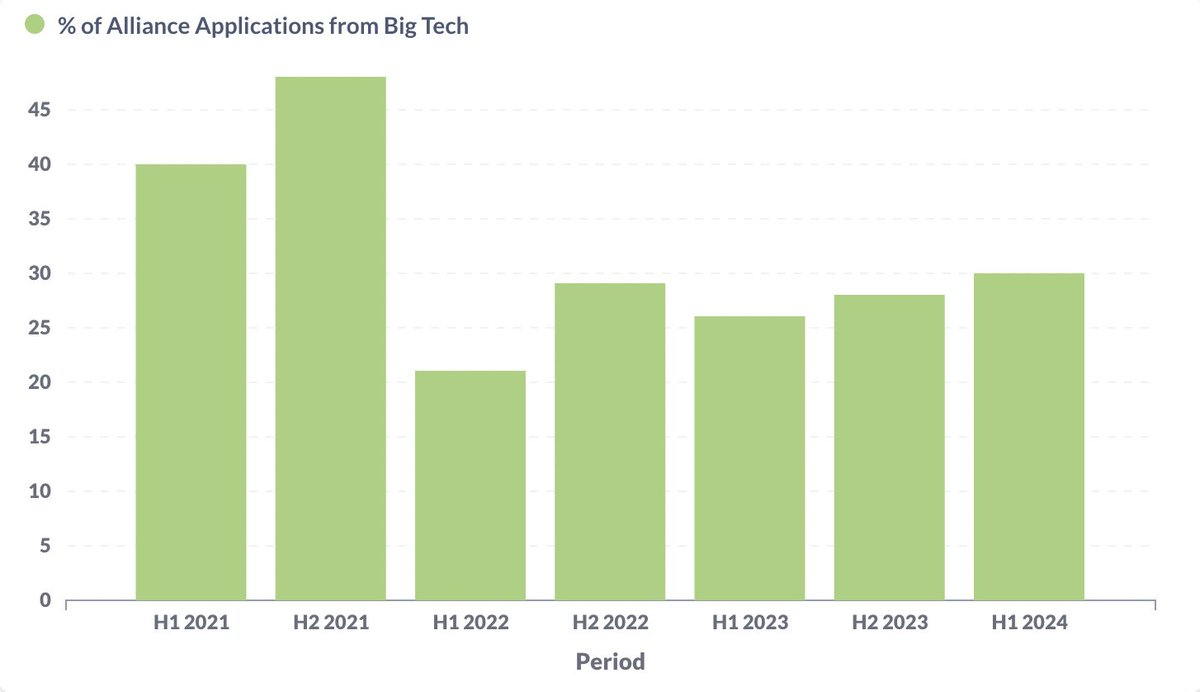
Proportion of founders with big tech backgrounds over time
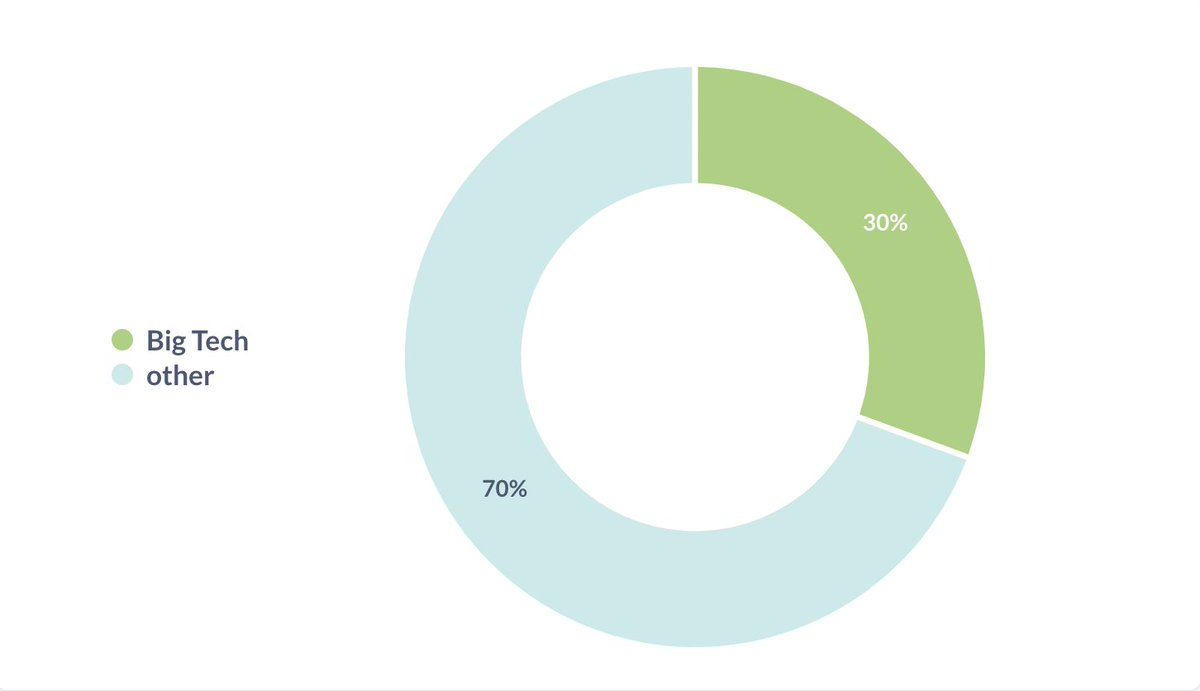
Proportion of founders with big tech backgrounds in H1 2024
Top-Tier Universities
Similarly, the proportion of founders graduating from top-tier universities peaked in 2021. We define top-tier universities as those ranked in the QS World Top 100.
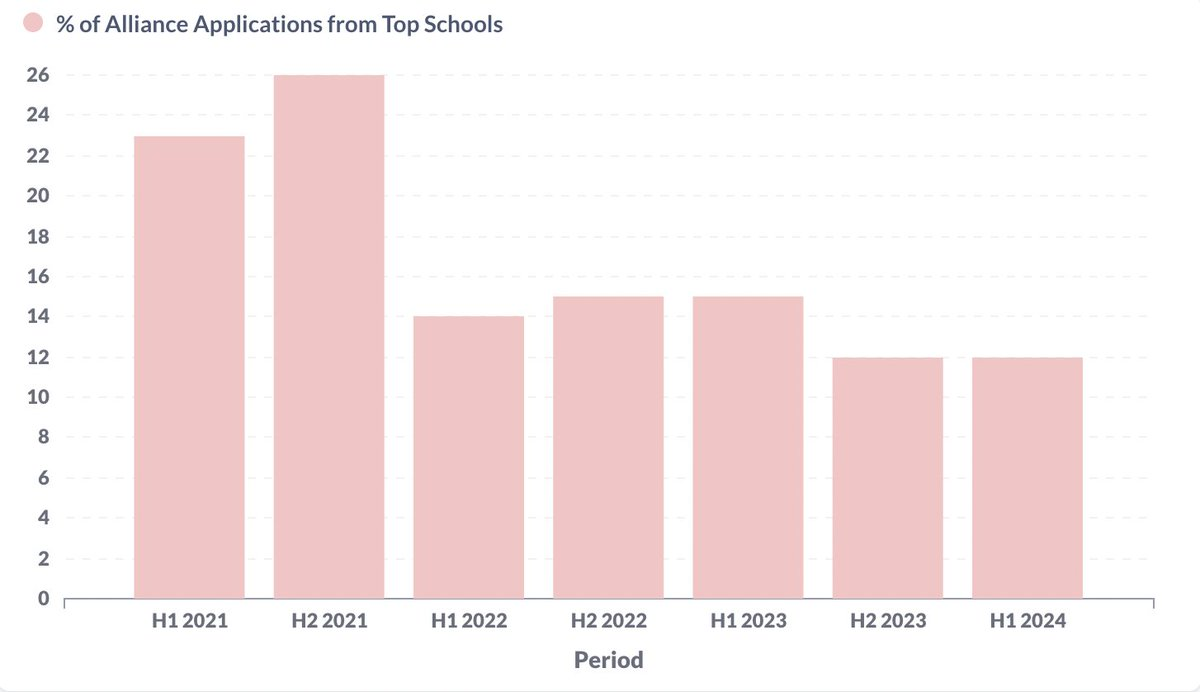
Proportion of founders from top-tier universities over time
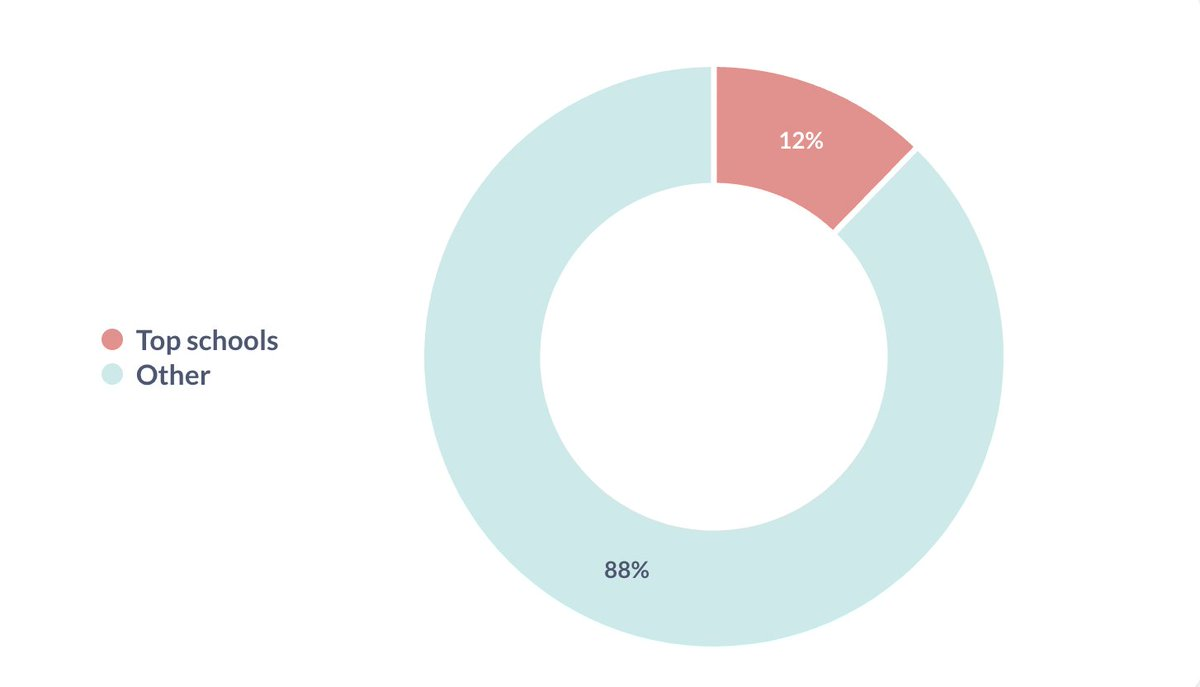
Proportion of founders from top-tier universities in H1 2024
Repeat Founders
Approximately 1 in 10 founders has previously started a startup.
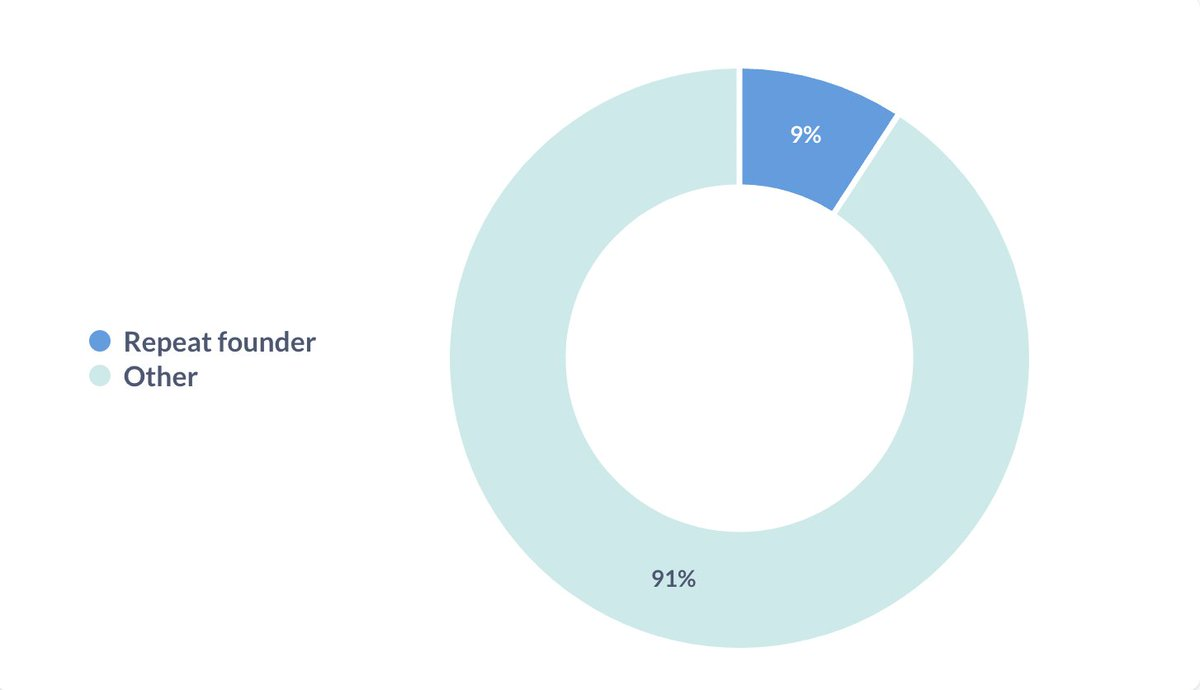
Repeat founders
Team Composition
Team Size
Over half of startups have team sizes between 2 and 5 members. We consider this the optimal size for pre-product-market-fit (PMF) startups.
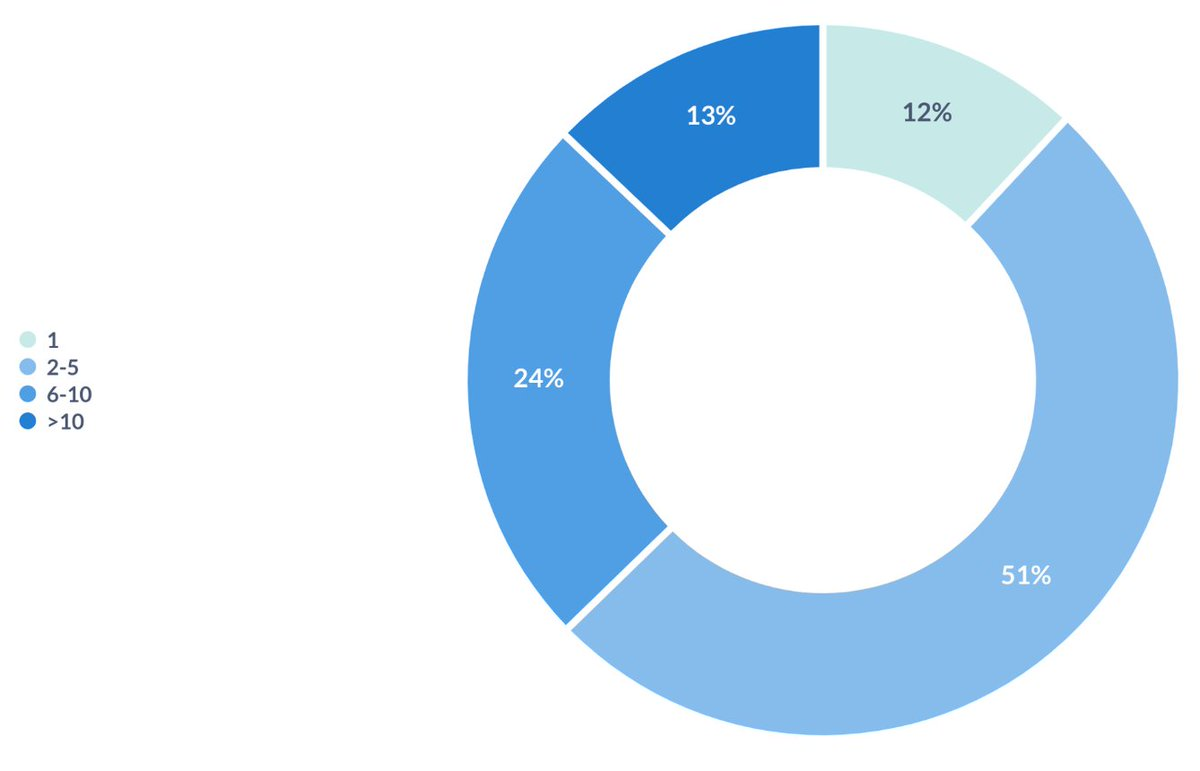
Team size
Number of Co-founders
Fewer than 40% of startups are founded by solo founders. For reference, various studies show that 20–30% of unicorns are founded by solo founders.
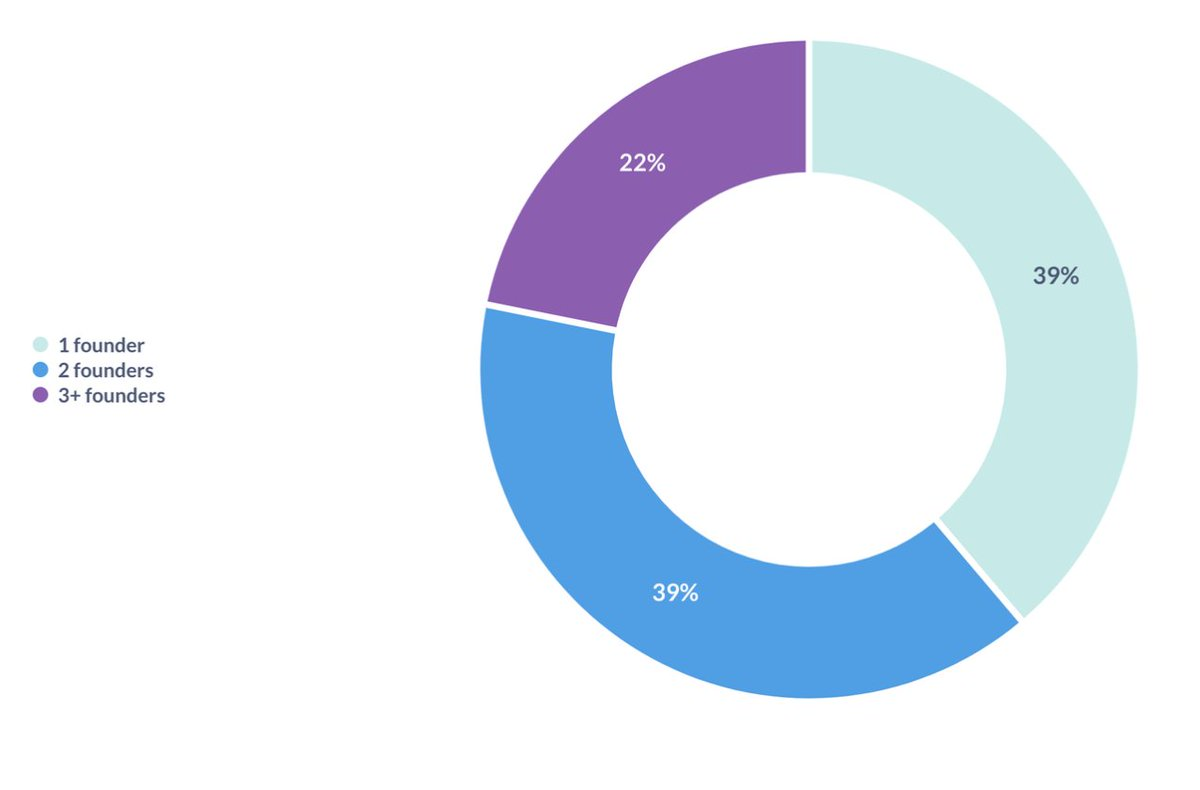
Number of founders
Equity Distribution
Among startups with two or more co-founders, roughly half split equity equally, while the other half do not.
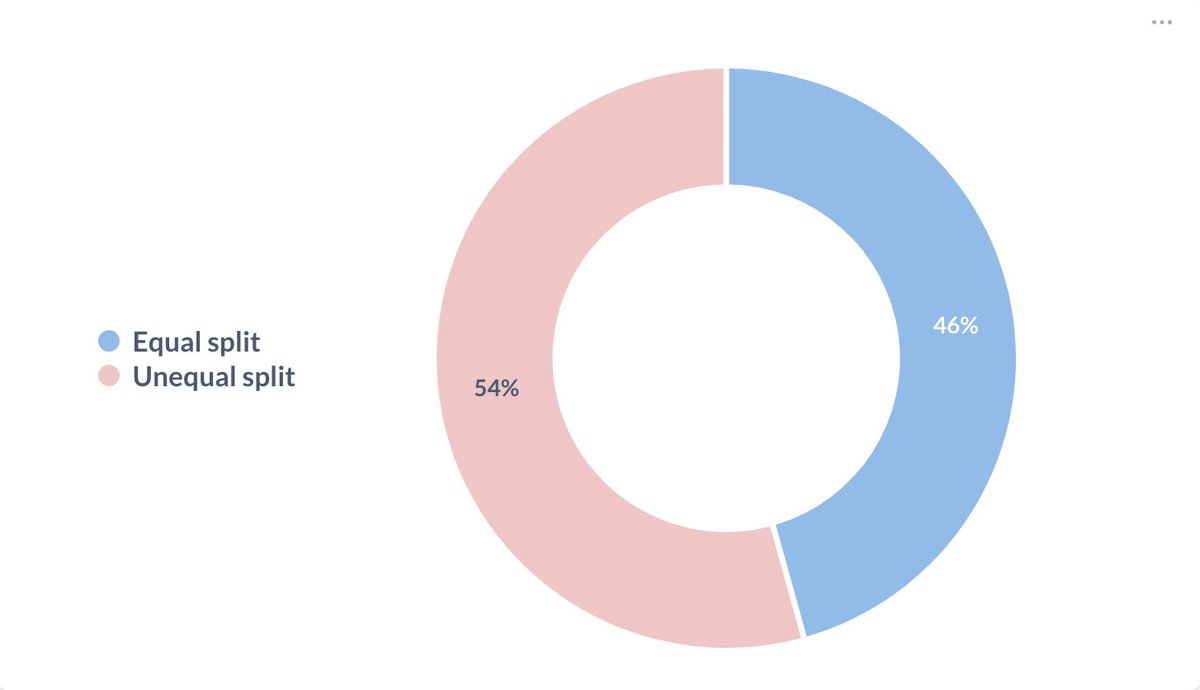
Equity distribution
Remote Work
Nearly three-quarters of startups operate fully remotely.
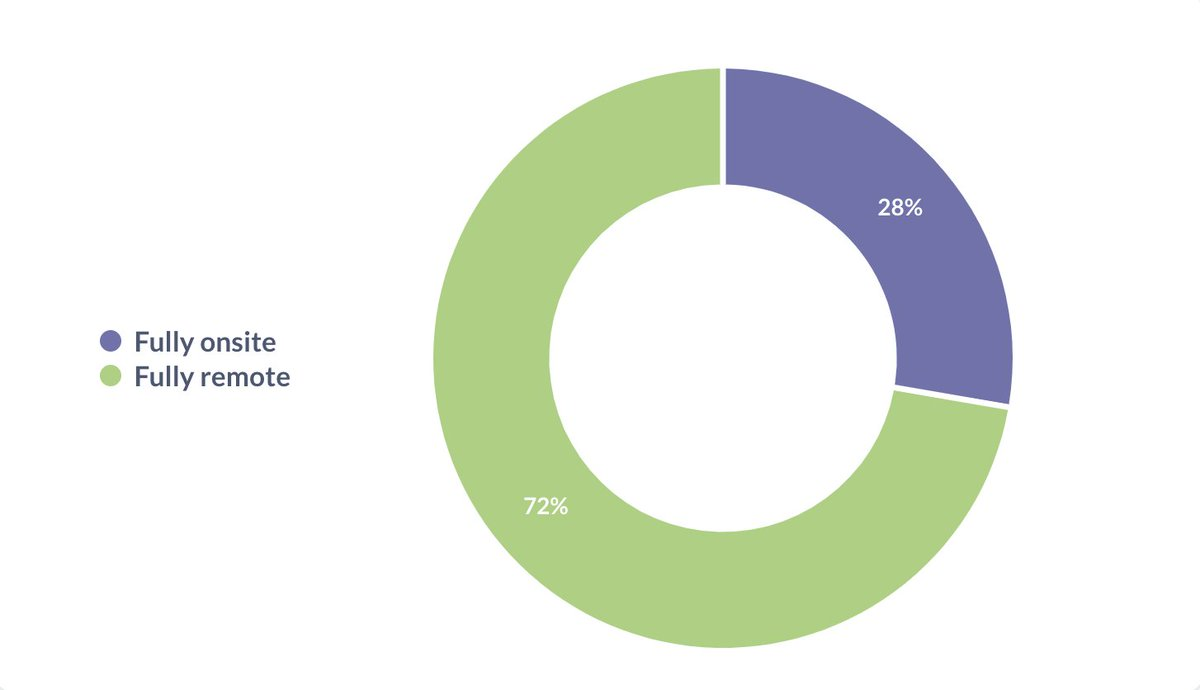
Remote work
Join TechFlow official community to stay tuned
Telegram:https://t.me/TechFlowDaily
X (Twitter):https://x.com/TechFlowPost
X (Twitter) EN:https://x.com/BlockFlow_News
 Alliance