5 Major Chart Patterns Every Cryptocurrency Trader Should Know
TechFlow Selected TechFlow Selected
5 Major Chart Patterns Every Cryptocurrency Trader Should Know
Mastering these five key patterns can significantly enhance your ability to navigate cryptocurrency market volatility.
 Navigating Web3 tides with focused insights
Author: Richard Knight
Compiled by: TechFlow

Mastering chart patterns is an essential skill for every cryptocurrency trader. This article introduces five of the most common chart patterns to help beginners identify market trends and provides practical trading strategies. Whether you're a novice or an experienced trader, these patterns can assist you in making smarter decisions in the cryptocurrency market.
1. Head & Shoulders
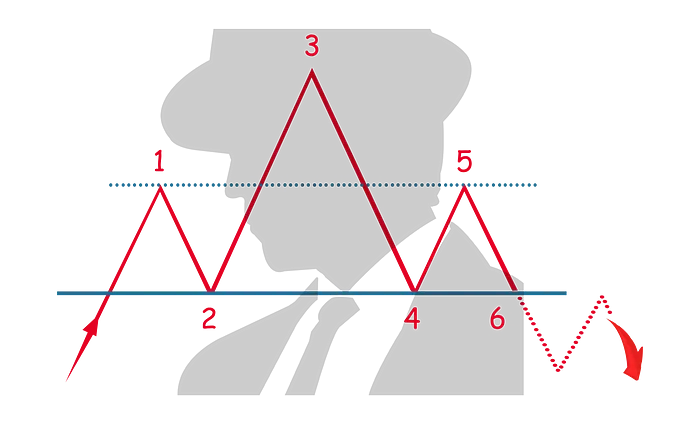
The head and shoulders pattern is a classic reversal signal indicating a shift from a bull to a bear market, or vice versa. It consists of three peaks: the first and third peaks (the shoulders) are of similar height, while the middle peak (the head) is higher. The neckline formed by connecting the lows between these peaks acts as a support or resistance line. A price break below (or above) the neckline signals that a reversal is likely underway.
Usage: Traders may short upon a breakdown in a bearish head and shoulders pattern, or go long upon a breakout in an inverse (reverse) head and shoulders pattern.
2. Double Top & Double Bottom
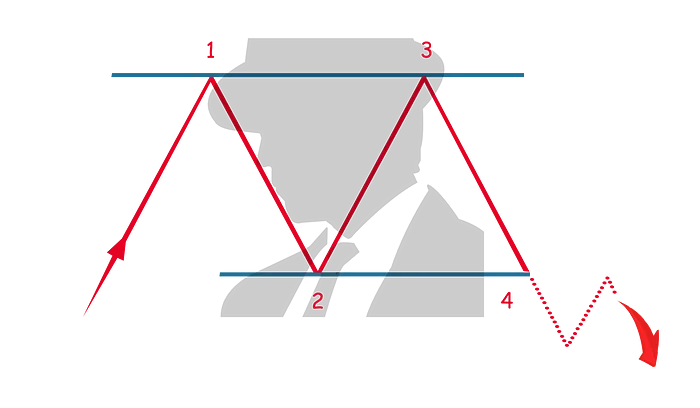
These patterns signal potential trend reversals and resemble a "W" shape (double bottom) or an "M" shape (double top). In a double top pattern, the price rises twice to a resistance level but fails to break through, then reverses downward. In a double bottom pattern, the price drops twice to a support level but fails to fall further, then reverses upward.
Usage: Traders look for these patterns at market extremes. A breakdown below the neckline in a double top may signal a short opportunity, while a breakout above the neckline in a double bottom may signal a buying opportunity.
3. Triangles: Ascending, Descending, and Symmetric
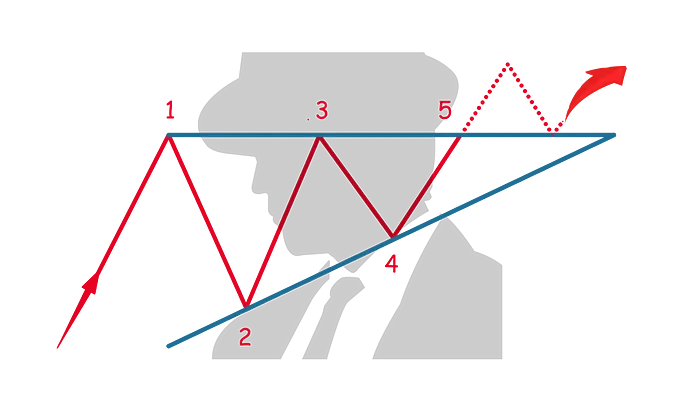
Triangle patterns indicate market consolidation and often lead to either trend continuation or reversal. They come in three forms:
-
Ascending Triangle: Forms when there is a horizontal resistance line and an upward-sloping trendline. A breakout above resistance typically signals bullish continuation.
-
Descending Triangle: Forms when there is a horizontal support line and a downward-sloping trendline. A breakdown below support typically signals bearish continuation.
-
Symmetric Triangle: Formed by two converging trendlines, indicating a consolidation phase. A breakout in either direction often signals trend continuation.
Usage: Traders may enter positions in the direction of the breakout, or treat symmetric triangles as potential signals of either continuation or reversal.
4. Flags and Pennants
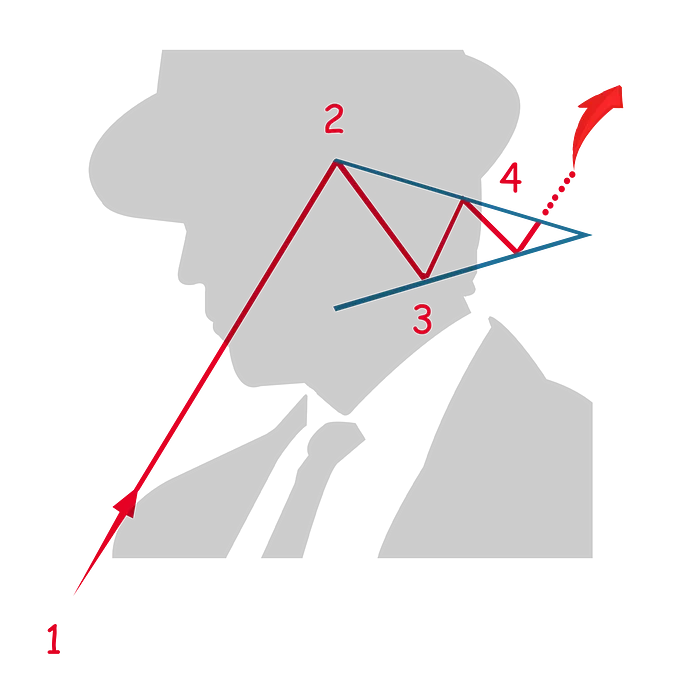
These patterns typically signal a brief consolidation period followed by a resumption of the existing trend.
-
Flags: Formed by parallel trendlines, representing a temporary counter-trend move against the prevailing direction.
-
Pennants: Resemble small symmetric triangles and indicate a short consolidation phase.
Usage: Traders can enter positions in the direction of the prior trend when price breaks out of the flag or pennant.
5. Cup & Handle Pattern
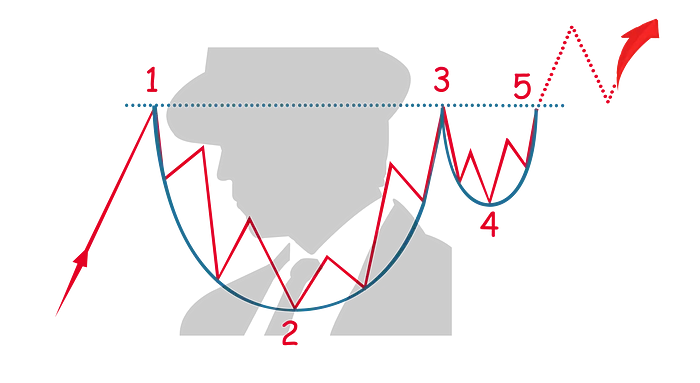
This bullish continuation pattern resembles a teacup, with a rounded "cup" followed by a smaller "handle." The handle represents a minor consolidation and is typically followed by a breakout in the same direction as the initial uptrend.
Usage: Traders may establish long positions when price breaks above the resistance level of the handle, anticipating a continuation of the prior upward trend.
Conclusion
Understanding your cryptocurrency trading patterns is an invaluable tool that helps traders gain insight into potential reversals or trend continuations. Mastering these five key patterns can significantly enhance your ability to navigate the volatility of the cryptocurrency markets. With practice, you'll be able to identify these patterns confidently and without hesitation.
Join TechFlow official community to stay tuned
Telegram:https://t.me/TechFlowDaily
X (Twitter):https://x.com/TechFlowPost
X (Twitter) EN:https://x.com/BlockFlow_News
 @DDInvestorHQ