








Meme vs. Governance Tokens: In Reality, Everything Is a Meme Coin
TechFlow Selected TechFlow Selected
Meme vs. Governance Tokens: In Reality, Everything Is a Meme Coin
In short, everything is a meme.
 Navigating Web3 tides with focused insights
Author: Yash Agarwal
Translation: TechFlow
A ramble and insight into how and why Memes provide fairer issuance compared to VC-backed governance tokens and TradFi — lessons for crypto founders.
Recently, A16z’s CTO argued that meme coins are “unattractive to builders” and “could even be net negative if externalities are considered.”
-
“A series of false promises masking a casino”
-
“Changed public, regulatory, and entrepreneurial perception of crypto”
-
“Technically unattractive”
And so on.
Meanwhile, Chris Dixon published a more sober take highlighting the systemic absurdity of U.S. securities laws—emphasizing how the best projects get caught in regulatory crosshairs while meme coins thrive because they don’t “pretend that meme investors rely on anyone’s managerial efforts.” This indirectly acknowledges the pretense across the rest of crypto—the various teams’ managerial efforts behind protocols we call governance tokens.
Our goal is neither to defend (nor diminish) meme coins (or governance tokens), but simply to advocate for fairer token distribution.
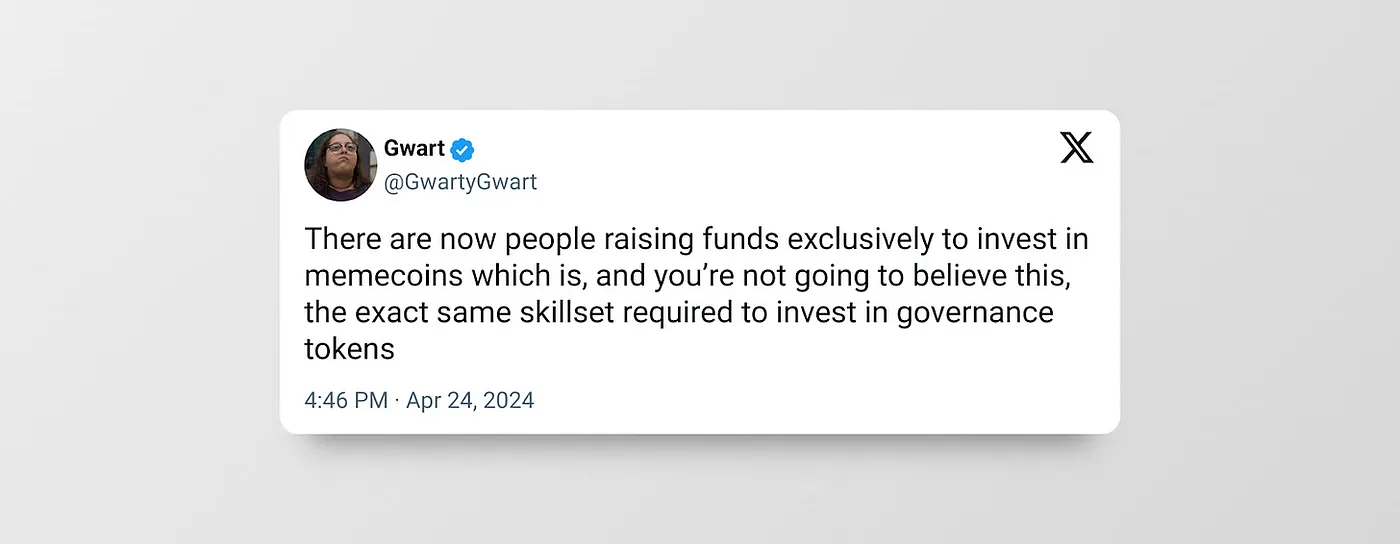
Governance Tokens Are Memes with Extra Steps
I argue that all governance tokens are fundamentally memes whose value depends on the protocol's meme origins. In other words, governance tokens are just memes dressed in suits. Why?
Typically, governance tokens offer no revenue sharing (due to securities laws), and perform poorly as community-driven decision-making tools (holdings are often concentrated, participation is low, or DAOs are generally dysfunctional), making them function like memes—with extra steps. Whether it’s ARB (Arbitrum’s governance token) or WLD (Worldcoin’s token), they’re essentially meme coins attached to these projects.
This isn’t to say governance tokens are useless. Ultimately, their existence is a constant reminder of why legal frameworks need updating. That said, governance tokens can do just as much harm as memes in many cases:
-
For builders: Many well-known VC-backed governance tokens launch before product release, creating severe disillusionment. This directly undermines the credibility of founders who’ve spent years building for adoption. For example, Zeus Network launched at a $1B FDV before even releasing a product, while many founders struggle to reach such valuations even after major milestones.
-
For communities: Most governance tokens are VC-backed, launching at high valuations and gradually transferring supply to retail investors.
Study ICP, XCH, Apecoin, DFINITYetc., even 2017 ICOs were better than today’s low-floating-supply VC-backed tokens, as most of their supply was unlocked at launch.
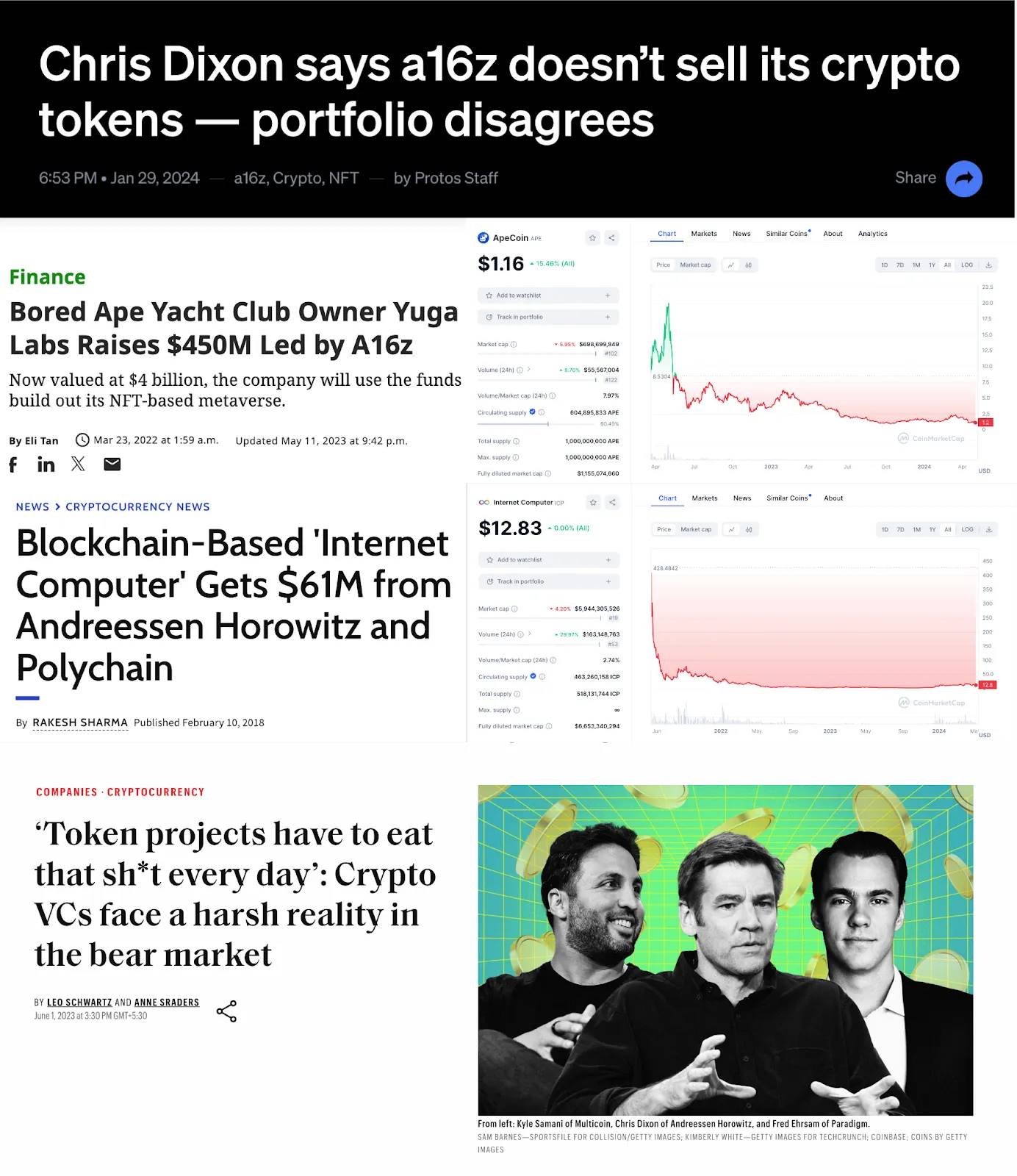
Take a16z as an example, but study any large VC with a fund over $300M
Let’s look at EigenLayer:
EigenLayer, arguably the largest Ethereum protocol this cycle, is a classic case. Insiders (VCs and team) hold a significant 55%, while initial community airdrops were only 5%. This is a textbook low-float, high-FDV game backed by VCs holding 29.5%. Last cycle we blamed FTX/Alameda, but this cycle isn’t much better.
EIGEN-managed EIGENDAO now functions like any Web2 governance council, as insiders control most of the supply (initial community allocation being just 5%). Don’t forget, EigenLayer’s entire premise is restaking (leveraged yield farming), making its financial engineering as Ponzi-like as memes.
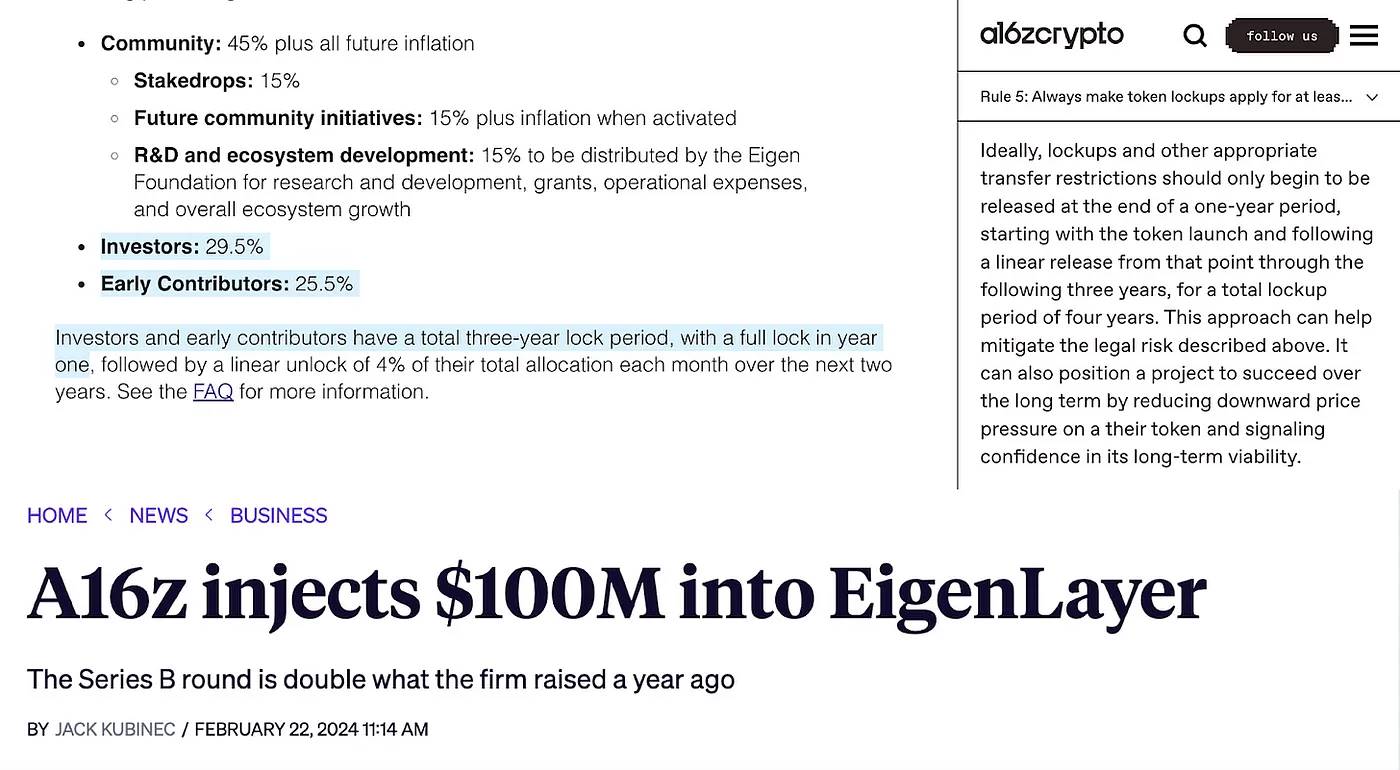
If a group of insiders holds over half the supply (55% here), we severely undermine crypto’s redistributive effect, enriching a few insiders via low-float, high-FDV launches. If insiders truly believe in the project despite astronomical valuations at launch, they should reduce allocations.
Real Cartels Step Forward
Given the absurdity of capital formation—we end up seeing VCs blaming memes, while meme creators blame VCs for regulatory chaos and reputational crises in the space.
But why are VCs so harmful to tokens?
VCs have structural incentives to inflate FDV. For example, if a large VC fund invests $4M for 20% equity at a $20M valuation, logically they must push the FDV to at least $400M at TGE (Token Generation Event) to generate returns for LPs. Protocols are pressured to launch at the highest possible FDV to maximize gains for seed/pre-seed investors.
In the process, they constantly encourage projects to raise at higher valuations. The larger the fund, the more likely it is to assign absurdly high private valuations, build strong narratives, and ultimately list at higher public valuations—forcing retail dumps at token launch.
-
High-FDV launches lead only to downward spirals and zero attention. See Starkware’s case.
-
Low-FDV launches allow retail to benefit from repricing and help build community and mindshare. See Celestia’s case.
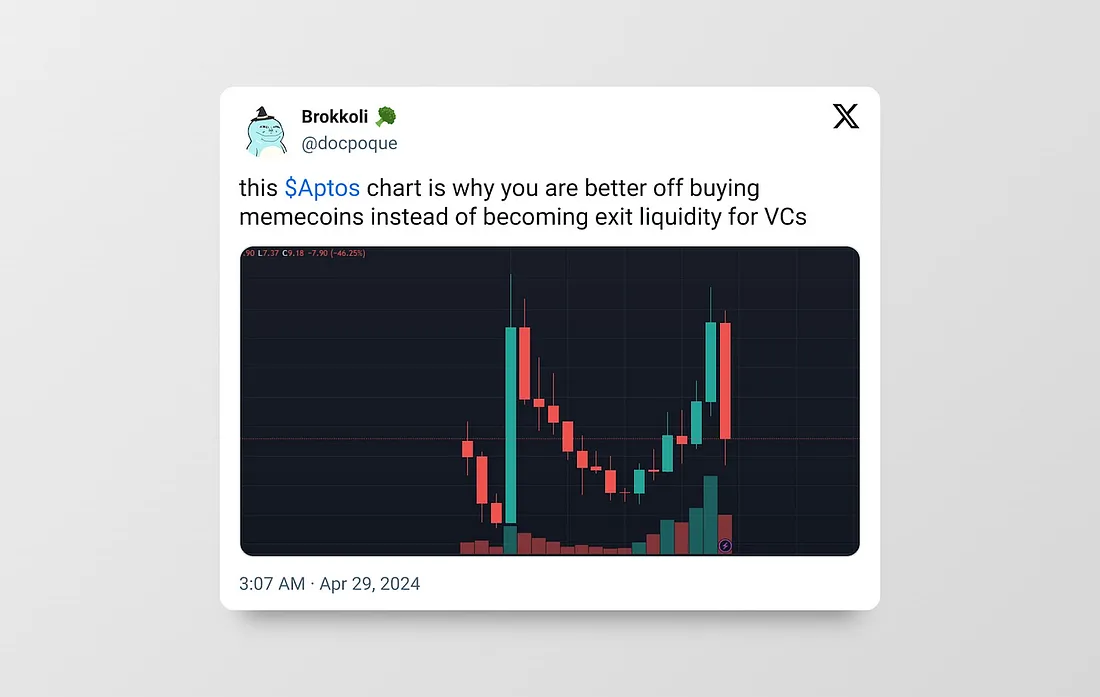
Retail is more sensitive than ever to unlock schedules. Just in May, $1.25B worth of Pyth will unlock, plus hundreds of millions from Avalanche, Aptos, Arbitrum, etc.
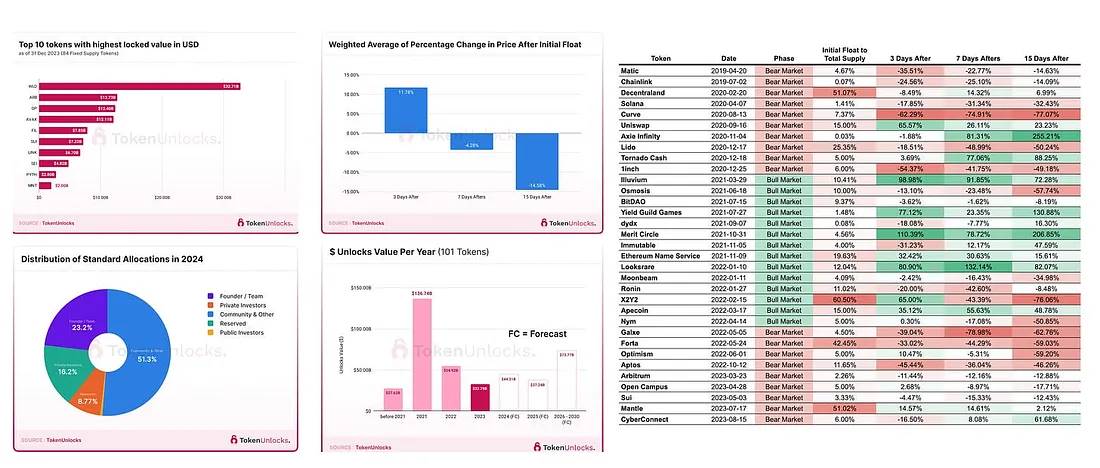
Some unlock data
Memes Are Products of Financial Collapse
Arguably, Bitcoin is the largest and oldest meme coin, born out of the 2008 financial crisis. Negative/zero real interest rates (interest rate - inflation) force every saver to speculate on shiny new asset classes (e.g., meme coins). The market environment created by zero rates is filled with reckless actors sustained by cheap capital. Even top indices like the S&P 500 contain about 5% zombie companies, whose conditions will worsen as rates rise—making them no different from memes. Worse, they’re marketed by fund managers while retail buys in monthly.
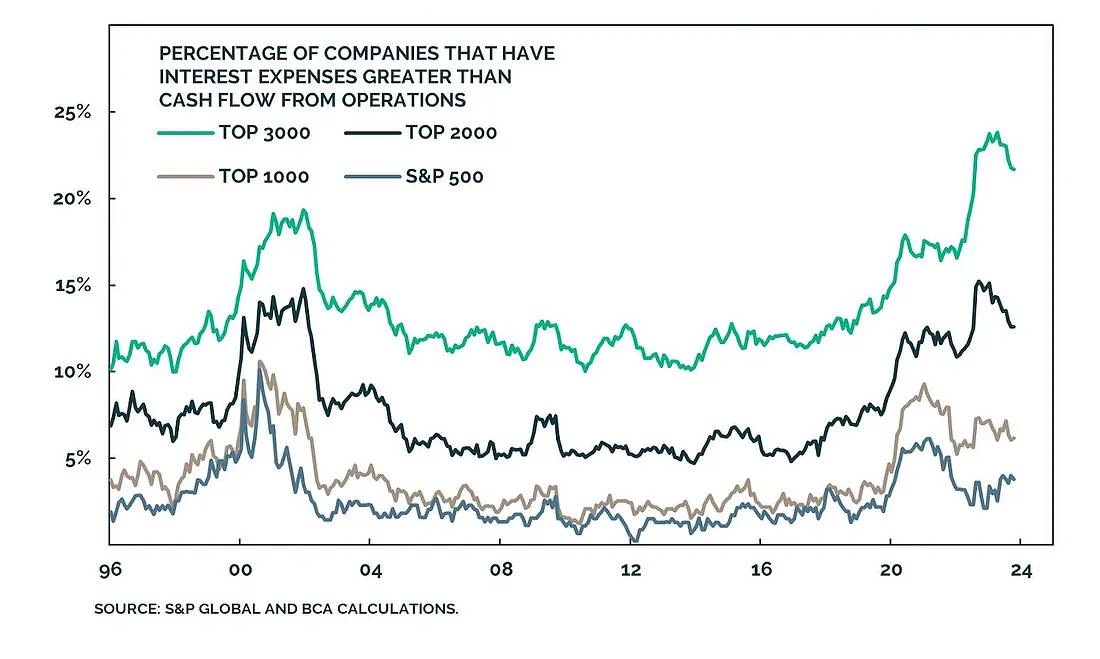
Speculation never dies—and this cycle, it’s memes.
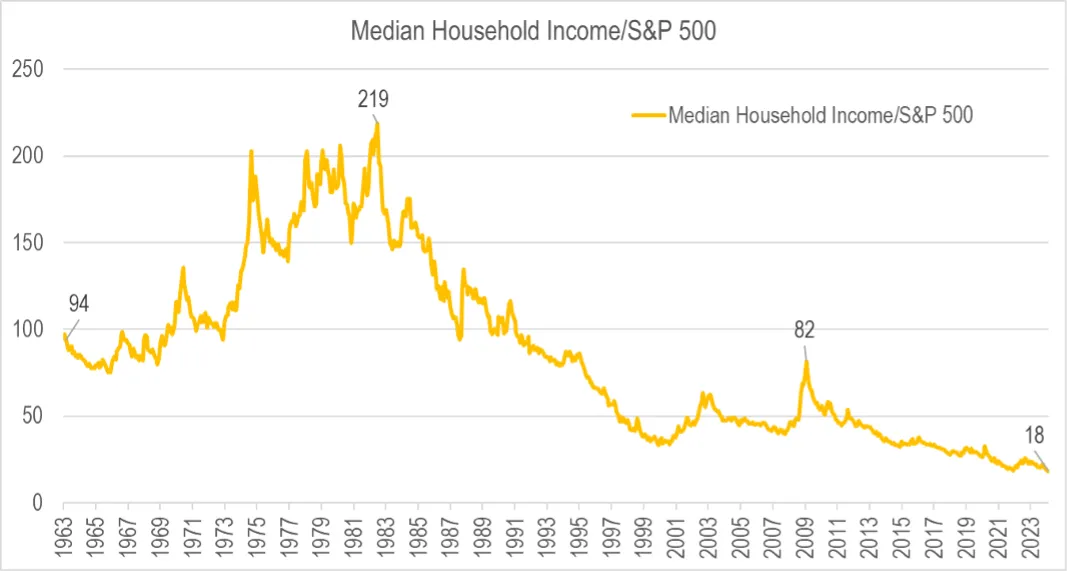
FRED via Kana and Katana
On this basis, the term 'financial nihilism' has recently gained traction. It captures the idea that cost of living is crushing most Americans, upward mobility is increasingly inaccessible, the American Dream is largely obsolete, and the median home price-to-income ratio has reached unsustainable levels. The drivers of financial nihilism are the same as populism—a political approach appealing to ordinary people tired of established elite groups—'this system doesn’t work for me, so I’ll try something very different' (e.g., buying BODEN instead of voting for Biden).
Memes Are Stress-Testing Infrastructure
Memes aren't just great onboarding tools—they're excellent infrastructure stress tests. Contrary to A16z’s stance, we believe memes have a net positive impact on any ecosystem. Without meme coins, chains like Solana wouldn't face network congestion, and critical network/economic vulnerabilities wouldn't surface. Meme coins on Solana have had a net positive effect:
-
All DEXs not only handled record-high volumes but surpassed their Ethereum counterparts.
-
Money markets integrate memes to boost TVL.
-
Consumer apps integrate memes for attention or marketing.
-
Validators earn massive fees thanks to priority fees and MEV.
-
Increased liquidity and activity strengthen network effects in DeFi.
There’s a reason Phantom, Solana’s wallet, hit 7 million monthly active devices—it’s powered by memecoins onboarding regular people, possibly making it one of the most used crypto apps today.
For real RWA, on-chain trading requires sufficiently liquid infrastructure (look at top memes—they have deepest liquidity besides L1 tokens/stables), battle-tested DEXs, and broader DeFi. Memes don’t distract; they’re just another asset class living on shared ledgers.
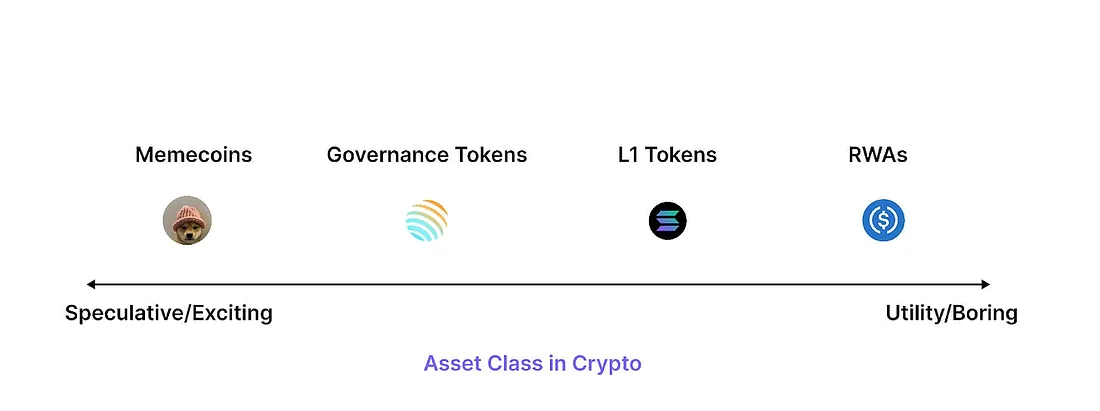
Memes as Fundraising Mechanisms
Memes have proven effective as capital coordination tools. Look at Pump.fun, which has facilitated nearly millions of meme launches and created billions in meme value. Why? Because for the first time in human history, anyone can create a financial asset in under 2 minutes and less than $2!
Memes can serve as excellent fundraising and listing strategies. Traditionally, projects raised large sums allocating 15–20% to VCs, built products, then launched tokens while building community through memes and marketing. But this often leaves communities abandoned by VCs.
In the meme era, people can raise funds by launching their own meme (no roadmap, just for fun) and forming tribal communities early. Then, they can build apps/infrastructure, continuously adding utility to the meme without false promises or roadmaps. This leverages tribalism within meme communities (e.g., holder bias), ensuring high engagement from community members who become your BD/marketers. It also ensures fairer token distribution, countering VC-style low-float, high-FDV pump-and-dump tactics.
This Is Already Happening
-
BONKBot, a Telegram bot (with daily trading volume up to $250M), originated from the BONK meme, using 10% of transaction fees to buy and burn BONK. It has already burned ~$7M worth of BONK through fees, aligning its economics with holders.
-
Degen, a meme in the Farcaster ecosystem, allows contributors to reward/tip others for quality content using DEGEN. Additionally, they’re building an L3 chain for degen. Similarly, Shibatoken—one of last cycle’s most popular memes—is now building an L2.
This trend will eventually lead to convergence between memes and governance tokens. Importantly, not all memes are equal; scams are common, but they’re easier to expose than the silent scams conducted by VCs.
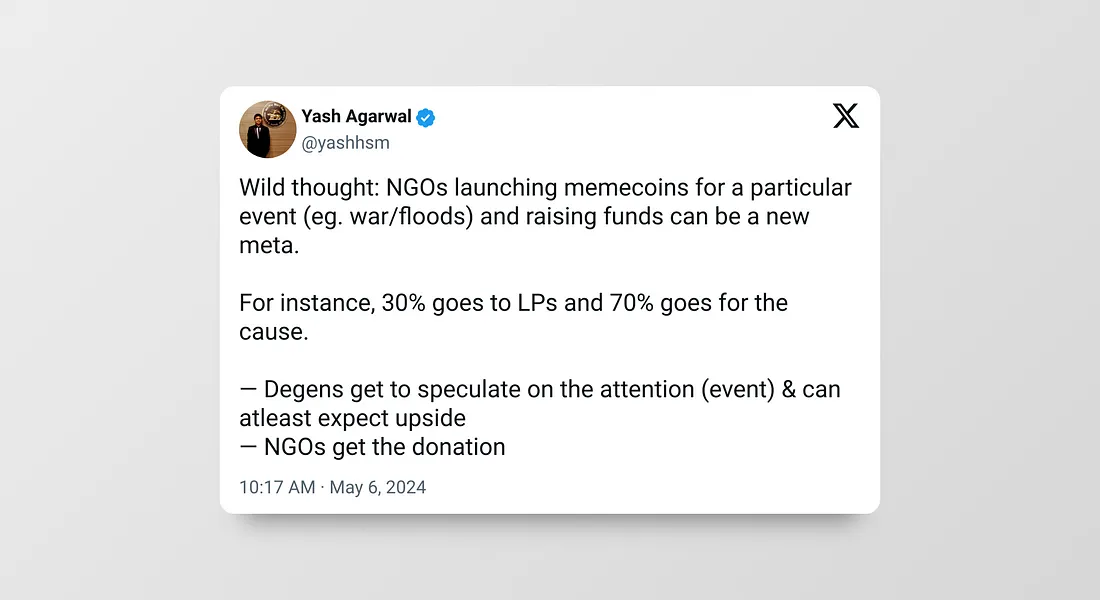
Looking Ahead
Everyone wants to get in early on the next big thing, and memes are one of the few areas where retail investors can enter earlier than most institutions. Due to restricted access to VC private deals, memes offer better potential product-market fit for sandhill capital. While memes do make crypto look like a casino, they do return power to communities.
So what’s the solution?
VCs like a16z should syndicate their deals publicly so anyone can participate. Platforms like Echo are ideal for this.
For VCs: Put your deals on Echo, let communities join syndicates, and witness the meme-like magic of early communities rallying around projects.
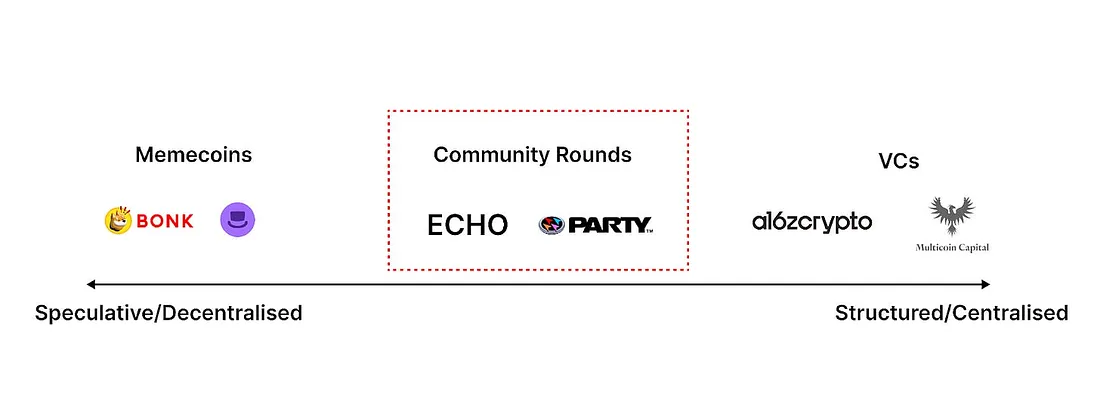
To clarify, we’re not against VCs/private capital—we advocate fairer distribution, creating a level playing field where everyone has a chance at financial sovereignty. VCs should be rewarded for early risk-taking. Crypto is not just about open, permissionless technology, but also about open early-stage funding—which today is as opaque as traditional startups.
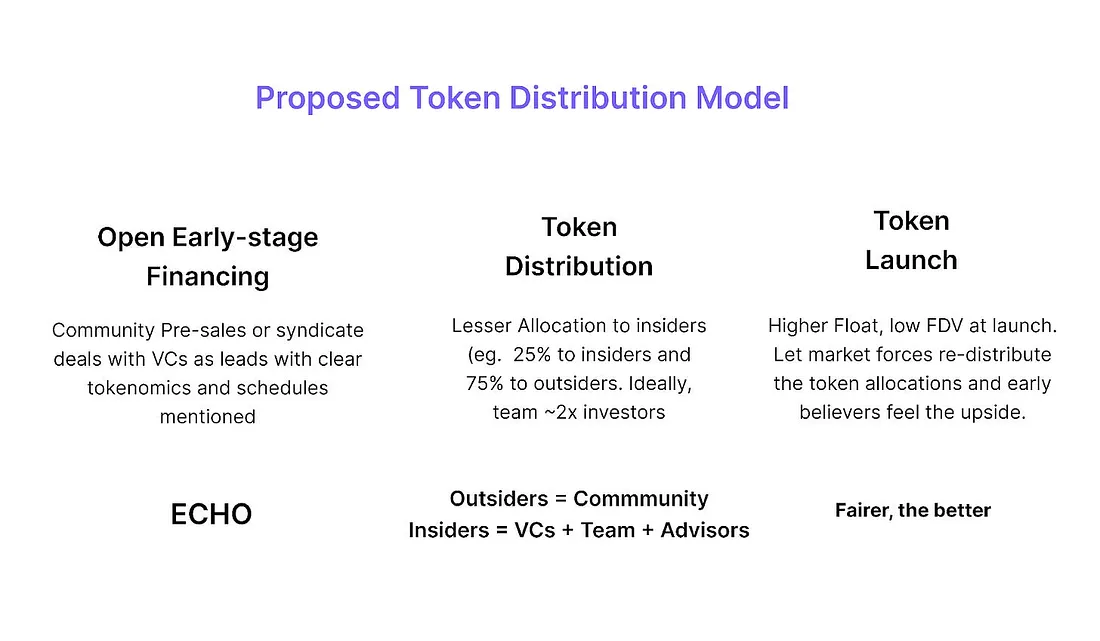
In Summary:
-
Everything is a meme.
-
Study memes as fundraising and community-building mechanisms.
-
Projects should lean toward fairer launches.
It’s time to make early funding more open.
Join TechFlow official community to stay tuned
Telegram:https://t.me/TechFlowDaily
X (Twitter):https://x.com/TechFlowPost
X (Twitter) EN:https://x.com/BlockFlow_News
 @yashhsm


