








Masa's "AI+Crypto" Guide: How 2024's First AI Project on CoinList Serves the Broader AI Developer Ecosystem
TechFlow Selected TechFlow Selected
Masa's "AI+Crypto" Guide: How 2024's First AI Project on CoinList Serves the Broader AI Developer Ecosystem
Masa is essentially a decentralized Web3 approach serving the entire AI developer ecosystem spanning both "Web2 and Web3."
 Navigating Web3 tides with focused insights
Author: TechFlow
Introduction
There are countless crypto projects, but AI takes up half the hype. As a dominant narrative throughout the year, AI continuously steers attention and trading decisions in the crypto market.
According to CoinGecko data, by March this year, the total market cap of tokens in the entire AI sector surged from $2.7 billion in April last year to $26.4 billion. Within the past 30 days, tokens related to AI projects have risen between 145% and 297% on average.
Where expectations lie, so does the spotlight. However, although there is no shortage of AI projects in the crypto space today, viable alpha opportunities appear to be in a transitional phase: established leaders like Fetch.ai and Ocean Protocol were already discovered in the previous cycle, becoming beta plays. Meanwhile, highly anticipated newcomers such as Ritual and Myshell, despite securing large funding rounds, are still refining their products—let alone launching tokens—making them unable to satisfy immediate demand.
In this context, aligning with the three key elements of AI—"computing power, algorithms, data"—only a few standout alpha projects currently lead the AI sector. Among them, Bittensor (TAO) stands as the leader in decentralized computing power, while Masa Network, set to launch its mainnet and token on April 11, emerges as the leading player in decentralized data, positioning itself as a niche leader within the current AI narrative.
Masa’s self-positioning as an “AI Data Chain” is clear: it aims to build a personal data network usable by AI, allowing users to earn rewards when contributing the value of their data, while leveraging technologies like zero-knowledge proofs (ZKP) to effectively protect privacy, thereby providing vast data sources for AI and large language models.

Back in December, we published an article titled "Deep Dive into Masa Network: Awakening the Value of Web3's Dormant Data, Exploring the Possibility of a Decentralized Google", which detailed Masa’s product mechanics and technical design. Now, Masa Network faces its most significant near-term catalyst — the upcoming launch of its mainnet and $MASA token on April 11.
Months later, with improved macro conditions, what changes and progress within Masa Network deserve attention? In this piece, we revisit Masa Network to uncover key catalysts favorable to its token and further examine its product updates.
The First AI Project on CoinList This Year — Expectations Are Sky-High
For technically complex projects, let’s first look at more easily graspable market sentiment and positive developments. On March 7, Masa Network launched on CoinList and initiated a community round token sale.
So far this year, CoinList Launchpad has featured six projects: Subsquid, zkLink, Nibrum, Meson, Masa, and Bondex—with Masa being the only AI-focused one.
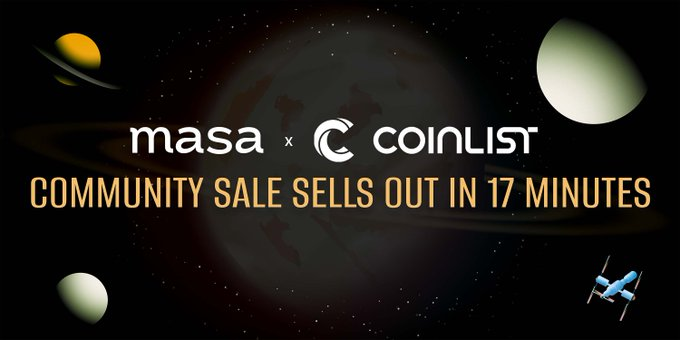
Moreover, the community sale allocation was sold out in just 17 minutes, oversubscribed by over 6.4 times.
Historically, CoinList has served as somewhat of a litmus test for identifying valuable crypto projects. Many top players in today’s crypto market got their start on CoinList:
For example, Ocean Protocol, another project in the AI space, has seen roughly a 10x increase since its CoinList debut. Another well-known name, Solana, remains the most successful case from that launchpad.
It’s widely known that CoinList shone brightest during bull markets, where projects like SOL and FLOW delivered substantial wealth effects to public sale participants. Now, as the bear market fades and bulls return, can Masa—backed by the AI narrative—carry forward the torch of generational wealth creation? That’s certainly something to look forward to.
Beyond early-stage validation, listing expectations on larger secondary markets are another critical factor not to overlook.
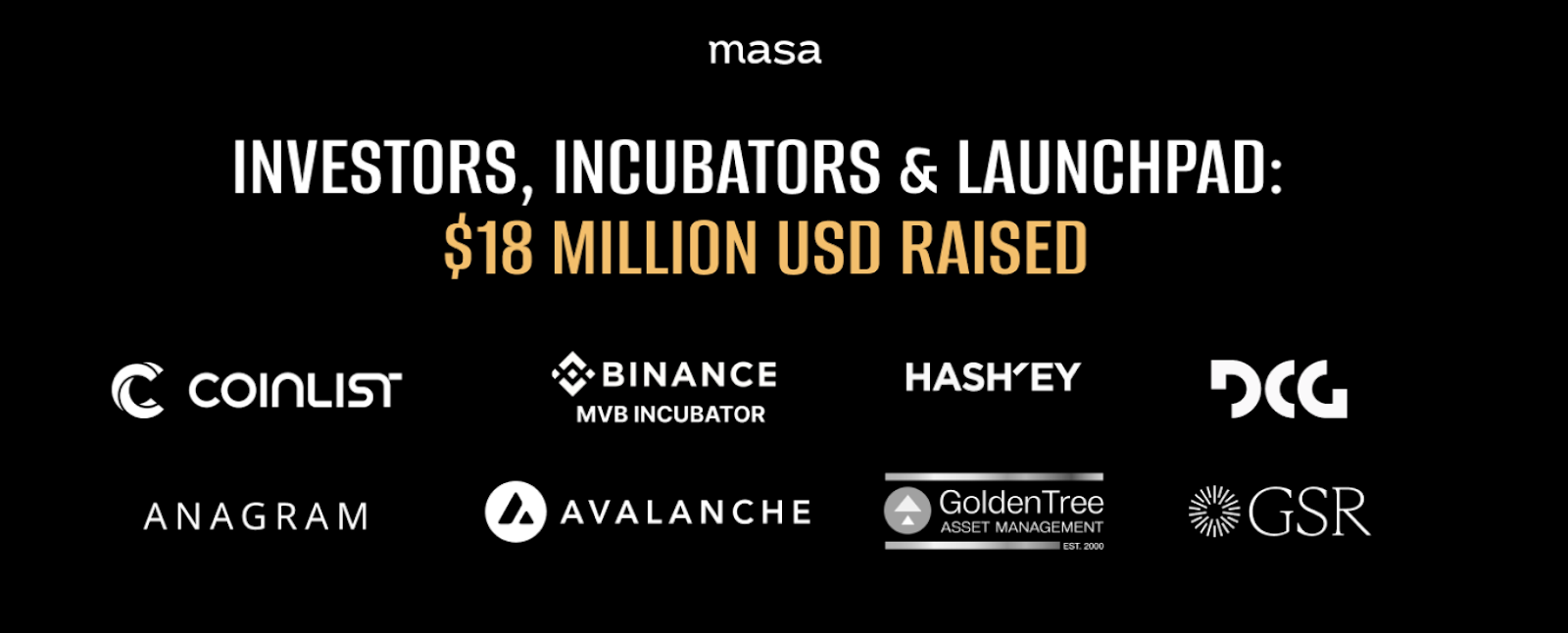
Masa has raised $18 million in funding, attracting participation from leading overseas VCs such as Anagram, DCG, and GoldenTree. With strong narratives around AI and zero-knowledge technology, expectations are undoubtedly high.
Mainnet Launch on April 11 — AI Operations Growing Stronger
Beyond capital market expectations, what concrete operations does Masa Network actually conduct? Most crypto-AI projects fall into two categories: using crypto to enhance AI, or using AI to improve crypto. Masa Network belongs firmly in the former.
As everyone knows, AI development hinges on three key components: computing power, algorithms, and data. While earlier AI+Crypto initiatives largely focused on computing power, data—the "oil" of the AI era—is equally crucial. This is especially true now, as key datasets remain locked within big tech companies, diverse data is scarce, and calls for data democratization grow louder—making AI data increasingly vital.
Since 2023, explosive growth among AI developers has made access to unique data a winning edge in an age where large models are becoming increasingly homogenized. Therefore, Masa, offering decentralized data solutions for AI, serves not only Web3-based AI developers but also a broad range of tech industry AI practitioners.
In short, built on blockchain architecture, Masa aims to serve the entire ecosystem of AI developers across both Web2 and Web3 through decentralized methods.
Specifically, Masa optimizes data collection, contribution, and value conversion, helping AI access broader, more diverse, and decentralized data sources, while ensuring contributors are fairly rewarded—all without compromising privacy.
To summarize: a data marketplace balancing privacy protection and data monetization, connecting AI data seekers with data contributors.
On privacy, Masa seeks to return control of personal data back to users.
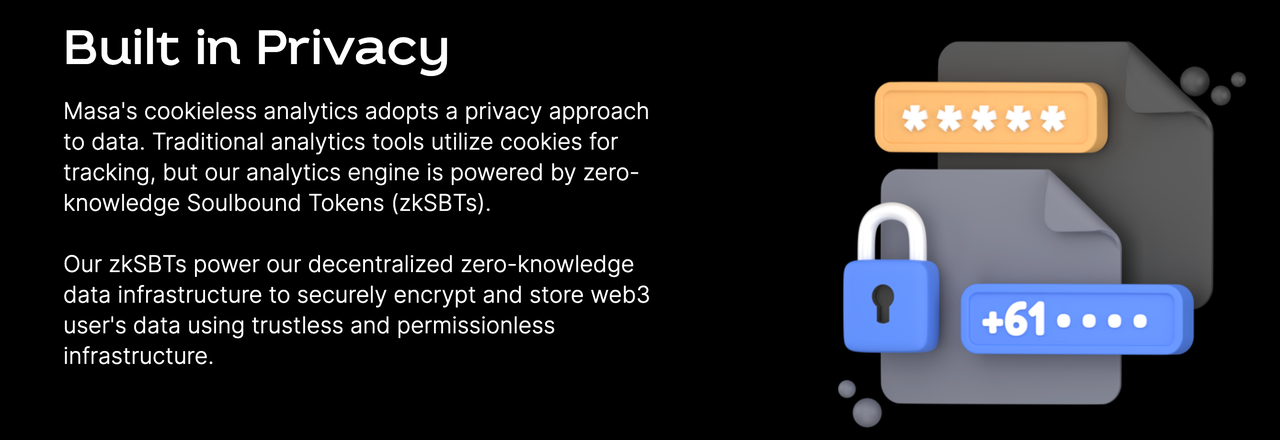
Through its pioneering Zero-Knowledge Soulbound Tokens (zkSBTs)—an industry-leading encryption technology—you can think of these as private personal data lockers that do not store sensitive information. Anyone with internet access can contribute data and earn passive rewards in MASA tokens.
On data value, proprietary, high-quality, verified personal data becomes more democratized, available for use by AI companies and large language models, adding massive, distributed data sources for model training.
But how exactly does this data marketplace function?
With the mainnet launch on April 11, Masa’s product structure has become clearer:
On the user side, you can easily contribute data to the Masa Network by completing tasks within Masa apps, browsing the web using the Masa browser extension, or simply using products within Masa’s partner ecosystem.
Additionally, every user can become a data scraper via Masa’s web browser plugin.
The Masa Oracle Network acts as a decentralized web data scraper, seamlessly extracting text from websites, Twitter feeds, authenticated sites, etc., and feeding it into databases.
Thus, the most direct user experience follows a "contribute-to-earn" model, involving an active staking operation:
-
All your historical behaviors and digital footprints within Masa Network are encrypted and stored in your personal data locker—the zkSBT.
-
You can view this data directly in the Masa App and choose to "stake" some or all of it, meaning you actively authorize sharing this data for a defined period with organizations needing data.
-
For contributing data, you receive corresponding rewards—potentially in Masa tokens or stablecoins.
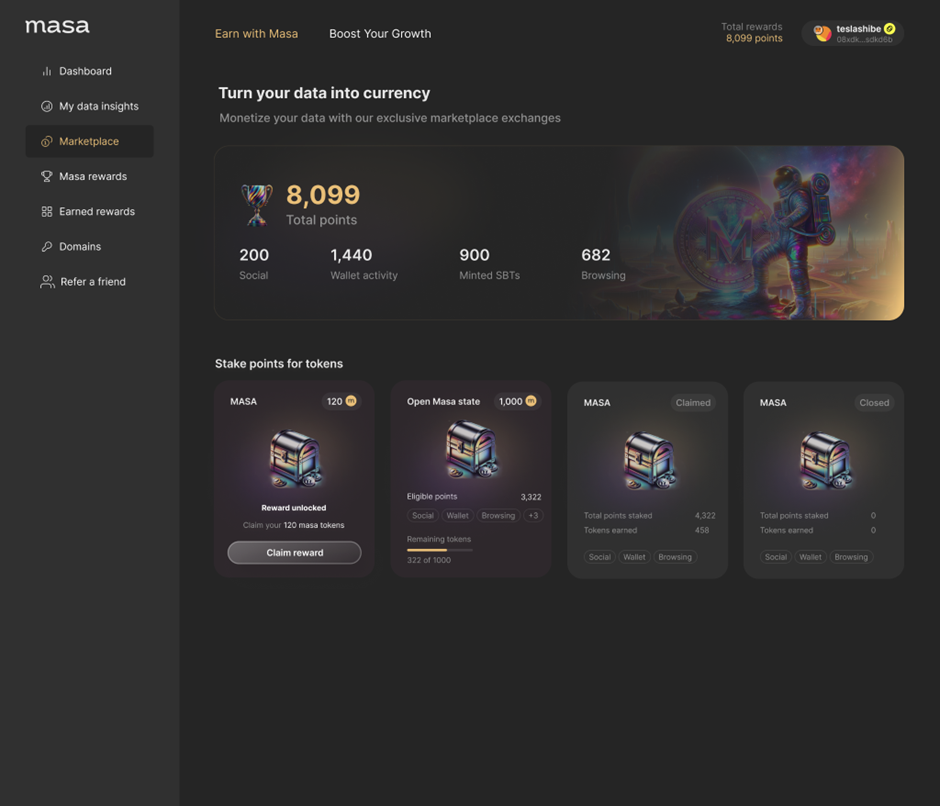
Essentially, Masa turns everyone into a data contributor—each person becomes a node, part of the AI infrastructure.
Every contribution maps directly to specific product features:
“Quest-to-earn”: Masa’s mobile app
“Surf-to-earn”: Masa’s browser extension
“Node-to-earn”: Becoming a Masa Oracle node, scraping data, and contributing unused computing power (CPU and GPU) to fulfill global user and developer requests.
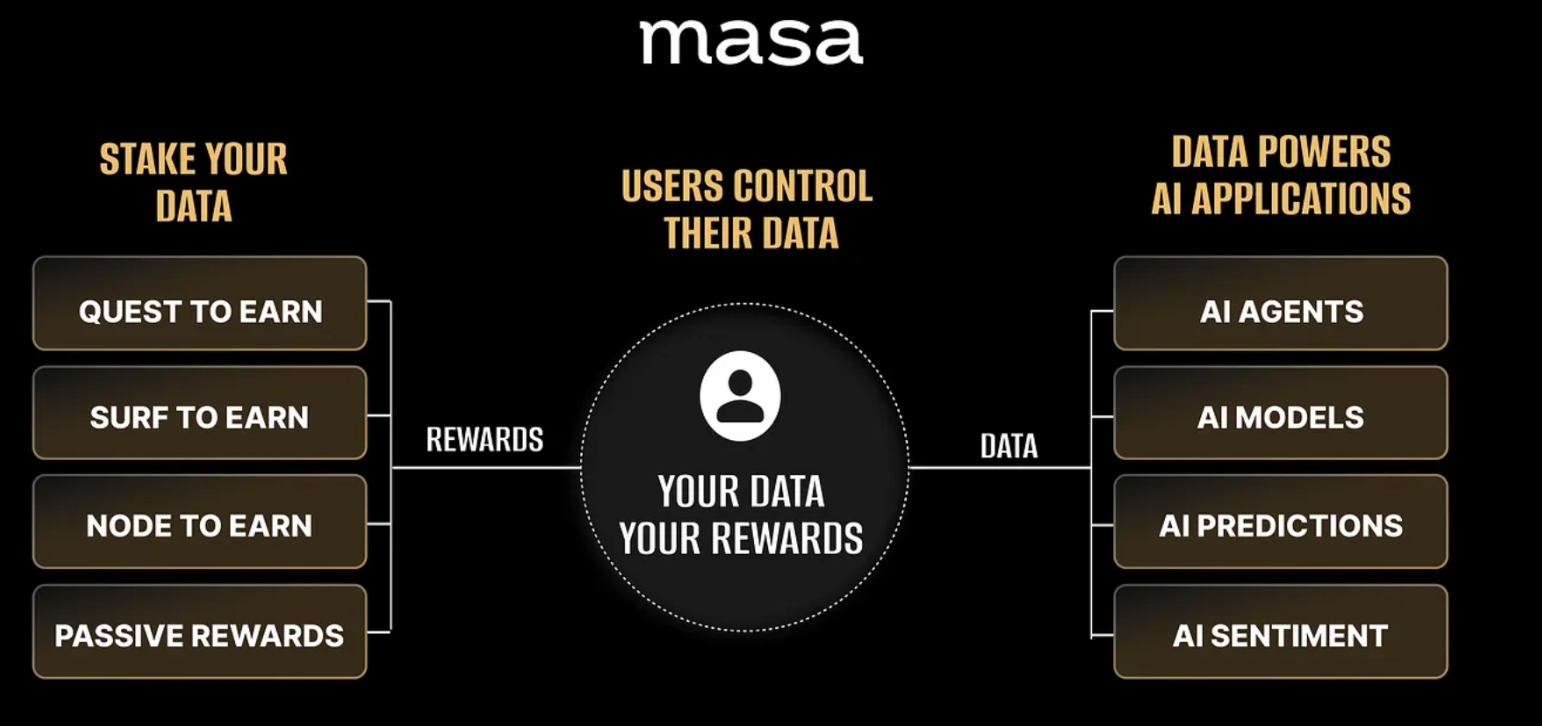
On the B2B side, Masa matches data demand.
Developers can easily access this powerful dataset by setting up data staking pools on Masa Network, directly rewarding users who opt to share their data. These datasets enable developers to train specialized rather than generalized AI models, enabling hyper-personalized AI agents and assistants.
Compared to our previous research on Masa last year, the post-mainnet version introduces a new capability: making large language models themselves more decentralized.
Masa allows anyone to easily select from various LLMs such as phi-2, bakllava, llava, and milstra. These models are readily accessible on user-friendly platforms like Hugging Face, enabling enterprise users to download and deploy them directly onto Oracle Node Workers.
Meanwhile, decentralized data access enables LLMs to evaluate encrypted data within the network to draw conclusions or generate outputs, without exposing any sensitive or personal information stored in the network.
Therefore, the optimal outcome enabled by Masa is bidirectional, free matching between AI data supply and demand.
With diverse products supporting the data marketplace connecting consumers and enterprises, Masa Network is clearly well-equipped. But from product refinement to mainnet launch, has its development been validated by the market? How is user adoption progressing?
Since its August 2022 launch, Masa Network has rapidly accumulated over 1.4 million unique wallets—a figure that continues to grow as of this writing. Each wallet represents an individual data contribution, made through various methods and products described above.
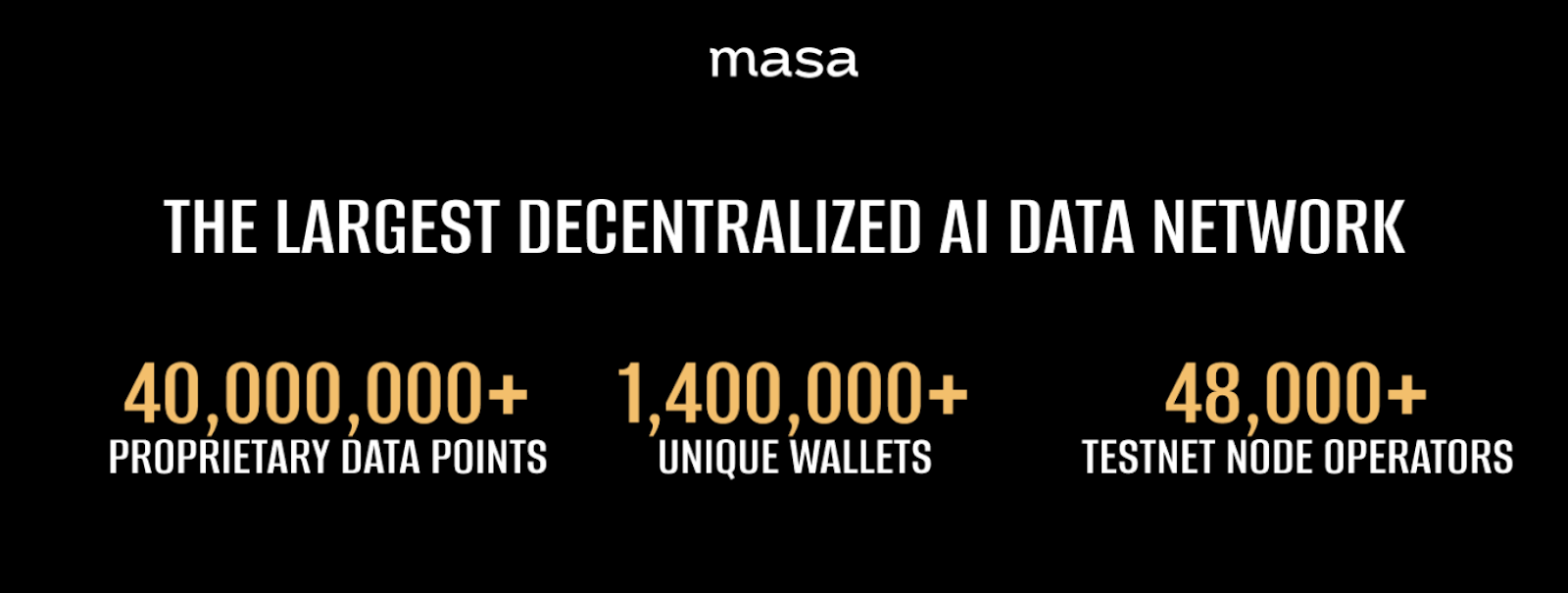
Corresponding to these data-contributing wallet addresses, the volume of events captured by the Masa Network is also significantly increasing.
According to its official data dashboard, numerous on-chain activities in the crypto world—such as claiming, swapping, mining, cross-chain transfers, liquidity provision, and minting—are all recorded. Common Web2 browsing events are also tracked and continue to grow in volume.
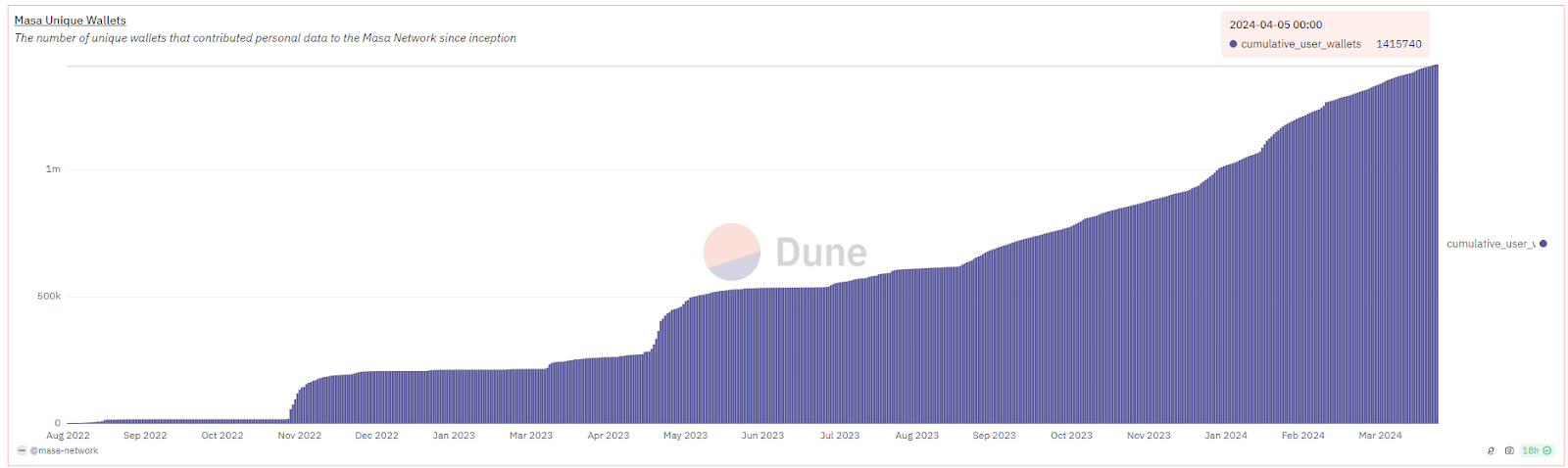
This vast, multidimensional user data forms the foundation for enterprise data usage. The greater the volume, diversity, and dimensionality of data, the better it trains AI models.
Token Utility and Cross-Ecosystem Synergies
Within Masa’s overall design, what role does the MASA token play?
From both consumer and enterprise perspectives, MASA serves multiple incentive and utility functions.
First, incentivizing data supply: Masa rewards users for contributing personal data to the network. When enterprises or developers use user data, contributors earn passive rewards in MASA tokens.
Second, paying for data usage: Enterprises and developers must pay fees to access and use data, products, and services on the Masa Network. Payments can be made in MASA tokens, stablecoins, or other native blockchain tokens. All non-MASA payments are subsequently converted into MASA tokens, with a portion burned.
Third, MASA serves as transaction fees for managing personal data: Users pay MASA gas fees on the Masa Avalanche subnet to mint and manage their zkSBTs (encrypted personal data lockers), with a portion of the gas fee burned.
Finally, tokens reward node operators: Masa Oracle node operators stake MASA to run zk-oracle nodes. They receive staking rewards during the network’s first two years. Staked tokens are locked during the vesting period.
Regarding the economic model, according to the official token distribution, the team and private sale rounds hold the largest shares. However, these are subject to a 6-month to 1-year lock-up after the public sale, followed by linear unlocking over three years.
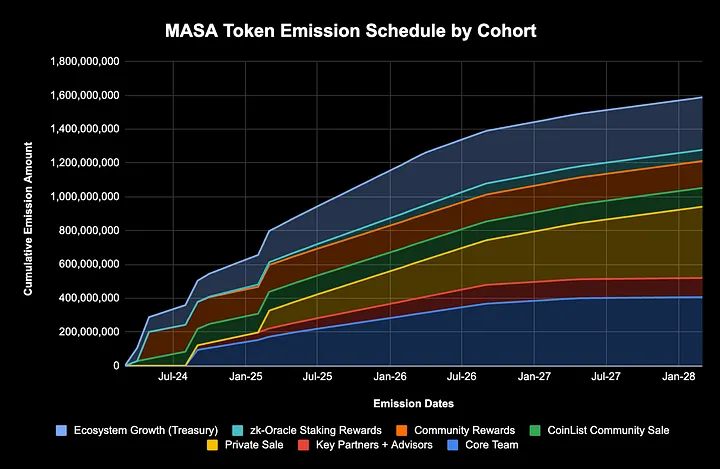
For market valuation, the value of the MASA token stems from its utility. As users engage and the network expands, a positive flywheel effect emerges:
More individuals contribute massive, diverse datasets → more enterprises and developers adopt the platform → increased demand and consumption of MASA → reduced circulating supply and rising value → stronger economic incentives attract even more data contributors...
Beyond utility, another potential source of value for MASA lies in the “pickaxe effect” generated by integrating with more ecosystems.
Recently, the project announced a partnership with LayerZero, enabling data contributions across different blockchains. This means users and AI developers in any public chain ecosystem can utilize Masa, allowing contributors from any chain to participate, establishing Masa as a cross-chain, data-driven AI+Crypto infrastructure layer that captures value from all on-chain users and data.
This could also create effects similar to Wormhole and Pyth—anyone who uses the service may qualify for airdrops or token benefits. This pickaxe effect could become a key driver of secondary market expectations.
Conclusion
Originating in Web3, yet extending beyond it, Masa fundamentally leverages decentralized Web3 methodologies to serve the full spectrum of AI developers across both Web2 and Web3 ecosystems.
As Masa co-founder Calanthia Mei stated in an interview with Bitcoin.com: "Personal data is digital footprint—every online and on-chain action (browsing, posting, transacting) leaves a trace."
With the advancement of the digital economy and Web3, personal data has become highly valuable for companies seeking to understand users and train AI models. By using Web3 as a bridge and token incentives to connect data contribution with AI training, Masa Network becomes more than just another AI narrative—it delivers real utility. How far Masa Network will go remains to be seen; time and the market will ultimately render a verdict based on value.
Backed by the premier AI+Crypto narrative and pursuing an ambitious vision, if successful, Masa is likely to become a core infrastructure component and data “water seller” for the global AI developer ecosystem spanning Web2 and Web3. It aims to build a cross-Web2/Web3 AI data chain—an endeavor rich with potential, yet undoubtedly fraught with challenges.
The future always exceeds imagination. Let’s wait and see.
Join TechFlow official community to stay tuned
Telegram:https://t.me/TechFlowDaily
X (Twitter):https://x.com/TechFlowPost
X (Twitter) EN:https://x.com/BlockFlow_News
 深潮TechFlow


