Hyperlane: The first accessible layer, easily connecting any chain
TechFlow Selected TechFlow Selected
Hyperlane: The first accessible layer, easily connecting any chain
Hyperlane is changing the game by enabling anyone to connect any blockchain network without having to wait for certain gatekeepers to give their approval.
 Navigating Web3 tides with focused insights
Author: Greythorn
Opening Remarks
In the world of Web3, securely and easily sharing data across blockchains is key. To overcome interoperability challenges in the crypto space, bridge technologies are essential—they connect different blockchains to enable token swaps and boost liquidity.
Last month, combined transaction volume across all bridges surpassed $11 billion, underscoring their critical role in the industry.
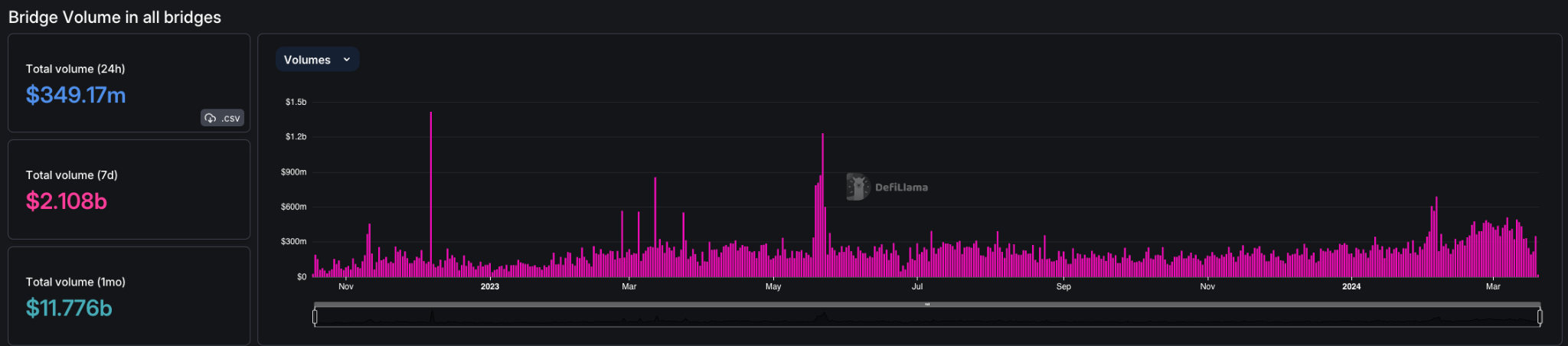
Source: DeFiLlama
Cross-chain bridges do more than just transfer tokens; they enable a wide range of operations across blockchains—from governance and launching new tokens to enhancing gaming experiences.
In particular, arbitrary message bridges (AMBs) open up possibilities for transmitting various types of data—including tokens, contract executions, and NFTs—enabling diverse cross-chain interactions.
We will focus on Hyperlane, exploring its design, security, and the trust it builds within this ecosystem, while highlighting its role in advancing interoperability, scalability, and liquidity in the crypto space.
Market Opportunity
Making different networks work together seamlessly has long been a major challenge. Typically, if developers want their new blockchain to communicate with others, they must go through a lengthy and often uncertain process to obtain permission from teams managing these connections. This approach tends to be slow and can hinder growth—especially for newer or smaller projects without much influence.
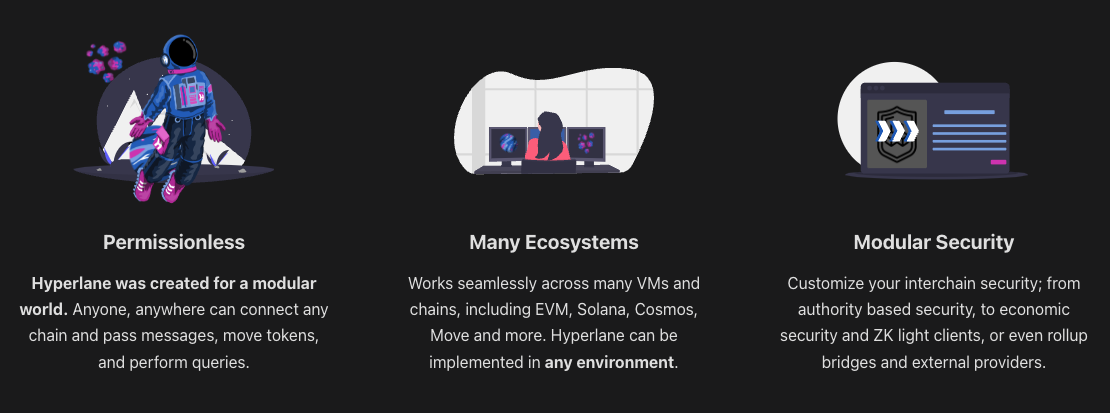
Hyperlane is changing the game by enabling anyone to connect any blockchain network without waiting for approval from gatekeepers. This approach, known as permissionless interoperability, opens the door widely for innovation. Today, developers can quickly link their blockchain to others, speeding up the entire process and allowing them to focus on building cool new things instead of standing in line.
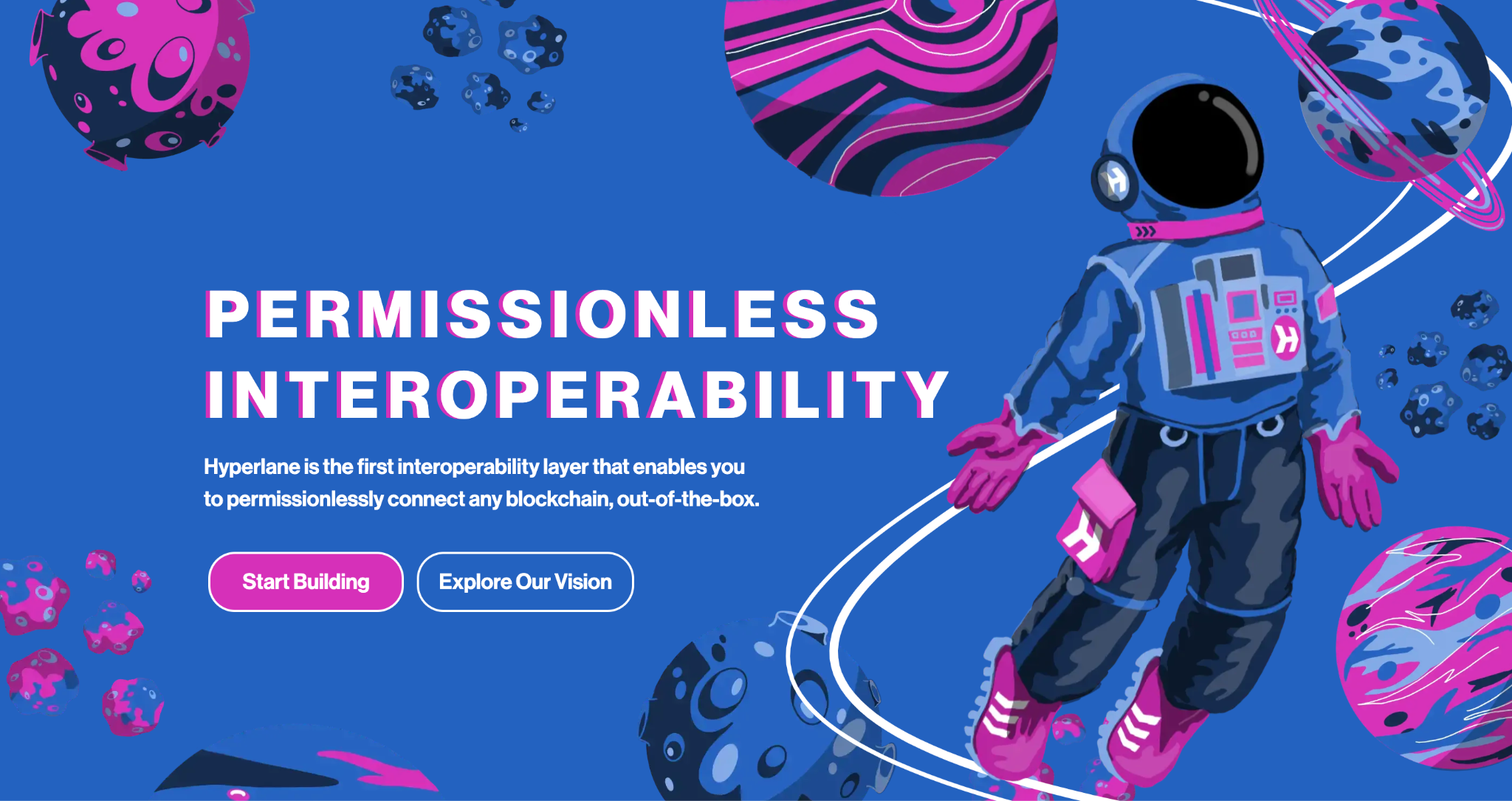
Source: Hyperlane
Additionally, Hyperlane allows developers to choose their own security level. This is known as Modular Security. Instead of being locked into a one-size-fits-all security setup, developers can tailor it perfectly to suit their project's needs.
By making itself so open and flexible, Hyperlane is paving the way for a future where blockchains can easily communicate, share information, and collaborate—with builders retaining full freedom to innovate and secure their work on their own terms.
Hyperlane Project Overview
Hyperlane stands out as the first accessible layer for effortlessly connecting any blockchain. It enables developers to create interchain applications and simplifies the complexity of user interactions between chains across any connected network. Moreover, its flexible security options allow developers to customize according to their specific security requirements.
In addition, Hyperlane comes equipped with ready-to-use features such as Warp Routes for easy cross-chain token transfers, Interchain Accounts for initiating contract calls from one chain to another, and Interchain Queries for accessing cross-chain information.
Hyperlane is designed to be modular, empowering developers to manage their own security models via its Interchain Security Modules (ISMs).
Source:Hyperlane
- Breaking the Cycle with Open Interoperability
Here’s how Hyperlane integration works:
1) Install the Hyperlane system on any supported virtual machine (currently available on EVM, with Solana VM, Fuel VM, CosmWasm, and Cosmos SDK modules expected to join by Q3 this year), no approvals required
2) Set up your security configuration using its modular security module.
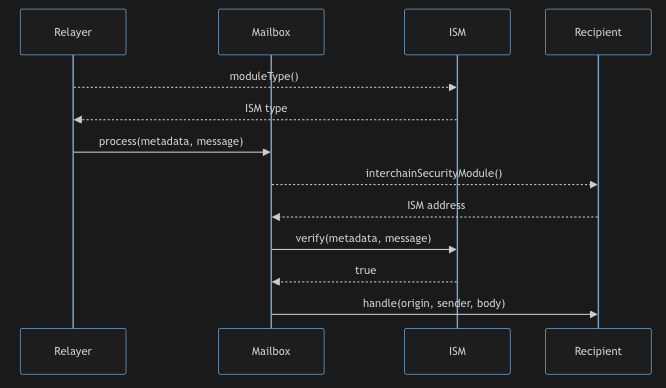
Hyperlane uses Interchain Security Modules (ISMs) for protection. These smart contracts verify that messages delivered to the destination chain genuinely originated from the source chain. Developers can customize the default ISM of the Mailbox with application-specific ISMs to meet their app’s unique needs.
Source: Hyperlane
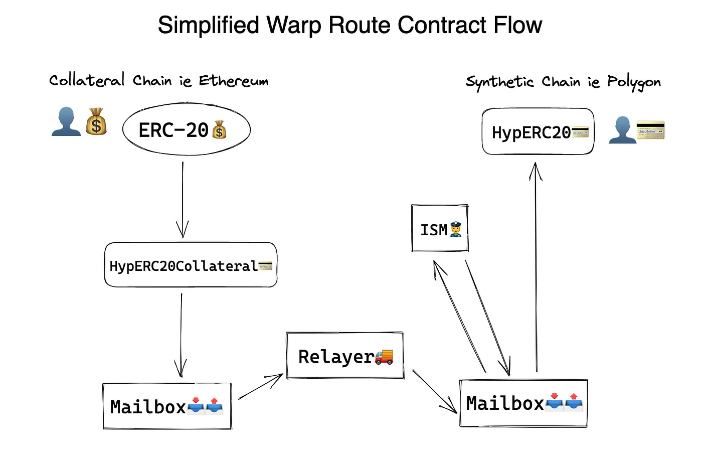
3) Use Warp Routes to easily transfer any asset between any chains, bypassing the usual whitelist approval processes required by traditional bridging technologies.
Warp Routes represent Hyperlane’s method for enabling permissionless transfers of ERC20 or ERC721 assets between any chains using Hyperlane. They let you set up transfer routes between any chain and those already connected via Hyperlane.
Source: Hyperlane
4) Set up and manage your own Hyperlane validators or relayers.
Hyperlane validators operate independently, not forming a network with other validators, and do not frequently submit transactions. They are configured per specific source chain, with setup guides provided for single-chain deployment.
- How It Works
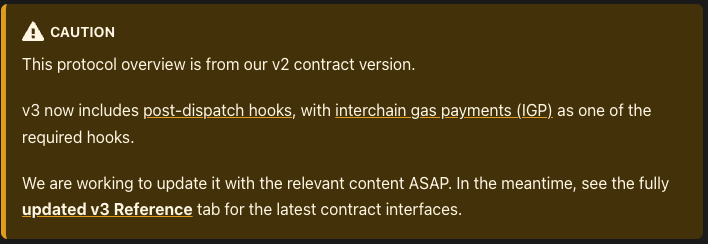
Hyperlane’s new V3 version introduces post-dispatch hooks, with Interchain Gas Payment (IGP) implemented as one of the required hooks. They are updating documentation to reflect these changes.
Source: Hyperlane
Here’s a detailed look at how Hyperlane’s Mailbox smart contracts work—designed to facilitate secure and efficient interchain communication:
Key Features:
● Dispatch Function: Initiates message sending, requiring message content, destination chain ID, and recipient address. Messages are stored in an incremental Merkle tree inside the mailbox to assist Hyperlane’s proof-of-stake protocol in verifying fraud proofs.
● Process Function: Facilitates cross-chain message delivery, operated by relayers. It handles the message and any metadata defined by the relayer, forwarding this information to the recipient’s Interchain Security Module (ISM) for validation. Once approved by the ISM, the mailbox delivers the message to the intended recipient via the recipient.handle() function.
To successfully send a message between chains, two transactions are needed: one to dispatch the message from the origin chain, and another to deliver it on the destination chain. Hyperlane simplifies this process by providing an on-chain interface on the source chain. This allows the sender to directly pay the relayer responsible for delivering the message on the destination chain—a fee known as Interchain Gas Payment.
The introduction of post-dispatch hooks and Interchain Gas Payment in Hyperlane V3 aims to enhance the functionality and efficiency of interchain communication, ensuring a more robust framework for blockchain interoperability and application development.
Team, Founding Support & Strategic Partnerships
Hyperlane was co-founded by Asa Oines and Nam Chu Hoai, early engineers at the decentralized finance platform Celo, along with Kol, who previously led venture investing at Galaxy. The company is headquartered in Greenwich, Connecticut.
Hyperlane raised $18.5 million in a seed round led by Variant, with participation from notable firms including Galaxy Digital and CoinFund. As co-founder Jon Kol shared in a CoinDesk interview, the funds will be used for hiring, product development, and security measures, including bug bounties and further audits.
On the partnerships front, Hyperlane has established several notable collaborations since 2023 and into early 2024. Key examples include:
● Circle’s CCTP x Hyperlane: The collaboration between Circle and Hyperlane enables the Cross-Chain Transfer Protocol (CCTP), enhancing USDC transfers across blockchains through features like permissionless interoperability and modular security.
● Celestia + Hyperlane Instant Interoperability: Hyperlane’s integration with Celestia brings instant, permissionless interoperability to Celestia rollups, offering developers customizable security and asset support for easier integration and faster liquidity onboarding.
● Hyperlane Expands to Polygon zkEVM: Launched via permissionless deployment on Polygon zkEVM, Hyperlane brings advanced interoperability and asset bridging to the platform, demonstrating its commitment to Indian crypto development and improving connectivity across blockchain ecosystems.
● Introducing Nexus: Powered by Hyperlane and Cosmos IBC, Nexus provides a unified interface for interoperability among Celestia, Cosmos, and EVM chains, enabling simple token movement and facilitating seamless liquidity access and cross-ecosystem development.
● Injective Ecosystem Introduces Hyperlane’s inEVM Bridge: Hyperlane’s inEVM bridge brings permissionless interoperability to the Injective ecosystem, linking it with Ethereum and preparing for future expansion. This move simplifies cross-blockchain integration and promotes dApp adoption.
● Hyperlane x Skip Protocol Integration: Hyperlane and Skip Protocol teamed up to simplify cross-chain transactions, integrating Warp Routes into DeFi platforms and wallets via the Skip API. This improves user experience with one-click trades and broadens access to unique interchain routing options.
Competitive Analysis
Considering the core functionality of arbitrary message bridges (AMBs), many projects are actively contributing to this space. Notable ones include LayerZero, Wormhole, and Axelar.
Axelar
The Axelar network offers a secure, decentralized cross-chain messaging platform that enables smooth EVM contract integration across blockchains. It stands out for ease of use, multi-chain compatibility, cost efficiency, and a secure, scalable architecture backed by efficient validators. Axelar connects EVM and Cosmos chains and enjoys strong community support and significant funding.
The network strengthens cross-chain transactions through solid infrastructure, serving both core functions and application development, with comprehensive functionality and strong security ensured via IBC protocols and modular isolation. Axelar builds trust and security through external validator checks and balanced voting, aiming for decentralized governance. While adding new chains presents challenges, Axelar’s approach—including innovative voting and governance practices—aims to deliver a scalable and reliable service for cross-chain communication.
LayerZero
LayerZero is a lightweight data messaging protocol designed for cross-chain communication with minimal assumptions, capable of transmitting messages across various blockchains. Its standout features include developer-friendliness, cost-efficient operations via off-chain Oracles and Relayers, and broad applicability to dApps. Backed by major crypto investors, LayerZero has attracted prominent dApps and supports 11 chains, offering tools like LayerZero Scan to track transactions.
The protocol’s architecture centers around Endpoints for chain communication, using Oracle and Relayer components to securely transmit messages without trusted intermediaries. Transactions are highly efficient, requiring gas only at the source, with system security ensured through independent verification and high attack thresholds.
Despite its strong design and security mechanisms, LayerZero faces challenges related to decentralization, reliance on external actors, and the inherent security of connected chains.
Wormhole
Wormhole acts as a bridge connecting at least fourteen blockchains (such as Ethereum and Solana), enabling cross-chain data and asset transfers through a decentralized network of “Guardians.” Key strengths include compatibility with both non-EVM and EVM-compatible chains, security provided by reputable validators, and low-cost transactions for users.
The protocol operates on Proof-of-Authority, with Guardians ensuring message integrity across chains. A transaction is considered valid only after approval by a majority of Guardians, promoting secure and straightforward cross-chain interactions.
Wormhole has become a trusted platform in the cross-chain space, backed by strong institutional partners.
Hyperlane’s Unique Positioning
Hyperlane is uniquely positioned by aligning closely with the ongoing evolution of the crypto ecosystem—particularly toward modularity and permissionless access—to meet dynamic market demands. In this context, Hyperlane has made significant progress in areas where other messaging protocols struggle to find balance.
However, within this space, a protocol’s longevity also greatly reflects its reliability and trust accumulated over time. In this regard, other projects may surpass Hyperlane in certain aspects.
Each bridge has its own unique design and method for validating cross-chain messages, meaning each involves trade-offs and sometimes sacrifices security. As past bridge hacks have shown, even a small vulnerability can result in losses of millions of dollars. Given that any code in these protocols could contain bugs—and considering bridges are prime targets for hackers—it is crucial for developers to prioritize continuous audits and maintain bounty programs.
Currently, the cross-chain space is still in its infancy, exploring various design approaches and consensus mechanisms, with different protocols and dApps undergoing real-time experimentation. For example, Injective focuses on Axelar, Portal Bridge leverages Wormhole, and Stargate utilizes LayerZero.
Hyperlane distinguishes itself by staying aligned with the evolving crypto ecosystem, particularly the shift toward modularity and permissionless access, thus adapting well to dynamic market needs. Hyperlane has made substantial progress in areas where other messaging protocols face difficulty achieving balance.
Yet, in this domain, a protocol’s longevity can significantly reflect its reliability and trust built over time. In this aspect, other projects may exceed Hyperlane in certain areas.
Tokenomics
To date, no exact details about the Hyperlane token have been confirmed beyond its anticipated role in the protocol’s proof-of-stake layer. Users may be able to stake the token to validate interchain messages and earn rewards for contributing to network security.
Bullish Fundamentals
● Hyperlane’s vision is to provide secure infrastructure for developing interchain applications. This initiative is backed by a strong team and powerful endorsements.
● With recent gains in the crypto market, Injective has emerged as a leading project. Hyperlane enables seamless interoperability between various blockchain platforms, expanding the reach and efficiency of Injective’s dApps and assets. Combined with Hyperlane’s growing list of partners and speculation around potential airdrops, broader protocol adoption appears likely.
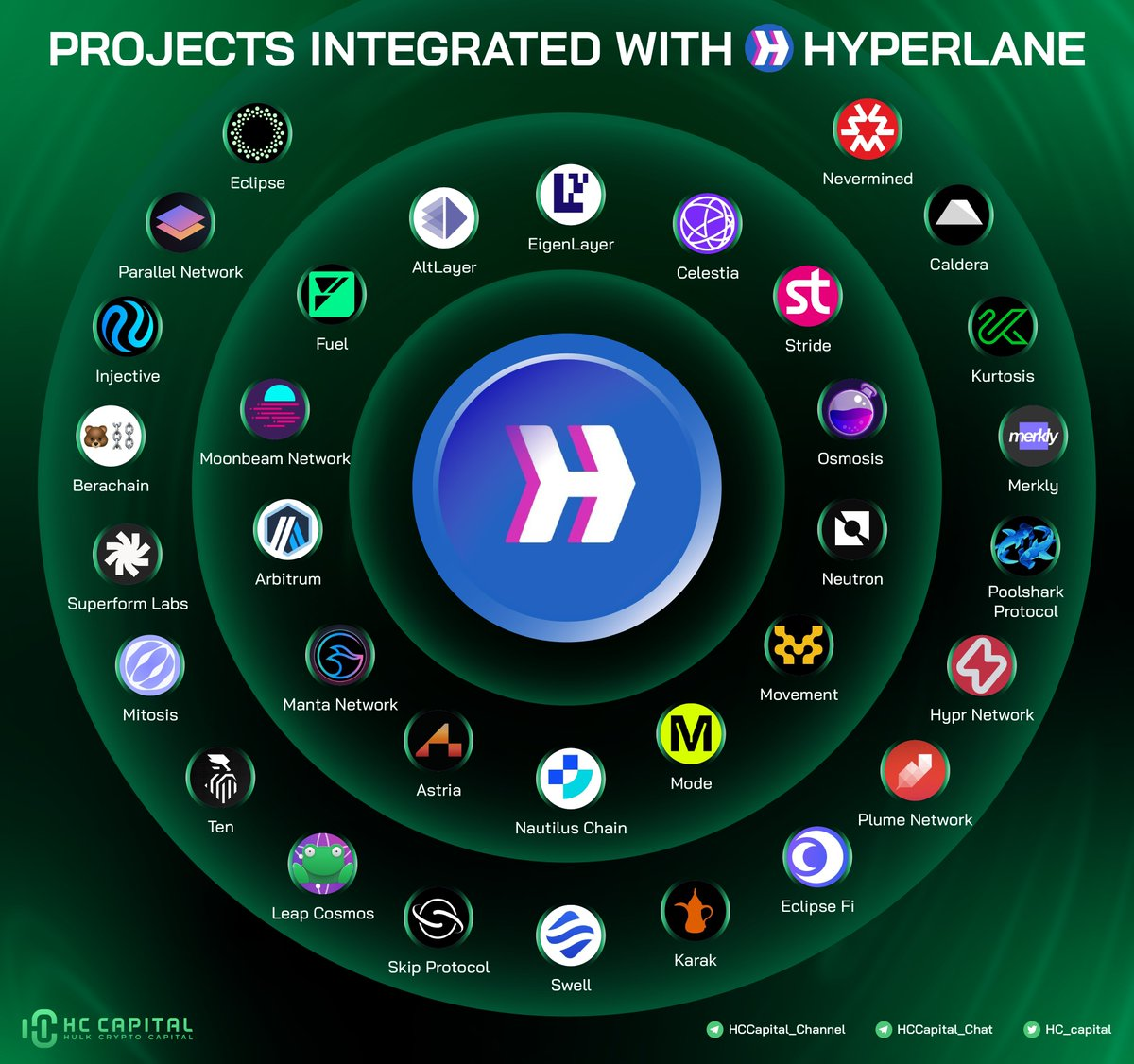
● The Hyperlane ecosystem is rapidly expanding, with increasing integration numbers starting from Q1 2024.
Source: HC Capital
Bearish Fundamentals
● The lack of tokenomics details complicates and hinders investment analysis of the project.
● Competing projects have already solidified their presence in the market, achieving monthly transaction volumes in the billions. While Hyperlane may have a strong start, it needs to establish a clear and compelling value proposition.
Conclusion
Hyperlane is emerging as a leader in blockchain interoperability, offering a decentralized and scalable strategy. Its innovative modular messaging system, combined with permissionless slashing mechanisms, sets a new benchmark for addressing challenges that have long plagued other messaging protocols.
It will be fascinating to follow Hyperlane’s development journey and the innovative applications it will enable.
For more insights and upcoming research articles, follow us on LinkedIn, X, and Medium. You can also visit our website for additional information.
Join TechFlow official community to stay tuned
Telegram:https://t.me/TechFlowDaily
X (Twitter):https://x.com/TechFlowPost
X (Twitter) EN:https://x.com/BlockFlow_News
 Greythorn