








Exploring the Future of Web3 Music: NFTs, AI, and Decentralization Compose the Melody
TechFlow Selected TechFlow Selected
Exploring the Future of Web3 Music: NFTs, AI, and Decentralization Compose the Melody
From the collectible value of NFTs to the innovative potential of AI music, Web3 is injecting new vitality into the music industry.
 Navigating Web3 tides with focused insights
Written by: @EdisonHuu
Mentor: @CryptoScott_ETH
I. Introduction
In a chaotic world, music is the sanctuary of the soul. It serves as an emotional outlet and a balm for the spirit. Through its melodies, we find resonance and touch depths of feeling that words cannot express. Music, like a painter of time, adds color to the canvas of life, allowing ordinary days to shine with extraordinary brilliance.
Music is a vessel of emotion, capable of evoking deep emotional resonance—be it joyful songs or sorrowful elegies. A simple melody holds the power to awaken memories buried in the heart, summoning old smiles or tears. It is the key to our emotional world, unlocking doors to the deepest chambers of the soul.
Music is a bond of society and culture, a bridge transcending linguistic and cultural barriers. In its unique way, it conveys stories from diverse cultures and histories, fostering understanding and connection among people. Each note carries cultural depth; every rhythm reflects the heartbeat of society. In musical resonance, we not only discover our similarities but also learn to appreciate beautiful differences.
Music is solace for the soul. On life's journey, music remains our constant companion. It offers comfort in difficult times and companionship in moments of joy. When we feel lonely or lost, music becomes a light illuminating the darkness, giving us strength and hope. It is a safe harbor for the mind, allowing us to find moments of peace amid life’s storms.
Music inspires creativity—it is also a source of creative thinking. It stimulates our imagination and challenges our innovative abilities. Music is not merely an artist’s canvas; it is a catalyst for the inner creativity of scientists, writers, entrepreneurs, and everyone else. Inspired by music, we can break through the boundaries of thought and explore infinite possibilities.
In this diverse and complex world, music provides a unique perspective, allowing us to feel the beauty and richness of life. It is indispensable because music does not just move our ears—it touches our souls.
II. The Music Industry Chain
The music industry chain is a vast and complex ecosystem. From a spark of inspiration to the birth of a song, from meticulous studio production to global distribution, each step is crucial in the musical journey. Fundamentally, it is an ecosystem centered on creation, production, distribution, and consumption. Within this system, every component is interconnected and interdependent.

Creative & Production:
Everything begins with creation. Music creation includes lyric writing, composition, arrangement, and recording. At this stage, artists and creators are central. Then comes the production phase, involving technical processes such as recording, mixing, and mastering. Crucially, this phase defines the final sound quality and artistic style of the work.
Distribution & Distribution:
Distribution refers to bringing music to market. Traditionally, this meant releasing physical records (e.g., CDs, vinyl) through record labels. However, with the development of digital technology, this process has shifted toward digital streaming services and online music stores.
Evolution of Business Models:
In the past, the music industry primarily relied on record sales and live performances. Artists earned revenue through record companies and ticket sales from live shows. However, with digitalization, streaming services have become dominant, transforming how income is generated. Today, artists derive more income from streaming royalties, live performances, and brand collaborations.
Copyright Management:
Copyright management plays a vital role in the music industry. It affects not only artists’ incomes but also underpins fairness across the entire music ecosystem. While the digital era has brought broader distribution channels, it has also introduced new challenges in copyright protection and management.
Market Trends:
According to IFPI’s 2023 Global Music Report, the global music market reached $26.2 billion in 2023—an increase of 9% from 2022—with revenue rising in every region worldwide. Recorded music revenue grew 9% year-on-year, and the number of paid subscription users reached an astonishing 589 million. Currently, the music industry is undergoing rapid transformation. On one hand, the rise of independent music disrupts traditional record label monopolies; on the other, globalization and internet penetration enable music to transcend geographical boundaries and reach global audiences.
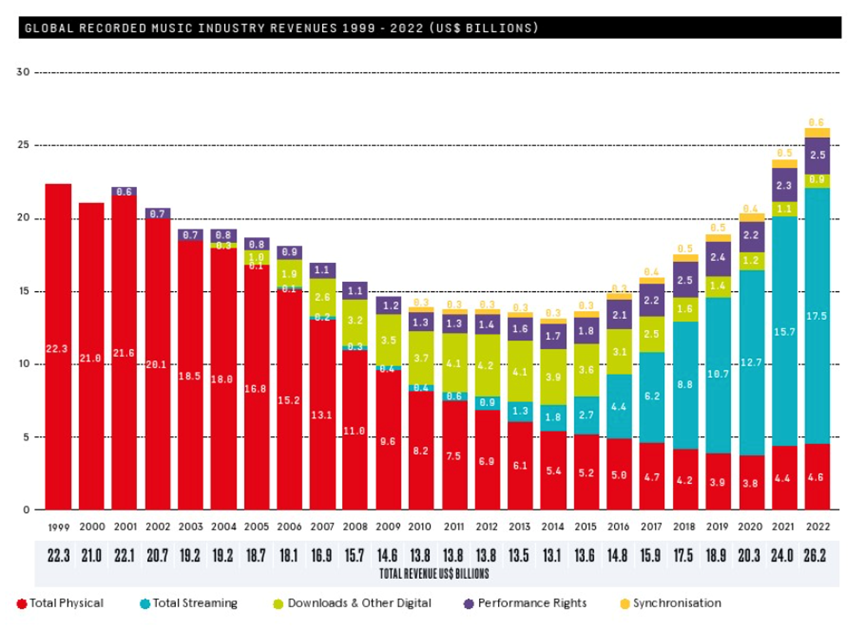
Source: IFPI 2023 Global Music Report
III. Industry Pain Points
Despite continuous global expansion and growth, the music industry still faces profound challenges and pain points. These issues affect not only artists’ earnings and creativity but also the healthy development of the entire industry.
Copyright Issues and Revenue Distribution:
Copyright issues have long been a core pain point in the music industry. With the popularity of digital music, copyright management has become increasingly complex.
For example, Taylor Swift’s copyright dispute with her former record label highlights the challenges artists face in protecting their works within the music industry. Additionally, opaque revenue-sharing mechanisms leave many artists feeling inadequately compensated, especially on streaming platforms.
Market Monopolization:
Market monopolization is another critical issue. The dominant positions of major music labels and streaming platforms restrict opportunities for independent artists. This monopoly affects not only artists’ income and exposure but also reduces musical diversity.
For instance, independent artists often struggle to gain sufficient visibility on mainstream platforms, limiting their career development and creative freedom.
Artist Exposure and Marketing:
In the digital age, artists face growing pressure regarding marketing and self-promotion. Artists signed with large companies may enjoy greater exposure, while independents must figure out how to stand out in a crowded digital landscape. This is not only a resource challenge but also one of skills and knowledge.
Challenges Brought by Digitalization:
While digitalization has expanded music’s reach and convenience, it has also introduced new challenges. Digital piracy and copyright infringement remain serious problems. Moreover, the prevalence of digital music has altered consumers’ perception of music’s value, impacting pricing and sales strategies.
Music platforms—the most crucial link in the music industry chain—also face significant challenges.
Complexity in Copyright Management and Revenue Distribution
-
From the platform's perspective, copyright management is a massive challenge. Platforms must ensure all streamed music is legal while handling complex revenue distributions to rights holders.
-
This process is especially cumbersome and error-prone for platforms hosting a large volume of independent artists’ works.
Market Monopoly and Artist Visibility
-
Major music platforms tend to promote already-famous artists and hit songs, making it difficult for emerging and independent musicians to gain exposure.
-
Such market dominance limits musical diversity and hinders innovation and the growth of new talent.
User Experience and Engagement
-
Traditional music platforms typically offer limited user engagement, focusing mainly on playback and basic interactive features, lacking deeper participation and community building.
IV. How Web3 Addresses Industry Pain Points
Web3 technologies—especially blockchain and decentralization—offer new perspectives and tools to address existing problems in the music industry. The essence of Web3 music lies in reshaping the music value chain: using blockchain technology to turn artists’ upstream creations into NFTs delivered directly to downstream listeners, resolving copyright issues and improving revenue distribution. Let’s examine the advantages of Web3 music.
Enhancing Transparency in Copyright Management and Revenue Mechanisms
-
Blockchain Application in Copyright Management:
-
Using blockchain technology, a transparent and tamper-proof copyright management system can be created. Every use and distribution of a musical work can be recorded on-chain, ensuring artists’ copyrights are protected and properly compensated.
-
Role of Smart Contracts in Revenue Distribution:
-
Smart contracts can automatically execute complex revenue-sharing agreements. This means artists and other rights holders receive payments directly based on predefined rules, reducing intermediaries and increasing transparency and efficiency.
Breaking Market Monopolies
-
Decentralized Music Platforms:
-
Decentralized music platforms allow independent artists to publish their work directly without relying on major record labels or streaming services. This provides more exposure opportunities for independent artists and gives consumers access to a wider range of music choices.
Artist Marketing and Exposure
-
Community-Based Promotion Models:
-
On Web3 platforms, artists can leverage community power to promote their music. Through tokenized incentive mechanisms, fans can directly participate in music promotion and distribution, forming a decentralized marketing model.
Addressing Digitalization Challenges
-
NFTs and Digital Assets:
-
By converting music works or experiences into NFTs, artists can imbue their creations with uniqueness and scarcity. This not only creates a new revenue stream but also helps reshape perceptions of digital music’s value.
V. Project Overview
This section compiles current Web3 music projects available in the market.
1. Gala Music
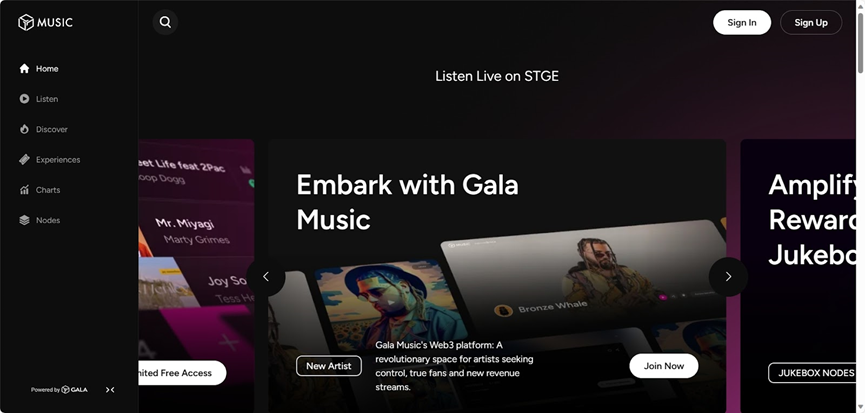
Gala Music is a decentralized music platform built on blockchain technology, enabling artists to gain greater control over their music and enhancing supply chain transparency, while allowing fans to connect more closely with artists.
Gala Music is a key component of the Gala ecosystem, alongside Gala Games and Gala Movies, forming the foundation of the Gala ecosystem. It has launched the $Music token, currently valued at just $13 million.

2. Audius
Audius is currently the largest Web3 music platform in terms of user base and market capitalization. It fosters an open music-sharing ecosystem where all music is free to listen to, and APIs are open for third-party applications. With rich content and low user barriers, it stands out.
The project launched its mainnet and $AUDIO token in October 2020. During the previous bull market, $AUDIO reached a peak market cap of $500 million and now sits around $200 million.

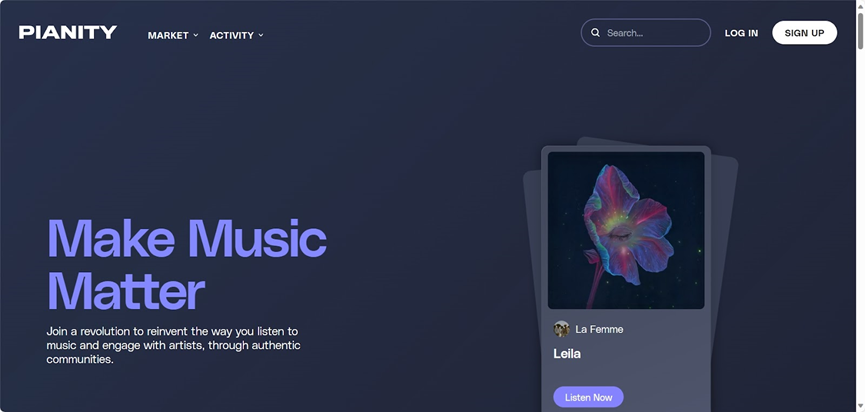
3. Pianity
Pianity is a music NFT platform built on Arweave, aiming to bring together musicians and their communities to create, sell, buy, and collect limited-edition tracks.
Beyond treating music as fine art, Pianity offers artists services to mint music NFTs, providing them with new independent income streams. It enables artists and collectors to sell and auction music NFTs. The ecosystem token has been designated as $PIA, though not yet issued.
4. Sound.XYZ
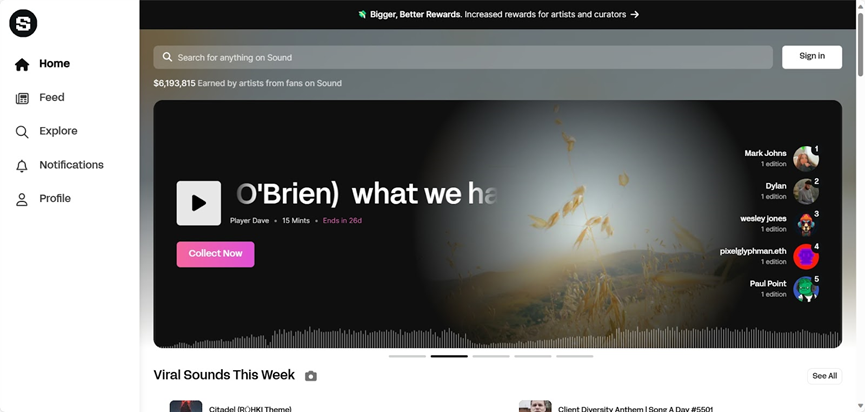
Sound.XYZ is an NFT music discovery and streaming platform on the Ethereum blockchain, offering convenient wallet integration and NFT trading pathways.
The project raised $20 million in Series A funding and hosts artists such as Snoop Dogg, DanielAllan, San Holo, Alexander23, and Vic Mensa. No token has been issued yet.
5. Royal
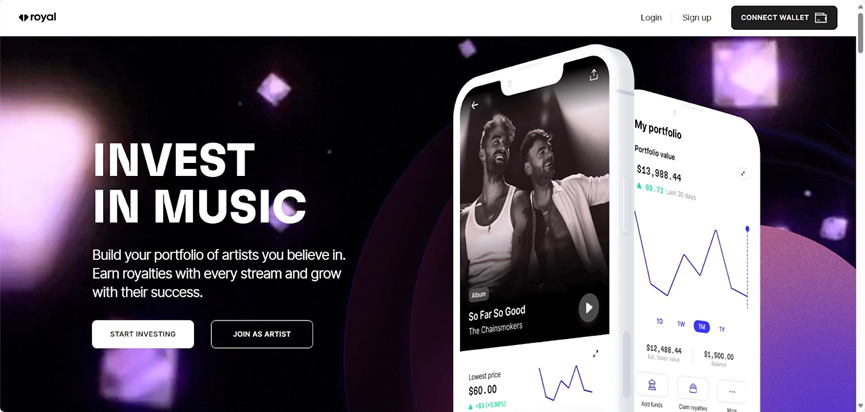
Royal is a pioneering music marketplace on the Polygon chain, enabling fans to co-invest in music with artists and share royalty income, achieving shared ownership and mutual growth. It secured $16 million in seed funding from institutions including Coinbase and a16z, followed by $55 million in Series A. Participating artists include 3LAU, JD Ross, The Chainsmokers, Nas, Kygo, and Loqic. No token has been issued yet.
VI. Exploring the Future of Web3 Music
The application of Web3 technology in the music industry not only solves existing problems but also opens up entirely new directions for development. Below are discussions on several key areas, each illustrated with specific examples to deepen understanding:
1. Integration of AI Music and Web3
Combining AI music creation with Web3’s decentralized and transparent characteristics can create novel music experiences and business models. AI-generated music can be managed and traded on Web3 platforms, offering new possibilities for personalization and intelligence in music.
2. Merging MEME Culture with AI Music
AI music technology can integrate with popular meme culture to create highly engaging and viral music content. Such combinations can quickly gain traction among youth, sparking new music trends. AI can analyze trending online movements and user preferences to generate music aligned with current cultural contexts.
3. DePIN Meets Music
Decentralized storage solutions can ensure the security and permanence of music data. Combined with decentralized computing platforms, they enable efficient inference and processing of AI music models. This technological synergy helps reduce operational costs in the music industry while improving data processing efficiency and security.
4. Creator Economy in Music Meets Web3
Web3 platforms provide music creators with more direct revenue channels and greater market control. Through decentralized markets, artists can sell their works directly to listeners, bypassing traditional music industry intermediaries. This will encourage more independent creation and drive diversification in the music industry.
5. NFTs Integrated with Music
NFTs offer a unique method of ownership and transaction for music. Artists can issue NFTs of their works to create limited editions or exclusive experiences, providing listeners with distinctive collectible value. In the future, NFTs may become a key method for music creation and distribution, especially for independent artists and experimental music projects.
6. Fan Economy Meets Web3
In a Web3 environment, fans can support their favorite musicians by purchasing artist tokens or NFTs. This model strengthens the bond between fans and artists and gives fans opportunities to participate in music creation and promotion, forming an interactive music ecosystem.
VII. Conclusion: The Future of the Music Industry and Its Fusion with Web3
Through an in-depth analysis of the music industry chain and its business models, along with a discussion of current industry pain points, we can clearly see that the music world stands at a pivotal turning point.
The introduction of Web3 technology not only offers innovative solutions to existing problems but also signals new directions for the future development of the music industry.

-
Blending Innovation with Tradition
Core features of Web3 technology—such as decentralization, transparency, data security, and smart contracts—open new paths for addressing long-standing industry issues like complex copyright management and unfair revenue distribution.
These applications not only enhance overall industry efficiency but also protect artists’ creative rights, ensuring fair compensation for their labor.
-
Building a Fairer Ecosystem
In the Web3 music ecosystem, artists, creators, and consumers will enjoy greater power and control. This new ecosystem helps dismantle monopolistic structures in traditional industries, creating a more diverse and equitable environment for artistic creation and sharing.
Artists will be able to connect directly with listeners, while consumers gain more opportunities to actively participate in music creation and promotion.
-
Unlocking New Business Models
With the rise of NFTs, AI music, and decentralized platforms, the music industry’s business models will undergo revolutionary changes. These new models will not only expand artists’ income sources but also offer consumers unprecedented music experiences and engagement opportunities.
From the collectible value of NFTs to the innovative potential of AI music, Web3 injects fresh vitality into the music industry.
-
Looking Ahead
The future direction of the music industry must adapt to changing times—leveraging intelligent technologies, innovating music products and services, improving music quality and efficiency, protecting copyrights and revenues, meeting diverse consumer needs, and achieving sustainable industry growth.
Although Web3 music is still in its early stages, its innovative models and solutions to traditional industry pain points represent an essential path for any music company aiming to establish a foothold and achieve long-term success. Once foundational conditions mature, explosive growth in the Web3 music sector is foreseeable.
Join TechFlow official community to stay tuned
Telegram:https://t.me/TechFlowDaily
X (Twitter):https://x.com/TechFlowPost
X (Twitter) EN:https://x.com/BlockFlow_News
 @gryphsisacademy











