Bitget Wallet launches MPC wallet, offering more secure and user-friendly Web3 wallet services
TechFlow Selected TechFlow Selected
Bitget Wallet launches MPC wallet, offering more secure and user-friendly Web3 wallet services
Bitget Wallet (formerly BitKeep) has officially launched its MPC keyless wallet, leveraging an enterprise-grade MPC (Multi-Party Computation) solution to provide users with a more secure and convenient Web3 wallet experience.
 Navigating Web3 tides with focused insights
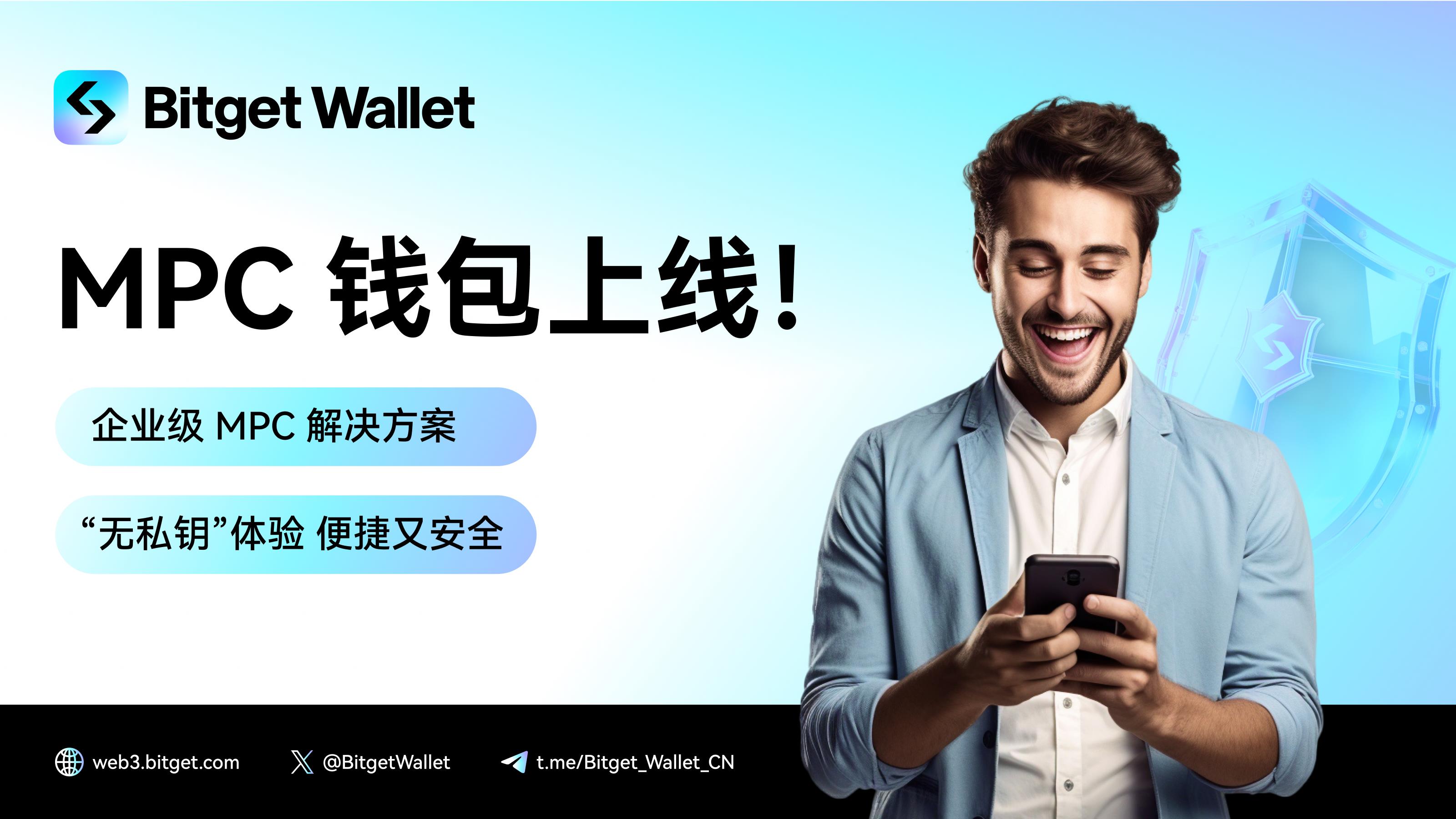
In the digital asset space, secure private key management is one of users' top concerns. Traditional wallet solutions often require users to memorize or store complex seed phrases or private keys—loss or exposure of which can lead to irreversible asset losses. To address this security pain point while lowering the barrier for wallet adoption, on October 23, Bitget Wallet (formerly BitKeep) officially launched its MPC no-private-key wallet, leveraging an enterprise-grade MPC (Multi-Party Computation) solution to deliver a more secure and user-friendly Web3 wallet experience.
No Private Key, Yet More Secure and User-Friendly
For users, the experience of using an MPC wallet differs significantly from most existing EOA wallets. With no need to remember or write down complex seed phrases or private keys, it enables a true "no private key" experience.
Using Bitget Wallet's MPC wallet only requires email-based authentication for setup, making it accessible even for complete beginners. Additionally, users can complete cloud backup of key shards in just three simple steps, effectively eliminating risks associated with forgotten, lost, or stolen private keys.
In short, “no private key” does not mean less security—it means greater usability and enhanced security.
Enterprise-Grade, Secure MPC Technology
Bitget Wallet’s MPC wallet employs Threshold Signature Scheme (TSS), a specific MPC technology, strictly adhering to the highest security standards. It integrates advanced techniques including secure large prime generation, Distributed Key Generation (DKG), distributed collaborative signing, homomorphic encryption, and a widely adopted 2-out-of-3 threshold configuration, ensuring maximum protection at every stage.
When creating a wallet, Bitget Wallet generates quantum-resistant secure large primes. According to the Bitget Wallet R&D team, “Generating secure large primes ensures all protocol operations run under the strictest security standards, significantly enhancing overall attack resistance.” This process occurs only once during initial wallet creation and takes about tens of seconds. “Though users may perceive a slight delay, the security gain is substantial,” they added.
During private key generation, Bitget Wallet uses distributed key generation technology to collaboratively compute and distribute encrypted fragments that implicitly map to the full private key. Crucially, one fragment is never transmitted, ensuring that no single shard is exposed and that the complete private key never exists in any form, thus preventing leakage.
During transaction signing, Bitget Wallet leverages distributed threshold signatures so that private key fragments remain dispersed throughout the process. Users sign transactions without ever exposing their private key—meaning the private key never appears as a whole, greatly improving both key and asset security.
The Bitget Wallet R&D team noted, “Most MPC wallets currently targeting retail users prioritize convenience over security. For example, some share account systems with centralized exchanges, enabling faster onboarding but concentrating risk; others use standard large primes instead of secure ones during DKG, compromising security for speed.”
Reshare Mechanism and Independent Passwords for Multi-Layer Protection
Bitget Wallet also introduces a Reshare mechanism. When users log in from a new device, the key shards stored on the old device automatically become invalid and can no longer participate in transaction signing, significantly reducing the risk of asset loss. Additionally, Bitget Wallet allows users to set a separate transaction password for the MPC wallet, ensuring server-side key shards only engage in signing with explicit user authorization.
Users Maintain Full Control Over Their Wallets
Bitget Wallet’s MPC wallet implements a 2-out-of-3 signature scheme, delivering a full enterprise-grade MPC solution tailored for retail users.
The 2-out-of-3 threshold means at least two out of three key shards are required for signing: one resides on the user’s current device (for signing), one on the platform’s server (for signing), and the third is securely backed up on cloud storage such as iCloud or Google Drive (not used for signing, but available for Reshare). This architecture is more decentralized and secure than hybrid custody (where both user and platform hold keys, neither can act alone) or third-party custody (where the platform holds and controls the keys).
Moreover, by having each party independently generate secure large primes—rather than relying on fast, centralized generation—the key shard creation process remains decentralized. Users can also invalidate old device shards via Reshare.
Ultimately, only the user has absolute control over their wallet.
Bitget Wallet has always pursued innovation in product and service design, committed to delivering higher-quality products and smoother experiences. “Internally, we have a saying: we build products and services for one billion users. For crypto and Web3 to achieve mass adoption, infrastructure like wallets must lower barriers and improve accessibility. The MPC wallet is a step forward, and we’ll continue exploring deeper into MPC and AA wallets, among other areas,” said Bitget Wallet’s CEO.
About Bitget Wallet
Bitget Wallet, formerly known as BitKeep, is Asia’s largest and a globally leading all-in-one Web3 multi-chain wallet. It offers users a comprehensive suite of on-chain products and DeFi services, including wallet functionality, Swap trading, NFT trading, and a DApp browser.
Over the past five years, it has earned recognition and support from 12 million global users and hundreds of leading industry projects such as Ethereum, BNB Chain, Arbitrum, and Polygon, thanks to its secure and user-friendly offerings.
In March 2023, the crypto derivatives exchange Bitget invested $30 million in BitKeep, becoming its majority shareholder. In August, BitKeep was officially rebranded as Bitget Wallet, launching a comprehensive product and service upgrade centered around “trading” to deliver superior trading experiences.
Join TechFlow official community to stay tuned
Telegram:https://t.me/TechFlowDaily
X (Twitter):https://x.com/TechFlowPost
X (Twitter) EN:https://x.com/BlockFlow_News
 @BitgetWallet