dappOS V2 Roadmap Explained: Official Introduction of Unified Accounts
TechFlow Selected TechFlow Selected
dappOS V2 Roadmap Explained: Official Introduction of Unified Accounts
From the application perspective, dappOS breaks down the barriers between different chains for Web3 products by acting as a "Web3 operating protocol," helping reduce customer acquisition costs for Web3 applications across different ecosystems.
 Navigating Web3 tides with focused insights
Recently, the Web3 operating protocol dappOS secured investment from Binance Labs. The dappOS protocol consists of two main components: dappOS Account, a unified account based on account abstraction, and dappOS Network, an automated execution network. Together, they enable users to access dApps with minimal friction while reducing the difficulty for dApps to acquire users across multiple chains. On July 7, dappOS released its V2 product roadmap.
1. Background
In the traditional internet world, user-friendly interfaces and interaction experiences provided by "operating systems" enabled widespread computer adoption. As the Web3 industry matures after a decade of rapid growth, high entry barriers for new users remain a major obstacle hindering broader Web3 adoption.
2. Overview of dappOS
dappOS aims to lower the barrier to using Web3 applications through two core components: dappOS Account, built on account abstraction, and dappOS Network, which enables automated execution of operations.
dApps often struggle to maintain strong liquidity across all chains without sacrificing access to cross-chain users. dappOS effectively solves this issue. By integrating the dappOS frontend SDK, dApps can seamlessly serve users from other public chains without modifying their smart contracts, thus avoiding fragmented liquidity. For example, a protocol deployed solely on BSC can attract users from Ethereum and other chains by integrating dappOS’s frontend SDK.
End users can use dappOS to manage multi-chain assets and one-click access various dApps across different chains, eliminating the need to manually switch between networks, bridge assets, or purchase Gas tokens.
3. dappOS V2
Following MVP validation and testing, dappOS will launch its first official version, V2. According to the latest v2 roadmap disclosed by dappOS, key new features include: unified accounts, task-linked order execution, and a new node bidding system. Initial projects supported in dappOS V2 include Benqi, Cheems, Curve, DeFi Kingdom, Frax Finance, GMX, KyberSwap, Lido, Perpetual, QuickSwap, StarryNift, SyncSwap, and SynFutures.
-
dappOS Account: Unified Account
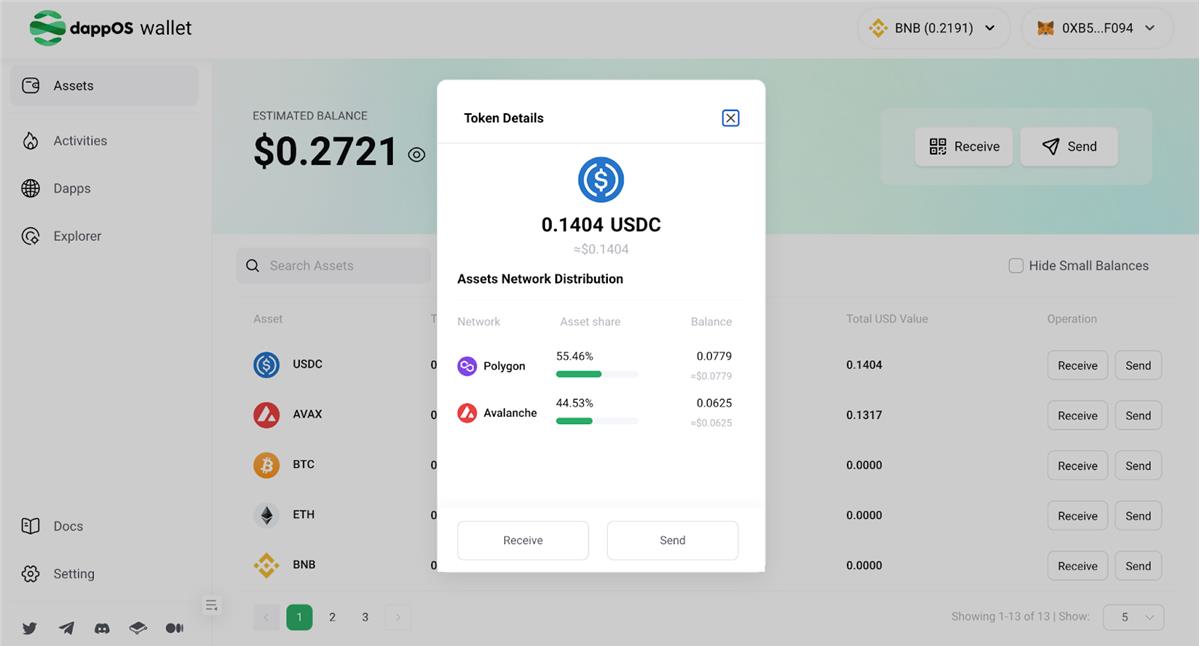
dappOS Account is a unified account built on account abstraction that delivers CeFi-like trading experiences while maintaining decentralization. Unlike traditional EOA accounts, account abstraction uses a smart contract as the account. Instead of relying solely on private keys or seed phrases, users can set up recovery methods such as phone numbers or email addresses—similar to Web2 accounts. If a user loses their seed phrase or private key, dappOS Account supports multiple recovery options.
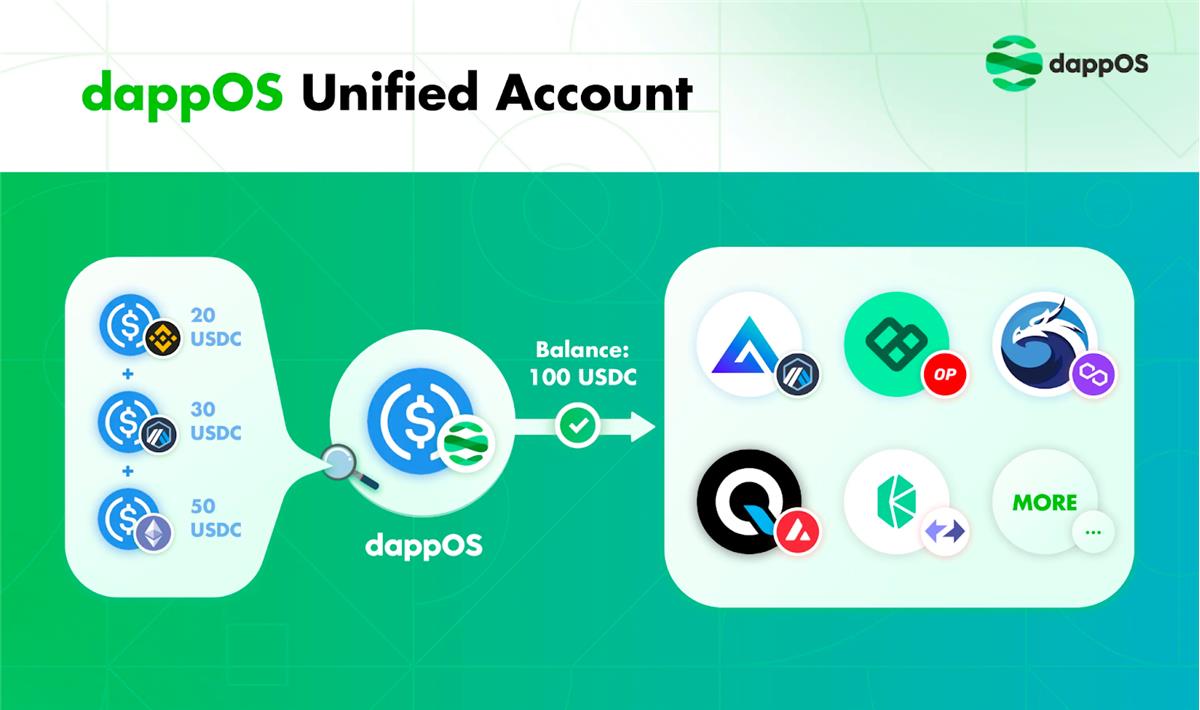
For example, if User A holds 20 USDC on BNB Chain, 30 USDC on Arbitrum, and 50 USDC on Ethereum, their total balance in the dappOS unified account will be 100 USDC. With just one signature, User A can use the full 100 USDC balance across GMX on Arbitrum, Perpetual on Optimism, and Benqi on Polygon—without needing to worry about which chain holds the USDC or how to pay gas fees. Compared to the manual process involving purchasing gas tokens, transferring assets, bridging across chains, and waiting for confirmation—which takes over 20 minutes—the entire transaction now takes under 2 minutes.
Under the LSD and LSDFi narratives, where protocols are scattered across various L1s and L2s, the dappOS unified account allows users to directly manage total asset value, achieve universal asset usability, abstract away individual chains, and interact seamlessly with dApps, fully leveraging DeFi composability.
-
Task-Linked Order Execution
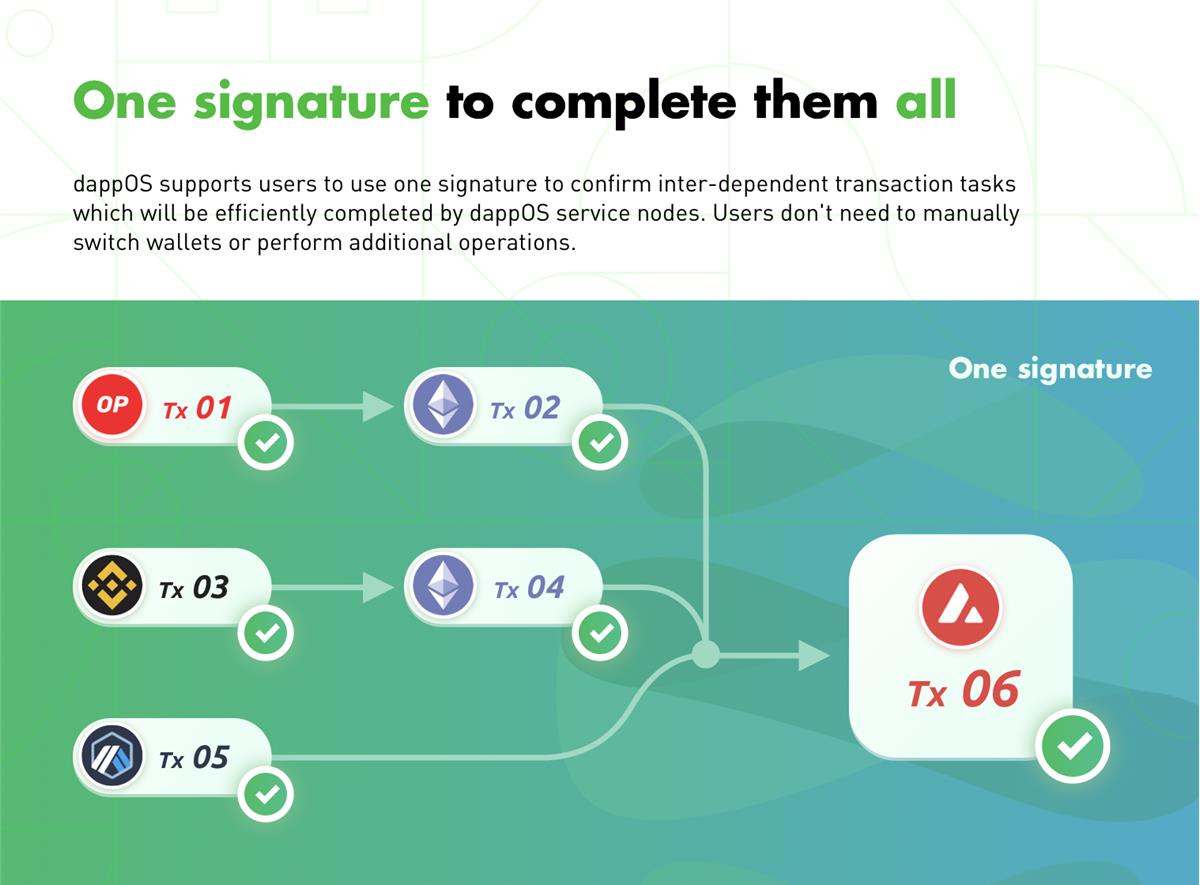
Task-linked order execution is a new feature in dappOS v2. With a single signature, users can confirm complex, sequential transactions spanning any number of chains.
-
New Node Bidding System
dappOS V2 will also introduce a new node bidding system, allowing users to view a list of service nodes for a target transaction along with the associated cost and time required. Users can then autonomously select the optimal service node to improve transaction efficiency and reduce costs.
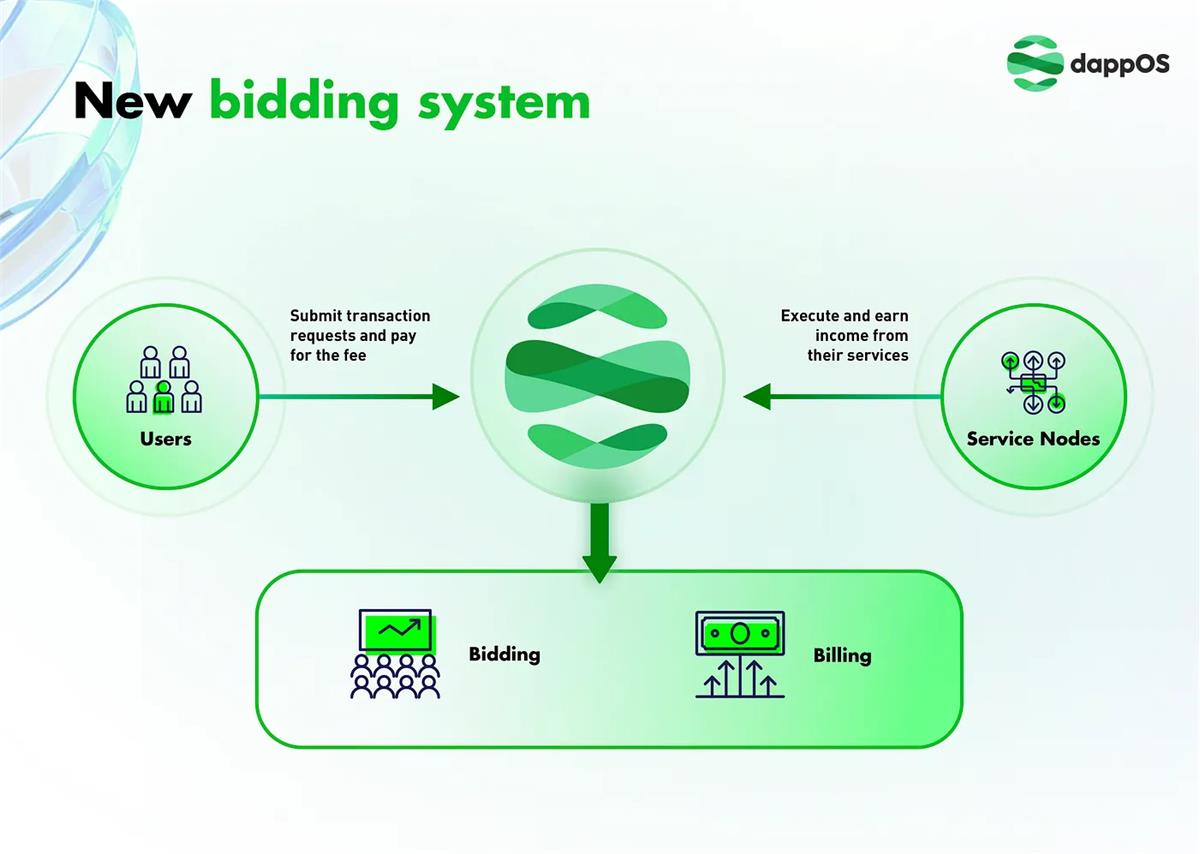
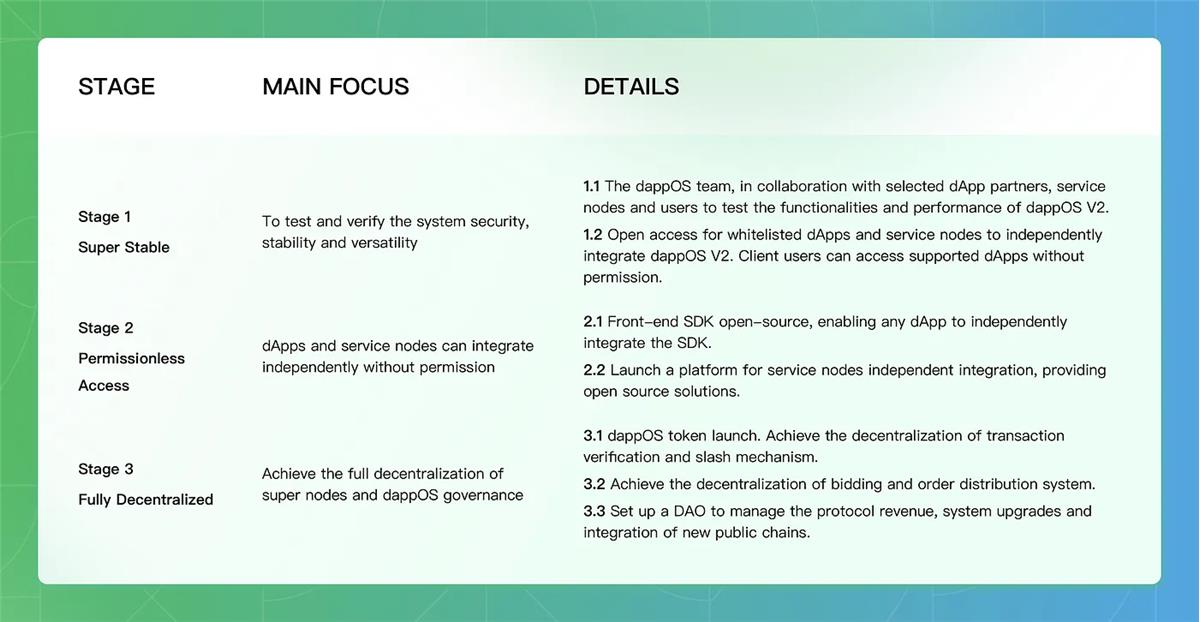
Under the new bidding system, service nodes are incentivized based on performance. Efficient, low-cost nodes have higher chances of being selected ("winning orders") to fulfill user transactions, fostering healthy competition among nodes and enabling self-optimization within the dappOS Network transaction ecosystem. The recently disclosed dappOS V2 roadmap indicates that during Stage 2, a self-onboarding platform for service nodes will launch, offering open-source implementations of varying specifications.
4. Investors and Project Progress
1. In early December last year, dappOS was selected into Season 5 of the Binance Labs Incubation Program as the first Web3 operating protocol, receiving industry resources and support from Binance Labs. In June this year, dappOS secured funding from Binance Labs.
2. During the MVP testing phase, dappOS has already been integrated by numerous leading Web3 applications, including GMX, Benqi, Perpetual, Pangolin, Kyber, QuickSwap, and dozens of other dApps.
3. The upcoming release of the first official version, V2 (Major Version), will officially introduce key features such as unified accounts (users no longer need to distinguish between chains and can use their total balance across any app on any chain), task-linked order execution (one signature confirms a sequence of interdependent operations across any number of chains), and a fee-based bidding system.
Summary
The release of the dappOS v2 roadmap signals that dappOS is entering the market with a fully functional suite of tools—a critical step toward expanding the Web3 user base from millions to billions—and reinforces its ability to continue attracting top-tier capital.
From an application perspective, dappOS breaks down silos between Web3 products across different chains by acting as a "Web3 operating protocol," helping reduce customer acquisition costs for Web3 apps across ecosystems. Whether it's driving further crypto adoption, evolving Web3 product design, or shaping the future of the Web3 landscape, dappOS is poised to play a significant role.
Join TechFlow official community to stay tuned
Telegram:https://t.me/TechFlowDaily
X (Twitter):https://x.com/TechFlowPost
X (Twitter) EN:https://x.com/BlockFlow_News
 @dappOS_com