








Who is the next $SOL? Top 11 upcoming L1/L0 dark horses to watch
TechFlow Selected TechFlow Selected
Who is the next $SOL? Top 11 upcoming L1/L0 dark horses to watch
In the upcoming cycle, many of the best layer-one blockchains are arriving.
 Navigating Web3 tides with focused insights
Written by: Crypto in Black
Compiled by: TechFlow
In the upcoming cycle, many of the best first-layer blockchains are about to arrive. They could surge 30-60x during the next bull market. They might become the next $SOL or $ADA—here are the 11 most exciting upcoming L0/L1s I’m most excited about.
Aleo
Aleo is like a "child of Ethereum and Zcash." It’s a first-layer blockchain platform that uses zero-knowledge cryptography to enable private applications.
It has three main advantages:
1. POS without environmental pollution
2. Maximum permissionlessness, incentivizing optimal validator behavior
3. Balancing privacy and transparency through the use of SNARKs
Shardeum
Shardeum is a sharded blockchain compatible with the Ethereum Virtual Machine (EVM), featuring:
A) “Infinite” scalability
B) High decentralization
C) Security
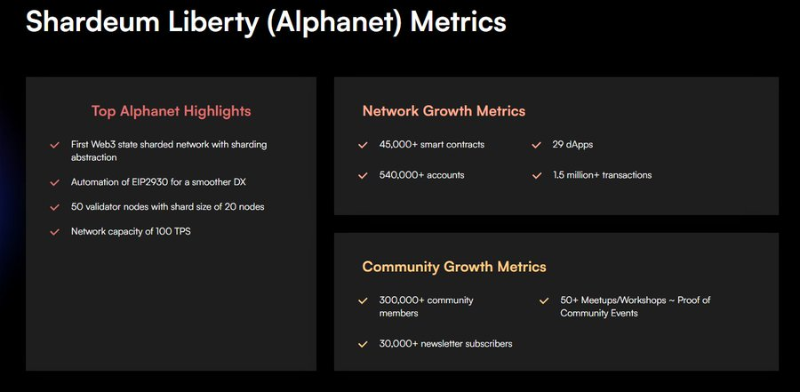
It is the world’s first Layer-1 blockchain combining sharding and auto-scaling to deliver high throughput, low latency, and instant finality.
Sui
Sui is a permissionless, PoS Layer-1 blockchain designed by former Meta (formerly Facebook) engineers.
Sui is a direct competitor to Aptos, as both were founded by ex-Meta employees who worked on Facebook’s failed project DIEM (Libra). Both Sui and Aptos use the Rust-based programming language Move, though Sui uses a slightly modified version.
-
Aptos differs with its Block-STM execution engine, which allows parallel processing of multiple transactions.
-
Sui, on the other hand, uses Narwhal and Tusk, a DAG-based mempool.
Both are ultra-high TPS L1 blockchains seeking scalable solutions at their base layer.
Fuel Labs
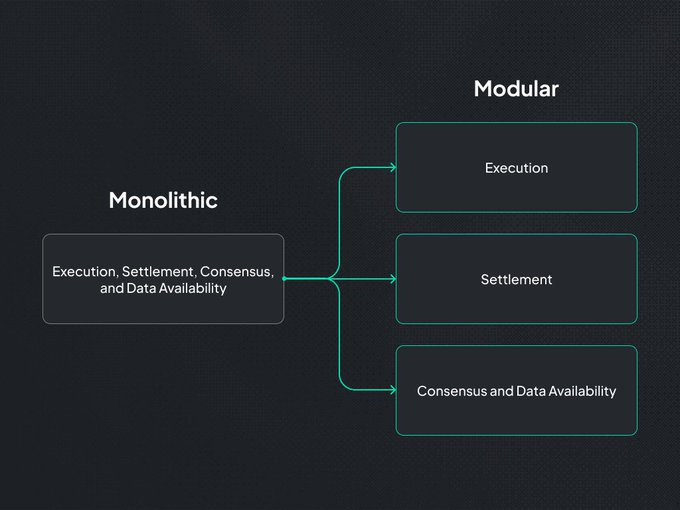
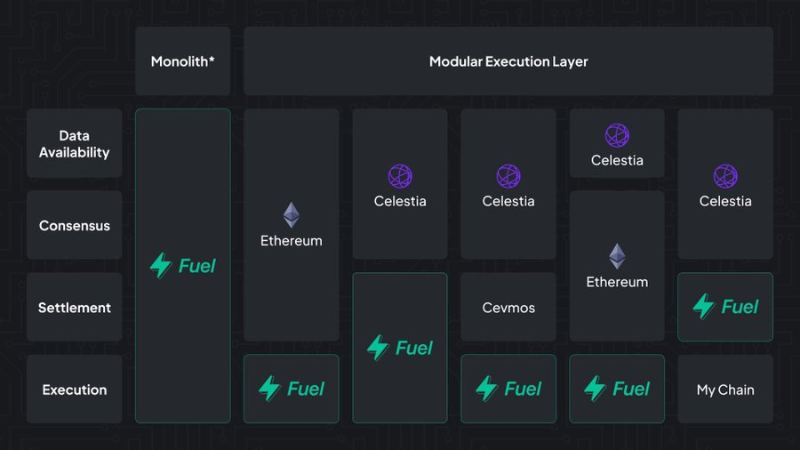
Blockchain technology is moving away from monolithic architectures where execution, data availability, and consensus are intertwined. Fuel aims to become the fastest execution layer for modular blockchain stacks.
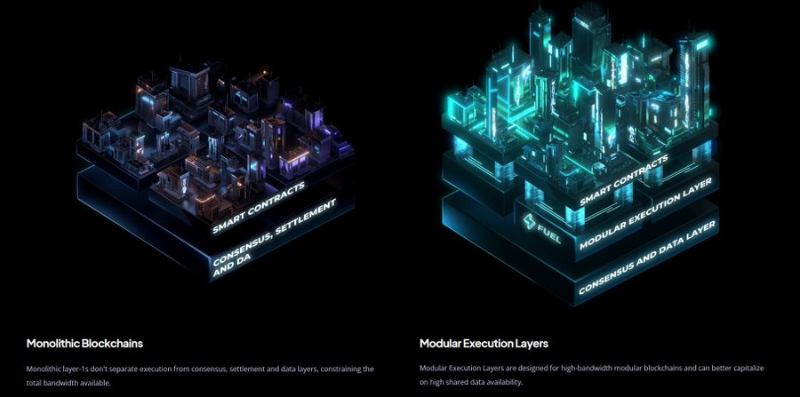
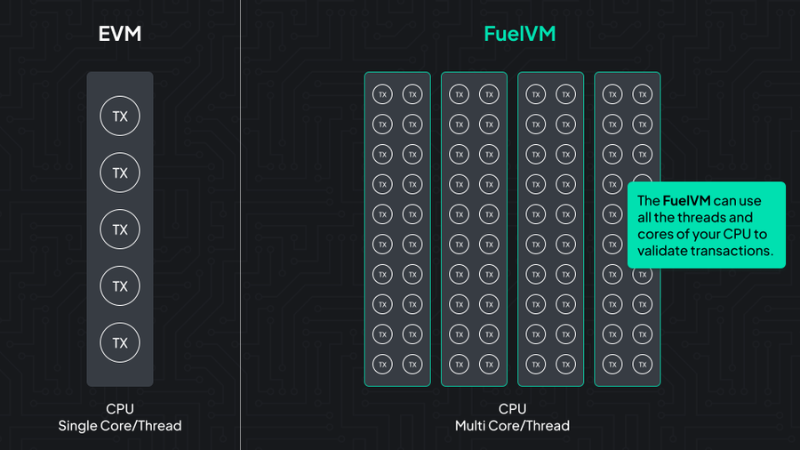
Fuel’s tech stack rests on three core pillars to achieve maximum security and flexible high throughput:
1. Parallel transactions
2. Fuel Virtual Machine
3. Sway language
Because execution, consensus, settlement, and data layers are combined into a single Layer-1, overall bandwidth is limited. Modular blockchains, composed of modular execution layers, can better leverage shared data availability.
5ireChain
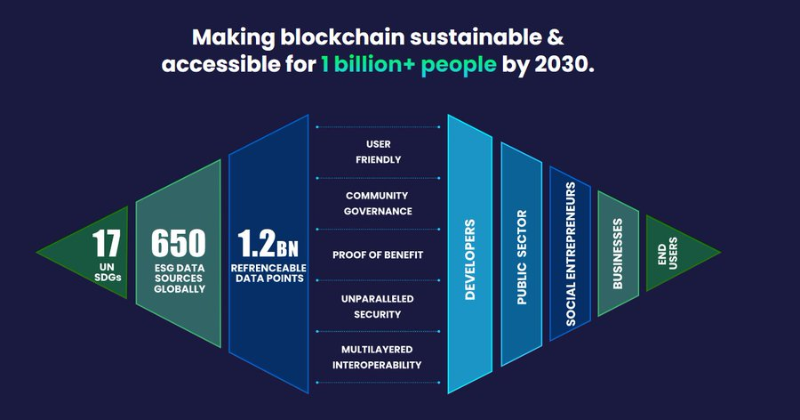
A blockchain ecosystem built on the United Nations Sustainable Development Goals, and one of India’s fastest-growing unicorns.

The blockchain utilizes PoS consensus to economically incentivize and reward participants to bring about:
• Sustainability
• Technology
• Innovation
Celestia
They enable anyone to quickly deploy their own blockchain without having to bootstrap a new consensus network.
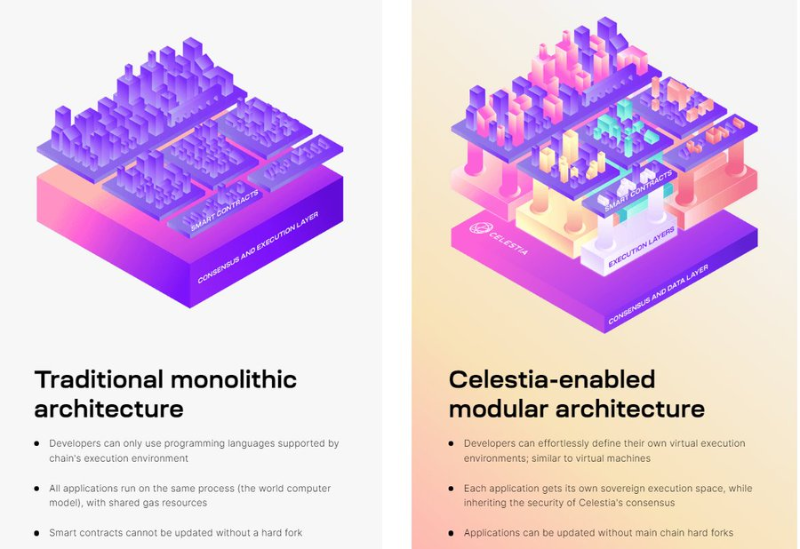
How? By decoupling the consensus layer from the execution layer.
They offer four main advantages:
1. Deploy blockchains as easily as smart contracts.
2. Simplified scaling via data availability.
3. Secure interoperability across all Celestia chains.
4. Developers can choose their own execution environment.
Subspace
This is a new blockchain powered by Proof-of-Archival-Storage (PoAS) consensus, providing a permanent, scalable, decentralized storage solution.
Its key features include:
- Fully decentralized
- Separated smart contracts
- Distributed archival storage
- True interoperability
- No compromise on scalability to solve the trilemma
- Open and fair consensus
Sei Network
Sei Network is an industry-specific Layer-1 blockchain dedicated to trading. It promises lightning-fast transaction finality in 600 milliseconds and 22,000 orders per second. It will feature an on-chain order book, enabling smart contracts to access shared liquidity.
Features:
-
High security, battle-tested Cosmos SDK and Tendermint Core.
-
Massive scalability, supporting large exchanges—the Nasdaq of crypto.
-
Native order matching optimized for exchanges.
-
Lightning-fast transactions, 5x faster than Solana.
-
Enables new financial products such as complex options/futures.
-
Trading-specific design means exchanges don’t have to deal with drawbacks of other L1 protocols using SEI.
ParallelChain
It powers two Layer-1 blockchain platforms:
-
ParallelChain Privacy: A business-native permissioned platform supporting market-ready software built for specific business purposes.
-
ParallelChain Mainnet: An open-source blockchain platform where developers can build and deploy decentralized applications using smart contracts.
ParallelChain natively supports Turing-complete smart contracts written in developer-friendly languages such as Rust and Go.
Core features:
-
ParallelBFT protocol + top-tier sharding.
-
Proof of immutability (repeatedly, without sacrificing privacy).
-
Rust, Go WASM smart contracts.
-
Further scalability (80,000 tps).
-
Open delegation.
-
Three-tier node operating system.
Quai Network
Quai Network is a proof-of-work (PoW) Layer-1 scaling solution. It interweaves multiple blockchains to achieve scalability without sacrificing security and decentralization.
Key Features:
• Proof-of-Work 2.0, utilizing a novel PoW 2.0 mechanism that leverages sharding to split one blockchain into many smaller ones to improve performance.
Quai uses merged mining to build a network of blockchains. Its parent chain (Prime chain) secures the other chains. Because the Quai network is horizontally scalable, more chains can be added to increase overall throughput.
• Multi-chain architecture: The Quai Network consists of 13 chains, with the Prime chain being the most important but hardest to mine, while Zone chains are easiest to mine.
Miners typically mine the Prime chain along with one other chain, with the Prime chain serving as the foundation for all Quai operations.
LayerZero
An omnichain interoperability protocol serving as the infrastructure layer connecting contracts across all chains.
Through its primary message-passing primitive, it elevates cross-chain communication in terms of functionality and composability to a new level.
With LayerZero, applications gain full control over their security parameters, including the ability to choose their own:
- Block confirmation
- Validation
- Relayer
- Oracle
- Library
How to get exposure to these unbuilt yet promising blockchains?
a) Participate in testnets (nodes, development, bug bounties).
b) Invest in projects built on their ecosystems.
c) Airdrops, ICOs, giveaways.
d) Buy tokens upon launch after thorough research.
Join TechFlow official community to stay tuned
Telegram:https://t.me/TechFlowDaily
X (Twitter):https://x.com/TechFlowPost
X (Twitter) EN:https://x.com/BlockFlow_News






