








Understanding zkSync and StarkNet Scaling Solutions: Proof Mechanisms, On-Chain Data, and Ecosystem Development
TechFlow Selected TechFlow Selected
Understanding zkSync and StarkNet Scaling Solutions: Proof Mechanisms, On-Chain Data, and Ecosystem Development
What are the differences between zkSync and StarkNet, two top-tier ZK rollups?
 Navigating Web3 tides with focused insights
Written by: Ethereum Daily
Compiled by: TechFlow
Zero-knowledge proof technology refers to a method where one party (the prover) can send a statement to another party (the verifier), who can verify the truthfulness of that statement without learning any additional information. So, what are the key differences between zkSync and StarkNet—two leading ZK rollups?
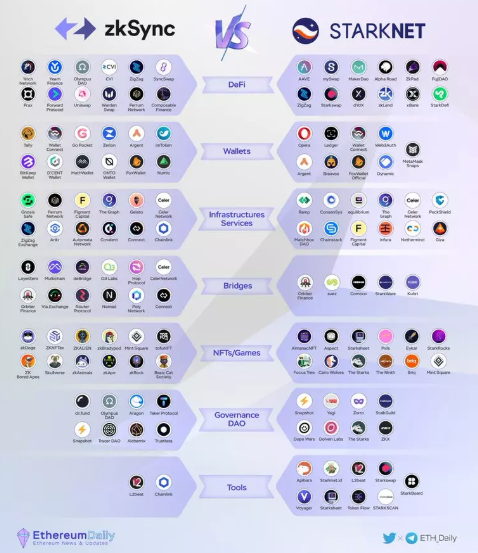
zkSync and StarkNet are two of the top Layer 2 (L2) solutions using ZK rollup technology to scale the Ethereum network.
First, let's briefly summarize zkSync and StarkNet:
-
MatterLabs launched zkSync V1 as a SNARK-based rollup protocol on the Ethereum mainnet in June 2020.
-
In October 2022, MatterLabs launched the first phase of zkSync 2.0 mainnet, dubbed "Baby Alpha."
-
In November 2021, StarkWare Ltd. released StarkNet, a STARK-based rollup protocol on the Ethereum testnet. It was later deployed on the mainnet that same month as Alpha version 0.4.0.
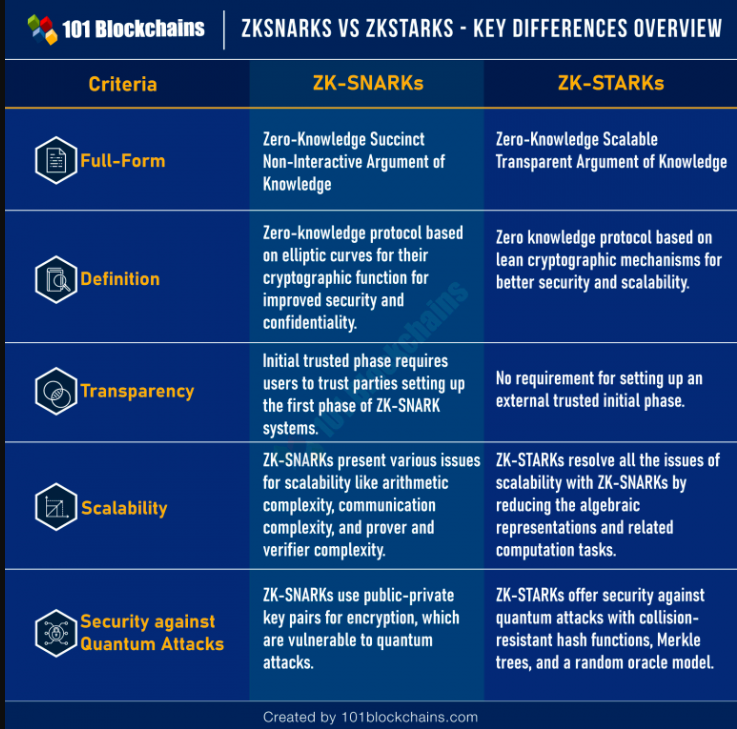
A key difference between zkSync and StarkNet is that they utilize different proof systems:
- SNARKs (Succinct Non-Interactive Arguments of Knowledge);
- STARKs (Scalable Transparent Arguments of Knowledge).
Fundamental differences between SNARK and STARK proofs:
- Trusted setup;
- Scalability;
- Quantum resistance;
Differences between ZK-SNARKs and ZK-STARKs:
-
ZK-STARKs are proven to be 10x faster than ZK-SNARKs.
-
However, a current drawback of ZK-STARKs is that the technology is not yet mature enough, limiting its general-purpose usability.
Compared to StarkNet, StarkEx is not a ZK-rollup but rather a customizable Layer-2 SaaS (Software-as-a-Service) platform that uses STARK proofs to provide massive scalability for applications.
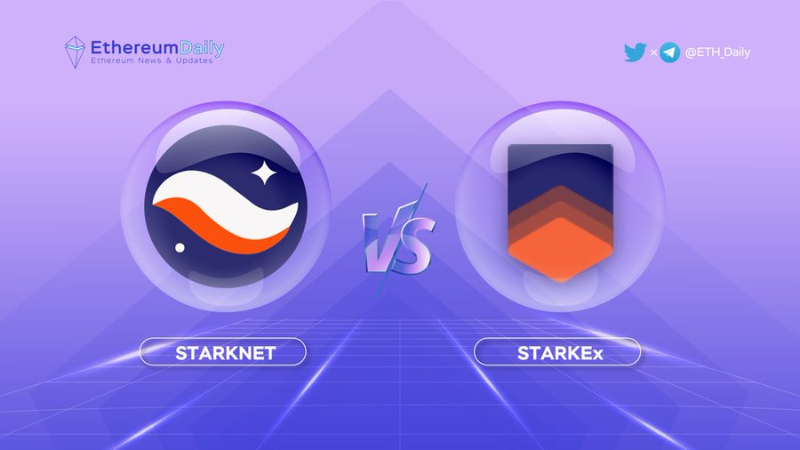
Key distinctions:
-
StarkNet is a general-purpose rollup chain;
-
StarkEx is a toolkit specifically built for individual applications;
-
StarkNet can scale Ethereum;
-
StarkEx can scale decentralized exchanges;
-
StarkNet enables interoperability between DApps, while StarkEx does not;
It’s important to understand these differences because DApps using StarkEx are often part of the broader StarkNet ecosystem, but metrics such as TVL are entirely separate.
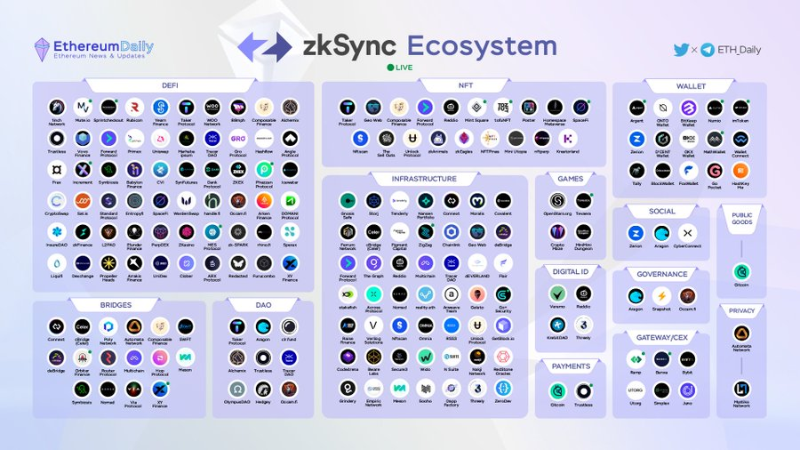
Notable on-chain data from the zkSync ecosystem:
-
According to L2beat, zkSync has a TVL of $52.97 million despite having no token;
-
According to Orbiter Finance, zkSync ranks third among L2s by transaction volume;
-
Over 300 projects have joined the zkSync ecosystem;
-
Total funding raised: $458 million;
Notable on-chain data from the StarkNet ecosystem:
-
According to L2beat, StarkNet has a TVL of $4.61 million despite having no token;
-
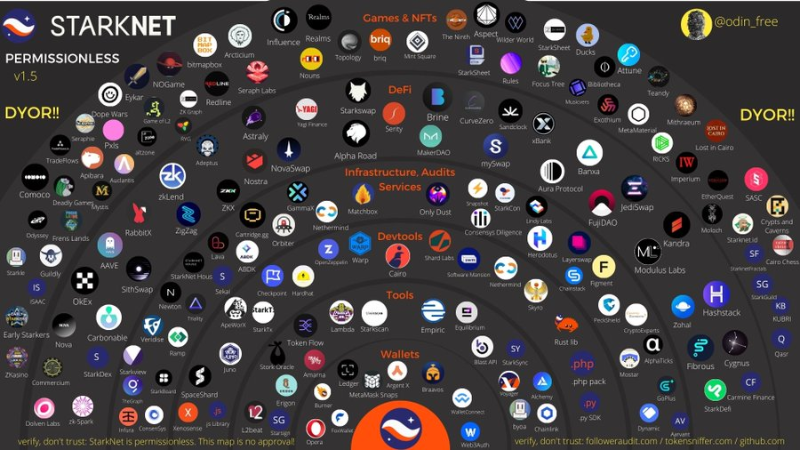
Over 200 projects have joined the StarkNet ecosystem;
-
Total funding raised: $273 million provided by StarkWare;
Join TechFlow official community to stay tuned
Telegram:https://t.me/TechFlowDaily
X (Twitter):https://x.com/TechFlowPost
X (Twitter) EN:https://x.com/BlockFlow_News




